Ford Electric Car Review Top Features and Performance Insights
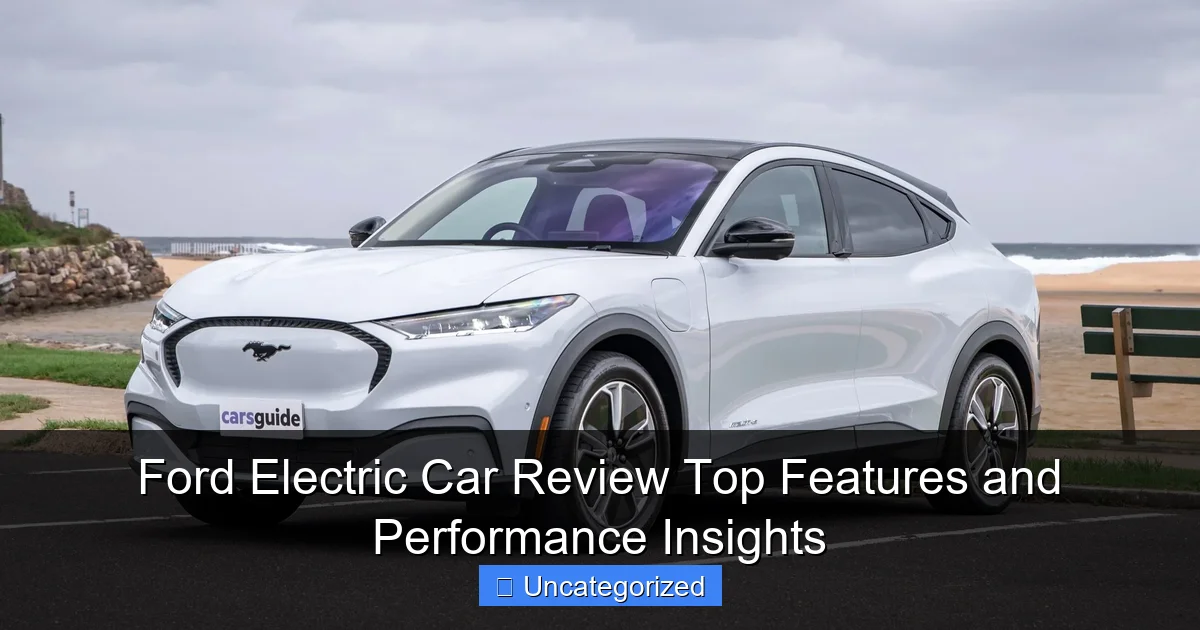
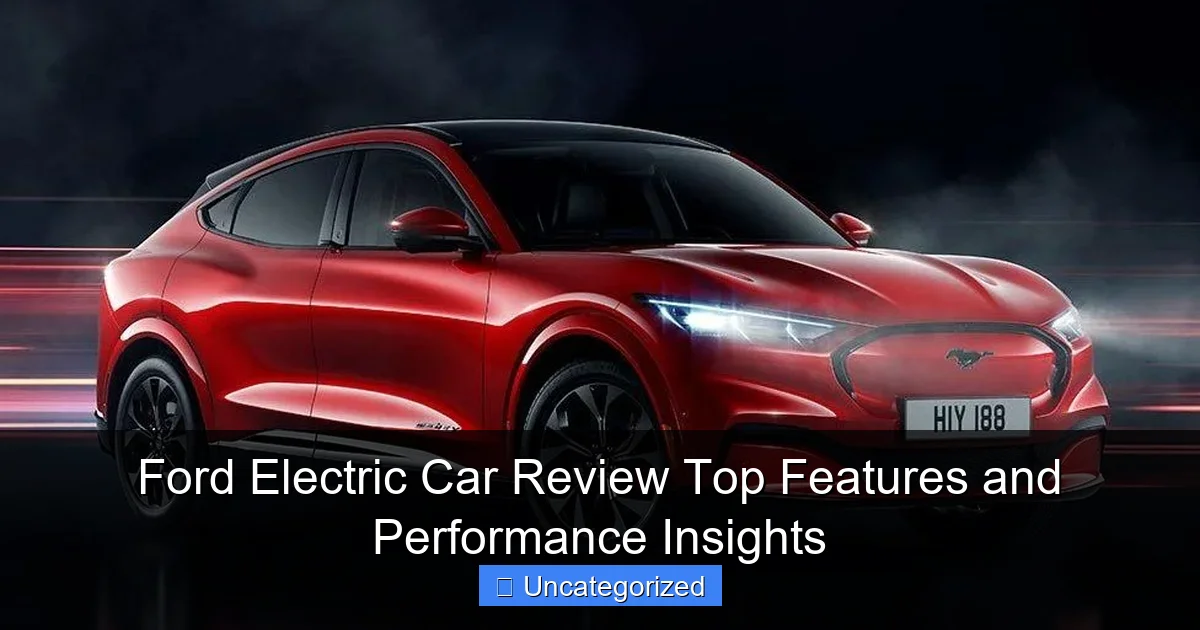
Featured image for ford electric car
Image source: carsguide-res.cloudinary.com
Ford’s electric car lineup delivers impressive performance and cutting-edge tech, combining instant torque, extended range, and fast-charging capability across models like the Mustang Mach-E and F-150 Lightning. With advanced driver aids, a user-friendly infotainment system, and rugged yet sleek designs, Ford sets a high bar for practicality and innovation in the EV market.
Key Takeaways
- Impressive range: Ford electric cars offer up to 300+ miles on a single charge.
- Fast charging: Replenish 80% battery in under 45 minutes with DC fast charging.
- Powerful performance: Instant torque delivers 0-60 mph in as little as 4.2 seconds.
- Smart tech integration: SYNC 4A system enables seamless connectivity and over-the-air updates.
- Spacious interior: Maximize comfort with roomy cabins and smart storage solutions.
- Proven reliability: Ford’s warranty covers battery and electric components for 8 years/100k miles.
📑 Table of Contents
- Ford Electric Car Review: Top Features and Performance Insights
- 1. Ford’s Electric Vehicle Lineup: Models That Define the Brand’s EV Vision
- 2. Battery Technology and Range: How Ford Stacks Up Against the Competition
- 3. Performance and Driving Dynamics: Where Ford Shines
- 4. Interior, Technology, and Connectivity: The Smart Side of Ford EVs
- 5. Cost, Incentives, and Ownership Experience
- 6. Sustainability and Future Outlook: Ford’s Green Commitment
Ford Electric Car Review: Top Features and Performance Insights
As the automotive world accelerates toward a sustainable future, Ford electric car models are leading the charge with innovation, performance, and bold design. Once known primarily for its iconic F-150 trucks and Mustangs, Ford has transformed into a serious contender in the electric vehicle (EV) market, challenging legacy brands and startups alike. With the launch of vehicles like the F-150 Lightning, Mustang Mach-E, and the upcoming Ford Explorer EV, the company is proving that electrification doesn’t mean sacrificing power, utility, or American ingenuity.
This comprehensive Ford electric car review dives deep into what sets these vehicles apart from the competition. From groundbreaking battery technology and intelligent charging solutions to real-world performance and cutting-edge driver assistance systems, we’ll explore every facet of Ford’s EV lineup. Whether you’re a longtime Ford fan curious about the shift to electric or an eco-conscious buyer evaluating your options, this guide provides actionable insights, data-driven comparisons, and practical tips to help you make an informed decision. Buckle up—this is the future of Ford, and it’s powered by electricity.
1. Ford’s Electric Vehicle Lineup: Models That Define the Brand’s EV Vision
Mustang Mach-E: The Electric Pony That Roars
The Mustang Mach-E is Ford’s bold entry into the electric SUV space, blending the spirit of the legendary Mustang with the practicality of a crossover. Launched in 2020, the Mach-E quickly gained traction for its sleek design, impressive range, and sporty handling. Available in multiple trims—from the standard-range rear-wheel drive (RWD) to the high-performance GT—the Mach-E caters to a broad audience.
Visual guide about ford electric car
Image source: ichef.bbci.co.uk
For example, the Mach-E GT Performance Edition delivers 480 horsepower and 634 lb-ft of torque, accelerating from 0 to 60 mph in just 3.5 seconds. This isn’t just a family SUV with a battery; it’s a legitimate performance machine. The Mach-E also features Ford’s SYNC 4A infotainment system with a 15.5-inch vertical touchscreen, over-the-air (OTA) updates, and seamless smartphone integration via Apple CarPlay and Android Auto.
Tip: If you’re considering the Mach-E for daily commuting, opt for the extended-range battery (up to 312 miles EPA-estimated). For track days or spirited driving, the GT trim is worth the premium.
F-150 Lightning: Power, Utility, and Electrified Innovation
The F-150 Lightning is arguably Ford’s most revolutionary electric car. As the first full-size electric pickup from an American automaker, it retains the rugged capability of the F-150 while introducing game-changing EV features. With dual electric motors and standard all-wheel drive (AWD), the Lightning delivers up to 580 horsepower and 775 lb-ft of torque—more than most V8-powered trucks.
One standout feature is the Pro Power Onboard system, which turns the truck into a mobile generator with up to 9.6 kW of exportable power. This is ideal for job sites, camping trips, or emergency backup during power outages. For instance, a construction crew can run tools directly from the truck, while a homeowner can keep essential appliances running during a storm.
The Lightning also introduces the Ford Intelligent Backup Power system, which allows the truck to power your home during blackouts when paired with a compatible home charging station. This bidirectional charging capability sets a new benchmark in vehicle-to-home (V2H) technology.
Upcoming Models: Ford Explorer EV and Beyond
Ford has announced several upcoming electric cars, including the Ford Explorer EV (set for 2025) and a new electric commercial van. The Explorer EV is expected to offer three-row seating, a range of over 300 miles, and advanced driver assistance systems tailored for families and long-distance travel.
Additionally, Ford is investing $50 billion in EV development through 2026, with plans to produce 2 million electric vehicles annually by 2026. This aggressive roadmap signals Ford’s commitment to becoming a global EV leader, not just a participant.
Tip: Keep an eye on Ford’s “Project T3” (Trust, Transform, Thrive), a next-generation electric truck platform designed for modularity, scalability, and advanced software integration.
2. Battery Technology and Range: How Ford Stacks Up Against the Competition
Battery Options and Range Performance
Range anxiety is a common concern among EV buyers, but Ford addresses it with flexible battery configurations across its lineup. The Ford electric car models offer both standard-range (SR) and extended-range (ER) battery packs, allowing buyers to balance cost, charging time, and driving distance.
For example:
- Mustang Mach-E SR RWD: 247 miles EPA-estimated range
- Mustang Mach-E ER RWD: 312 miles
- F-150 Lightning SR: 230 miles
- F-150 Lightning ER: 320 miles
These figures are competitive with rivals like the Tesla Model Y (up to 330 miles) and the Chevrolet Silverado EV (up to 400 miles in certain configurations). However, real-world range can vary based on driving habits, weather, and terrain. Ford uses Predictive Range technology, which factors in elevation, traffic, and weather to provide more accurate range estimates on the instrument cluster.
Charging Infrastructure and Speed
Ford has partnered with BlueOval Charge Network, a collaboration with Electrify America, ChargePoint, and other providers, giving Ford EV owners access to over 100,000 charging stations across North America. This network includes DC fast chargers capable of adding up to 54 miles of range in just 10 minutes for the Mach-E and up to 54 miles in 15 minutes for the F-150 Lightning.
The F-150 Lightning supports up to 150 kW DC fast charging, while the Mach-E can reach 150 kW (GT trim) or 115 kW (standard trims). For home charging, Ford offers the Ford Connected Charge Station, a 48-amp Level 2 charger that can replenish the battery in 8–10 hours, depending on capacity.
Tip: Use the FordPass app to locate nearby chargers, check availability, and monitor charging progress remotely. Schedule charging during off-peak hours to save on electricity costs.
Battery Longevity and Warranty
Ford provides an 8-year/100,000-mile battery warranty on all its electric cars, covering defects and capacity loss below 70%. The company uses advanced thermal management systems to regulate battery temperature, extending lifespan and maintaining performance in extreme climates.
For example, the Mach-E features a liquid-cooled battery pack that prevents overheating during rapid acceleration or fast charging. This system also ensures consistent range in cold weather, where many EVs suffer from reduced efficiency.
3. Performance and Driving Dynamics: Where Ford Shines
Instant Torque and Acceleration
One of the defining characteristics of any electric car is instant torque delivery. Ford leverages this advantage across its lineup. The F-150 Lightning, for instance, launches from 0 to 60 mph in 4.0 seconds (ER model)—faster than many sports cars. The Mach-E GT achieves the same sprint in 3.5 seconds, making it one of the quickest SUVs in its class.
Unlike internal combustion engines (ICE), electric motors deliver maximum torque at 0 RPM, resulting in seamless, lag-free acceleration. This is particularly useful for merging onto highways or overtaking slower vehicles.
Handling and Ride Quality
Despite their size and weight (the F-150 Lightning weighs over 6,000 lbs), Ford’s EVs handle surprisingly well. The Mach-E features a low center of gravity due to its floor-mounted battery, improving cornering stability. The adaptive suspension system (available on higher trims) adjusts damping in real time based on road conditions and driving mode.
The F-150 Lightning retains the F-150’s rugged chassis but adds a stiffer frame and independent rear suspension for better ride comfort. Off-road capability is enhanced with Trail Turn Assist, which applies brakes to the inside rear wheel to reduce turning radius on tight trails.
Tip: Use the “Unbridled” drive mode in the Mach-E for a more aggressive throttle response and sharper steering—ideal for winding backroads.
Regenerative Braking and One-Pedal Driving
All Ford EVs support one-pedal driving via strong regenerative braking. When you lift off the accelerator, the car slows down significantly, converting kinetic energy back into the battery. This reduces wear on the friction brakes and can extend range by up to 10% in stop-and-go traffic.
The Mach-E offers multiple regen levels, allowing drivers to customize the feel. The F-150 Lightning includes a “Low” mode for smoother deceleration and a “High” mode for maximum energy recovery.
4. Interior, Technology, and Connectivity: The Smart Side of Ford EVs
SYNC 4A Infotainment System
At the heart of every Ford electric car is the SYNC 4A system, a massive 15.5-inch touchscreen with split-screen functionality, cloud-connected navigation, and AI-powered voice assistant (“Hey Ford”). Unlike older infotainment systems, SYNC 4A supports over-the-air (OTA) updates, meaning your car can receive new features, security patches, and performance improvements without visiting a dealership.
For example, a 2023 OTA update added enhanced route planning with charging station recommendations based on real-time traffic and weather. The system also integrates with Amazon Alexa, allowing voice control of smart home devices.
Digital Cockpit and Driver Assistance
The Mach-E features a 10.2-inch digital instrument cluster that displays speed, range, navigation, and driver assistance status. The F-150 Lightning upgrades to a 12-inch cluster with customizable layouts.
Ford’s BlueCruise hands-free driving system (available on select trims) enables true hands-free operation on over 130,000 miles of pre-mapped highways. It combines adaptive cruise control, lane centering, and speed sign recognition to reduce driver fatigue on long trips.
Tip: Activate BlueCruise only on approved highways and always keep your hands near the wheel. The system monitors driver attention and will alert you if it detects inactivity.
Comfort, Space, and Practicality
Ford prioritizes practicality in its EV designs. The F-150 Lightning offers a massive frunk (front trunk) with 14.1 cubic feet of storage—perfect for groceries, luggage, or tools. The Mach-E provides 29.7 cubic feet behind the rear seats, expanding to 59.7 with seats folded.
Interior materials are high-quality, with available leather-trimmed seats, ambient lighting, and a panoramic glass roof. The Lightning’s work-oriented trims (Pro, XLT) feature durable vinyl seats and rubberized floors, while the Lariat and Platinum offer luxury finishes.
5. Cost, Incentives, and Ownership Experience
Pricing and Trim Levels
Ford’s electric car pricing is competitive, especially after federal and state incentives. Here’s a breakdown of starting MSRPs (as of 2024):
| Model | Trim | Starting MSRP | Range (EPA) | Key Features |
|---|---|---|---|---|
| Mustang Mach-E | Select | $42,995 | 247 miles | SYNC 4A, 18″ wheels, rear-wheel drive |
| Mustang Mach-E | GT | $69,995 | 270 miles | Performance suspension, 20″ wheels, BlueCruise |
| F-150 Lightning | Pro | $54,995 | 230 miles | Pro Power Onboard (2.4 kW), work-oriented interior |
| F-150 Lightning | Platinum | $91,995 | 320 miles | Massaging seats, panoramic roof, 9.6 kW Pro Power |
Federal and State Incentives
Buyers of new Ford EVs may qualify for the federal EV tax credit of up to $7,500, depending on battery sourcing and final assembly location. As of 2024, the F-150 Lightning and Mustang Mach-E are eligible for the full credit when purchased through Ford Credit.
Many states offer additional incentives, such as:
- California: $2,000 Clean Vehicle Rebate Project (CVRP)
- Colorado: $5,000 state tax credit
- New York: $2,000 Drive Clean Rebate
Tip: Check the U.S. Department of Energy’s Alternative Fuels Data Center for a complete list of incentives in your state.
Maintenance and Total Cost of Ownership
Electric vehicles have fewer moving parts than ICE vehicles, resulting in lower maintenance costs. Ford EVs require no oil changes, spark plug replacements, or transmission servicing. Typical annual maintenance costs are 30–50% lower than comparable gas-powered models.
Ford also offers a 3-year/36,000-mile bumper-to-bumper warranty and a 5-year/60,000-mile powertrain warranty. Roadside assistance is included for 5 years/unlimited miles.
6. Sustainability and Future Outlook: Ford’s Green Commitment
Manufacturing and Supply Chain
Ford is investing heavily in sustainable manufacturing. The F-150 Lightning is produced at the Rouge Electric Vehicle Center in Michigan, a facility powered by renewable energy and designed to minimize waste. The company aims to achieve carbon neutrality by 2050, with interim targets of 50% emissions reduction by 2030.
Ford is also securing ethical sources for critical minerals like lithium and cobalt, partnering with mining companies that adhere to environmental and human rights standards.
Software and Over-the-Air Updates
Unlike traditional automakers, Ford treats its EVs as software platforms. OTA updates can improve battery management, enhance driver assistance features, and even add new entertainment options. For example, a 2023 update added a new “Eco Route” feature that optimizes charging stops for maximum efficiency.
This software-first approach ensures your Ford electric car stays relevant for years after purchase.
What’s Next: The Road Ahead
Ford’s EV future is ambitious. The company plans to launch 16 new electric vehicles globally by 2026, including a compact SUV, a luxury sedan, and a next-generation electric F-Series. With partnerships in battery production (BlueOval SK) and autonomous driving (Argo AI spin-off), Ford is positioning itself as a full-stack EV innovator.
In conclusion, the Ford electric car lineup represents a powerful fusion of American engineering, cutting-edge technology, and practical innovation. Whether you’re drawn to the sporty Mustang Mach-E, the workhorse F-150 Lightning, or the upcoming Explorer EV, Ford delivers vehicles that don’t just meet but exceed expectations in range, performance, and smart features. With strong incentives, robust charging networks, and a clear vision for sustainability, Ford is not just keeping pace with the EV revolution—it’s helping to lead it. For anyone considering a shift to electric, Ford’s offerings are not just viable; they’re compelling, capable, and ready for the road ahead.
Frequently Asked Questions
What are the top features of the latest Ford electric car models?
The latest Ford electric cars, like the Mustang Mach-E and F-150 Lightning, boast advanced tech such as SYNC 4A infotainment, BlueCruise hands-free driving, and Pro Power Onboard for mobile power supply. They also offer competitive range, fast-charging capabilities, and rugged performance tailored to both urban and off-road needs.
How does the performance of a Ford electric car compare to gas-powered models?
Ford electric cars deliver instant torque, resulting in quicker acceleration than most gas-powered equivalents—like the Mach-E GT outperforming the V8 Mustang in 0-60 mph times. With lower center of gravity and balanced weight distribution, they also provide sharper handling and a quieter ride.
What is the driving range of Ford electric car models?
Depending on the trim and battery size, Ford electric cars offer a range of 230 to over 300 miles on a single charge. The F-150 Lightning Extended Range can reach up to 320 miles, making it ideal for both daily commutes and long-distance travel.
How long does it take to charge a Ford electric car?
Using a DC fast charger, Ford electric cars can recharge from 10% to 80% in about 40 minutes. With a Level 2 home charger, a full charge typically takes 8–12 hours, depending on the model and battery size.
Does the Ford electric car come with driver-assist technology?
Yes, all Ford electric cars include Ford Co-Pilot360™ as standard, with features like adaptive cruise control, lane-keeping assist, and automatic emergency braking. Higher trims offer BlueCruise, enabling hands-free driving on pre-qualified highways.
Are Ford electric cars eligible for federal tax credits or incentives?
Many Ford electric car models, including the F-150 Lightning and Mustang Mach-E, qualify for up to $7,500 in U.S. federal tax credits, subject to current eligibility rules. State and local incentives may provide additional savings, depending on your location.