Ford Electric Car Roadmap Revealed Whats Next for EVs
Featured image for ford electric car roadmap
Image source: stockdividendscreener.com
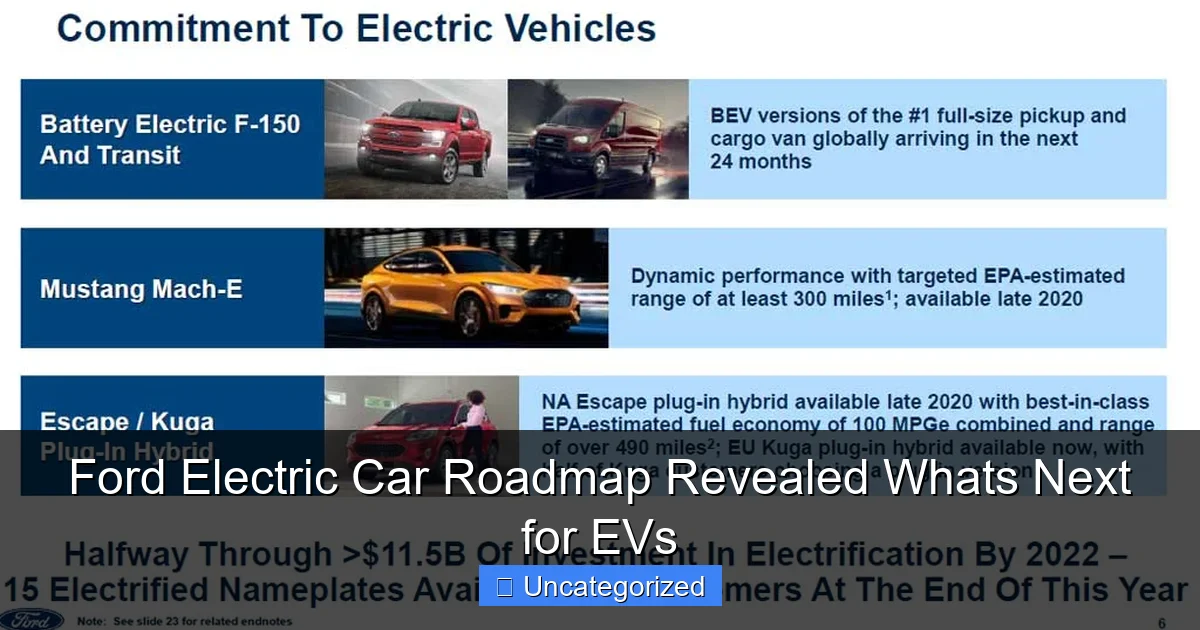
Ford has unveiled an aggressive electric car roadmap aimed at dominating the EV market with 16 new electric vehicles by 2028, including next-gen pickups and commercial vans. With $50 billion invested in electrification, Ford is accelerating its shift toward a fully electric future, targeting 2 million annual EV sales by 2026.
Key Takeaways
- Ford accelerates EV production: Targets 2 million annual EV units by 2026.
- New platforms unveiled: Modular designs cut costs and boost scalability.
- Expanded battery plants: U.S. facilities ensure faster, localized supply chains.
- Focus on affordability: $25K EV in development to widen market appeal.
- Software integration: Over-the-air updates enhance vehicle performance and features.
- Commercial EVs prioritized: E-Transit and F-150 Lightning lead fleet transitions.
- Charging network partnerships: Collaborations with Tesla and others improve accessibility.
📑 Table of Contents
- Ford Electric Car Roadmap Revealed: What’s Next for EVs?
- Ford’s Electrification Vision: From Legacy to Innovation
- New Models and Upcoming Launches (2024–2027)
- Battery Technology and Manufacturing Breakthroughs
- Manufacturing Transformation: Factories of the Future
- Challenges and Competitive Landscape
- Data Table: Ford’s Upcoming EVs (2024–2027)
Ford Electric Car Roadmap Revealed: What’s Next for EVs?
The automotive world is undergoing a seismic shift, and Ford Motor Company is charging full speed ahead into the electric future. As global demand for sustainable transportation surges, Ford has unveiled an ambitious electric car roadmap that signals a bold transformation from its century-long legacy of internal combustion engines to a new era of zero-emission mobility. With climate change concerns mounting and governments worldwide setting aggressive carbon neutrality goals, automakers are racing to electrify their fleets. Ford, once known for its iconic F-150 pickup and Mustang muscle cars, is now redefining its identity as a leader in the electric vehicle (EV) revolution.
But this isn’t just about swapping gas tanks for batteries. Ford’s electric strategy is a comprehensive, multi-billion-dollar plan that spans vehicle development, manufacturing overhaul, battery innovation, charging infrastructure, and workforce retraining. From the launch of the Mustang Mach-E to the groundbreaking F-150 Lightning, Ford has already made waves in the EV market. Yet, these are just the beginning. The company’s electric car roadmap reveals a vision that stretches well into the next decade, promising new models, cutting-edge technology, and a complete reimagining of how we think about transportation. Whether you’re an EV enthusiast, a potential buyer, or an industry observer, understanding Ford’s strategy is key to anticipating the future of mobility.
Ford’s Electrification Vision: From Legacy to Innovation
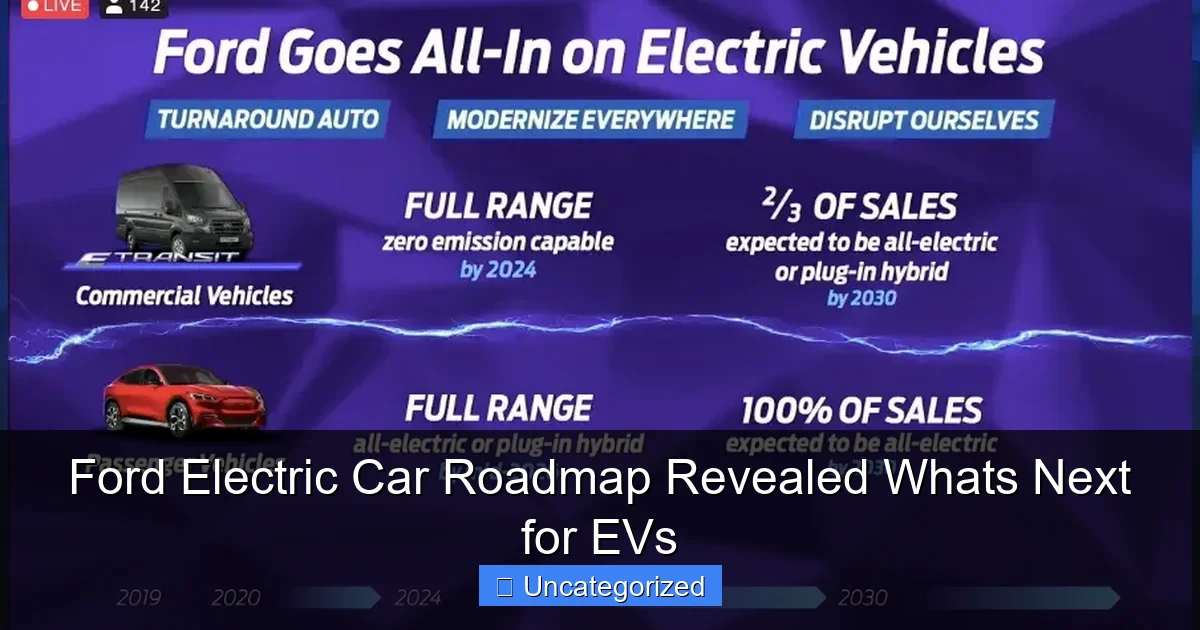
Ford’s journey into electrification is not a sudden pivot but a calculated evolution. The company’s electric car roadmap is built on a foundation of decades of innovation, customer insights, and strategic partnerships. In 2021, Ford announced a $30 billion investment in electrification by 2025, later increased to over $50 billion by 2026. This massive capital injection underscores the company’s commitment to becoming a dominant player in the global EV market, targeting 2 million annual EV production by 2026.
Visual guide about ford electric car roadmap
Image source: car-images.bauersecure.com
Core Pillars of Ford’s EV Strategy
Ford’s electrification plan rests on three core pillars:
- Vehicle Portfolio Expansion: Launching a wide range of EVs across segments, from SUVs and trucks to commercial vehicles.
- Manufacturing Transformation: Retooling existing factories and building new ones to support EV production at scale.
- Technology Leadership: Advancing battery technology, software integration, and connected vehicle features.
For example, the Ford F-150 Lightning, an all-electric version of America’s best-selling truck, isn’t just a new model—it’s a symbol of Ford’s belief that EVs can meet the rugged, high-performance demands of real-world users. The Lightning offers up to 320 miles of range, can power homes during outages (via Ford Intelligent Backup Power), and has already garnered over 200,000 reservations.
Customer-Centric Approach
Unlike some automakers that focus solely on urban commuters, Ford is targeting a broad customer base. The company recognizes that EV adoption varies by region, use case, and lifestyle. To address this, Ford is tailoring its EVs to different markets:
- North America: Emphasis on trucks, SUVs, and commercial vans (e.g., E-Transit).
- Europe: Compact cars and city EVs, like the Ford Puma Electric.
- China: Joint ventures and localized models to meet regional preferences.
Ford’s approach is practical: it’s not forcing customers into EVs but making them so compelling that the choice is obvious. As Ford CEO Jim Farley stated, “We’re not just building electric cars—we’re building the future of Ford.”
New Models and Upcoming Launches (2024–2027)
The heart of Ford’s electric car roadmap lies in its upcoming vehicle lineup. While the Mustang Mach-E and F-150 Lightning have set the stage, the next wave of EVs promises even greater innovation, range, and affordability. Ford plans to introduce at least 10 new EVs globally by 2027, with several already confirmed or strongly hinted at.
Confirmed Models and Release Timelines
- Ford Explorer EV (2025): A fully electric version of the popular midsize SUV, targeting families with a range of 300+ miles and third-row seating. Built on Ford’s new Global Electric Flexible Architecture (GEFA), it will feature over-the-air (OTA) updates and advanced driver-assist systems.
- Ford Bronco EV (2026): An electric off-road SUV designed for adventure. Expected to include dual-motor AWD, off-road mode tuning, and a modular interior. Ford has teased a “Trail Turn Assist” feature that could revolutionize off-road EV capabilities.
- Ford Puma Electric (2024, Europe): A compact urban EV with a 300-mile range, fast charging (10–80% in 30 minutes), and a focus on city driving efficiency.
- Ford E-Transit Custom (2024, Europe): An electric version of the best-selling Transit van, offering 230 miles of range and tailored for delivery fleets.
- All-New Electric Pickup (2026): Codenamed “Project T3,” this next-gen truck will feature a new battery platform, bidirectional charging, and a modular design for work and lifestyle use. Ford claims it will be “the most capable electric truck ever built.”
Affordable EVs on the Horizon
One of the biggest challenges in EV adoption is price. Ford is addressing this with plans for a low-cost EV platform targeting a $25,000 price point. This platform, expected by 2027, will underpin compact SUVs and city cars, making EVs accessible to a broader audience. Key strategies include:
- Simplified manufacturing (fewer parts, modular design).
- Use of lithium iron phosphate (LFP) batteries, which are cheaper and safer than nickel-based batteries.
- Localization of production in North America and Europe to reduce import costs.
For example, Ford’s partnership with CATL (a Chinese battery giant) to produce LFP batteries in Michigan will be critical in driving down costs. This move not only reduces dependency on rare earth materials but also aligns with U.S. Inflation Reduction Act (IRA) incentives for domestic battery production.
Battery Technology and Manufacturing Breakthroughs
Battery technology is the cornerstone of any successful electric car roadmap, and Ford is making bold moves to lead in this space. The company is investing heavily in battery research, development, and production to ensure it controls its supply chain and delivers high-performance, affordable batteries.
Next-Gen Battery Platforms
Ford is developing three battery platforms to serve different vehicle segments:
- Gen 1 (Current): Nickel-based batteries used in the Mustang Mach-E and F-150 Lightning. Offers high energy density and fast charging.
- Gen 2 (2024–2025): Introduction of LFP batteries for lower-cost models. These batteries are longer-lasting (up to 4,000 cycles), safer, and less prone to thermal runaway.
- Gen 3 (2026+): Solid-state battery prototypes in development. Ford has partnered with Solid Power to test solid-state cells that could offer 50% higher energy density, 80% faster charging, and 30% longer lifespan than current lithium-ion batteries.
Solid-state batteries are a game-changer. They replace liquid electrolytes with solid materials, reducing fire risk and enabling thinner, lighter battery packs. While still in the lab, Ford aims to have solid-state batteries in pilot production by 2026 and in vehicles by 2030.
U.S. Battery Manufacturing: BlueOval SK and Beyond
To reduce reliance on foreign battery suppliers, Ford is building a network of U.S. battery plants through its joint venture with SK On, called BlueOval SK. Key facilities include:
- BlueOval SK Battery Park (Kentucky): Two plants producing 86 GWh annually—enough for 1.2 million EVs per year.
- BlueOval City (Tennessee): A $5.6 billion mega-campus integrating EV assembly (F-150 Lightning), battery production, and recycling. Expected to create 6,000 jobs and produce 43 GWh of batteries annually.
These plants will not only secure Ford’s supply chain but also qualify for IRA tax credits, reducing production costs. Additionally, Ford is exploring battery recycling programs to recover up to 95% of battery materials, supporting a circular economy.
Charging and Energy Ecosystem
Battery tech is only half the story. Ford is also investing in charging infrastructure and energy services:
- Ford Pro Charging: A commercial charging solution for fleets, offering hardware, software, and 24/7 support.
- Ford Power Promise: A home charging installation service with free standard installation for F-150 Lightning buyers.
- Partnership with Tesla: Ford EVs will gain access to Tesla Superchargers starting in 2025, with a Tesla-style NACS charging port becoming standard on new models.
Manufacturing Transformation: Factories of the Future
Electrifying vehicles is one challenge; building them at scale is another. Ford’s electric car roadmap includes a complete overhaul of its manufacturing footprint, turning traditional assembly plants into high-tech, flexible EV hubs.
Retooling Legacy Plants
Ford is repurposing existing factories to reduce costs and speed up production:
-
<
- Dearborn, Michigan: The historic Rouge Complex is now home to the F-150 Lightning, with a new battery lab and “smart factory” features like AI-driven quality control and digital twins.
- Oakville, Ontario: The Oakville Assembly Complex is being converted into an EV center, producing the Explorer EV and Lincoln Aviator EV by 2025.
- Cologne, Germany: The Ford Cologne Electrification Center will build the next-gen European EVs, including the Puma Electric.
These plants use advanced robotics, real-time data analytics, and modular production lines to switch between EV models quickly. For instance, the Rouge plant can build both the F-150 Lightning and the gas-powered F-150 on the same line—a rare feat in the industry.
BlueOval City: The EV Mega-Campus
Perhaps the most ambitious project is BlueOval City in Stanton, Tennessee. This 3,600-acre site is designed to be a fully integrated EV ecosystem:
- Vehicle Assembly: Produces the next-gen electric pickup (Project T3).
- Battery Production: BlueOval SK’s Tennessee plant.
- Recycling: A closed-loop system to recover battery materials.
- Renewable Energy: Solar panels and wind power to offset 100% of energy use.
The campus will use “digital factory” technology, where virtual simulations optimize production before physical construction begins. Ford estimates it will reduce CO2 emissions by 1.5 million tons annually compared to traditional manufacturing.
Workforce and Sustainability
Transitioning to EVs requires retraining workers. Ford has launched the Ford+ Plan, which includes:
- Retraining 10,000 UAW members for EV production.
- Investing $1.5 billion in worker education and safety.
- Setting a goal of carbon neutrality by 2050, with interim targets for 2035.
Challenges and Competitive Landscape
Despite its aggressive electric car roadmap, Ford faces significant challenges. The EV market is crowded, with Tesla dominating, legacy automakers like GM and Volkswagen ramping up, and new entrants like Rivian and Lucid disrupting the space.
Key Challenges
- Supply Chain Risks: Battery materials (lithium, cobalt) are subject to geopolitical and price volatility. Ford is diversifying suppliers and investing in recycling to mitigate this.
- Competition: Tesla’s Model Y and Cybertruck, GM’s Ultium platform, and Hyundai’s Ioniq series offer stiff competition. Ford must differentiate through brand loyalty, truck/SUV expertise, and commercial EV leadership.
- Consumer Adoption: Range anxiety, charging infrastructure gaps, and higher upfront costs remain barriers. Ford’s focus on bidirectional charging (e.g., powering homes) and affordable EVs aims to overcome these.
- Software and Tech: Tesla’s lead in OTA updates and autonomy is a threat. Ford is investing in its BlueCruise hands-free driving system and expanding its software team.
Ford’s Competitive Edge
Ford’s strengths lie in:
- Truck and SUV Expertise: The F-Series has been America’s best-selling vehicle for 46 years. The F-150 Lightning leverages this trust.
- Commercial EV Leadership: The E-Transit is already the best-selling electric van in the U.S., with fleets like Amazon and Walmart adopting it.
- Dealer Network: Ford’s 3,000+ dealerships provide unmatched service and test drive access.
- Brand Heritage: The Mustang and F-150 are cultural icons—electrifying them resonates with customers.
Data Table: Ford’s Upcoming EVs (2024–2027)
| Model | Expected Launch | Target Range (Miles) | Key Features | Target Price |
|---|---|---|---|---|
| Ford Puma Electric | 2024 | 300 | Fast charging, city-focused design | €35,000 (est.) |
| Ford E-Transit Custom | 2024 | 230 | Commercial van, fleet-ready | $45,000 (est.) |
| Ford Explorer EV | 2025 | 320 | 3-row SUV, OTA updates | $48,000 (est.) |
| Ford Bronco EV | 2026 | 300 | Off-road capable, Trail Turn Assist | $52,000 (est.) |
| Project T3 (Next-Gen Pickup) | 2026 | 350+ | Modular design, bidirectional charging | $55,000 (est.) |
| Low-Cost EV (Compact SUV) | 2027 | 250 | LFP battery, simplified design | $25,000 |
Ford’s electric car roadmap is one of the most comprehensive and ambitious in the automotive industry. By combining its legacy of innovation with a bold vision for the future, Ford is not just adapting to the EV era—it’s helping to define it. From the groundbreaking F-150 Lightning to the upcoming low-cost EVs and solid-state battery breakthroughs, Ford is addressing every aspect of the EV ecosystem: vehicles, batteries, manufacturing, charging, and affordability.
The road ahead is not without hurdles, but Ford’s strategy is built on practicality, customer focus, and long-term sustainability. As the company transitions from “America’s truck company” to “America’s EV company,” it’s clear that Ford is all-in on electrification. For consumers, this means more choice, better technology, and lower prices. For the planet, it means a significant step toward reducing transportation emissions. The future of Ford is electric—and it’s arriving faster than ever.
Frequently Asked Questions
What is Ford’s electric car roadmap for the next 5 years?
Ford’s electric car roadmap outlines plans to invest $50 billion in EVs through 2026, targeting 2 million annual EV production. Key launches include the F-150 Lightning, Mustang Mach-E updates, and new electric commercial vehicles.
Which new Ford EVs are coming in 2024-2025?
Ford will release an all-electric Transit van, a next-gen Explorer EV, and a performance-focused “Project T3” truck by 2025. These models aim to expand Ford’s EV portfolio across SUV, truck, and commercial segments.
How does Ford plan to compete with Tesla and other EV brands?
Ford’s electric car roadmap focuses on leveraging its truck/SUV expertise (like F-150 Lightning) and affordable pricing. The company is also building 3 new battery plants to reduce costs and improve range.
Will Ford discontinue gas-powered cars soon?
Ford plans for 50% of its global sales to be EVs by 2030 but hasn’t set a full discontinuation date for ICE vehicles. The roadmap prioritizes EV growth while maintaining hybrid options during the transition.
What charging infrastructure is Ford investing in?
Ford is expanding its BlueOval Charge Network with 10,000+ fast chargers in North America and Europe. The roadmap includes partnerships with Tesla for Supercharger access starting in 2024.
Does Ford’s roadmap include affordable electric cars?
Yes, Ford plans to launch a $25,000 compact EV by 2026, targeting budget-conscious buyers. The roadmap also includes mid-priced options like the upcoming Explorer EV to broaden market appeal.