Ford Electric Car vs Tesla Which One Reigns Supreme
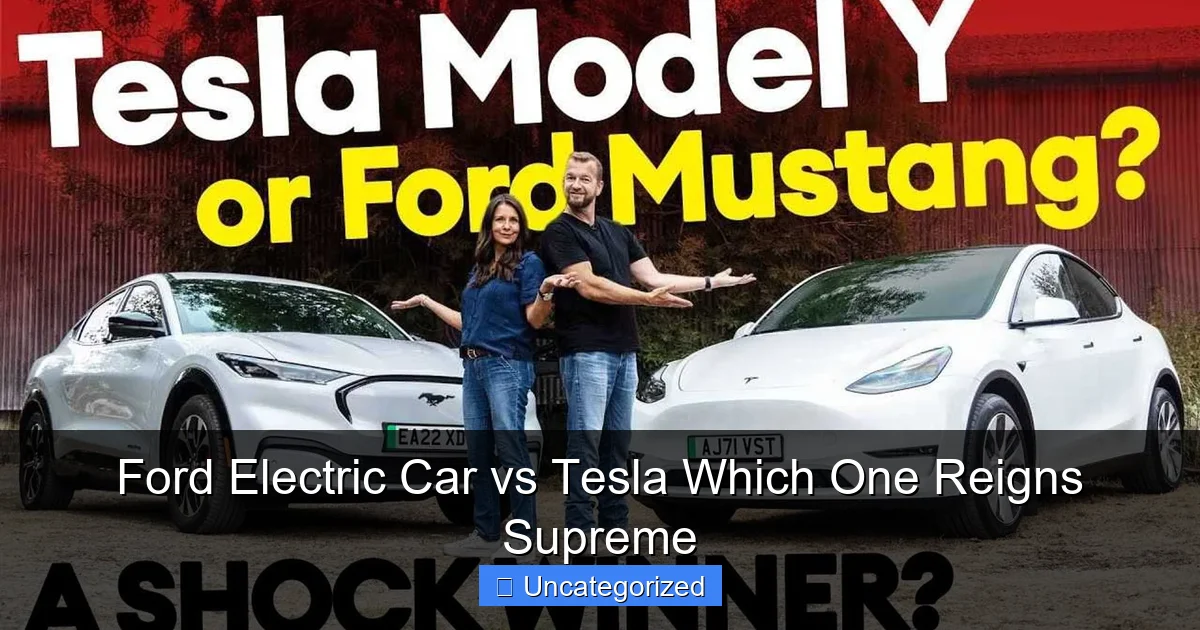
Featured image for ford electric car vs tesla
Image source: cdn.motor1.com
Ford electric cars deliver rugged reliability and strong performance at a competitive price, making them a compelling alternative to Tesla’s tech-forward, long-range dominance. While Tesla leads in battery innovation, charging infrastructure, and software integration, Ford strikes back with superior build quality and broader model variety for mainstream buyers. The ultimate choice hinges on whether you prioritize cutting-edge tech or real-world practicality.
Key Takeaways
- Tesla leads in range: Most models exceed 300 miles per charge.
- Ford offers affordability: Competitive pricing with strong incentives.
- Tesla’s tech is unmatched: Superior Autopilot and infotainment features.
- Ford excels in utility: Spacious designs ideal for families.
- Charging infrastructure favors Tesla: Access to Supercharger network is key.
- Ford’s build quality shines: Durable materials and traditional craftsmanship.
📑 Table of Contents
Ford Electric Car vs Tesla Which One Reigns Supreme
The electric vehicle (EV) revolution is in full swing, and two American automotive giants are leading the charge: Ford and Tesla. As consumers increasingly prioritize sustainability, performance, and cutting-edge technology, the rivalry between Ford’s electric lineup and Tesla’s pioneering models has become one of the most compelling battles in the automotive world. While Tesla has long held the crown as the EV market leader, Ford is making a serious comeback with its bold electric initiatives, including the Mustang Mach-E, F-150 Lightning, and the upcoming Explorer EV. The question on every EV enthusiast’s mind is: which brand truly reigns supreme?
Choosing between Ford electric cars and Tesla isn’t just about comparing specs—it’s about understanding brand philosophies, ownership experiences, and long-term value. Tesla has built its reputation on innovation, autonomy, and a vertically integrated ecosystem, while Ford brings decades of manufacturing expertise, rugged reliability, and a deep connection to American truck and SUV culture. In this comprehensive guide, we’ll dive deep into performance, range, technology, pricing, and real-world usability to determine which brand offers the best electric driving experience. Whether you’re a first-time EV buyer, a truck lover, or a tech enthusiast, this Ford Electric Car vs Tesla showdown will help you make an informed decision.
Performance and Driving Experience
When it comes to electric vehicles, performance is more than just horsepower—it’s about how the car feels on the road, how it handles corners, and how it delivers power in real-world conditions. Both Ford and Tesla offer exhilarating performance, but their approaches differ significantly.
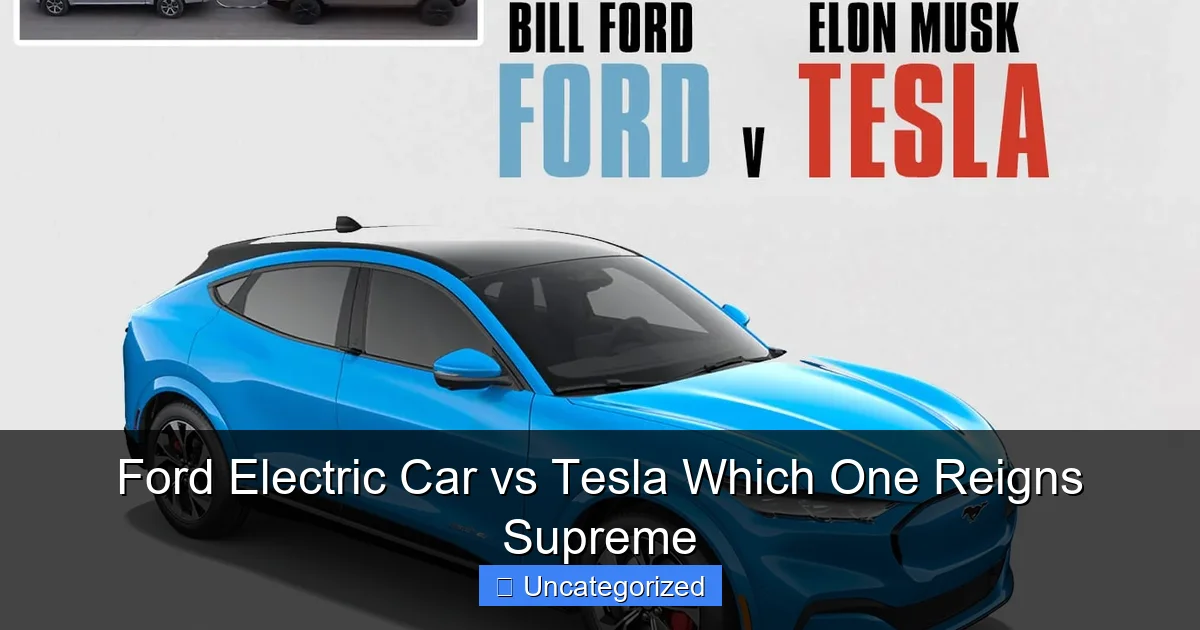
Visual guide about ford electric car vs tesla
Image source: evbite.com
Acceleration and Power Delivery
Tesla has long been synonymous with blistering acceleration. The Tesla Model S Plaid can go from 0 to 60 mph in just 1.99 seconds, making it one of the fastest production cars ever built. Even the base Model 3 Performance hits 60 mph in under 3.1 seconds. Tesla’s dual- and tri-motor setups deliver instant torque, creating a rocket-like launch that’s unmatched in its class.
Ford counters with strong performance of its own. The Mustang Mach-E GT Performance Edition reaches 60 mph in 3.5 seconds, while the F-150 Lightning Platinum does it in 4.5 seconds—impressive for a full-size pickup. Ford’s performance is more linear and predictable, offering a more traditional driving feel. This can be a plus for drivers who prefer a controlled, responsive experience over neck-snapping thrust.
Tip: If you value raw acceleration and want the thrill of a supercar, Tesla is the clear winner. But if you prefer a balanced, sporty feel with strong mid-range power, Ford’s EVs deliver a more engaging and driver-focused experience.
Handling and Ride Comfort
Tesla vehicles are engineered with a low center of gravity thanks to their floor-mounted battery packs, which enhances cornering stability. The Model S and Model X offer adaptive air suspension that adjusts to road conditions, providing a plush ride in comfort mode and tight handling in sport mode. However, some drivers find Tesla’s steering overly light and artificial, lacking the feedback that driving enthusiasts crave.
Ford, on the other hand, leverages its decades of performance tuning. The Mach-E benefits from a near 50/50 weight distribution and a well-tuned suspension system that balances comfort and agility. The F-150 Lightning, while heavier, uses a multi-link rear suspension and available air springs to maintain a smooth ride even when towing. Ford’s steering is more communicative, offering better road feel—especially in the Mach-E GT.
Example: On a twisty mountain road, the Mach-E GT feels more planted and responsive than the Model Y Performance, which can feel floaty at high speeds due to its softer suspension tuning.
Real-World Driving Dynamics
Daily driving isn’t just about speed—it’s about usability. The F-150 Lightning shines in practical scenarios. With 775 lb-ft of torque and a towing capacity of up to 10,000 lbs, it’s a workhorse that doubles as a family vehicle. Tesla’s Model X can tow up to 5,000 lbs, but its falcon-wing doors and low ground clearance make it less ideal for rugged terrain or construction sites.
Ford’s performance EVs also offer one-pedal driving with strong regenerative braking, similar to Tesla. However, Ford allows more customization—drivers can adjust regen strength and even disable it entirely, which Tesla doesn’t allow.
Range, Charging, and Efficiency
Range anxiety is one of the biggest concerns for new EV buyers. Both Ford and Tesla have made significant strides, but their strategies differ in how they deliver real-world range and charging convenience.
Official EPA Range Comparison
Tesla consistently leads in EPA-estimated range. The Model S Long Range achieves up to 405 miles on a single charge, while the Model 3 Long Range offers 333 miles. Even the Model Y Long Range reaches 330 miles, among the best in its class.
Ford’s offerings are competitive but slightly behind. The F-150 Lightning Extended Range delivers up to 320 miles, and the Mustang Mach-E Extended Range RWD hits 314 miles. However, real-world testing often shows Ford’s range estimates to be more conservative, meaning drivers may get closer to the EPA number in daily use.
Tip: Always check real-world range tests from sources like Consumer Reports or InsideEVs. Ford’s vehicles tend to perform closer to their EPA ratings, while Tesla’s can fall short in cold weather or highway driving due to higher energy consumption.
Charging Network and Speed
This is where Tesla holds a massive advantage: the Supercharger Network. With over 50,000 Superchargers globally and growing, Tesla owners enjoy fast, reliable, and often free charging. Superchargers can deliver up to 250 kW, adding up to 200 miles of range in 15 minutes.
Ford uses the CCS (Combined Charging System) standard, which is widely adopted in North America and Europe. However, Ford’s charging infrastructure is more fragmented. While it partners with networks like Electrify America and ChargePoint, availability and reliability can vary. Ford’s FordPass Charging Network now includes over 84,000 chargers, but only a fraction offer DC fast charging above 150 kW.
Example: On a cross-country road trip, a Tesla owner can plan their stops using Tesla’s in-car navigation, which automatically routes to Superchargers and preconditions the battery for faster charging. Ford’s navigation system integrates third-party chargers but lacks the same seamless experience.
Home Charging and Energy Management
Both brands offer Level 2 home chargers. Tesla’s Wall Connector costs $500 and delivers up to 44 miles of range per hour. Ford’s Ford Connected Charge Station is similarly priced and offers smart features like scheduling and load management.
A unique advantage of the F-150 Lightning is Pro Power Onboard—a built-in generator that can power tools, appliances, or even a home during an outage. With up to 9.6 kW of power, it’s a game-changer for contractors, campers, and emergency preparedness. Tesla offers Powerwall integration but requires additional hardware and installation.
Technology and Infotainment
EVs are as much about software and digital experiences as they are about hardware. Tesla and Ford take vastly different approaches to in-car technology.
User Interface and Software Updates
Tesla’s 17-inch touchscreen is a minimalist masterpiece. It controls nearly every function—from climate and navigation to gaming and web browsing. Over-the-air (OTA) updates regularly add new features, like Dog Mode, Sentry Mode, and Bioweapon Defense Mode. The interface is intuitive but can be overwhelming for new users.
Ford uses SYNC 4A with a 12- or 15-inch touchscreen depending on the model. It integrates Apple CarPlay, Android Auto, and Amazon Alexa. The interface is more traditional, with physical buttons for critical functions like climate and volume. Ford also offers OTA updates, but they’re less frequent and less transformative than Tesla’s.
Tip: If you want cutting-edge software and a futuristic feel, Tesla wins. But if you prefer a familiar, user-friendly interface with fewer distractions, Ford’s SYNC system is more approachable.
Autopilot vs. BlueCruise: Driver Assistance
Tesla’s Full Self-Driving (FSD) Beta is one of the most advanced driver-assistance systems (ADAS) available. It can navigate city streets, change lanes, and park autonomously—though it still requires driver supervision. The system uses cameras and AI, with no radar or lidar.
Ford’s BlueCruise 1.2 is a hands-free highway driving system available on the Mach-E and F-150 Lightning. It works on over 130,000 miles of pre-mapped highways in North America. Unlike Tesla, Ford uses a driver-facing camera to ensure eyes are on the road, making it safer and more reliable.
Example: On a long highway drive, BlueCruise feels more natural and less intrusive than Tesla’s Autopilot, which can make sudden corrections. However, FSD’s city navigation capabilities are unmatched.
Connectivity and Ecosystem
Tesla’s ecosystem is tightly integrated. The Tesla app lets you monitor charging, control climate, summon the car, and even stream music. Tesla also offers in-car gaming with titles like Cuphead and The Witcher 3.
Ford’s FordPass app offers similar features, including remote start, charging status, and vehicle locator. It also includes roadside assistance and maintenance reminders. However, Ford doesn’t offer in-car gaming or web browsing, focusing more on practicality than entertainment.
Pricing, Value, and Incentives
Cost is a major factor in any vehicle purchase. Both brands offer competitive pricing, but the value proposition varies by model and use case.
Base MSRP and Trim Levels
Tesla’s pricing is transparent and standardized. The Model 3 starts at $38,990, the Model Y at $43,990, and the Model S at $74,990. There are no dealership markups, and all trims are available online.
Ford’s pricing varies by dealership and region. The F-150 Lightning starts at $49,995 (before incentives), and the Mustang Mach-E at $42,995. Higher trims can exceed $70,000, especially with options like extended range and premium packages.
Tip: Use Ford’s online configurator to get accurate pricing. Tesla’s website shows final prices, while Ford’s may not include destination fees or dealer add-ons.
Federal and State Incentives
Both brands qualify for the federal EV tax credit of up to $7,500, but eligibility depends on battery sourcing and income limits. As of 2024, F-150 Lightning and Mustang Mach-E qualify for the full credit, while Model 3 and Model Y qualify for $3,750 due to battery component rules.
Many states offer additional rebates. For example, California’s Clean Vehicle Rebate Project (CVRP) provides up to $7,500, and Colorado offers $5,000. Tesla and Ford both qualify, but Ford’s higher base prices may offset the incentive advantage.
Resale Value and Depreciation
Tesla vehicles historically have strong resale value. The Model 3 and Model Y hold around 60-65% of their value after three years. The Model S and Model X depreciate faster due to higher initial prices.
Ford’s EVs are newer to the market, but early data shows the F-150 Lightning retains about 55% of its value after three years. The Mach-E is around 50%, slightly below Tesla but competitive for an American EV.
Reliability, Service, and Ownership Experience
Long-term ownership is about more than specs—it’s about peace of mind. Here’s how Ford and Tesla compare in real-world reliability and support.
Build Quality and Recalls
Tesla has faced criticism for inconsistent build quality, including panel gaps, misaligned trim, and software bugs. However, reliability has improved with newer models. Tesla issued 19 recalls in 2023, mostly related to software.
Ford, with its legacy manufacturing, offers more consistent build quality. The Mach-E and F-150 Lightning have had fewer recalls—mostly software updates. Ford’s 3-year/36,000-mile bumper-to-bumper warranty and 8-year/100,000-mile battery warranty match Tesla’s coverage.
Service and Maintenance
Tesla has a limited number of service centers, often leading to long wait times. Mobile service vans help, but repairs can be delayed. Parts are proprietary, limiting third-party options.
Ford has over 3,000 dealerships nationwide, making service more accessible. Dealerships offer loaner vehicles, and many provide EV-specific training. Ford also allows third-party repairs, giving owners more flexibility.
Example: A Ford EV owner in rural Texas can get service at their local dealership, while a Tesla owner may need to drive to a major city.
Customer Support and Community
Tesla has a passionate owner community, with forums, clubs, and meetups. However, customer support can be slow, with limited phone support.
Ford offers 24/7 roadside assistance and a dedicated EV hotline. Its dealership network provides personalized service, and Ford’s EV Concierge helps new buyers with charging setup and incentives.
Comparative Data Table
| Feature | Ford F-150 Lightning | Tesla Model Y | Ford Mustang Mach-E | Tesla Model 3 |
|---|---|---|---|---|
| Starting Price | $49,995 | $43,990 | $42,995 | $38,990 |
| Max Range (EPA) | 320 miles | 330 miles | 314 miles | 333 miles |
| 0-60 mph | 4.5 sec | 4.8 sec | 3.5 sec (GT) | 3.1 sec (Performance) |
| Charging (DC Fast) | 150 kW max | 250 kW max | 150 kW max | 250 kW max |
| Infotainment | 15″ SYNC 4A | 15″ Touchscreen | 15″ SYNC 4A | 15″ Touchscreen |
| Driver Assistance | BlueCruise | FSD Beta | BlueCruise | FSD Beta |
| Warranty | 3yr/36k + 8yr/100k battery | 4yr/50k + 8yr/120k battery | 3yr/36k + 8yr/100k battery | 4yr/50k + 8yr/120k battery |
Final Verdict: Who Wins?
The battle between Ford electric cars and Tesla isn’t about a single winner—it’s about finding the right fit for your lifestyle. Tesla reigns supreme in technology, charging infrastructure, and raw performance. If you want the most advanced EV with seamless charging, cutting-edge software, and blistering speed, Tesla is the clear choice. The Model 3 and Model Y offer exceptional range and efficiency, while the Model S and Model X deliver luxury and innovation unmatched by Ford.
But Ford is the king of practicality, reliability, and versatility. The F-150 Lightning is a groundbreaking electric truck that can tow, haul, and power your home. The Mustang Mach-E offers a sporty, engaging drive with strong build quality and a more traditional ownership experience. Ford’s extensive dealership network, better real-world range accuracy, and superior service access make it a compelling choice for families, contractors, and everyday drivers.
Ultimately, the best EV for you depends on your priorities. If you’re a tech enthusiast who values innovation and a seamless digital experience, go with Tesla. If you want a rugged, reliable, and versatile electric vehicle backed by a century of American engineering, Ford is the way to go. Both brands are pushing the boundaries of what electric cars can do—and in this rivalry, consumers are the real winners.
Frequently Asked Questions
Which is better: Ford electric car or Tesla for performance?
Tesla generally outperforms Ford electric cars with faster acceleration, longer range, and advanced battery tech—especially in models like the Model S Plaid. However, Ford’s Mach-E and F-150 Lightning offer strong performance for their price, appealing to drivers who want a balance of power and practicality.
How does charging infrastructure compare between Ford electric car and Tesla?
Tesla’s Supercharger network is more widespread and reliable, giving Tesla owners a significant advantage on road trips. Ford electric car owners can use Tesla chargers with an adapter (as of 2024), but they’ll still rely more on third-party networks like Electrify America.
Which has a lower starting price: Ford electric car or Tesla?
Ford electric cars, like the Mustang Mach-E and F-150 Lightning, typically start at a lower price point than Tesla’s Model Y or Model 3. This makes Ford a more budget-friendly entry into the EV market, though Tesla’s long-term value and resale remain strong.
Is Tesla’s Autopilot better than Ford’s driver-assist tech?
Tesla’s Full Self-Driving (FSD) system is more advanced and widely tested, offering features like automatic lane changes and traffic navigation. Ford’s BlueCruise is solid for hands-free highway driving but lacks Tesla’s full suite of autonomous capabilities.
Which brand has a longer driving range: Ford electric car or Tesla?
Tesla models consistently lead in range, with some exceeding 350–400 miles per charge. Ford electric cars, like the Mach-E, max out around 300 miles, which is competitive but not class-leading—making Tesla better for long-distance travelers.
Can a Ford electric car use Tesla Superchargers?
Yes! Starting in 2024, Ford electric car owners can access Tesla’s Supercharger network using a complimentary adapter. This expands charging options significantly, though Tesla’s native integration still offers faster, more seamless charging.