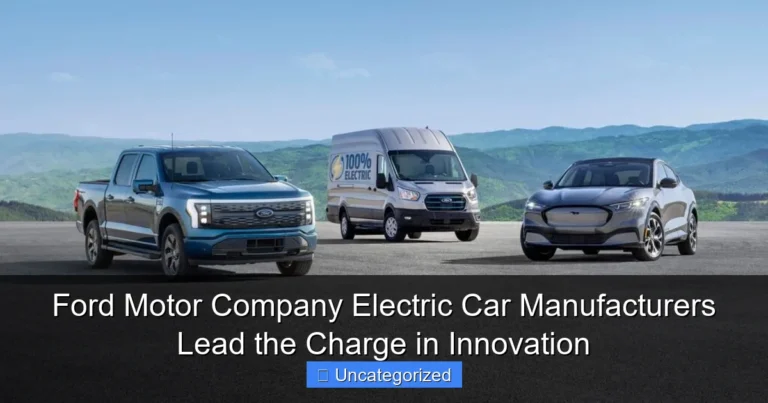
Ford Electric Cars and Trucks The Future of Driving

Featured image for ford electric cars and trucks
Image source: 2025ford.com
Ford electric cars and trucks are revolutionizing the automotive industry with cutting-edge technology, impressive range, and rugged performance. From the best-selling F-150 Lightning to the sleek Mustang Mach-E, Ford delivers innovative, eco-friendly vehicles without compromising power or practicality. These EVs mark a bold step toward a sustainable future, proving that American engineering can lead the electric revolution.
Key Takeaways
- Ford’s EV lineup includes the F-150 Lightning and Mustang Mach-E, blending power with sustainability.
- Invest in charging infrastructure at home for seamless Ford electric truck and car ownership.
- Federal tax credits can significantly reduce the cost of qualifying Ford electric models.
- Long-range options like the F-150 Lightning offer over 300 miles per charge.
- Advanced tech features include Pro Power Onboard and FordPass app integration for smarter driving.
- Fleet electrification is simplified with Ford’s E-Transit van, ideal for business needs.
📑 Table of Contents
- The Dawn of a New Era: Ford’s Electric Revolution
- Why Ford is Betting Big on Electric Vehicles
- Ford’s Electric Lineup: Current Models and What They Offer
- Charging Infrastructure: How Ford is Solving the Range Anxiety Problem
- What’s Next for Ford Electric Cars and Trucks?
- The Environmental and Economic Impact of Ford’s EVs
- Conclusion: Ford is Driving the Future
The Dawn of a New Era: Ford’s Electric Revolution
The automotive industry is undergoing a seismic shift, and at the forefront of this transformation is Ford, an American icon that’s redefining its legacy with a bold commitment to electrification. For over a century, Ford has been synonymous with innovation—from the Model T to the F-Series trucks—and now, the company is channeling that same pioneering spirit into the electric vehicle (EV) revolution. With climate change concerns, government regulations, and consumer demand driving the transition to sustainable transportation, Ford is not just adapting to the future; it’s actively shaping it.
Ford’s electric lineup, including the Mustang Mach-E, F-150 Lightning, and the upcoming E-Transit, represents more than just a new powertrain—it’s a reimagining of mobility. These vehicles combine Ford’s renowned durability and performance with cutting-edge battery technology, smart connectivity, and eco-friendly manufacturing. Whether you’re a city commuter, a weekend adventurer, or a fleet manager, Ford’s electric cars and trucks offer something for everyone. This blog post dives deep into Ford’s EV strategy, explores its current and future models, and examines how these vehicles are setting the standard for the future of driving.
Why Ford is Betting Big on Electric Vehicles
Ford’s aggressive pivot to electric vehicles isn’t just a trend-following move; it’s a strategic response to a rapidly evolving market. The company has committed over $50 billion through 2026 to develop EVs, charging infrastructure, and battery technology—a clear signal that Ford is all-in on electrification. But what’s driving this monumental shift?

Visual guide about ford electric cars and trucks
Image source: topelectricsuv.com
Meeting Global Sustainability Goals
With governments worldwide setting ambitious carbon neutrality targets, automakers face increasing pressure to reduce emissions. Ford has pledged to achieve carbon neutrality by 2050, with interim goals to cut CO2 emissions from its vehicles and operations by 50% by 2035. Electric vehicles are central to this plan, as they produce zero tailpipe emissions and can be powered by renewable energy sources. For example, the F-150 Lightning’s ability to serve as a home backup power source during outages (via its 9.6 kW Pro Power Onboard) reduces reliance on fossil-fuel generators.
Consumer Demand and Market Competition
Consumers are increasingly prioritizing sustainability, and EVs now account for nearly 10% of new car sales in the U.S. Ford’s rivals, including Tesla, GM, and Rivian, are already capturing this demand. By offering EVs that match their ICE (internal combustion engine) counterparts in performance, range, and utility, Ford aims to retain its loyal customer base while attracting new buyers. The Mustang Mach-E, for instance, has outsold the gas-powered Mustang in some months, proving that electric performance can win over even traditional enthusiasts.
Cost Savings and Incentives
EVs offer lower operating costs due to fewer moving parts, reduced maintenance (no oil changes, spark plugs, or exhaust systems), and cheaper “fuel” (electricity vs. gasoline). Federal and state incentives, such as the $7,500 federal tax credit and additional rebates in states like California and New York, make Ford’s EVs even more affordable. For fleet operators, the E-Transit van promises significant savings on fuel and maintenance, with Ford estimating a 40% lower cost of ownership compared to diesel models.
Ford’s Electric Lineup: Current Models and What They Offer
Ford’s EV portfolio is designed to cater to diverse needs, from sporty crossovers to work-ready trucks. Here’s a detailed look at the current lineup, highlighting their standout features and ideal use cases.
Mustang Mach-E: The Electric Pony
The Mustang Mach-E (starting at $42,895) is Ford’s answer to Tesla’s Model Y and the Volkswagen ID.4. This all-electric SUV blends the Mustang’s performance heritage with modern tech:
- Performance: The Mach-E GT (480 hp, 634 lb-ft torque) accelerates 0-60 mph in 3.5 seconds, rivaling sports cars.
- Range: Up to 314 miles (Extended Range RWD) on a single charge.
- Tech: 15.5-inch touchscreen with SYNC 4A, wireless Apple CarPlay/Android Auto, and Ford’s BlueCruise hands-free highway driving system.
- Utility: 59.7 cu ft of cargo space (with rear seats folded) and a front trunk (“frunk”) for additional storage.
Tip: Opt for the California Route 1 Edition for the best range-to-price ratio, or the GT if you crave track-ready thrills.
F-150 Lightning: The Electric Workhorse
The F-150 Lightning (starting at $49,995) is the first all-electric version of America’s best-selling truck. It retains the F-150’s ruggedness while adding EV-specific innovations:
- Power: Dual motors (580 hp, 775 lb-ft torque) with 0-60 mph in 4.5 seconds (XLT and Lariat trims).
- Range: 240 miles (Standard Range) or 320 miles (Extended Range).
- Pro Power Onboard: 9.6 kW of exportable power—enough to run a job site or power a home for 3-10 days during outages.
- Towing: Up to 10,000 lbs (Extended Range), matching gas-powered F-150s.
<
Practical Example: A contractor can charge the Lightning overnight using a Level 2 charger, then use its 110V/240V outlets to run power tools all day without noise or emissions.
E-Transit: The Electric Work Van
The E-Transit (starting at $47,185) is Ford’s electric van for commercial fleets. Key features include:
- Range: 126 miles (ideal for urban deliveries).
- Cargo Capacity: Up to 487.3 cu ft, with a 3,800-lb payload.
- Charging: DC fast charging adds 45 miles in 15 minutes.
- Connectivity: Ford Telematics for route optimization and battery management.
Tip: Pair the E-Transit with Ford’s Pro Power Onboard option (2.4 kW) to power refrigerated compartments or liftgates.
Charging Infrastructure: How Ford is Solving the Range Anxiety Problem
One of the biggest barriers to EV adoption is “range anxiety”—the fear of running out of charge. Ford is addressing this with a multi-pronged approach to charging infrastructure and convenience.
FordPass Charging Network
Ford has partnered with charging providers to offer access to over 19,500 charging stations across North America via the FordPass app. This includes:
- BlueOval Charge Network: 70,000+ public chargers (including Electrify America, EVgo, and ChargePoint), with 1,200+ DC fast chargers.
- Home Charging: Ford’s Connected Charge Station ($799) provides Level 2 (240V) charging, adding up to 20 miles of range per hour.
- On-the-Go Charging: Ford EVs support DC fast charging, adding 54-61 miles in 10 minutes (Mach-E) or 54 miles in 15 minutes (Lightning).
Smart Charging Solutions
Ford’s EVs come with tools to optimize charging:
- Plug & Charge: Automatically authenticates and bills charging sessions at participating stations (no app needed).
- Scheduled Charging: Charge during off-peak hours to save on electricity costs.
- Route Planning: The navigation system preconditions the battery for fast charging and suggests optimal stops.
Practical Tip: Use the FordPass app to locate chargers, check availability, and monitor charging progress remotely. For road trips, plan routes with PlugShare or A Better Routeplanner (ABRP) to ensure seamless charging.
Vehicle-to-Grid (V2G) and Vehicle-to-Home (V2H) Technology
The F-150 Lightning’s Intelligent Backup Power system can power a home for up to 10 days during outages (with a 131 kWh Extended Range battery). Ford is also testing V2G tech, where EVs feed power back into the grid during peak demand, potentially earning owners credits. This transforms EVs from passive consumers to active participants in the energy ecosystem.
What’s Next for Ford Electric Cars and Trucks?
Ford’s current EVs are just the beginning. The company has unveiled a roadmap for 20+ new EVs by 2025, including trucks, SUVs, and commercial vehicles. Here’s a glimpse of what’s coming:
Next-Gen Electric Trucks
Ford is developing a next-generation F-Series EV platform (codenamed “Project T3”) with:
- 300+ mile range on a single charge.
- 14,000-lb towing capacity (surpassing the Lightning).
- Over-the-air (OTA) updates for continuous performance improvements.
The platform will also support autonomous driving features, building on Ford’s partnership with Argo AI (now integrated into Ford’s in-house autonomy team).
Electric SUVs and Crossovers
Ford plans to launch an electric Explorer and electric Expedition by 2025. These will target families and adventurers with:
- 300-400 mile ranges (using next-gen batteries).
- Advanced off-road capabilities (e.g., “G.O.A.T. Modes” for mud, sand, and rock).
- Spacious interiors with modular seating and storage.
Battery and Manufacturing Innovations
Ford is investing in lithium iron phosphate (LFP) batteries for entry-level EVs, reducing reliance on cobalt and nickel. It’s also building three new battery plants in the U.S. (with SK On) to produce 129 GWh annually by 2025. This will lower costs and shorten supply chains, making EVs more accessible.
The Environmental and Economic Impact of Ford’s EVs
Ford’s electric vehicles aren’t just changing how we drive—they’re reshaping industries and communities.
Reducing Carbon Footprint
According to Ford’s 2022 Sustainability Report, EVs reduce CO2 emissions by 60-70% over their lifetime compared to gas-powered vehicles (even when accounting for battery production). For example, driving an F-150 Lightning for 15,000 miles/year saves 6.5 metric tons of CO2 annually.
Job Creation and Local Economies
Ford’s EV investments are creating thousands of jobs. The BlueOval City complex in Tennessee (a $5.6 billion investment) will produce 500,000 EVs annually and employ 6,000 workers. Similarly, the Rouge Electric Vehicle Center in Michigan has created 300+ jobs for Lightning production.
Data Table: Ford EV Impact (2022-2025)
| Metric | 2022 | 2023 | 2025 (Projected) |
|---|---|---|---|
| EV Sales (Units) | 61,575 | 100,000+ | 500,000+ |
| CO2 Reduction (Metric Tons) | 1.2M | 2M | 10M |
| Charging Stations (Public) | 15,000 | 19,500 | 50,000+ |
| U.S. EV Jobs Created | 2,000 | 4,000 | 15,000+ |
Challenges and Opportunities
While Ford’s EV push is promising, challenges remain:
- Battery Supply: Sourcing raw materials (lithium, cobalt) sustainably.
- Grid Strain: Managing increased electricity demand from EVs.
- Consumer Education: Overcoming myths about EV performance and charging.
However, Ford’s partnerships with utilities, governments, and tech companies position it to turn these challenges into opportunities.
Conclusion: Ford is Driving the Future
Ford’s electric cars and trucks represent a paradigm shift in the automotive world. By combining its century-old legacy of innovation with a forward-thinking EV strategy, Ford is proving that the future of driving isn’t just electric—it’s exhilarating, practical, and sustainable. From the Mustang Mach-E’s sporty agility to the F-150 Lightning’s workhorse versatility, these vehicles cater to every lifestyle and need.
As Ford expands its charging network, refines its battery tech, and rolls out new models, one thing is clear: the company isn’t just keeping pace with the EV revolution—it’s leading it. Whether you’re a first-time EV buyer or a long-time Ford fan, the message is the same: the future of driving is here, and it’s electric. With Ford at the wheel, that future looks brighter than ever.
Frequently Asked Questions
What Ford electric cars and trucks are available in 2024?
Ford’s 2024 electric lineup includes the F-150 Lightning pickup, Mustang Mach-E SUV, and E-Transit van. These vehicles offer ranges from 240 to over 300 miles, catering to diverse needs from work to adventure. The F-150 Lightning also features innovative tech like Pro Power Onboard for job sites.
How does the Ford F-150 Lightning compare to gas-powered trucks?
The Ford F-150 Lightning delivers instant torque, faster acceleration, and lower maintenance costs than gas models, while offering comparable towing (up to 10,000 lbs) and payload capacity. It also includes smart features like over-the-air updates and bidirectional charging for home power backup.
Are Ford electric vehicles eligible for tax credits?
Yes, many Ford electric cars and trucks, including the Mustang Mach-E and F-150 Lightning, qualify for federal tax credits up to $7,500, depending on battery sourcing and income limits. Check the IRS guidelines for the latest eligibility requirements.
What is the charging time for Ford electric trucks?
With a DC fast charger, the F-150 Lightning can recharge 15–80% in about 41 minutes. Using a 240V home charger, it takes roughly 8–10 hours for a full charge, depending on battery size and charger capacity.
How long do Ford electric car batteries last?
Ford electric car batteries are designed to last 8–10 years or 100,000 miles, with warranties covering 8 years/100,000 miles for defects and capacity loss below 70%. Proper charging habits can extend battery lifespan significantly.
Can I take a Ford electric truck on long trips?
Absolutely! The F-150 Lightning offers over 300 miles of range, and Ford’s BlueOval Charge Network provides access to 84,000+ chargers nationwide. Route-planning apps like FordPass help locate charging stations along your journey.