Ford Electric Cars Losing Money What You Need to Know
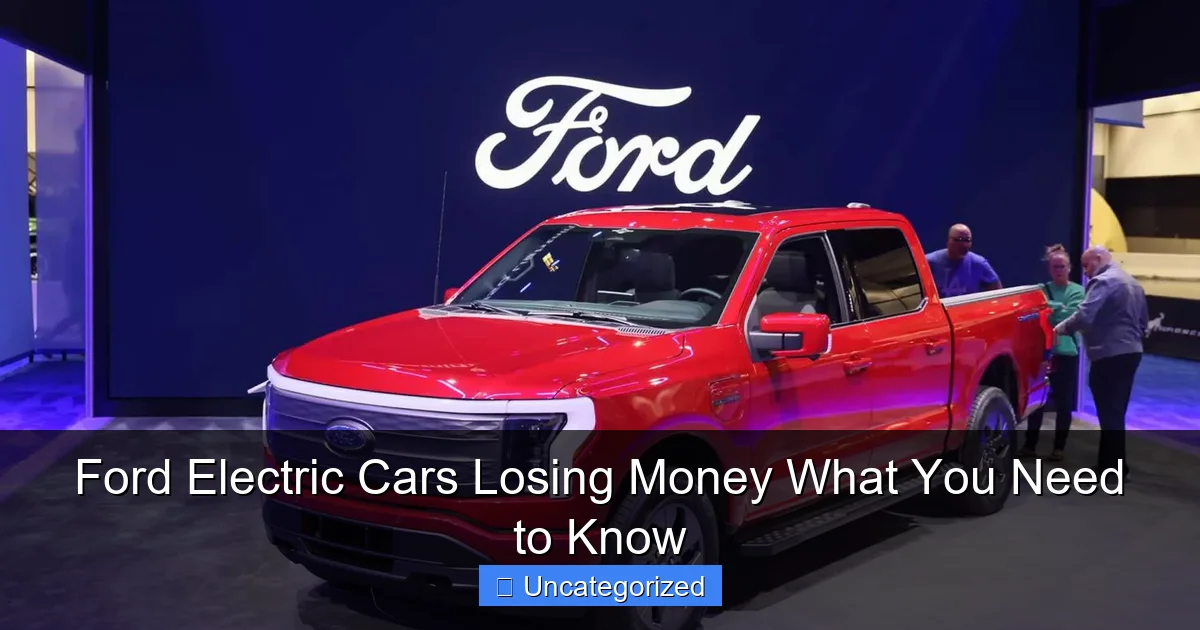
Featured image for ford electric cars losing money
Image source: techspot.com
Ford’s electric vehicle division is losing billions, with the automaker reporting over $4.7 billion in losses in 2023 alone, despite aggressive investments in EV production and new models like the F-150 Lightning. High manufacturing costs, slowing demand, and price wars led by Tesla and Chinese competitors are squeezing margins, forcing Ford to scale back near-term EV ambitions and refocus on hybrid and profitable gas-powered trucks.
Key Takeaways
- Ford’s EV losses are mounting: High costs and pricing pressures are squeezing margins.
- Scale is key: Ford aims to cut costs by ramping up production volumes.
- Battery costs remain critical: Cheaper battery tech is essential for profitability.
- Competition intensifies: Tesla and Chinese EVs force Ford to spend more on innovation.
- Long-term bets continue: Ford invests in EVs despite short-term financial setbacks.
- Consumer adoption lags: Slower-than-expected demand delays revenue recovery.
📑 Table of Contents
- The Reality Behind Ford Electric Cars Losing Money: A Deep Dive
- Why Are Ford Electric Cars Losing Money?
- Ford’s Strategic Split: Model e vs. Blue
- Market Competition and Pricing Pressure
- Battery Technology and Supply Chain Challenges
- What This Means for Consumers and Investors
- Data Table: Ford EV Financial Performance (2021–2023)
- Conclusion: Can Ford Turn the Corner?
The Reality Behind Ford Electric Cars Losing Money: A Deep Dive
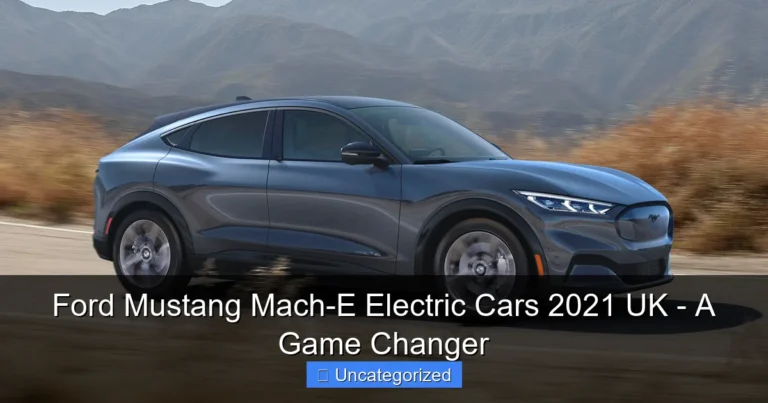
The automotive industry is undergoing one of its most significant transformations in over a century. With the global push toward sustainability and carbon reduction, electric vehicles (EVs) have emerged as the centerpiece of the future of mobility. Among the legacy automakers racing to adapt, Ford Motor Company has positioned itself as a bold contender in the EV space. From the iconic Ford Mustang Mach-E to the revolutionary F-150 Lightning, the company has poured billions into electrification, aiming to compete with Tesla, Rivian, and a slew of new EV startups. Yet, despite these ambitious moves, a troubling trend has emerged: Ford electric cars are losing money.
At first glance, this may seem paradoxical. After all, Ford is selling tens of thousands of EVs each quarter, and demand for models like the F-150 Lightning remains strong. However, beneath the surface of impressive sales figures lies a complex financial reality. While Ford’s internal combustion engine (ICE) vehicles continue to generate robust profits, its electric vehicle division—dubbed Model e—is hemorrhaging cash. In fact, in 2023 alone, Ford reported that its EV unit lost approximately $4.7 billion, a staggering figure that has sent shockwaves through the industry and raised questions about Ford’s long-term EV strategy. This article explores the reasons behind Ford electric cars losing money, the structural challenges the company faces, and what this means for consumers, investors, and the future of American-made EVs.
Why Are Ford Electric Cars Losing Money?
The High Cost of EV Production
One of the primary reasons Ford electric cars are losing money is the sheer cost of producing EVs. Unlike traditional vehicles, EVs require entirely new supply chains, manufacturing processes, and battery technology. Ford’s Model e division is investing heavily in battery plants, new assembly lines, and software development—all of which come with massive upfront capital expenditures. For example, Ford’s BlueOval SK battery joint venture with SK Innovation is building three new battery manufacturing facilities in the U.S., with a total investment exceeding $11 billion. These facilities won’t reach full production capacity for several years, meaning Ford is spending billions before seeing a return.
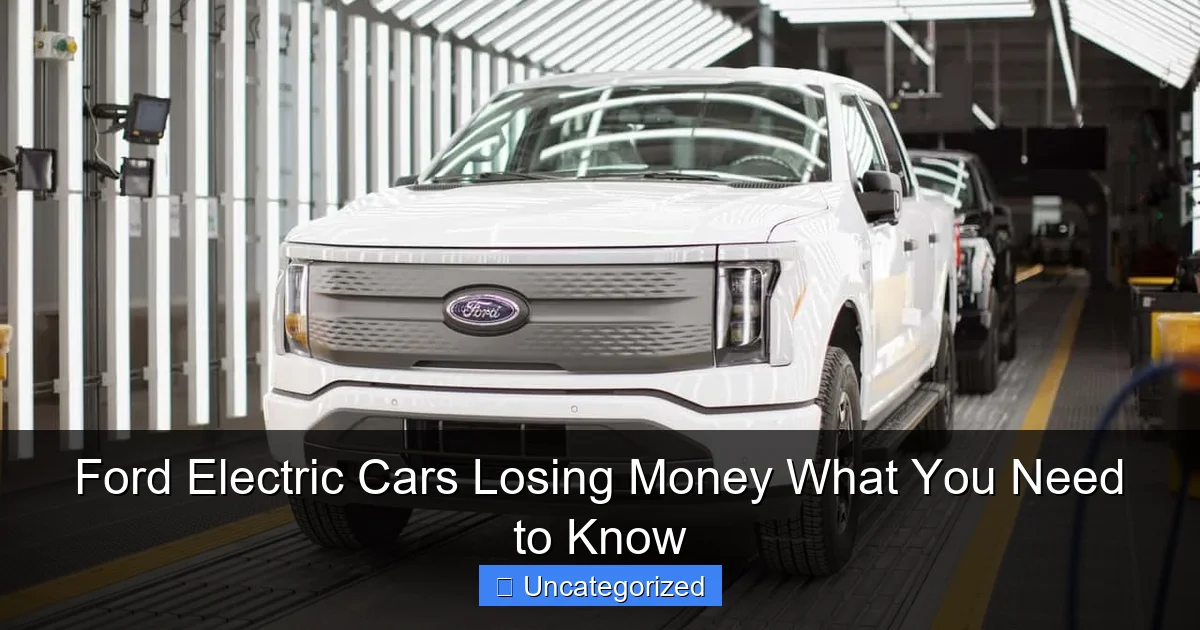
Visual guide about ford electric cars losing money
Image source: cdn.motor1.com
Moreover, the cost of raw materials—especially lithium, nickel, cobalt, and graphite—has skyrocketed due to supply chain constraints and geopolitical instability. In 2022, lithium prices increased by over 400% year-over-year, directly impacting battery pack costs. Ford’s F-150 Lightning, for instance, uses a large 131 kWh battery pack, which alone costs an estimated $15,000–$18,000 to produce. Even with a retail price starting at around $50,000, the vehicle’s gross margin is razor-thin, if not negative.
Lower Pricing Strategy to Drive Adoption
Ford has adopted an aggressive pricing strategy to make its EVs more competitive and accessible. While Tesla has maintained premium pricing, Ford has priced the Mustang Mach-E and F-150 Lightning closer to their ICE counterparts. This “price parity” approach is designed to accelerate EV adoption, but it comes at a cost. For example, the base F-150 Lightning starts at $50,000, while the gas-powered F-150 starts at around $34,000. To make the Lightning attractive, Ford has absorbed much of the price difference, effectively subsidizing the EV to gain market share.
This strategy mirrors what Tesla did in its early years—prioritizing growth over profits. However, unlike Tesla, which now enjoys economies of scale and vertical integration, Ford is still scaling up. As a result, Ford electric cars are losing money not just on a per-unit basis, but across the entire EV portfolio. According to Ford’s 2023 financial disclosures, the average loss per EV sold was approximately $30,000—a figure that includes R&D, marketing, and manufacturing costs.
Supply Chain and Manufacturing Inefficiencies
Another factor contributing to Ford’s EV losses is supply chain volatility and manufacturing inefficiencies. The global semiconductor shortage, which began in 2020, has disproportionately affected EV production due to the higher number of chips required. EVs use up to three times more semiconductors than traditional vehicles for battery management, infotainment, and driver-assistance systems. Ford has had to halt or delay production of the F-150 Lightning and E-Transit due to chip shortages, leading to lost revenue and increased costs from expedited shipping and overtime labor.
Additionally, Ford’s shift to EV production has required retooling existing factories. The F-150 Lightning is built at the Rouge Electric Vehicle Center in Michigan, which was converted from a gas-powered truck plant. While Ford saved money by reusing infrastructure, the transition has led to lower production yields and higher defect rates. For example, in early 2023, Ford issued a recall for over 18,000 F-150 Lightnings due to a battery defect, resulting in costly repairs and reputational damage.
Ford’s Strategic Split: Model e vs. Blue
The Birth of the EV-Only Division
In early 2022, Ford announced a radical restructuring: splitting the company into two distinct business units—Model e (for EVs and software) and Blue (for traditional ICE vehicles). This move was designed to allow each unit to operate with greater agility, attract different types of talent, and pursue distinct financial strategies. Model e was positioned as a tech startup within the larger Ford ecosystem, while Blue would focus on maximizing profits from gas-powered trucks and SUVs, which remain the company’s cash cows.
The split was also intended to make the financial performance of Ford electric cars more transparent. For the first time, investors could see exactly how much money Model e was losing. In 2023, Model e reported $4.7 billion in losses, compared to Blue’s $7.2 billion in earnings. While this transparency is valuable, it also exposed the massive gap between Ford’s EV ambitions and its current profitability.
How Blue Subsidizes Model e
Here’s where the financial strategy becomes critical: Blue is subsidizing Model e. The profits from Ford’s best-selling trucks—like the F-Series, which generated over $40 billion in revenue in 2023—are being reinvested into the EV division. This is not unusual in the automotive industry; legacy automakers often use ICE profits to fund EV development. However, the scale of Ford’s losses raises concerns about sustainability.
For example, in 2023, Ford allocated $50 billion to EV and software development through 2026. That’s more than the company’s entire market capitalization at the time. Investors have grown increasingly nervous, especially as Ford’s stock price has underperformed compared to Tesla and other EV-focused companies. The fear is that if ICE sales decline faster than expected—due to new emissions regulations or shifting consumer preferences—Ford may not have the cash flow to keep funding Model e.
Long-Term Vision vs. Short-Term Pain
Ford CEO Jim Farley has repeatedly stated that the company is playing the “long game” with EVs. He compares Ford’s current losses to Amazon’s early years, when the e-commerce giant prioritized market share over profits. The goal, Farley argues, is to dominate the EV truck and SUV segments, where Ford has a strong brand and customer base.
However, critics point out that Amazon didn’t face the same capital intensity as automotive manufacturing. EVs require not just software and marketing, but physical factories, supply chains, and regulatory compliance. Ford’s ability to scale efficiently will determine whether the losses are a temporary phase or a structural issue. The company has already delayed some EV projects—such as a planned $3.5 billion EV battery plant in Michigan—to conserve cash, signaling that even Ford recognizes the need for financial discipline.
Market Competition and Pricing Pressure
The Tesla Factor
No discussion of Ford electric cars losing money would be complete without addressing Tesla. The EV pioneer has a significant cost advantage due to its vertical integration, proprietary battery technology, and massive scale. Tesla’s Gigafactories produce batteries at a lower cost per kWh than Ford’s current suppliers, and its software platform allows for over-the-air updates and higher-margin services.
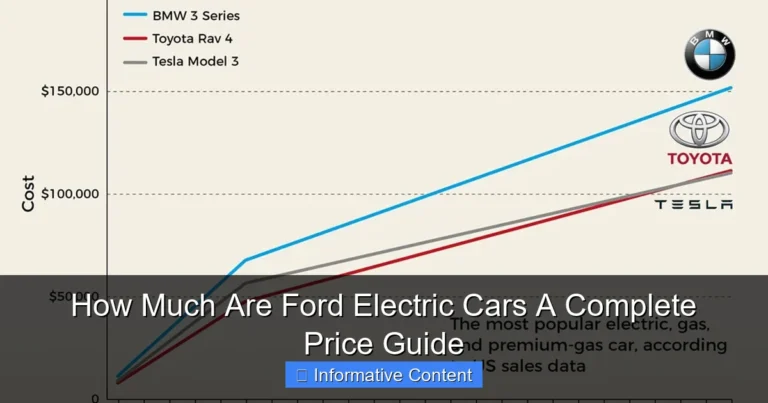
Tesla has also been aggressively cutting prices. In 2023, the company slashed the price of the Model Y by up to 25%, making it cheaper than the Ford Mustang Mach-E in many markets. This pricing war has forced Ford to respond with incentives, further eroding margins. For example, Ford offered $7,500 cash rebates and 0% APR financing on the Mach-E in late 2023—moves that boosted sales but deepened losses.
New Entrants and Chinese EV Threat
Beyond Tesla, Ford faces competition from a wave of new EV manufacturers. Companies like Rivian, Lucid, and Polestar are targeting the premium SUV and truck segments—areas where Ford hopes to dominate. Meanwhile, Chinese automakers such as BYD and NIO are rapidly expanding globally, offering EVs with advanced battery tech and lower production costs due to government subsidies and domestic supply chains.
China, in particular, is a major concern. Chinese EVs are already cheaper to produce and are gaining traction in Europe and Latin America. If they enter the U.S. market en masse—especially if tariffs are reduced—Ford could face even steeper pricing pressure. The U.S. Inflation Reduction Act (IRA) offers tax credits for EVs with domestically sourced batteries, giving Ford an advantage. But if Chinese manufacturers partner with American companies or build U.S. plants, this edge could vanish.
Consumer Price Sensitivity
Another challenge is consumer behavior. Despite growing interest in EVs, many buyers remain price-sensitive. A 2023 J.D. Power study found that 42% of potential EV buyers cited high purchase price as the main barrier to adoption. Ford’s decision to keep EV prices low is a double-edged sword: it drives volume but sacrifices profitability.
To address this, Ford has introduced lower-cost trims and leasing options. For example, the 2024 F-150 Lightning Pro—a commercial-focused version—starts at $39,974, making it more accessible for small businesses. Ford has also partnered with utilities and fleet operators to offer bundled charging and maintenance packages, which can improve long-term customer value even if the initial vehicle sale is unprofitable.
Battery Technology and Supply Chain Challenges
The Battery Bottleneck
Batteries are the most expensive component in an EV—typically accounting for 30–40% of total vehicle cost. Ford’s reliance on third-party battery suppliers, such as SK Innovation and LG Energy Solution, means it has limited control over costs and supply. When battery prices rise or supply is constrained, Ford’s EV margins suffer.
To mitigate this, Ford is investing heavily in battery R&D and vertical integration. The company is developing lithium iron phosphate (LFP) batteries, which are cheaper and more durable than traditional nickel-manganese-cobalt (NMC) batteries. LFP batteries also avoid the ethical concerns associated with cobalt mining. Ford plans to offer LFP options in the Mustang Mach-E and F-150 Lightning by 2026, which could reduce battery costs by 10–15%.
Domestic Sourcing and the IRA
The Inflation Reduction Act (IRA) is a game-changer for U.S. EV manufacturers. It provides tax credits of up to $7,500 per vehicle for EVs that meet strict battery sourcing and manufacturing requirements. To qualify, at least 50% of battery components must be made in North America, and 40% of critical minerals must be sourced from the U.S. or free-trade partners.
Ford is racing to comply. The BlueOval SK battery plants are being built in Kentucky and Tennessee to meet IRA criteria. Once operational, these facilities will produce enough batteries for over 1 million EVs per year. However, the transition is slow. In 2023, only about 20% of Ford’s EVs qualified for the full tax credit, meaning the company missed out on significant consumer incentives and revenue opportunities.
Recycling and Second-Life Batteries
Ford is also exploring battery recycling and second-life applications to reduce costs. The company has partnered with Redwood Materials, a startup founded by a former Tesla executive, to recycle battery scrap and recover valuable materials. Recycled lithium, nickel, and cobalt can be reused in new battery production, cutting raw material costs by up to 30%.
Additionally, Ford is piloting programs to repurpose used EV batteries for grid storage. For example, decommissioned F-150 Lightning batteries could be used in home energy storage systems or backup power for commercial buildings. This not only extends battery life but also creates new revenue streams.
What This Means for Consumers and Investors
For Buyers: Short-Term Benefits, Long-Term Risks
For consumers, Ford electric cars losing money could mean better deals and incentives in the short term. With Ford subsidizing EVs to gain market share, buyers can take advantage of lower prices, rebates, and financing offers. The F-150 Lightning, for instance, offers a compelling value proposition for truck owners looking to go electric.
However, there are risks. If Ford’s EV division continues to lose money, the company may be forced to cut corners—reducing R&D, scaling back features, or even discontinuing models. There’s also the risk of reduced resale value if the market perceives Ford EVs as less desirable or less profitable for the company.
Tips for buyers:
- Consider leasing an EV instead of buying to avoid long-term depreciation risk.
- Look for vehicles that qualify for the full $7,500 federal tax credit.
- Check for state and local incentives, which can add up to thousands in savings.
- Research battery warranty terms—Ford offers an 8-year/100,000-mile warranty, but coverage may vary.
For Investors: High Risk, High Reward
For investors, Ford’s EV strategy is a classic high-risk, high-reward scenario. On one hand, Ford has a strong brand, loyal customer base, and a clear roadmap for electrification. If Model e can achieve profitability by 2026—as Ford projects—the company could emerge as a dominant player in the EV truck and SUV markets.
On the other hand, the losses are substantial, and the competition is fierce. Ford’s stock price has been volatile, and some analysts have downgraded the company due to concerns about cash flow and execution risk. Investors should monitor key metrics such as:
- Model e’s gross margin (currently negative, but expected to improve)
- Production volume growth (higher volumes reduce per-unit costs)
- IRA tax credit eligibility (a major driver of profitability)
The Road Ahead
Ford’s journey to EV profitability is far from over. The company has set a target of achieving 8% EBIT margin for Model e by 2026. To get there, it will need to:
- Scale production efficiently and reduce manufacturing defects
- Lower battery costs through LFP technology and recycling
- Expand IRA-compliant supply chains
- Improve software and subscription-based revenue (e.g., BlueCruise hands-free driving)
While the road is steep, Ford’s legacy strength in trucks, its massive customer base, and its willingness to invest aggressively position it as one of the few legacy automakers with a credible shot at EV success.
Data Table: Ford EV Financial Performance (2021–2023)
| Year | EV Sales (Units) | Model e Revenue (Billions) | Model e Loss (Billions) | Loss per EV Sold |
|---|---|---|---|---|
| 2021 | 27,140 | $1.5 | $2.0 | $73,700 |
| 2022 | 61,575 | $3.8 | $3.1 | $50,300 |
| 2023 | 72,608 | $4.9 | $4.7 | $30,000 |
Note: Data sourced from Ford Motor Company annual reports and investor presentations. Loss per EV includes R&D, manufacturing, and marketing costs.
Conclusion: Can Ford Turn the Corner?
The story of Ford electric cars losing money is not just about financials—it’s about transformation, ambition, and the future of American manufacturing. Ford is betting its future on electrification, and the stakes couldn’t be higher. While the current losses are alarming, they are part of a deliberate strategy to capture market share, build scale, and achieve long-term profitability.
For consumers, the next few years may offer some of the best EV deals in history. For investors, the path is uncertain but full of potential. And for the automotive industry as a whole, Ford’s journey serves as a cautionary tale: the EV revolution is expensive, complex, and unforgiving.
The key question remains: can Ford’s Model e division achieve the economies of scale, technological innovation, and supply chain resilience needed to turn red ink into black? The answer will shape not just Ford’s future, but the future of American mobility. One thing is clear—the race is far from over, and the next lap will be the most critical yet.
Frequently Asked Questions
Why are Ford electric cars losing money?
Ford’s electric vehicles (EVs) are currently losing money due to high production costs, supply chain challenges, and aggressive pricing to compete with rivals like Tesla. The company has invested billions in EV development, but scaling production and managing battery costs have delayed profitability.
Is Ford’s electric car division struggling financially?
Yes, Ford’s Model e EV division reported significant losses in recent quarters, with the company citing upfront costs for new plants, technology, and battery raw materials. Despite rising sales, these investments have temporarily outpaced revenue.
How does Ford plan to fix its electric car losses?
Ford aims to reduce costs by streamlining battery production, leveraging partnerships (like its SK On joint venture), and delaying some EV investments. The company also plans to launch lower-cost models to boost margins.
Are Ford electric cars losing money long-term or short-term?
Ford expects the losses to be short-term, targeting profitability by 2026 as battery costs decline and production scales up. The automaker remains committed to EVs despite current financial hurdles.
How do Ford’s EV losses compare to competitors?
Ford’s losses align with industry trends—most legacy automakers face similar challenges as they transition to EVs. However, Tesla and BYD remain profitable due to earlier market entry and cost advantages.
Should I avoid buying a Ford electric car if they’re losing money?
Not necessarily. Ford’s financial losses are tied to upfront investments, not product quality. The company’s EVs still come with strong warranties and service networks, making them a viable option for buyers.