Ford Electric Cars The Future of EcoFriendly Driving
Featured image for ford electric cars
Ford electric cars are redefining sustainable mobility with cutting-edge technology, impressive range, and bold designs that challenge traditional gas-powered vehicles. From the F-150 Lightning to the Mustang Mach-E, Ford’s EV lineup delivers thrilling performance while slashing emissions, making eco-friendly driving more accessible than ever. With expanding charging networks and innovative features like bidirectional charging, Ford is accelerating the shift toward a cleaner, smarter automotive future.
Key Takeaways
- Ford EVs lead innovation: Cutting-edge tech meets eco-friendly performance in every model.
- Long-range confidence: Most models exceed 300 miles per charge, ideal for daily and long trips.
- Fast-charging ready: Recharge up to 80% in under 45 minutes with DC fast charging.
- Built for all budgets: From the Mustang Mach-E to F-150 Lightning, options suit every driver.
- Sustainability inside out: Eco-conscious materials and zero tailpipe emissions drive real impact.
- Smart connectivity: FordPass app enables remote control, charging, and route planning effortlessly.
📑 Table of Contents
- The Dawn of a New Era: Ford’s Commitment to Sustainable Mobility
- Ford’s Electric Vehicle Lineup: Models That Redefine Expectations
- Charging Solutions and Infrastructure: Powering the Ford EV Revolution
- Ownership Experience: Total Cost of Ownership and Incentives
- Technology and Innovation: The Ford EV Advantage
- Sustainability Beyond the Tailpipe: Ford’s Holistic Approach
- Conclusion: Driving Toward a Sustainable Tomorrow
The Dawn of a New Era: Ford’s Commitment to Sustainable Mobility
In an age where climate change headlines dominate global discourse, the automotive industry stands at a pivotal crossroads. Among the legacy automakers leading the charge toward a sustainable future, Ford electric cars have emerged as a compelling force, merging American engineering heritage with cutting-edge green technology. From the iconic F-150 pickup to sleek crossovers, Ford’s electrified lineup isn’t just about replacing gasoline engines with batteries—it’s a comprehensive reimagining of mobility. With over 120 years of manufacturing expertise, the company has committed to investing $50 billion in electrification through 2026, aiming for 50% of global sales to be electric vehicles (EVs) by 2030. This isn’t a tentative step into the EV space; it’s a full-throttle transformation.
What sets Ford apart is its unique blend of practicality, performance, and purpose. Unlike some competitors that prioritize niche luxury EVs, Ford targets the heart of the market: working families, tradespeople, and adventure seekers. Whether you’re a contractor needing a rugged electric truck or a suburban parent seeking a spacious EV, Ford offers solutions that don’t require sacrificing utility for sustainability. The company’s “Built Ford Tough” ethos now extends beyond durability to include environmental responsibility, proving that eco-friendly driving can be both accessible and exhilarating.
Ford’s Electric Vehicle Lineup: Models That Redefine Expectations
The Mustang Mach-E: Where Performance Meets Sustainability
The Ford electric cars lineup kicks off with a bold statement: the Mustang Mach-E. This isn’t just another SUV with a battery pack—it’s a legitimate successor to the Mustang legacy, blending 480 horsepower (in GT trim) with 314 miles of EPA-estimated range. Unlike traditional Mustangs, the Mach-E features a spacious interior with 59.7 cubic feet of cargo space (with rear seats folded) and an innovative front trunk (“frunk”) that holds 4.7 cubic feet. The Mach-E GT Performance Edition can sprint from 0-60 mph in 3.5 seconds, outperforming many gas-powered sports cars while producing zero emissions.
Pro Tip: For urban dwellers, the Mach-E’s 150-kW DC fast charging capability adds 61 miles of range in just 10 minutes, making it ideal for quick top-ups during lunch breaks. Consider the California Route 1 edition if maximum range (314 miles) is your priority, while the Premium trim offers the best balance of features and value.
F-150 Lightning: Electrifying America’s Best-Selling Vehicle
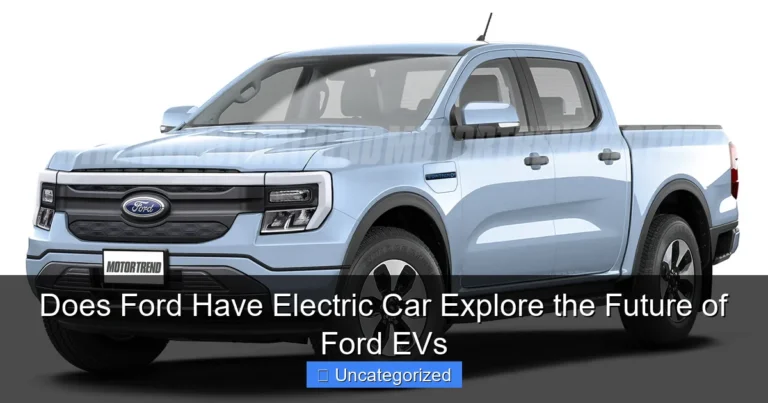
When Ford announced the F-150 Lightning, the industry took notice. This all-electric version of America’s top-selling vehicle retains the F-150’s legendary towing (up to 10,000 lbs) and payload (2,000 lbs) capabilities while introducing game-changing features. The Mega Power Frunk provides 14.1 cubic feet of lockable, drainable storage—perfect for tools, groceries, or camping gear. But the real innovation lies in its “Intelligent Backup Power” system: during outages, the Lightning can power a home for up to three days using its 131 kWh extended-range battery.
Real-World Example: A contractor in Texas reported using his Lightning’s Pro Power Onboard (9.6 kW) to run a full job site—including a table saw, air compressor, and portable lights—without needing a generator. The truck’s 320-mile range (Extended Range model) ensures all-day work capacity without range anxiety.
E-Transit: Revolutionizing Commercial Fleets
Ford’s E-Transit addresses a critical gap in the EV market: electric work vans. With 126 miles of range and 68 MPGe, it’s designed for urban delivery routes where most trips are under 75 miles. The van offers three roof heights, three body lengths, and multiple configurations (cargo, crew, cutaway), making it adaptable to diverse commercial needs. Key features include:
- Pro Power Onboard: 2.4 kW of exportable power (upgradable to 6.2 kW)
- Fleet Telematics: Real-time energy usage monitoring and route optimization
- Low Floor Height: 21.5 inches for easier loading/unloading
UPS has already ordered 10,000 E-Transit vans, demonstrating corporate confidence in Ford’s electrified commercial solutions.
Charging Solutions and Infrastructure: Powering the Ford EV Revolution
Home Charging Made Simple
Ford addresses the #1 concern of new EV buyers—charging—through its Ford Connected Charge Station and comprehensive home installation support. The 48-amp charger (11.5 kW) adds up to 30 miles of range per hour, fully replenishing most Ford EVs overnight. Ford partners with Qmerit for turnkey installations, including:
- Free site assessment and permit assistance
- 240-volt circuit installation (typically 50-amp)
- Smart charging features (schedule charging during off-peak hours)
Cost-Saving Tip: Many utility companies offer rebates for EV charger installation. For example, Southern California Edison provides up to $1,000 back, while Duke Energy offers $500—effectively making the $799 charger free after incentives.
BlueOval Charge Network: 100,000+ Charging Points
Ford’s BlueOval Charge Network aggregates access to over 100,000 charging points across North America, including 8,800+ DC fast chargers. Unlike proprietary networks (e.g., Tesla Superchargers), Ford owners can use multiple networks through a single app. Key benefits:
- Plug & Charge technology: Automatic billing when connected
- Predictive charging: Navigation system pre-conditions battery for optimal fast charging
- Priority access: 1,200+ Ford-branded DC fast chargers at dealerships
Example Route Planning: A 300-mile journey from Chicago to Indianapolis can be planned with three charging stops (15 minutes each) at Ford dealerships, maintaining an average speed of 65 mph with minimal downtime.
Workplace and Public Charging Partnerships
Ford collaborates with businesses to install workplace chargers through its Ford Pro Charging program. Companies receive:
- Customized charging solutions (L2 and DC fast)
- Energy management software
- Employee incentives (e.g., charging credits)
Additionally, Ford’s partnership with Electrify America provides 200 kWh of complimentary fast charging for new EV buyers—enough for about 700 miles of driving.
Ownership Experience: Total Cost of Ownership and Incentives
Breaking Down the Numbers: Ford EVs vs. Gas Vehicles
While Ford electric cars have higher upfront costs, their total ownership expenses are significantly lower. Consider this comparison between the 2023 F-150 Lightning (Extended Range) and F-150 Lariat 3.5L EcoBoost:
| Cost Factor | F-150 Lightning | F-150 Lariat |
|---|---|---|
| MSRP | $74,974 | $56,974 |
| Federal Tax Credit | $7,500 | $0 |
| Fuel (5 years/75,000 mi) | $4,875 | $15,600 |
| Maintenance (5 years) | $1,200 | $4,500 |
| Insurance (5 years) | $7,500 | $6,200 |
| Total 5-Year Cost | $81,049 | $83,274 |
Even before state/local incentives (e.g., California’s $2,000 rebate), the Lightning is cheaper over five years. EVs have 40% fewer moving parts, eliminating oil changes, spark plugs, and exhaust system repairs.
Available Incentives and How to Claim Them
Maximize savings with these Ford electric cars incentives:
- Federal Tax Credit: Up to $7,500 for qualified buyers (income limits apply). Use IRS Form 8936.
- State Rebates: Vary by location (e.g., Colorado: $5,000; Maryland: $3,000). Check your DMV website.
- Utility Discounts: Many providers offer reduced electricity rates for EV charging (e.g., PG&E’s EV-B plan saves $100+/year).
- HOA/Employer Perks: Some communities offer free charging or parking for EVs.
Pro Tip: Combine incentives! A California buyer could save $14,500 ($7,500 federal + $2,000 state + $5,000 local) on a Lightning purchase.
Technology and Innovation: The Ford EV Advantage
SYNC 4A Infotainment: A Digital Driving Hub
Ford’s SYNC 4A system is the brains behind its electric cars, featuring:
- 15.5-inch touchscreen with split-screen functionality
- Over-the-air (OTA) updates (no dealership visits for software improvements)
- Enhanced voice recognition with natural language processing
- Wireless Apple CarPlay/Android Auto
The system learns driver preferences—automatically adjusting climate control, seat position, and navigation based on time of day and calendar events. For example, it can preheat the cabin while charging in winter or suggest charging stops when battery levels drop below 30%.
Ford Power-Up and BlueCruise: The Future of Connectivity
Ford Power-Up delivers OTA updates that add features post-purchase. Recent updates have introduced:
- Improved battery preconditioning for faster charging
- Enhanced driver-assist features
- New ambient lighting themes
Meanwhile, BlueCruise offers hands-free driving on over 130,000 miles of pre-mapped highways. Unlike Tesla’s Full Self-Driving (which requires constant supervision), BlueCruise uses driver-facing cameras to ensure attention—activating only when the driver is ready. In 2023, Ford added “Lane Change Assist,” enabling automatic lane changes with a turn signal tap.
Vehicle-to-Everything (V2X) Capabilities
Ford’s EVs lead in V2X technology:
- V2H (Vehicle-to-Home): F-150 Lightning powers homes during outages
- V2G (Vehicle-to-Grid): Pilot programs allow EVs to sell excess power back to utilities (e.g., Ford’s collaboration with PG&E)
- V2L (Vehicle-to-Load): E-Transit’s Pro Power Onboard runs job sites or campsites
Future Outlook: Ford plans to expand V2X to support renewable energy integration, turning EVs into mobile power banks that stabilize the grid.
Sustainability Beyond the Tailpipe: Ford’s Holistic Approach
Eco-Conscious Manufacturing
Ford’s commitment to sustainability extends beyond zero-emission vehicles. The F-150 Lightning is assembled at the Rouge Electric Vehicle Center, which features:
- 100% renewable energy (solar and wind)
- Water reuse systems (95% reduction in freshwater usage)
- Recycled materials (e.g., 10% recycled ocean plastics in interior components)
The Mustang Mach-E’s battery packs use 100% renewable energy during production, and Ford sources cobalt from mines with strict ethical labor standards.
Battery Innovation and Recycling
Ford’s BlueOval SK joint venture with SK On will build three battery plants in the U.S. by 2026, creating 129 GWh of annual capacity. Key initiatives:
- Recycling: 95% battery material recovery through Redwood Materials partnership
- Second Life: Used EV batteries become energy storage units for solar farms
- Solid-State Research: Next-gen batteries promise 500+ miles range and 10-minute charging
Environmental Impact: A Ford EV produces 60% fewer lifetime emissions than a comparable gas car, even when accounting for manufacturing and electricity generation.
Community and Ecosystem Impact
Ford’s “Green Deal” includes:
- Planting 300,000 trees in urban areas by 2025
- Supporting EV charging in underserved communities
- Partnering with NGOs for clean energy projects
The company’s “Ford+ Plan” integrates EVs into a broader sustainability ecosystem, including ride-sharing, last-mile delivery, and smart city infrastructure.
Conclusion: Driving Toward a Sustainable Tomorrow
Ford electric cars represent more than just a shift from gasoline to batteries—they embody a fundamental reimagining of transportation’s role in society. Through vehicles like the Mustang Mach-E, F-150 Lightning, and E-Transit, Ford proves that sustainability doesn’t require sacrificing performance, practicality, or affordability. With a comprehensive charging network, innovative V2X technology, and a holistic approach to manufacturing, Ford isn’t merely adapting to the EV revolution; it’s shaping it.
The data speaks volumes: Ford EVs offer lower total ownership costs, superior technology, and meaningful environmental benefits. Whether you’re a homeowner leveraging the Lightning’s home backup power, a business reducing fleet emissions with the E-Transit, or an enthusiast enjoying the Mach-E’s exhilarating acceleration, these vehicles make eco-friendly driving accessible to all. As Ford continues investing in battery innovation, charging infrastructure, and sustainable manufacturing, it’s clear that the future of driving isn’t just electric—it’s Ford. The road ahead is green, and with Ford leading the charge, it’s also rugged, reliable, and ready for anything.
Frequently Asked Questions
What are the most popular Ford electric cars available today?
The Ford Mustang Mach-E and Ford F-150 Lightning are the brand’s flagship Ford electric cars, offering impressive range, performance, and tech. Both models cater to different needs—SUV versatility and truck utility—making them top choices in the EV market.
How long does it take to charge a Ford electric car?
Charging times vary by model and charger type: a Level 2 (240V) home charger can fully recharge the Mustang Mach-E in 10–15 hours, while DC fast charging can reach 80% in 30–40 minutes. The F-150 Lightning supports similar speeds with its extended battery option.
What is the driving range of Ford electric cars?
Most Ford electric cars offer ranges between 230–320 miles per charge, depending on the model and configuration. The Mustang Mach-E Extended Range RWD, for example, delivers up to 320 miles, while the F-150 Lightning ranges from 240–320 miles based on battery size.
Do Ford electric cars qualify for federal tax credits?
Yes, many Ford EVs, including the F-150 Lightning and Mustang Mach-E, qualify for the U.S. federal tax credit of up to $7,500, subject to eligibility and battery sourcing requirements. Check the IRS guidelines or consult a tax professional for current details.
Can I use my Ford electric car to power my home?
With the F-150 Lightning’s Intelligent Backup Power feature, yes—it can power your home during outages using its 9.6 kW battery. This bi-directional charging capability makes Ford electric trucks a practical emergency power solution.
Where can I find Ford electric car charging stations?
Ford partners with the BlueOval™ Charge Network, giving drivers access to over 84,000 charging stations across North America, including Electrify America and other public networks. The FordPass app helps locate and navigate to available chargers in real time.