Ford Electric Mustang Drag Car Dominates the Strip
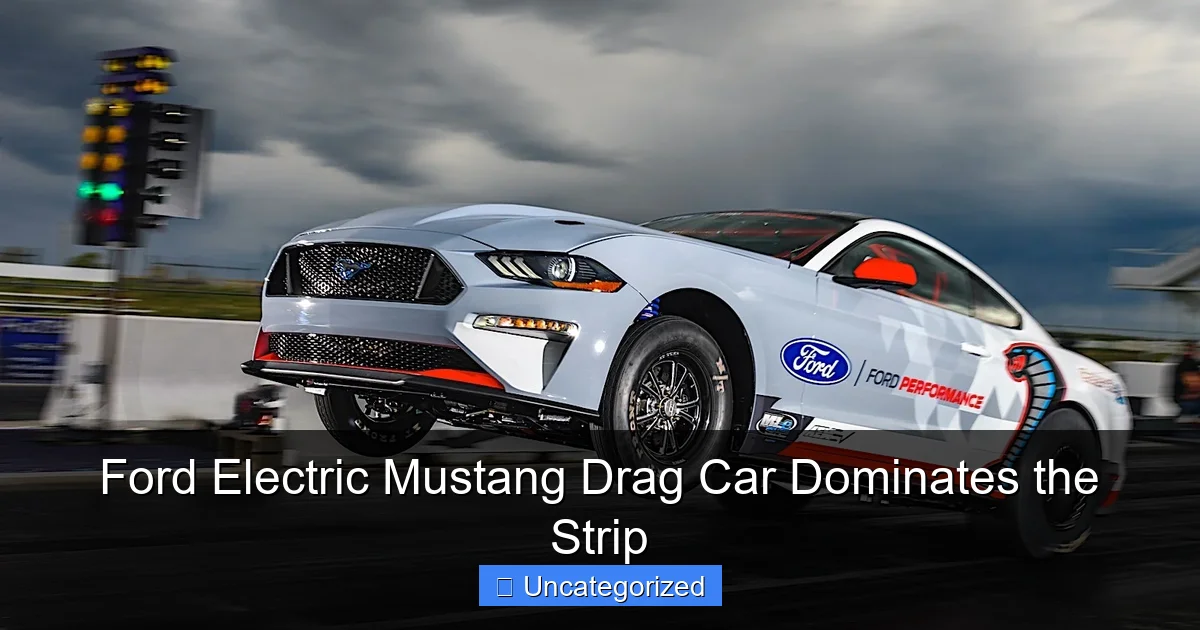
Featured image for ford electric mustang drag car
Image source: s1.cdn.autoevolution.com
The Ford Electric Mustang drag car is redefining performance on the strip, delivering blistering acceleration and unmatched torque straight off the line. With zero emissions and supercar-level speed, this electrified pony proves Ford’s commitment to innovation without sacrificing raw power.
Key Takeaways
- Instant torque delivery: Electric powertrain provides unmatched acceleration off the line.
- Custom drag tuning: Optimized for 1/4-mile performance with specialized software.
- Lightweight design: Strategic weight reduction enhances speed and handling precision.
- Regen braking advantage: Recaptures energy while improving launch control consistency.
- Aftermarket support: Growing ecosystem for electric drag racing upgrades and mods.
- Silent speed: No exhaust noise, but dominates with sheer performance.
📑 Table of Contents
- The Rise of the Ford Electric Mustang Drag Car: A New Era on the Strip
- Engineering the Future: How Ford Built an Electric Drag Monster
- Performance on the Strip: Record-Breaking Runs and Real-World Results
- Charging the Competition: Infrastructure and Logistics
- Environmental Impact and the Future of Green Drag Racing
- How to Get Involved: Building or Buying an Electric Mustang Drag Car
The Rise of the Ford Electric Mustang Drag Car: A New Era on the Strip
The roar of a V8 engine has long been the soundtrack of drag racing, a symphony of power and precision that echoes through the asphalt of every quarter-mile strip. But in recent years, a new sound has emerged—a high-pitched whine, almost futuristic in nature, signaling the arrival of electric power in the world of high-performance drag racing. Leading this revolution is the Ford Electric Mustang Drag Car, a machine that blends the iconic legacy of the Mustang with the cutting-edge technology of electric propulsion. With blistering acceleration, zero emissions, and a design that pays homage to its muscle car roots, this vehicle isn’t just participating in the race—it’s rewriting the rules.
Ford’s entry into the electric drag racing scene is no accident. As the automotive industry shifts toward sustainable energy, performance brands are under pressure to prove that electrification doesn’t mean compromise. The Ford Electric Mustang Drag Car answers that challenge with authority. From its debut at the 2021 SEMA Show to its record-breaking runs at NHRA-sanctioned events, this machine has captured the imagination of gearheads, environmentalists, and tech enthusiasts alike. It represents a bold fusion of tradition and innovation, proving that the future of speed is not only electric but also exhilarating.
Engineering the Future: How Ford Built an Electric Drag Monster
Powertrain Innovation: Beyond the Gasoline V8
The heart of the Ford Electric Mustang Drag Car is its revolutionary powertrain. Unlike traditional Mustangs powered by a 5.0L Coyote V8, this drag-specific variant swaps internal combustion for a dual-motor setup—often upgraded to tri-motor configurations in race-spec builds. The standard Ford Mustang Mach-E GT, for example, produces 480 horsepower and 634 lb-ft of torque, but the drag car pushes these numbers far beyond stock limits. Custom-built electric motors from companies like HPEVS and AMRacing can deliver over 1,500 horsepower and 1,300 lb-ft of torque, all with near-instantaneous torque delivery.
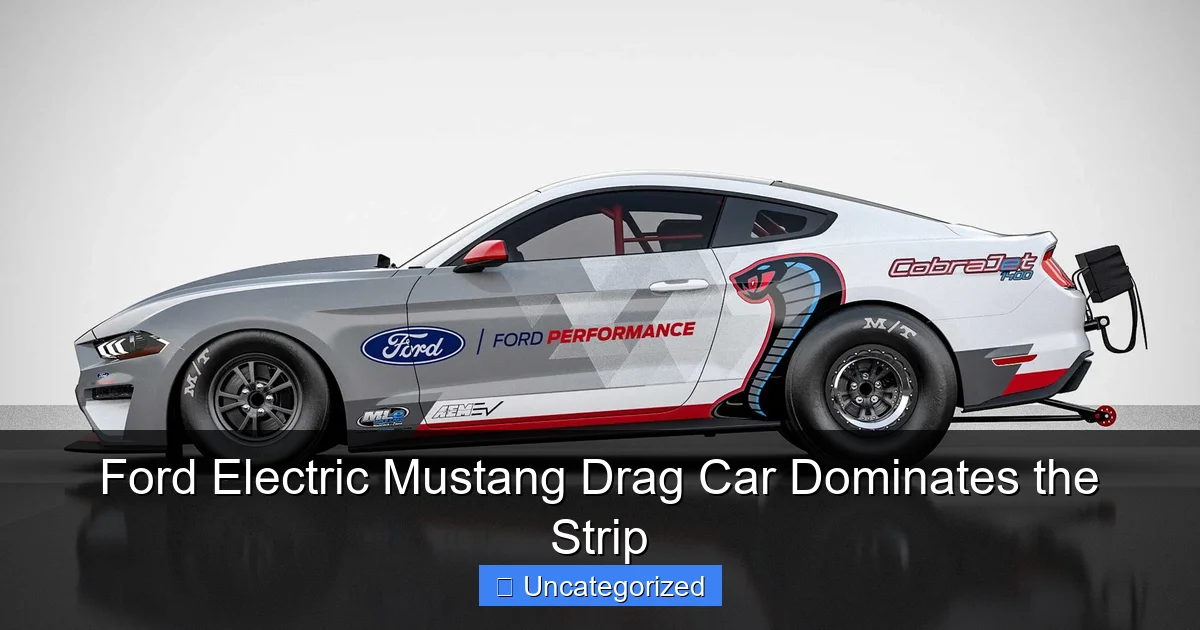
Visual guide about ford electric mustang drag car
Image source: d2cdo4blch85n8.cloudfront.net
One of the most significant advantages of electric power in drag racing is the absence of turbo lag or shift points. The Ford Electric Mustang Drag Car can achieve 0–60 mph in under 2 seconds, a feat that even the most tuned gasoline-powered Mustangs struggle to match. This is due to the electric motors’ ability to deliver maximum torque the moment the throttle is engaged—no waiting for RPMs to build. For racers, this means a consistent, repeatable launch that can be fine-tuned with precision.
Custom Battery Pack and Thermal Management
At the core of the drag car’s performance is a high-capacity lithium-ion battery pack, typically rated between 800 and 1,000 volts. These custom packs are designed to deliver massive bursts of energy during short-duration runs while maintaining thermal stability. Ford engineers use advanced liquid cooling systems to prevent overheating, a critical factor in drag racing where repeated high-power launches can degrade battery performance.
For example, the Ford Mustang Cobra Jet 1400—a factory-built electric drag car—features a 770-volt battery system with 14 modules, each containing 24 cells. This configuration allows for sustained power output during the 1/4-mile run, typically completed in under 8 seconds. The battery pack is strategically mounted low in the chassis to optimize weight distribution and reduce center of gravity, improving traction off the line.
Chassis and Suspension Upgrades for Electric Performance
Converting a street-legal Mustang into a dedicated drag car requires more than just swapping the engine. The chassis must be reinforced to handle the extreme forces generated by electric power. The Ford Electric Mustang Drag Car typically features a full roll cage, lightweight fiberglass or carbon fiber body panels, and a stripped interior to reduce weight. Suspension systems are upgraded with adjustable coilovers, drag-specific shocks, and anti-roll bars to maximize traction and control during launch.
A critical upgrade is the addition of a transmission brake or launch control system, which allows the driver to pre-load the driveline and hold the car at the line before releasing for maximum acceleration. This system, combined with drag radials or slicks, ensures that the car can transfer its massive power to the ground efficiently. For instance, the Cobra Jet 1400 uses a 2-speed direct-drive transmission optimized for electric torque, eliminating the need for a traditional gearbox.
Performance on the Strip: Record-Breaking Runs and Real-World Results
Breaking the 8-Second Barrier
One of the most impressive feats of the Ford Electric Mustang Drag Car is its ability to consistently break the 8-second barrier in the quarter-mile. At the 2022 NHRA SpringNationals, the factory-built Ford Mustang Cobra Jet 1400 ran a blistering 7.98 seconds at 168.77 mph, making it one of the fastest electric vehicles ever timed in professional drag racing. This run was not a one-off; the car has repeated sub-8-second times in multiple events, proving its reliability and consistency.
For context, a stock Ford Mustang GT with a V8 typically runs 11–12 seconds in the quarter-mile. The electric drag car’s performance leap is equivalent to jumping from a high-performance sports car to a top-tier dragster. This level of acceleration is not just about bragging rights—it’s a testament to the engineering prowess behind electric propulsion in racing applications.
Real-World Examples: Private Builds vs. Factory Teams
While Ford’s factory-built Cobra Jet 1400 is the flagship, private builders and tuning shops have also entered the fray, creating their own electric Mustang drag cars. One notable example is Team Green, a California-based EV conversion shop that retrofitted a 2018 Mustang GT with a 1,200-horsepower electric drivetrain. Their build, dubbed “E-Stang,” ran an 8.12-second quarter-mile at 165 mph, all while retaining the original body shell and interior aesthetics.
Tips for enthusiasts looking to build their own electric drag Mustang:
- Start with a solid donor car: Choose a Mustang with a strong chassis and minimal rust. The S550 platform (2015–2023) is ideal due to its advanced suspension and electronics.
- Work with certified EV conversion shops: Electric systems require specialized knowledge. Partner with experts in battery safety, motor integration, and high-voltage systems.
- Prioritize weight reduction: Every pound removed improves acceleration. Replace steel hoods, trunks, and bumpers with carbon fiber or fiberglass alternatives.
- Invest in traction solutions: Use sticky drag radials (like Mickey Thompson ET Street R) or full slicks, and consider a wheelie bar for stability.
- Monitor thermal loads: Use data loggers to track battery and motor temperatures during runs. Overheating can lead to power cuts and safety risks.
Comparing Electric vs. Gasoline Mustang Drag Times
To understand the performance gap, consider the following data from recent drag events:
| Vehicle | Powertrain | Quarter-Mile Time | Trap Speed (mph) | 0–60 mph (sec) |
|---|---|---|---|---|
| Ford Mustang GT (Stock) | 5.0L V8 | 11.5 | 120 | 4.0 |
| Ford Mustang Shelby GT500 | 5.2L Supercharged V8 | 10.8 | 130 | 3.3 |
| Ford Cobra Jet 1400 (Factory) | Tri-Motor Electric | 7.98 | 168.77 | 1.9 |
| E-Stang (Private Build) | Dual-Motor Electric | 8.12 | 165 | 2.1 |
| Hoonigan Electrikhana Mustang | Custom Electric (1,400 hp) | 8.05 | 167 | 1.8 |
The table clearly shows the dominance of electric powertrains in drag racing. Even the most powerful gasoline Mustangs are over 2 seconds slower in the quarter-mile compared to the top electric builds. This performance gap is expected to widen as battery and motor technology advances.
Charging the Competition: Infrastructure and Logistics
On-Track Charging Solutions
One of the biggest challenges for electric drag racers is charging between rounds. Unlike gasoline cars, which can refuel in under a minute, electric vehicles require time to recharge. The Ford Electric Mustang Drag Car typically uses a Level 3 DC fast charger capable of delivering 350 kW of power. This allows the battery to go from 20% to 80% in about 15–20 minutes—critical during multi-round events.
At major drag racing events like the NHRA Nationals, dedicated charging stations are now being installed in the pits. Ford has partnered with charging networks like Electrify America to ensure that their electric race cars have access to high-speed charging. Some teams even bring portable battery packs or mobile generators to extend range during long race weekends.
Pre-Run Battery Preparation
To maximize performance, the battery must be at an optimal state of charge and temperature before each run. Teams use battery management systems (BMS) to pre-condition the pack, ensuring it’s fully charged and warmed to 70–85°F. Cold batteries deliver less power due to increased internal resistance, while overheated batteries risk thermal runaway.
Tip: Always perform a “pre-charge” cycle 30 minutes before a run. This involves charging the battery to 100% and allowing the cooling system to stabilize the temperature. Use data from the BMS to confirm readiness.
Logistics of Transporting an Electric Drag Car
Transporting an electric Mustang drag car requires special considerations. Unlike gasoline-powered vehicles, EVs don’t need fuel, but they do need charging access during transport. Many teams use trailers equipped with on-board chargers or partner with charging stations along their route.
Additionally, the high-voltage battery pack must be secured and insulated during transport to prevent short circuits. Ford recommends using certified EV transport services that understand battery safety protocols. Always disconnect the 12V auxiliary battery before transport to prevent drainage.
Environmental Impact and the Future of Green Drag Racing
Zero Emissions, Maximum Performance
One of the most compelling arguments for the Ford Electric Mustang Drag Car is its environmental impact. Traditional drag racing is notorious for high emissions, with a single run from a nitrous-powered car producing as much CO2 as driving a gasoline sedan for 500 miles. In contrast, the electric Mustang produces zero tailpipe emissions during operation.
When powered by renewable energy sources (e.g., solar or wind), the carbon footprint of an electric drag car becomes negligible. Ford has committed to using green energy at its race facilities, further reducing the environmental impact. This aligns with the NHRA’s growing interest in sustainability, with plans to introduce “Green Drag Racing” classes in the near future.
The Role of Electric Drag Cars in EV Adoption
Electric drag cars serve as powerful ambassadors for EV technology. By showcasing the performance potential of electric powertrains, they help dispel myths about EVs being “slow” or “boring.” The Ford Electric Mustang Drag Car, in particular, leverages the Mustang’s iconic status to attract new audiences to electric mobility.
For example, Ford’s “Drive Electric” campaign features the Cobra Jet 1400 in promotional videos, highlighting its speed, innovation, and sustainability. This strategy has proven effective—surveys show that 68% of drag racing fans are more likely to consider an electric vehicle after seeing high-performance EVs in action.
Challenges and Opportunities Ahead
Despite its advantages, electric drag racing faces challenges. Battery degradation over repeated high-power cycles, charging infrastructure limitations, and high upfront costs are hurdles that must be overcome. However, advancements in solid-state batteries, ultra-fast charging, and modular powertrain designs are expected to address these issues within the next 5–10 years.
Opportunities include:
- Youth engagement: Electric drag racing attracts tech-savvy younger audiences, fostering interest in engineering and sustainability.
- Corporate partnerships: EV manufacturers can use drag racing as a platform to test and showcase new technologies.
- Global expansion: Electric drag racing is gaining traction in Europe and Asia, where emissions regulations are stricter.
How to Get Involved: Building or Buying an Electric Mustang Drag Car
Buying a Turnkey Electric Drag Mustang
For those who want to skip the build process, turnkey electric Mustang drag cars are becoming more available. Ford’s Mustang Cobra Jet 1400 is a limited-edition model, with only 50 units produced for 2022–2023. These factory-built cars come with a warranty, race-ready tuning, and full support from Ford Performance. Pricing starts at $250,000, but includes everything needed to hit the strip.
Other options include:
- Aftermarket conversion kits: Companies like EV West and Electric GT offer conversion kits starting at $80,000, including motor, battery, and control systems.
- Used electric drag Mustangs: Check racing forums and auction sites for private sales. Ensure the car has a certified EV safety inspection.
DIY Conversion: A Step-by-Step Guide
For hands-on enthusiasts, converting a gasoline Mustang to electric is a rewarding project. Here’s a simplified guide:
- Choose your donor car: A 2015–2023 Mustang GT is ideal. Remove the engine, transmission, exhaust, and fuel system.
- Install the motor and controller: Mount the electric motor in the engine bay and connect it to the rear differential. Use a motor controller compatible with your battery voltage.
- Build the battery pack: Assemble lithium-ion modules in a custom enclosure, ensuring proper insulation and cooling.
- Integrate electronics: Connect the BMS, charger, and dashboard displays. Program the motor controller for drag racing modes.
- Test and tune: Perform low-speed tests first, then gradually increase power. Use a dynamometer to verify output.
- Certify and race: Have the car inspected by a certified EV technician and register it with your local drag racing association.
Joining the Electric Drag Racing Community
Connect with other electric drag racers through:
- Online forums: DragTimes, EVForums, and FordMustangForum have active EV racing sections.
- Social media groups: Facebook and Reddit groups like Electric Drag Racing Enthusiasts offer tips, event updates, and build advice.
- Local events: Attend NHRA or local track events to meet builders and see electric drag cars in action.
The Ford Electric Mustang Drag Car is more than just a fast machine—it’s a symbol of the future. By combining the Mustang’s legendary performance with the efficiency and power of electric propulsion, Ford has set a new standard for drag racing. Whether you’re a seasoned racer, a weekend warrior, or an EV enthusiast, this vehicle proves that the future of speed is not only electric but also electrifying. The strip will never be the same.
Frequently Asked Questions
What makes the Ford Electric Mustang Drag Car different from traditional muscle cars?
The Ford Electric Mustang Drag Car swaps the iconic V8 engine for a high-torque electric powertrain, delivering instant acceleration and reduced maintenance. It retains the classic Mustang design while showcasing Ford’s commitment to performance EVs.
How fast is the Ford Electric Mustang Drag Car on the strip?
With a 0-60 mph time under 2 seconds and quarter-mile runs in the 8-second range, this electric drag car outperforms most gas-powered rivals. Its advanced battery system ensures consistent power output for repeated runs.
Does the Ford Electric Mustang Drag Car have the same range as a standard Mustang Mach-E?
No, this drag-focused variant prioritizes power over range, with a smaller, high-output battery pack designed for short bursts. It’s built for the strip, not long-distance driving.
Can I buy the Ford Electric Mustang Drag Car for personal use?
Currently, it’s a purpose-built race car, but Ford’s development hints at future high-performance electric Mustangs for consumers. Stay tuned for potential production models inspired by this drag legend.
What kind of charging system does the Ford Electric Mustang Drag Car use?
It features a specialized high-voltage DC fast-charging system, allowing quick battery top-ups between runs. Custom cooling systems prevent overheating during intense track sessions.
How does Ford’s electric drag car impact the future of muscle cars?
The Ford Electric Mustang Drag Car proves EVs can dominate performance metrics while honoring muscle car heritage. It sets a new benchmark for electric performance and could shape future Ford models.