Ford F150 Electric Car Review Power Meets Innovation
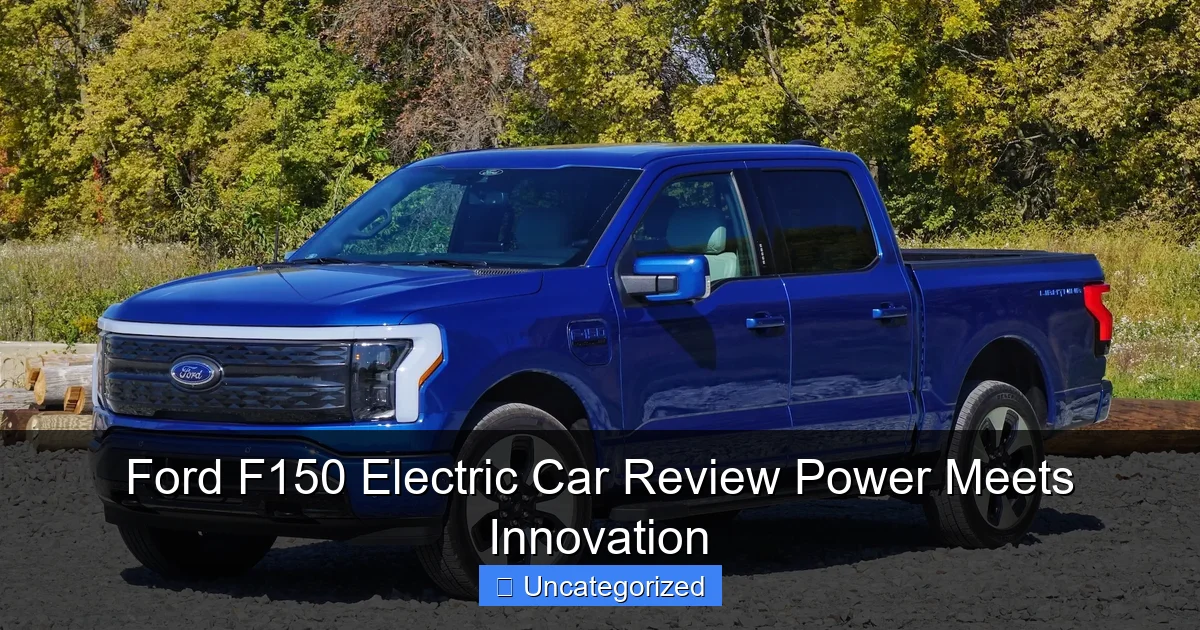
Featured image for ford f150 electric car
Image source: thedrive.com
The Ford F-150 Lightning redefines the electric truck segment with 452 horsepower, a 0–60 mph time of just 4.5 seconds, and an impressive 230–320 miles of range. Built on a rugged platform with advanced tech like Pro Power Onboard and over-the-air updates, it seamlessly blends workhorse durability with cutting-edge innovation. This is the electric pickup that proves power and sustainability can drive side by side.
Key Takeaways
- Instant torque: Experience rapid acceleration with the F150 Lightning’s electric powertrain.
- Long range: Drive up to 320 miles on a single charge with extended battery.
- Pro Power Onboard: Use built-in outlets to power tools or appliances anywhere.
- Towing power: Tow up to 10,000 lbs without sacrificing efficiency or performance.
- Smart tech: Enjoy seamless connectivity with Ford’s SYNC 4A and over-the-air updates.
- Cost savings: Lower fuel and maintenance costs make it ideal for long-term ownership.
📑 Table of Contents
- Introduction: The Electric Revolution Hits the Iconic F-150
- Design and Exterior: Rugged Meets Futuristic
- Performance and Powertrain: Electrifying Capability
- Interior and Technology: A Smart, Comfortable Cabin
- Charging and Range: Real-World Usability
- Safety and Driver Assistance: Built to Protect
- Data Table: Ford F-150 Lightning Key Specifications
- Conclusion: The Future of Trucks Is Here
Introduction: The Electric Revolution Hits the Iconic F-150
The Ford F-150 has long been a symbol of American strength, reliability, and innovation in the pickup truck segment. For decades, it has dominated the market, earning the trust of contractors, adventurers, and everyday drivers alike. Now, Ford is taking a bold leap into the future with the Ford F150 Electric Car, officially known as the F-150 Lightning. This isn’t just another electric vehicle (EV)—it’s a full-size, full-capability pickup truck that combines the ruggedness of the traditional F-150 with the silent power of electric propulsion. The F-150 Lightning marks a pivotal moment in the automotive industry, proving that electrification doesn’t mean compromise, but rather evolution.
Launched in 2022, the F-150 Lightning isn’t Ford’s first EV, but it’s arguably its most significant. As the company commits to an all-electric future, the Lightning stands at the forefront of that vision. With instant torque, zero tailpipe emissions, and a suite of intelligent features, this electric pickup redefines what a truck can be. Whether you’re hauling construction materials, towing a boat, or simply commuting to work, the F-150 Lightning delivers power, performance, and innovation in one compelling package. In this comprehensive review, we’ll explore every aspect of the Ford F150 Electric Car—from its design and performance to its technology, utility, and real-world usability—helping you decide if it’s the right EV pickup for your lifestyle.
Design and Exterior: Rugged Meets Futuristic
Bold, Modern Aesthetic with Functional Upgrades
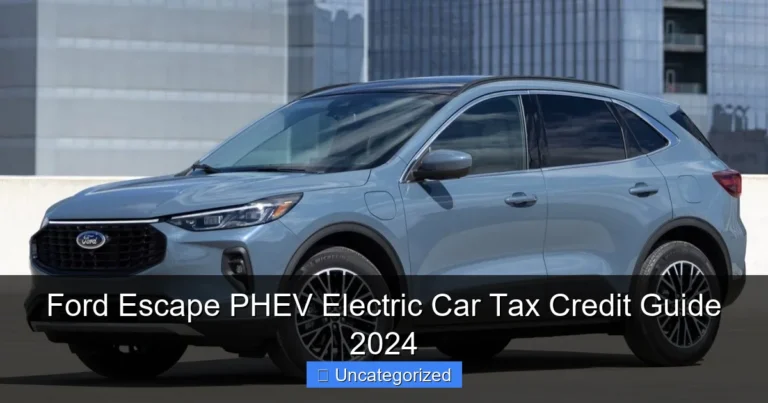
The Ford F150 Electric Car retains the muscular, aggressive stance of its gas-powered siblings but introduces several design cues that set it apart. Up front, the most noticeable change is the full-width LED light bar, which stretches across the grille, giving the Lightning a futuristic, high-tech appearance. Unlike traditional F-150s, there’s no need for a large front grille since electric motors don’t require the same airflow for cooling. Instead, Ford uses this space for aerodynamic efficiency and a sleek, closed-off front end.
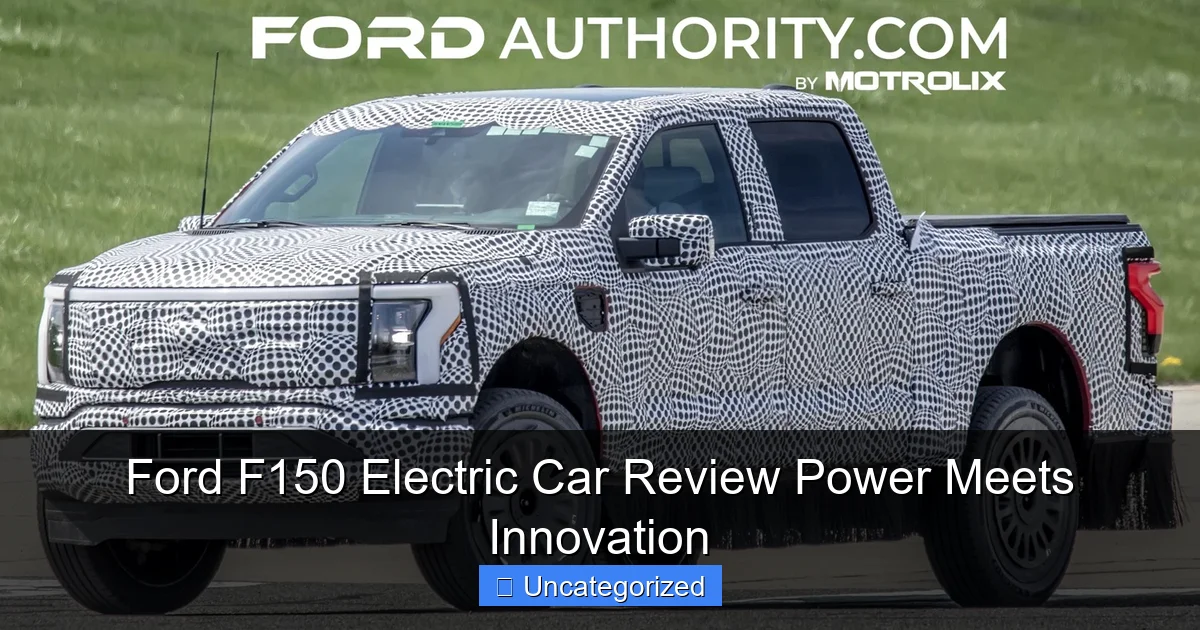
Visual guide about ford f150 electric car
Image source: fordauthority.com
The truck features unique 18- to 22-inch alloy wheels designed specifically for EVs, with lower rolling resistance to maximize range. The side profile remains familiar, with a high beltline, pronounced wheel arches, and available running boards for easier entry. At the rear, the Lightning sports a revised tailgate with an integrated step and grab handle—just like the standard F-150—but adds a subtle “Lightning” badge and unique taillight graphics that pulse when charging.
Lightweight Materials and Aerodynamic Enhancements
Ford engineers have used high-strength steel and aluminum in the F-150 Lightning’s construction to reduce weight without sacrificing durability. The aluminum body panels help offset the added weight of the battery pack, which can exceed 1,800 pounds depending on the configuration. Aerodynamic tweaks, such as active grille shutters (which close when cooling isn’t needed) and underbody panels, reduce drag and improve efficiency.
One clever feature is the front trunk, or “frunk,” which offers 14.1 cubic feet of storage space. This is a massive upgrade over the engine bay of a gas F-150 and can hold two sets of golf clubs, a full-sized cooler, or even a compact generator. The frunk is waterproof, lockable, and includes a drain plug—perfect for muddy gear or wet camping equipment.
Color and Trim Options
Buyers can choose from several trims: Pro, XLT, Lariat, and Platinum, with each offering increasingly luxurious finishes and tech features. Exterior color options include classic shades like Oxford White and Agate Black, as well as bold choices like Rapid Red and Atlas Blue. The Lightning also offers unique two-tone paint schemes and blacked-out trim packages for a more aggressive look.
Tip: If you plan to use your truck in harsh environments, consider the available spray-in bed liner and all-weather floor liners—they’re worth the extra investment for long-term protection.
Performance and Powertrain: Electrifying Capability
Dual-Motor AWD and Instant Torque
At the heart of the Ford F150 Electric Car is a dual-motor all-wheel-drive (AWD) system that delivers 580 horsepower and 775 lb-ft of torque in the extended-range battery version. That’s more torque than any other F-150 ever produced, including the Raptor. The result? A 0–60 mph time of just 4.4 seconds—faster than many sports cars and a clear demonstration of the power of electric propulsion.

Visual guide about ford f150 electric car
Image source: autocar.co.uk
Unlike internal combustion engines that build power over time, electric motors deliver maximum torque the moment they start spinning. This means the Lightning feels incredibly responsive, whether you’re merging onto a highway or climbing a steep grade. The powertrain is smooth, quiet, and nearly vibration-free—transforming the driving experience into something serene yet exhilarating.
Two Battery Options and Range
Ford offers two battery configurations:
- Standard-Range Battery: 98 kWh, EPA-estimated range of 240 miles
- Extended-Range Battery: 131 kWh, EPA-estimated range of 320 miles (XLT and above)
Real-world range can vary based on driving habits, terrain, temperature, and payload. For example, towing a 5,000-pound trailer can reduce range by up to 50%. However, Ford’s Pro Power Onboard system (discussed later) helps offset some of this by allowing you to charge tools or devices while on the go.
Tip: If you frequently tow or drive long distances, the extended-range battery is highly recommended. It also unlocks the full 580 horsepower and 775 lb-ft of torque—standard-range models are slightly detuned to 452 hp.
Towing and Payload Capacity
Despite being electric, the F-150 Lightning is still a workhorse. It can tow up to 10,000 pounds with the extended-range battery and Max Trailer Tow Package—matching the capability of the gas-powered F-150. Payload capacity maxes out at 2,235 pounds, which is competitive in the full-size pickup segment.
Ford’s Intelligent Range system uses GPS, weather, and traffic data to predict how much range you’ll have when you reach your destination, especially when towing. It also recommends optimal speeds and routes to maximize efficiency. For example, if you’re towing a trailer up a mountain, the system might suggest a slightly slower speed to conserve battery.
Regenerative Braking and Driving Modes
The Lightning features strong regenerative braking, which helps recapture energy during deceleration. Drivers can adjust the level of regen using paddle shifters behind the steering wheel. In “One-Pedal Driving” mode, lifting off the accelerator brings the truck to a complete stop—ideal for stop-and-go traffic.
Three driving modes are available:
- Normal: Balanced performance and efficiency
- Sport: Sharper throttle response and tighter steering
- Off-Road: Enhanced traction control and hill descent assist
Interior and Technology: A Smart, Comfortable Cabin
Spacious and Premium Interior
Step inside the Ford F150 Electric Car, and you’re greeted with a cabin that blends utility with luxury. The interior is roomy, with best-in-class front headroom and legroom. The centerpiece is the massive 15.5-inch vertical touchscreen powered by Ford’s SYNC 4A infotainment system. The screen is intuitive, responsive, and features over-the-air (OTA) updates, so your truck gets smarter over time.
Higher trims like the Lariat and Platinum offer leather-trimmed seats, heated and ventilated front seats, a panoramic sunroof, and a premium 18-speaker B&O sound system. Even the base Pro trim is well-equipped, with cloth seats, dual-zone climate control, and a 12-inch digital instrument cluster.
SYNC 4A and Ford Power-Up Updates
SYNC 4A supports wireless Apple CarPlay and Android Auto, voice commands, and cloud-connected navigation. It also integrates with the FordPass app, allowing you to start the truck, lock/unlock doors, check battery status, and pre-condition the cabin from your smartphone.
One of the most exciting features is Ford Power-Up, which delivers OTA software updates. For example, Ford recently rolled out an update that improved charging speed, added new driver-assist features, and enhanced the navigation system. This means your truck can improve without ever visiting a dealership.
Pro Power Onboard: The Ultimate Mobile Workstation
Perhaps the most innovative feature of the F-150 Lightning is Pro Power Onboard, a built-in mobile power station. Depending on the trim and battery size, it offers up to 9.6 kW of power—enough to run a full-sized air compressor, welder, or even a small job site.
Power outlets are located:
- Inside the cab (120V)
- In the bed (120V and 240V)
- In the frunk (120V)
<
With the extended-range battery, you can power a 5,000 BTU air conditioner for up to 85 hours—perfect for camping or emergency backup during power outages. In fact, Ford demonstrated this capability by powering an entire home during a simulated blackout.
Example: A contractor could use the Lightning to power a table saw, drill, and lighting on a remote job site—no generator needed. A family could run a refrigerator, TV, and microwave during a weekend camping trip.
Comfort and Storage
The Lightning offers plenty of in-cabin storage, including a large center console, door pockets, and under-seat compartments. The flat floor (thanks to the skateboard-style battery) makes it easy to move between seats. Rear passengers enjoy generous legroom and optional heated seats.
Noise levels are impressively low, thanks to the absence of engine noise and sound-deadening materials. The ride quality is smooth, with a well-tuned suspension that handles both city streets and rough backroads with ease.
Charging and Range: Real-World Usability
Home Charging and Ford Connected Charge Station
For most owners, charging will happen at home. Ford includes a 110V mobile charger with every Lightning, but for faster charging, the automaker offers the Ford Connected Charge Station—an 80-amp Level 2 charger that can replenish the extended-range battery from 15% to 100% in about 8 hours.
Installation is straightforward and typically costs between $700 and $1,200, depending on your home’s electrical setup. Ford partners with Qmerit to handle installation, and many utility companies offer rebates for home EV chargers.
Public Charging and DC Fast Charging
The F-150 Lightning supports DC fast charging up to 150 kW. With the extended-range battery, you can add 54 miles of range in just 10 minutes—ideal for road trips. The truck is compatible with the Ford BlueOval Charge Network, which includes over 84,000 charging stations across North America, including Tesla Superchargers (via adapter).
Ford’s navigation system automatically plans charging stops on long trips, factoring in traffic, elevation, and weather. It even shows you how long you’ll need to charge at each station to reach your destination.
Vehicle-to-Load (V2L) and Vehicle-to-Home (V2H)
Beyond powering tools, the Lightning can power your home during an outage using Vehicle-to-Home (V2H) technology. With the Ford Charge Station Pro and a compatible home integration kit, the truck can supply up to 9.6 kW of power to your house for days—enough to keep lights, refrigerators, and critical appliances running.
Ford calls this Intelligent Backup Power, and it’s a game-changer for areas prone to blackouts. For example, during a storm, the Lightning can automatically switch to backup mode, using its battery to power your home until the grid is restored.
Tip: To enable V2H, you’ll need the Charge Station Pro, a home energy management system, and professional installation. Ford is working with utility companies to make this more accessible.
Safety and Driver Assistance: Built to Protect
Advanced Safety Features
The Ford F150 Electric Car comes standard with Ford Co-Pilot360, a suite of advanced driver-assistance systems (ADAS) that includes:
- Pre-Collision Assist with Automatic Emergency Braking
- Blind Spot Information System (BLIS) with Cross-Traffic Alert
- Lane-Keeping System
- Rear View Camera with Trailer Coverage
- Adaptive Cruise Control with Stop-and-Go
<
Higher trims add Co-Pilot360 Assist 2.0, which includes:
- Active Drive Assist (hands-free highway driving on select roads)
- Intersection Assist
- Evasive Steering Assist
- 360-Degree Camera with Split View
Structural Safety and Crash Testing
The Lightning is built on Ford’s T3 platform, which is designed to protect both passengers and the high-voltage battery. The battery pack is encased in a rigid, crash-resistant structure, and Ford has conducted extensive crash testing to ensure safety in all scenarios.
The truck earned a 5-star overall safety rating from the National Highway Traffic Safety Administration (NHTSA), including top scores in frontal and side crash tests. The Insurance Institute for Highway Safety (IIHS) named it a Top Safety Pick, praising its front crash prevention system and headlights.
Cybersecurity and Over-the-Air Updates
With so much technology onboard, cybersecurity is a priority. Ford uses end-to-end encryption for all OTA updates and employs a dedicated security team to monitor for threats. The Lightning also features a firewall between the infotainment system and critical vehicle functions to prevent hacking.
Data Table: Ford F-150 Lightning Key Specifications
| Feature | Standard-Range Battery | Extended-Range Battery |
|---|---|---|
| Battery Capacity | 98 kWh | 131 kWh |
| EPA-Estimated Range | 240 miles | 320 miles |
| Horsepower | 452 hp | 580 hp |
| Torque | 775 lb-ft | 775 lb-ft |
| 0–60 mph | 4.5 seconds | 4.4 seconds |
| Towing Capacity | 7,700 lbs | 10,000 lbs |
| Payload Capacity | 2,000 lbs | 2,235 lbs |
| DC Fast Charging (10–80%) | 41 minutes (150 kW) | 41 minutes (150 kW) |
| Pro Power Onboard | 2.4 kW | 9.6 kW |
Conclusion: The Future of Trucks Is Here
The Ford F150 Electric Car isn’t just a truck—it’s a statement. It proves that electric vehicles can be powerful, practical, and packed with innovation without sacrificing the toughness and versatility that truck buyers demand. From its lightning-fast acceleration and impressive towing capacity to its game-changing Pro Power Onboard and V2H capabilities, the F-150 Lightning redefines what a pickup can do.
Whether you’re a contractor looking for a mobile job site, an adventurer seeking off-grid power, or a family wanting a safe, comfortable daily driver, the Lightning delivers. It’s not perfect—range can drop significantly when towing, and the price tag (starting around $50,000 and going up to $90,000 for loaded trims) may be steep for some—but the value it offers in technology, efficiency, and utility is unmatched.
Ford has taken an American icon and electrified it with precision, purpose, and passion. The F-150 Lightning isn’t just keeping up with the EV revolution—it’s leading it. For those ready to embrace the future of transportation, the Ford F150 Electric Car isn’t just a smart choice—it’s the ultimate evolution of power meets innovation.
Frequently Asked Questions
What is the range of the Ford F150 electric car?
The Ford F150 Lightning, the electric version of the F150, offers an EPA-estimated range of up to 320 miles on a single charge with the extended-range battery. The standard-range model delivers around 240 miles, making it competitive for both daily commutes and long-haul work needs.
How fast can the Ford F150 electric car charge?
With DC fast charging, the F150 Lightning can recharge from 15% to 80% in approximately 41 minutes. Using a Level 2 home charger, it takes about 8–10 hours for a full charge, depending on the battery configuration and power source.
Does the Ford F150 electric car have enough power for towing?
Yes, the Ford F150 electric car delivers impressive towing capability—up to 10,000 pounds when properly equipped. Its dual electric motors generate instant torque, providing strong, smooth performance even under heavy loads.
What innovative features come with the Ford F150 Lightning?
The F150 Lightning includes innovative tech like Pro Power Onboard, which turns the truck into a mobile generator with up to 9.6 kW of power. It also features Ford’s BlueCruise hands-free driving system and over-the-air software updates for continuous improvements.
How does the Ford F150 electric car compare to gas-powered models?
The Ford F150 electric car offers quicker acceleration, lower maintenance costs, and reduced fuel expenses compared to gas-powered F150s. While it shares the same rugged design, the electric version adds modern tech, quiet operation, and zero tailpipe emissions.
Is the Ford F150 electric car good for off-roading?
Yes, the F150 Lightning is available with an FX4 Off-Road Package, including all-terrain tires, skid plates, and off-road-tuned suspension. Its low center of gravity from the battery pack enhances stability on rugged trails, making it a capable off-road performer.