Ford GM Electric Cars A New Era of American Innovation

Featured image for ford gm electric cars
Image source: gm.com
Ford and GM are revolutionizing the auto industry with cutting-edge electric vehicles, combining American engineering excellence with sustainable innovation to challenge global EV leaders. From the Ford F-150 Lightning to the GMC Hummer EV, these powerhouse brands are redefining performance, range, and smart technology, marking a bold new chapter in the future of transportation.
Key Takeaways
- Ford and GM lead the U.S. electric vehicle revolution with bold innovation.
- Invest in EV infrastructure to support growing demand for American-made electric cars.
- New models offer longer range, faster charging, and competitive pricing.
- Federal incentives boost affordability and adoption of Ford and GM EVs.
- Domestic manufacturing expands jobs and strengthens supply chain resilience.
- Tech integration sets Ford and GM apart with smart, connected features.
📑 Table of Contents
- The Dawn of a New American Electric Era
- Why Ford and GM Are Going All-In on Electric
- Key Electric Models: Ford vs. GM
- Technology and Innovation: The Engines Behind the EVs
- Charging Infrastructure and Range Realities
- The Road Ahead: Challenges and Opportunities
- Conclusion: A New Chapter in American Automotive Leadership
The Dawn of a New American Electric Era
The automotive landscape is undergoing a seismic shift, and two American giants—Ford and General Motors (GM)—are leading the charge into a future powered by electricity. For over a century, these companies have shaped the identity of American innovation, from the Model T to the Corvette. Now, they’re reinventing themselves for the 21st century, betting billions on a future where internal combustion engines give way to electric motors, lithium-ion batteries, and software-driven mobility. The transition isn’t just about swapping gas tanks for batteries; it’s a complete reimagining of what a car can be.
With the global push for sustainability, stricter emissions regulations, and consumer demand for cleaner, smarter vehicles, Ford and GM have launched aggressive electrification strategies. From the Ford F-150 Lightning to the Chevrolet Silverado EV and the GM Ultium platform, these automakers are proving that American muscle and innovation can thrive in the electric age. This blog explores how Ford and GM are reshaping the electric vehicle (EV) market, the technologies powering their transformation, and what this means for consumers, workers, and the future of mobility in the United States.
Why Ford and GM Are Going All-In on Electric
The decision by Ford and GM to pivot toward electric vehicles isn’t a fleeting trend—it’s a strategic, long-term commitment backed by massive investments, policy alignment, and consumer demand. Both companies recognize that the future of transportation is electric, and they’re positioning themselves as leaders, not followers, in this new era.
Visual guide about ford gm electric cars
Image source: i0.wp.com
Massive Financial Investments
Ford has committed to $50 billion in EV development through 2026, with plans to produce 2 million EVs annually by that time. GM is even more ambitious, pledging $35 billion in EV and autonomous vehicle investments through 2025, aiming for 1 million EVs per year by 2025 and 30 new EV models globally by 2025. These aren’t just R&D budgets—they’re investments in new factories, battery plants, software development, and supply chain transformation.
For example, Ford’s BlueOval City in Tennessee is a $5.6 billion mega-campus that will produce next-generation electric trucks and batteries. Similarly, GM’s Ultium Cells LLC joint venture with LG Energy Solution is building multiple battery plants across the U.S., including in Ohio, Tennessee, and Michigan, to secure domestic battery production and reduce reliance on foreign suppliers.
Aligning with National and Global Sustainability Goals
The Biden administration’s goal of 50% EV sales by 2030 has provided strong policy tailwinds. Federal tax credits of up to $7,500 for qualifying EVs, infrastructure funding, and state-level zero-emission mandates have made EV adoption more attractive. Ford and GM are leveraging these incentives while also meeting increasingly stringent emissions standards, such as the EPA’s 2023-2026 greenhouse gas rules.
Moreover, both companies have pledged carbon neutrality. Ford aims for net-zero emissions by 2050, with interim goals of 50% reduction by 2035. GM has an even bolder target: carbon neutrality by 2040, including its supply chain and products. Electrification is central to achieving these goals.
Consumer Demand and Market Competition
Consumers are embracing EVs at an accelerating pace. In 2023, EV sales in the U.S. surpassed 1.2 million units, a 50% increase from 2022. Ford and GM are responding with vehicles that meet real-world needs—especially in the truck and SUV segments, which dominate U.S. sales.
Take the Ford F-150 Lightning, for instance. As the electric version of America’s best-selling vehicle for over 40 years, it combines rugged capability with zero emissions. Similarly, the Chevrolet Blazer EV and Cadillac Lyriq target the booming SUV market. These aren’t niche EVs—they’re mainstream vehicles designed to win over pickup drivers, families, and luxury buyers.
Key Electric Models: Ford vs. GM
Both Ford and GM are launching a diverse portfolio of EVs across multiple segments. Let’s break down their flagship models, performance specs, and unique selling points.
Visual guide about ford gm electric cars
Image source: static.electronicsweekly.com
Ford’s Electric Lineup
- Ford F-150 Lightning: Starting at $49,995 (after tax credit), this all-electric pickup offers up to 320 miles of range, 580 horsepower, and 775 lb-ft of torque. It features Ford’s Intelligent Backup Power, allowing the truck to power a home during outages. The Pro Power Onboard system provides up to 9.6 kW of exportable power—ideal for job sites or camping.
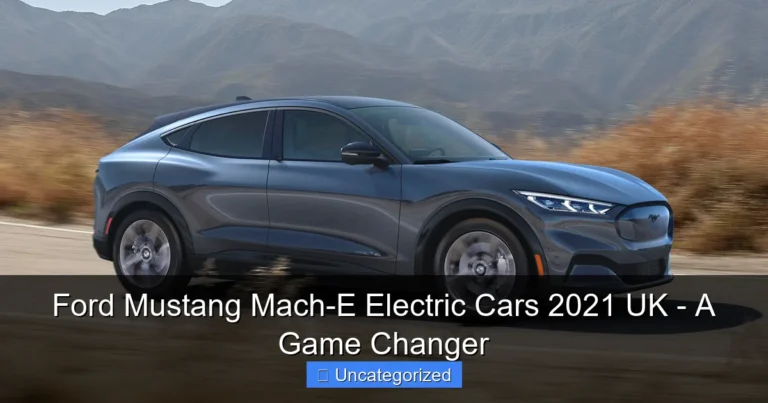
- Ford Mustang Mach-E: A sporty crossover with up to 314 miles of range and 480 hp (GT version). It blends Mustang heritage with EV performance, offering fast charging (10-80% in ~45 minutes) and a tech-forward interior with a 15.5-inch touchscreen.
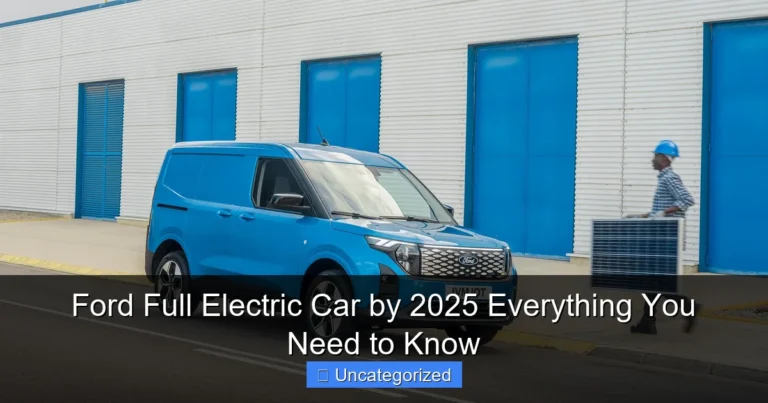
- Ford E-Transit: The electric version of the popular Transit van, targeting commercial fleets. With 126 miles of range and 266 hp, it’s ideal for last-mile delivery and tradespeople.
- Ford Explorer EV (upcoming): Expected in 2025, this three-row SUV will compete with the Tesla Model Y and Hyundai Ioniq 5.
Pro Tip: When choosing a Ford EV, consider your driving needs. The F-150 Lightning is perfect for those who need truck capabilities, while the Mach-E suits urban commuters and performance enthusiasts.
GM’s Electric Lineup
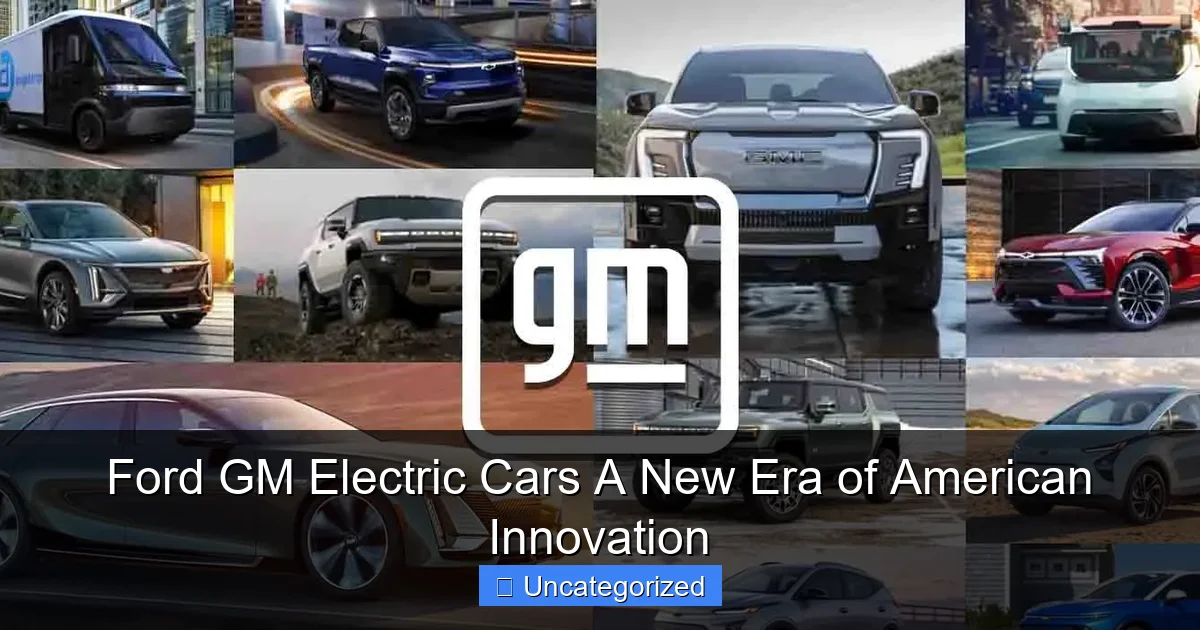
- Chevrolet Silverado EV: Launching in 2024, this electric pickup boasts up to 400 miles of range, 754 hp, and 785 lb-ft of torque. It features a Multi-Flex Tailgate, eTrunk (front storage), and GM’s Ultium Drive system for smooth acceleration.
- Chevrolet Blazer EV: A midsize SUV with up to 320 miles of range and 557 hp (SS model). It includes a 17.7-inch infotainment screen and GM’s Super Cruise hands-free driving system.
- Chevrolet Equinox EV: A compact SUV starting at $30,000 (after tax credit), offering 250–300 miles of range. It’s GM’s answer to affordable EVs, targeting first-time EV buyers.
- Cadillac Lyriq: A luxury SUV with 312 miles of range, 340 hp, and a stunning 33-inch LED display. It combines premium materials with cutting-edge tech.
- GMC Hummer EV: A $80,000+ super-truck with up to 350 miles of range, 1,000 hp, and CrabWalk diagonal driving. It’s a halo vehicle showcasing GM’s EV capabilities.
Pro Tip: GM’s Ultium platform underpins all its EVs, enabling flexibility in range, performance, and pricing. If you prioritize tech and luxury, the Lyriq or Hummer EV are excellent choices. For practicality, the Equinox EV offers great value.
Technology and Innovation: The Engines Behind the EVs
The success of Ford and GM’s EVs hinges on more than just marketing—it’s built on advanced technology, proprietary platforms, and software ecosystems that set them apart from competitors like Tesla and Rivian.
Ford’s BlueOval and Intelligent Tech
Ford’s BlueOval initiative is more than a branding campaign—it’s a comprehensive strategy to integrate EVs into the broader mobility ecosystem. Key tech features include:
- Ford BlueCruise: A hands-free driving system (available on Mach-E and F-150 Lightning) that works on 130,000+ miles of pre-mapped highways.
- Ford Power-Up: Over-the-air (OTA) software updates that improve performance, add features, and fix bugs—similar to smartphone updates.
- FordPass App: A mobile app for remote start, charging management, vehicle location, and roadside assistance.
- 800V Fast Charging: The Mach-E supports DC fast charging at up to 150 kW, adding 50+ miles in 10 minutes.
Ford is also investing in AI and machine learning to optimize battery performance, predict maintenance needs, and enhance driver assistance systems.
GM’s Ultium Platform: The Backbone of Innovation
GM’s Ultium platform is a modular, scalable EV architecture designed for efficiency, flexibility, and cost savings. It features:
- Ultium Batteries: Nickel-manganese-cobalt (NMC) cells with high energy density. GM is also developing Ultium Energy batteries with silicon-rich anodes for even longer range.
- Ultium Drive: A family of five interchangeable drive units (motors) that can power front-wheel, rear-wheel, or all-wheel drive configurations.
- Ultium Energy Recovery: Captures waste heat from the battery and cabin to improve efficiency, especially in cold weather.
- 12- to 1000-volt Architecture: Allows for ultra-fast charging (up to 350 kW) and bidirectional charging (vehicle-to-home, vehicle-to-grid).
GM’s Super Cruise system is a standout, offering hands-free driving with LiDAR map data and driver attention monitoring. It’s available on the Blazer EV, Lyriq, and upcoming models.
Pro Tip: When comparing EVs, look at the underlying platform. Ultium’s modularity means GM can launch new models faster and at lower costs. Ford’s focus on OTA updates ensures your vehicle improves over time.
Charging Infrastructure and Range Realities
Range anxiety and charging accessibility remain key concerns for EV buyers. Ford and GM are addressing these challenges through partnerships, technology, and strategic infrastructure development.
Ford’s Charging Strategy
Ford has partnered with Electrify America and ChargePoint to give F-150 Lightning and Mach-E owners access to over 84,000 charging stations across North America. Key initiatives include:
- Ford Connected Charging Network: Integrates multiple charging providers into one app for seamless navigation and payment.
- Home Charging Solutions: Ford offers a Ford Connected Charge Station (19.2 kW) for home installation, enabling full overnight charging.
- Mobile Power Cord: A portable Level 2 charger included with every Ford EV.
- Bidirectional Charging: The F-150 Lightning can power homes for up to 10 days during outages (with a home integration kit).
Pro Tip: For daily commutes under 50 miles, a Level 2 home charger is sufficient. For road trips, plan routes using Ford’s Trip Planner app, which identifies optimal charging stops.
GM’s Charging Ecosystem
GM is expanding its charging footprint through the Ultium Charge 360 program, which includes:
- Partnerships with EVgo, ChargePoint, and Blink: Over 100,000 public chargers in the U.S. and Canada.
- GM Energy: A new business unit offering home energy storage, solar integration, and vehicle-to-grid (V2G) solutions.
- DC Fast Charging: Silverado EV and Lyriq support 350 kW charging, adding 100 miles in 10 minutes.
- OnStar Energy Insights: Real-time data on energy usage, charging costs, and carbon savings.
GM is also piloting wireless charging with WiTricity and exploring autonomous charging robots for commercial fleets.
Pro Tip: Use GM’s myChevrolet app to find chargers, check availability, and pre-condition the battery (which improves charging speed in cold weather).
The Road Ahead: Challenges and Opportunities
While Ford and GM are making impressive progress, the road to full electrification is paved with challenges—and opportunities.
Supply Chain and Battery Materials
EVs require critical minerals like lithium, cobalt, and nickel. Both companies are securing long-term supply agreements and investing in battery recycling. Ford is partnering with Redwood Materials to recycle 95% of battery components. GM is developing cobalt-free batteries and has secured lithium from Nevada’s Thacker Pass mine.
Workforce Transformation
The shift to EVs requires retraining 100,000+ auto workers. Ford and GM are investing in upskilling programs to transition ICE workers to battery and software roles. GM’s Ultium Learning program has trained over 20,000 employees since 2020.
Competition and Market Share
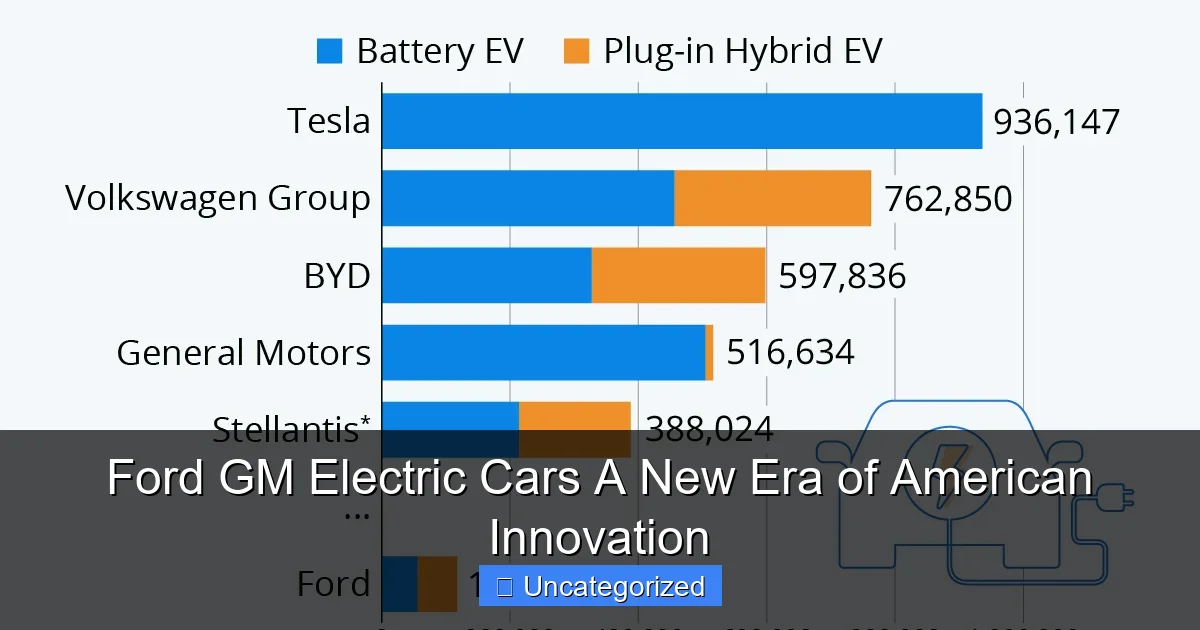
Tesla still dominates the U.S. EV market (over 60% share), but Ford and GM are gaining ground. In Q1 2024, Ford’s EV sales grew 86% YoY, while GM’s grew 40%. The key will be maintaining momentum in affordability, charging access, and brand trust.
Data Table: Ford vs. GM EV Comparison (2024 Models)
| Model | Starting Price | Range (EPA) | Horsepower | 0-60 mph | Fast Charging (10-80%) | Unique Feature |
|---|---|---|---|---|---|---|
| Ford F-150 Lightning | $49,995 | 240–320 mi | 452–580 hp | 4.5 sec | 41 min | Home power backup |
| Chevrolet Silverado EV | $77,905 | 350–400 mi | 510–754 hp | 4.5 sec | 10 min (350 kW) | eTrunk & Multi-Flex Tailgate |
| Ford Mustang Mach-E | $42,995 | 247–314 mi | 266–480 hp | 3.5 sec (GT) | 45 min | BlueCruise hands-free |
| Chevrolet Blazer EV | $44,995 | 279–320 mi | 340–557 hp | 4.0 sec (SS) | 10 min (350 kW) | Super Cruise |
| Cadillac Lyriq | $58,590 | 312 mi | 340 hp | 4.8 sec | 28 min | 33-inch LED display |
| Ford E-Transit | $49,500 | 126 mi | 266 hp | 6.8 sec | 30 min | Pro Power Onboard (2.4 kW) |
Conclusion: A New Chapter in American Automotive Leadership
The rise of Ford GM electric cars marks a pivotal moment in American industrial history. These legacy automakers are not just adapting to change—they’re driving it. By combining their deep expertise in vehicle engineering, manufacturing scale, and brand loyalty with cutting-edge EV technology, they’re proving that American innovation is alive and well in the 21st century.
From the F-150 Lightning’s ability to power homes to the Hummer EV’s off-road prowess, Ford and GM are redefining what electric vehicles can do. Their investments in battery plants, charging networks, and workforce development are laying the foundation for a sustainable, domestic EV ecosystem.
For consumers, this means more choices, better value, and vehicles that meet real-world needs—whether it’s hauling cargo, navigating city streets, or embarking on road trips. The competition between Ford and GM will accelerate innovation, lower prices, and expand charging access, benefiting all EV buyers.
As the world transitions to cleaner transportation, Ford and GM are positioned to lead—not just in the U.S., but globally. The era of the electric American muscle car has arrived, and it’s powered by ingenuity, ambition, and a commitment to a better future. The road ahead is electric, and Ford and GM are in the driver’s seat.
Frequently Asked Questions
What are the key differences between Ford and GM electric cars?
Ford GM electric cars differ in design and technology: Ford emphasizes rugged performance with models like the F-150 Lightning, while GM focuses on modular platforms like Ultium for scalability across brands like Chevrolet and Cadillac. Both prioritize range and fast charging, but GM offers more battery customization options.
Which Ford GM electric car has the longest range?
The GMC Hummer EV (GM) leads with up to 350 miles per charge, while Ford’s Mustang Mach-E and F-150 Lightning offer 300+ miles. Range varies by trim, with GM’s Ultium platform enabling larger battery packs in select models.
How do charging networks compare for Ford and GM electric vehicles?
Ford partners with Tesla’s Supercharger network (from 2024), while GM collaborates with EVgo and Pilot Flying J for widespread access. Both offer home charging solutions, but GM includes 3 years of free fast charging on select models.
Are Ford GM electric cars eligible for federal tax credits?
Yes, many Ford GM electric cars qualify for the U.S. federal tax credit (up to $7,500), but eligibility depends on battery component sourcing and MSRP limits. Check IRS guidelines, as requirements change frequently.
What safety features do Ford GM electric cars offer?
Both brands include advanced driver aids like Ford’s Co-Pilot360 and GM’s Super Cruise (hands-free driving). GM’s Ultium batteries are crash-tested for safety, while Ford uses high-strength steel frames for impact resistance.
Can Ford GM electric cars tow or haul like traditional trucks?
Yes, the Ford F-150 Lightning tows up to 10,000 lbs, and GM’s Silverado EV offers 12,500 lbs. Both use electric torque for instant power, with specialized cooling systems to manage heavy loads efficiently.