Ford Hybrid and Electric Cars The Future of Driving

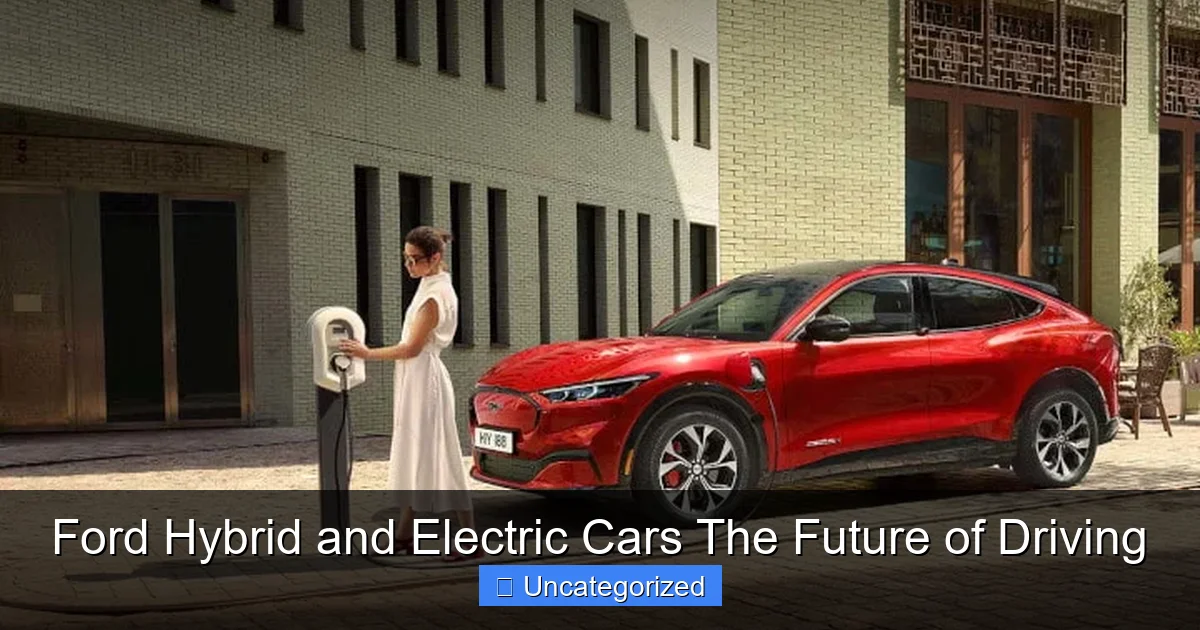
Featured image for ford hybrid and electric cars
Image source: keyscalesford.com
Ford hybrid and electric cars are revolutionizing the automotive industry with cutting-edge technology, impressive efficiency, and bold sustainability goals. From the rugged F-150 Lightning to the eco-friendly Escape Hybrid, Ford delivers powerful, innovative options that prove electrified driving doesn’t mean compromising performance or style. The future of driving is here—and Ford is leading the charge.
Key Takeaways
- Ford’s electric lineup offers zero-emission driving with models like Mustang Mach-E and F-150 Lightning.
- Hybrid options combine fuel efficiency and power, ideal for eco-conscious drivers needing flexibility.
- Advanced tech features include SYNC 4A, BlueCruise, and over-the-air software updates for enhanced convenience.
- Home charging solutions like Ford Charge Station Pro simplify EV ownership for daily use.
- Competitive pricing makes Ford EVs and hybrids accessible with federal and local incentives.
- Sustainable manufacturing reflects Ford’s commitment to reducing carbon footprint across production processes.
📑 Table of Contents
- The Dawn of a New Era in Ford’s Electric and Hybrid Journey
- Ford’s Electrification Strategy: Vision and Commitment
- Top Ford Hybrid and Electric Cars: Models and Features
- Charging and Range: Practical Tips for Everyday Use
- Cost, Incentives, and Total Ownership Value
- The Road Ahead: Ford’s Future in Electrification
- Conclusion: Embrace the Electric Revolution with Ford
The Dawn of a New Era in Ford’s Electric and Hybrid Journey
The automotive landscape is undergoing a seismic shift, and Ford hybrid and electric cars are at the heart of this transformation. As global concerns about climate change, rising fuel costs, and urban air quality intensify, Ford—a century-old titan of American innovation—is reinventing itself for a cleaner, smarter, and more sustainable future. No longer content with being known solely for muscle trucks and V8 engines, Ford has committed to a bold electrification strategy, investing over $50 billion in electric vehicles (EVs) and battery technology through 2026. This pivot isn’t just about meeting regulatory standards; it’s about leading a revolution in how we drive, commute, and interact with our vehicles.
From the rugged F-150 Lightning to the sleek Mustang Mach-E, Ford’s lineup of hybrid and electric vehicles (HEVs, PHEVs, and BEVs) blends performance, utility, and environmental responsibility in ways that were once considered impossible. Whether you’re a city commuter seeking efficiency, an outdoor enthusiast needing off-road capability, or a fleet operator aiming to reduce emissions, Ford offers a growing portfolio of electrified models that cater to diverse lifestyles. This comprehensive guide dives deep into Ford hybrid and electric cars, exploring their technology, performance, real-world benefits, charging infrastructure, and what the future holds for Ford’s electrified journey. Buckle up—this is more than just a change of powertrain; it’s a reimagining of mobility.
Ford’s Electrification Strategy: Vision and Commitment
Ford’s transition to electrification is not a sudden pivot but a carefully orchestrated, long-term strategy rooted in innovation, sustainability, and customer needs. The company’s vision is clear: to become a leader in the EV market by 2030, with 40% of its global vehicle volume being fully electric. This ambitious goal is backed by concrete investments, partnerships, and a reimagined manufacturing ecosystem.

Visual guide about ford hybrid and electric cars
Image source: fordauthority.com
Investment and Infrastructure
Ford has committed to spending more than $50 billion in EV development through 2026, with a significant portion allocated to battery technology and production. The company is building BlueOval SK, a joint venture with SK Innovation, to manufacture batteries at three new plants—two in Tennessee and one in Kentucky. These facilities will produce enough battery cells to power 1.2 million EVs annually by 2026, ensuring domestic supply chain resilience and reducing reliance on overseas components.
Additionally, Ford is investing in BlueOval City, a 6-square-mile mega-campus in Tennessee that will serve as a hub for EV and battery production. This site will be home to the next-generation electric F-Series trucks and will feature advanced automation, renewable energy integration, and zero-waste-to-landfill operations. These investments underscore Ford’s commitment to not just selling electric cars, but building them sustainably and at scale.
Product Roadmap: From Hybrids to Full Electrics
Ford’s electrification strategy includes a phased rollout of hybrid, plug-in hybrid (PHEV), and battery-electric vehicles (BEVs). The company’s approach is pragmatic: offer transitional technologies like hybrids to ease customers into electrification while rapidly expanding its BEV lineup. Key milestones include:
- 2023–2024: Launch of the all-electric F-150 Lightning, Mustang Mach-E, and E-Transit commercial van.
- 2025: Introduction of next-generation EVs built on the Ford Global Electric Vehicle Platform, including a three-row electric SUV and a mid-size electric pickup.
- 2030: Target of 40% global EV sales, with plans for a fully electric F-Series lineup.
This roadmap reflects Ford’s understanding that the transition to EVs must be inclusive—offering solutions for every driver, from budget-conscious families to commercial fleets.
Partnerships and Innovation
Ford isn’t going it alone. The company has forged strategic partnerships to accelerate innovation. For example, Ford is collaborating with Redwood Materials to develop a closed-loop battery recycling system, reducing waste and recovering valuable materials like lithium, cobalt, and nickel. It has also partnered with Google to integrate Google Cloud and Android Automotive into its SYNC infotainment system, enabling over-the-air updates, real-time navigation, and enhanced voice control.
Moreover, Ford is leveraging its heritage in truck engineering to create electric vehicles that don’t sacrifice capability. The F-150 Lightning, for instance, uses the same rugged chassis as the gas-powered F-150, ensuring it can tow up to 10,000 pounds—a critical factor for many buyers.
Top Ford Hybrid and Electric Cars: Models and Features
Ford’s current and upcoming lineup of hybrid and electric vehicles offers something for everyone. Below is a breakdown of the most significant models, highlighting their key features, performance specs, and ideal use cases.
Visual guide about ford hybrid and electric cars
Image source: evanshalshaw.com
1. Ford F-150 Lightning: The Electric Workhorse
The F-150 Lightning is more than just an electric pickup—it’s a game-changer. With a starting price of around $50,000 (before incentives), it delivers up to 320 miles of range (Extended Range model), dual electric motors producing up to 580 horsepower, and a 0–60 mph time of 4.0 seconds. But its real innovation lies in utility:
- Pro Power Onboard: Up to 9.6 kW of exportable power—enough to run a home for three days during a blackout or power tools on a job site.
- Front Trunk (Frunk): 14.1 cubic feet of secure, lockable storage—perfect for groceries, camping gear, or tools.
- BlueCruise Hands-Free Driving: Available on select trims, offering hands-free highway driving on over 130,000 miles of mapped roads.
Tip: If you frequently tow or carry heavy loads, opt for the Extended Range battery and Max Trailer Tow Package to maintain range under load.
2. Ford Mustang Mach-E: The Electric Performance SUV
The Mustang Mach-E brings the spirit of the iconic Mustang to the EV world. Available in rear-wheel drive (RWD) and all-wheel drive (AWD) configurations, it offers up to 314 miles of range (California Route 1 trim) and 480 horsepower (GT Performance Edition). Key features include:
- 15.5-inch SYNC 4A Touchscreen: With wireless Apple CarPlay, Android Auto, and over-the-air updates.
- Hands-Free Liftgate: Wave your foot under the rear bumper to open the trunk—ideal when your hands are full.
- Performance Options: The Mach-E GT can hit 60 mph in 3.5 seconds, rivaling many sports cars.
Tip: For city driving, the Standard Range model (247 miles) is sufficient and more affordable. Use FordPass Charging Network to locate fast chargers on long trips.
3. Ford Escape Hybrid and Plug-In Hybrid: Efficient Family SUVs
The Escape Hybrid (40 mpg combined) and Escape Plug-In Hybrid (PHEV) (37 miles electric-only range) are excellent choices for eco-conscious families. The PHEV can run on electricity for short commutes, then switch to gas for longer trips—ideal for drivers who don’t have home charging. Features include:
- Ford Co-Pilot360: Standard safety suite with adaptive cruise control, lane-keeping assist, and automatic emergency braking.
- Available AWD: Enhances traction in snowy or rainy conditions.
- Affordable Price: Starts around $28,000 for the hybrid, $35,000 for the PHEV.
Tip: Charge your Escape PHEV nightly to maximize electric-only driving and reduce fuel costs.
4. Ford E-Transit: The Electric Work Van
Designed for small businesses and delivery fleets, the E-Transit offers up to 126 miles of range (low-roof model) and can carry up to 4,000 pounds. It features:
- Multiple Configurations: Available in cargo, passenger, and cutaway models with varying roof heights.
- Ford Pro Charging Solutions: Customized charging plans and fleet management tools.
- Low Floor Design: Easier loading and unloading, reducing physical strain.
Tip: Pair the E-Transit with Ford Pro Telematics to monitor vehicle health, optimize routes, and reduce downtime.
5. Upcoming: Ford Explorer Electric and Next-Gen EVs
Ford is expanding its electric SUV lineup with the all-electric Explorer, expected in 2025. Built on the new Global EV Platform, it will offer three-row seating, over 300 miles of range, and advanced driver-assistance systems. Additionally, a mid-size electric pickup and a luxury electric sedan are in development, signaling Ford’s intent to compete across all segments.
Charging and Range: Practical Tips for Everyday Use
One of the biggest concerns for potential EV buyers is charging and range. Ford has addressed these challenges with a mix of technology, partnerships, and user-friendly solutions.
Home Charging: The Foundation
For most drivers, Level 2 (240V) home charging is the most convenient option. Ford recommends installing a Ford Connected Charge Station (priced around $799, with installation typically $500–$1,500). This charger adds about 25 miles of range per hour, allowing you to fully charge most Ford EVs overnight.
- Tip: Use a timer to charge during off-peak hours (e.g., 10 PM–6 AM) to save on electricity costs.
- Tip: If you rent or lack a garage, look into public charging or workplace charging programs.
Public Charging Networks
Ford provides access to over 100,000 charging plugs via the FordPass Charging Network, including partnerships with Electrify America, ChargePoint, and EVgo. Key features include:
- Plug & Charge: Automatically authenticates and pays for charging when you plug in—no app needed.
- FordPass App Integration: View real-time charger availability, start/stop charging, and monitor costs.
- Fast Charging: The F-150 Lightning and Mach-E can gain up to 70 miles in 10 minutes at a 150kW DC fast charger.
Range Management: Maximizing Efficiency
EV range isn’t fixed—it varies based on driving style, terrain, temperature, and accessories. Here’s how to optimize it:
- Use Regenerative Braking: Maximize energy recovery by using one-pedal driving (available on Mach-E and Lightning).
- Precondition the Battery: Use the FordPass app to warm or cool the battery while plugged in—this improves efficiency in extreme weather.
- Avoid Heavy Loads: Towing and roof racks reduce range by 20–30%. Plan trips accordingly.
- Check Tire Pressure: Underinflated tires increase rolling resistance and reduce range.
Example: A Mach-E with a 270-mile EPA range might deliver only 200 miles when towing a 3,000-pound trailer in cold weather. Use Ford’s Trip Planner in the SYNC system to estimate range under specific conditions.
Cost, Incentives, and Total Ownership Value
While EVs often have higher upfront costs than gas cars, their long-term value is compelling—especially with incentives, lower operating costs, and tax benefits.
Federal and State Incentives
The U.S. federal tax credit offers up to $7,500 for qualifying EVs. As of 2023, the F-150 Lightning and E-Transit are eligible, while the Mustang Mach-E is not (due to battery sourcing). Many states offer additional rebates:
- California: Up to $2,000 Clean Vehicle Rebate Project (CVRP).
- New York: $2,000 Drive Clean Rebate.
- Colorado: $5,000 tax credit for EVs under $50,000.
Tip: Check the Alternative Fuels Data Center (AFDC) website for state-specific incentives.
Operating Costs: Fuel, Maintenance, and Insurance
EVs are cheaper to maintain and fuel than gas cars:
- Fuel Savings: Charging a Mach-E costs about $600/year (vs. $1,800 for a gas SUV), assuming 12,000 miles and $0.13/kWh.
- Maintenance: No oil changes, spark plugs, or exhaust systems. Brakes last longer due to regenerative braking.
- Insurance: EVs can cost 10–20% more to insure due to higher repair costs, but some insurers offer EV discounts.
Resale Value and Depreciation
Early data shows Ford EVs are holding value well. The F-150 Lightning had a 70% retention rate after one year (2023), outperforming many gas trucks. However, rapid tech changes mean older EV models may depreciate faster. Consider certified pre-owned (CPO) programs for better value.
Total Cost of Ownership (TCO) Comparison
| Model | MSRP | 5-Year Fuel Cost | 5-Year Maintenance | Federal Incentive | Estimated TCO (5 Years) |
|---|---|---|---|---|---|
| F-150 Lightning (XLT) | $52,000 | $1,200 | $1,800 | $7,500 | $47,500 |
| F-150 (XLT, 3.5L V6) | $38,000 | $9,000 | $4,500 | $0 | $51,500 |
| Mustang Mach-E (Premium) | $47,000 | $1,000 | $1,500 | $0 | $49,500 |
| Escape Hybrid (SE) | $28,000 | $3,000 | $2,200 | $0 | $33,200 |
Note: TCO includes purchase price, fuel, maintenance, and incentives. Based on 12,000 miles/year and $3.50/gallon gas.
The Road Ahead: Ford’s Future in Electrification
Ford’s electrification journey is just beginning. The company is poised to leverage its strengths—truck expertise, manufacturing scale, and customer trust—to dominate the EV market. Key developments on the horizon include:
Next-Generation Battery Technology
Ford is investing in lithium iron phosphate (LFP) batteries for entry-level models, offering lower cost, longer cycle life, and improved safety. It’s also exploring solid-state batteries, which could double energy density and reduce charging time to under 10 minutes.
Vehicle-to-Everything (V2X) Integration
The F-150 Lightning already supports vehicle-to-grid (V2G) and vehicle-to-home (V2H) capabilities. Future models will integrate with smart grids, allowing EVs to supply power during peak demand and earn money for owners.
Autonomous Driving and Software
Ford is expanding BlueCruise to more models and regions, with plans for Level 3 autonomy by 2025. Its Ford Pro division is developing software for fleet management, predictive maintenance, and route optimization—creating a recurring revenue stream.
Sustainability and Circular Economy
Ford aims to achieve carbon neutrality by 2050, with interim goals of using 100% renewable energy in manufacturing by 2035. Its battery recycling program and use of recycled materials (e.g., ocean plastics in seat fabrics) reflect a commitment to sustainability beyond tailpipe emissions.
As Ford continues to innovate, one thing is clear: the future of driving isn’t just electric—it’s intelligent, sustainable, and accessible. With a diverse lineup of Ford hybrid and electric cars, the company is proving that you don’t have to sacrifice performance, utility, or style to go green.
Conclusion: Embrace the Electric Revolution with Ford
The era of internal combustion engines is winding down, and Ford hybrid and electric cars are leading the charge into a cleaner, smarter future. From the workhorse F-150 Lightning to the stylish Mustang Mach-E, Ford is delivering vehicles that meet the demands of modern drivers—without compromising on capability, comfort, or innovation. Whether you’re motivated by environmental responsibility, cost savings, or cutting-edge technology, Ford’s electrified lineup offers compelling reasons to make the switch.
But this isn’t just about buying a new car. It’s about participating in a broader transformation—one that includes home charging, smart grids, renewable energy, and a circular economy. Ford is not only building electric vehicles; it’s building an ecosystem around them. With robust charging networks, generous incentives, and a commitment to sustainability, the barriers to EV ownership are lower than ever.
So, if you’ve been waiting for the right moment to go electric, that moment is now. Test drive a Ford EV, explore available incentives, and experience the instant torque, whisper-quiet operation, and lower maintenance costs for yourself. The road ahead is electric, and Ford is paving the way. The future of driving isn’t just coming—it’s already here.
Frequently Asked Questions
What are the benefits of driving a Ford hybrid or electric car?
Ford hybrid and electric cars offer improved fuel efficiency, lower emissions, and reduced maintenance costs compared to traditional gas-powered vehicles. Many models also qualify for federal tax credits and provide a quieter, smoother driving experience.
How long does it take to charge a Ford electric car?
Charging times vary by model and charger type: Ford electric cars can take 30–40 minutes on a DC fast charger or 8–12 hours using a standard Level 2 home charger. The FordPass app helps locate nearby charging stations and monitor charging progress.
What is the driving range of Ford hybrid and electric vehicles?
Ford hybrids typically achieve 500–600 miles on a full tank, while electric models like the Mustang Mach-E offer up to 314 miles per charge. Range varies based on driving habits, terrain, and weather conditions.
Are Ford hybrid and electric cars more expensive to maintain?
No—these vehicles require less maintenance due to fewer moving parts, no oil changes, and regenerative braking systems that reduce wear on brakes. Ford’s warranty coverage also includes battery and electric components.
Which Ford hybrid or electric car is best for families?
The Ford Escape Hybrid and Explorer Hybrid offer spacious interiors and advanced safety features, making them ideal for family use. The all-electric Mustang Mach-E also provides ample cargo space and seating for five.
Does Ford offer home charging solutions for electric cars?
Yes, Ford provides the Connected Charge Station, a Level 2 home charger that can be installed indoors or outdoors. It integrates with the FordPass app for scheduling and monitoring charging sessions, making it convenient for daily use.