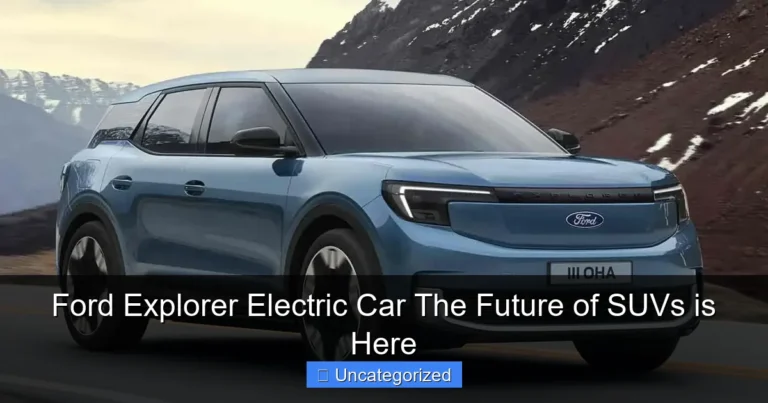
Ford Hybrids and Electric Cars The Future of Driving
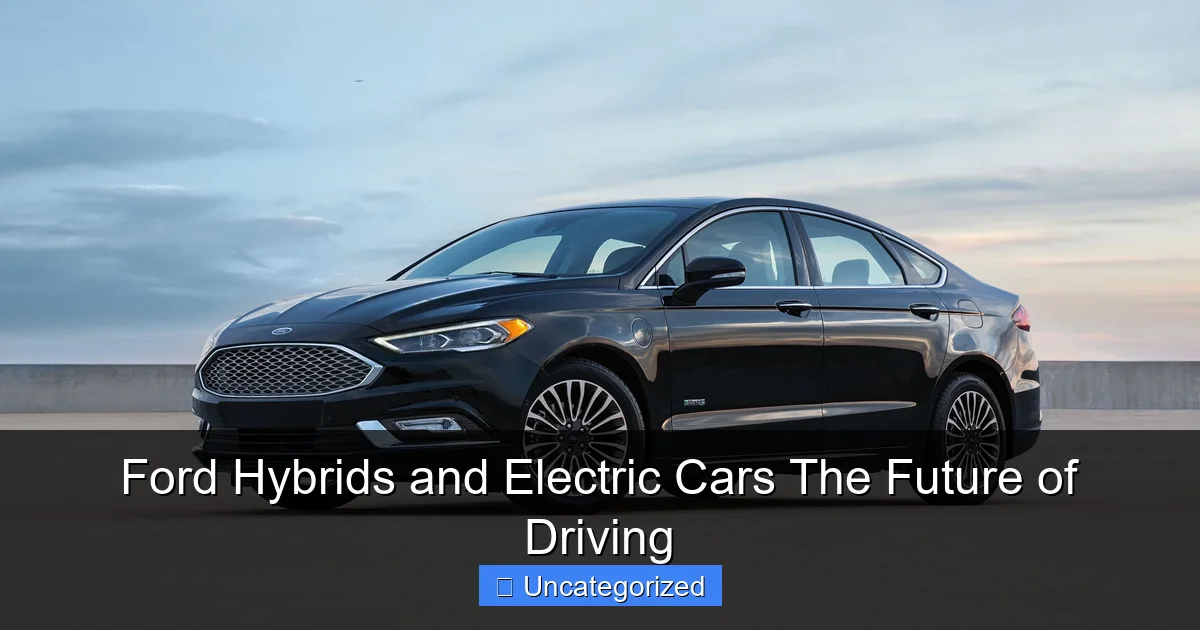
Featured image for ford hybrids and electric cars
Image source: images.hgmsites.net
Ford hybrids and electric cars are revolutionizing the automotive industry with cutting-edge technology, impressive fuel efficiency, and eco-friendly performance. From the rugged F-150 Hybrid to the all-electric Mustang Mach-E, Ford delivers powerful, sustainable options that meet the demands of modern drivers without compromising on style or capability.
Key Takeaways
- Ford’s EV lineup includes the Mustang Mach-E and F-150 Lightning for diverse needs.
- Hybrid efficiency like Escape Hybrid cuts fuel costs without sacrificing power.
- Charging infrastructure partnerships simplify long-distance EV travel nationwide.
- Tax incentives may reduce upfront costs for qualifying Ford EV buyers.
- Regenerative braking boosts efficiency and reduces brake wear in hybrids/EVs.
- FordPass app enables remote monitoring and control of charging/EV settings.
- Sustainability focus drives Ford’s shift toward 100% electric vehicle production.
📑 Table of Contents
- The Evolution of Ford: From Gasoline to Green
- Ford’s Electrified Lineup: Hybrids, Plug-in Hybrids, and EVs
- Technology and Innovation Behind Ford’s Electrified Vehicles
- Real-World Benefits of Driving Ford Hybrids and Electric Cars
- Challenges and Considerations for Prospective Buyers
- Data Table: Comparison of Key Ford Hybrid and Electric Models
- Conclusion: Driving Toward a Sustainable Future
The Evolution of Ford: From Gasoline to Green
The automotive landscape is undergoing a seismic shift, and at the forefront of this transformation stands Ford, one of America’s most iconic and enduring automakers. Once synonymous with roaring V8 engines and muscle-bound trucks, Ford is now reimagining its legacy for a new era—one defined by sustainability, innovation, and electrification. As climate concerns intensify and global emissions regulations tighten, Ford has made a bold commitment: to transition from a traditional internal combustion engine (ICE) manufacturer to a leader in hybrids and electric cars. With a $50 billion investment in electrification through 2026 and a vision to sell 2 million electric vehicles (EVs) annually by 2026, Ford is not just adapting to the future—it’s actively shaping it.
But this journey isn’t just about swapping gasoline for electrons. It’s about rethinking mobility from the ground up. Ford’s approach to hybrids and electric cars combines cutting-edge battery technology, intelligent software, and a deep understanding of what American drivers truly need—from long-haul truckers to urban commuters. Whether it’s the all-electric Ford F-150 Lightning, the hybrid Escape Hybrid, or the sleek Mustang Mach-E, Ford is proving that sustainability doesn’t mean sacrificing performance, comfort, or utility. This blog post dives deep into Ford’s electrified lineup, exploring the technology, benefits, challenges, and real-world implications of driving Ford’s hybrids and electric cars. Buckle up—the future of driving is here.
Ford’s Electrified Lineup: Hybrids, Plug-in Hybrids, and EVs
Hybrid Models: The Bridge to Electrification
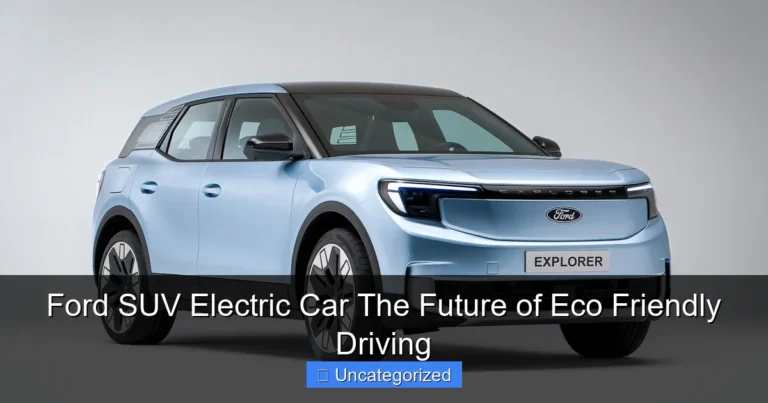
Ford’s hybrid vehicles serve as a crucial stepping stone for drivers not yet ready to go fully electric. These models combine a traditional gasoline engine with an electric motor and battery, offering improved fuel efficiency and reduced emissions without the range anxiety associated with pure EVs. Ford’s hybrid lineup includes the Ford Escape Hybrid and Ford Explorer Hybrid, both of which deliver significant fuel savings over their gasoline-only counterparts.
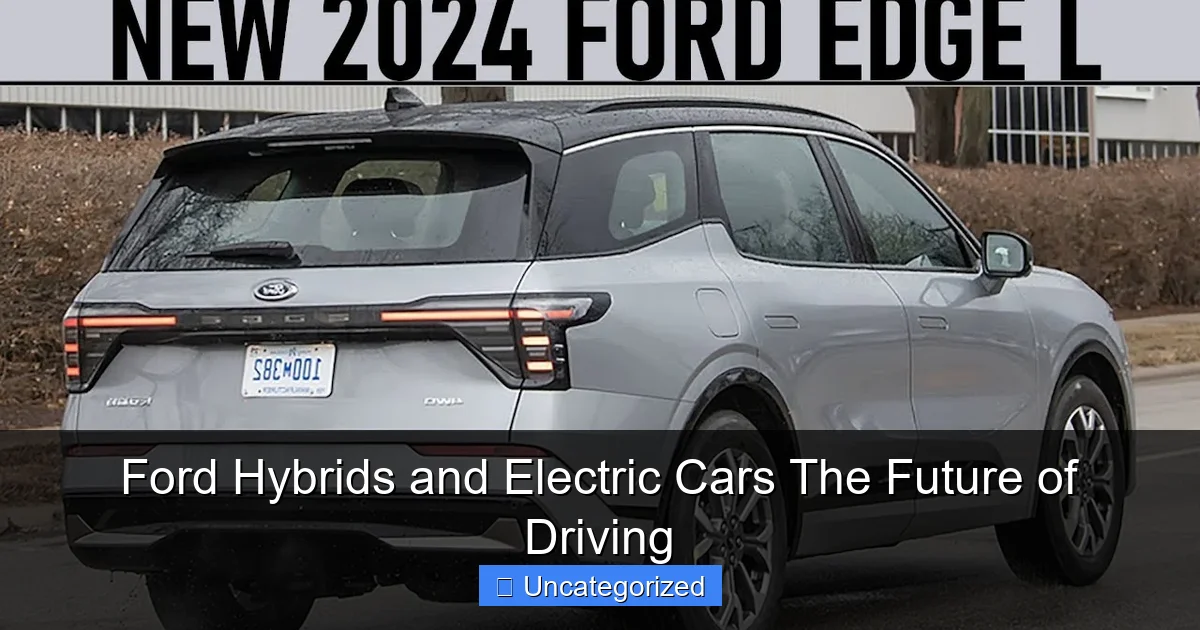
Visual guide about ford hybrids and electric cars
Image source: i.ytimg.com
The Ford Escape Hybrid, for example, achieves an EPA-estimated 40 mpg combined (44 mpg city), making it one of the most fuel-efficient compact SUVs in its class. It features a 2.5L Atkinson-cycle four-cylinder engine paired with an electric motor, delivering a total of 200 horsepower. The hybrid system automatically switches between electric-only, gasoline-only, or combined power depending on driving conditions. This seamless integration is ideal for city driving, where frequent stops and starts allow the electric motor to take over during low-speed cruising and regenerative braking to recharge the battery.
The Ford Explorer Hybrid takes a different approach. Designed for larger families and long-distance travelers, it uses a 3.3L V6 hybrid powertrain producing 318 horsepower. With an estimated 27 mpg combined, it offers a 25% improvement in fuel economy over the standard V6 Explorer. It also includes a 1.5 kWh lithium-ion battery and can tow up to 5,000 pounds—proof that hybrid technology doesn’t compromise utility.
Plug-in Hybrids: The Best of Both Worlds
For drivers seeking even greater efficiency and electric-only capability, Ford offers plug-in hybrid (PHEV) models like the Ford Escape Plug-in Hybrid and Ford Explorer Plug-in Hybrid. These vehicles can be charged at home or public stations, allowing for daily commutes on pure electricity before switching to hybrid mode for longer trips.
The Escape Plug-in Hybrid boasts an EPA-estimated 37 miles of all-electric range—more than enough for most daily commutes. After the battery depletes, it seamlessly transitions to hybrid mode, achieving 40 mpg combined. It features a 14.4 kWh battery, which can be fully charged in about 3.5 hours using a Level 2 charger (240V). This makes it ideal for urban drivers with access to home charging or workplace stations.
Similarly, the Explorer Plug-in Hybrid offers 27 miles of electric range and a total driving range of over 500 miles. It’s perfect for road-trippers who want to reduce fuel consumption during city segments while maintaining the ability to cover long distances without recharging. Both PHEVs come with Ford’s Co-Pilot360 suite of driver-assist technologies, including adaptive cruise control, lane-keeping assist, and automatic emergency braking.
All-Electric Vehicles: The Future Is Now
Ford’s all-electric lineup is where the company’s vision for the future truly shines. The Ford Mustang Mach-E and Ford F-150 Lightning are not just electrified versions of existing models—they’re redefining what these vehicles can be.
The Mustang Mach-E is a high-performance, all-electric SUV that pays homage to the Mustang’s heritage while embracing the future. It’s available in multiple configurations, from the standard-range rear-wheel-drive model (247 miles range) to the extended-range all-wheel-drive GT (270 miles range). The GT Performance Edition can accelerate from 0 to 60 mph in just 3.5 seconds—faster than many sports cars. With a minimalist interior, a 15.5-inch touchscreen, and Ford’s SYNC 4A infotainment system, the Mach-E blends luxury, tech, and performance in a way that’s uniquely Ford.
The F-150 Lightning is perhaps Ford’s most ambitious EV yet. Built on the best-selling vehicle in the U.S. for 46 years, the Lightning retains the rugged capability of the F-150 while offering groundbreaking electric features. It delivers up to 580 horsepower (in the extended-range model), 775 lb-ft of torque, and a towing capacity of 10,000 pounds. With an EPA-estimated range of 320 miles, it’s suitable for both work and weekend adventures. Unique features include Pro Power Onboard, which turns the truck into a mobile generator with up to 9.6 kW of power—perfect for job sites, tailgating, or emergencies.
Technology and Innovation Behind Ford’s Electrified Vehicles
Battery Technology and Range
At the heart of Ford’s hybrids and electric cars is its advanced battery technology. Ford uses lithium-ion batteries with nickel-manganese-cobalt (NMC) chemistry, which offers high energy density, fast charging, and long cycle life. The company has also invested in solid-state battery research through its partnership with Solid Power, aiming to deliver even higher energy density and faster charging in future models.
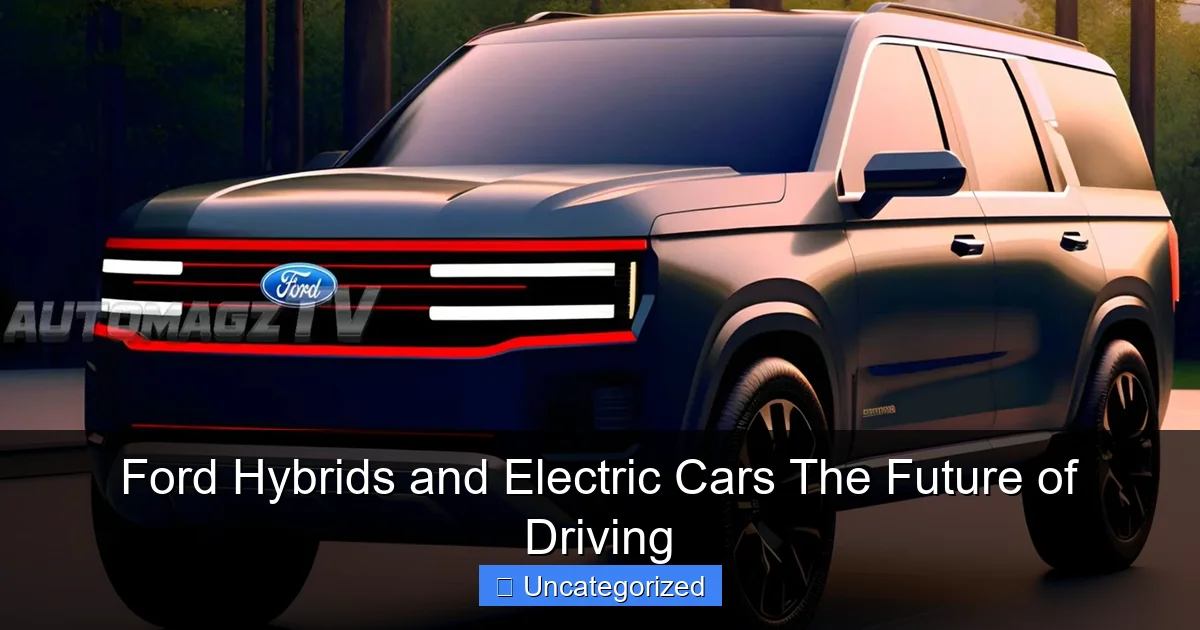
Visual guide about ford hybrids and electric cars
Image source: s1.cdn.autoevolution.com
For example, the F-150 Lightning uses a 131 kWh extended-range battery pack, which supports DC fast charging at up to 150 kW. This allows drivers to add 54 miles of range in just 10 minutes. The Mustang Mach-E, meanwhile, can charge from 10% to 80% in about 45 minutes using a DC fast charger. Ford also offers a FordPass Charging Network app, which gives drivers access to over 19,500 charging stations across North America, including 1,500 DC fast chargers.
Ford’s battery management systems (BMS) are designed to optimize performance and longevity. They monitor temperature, voltage, and state of charge in real time, ensuring safe and efficient operation. Additionally, Ford’s batteries come with an 8-year/100,000-mile warranty (or 10-year/150,000-mile in some states), giving buyers peace of mind.
Intelligent Software and Connectivity
Ford’s electrified vehicles are not just about hardware—they’re smart, connected ecosystems. All Ford EVs and hybrids come equipped with SYNC 4A, a next-generation infotainment system that supports over-the-air (OTA) updates, voice commands, and seamless smartphone integration (Apple CarPlay, Android Auto).
One standout feature is Ford Power-Up, which delivers OTA software updates that improve functionality, add new features, and even enhance battery performance. For example, an update in 2023 improved the Mach-E’s regenerative braking and added new driver-assist capabilities. This means your Ford can get smarter over time—without visiting a dealership.
Another innovation is BlueCruise, Ford’s hands-free driver-assistance system. Available on select models, it allows drivers to take their hands off the wheel on over 130,000 miles of pre-mapped highways in North America. Using a driver-facing camera and advanced sensors, BlueCruise monitors driver attention and ensures safety. It’s a major step toward semi-autonomous driving and a key selling point for tech-savvy buyers.
Sustainability and Manufacturing
Ford is committed to making its hybrids and electric cars as sustainable as possible—not just in use, but in production. The company has pledged to achieve carbon neutrality by 2050, with interim goals of 100% renewable energy in manufacturing by 2035.
The F-150 Lightning is assembled at the Ford Rouge Electric Vehicle Center in Dearborn, Michigan—a facility powered entirely by renewable energy. Ford has also partnered with SK On to build three battery plants in the U.S. (Tennessee and Kentucky), creating over 12,000 jobs and ensuring domestic supply chain resilience.
Additionally, Ford is exploring battery recycling through its BlueOval SK joint venture. By recovering and reusing materials like lithium, cobalt, and nickel, Ford aims to reduce waste and lower the environmental impact of battery production.
Real-World Benefits of Driving Ford Hybrids and Electric Cars
Cost Savings and Incentives
One of the biggest advantages of Ford’s hybrids and electric cars is long-term cost savings. While EVs often have a higher upfront price, they offer lower operating and maintenance costs over time. Electricity is cheaper than gasoline (on a per-mile basis), and EVs have fewer moving parts, reducing the need for oil changes, transmission repairs, and brake replacements (thanks to regenerative braking).
For example, the average U.S. driver spends about $1,500 annually on gasoline. A Ford Escape Hybrid can cut that cost by nearly half, while the F-150 Lightning could reduce it by over 70%. Over five years, that’s a savings of $5,000 to $7,500.
Buyers can also take advantage of federal and state incentives. The Federal EV Tax Credit offers up to $7,500 for qualifying vehicles (including the F-150 Lightning and Mustang Mach-E). Many states add additional rebates—California offers up to $2,000, while Colorado provides $5,000. Always check the Database of State Incentives for Renewables & Efficiency (DSIRE) for the latest offers.
Environmental Impact
Driving a Ford EV or hybrid significantly reduces your carbon footprint. According to the EPA, EVs produce zero tailpipe emissions, and even when charged with electricity from the grid (which includes fossil fuels), they emit less CO2 than gasoline vehicles over their lifetime.
A study by the Union of Concerned Scientists found that EVs produce less than half the emissions of comparable gasoline cars, even in regions with coal-heavy grids. In cleaner energy states like California or Washington, the difference is even greater. By switching to a Ford EV, the average driver can prevent over 5 tons of CO2 emissions per year—equivalent to planting 120 trees.
Hybrids also contribute to sustainability. The Escape Hybrid, for instance, emits 30% less CO2 than its gasoline counterpart. For drivers who aren’t ready to go fully electric, hybrids offer a meaningful step toward greener mobility.
Performance and Driving Experience
Contrary to the myth that EVs are “slow and boring,” Ford’s electric vehicles deliver thrilling performance. Instant torque from electric motors means rapid acceleration—the F-150 Lightning can hit 60 mph in 4.0 seconds (in the extended-range model). The Mustang Mach-E’s low center of gravity (due to the floor-mounted battery) enhances handling and stability, making it fun to drive on winding roads.
Hybrid models offer a smoother, quieter ride, especially in city traffic. The transition between electric and gasoline power is nearly imperceptible, and regenerative braking adds a one-pedal driving experience that many drivers love.
Tip: To maximize efficiency, use Eco Mode and One-Pedal Driving (available on most Ford EVs). These features optimize energy use and reduce brake wear.
Challenges and Considerations for Prospective Buyers
Charging Infrastructure and Range Anxiety
Despite the benefits, charging remains a concern for many buyers. While home charging is the most convenient (and cheapest) option, not everyone has access to a garage or driveway. Apartment dwellers or renters may struggle to install a Level 2 charger, and public charging networks are still unevenly distributed.
Ford addresses this with its FordPass Charging Network, which includes partnerships with ChargePoint, EVgo, and Electrify America. The app helps drivers locate nearby chargers, check availability, and pay seamlessly. Ford also offers free 240V home charger installation with EV purchases (through Qmerit), reducing the barrier to entry.
Range anxiety is real, but often overstated. Most Ford EVs offer over 250 miles of range—more than enough for 95% of daily commutes. For longer trips, planning is key. Use apps like A Better Routeplanner (ABRP) or PlugShare to map charging stops along your route.
Upfront Costs and Financing
While operating costs are lower, the initial price of Ford’s hybrids and electric cars can be higher than gasoline models. The F-150 Lightning starts at $49,995 (before incentives), compared to $33,695 for a base F-150. However, federal and state incentives, along with lower fuel and maintenance costs, can offset this over time.
Ford offers competitive financing and lease options. For example, the Mustang Mach-E is available with 0% APR for 60 months, and the F-150 Lightning qualifies for special commercial fleet discounts. Leasing is also a smart option for buyers who want to upgrade to newer technology every few years.
Maintenance and Service
EVs require less maintenance than gasoline cars, but they’re not maintenance-free. Tires, brakes (though less frequent), and cabin air filters still need attention. Ford’s network of certified EV service centers is growing, but availability varies by region.
Tip: Schedule regular battery health checks and use Ford’s FordPass app to monitor battery status, tire pressure, and software updates. Also, consider enrolling in Ford’s EV Protection Plan, which covers high-voltage components and roadside assistance.
Data Table: Comparison of Key Ford Hybrid and Electric Models
| Model | Type | Electric Range (miles) | Total Range (miles) | MPG / MPGe | Horsepower | 0-60 mph (sec) | Starting MSRP |
|---|---|---|---|---|---|---|---|
| Ford Escape Hybrid | Hybrid | 0 | 580 | 40 mpg combined | 200 | 8.0 | $31,995 |
| Ford Escape Plug-in Hybrid | Plug-in Hybrid | 37 | 520 | 100 MPGe / 40 mpg | 210 | 7.5 | $39,995 |
| Ford Explorer Hybrid | Hybrid | 0 | 500 | 27 mpg combined | 318 | 6.8 | $50,975 |
| Ford Mustang Mach-E | All-Electric | 247–314 | 247–314 | 100–103 MPGe | 266–480 | 3.5–6.1 | $42,995 |
| Ford F-150 Lightning | All-Electric | 230–320 | 230–320 | 70 MPGe | 452–580 | 4.0–4.5 | $49,995 |
Conclusion: Driving Toward a Sustainable Future
Ford’s journey into the world of hybrids and electric cars is more than a technological evolution—it’s a cultural and environmental imperative. From the efficient Escape Hybrid to the powerful F-150 Lightning, Ford is proving that electrification doesn’t mean compromise. These vehicles deliver on performance, utility, and sustainability, all while embracing cutting-edge technology and intelligent design.
The benefits are clear: lower fuel costs, reduced emissions, thrilling driving dynamics, and long-term savings. And with federal incentives, expanding charging networks, and Ford’s commitment to innovation, the barriers to adoption are lower than ever. Whether you’re a daily commuter, a weekend adventurer, or a fleet operator, there’s a Ford electrified vehicle that fits your needs.
As Ford continues to invest in battery technology, software, and manufacturing, the future of driving looks brighter—and greener. The transition to electric mobility isn’t just inevitable; it’s already happening. And with Ford leading the charge, American drivers have a trusted partner on the road ahead. The future isn’t coming—it’s already here. All you have to do is turn the key (or press the button) and drive.
Frequently Asked Questions
What Ford hybrids and electric cars are available in 2024?
Ford offers several popular models, including the Escape Hybrid, Explorer Hybrid, and the all-electric Mustang Mach-E and F-150 Lightning. These vehicles combine eco-friendly performance with Ford’s signature power and reliability.
How do Ford hybrids compare to traditional gas-powered models?
Ford hybrids deliver better fuel efficiency and lower emissions without sacrificing towing capacity or performance. For example, the Explorer Hybrid gets up to 27 MPG combined, outperforming its gas-only counterpart.
What is the driving range of Ford electric cars like the Mustang Mach-E?
The Mustang Mach-E offers an EPA-estimated range of up to 314 miles on a single charge, depending on the trim and battery size. This makes it a practical choice for both daily commutes and longer road trips.
Can Ford hybrids be plugged in to recharge?
Some Ford hybrids, like the Escape Plug-In Hybrid, have a rechargeable battery for short electric-only trips (up to 37 miles). Others, like standard hybrids, self-charge while driving and don’t require plugging in.
Are there tax incentives for buying Ford hybrids and electric cars?
Yes, many Ford electric and plug-in hybrid models qualify for federal tax credits up to $7,500, depending on your location and income. State-level incentives may also reduce the overall cost.
How long does it take to charge a Ford F-150 Lightning?
Using a Level 2 charger (240V), the F-150 Lightning can gain about 20-30 miles of range per hour, reaching full charge in roughly 8-10 hours. With a DC fast charger, you can get to 80% in just 41 minutes.