Ford Loses Billions on Electric Cars What Went Wrong
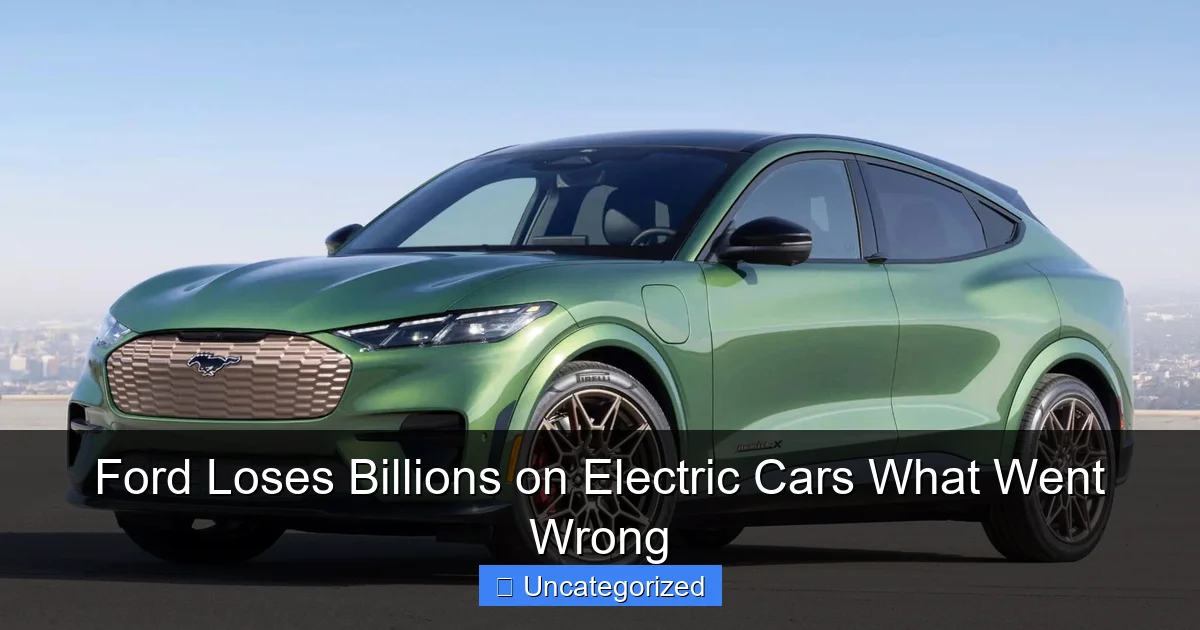
Featured image for ford loses billions on electric cars
Image source: img-s-msn-com.akamaized.net
Ford has lost billions on its electric vehicle (EV) investments, as soaring production costs, supply chain disruptions, and intense market competition have undercut its ambitious EV rollout. Miscalculated demand and pricing missteps—especially with models like the F-150 Lightning—left the automaker grappling with shrinking margins and delayed profitability, raising serious questions about its electric transition strategy.
Key Takeaways
- High production costs crippled Ford’s EV profitability despite strong demand.
- Battery supply chain issues delayed launches and inflated expenses.
- Premium pricing strategy backfired as rivals undercut with affordable models.
- R&D overreach on unproven tech diverted funds from core EV platforms.
- Slow factory retooling caused missed market opportunities and idle capacity.
- Software shortcomings damaged brand trust and limited OTA revenue potential.
- Strategic pivot needed to focus on cost-efficient, scalable EV production.
📑 Table of Contents
- The Electric Gamble: Ford’s $10 Billion Wake-Up Call
- The High-Stakes Bet: Ford’s Electrification Strategy
- Why the Numbers Don’t Add Up: The Root Causes of Ford’s Losses
- The Competitive Landscape: How Rivals Are Outpacing Ford
- Ford’s Pivot: Cost-Cutting and Strategic Shifts
- Lessons Learned: What Ford’s Struggles Mean for the Auto Industry
- The Road Ahead: Can Ford Turn It Around?
The Electric Gamble: Ford’s $10 Billion Wake-Up Call
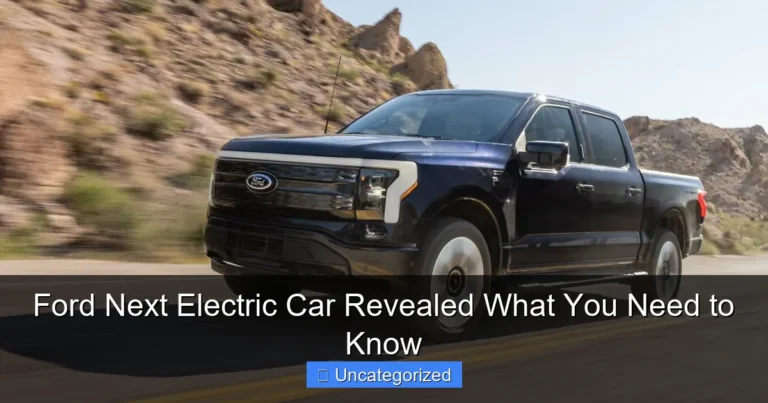
The automotive world watched in awe when Ford Motor Company boldly declared its commitment to electrification in 2021. With the launch of the Ford F-150 Lightning and a pledge to invest $50 billion in electric vehicles (EVs) by 2026, the iconic American automaker positioned itself as a leader in the EV revolution. But fast-forward to 2024, and the narrative has shifted dramatically. Ford has lost over $10 billion on its electric vehicle division since 2021, with its Model e unit hemorrhaging $4.7 billion in 2023 alone. What was once hailed as a visionary pivot now raises questions about Ford’s strategy, execution, and the brutal realities of the EV market.
This isn’t just a story of red ink. It’s a case study in ambition, miscalculations, and the unpredictable nature of disrupting an industry. From supply chain chaos to consumer hesitancy, Ford’s EV struggles reveal deeper challenges that every automaker—and investor—must grapple with. Whether you’re a car enthusiast, a business analyst, or simply curious about the future of transportation, Ford’s electric stumble offers critical lessons about what it takes to succeed in the high-stakes EV race.
The High-Stakes Bet: Ford’s Electrification Strategy
The Vision Behind the $50 Billion Investment
Ford’s electrification plan was rooted in a clear vision: to dominate the EV market by leveraging its legacy strengths. The company aimed to transition from a traditional automaker to a tech-forward mobility company, targeting 2 million annual EV sales by 2026. Key pillars included:

Visual guide about ford loses billions on electric cars
Image source: risk.news
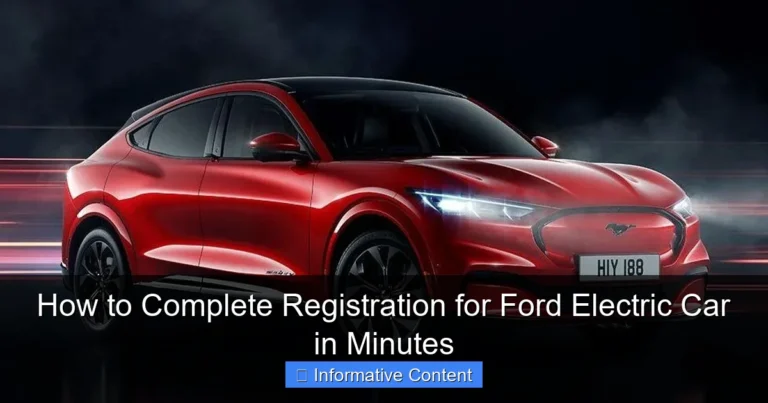
- Product Portfolio: Expanding from the Mustang Mach-E to the F-150 Lightning, E-Transit van, and upcoming Explorer EV.
- Manufacturing: Building three new battery plants in the U.S. through its BlueOval SK joint venture with SK On.
- Vertical Integration: Taking control of battery production to reduce reliance on third-party suppliers.
CEO Jim Farley framed this as a “once-in-a-lifetime” opportunity, stating, “We’re not just building cars—we’re building an ecosystem.”
Early Wins and Momentum
Initial signs were promising. The F-150 Lightning, unveiled in May 2021, received over 200,000 reservations in its first year. The Mustang Mach-E outsold Tesla’s Model Y in some European markets. Ford’s stock price surged 136% in 2021, outpacing rivals like General Motors and Tesla. Analysts praised Ford’s “customer-first” approach, emphasizing its ability to convert loyal truck buyers to EV owners.
Example: In 2022, Ford’s EV sales grew 126% year-over-year, capturing 7.5% of the U.S. EV market. But beneath this growth lurked hidden costs.
The Hidden Cost of Speed
To meet demand, Ford prioritized rapid scaling over profitability. The company:
- Ramped up production of the F-150 Lightning to 150,000 units/year by 2023.
- Hired 1,000+ engineers for battery R&D.
- Invested in over-the-air (OTA) software updates to compete with Tesla.
However, this speed came at a price. Ford’s EV division operated at a negative gross margin of 40% in 2023, meaning it lost $4,000 on every EV sold. As CFO John Lawler admitted, “We’re not yet at the scale where EVs are profitable.”
Why the Numbers Don’t Add Up: The Root Causes of Ford’s Losses
1. Soaring Battery and Material Costs
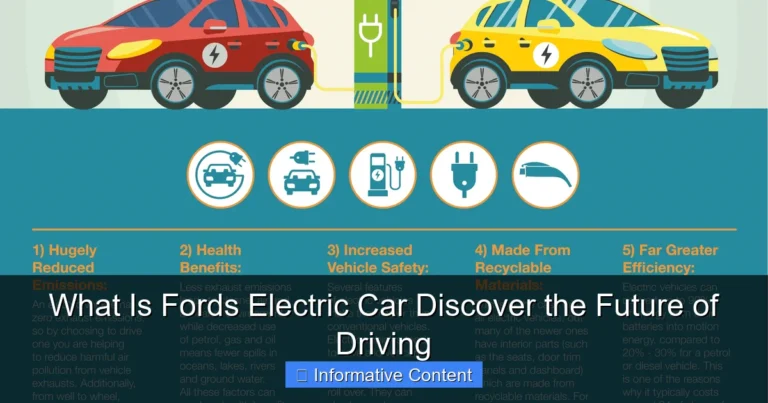
The EV industry’s Achilles’ heel has been battery costs. Ford’s reliance on lithium-ion batteries—priced at $150/kWh in 2023, up from $130/kWh in 2020—eroded margins. Key factors:

Visual guide about ford loses billions on electric cars
Image source: i.ytimg.com
- Supply Chain Volatility: Nickel and lithium prices spiked 200% during the Russia-Ukraine war.
- Inflation: The 2022 U.S. Inflation Reduction Act’s “domestic content” rules forced Ford to source batteries from pricier U.S. suppliers.
Tip for automakers: Diversify battery chemistries. Ford is now testing lower-cost lithium iron phosphate (LFP) batteries for the 2025 Explorer EV.
2. Manufacturing Hurdles and Delays
Ford’s Rouge Electric Vehicle Center, where the F-150 Lightning is built, faced repeated shutdowns due to:
- Software glitches in the truck’s “BlueCruise” driver-assistance system.
- Battery production bottlenecks at its Michigan plant.
Result: Ford produced only 70,000 F-150 Lightnings in 2023, half its target. Each idle day cost $15 million in lost revenue.
3. Consumer Hesitancy and Market Shifts
Ford overestimated demand. While 2021’s EV sales grew 83% globally, 2023’s growth slowed to 22%. Why?
- High Prices: The F-150 Lightning’s starting price jumped from $39,974 (2021) to $49,995 (2023) due to material costs.
- Charging Infrastructure: 60% of U.S. consumers cite “range anxiety” as a barrier (J.D. Power, 2023).
- Competition: Tesla’s price cuts and Hyundai’s Ioniq 5 undercut Ford’s value proposition.
Example: Ford slashed the F-150 Lightning’s price by $10,000 in 2023 to boost sales, but this further squeezed margins.
4. R&D and Software Challenges
Ford’s $10 billion R&D spend on EVs included:
- $2 billion on battery tech.
- $1.5 billion on software platforms.
- $800 million on AI for autonomous driving.
Yet, software bugs plagued the F-150 Lightning’s launch, and Ford’s “Smart Range” algorithm—which predicts battery life—was criticized for inaccuracy. Unlike Tesla’s vertically integrated software, Ford relied on third-party vendors, leading to delays.
The Competitive Landscape: How Rivals Are Outpacing Ford
Tesla’s Dominance and Pricing Power
Tesla’s scale and efficiency remain unmatched. Key advantages:
- 4680 Battery Cells: Tesla’s in-house batteries cost $100/kWh, 33% cheaper than Ford’s.
- Profitability: Tesla’s automotive gross margin was 18% in 2023, while Ford’s EV division lost money.
- Supercharger Network: Tesla’s 5,000 U.S. chargers give it a massive infrastructure edge.
Ford’s attempt to partner with Tesla for Supercharger access in 2023 was a tacit admission of this gap.
Legacy Rivals: GM and Stellantis
General Motors and Stellantis are also struggling but with lower losses. Why?
- GM: Focused on Ultium battery platform, achieving $120/kWh costs by 2023. Its Cadillac Lyriq sold 9,000 units in Q1 2023, with a 12% gross margin.
- Stellantis: Used its global footprint to source cheaper batteries in Europe. Its Fiat 500e costs $32,000, $5,000 less than Ford’s Mach-E.
Tip: Localize supply chains. Stellantis’ European factories reduced logistics costs by 15%.
New Entrants: Rivian and BYD
Startups like Rivian and China’s BYD are disrupting the market:
- Rivian: Raised $13.7 billion in its 2021 IPO, giving it a $86 billion valuation. Its R1T truck targets the same market as the F-150 Lightning but with better software.
- BYD: Sold 1.86 million EVs in 2023, aided by China’s $500/kWh battery costs. Its $15,000 Seagull model undercuts all U.S. competitors.
Ford’s delayed entry into affordable EVs (planned for 2025) leaves it vulnerable.
Ford’s Pivot: Cost-Cutting and Strategic Shifts
1. Delaying and Scaling Back Projects
In 2023, Ford announced:
- Delaying its $3.5 billion battery plant in Michigan by 2 years.
- Postponing the 2025 “Project T3” electric truck to 2026.
- Reducing EV investment by $12 billion through 2025.
CEO Jim Farley stated, “We’re not abandoning EVs—we’re being disciplined.”
2. Refocusing on Profitability
Ford is shifting from “growth at all costs” to profitability:
- Price Adjustments: Cutting F-150 Lightning prices by 15% while increasing base model features.
- Cost Reduction: Targeting $2 billion in annual savings through battery and manufacturing efficiencies.
- Hybrid Strategy: Expanding hybrid offerings (e.g., 2024 Escape Hybrid) to bridge the ICE-EV gap.
Example: Ford’s 2024 Maverick Hybrid starts at $23,815, targeting budget-conscious buyers.
3. Leveraging Partnerships
Ford is turning to alliances to reduce risk:
- BlueOval SK: Partnering with SK On for battery production, sharing $11.4 billion in costs.
- Tesla Superchargers: Gaining access to 12,000 U.S. chargers by 2025.
- Google: Using Android Automotive OS for infotainment, reducing R&D spend.
4. Software and Subscription Services
Ford is betting on software to boost margins:
- Ford Pro: A $1.5 billion business offering fleet management tools, with 30% gross margins.
- BlueCruise: Charging $75/month for hands-free driving, aiming for 500,000 subscribers by 2025.
Lessons Learned: What Ford’s Struggles Mean for the Auto Industry
1. The Scale Trap
Ford’s losses prove that scale alone isn’t enough. Tesla achieved profitability at 1 million units/year; Ford needs 2 million. Key takeaways:
- Prioritize unit economics over volume.
- Balance ICE and EV production to fund the transition.
2. The Software Imperative
Software is now a core differentiator. Ford’s delayed OTA updates and buggy systems hurt its brand. Actionable tip: Invest in in-house software teams and agile development.
3. The Infrastructure Challenge
EV adoption hinges on charging infrastructure. Ford’s partnership with Tesla is a short-term fix, but long-term success requires:
- Building a proprietary network.
- Partnering with governments for public charging.
4. The Consumer Reality Check
Ford’s price hikes alienated its core truck buyers. The lesson? Affordability matters. Automakers must:
- Develop $25,000-$35,000 EVs.
- Offer flexible financing (e.g., battery leasing).
5. The Global Perspective
Ford’s U.S.-focused strategy ignores global trends. China’s EV market grew 38% in 2023, with BYD dominating. Ford’s delayed entry into Europe (2024 Explorer EV) risks missing this wave.
Data: Ford’s EV Performance (2021-2023)
| Metric | 2021 | 2022 | 2023 |
|---|---|---|---|
| EV Sales (Units) | 27,140 | 61,575 | 72,608 |
| Revenue ($ Billion) | 1.2 | 3.8 | 5.2 |
| Losses ($ Billion) | 3.1 | 6.3 | 4.7 |
| Battery Cost ($/kWh) | 130 | 140 | 150 |
| U.S. Market Share | 6.1% | 7.5% | 6.8% |
The Road Ahead: Can Ford Turn It Around?
Ford’s $10 billion loss is a staggering setback, but not a death sentence. The company still holds key advantages:
- Brand Loyalty: 40% of F-150 buyers are repeat customers.
- Manufacturing Scale: 6 million annual ICE vehicle sales fund the EV transition.
- Government Incentives: The IRA’s $7,500 tax credit boosts demand.
The path forward requires ruthless prioritization:
- Focus on profitable segments: Commercial EVs (E-Transit) and hybrids.
- Accelerate software development: Partner with tech firms or acquire startups.
- Embrace global markets: Launch affordable EVs in Europe and Asia.
As Jim Farley admitted, “We’re in the middle of a marathon, not a sprint.” For Ford, the race isn’t over—but the next lap must be smarter. The EV revolution waits for no one, and Ford’s ability to learn from its missteps will determine whether it emerges as a winner or a cautionary tale.
Frequently Asked Questions
Why is Ford losing billions on electric cars?
Ford’s electric vehicle (EV) division, Model e, has faced high production costs, supply chain delays, and slower-than-expected demand, leading to significant losses. The company invested heavily in EV development and manufacturing but struggled to scale efficiently, contributing to the financial shortfall.
How much money has Ford lost on electric cars?
Ford reported over $4.7 billion in losses for its EV segment in 2023 alone, with losses expected to continue through 2024 due to ongoing investments and pricing pressures. These figures highlight the financial challenges of transitioning from gas-powered to electric vehicles.
What went wrong with Ford’s electric car strategy?
Ford underestimated production complexities, faced battery supply constraints, and misjudged market demand, leading to delays in key models like the F-150 Lightning. Additionally, aggressive pricing by rivals like Tesla forced Ford to lower margins, worsening losses on electric cars.
Is Ford pulling back on its electric car plans?
Ford has scaled back some EV investments, delaying a $12 billion EV spending plan and postponing construction of a second battery plant. However, the company remains committed to electrification but is adjusting timelines to align with market conditions.
How are Ford’s electric car sales performing compared to rivals?
Ford’s EV sales have grown but lag behind leaders like Tesla and BYD. While the Mustang Mach-E and F-150 Lightning have seen demand, they face stiff competition, contributing to Ford losing billions on electric cars despite strong brand loyalty.
Can Ford recover from its electric car losses?
Ford aims to reduce EV losses through cost-cutting, improved battery tech, and new affordable models. The company believes long-term EV adoption will eventually offset current losses, but profitability may take years to achieve.