Ford Making Electric Cars The Future of Driving is Here
Featured image for ford making electric cars
Image source: i.ytimg.com
Ford is revolutionizing the automotive industry with its bold commitment to electric vehicles, investing billions to expand its EV lineup and phase out gas-powered models. The future of driving is electric, and Ford’s cutting-edge innovations—like the F-150 Lightning and Mustang Mach-E—prove it’s leading the charge with performance, range, and sustainability.
Key Takeaways
- Ford invests heavily in EV tech to lead the electric revolution.
- Mustang Mach-E and F-150 Lightning redefine performance and utility.
- Expanding charging network ensures seamless long-distance travel.
- Sustainable manufacturing reduces environmental impact across production lines.
- Affordable EV options coming soon to democratize electric driving.
- Over-the-air updates keep vehicles cutting-edge after purchase.
📑 Table of Contents
- Ford Making Electric Cars: The Future of Driving is Here
- The Evolution of Ford’s Electric Vehicle Strategy
- Flagship Models: Ford’s Electric Vehicle Lineup
- Technology and Innovation: Powering Ford’s EVs
- Sustainability and Environmental Impact
- Challenges and the Road Ahead
- Conclusion: Ford’s Electric Future is Now
Ford Making Electric Cars: The Future of Driving is Here
When Henry Ford revolutionized the automotive industry over a century ago, he did so with the vision of making cars accessible to the masses. Today, Ford is once again at the forefront of a transportation revolution, this time embracing the shift to electric vehicles (EVs). The automaker, once synonymous with roaring V8 engines and gas-guzzling muscle cars, is now leading the charge into an electrified future. From the iconic F-150 Lightning to the sleek Mustang Mach-E, Ford is redefining what it means to drive an American car. With bold commitments to sustainability, cutting-edge technology, and customer-centric innovation, Ford’s electric vehicle lineup is not just a new chapter—it’s a full-scale transformation of the driving experience.
But what does this shift mean for consumers, the environment, and the automotive landscape as a whole? As governments worldwide push for stricter emissions standards and consumers demand cleaner, more efficient transportation, Ford is responding with a comprehensive strategy. The company has committed billions to electrification, aiming to produce 2 million EVs annually by 2026 and achieve carbon neutrality by 2050. This isn’t just a marketing ploy; it’s a fundamental reimagining of Ford’s identity. In this deep dive, we’ll explore Ford’s journey into the electric era, examining their flagship models, technological breakthroughs, infrastructure investments, and the real-world impact of their EV ambitions. Whether you’re a die-hard Ford fan, an eco-conscious driver, or simply curious about the future of mobility, this is the story of how Ford is making electric cars—and why it matters.
The Evolution of Ford’s Electric Vehicle Strategy
From Concept to Commitment: Ford’s Electrification Timeline
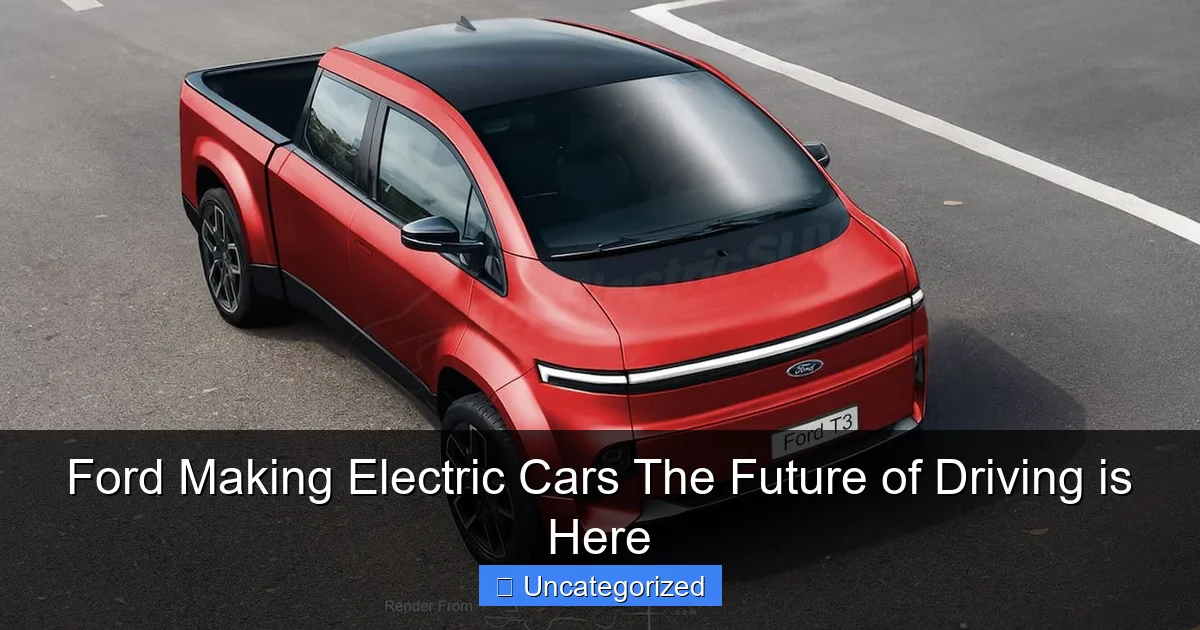
Ford’s journey into electric vehicles didn’t start with a sudden pivot. It began decades ago with experimental models like the 1998 Ford Ranger EV and the 2012 Focus Electric. However, these early attempts were limited in range, technology, and market appeal. The real turning point came in 2021 with the launch of the Mustang Mach-E, Ford’s first global all-electric SUV. This wasn’t just a new car; it was a statement. By naming an EV after the legendary Mustang, Ford signaled that electric performance could be thrilling, not just efficient.
Visual guide about ford making electric cars
Image source: topelectricsuv.com
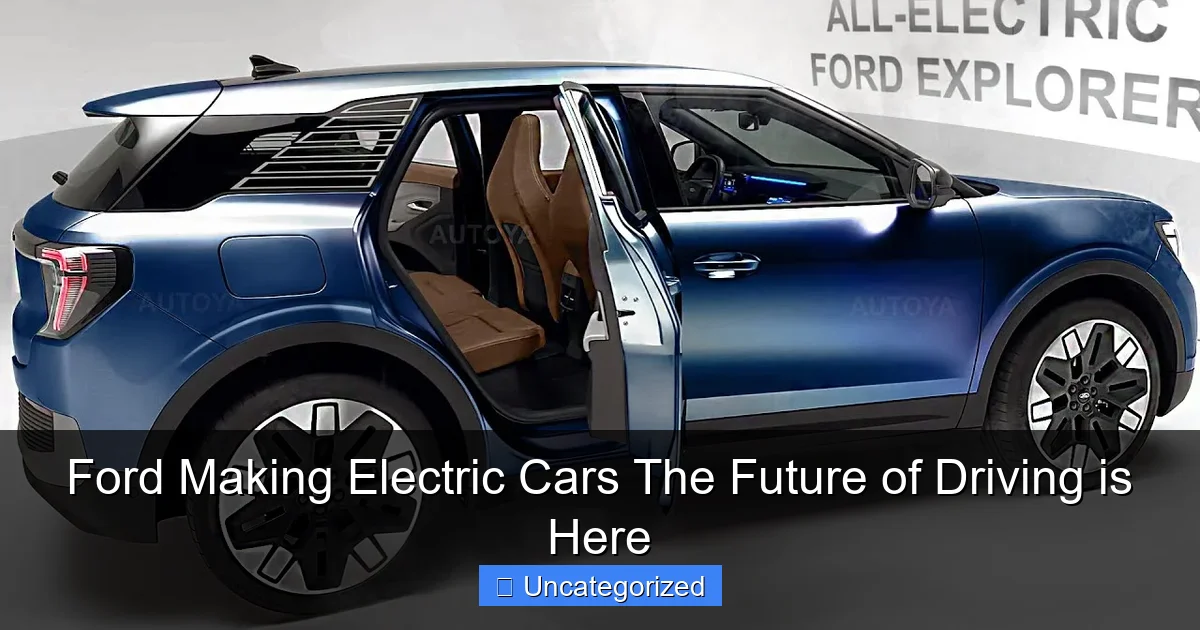
The momentum continued in 2022 with the introduction of the F-150 Lightning, the electric version of America’s best-selling vehicle. Unlike previous EVs, the Lightning wasn’t a niche product—it was a direct response to the needs of real-world drivers, from contractors to families. Ford followed up with the E-Transit, an all-electric van designed for commercial fleets, and the Explorer EV, set to launch in Europe. Each model represents a strategic move: electrifying Ford’s most popular and profitable vehicle segments.
Investing in the Future: Billions for Electrification
Ford’s commitment goes beyond vehicle launches. In 2021, the company announced a $30 billion investment in EVs and battery technology through 2025, later increasing it to $50 billion. A significant portion of this funding is directed toward building new battery plants, including the BlueOval SK joint venture with SK Innovation. These facilities will produce lithium-ion batteries for Ford and Lincoln EVs, reducing reliance on third-party suppliers and lowering production costs.
Additionally, Ford is investing in solid-state battery research through partnerships with companies like QuantumScape. These next-gen batteries promise higher energy density, faster charging, and improved safety—key factors in making EVs more competitive with internal combustion engine (ICE) vehicles. By controlling the battery supply chain, Ford aims to achieve price parity with traditional vehicles by the mid-2020s, a critical milestone for mass EV adoption.
Global Vision: Electrifying Ford’s Entire Lineup
Ford’s electrification isn’t limited to North America. In Europe, the company plans to sell only electric passenger vehicles by 2030 and has already launched the Explorer EV and Puma EV in key markets. In China, Ford is adapting its EV strategy to local preferences, partnering with local battery manufacturers and tailoring designs for urban commuters.
The company’s “Ford+ Plan” outlines a roadmap to electrify 40% of its global lineup by 2030, with full electrification of European vehicles by the same deadline. This global approach ensures that Ford’s EVs meet diverse market needs, from long-range highway drivers to city dwellers with limited parking.
Flagship Models: Ford’s Electric Vehicle Lineup
Mustang Mach-E: Performance Meets Practicality
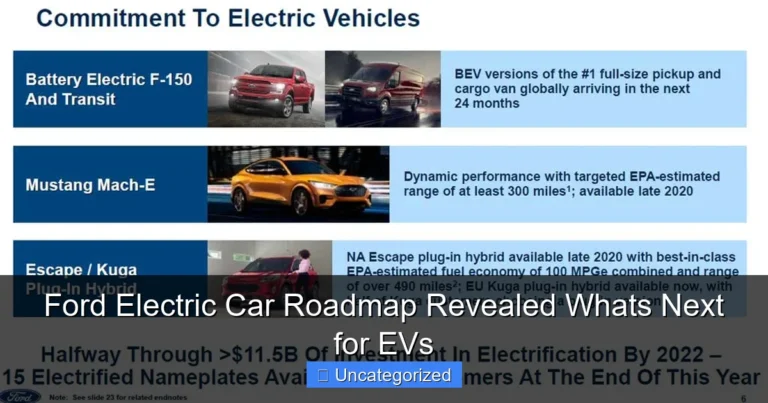
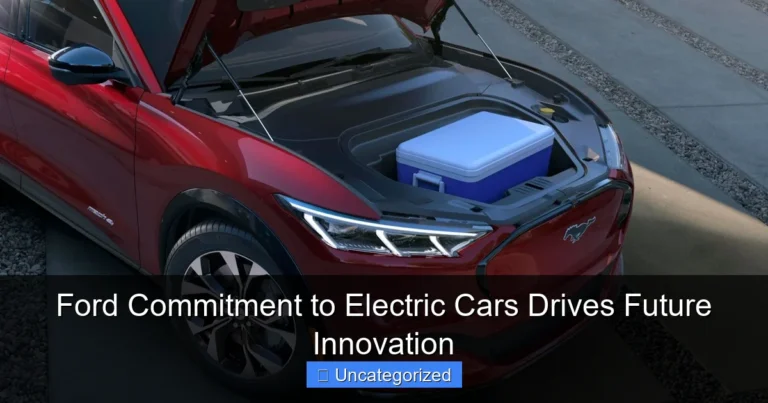
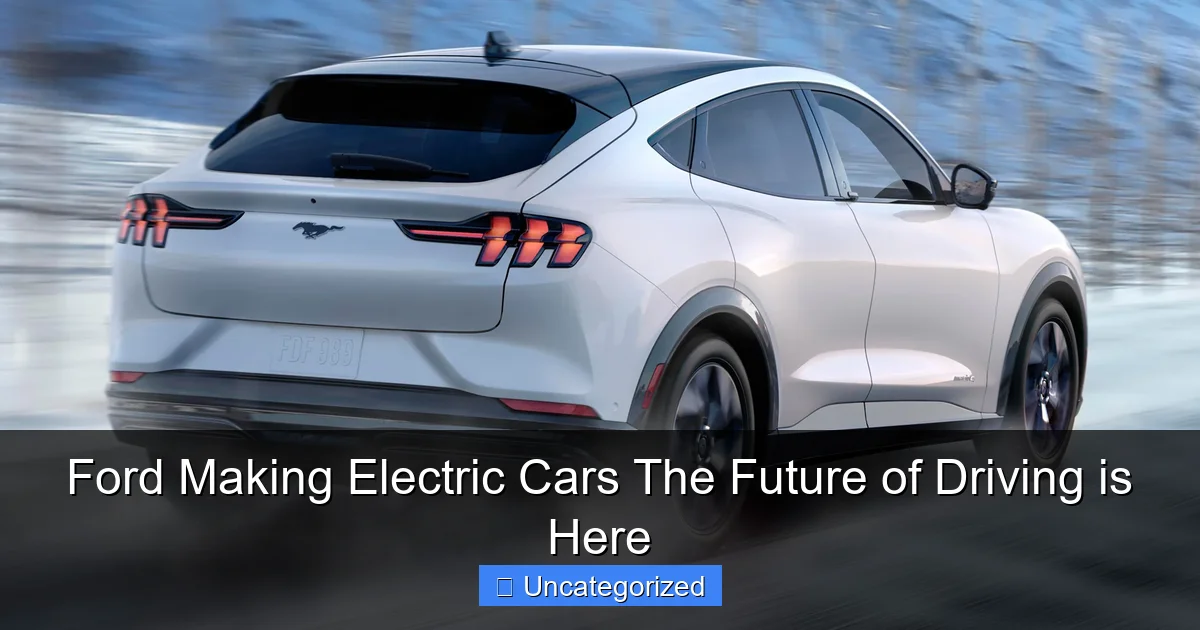
The Mustang Mach-E is more than just an electric SUV—it’s a cultural reset. With a starting price of $43,895 (before incentives), it offers up to 314 miles of range (on the California Route 1 trim), a 0-60 mph time of 3.5 seconds (in GT Performance trim), and seating for five. Unlike traditional SUVs, the Mach-E features a spacious front trunk (“frunk”) with 4.8 cubic feet of storage—perfect for groceries or camping gear.
Visual guide about ford making electric cars
Image source: motortrend.com
Key features include:
- Ford BlueCruise: A hands-free driving system for highways (available on select trims).
- SYNC 4A Infotainment: A 15.5-inch touchscreen with cloud-based navigation and over-the-air updates.
- One-Pedal Driving: Regenerative braking that slows the car when you lift off the accelerator, reducing wear on brake pads.
Real-world example: A Mach-E owner in Colorado reported saving over $1,200 annually on fuel and maintenance compared to their previous gasoline SUV, with no range anxiety during winter commutes.
F-150 Lightning: The Electric Workhorse
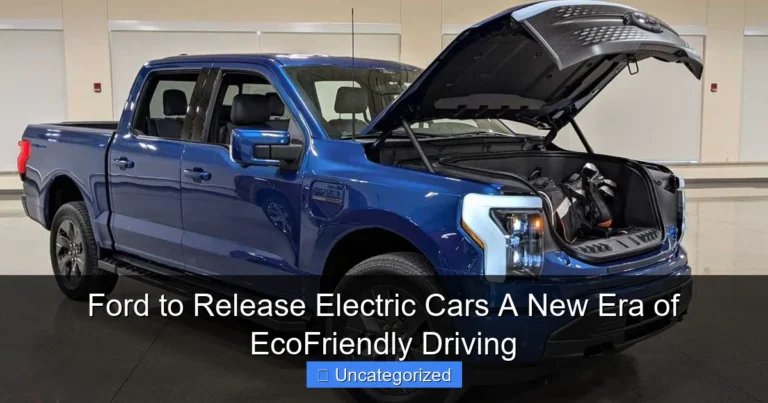
The F-150 Lightning is Ford’s most ambitious EV yet. Priced from $49,995, it retains the ruggedness of the F-150 while adding electric advantages. With 580 horsepower and 775 lb-ft of torque, it outperforms the gas-powered F-150 in acceleration and towing (up to 10,000 lbs). But the Lightning’s true innovation lies in its Pro Power Onboard system, which provides up to 9.6 kW of electricity—enough to power tools, campsites, or even a home during a blackout.
Notable features:
- Mega Power Frunk: A 14.1 cubic-foot front trunk with outlets and a drain for easy cleaning.
- Intelligent Range: A system that adjusts range estimates based on weather, terrain, and driving habits.
- FordPass App: Remote start, charge scheduling, and vehicle diagnostics.
Tip: For contractors, the Lightning’s ability to power job sites eliminates the need for noisy generators. A landscaping company in Texas reported a 30% reduction in equipment costs after switching to Lightning trucks.
E-Transit: Electrifying Commercial Fleets
The E-Transit is Ford’s answer to the growing demand for sustainable delivery and service vehicles. With a 126-mile range and a 67 MPGe efficiency rating, it’s ideal for urban routes. The van offers three roof heights, three lengths, and a maximum payload of 3,800 lbs—comparable to its gas counterpart.
Fleet managers benefit from:
- Lower Operating Costs: 45% lower fuel and 40% lower maintenance costs over five years.
- Ford Pro Intelligence: Telematics and charging management tools for optimizing fleet performance.
- Government Incentives: Up to $7,500 in U.S. tax credits and state-level rebates.
Upcoming Models: The Road Ahead
Ford has teased several upcoming EVs, including:
- Explorer EV: A European-focused SUV with a 300+ mile range.
- Lincoln Star Concept: A luxury EV with a “coast-to-coast” panoramic display.
- Next-Gen F-Series EV: Rumored to feature a 400+ mile range and bidirectional charging.
Technology and Innovation: Powering Ford’s EVs
BlueOval Charging Network: Solving the Range Anxiety Problem
One of the biggest barriers to EV adoption is charging infrastructure. Ford addresses this with the BlueOval Charge Network, a partnership with Electrify America, ChargePoint, and other providers. Drivers can access over 100,000 public charging stations in North America, with seamless navigation and payment via the FordPass app.
Key features:
- Plug & Charge: Automatically starts charging when you plug in (available on Mach-E and Lightning).
- Home Charging: Ford offers a 48-amp Level 2 charger ($799) with installation support.
- Roadside Assistance: Free towing to the nearest charger if the battery runs out.
Example: A Mach-E owner in California completed a 1,200-mile road trip using only BlueOval Network chargers, with an average charge time of 30 minutes at 150 kW stations.
Ford Power-Up: Over-the-Air Updates
Ford’s EVs receive Power-Up updates that improve performance, add features, and fix bugs—just like a smartphone. The Mach-E, for instance, gained a 10% range increase and new driver-assist features via a 2023 update.
Tips for owners:
- Keep your vehicle connected to Wi-Fi for automatic updates.
- Check the FordPass app for update notifications.
- Schedule updates during off-peak hours to avoid interruptions.
Bidirectional Charging: Powering Homes and Grids
The F-150 Lightning’s Intelligent Backup Power can supply a home with electricity for up to three days during an outage (with a 131 kWh battery). Ford is also piloting vehicle-to-grid (V2G) programs, where EVs feed power back into the grid during peak demand, earning owners credits.
Real-world impact: During a 2022 Texas storm, Lightning owners reported powering their homes for over 48 hours, with no generator noise or emissions.
Sustainability and Environmental Impact
Reducing Carbon Footprint: From Factory to Road
Ford’s EVs are designed with sustainability in mind. The Rouge Electric Vehicle Center, where the Lightning is built, uses 100% renewable energy and recycles 95% of its water. The Mach-E’s interior features recycled materials, including seat fabrics made from 300 plastic bottles.
Data table: Environmental benefits of Ford EVs vs. ICE vehicles (over 5 years):
| Vehicle | CO2 Emissions (tons) | Energy Use (kWh) | Maintenance Costs |
|---|---|---|---|
| F-150 Lightning (EV) | 12.5 | 15,000 | $1,200 |
| F-150 (Gas) | 35.0 | 30,000 | $3,500 |
| Mustang Mach-E (EV) | 10.0 | 12,000 | $900 |
| Mustang (Gas) | 32.5 | 28,000 | $3,200 |
Recycling and Second-Life Batteries
Ford is pioneering battery recycling through a partnership with Redwood Materials. Used EV batteries are processed to recover 95% of nickel, cobalt, and lithium, which are reused in new batteries. Additionally, retired batteries are repurposed for grid storage, extending their lifespan by up to 10 years.
Community and Policy Advocacy
Ford actively supports policies that promote EV adoption, such as the U.S. Inflation Reduction Act’s tax credits and California’s zero-emission vehicle mandates. The company also funds charging infrastructure in underserved communities through its Charging Equity Initiative.
Challenges and the Road Ahead
Overcoming Supply Chain Hurdles
The EV revolution isn’t without obstacles. Ford has faced delays due to semiconductor shortages and battery material constraints. To mitigate this, the company is diversifying its supply chain, sourcing lithium from Canada and Australia, and investing in lithium-iron-phosphate (LFP) batteries, which are cheaper and more abundant than nickel-based batteries.
Competition and Market Positioning
Ford competes with Tesla, GM, and Rivian in the EV space. While Tesla leads in range and tech, Ford differentiates itself with proven durability, familiar design, and work-ready features. The Lightning, for example, outsold the Tesla Cybertruck in 2023 due to its practicality and brand trust.
The Human Factor: Training and Support
Ford is retraining 100,000 employees in EV technology and expanding its Ford Pro service network to support commercial EV fleets. Dealerships now offer EV-specific maintenance, including battery health checks and charging consultations.
Conclusion: Ford’s Electric Future is Now
Ford’s transition to electric vehicles isn’t just about replacing engines with motors—it’s a holistic reimagining of mobility. By electrifying its most iconic models, investing in cutting-edge technology, and prioritizing sustainability, Ford is proving that the future of driving can be both thrilling and responsible. The Mustang Mach-E delivers performance without compromise, the F-150 Lightning redefines utility, and the E-Transit paves the way for greener commerce. With a robust charging network, over-the-air updates, and a commitment to affordability, Ford is making EVs accessible to everyone.
As the automotive industry hurtles toward an electrified future, Ford’s strategy stands out for its balance of innovation and practicality. Whether you’re a weekend warrior, a busy parent, or a business owner, there’s a Ford EV designed for your life. The message is clear: the future of driving isn’t just here—it’s already on the road, and it’s powered by Ford. So, the next time you see a Lightning charging at a rest stop or a Mach-E zipping through traffic, remember: you’re witnessing history in the making. The era of Ford electric cars has arrived, and it’s changing everything.
Frequently Asked Questions
Why is Ford making electric cars now?
Ford is making electric cars to meet growing consumer demand for sustainable transportation and comply with stricter global emissions regulations. The shift also positions Ford as a leader in the auto industry’s transition to cleaner, innovative technologies.
What are the benefits of Ford’s electric cars compared to gas models?
Ford’s electric cars offer lower operating costs, reduced emissions, and smoother acceleration without the need for gas or oil changes. They also feature advanced tech like over-the-air updates and regenerative braking.
How far can Ford’s electric cars travel on a single charge?
Depending on the model, Ford’s electric vehicles (like the Mustang Mach-E and F-150 Lightning) offer ranges from 240 to over 300 miles per charge. Real-world range may vary based on driving habits and conditions.
Is Ford making electric cars affordable for everyday drivers?
Ford aims to make electric vehicles more accessible with competitive pricing, tax incentives, and expanding charging infrastructure. Models like the upcoming electric Explorer are designed to fit a variety of budgets.
What charging options do Ford’s electric cars support?
Ford’s electric cars work with home chargers, public networks like FordPass Charging, and fast chargers that can add 50–100 miles of range in 10–20 minutes. The brand also partners with third-party networks for nationwide coverage.
Are Ford’s electric vehicles reliable and safe?
Yes, Ford’s electric cars undergo rigorous testing and include advanced safety features like automatic emergency braking and blind-spot monitoring. They also come with comprehensive warranties covering the battery and drivetrain.