Ford Model A Electric Car The Future of Classic Driving
Featured image for ford model a electric car
Image source: newkidscar.com
The Ford Model A Electric Car reimagines a vintage icon with cutting-edge EV technology, delivering zero-emission performance without sacrificing classic style. Seamlessly blending retro design with modern innovation, this electrified classic offers instant torque, whisper-quiet operation, and sustainable driving for purists and eco-conscious enthusiasts alike. It’s not just a restoration—it’s the bold evolution of an American legend.
Key Takeaways
- Classic design meets modern tech: The Ford Model A Electric blends vintage aesthetics with cutting-edge EV performance.
- Zero emissions, timeless style: Drive sustainably without sacrificing the iconic look of a classic car.
- Upgrade your ride: Retrofitting kits make switching to electric easier than ever for Model A owners.
- Lower maintenance costs: Electric drivetrains reduce upkeep compared to traditional combustion engines.
- Silent, smooth acceleration: Enjoy instant torque and a quiet driving experience in a vintage package.
- Future-proof collectible: Electric conversions increase long-term value and relevance for classic car enthusiasts.
📑 Table of Contents
- The Dawn of a New Era: Reviving the Iconic Ford Model A with Electric Power
- Why Convert a Classic? The Rise of Electric Restomods
- Inside the Conversion: How the Ford Model A Becomes Electric
- Performance and Range: What to Expect from the Electric Model A
- Cost and DIY vs. Professional Conversion: What’s Right for You?
- The Future of Classic EVs: Where the Model A Fits In
- Conclusion: The Classic Car Reimagined
The Dawn of a New Era: Reviving the Iconic Ford Model A with Electric Power
The Ford Model A, introduced in 1927, was a groundbreaking vehicle that revolutionized the automotive industry with its affordability, reliability, and timeless design. For decades, this classic car has captured the hearts of collectors, historians, and driving enthusiasts alike. Fast forward to the 21st century, and the Ford Model A is experiencing a resurrection—not as a fossilized relic of the past, but as a forward-thinking, eco-friendly marvel. Enter the Ford Model A Electric Car: a modern interpretation of an American icon, blending vintage charm with cutting-edge electric vehicle (EV) technology.
This transformation isn’t just about aesthetics or nostalgia. It’s about reimagining what a classic car can be in an era defined by sustainability, innovation, and performance. The electric conversion of the Ford Model A represents a bridge between eras—where the simplicity of early automotive engineering meets the sophistication of lithium-ion batteries, regenerative braking, and whisper-quiet electric motors. Whether you’re a classic car purist, an EV enthusiast, or simply someone who appreciates the fusion of history and progress, the Ford Model A electric car offers something truly unique: the future of classic driving.
Why Convert a Classic? The Rise of Electric Restomods
The concept of restomodding—restoring classic cars with modern components—has surged in popularity over the last decade. Among these upgrades, electric conversions are leading the charge, and the Ford Model A is a prime candidate. But why convert a perfectly good vintage car into an EV? The answer lies in a combination of environmental responsibility, performance enhancement, and practical usability.
Visual guide about ford model a electric car
Image source: img.etnews.com
Environmental and Economic Advantages
Classic cars like the original Model A were powered by inefficient internal combustion engines (ICEs) that emitted high levels of CO2, hydrocarbons, and particulate matter. Converting them to electric power drastically reduces their carbon footprint. According to the U.S. Department of Energy, EVs produce zero tailpipe emissions, and even when accounting for electricity generation, their lifetime emissions are 60–68% lower than gasoline vehicles.
Moreover, electric conversions can save owners money in the long run. With fewer moving parts, EVs require less maintenance—no oil changes, spark plugs, or exhaust systems to worry about. Electricity is also generally cheaper than gasoline per mile driven. For example, driving 10,000 miles annually at $0.13/kWh costs around $520, compared to $1,400+ for a gas-powered Model A averaging 15 mpg at $3.50/gallon.
Performance Meets Nostalgia
While the original Model A produced a modest 40 horsepower, an electric conversion can deliver instant torque and significantly improved acceleration. Modern electric motors can easily produce 100–150 horsepower with smooth, linear power delivery. This means a converted Model A can go from 0–60 mph in under 8 seconds—a dramatic improvement over the original’s 20+ second time.
Additionally, regenerative braking systems allow the car to recapture energy during deceleration, improving efficiency and reducing brake wear. For city driving or stop-and-go traffic, this feature is a game-changer, making the Model A electric car not just a showpiece, but a practical daily driver.
Real-World Example: The “Amp’d A” Project
One standout example is the “Amp’d A” by Electric GT, a California-based EV conversion shop. This Model A features a 100 kW AC motor, a 40 kWh battery pack, and a range of 120 miles. It retains the original body and interior but includes a digital dashboard, heated seats, and modern suspension. The result? A car that turns heads at car shows and performs reliably on modern roads.
Inside the Conversion: How the Ford Model A Becomes Electric
Converting a Ford Model A into an electric car is no small feat. It requires a meticulous blend of engineering, craftsmanship, and respect for the original design. The process typically takes 300–500 hours and involves several key stages, each with its own challenges and solutions.

Visual guide about ford model a electric car
Image source: static.designboom.com
1. Removing the ICE Components
The first step is stripping the car of its original engine, transmission, fuel tank, exhaust system, and radiator. This “de-ICEing” process is crucial to make room for the new electric drivetrain. The engine bay, once filled with a 3.3L four-cylinder, becomes the housing for the electric motor, controller, and cooling system.
Tip: Always document the original components with photos and measurements. This helps preserve the car’s history and allows for potential reversion to gas power if desired.
2. Battery Pack Integration
The battery pack is the heart of the electric Model A. Most conversions use lithium-ion (Li-ion) or lithium iron phosphate (LiFePO4) batteries due to their energy density, longevity, and safety. A typical 40–50 kWh pack is split between the engine bay and the trunk to maintain the car’s original weight distribution.
- Engine Bay: Houses 60–70% of the battery cells, often in custom aluminum enclosures.
- Trunk: Contains the remaining cells and the battery management system (BMS), which monitors voltage, temperature, and state of charge.
Example: A conversion by Zelectric Motors uses a 45 kWh LiFePO4 pack with a modular design, allowing for easier servicing and future upgrades.
3. Motor and Drivetrain Setup
The electric motor replaces the original transmission. Most builders use a direct-drive or single-speed reduction gear system to connect the motor to the rear differential. This eliminates the need for a traditional gearbox, simplifying the drivetrain and reducing mechanical losses.
Common motor choices include:
- AC Induction Motors: Durable and efficient (e.g., AC-50 or AC-51).
- Brushless DC Motors: Compact and high-torque (e.g., NetGain Warp9).
Tip: Ensure the motor’s torque curve matches the car’s weight and intended use. A high-torque motor is ideal for city driving, while a higher-RPM motor suits highway speeds.
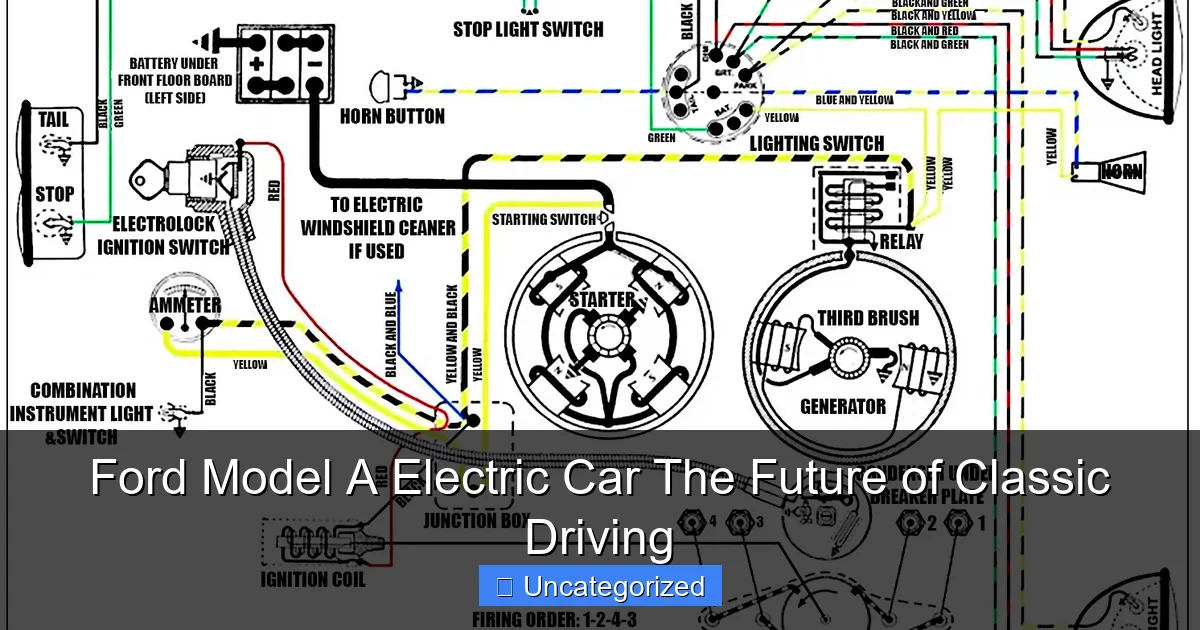
4. Electrical and Control Systems
This phase involves installing:
- Motor Controller: Regulates power delivery from the battery to the motor.
- DC-DC Converter: Powers 12V accessories (lights, wipers, horn).
- Charging Port: Usually a J1772 or CCS connector, mounted in the original gas cap location.
- Dashboard Interface: Modern gauges showing speed, battery level, and energy consumption.
Pro Tip: Use shielded wiring and proper grounding to prevent electromagnetic interference (EMI) with vintage electronics.
5. Cooling and Safety
EV components generate heat, so a liquid cooling system is essential for the battery and motor. A small radiator and electric pump circulate coolant through the pack. Safety features include:
- High-Voltage Cutoff: Automatically disconnects power in a crash.
- Fire-Resistant Enclosures: For batteries and high-voltage cables.
- Ground Fault Detection: Prevents electrical shocks.
Performance and Range: What to Expect from the Electric Model A
One of the biggest questions about any EV conversion is: “How far will it go?” The answer depends on several factors, including battery capacity, driving habits, terrain, and weather. However, most Ford Model A electric conversions offer a practical range that rivals modern EVs—especially for urban and suburban use.
Battery Capacity and Range Breakdown
Here’s a comparison of common battery configurations and their estimated ranges:
| Battery Size (kWh) | Estimated Range (miles) | Motor Power (hp) | Top Speed (mph) | Charging Time (Level 2) |
|---|---|---|---|---|
| 30 | 80–90 | 100 | 75 | 4–5 hours |
| 40 | 100–120 | 120 | 85 | 5–6 hours |
| 50 | 130–150 | 150 | 95 | 6–7 hours |
| 60 | 160–180 | 180 | 105 | 7–8 hours |
Note: Range assumes 3.5–4.0 miles per kWh efficiency, typical for lightweight vintage EVs. Cold weather can reduce range by 20–30%.
Driving Experience: Smooth, Silent, and Responsive
Owners consistently praise the driving dynamics of electric Model A conversions. The near-silent operation amplifies the car’s classic charm—imagine cruising through a small town with only the hum of tires on pavement. Acceleration is immediate, with torque peaking at 0 RPM, making merging and passing effortless.
Regenerative braking adds another layer of control. By adjusting the strength of regen, drivers can slow the car without touching the brake pedal—ideal for downhill descents or stop-and-go traffic. Some conversions even include a “one-pedal driving” mode, similar to modern Tesla models.
Real-World Range Tips
- Plan for Efficiency: Use cruise control on highways and avoid aggressive acceleration.
- Precondition the Battery: In cold weather, warm the battery while plugged in to preserve range.
- Use Eco Mode: Many controllers offer power-saving modes that extend range by 10–15%.
- Monitor Tire Pressure: Proper inflation can improve efficiency by up to 5%.
Cost and DIY vs. Professional Conversion: What’s Right for You?
Converting a Ford Model A to electric power is an investment, both financially and emotionally. The cost can vary widely based on the scope of the project, components used, and whether you do it yourself or hire a professional shop.
DIY Conversion: The Budget-Friendly Path
For mechanically inclined enthusiasts, a DIY conversion is a rewarding challenge. A basic kit (motor, controller, battery pack, wiring) costs between $15,000 and $25,000. Additional expenses include:
- Labor: If you’re doing the work yourself, time is free—but expect 200–400 hours of effort.
- Custom Fabrication: $2,000–$5,000 for battery enclosures, motor mounts, and cooling systems.
- Upgrades: Modern suspension, disc brakes, and LED lighting ($3,000–$7,000).
Tip: Start with a donor Model A in good structural condition. Rust or frame damage can add thousands to the budget.
Professional Conversion: Turnkey Solutions
Companies like Zelectric Motors, Electric GT, and EV4U offer complete conversions for $40,000–$75,000. These turnkey packages include:
- Full EV Drivetrain: Motor, battery, controller, and charging system.
- Modern Amenities: Air conditioning, power steering, touchscreen dash.
- Warranty: 2–3 years on electrical components.
- Compliance: DOT and EPA certification (where required).
Example: Zelectric’s “A-100” package ($55,000) includes a 50 kWh battery, 120 hp motor, and 140-mile range. It’s delivered ready to drive—no waiting, no stress.
Cost Comparison: DIY vs. Professional
| Factor | DIY Conversion | Professional Conversion |
|---|---|---|
| Upfront Cost | $20,000–$35,000 | $40,000–$75,000 |
| Time Investment | 200–400 hours | 0–20 hours (coordination) |
| Warranty | Limited (self-provided) | 2–3 years (shop-backed) |
| Resale Value | Moderate (depends on build quality) | High (certified builds) |
| Customization | High (you control every detail) | Moderate (limited to package options) |
The Future of Classic EVs: Where the Model A Fits In
The Ford Model A electric car is more than a one-off curiosity—it’s a symbol of a broader movement: the electrification of classic vehicles. As governments worldwide push for net-zero emissions and ICE bans (e.g., UK’s 2030 deadline), restomodded EVs are gaining legitimacy as sustainable alternatives.
Market Trends and Collector Demand
Classic car auctions are seeing a shift. In 2023, a fully restored, electric-converted 1957 Chevrolet Bel Air sold for $180,000—double its original value. The Model A, with its simpler design and smaller size, is even more adaptable to EV conversion. Enthusiasts are drawn to:
- Lower Operating Costs: No gas, less maintenance.
- Increased Usability: Daily driving, car shows, and road trips.
- Environmental Cred: A classic car that aligns with modern values.
Innovation and Community
The DIY EV community is thriving, with online forums (e.g., EVConvert.com, Endless Sphere) sharing open-source designs and tutorials. Companies are also responding with affordable conversion kits. For example, Legacy EV offers a $12,000 “A-Kit” for Model A owners, complete with motor, battery, and wiring harness.
Meanwhile, Ford Motor Company itself has shown interest in electrifying classics. The Ford Mustang Lithium concept (2019) demonstrated the potential for OEM-backed restomods. While no official Model A EV exists yet, the demand is undeniable.
Preserving History, Embracing Progress
The electric Model A isn’t about erasing the past—it’s about evolving it. By retaining the original body, interior, and character, these conversions celebrate the craftsmanship of the 1920s while embracing the technology of the 21st century. It’s a harmonious blend that honors the legacy of Henry Ford while paving the way for a cleaner, quieter, and more efficient automotive future.
Conclusion: The Classic Car Reimagined
The Ford Model A electric car is a testament to the enduring appeal of classic design and the transformative power of innovation. It answers a fundamental question: Can vintage vehicles have a place in a sustainable future? The resounding answer is yes. With improved performance, reduced emissions, and modern convenience, the electric Model A offers the best of both worlds—nostalgia and progress, style and substance.
Whether you choose to convert your own Model A or invest in a professionally built masterpiece, you’re not just buying a car—you’re becoming part of a movement. A movement that values heritage, embraces technology, and redefines what it means to drive a classic. In the Ford Model A electric car, the future of classic driving isn’t just possible; it’s already here, waiting to be experienced one silent, exhilarating mile at a time.
Frequently Asked Questions
What is the Ford Model A Electric Car?
The Ford Model A Electric Car is a modern, all-electric reimagining of the iconic 1928 Model A, blending classic design with cutting-edge EV technology. It offers zero-emission driving while preserving the vintage aesthetic and driving experience.
How does the Ford Model A Electric Car compare to original Model A models?
Unlike the gas-powered 1928 version, the electric Model A features instant torque, regenerative braking, and a battery-powered drivetrain—all while maintaining the original’s timeless styling and mechanical simplicity for a nostalgic yet modern drive.
What is the range of the Ford Model A Electric Car?
The Ford Model A Electric Car delivers an estimated 150–200 miles per charge, depending on driving conditions. Its efficient battery system balances classic charm with practical daily usability.
Can I charge the Ford Model A Electric Car at home?
Yes, the Model A Electric Car supports Level 1 and Level 2 home charging, making it easy to power up overnight. It also works with public DC fast-charging stations for quicker top-ups.
Does the Ford Model A Electric Car have modern safety features?
Absolutely. Despite its vintage look, it includes modern safety tech like ABS, airbags, backup cameras, and LED lighting—proving classic style doesn’t have to compromise on safety.
Is the Ford Model A Electric Car street-legal?
Yes, the Ford Model A Electric Car meets all modern safety and emissions standards for street use. It’s fully compliant with regulations, making it a legal and eco-friendly classic car alternative.