Ford Model A Electric Car Conversion A Retro Ride Reimagined
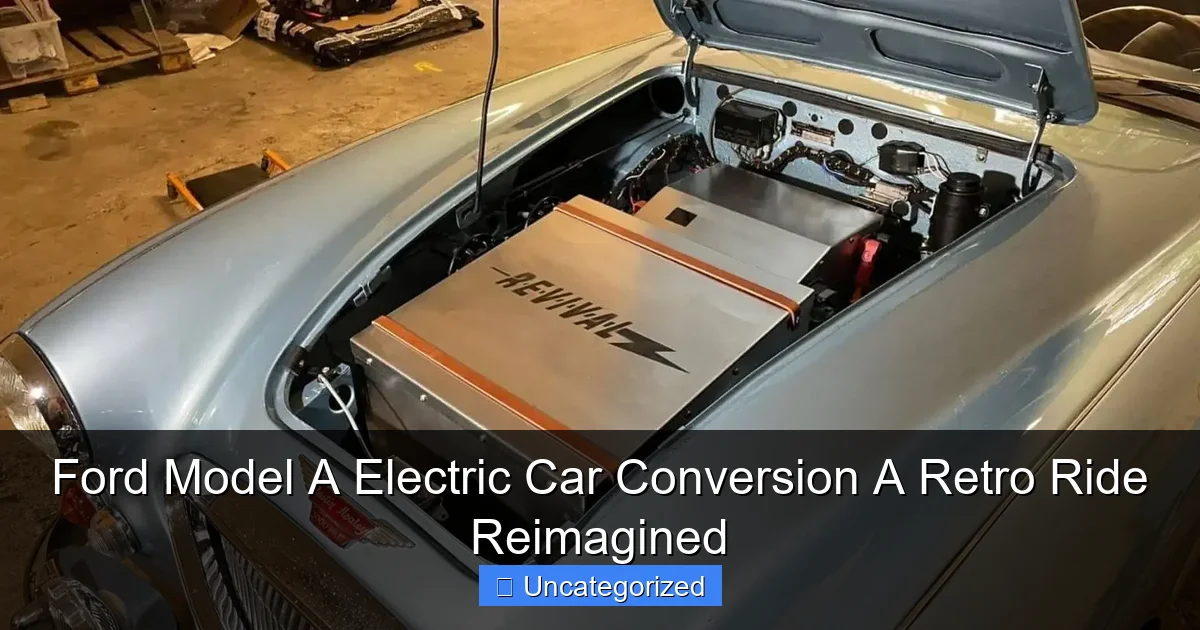
Featured image for ford model a electric car conversion
Image source: revival.autos
The Ford Model A electric car conversion breathes new life into a classic icon, merging vintage charm with zero-emission performance. By replacing the original combustion engine with a modern electric drivetrain, enthusiasts enjoy instant torque, reduced maintenance, and eco-friendly driving—all while preserving the timeless design and nostalgic appeal of the 1930s classic.
Key Takeaways
- Eco-friendly upgrade: Convert your Model A to electric for zero emissions and classic style.
- Cost-effective solution: Save on fuel and maintenance with a modern electric drivetrain.
- Customizable range: Choose battery options to match your driving needs and budget.
- Preserve heritage: Maintain vintage aesthetics while integrating cutting-edge EV technology.
- DIY or pro install: Tackle the conversion yourself or hire experts for seamless results.
📑 Table of Contents
- Ford Model A Electric Car Conversion: A Retro Ride Reimagined
- Why Convert a Ford Model A to Electric?
- Planning Your Ford Model A Electric Conversion
- Key Components of a Model A EV Conversion
- Installation Process: Step-by-Step Guide
- Safety, Testing, and Long-Term Ownership
- Real-World Examples and Cost Breakdown
- Conclusion: The Future of Classic Driving
Ford Model A Electric Car Conversion: A Retro Ride Reimagined
The Ford Model A, a timeless icon of American automotive history, first rolled off the assembly line in 1927, capturing the hearts of car enthusiasts with its elegant design and mechanical simplicity. As we step into an era defined by sustainability and electric innovation, the idea of transforming this vintage classic into a Ford Model A electric car conversion has gained remarkable traction. No longer confined to the realm of nostalgia, the Model A is being reimagined as a modern, eco-friendly vehicle that retains its vintage charm while embracing 21st-century technology. This transformation represents more than just a technical upgrade—it’s a cultural statement, a fusion of past and future, where classic lines meet cutting-edge electric drivetrains.
For collectors, restorers, and DIY enthusiasts, converting a Ford Model A into an electric vehicle (EV) offers a unique opportunity to honor automotive heritage while reducing carbon footprints. With rising fuel costs, environmental concerns, and the global shift toward electrification, repurposing classic cars like the Model A with electric powertrains is both practical and visionary. Whether you’re a seasoned mechanic or a passionate hobbyist, the journey of a Ford Model A electric car conversion is as rewarding as the final product. In this guide, we’ll explore every aspect of the conversion process—from planning and sourcing components to installation, safety, and long-term ownership—ensuring your retro ride is not only stylish but also sustainable and street-legal.
Why Convert a Ford Model A to Electric?
The Appeal of Vintage EVs
Converting a Ford Model A to electric is more than a mechanical overhaul—it’s a statement of values. Classic cars like the Model A are celebrated for their craftsmanship, simplicity, and historical significance. By electrifying them, owners preserve these qualities while eliminating the environmental drawbacks of internal combustion engines (ICEs). Unlike modern EVs, which often sacrifice character for efficiency, a Ford Model A electric car conversion delivers the best of both worlds: a silent, zero-emission drive wrapped in a body that turns heads wherever it goes.
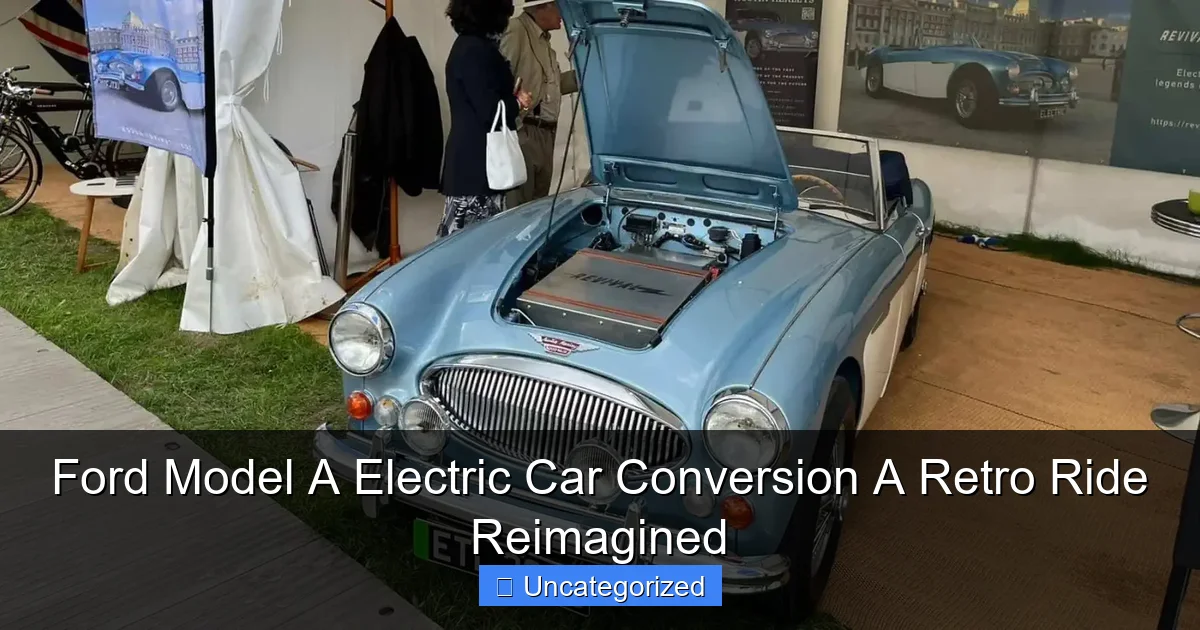
Visual guide about ford model a electric car conversion
Image source: revival.autos
Moreover, the Model A’s lightweight steel frame and uncluttered engine bay make it an ideal candidate for EV conversion. With a curb weight of around 2,200 pounds and a simple mechanical layout, it offers a clean slate for integrating electric components without the need for extensive structural modifications. This contrasts sharply with heavier, more complex classic cars that require major chassis reinforcements.
Environmental and Economic Benefits
Switching from gasoline to electricity significantly reduces greenhouse gas emissions, especially when powered by renewable energy sources. According to the U.S. Department of Energy, EVs produce 50–70% fewer emissions over their lifetime compared to gasoline-powered vehicles. For a vintage car that might only be driven a few thousand miles annually, the environmental impact is profound.
Economically, the shift can also pay off. While the upfront cost of an EV conversion is significant, long-term savings on fuel, oil changes, and maintenance can offset the investment. Electricity is generally cheaper than gasoline, and electric drivetrains have fewer moving parts, reducing wear and tear. Additionally, some states offer tax incentives or rebates for EV conversions, further improving the financial case.
Preserving Automotive Heritage
Many classic car owners worry that modifications will diminish their vehicle’s authenticity. However, a well-executed Ford Model A electric car conversion can actually enhance its legacy. By preserving the original body, trim, and interior while modernizing the powertrain, owners create a living museum piece that can be driven daily. This approach aligns with the growing “restomod” trend—restored modern—where vintage aesthetics meet contemporary performance and reliability.
For example, a Model A converted with a modern electric motor and battery pack can achieve a range of 100–150 miles per charge, a significant improvement over its original 40–50 mph top speed and 200-mile gasoline range. This means the car can participate in car shows, road rallies, and even daily commutes—something rarely possible with unrestored classics.
Planning Your Ford Model A Electric Conversion
Assessing the Donor Vehicle
Before ordering parts or wiring a single cable, it’s essential to thoroughly assess the condition of your Ford Model A. A solid foundation is critical for a successful conversion. Start by inspecting the frame, suspension, brakes, and body for rust, structural damage, or previous repairs. A clean, rust-free chassis will save time and money in the long run.

Visual guide about ford model a electric car conversion
Image source: evsroad.com
Key areas to check include:
- Frame integrity: Look for cracks, bends, or excessive corrosion, especially around the front crossmember and rear axle mounts.
- Brake system: The original mechanical brakes are inadequate for modern driving. Plan to upgrade to hydraulic brakes with a dual-circuit master cylinder.
- Electrical system: While the original 6-volt system won’t power the EV components, assess the wiring condition. You’ll likely replace the entire harness.
- Interior and trim: Preserve original gauges, steering wheel, and upholstery if possible—they’re irreplaceable and add to the car’s value.
Defining Your Goals and Budget
Every conversion should begin with clear objectives. Ask yourself:
- Is this a show car, a daily driver, or a weekend cruiser?
- What range (miles per charge) do you need?
- How fast do you want the car to accelerate?
- Do you want to retain original gauges or install a modern digital display?
Your answers will guide component selection and budget. A basic conversion using a used EV motor and repurposed batteries might cost $10,000–$15,000, while a high-performance build with a custom battery pack, regenerative braking, and fast charging could exceed $30,000. Create a detailed budget spreadsheet that includes:
- Motor and controller
- Battery pack (cells, BMS, enclosure)
- Charger and charging port
- Wiring, fuses, and relays
- Cooling system (if needed)
- Labor (if outsourcing)
- Contingency fund (10–15% of total)
Choosing the Right Conversion Kit or DIY Approach
There are two main paths: using a pre-designed conversion kit or building a custom solution from scratch.
Conversion Kits: Companies like Electric GT, Zero Labs, and EV West offer Model A-specific kits that include a motor, controller, mounting brackets, and wiring diagrams. These kits are ideal for beginners or those seeking plug-and-play simplicity. For example, EV West’s Model A EV kit includes a 100-hp AC motor, a 400-volt controller, and a 35 kWh lithium battery pack, offering 120-mile range and 0–60 mph in under 10 seconds.
DIY Builds: For experienced builders, sourcing individual components allows greater customization. Popular motors include the NetGain Hyper9 (DC) or AC Propulsion AC-50 (AC), both known for reliability and compact size. Batteries can be built from new or repurposed Tesla Model S modules, which offer high energy density and proven performance.
Tip: Join online forums like EVConversion.com or ModelAForums.com to connect with others who’ve completed similar projects. Their advice can save you from costly mistakes.
Key Components of a Model A EV Conversion
Electric Motor and Controller
The heart of any EV conversion is the motor and controller. For a Ford Model A, the goal is to balance power, efficiency, and physical fit.
- Motor Type: AC motors are generally preferred for their higher efficiency, regenerative braking capability, and lower maintenance. The AC-50 or AC-51 from AC Propulsion are excellent choices, delivering 100–150 hp and 200 lb-ft of torque.
- Controller: The controller manages power delivery from the battery to the motor. Look for a 300–400V unit with CAN bus communication for integration with the battery management system (BMS). The Zilla Z1K and Brusa NLG513 are popular options.
- Mounting: Fabricate custom motor mounts to secure the unit to the original engine block location. Ensure alignment with the transmission input shaft—misalignment can cause vibration and premature wear.
Example: A Model A converted with the AC-50 motor and Zilla controller can reach 70 mph and achieve a 0–60 time of 8.5 seconds—impressive for a 1920s design.
Battery Pack and Management System
The battery pack is the most critical and expensive component. It determines range, weight distribution, and safety.
- Chemistry: Lithium-ion (Li-ion) is the standard, with NMC (Nickel Manganese Cobalt) offering the best balance of energy density and cost. Avoid lead-acid or older NiMH batteries—they’re heavy and inefficient.
- Capacity: For a 100–150 mile range, aim for 30–40 kWh. This typically requires 12–16 kWh of usable capacity (accounting for depth of discharge).
- Layout: Distribute the pack evenly. Common locations include the original engine bay (under the hood), trunk, and floor pans. Avoid placing batteries in the passenger compartment for safety.
- BMS (Battery Management System): A BMS monitors cell voltage, temperature, and state of charge. It prevents overcharging, deep discharge, and thermal runaway. Use a reputable system like Orion BMS or Manzanita Micro PFC.
Tip: Use fire-resistant enclosures and install a battery disconnect switch for safety during maintenance.
Charging System and Regenerative Braking
Modern EVs rely on efficient charging and energy recovery. Your Model A should too.
- Onboard Charger: Install a 3.3 kW or 6.6 kW charger. A 6.6 kW unit can recharge a 35 kWh pack in 6–7 hours on a Level 2 (240V) charger.
- Charging Port: Use a J1772 connector for compatibility with public chargers. Mount it discreetly, perhaps behind the original fuel cap.
- Regenerative Braking: AC motors allow regenerative braking, which converts kinetic energy back into electricity during deceleration. This extends range and reduces brake wear. Ensure your controller supports this feature and adjust the regen strength via the dashboard.
Bonus: Install a solar panel on the roof to trickle-charge the 12V auxiliary battery—a nod to sustainability.
Installation Process: Step-by-Step Guide
Removing the Original Engine and Components
Begin by draining all fluids and disconnecting the battery. Remove the engine, transmission, exhaust, fuel tank, and radiator. Label and store any parts you might reuse (e.g., transmission for a manual conversion).
Clean the engine bay thoroughly. Remove rust with a wire brush or media blasting. Apply rust-inhibiting primer and paint. This is also the time to install upgraded suspension and brakes—consider a modern front end with disc brakes and power steering.
Mounting the Motor and Battery Pack
Fabricate motor mounts using steel plate or C-channel. Weld them to the frame or use high-strength bolts. Ensure the motor is level and aligned with the transmission. If using a direct drive (no transmission), use a coupler to connect the motor shaft to the driveshaft.
For the battery pack, build custom enclosures from aluminum or steel. Secure them with bolts and brackets. Use rubber isolation pads to prevent vibration. Connect the BMS and run high-voltage cables through conduit to protect against chafing.
Wiring the High- and Low-Voltage Systems
High-voltage wiring (battery to controller to motor) requires 2/0 or 4/0 gauge cables, properly insulated and fused. Use a main contactor and pre-charge circuit to prevent arcing when powering up.
Low-voltage systems (12V) power lights, gauges, and the BMS. Replace the original 6V system with a modern 12V setup. Use a DC-DC converter to step down the high-voltage battery to 12V.
Tip: Use color-coded wires and label every connection. A wiring diagram is essential for troubleshooting.
Cooling and Ventilation
Electric motors and batteries generate heat. Install:
- A coolant loop for the motor and controller (if liquid-cooled)
- Fans and ducting for air-cooled systems
- Ventilation in battery enclosures (passive or active)
Monitor temperatures with sensors connected to the BMS or a dedicated display.
Safety, Testing, and Long-Term Ownership
Electrical Safety and Insulation
High-voltage systems are dangerous. Follow these safety protocols:
- Use insulated tools and wear rubber gloves when working on live circuits.
- Install a manual disconnect switch and emergency shutoff button.
- Use high-voltage interlocks that cut power when enclosures are opened.
- Insulate all high-voltage components and label them clearly.
Have a fire extinguisher (Class C for electrical fires) in the car at all times.
Road Testing and Tuning
Before driving on public roads, conduct extensive testing:
- Bench Test: Power the system without the motor connected to verify controller and BMS operation.
- Rolling Test: Use jack stands or a lift to run the motor at low speed.
- Short Drive: Test acceleration, braking, and handling in a controlled environment.
Use the controller’s software to fine-tune parameters like acceleration curve, max current, and regen strength.
Registration and Insurance
Check your state’s regulations for converted EVs. Many require:
- Inspection by a certified mechanic
- Proof of battery safety (e.g., UL certification)
- Updated VIN plate indicating the vehicle type (e.g., “EV Conversion”)
Contact specialty insurers like Hagerty or American Collectors Insurance for coverage. They understand modified classics and offer agreed-value policies.
Maintenance and Upgrades
EVs require less maintenance than ICE vehicles, but not zero. Regular tasks include:
- Checking battery connections and BMS readings
- Inspecting motor and controller temperatures
- Servicing brakes, suspension, and tires
- Updating controller firmware
As technology advances, consider upgrades like faster charging, larger batteries, or improved regen algorithms.
Real-World Examples and Cost Breakdown
To illustrate the potential of a Ford Model A electric car conversion, here are two real-world examples:
| Component | Project A (DIY) | Project B (Kit-Based) |
|---|---|---|
| Motor | NetGain Hyper9 (DC) | AC Propulsion AC-50 (AC) |
| Controller | Alltrax AXE7245 | Zilla Z1K |
| Battery Pack | 35 kWh (Tesla Modules) | 40 kWh (EV West) |
| Range | 110 miles | 140 miles |
| 0–60 mph | 9.2 seconds | 7.8 seconds |
| Total Cost | $14,500 | $28,000 |
| Build Time | 6 months (part-time) | 3 months (with professional help) |
Project A was completed by a hobbyist using repurposed parts and online resources. Project B used a premium kit and professional installation. Both cars are street-legal and frequently driven to car shows and EV meetups.
Conclusion: The Future of Classic Driving
The Ford Model A electric car conversion is more than a technical achievement—it’s a celebration of innovation, sustainability, and automotive passion. By electrifying a 1920s icon, owners bridge the gap between history and the future, proving that classic cars can evolve without losing their soul. Whether you choose a DIY path or a kit-based approach, the result is a vehicle that’s quieter, cleaner, and more reliable than its gasoline predecessor.
Beyond the mechanics, these conversions inspire communities. Car clubs, online forums, and EV festivals are filled with enthusiasts sharing tips, celebrating milestones, and pushing the boundaries of what’s possible. As battery technology improves and charging infrastructure expands, the dream of driving a vintage EV becomes more accessible every year.
So, if you’ve ever looked at your Model A and imagined it gliding silently down the road, now is the time to act. With careful planning, the right tools, and a bit of courage, you can turn that vision into reality. The open road awaits—powered by electricity, driven by history, and fueled by passion. Your retro ride is no longer just a memory. It’s the future, reimagined.
Frequently Asked Questions
What is a Ford Model A electric car conversion?
A Ford Model A electric car conversion involves replacing the original gasoline engine and drivetrain with a modern electric motor, battery pack, and associated components. This retrofit preserves the classic 1928–1931 Model A aesthetic while delivering eco-friendly, whisper-quiet performance. It’s a popular choice for enthusiasts seeking sustainable vintage motoring.
How much does a Ford Model A electric conversion cost?
Costs typically range from $15,000 to $30,000+ depending on battery capacity, motor power, and customization level. DIY kits start around $8,000, while professional conversions with premium features (like fast charging or lithium-ion batteries) can exceed $40,000. The investment blends classic style with modern EV efficiency.
Can I convert my own Ford Model A to electric?
Yes! DIY Ford Model A electric car conversion kits are available, including pre-assembled motor mounts, battery trays, and wiring harnesses. Basic mechanical skills and electrical knowledge are required, and the process usually takes 100–200 hours. Many online communities offer step-by-step guidance for first-timers.
What range can I expect from a converted Ford Model A EV?
Most conversions achieve 60–120 miles per charge using lithium-ion batteries (40–100 kWh). Range depends on driving habits, terrain, and battery size—smaller packs reduce weight but limit distance. Some builders optimize aerodynamics and regenerative braking for extended range.
Are there legal requirements for a Ford Model A electric car conversion?
Yes, regulations vary by location but often include safety inspections, VIN revalidation, and compliance with EV-specific standards (e.g., battery containment). In the U.S., the NHTSA requires converted vehicles to meet Federal Motor Vehicle Safety Standards. Always check local DMV guidelines before starting.
What are the benefits of a Ford Model A EV conversion over original specs?
Beyond zero emissions and lower maintenance, electric conversions offer instant torque (0–60 mph in ~8 seconds), reduced noise, and modern reliability. Unlike finicky Model A carburetors, EVs start reliably and integrate features like Bluetooth audio or LED lighting while preserving the classic look.