Ford Motor Company Electric Cars The Future of Driving
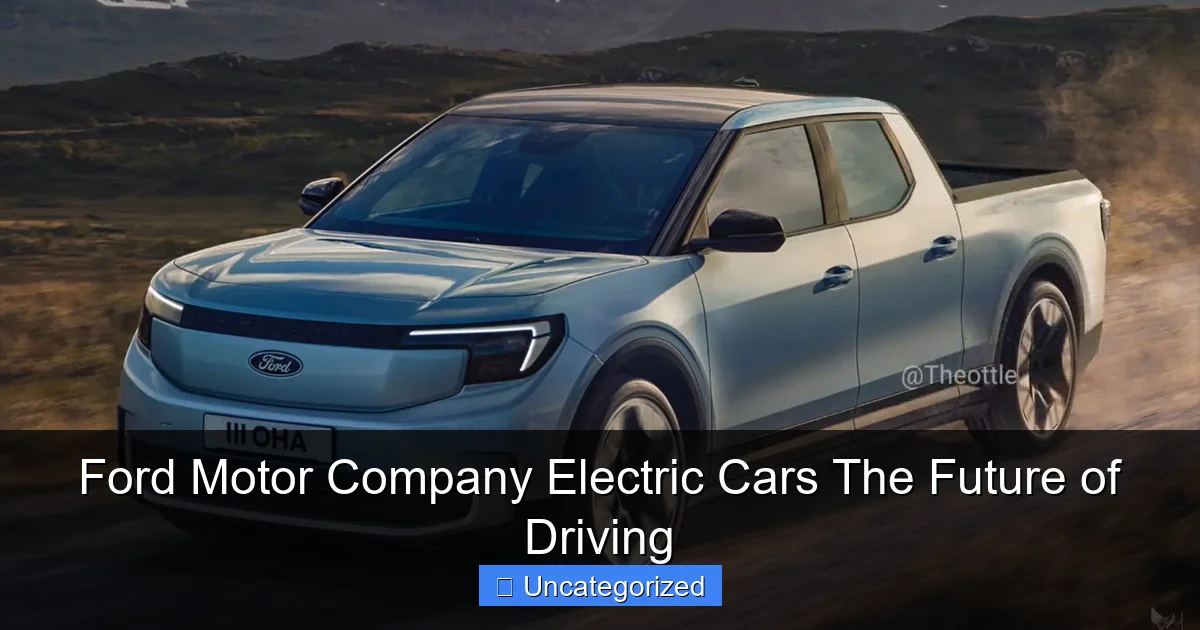
Featured image for ford motor company electric cars
Image source: s1.cdn.autoevolution.com
Ford Motor Company is revolutionizing the electric vehicle (EV) market with its bold lineup of eco-friendly, high-performance cars like the Mustang Mach-E and F-150 Lightning. Combining cutting-edge technology, extended range, and iconic American design, Ford’s EVs are setting new standards for innovation, sustainability, and driving excitement—proving the future of mobility is electric.
Key Takeaways
- Ford leads the EV market with innovative, high-performance electric models.
- Mustang Mach-E combines power, style, and cutting-edge tech for modern drivers.
- F-150 Lightning proves electric trucks can be tough, smart, and versatile.
- Ford invests $50B in EVs, signaling long-term commitment to electrification.
- BlueCruise hands-free driving enhances safety and convenience on highways.
- Fast-charging network access ensures long-distance travel is seamless and stress-free.
- Affordable options like the E-Transit make EVs accessible for businesses and fleets.
📑 Table of Contents
- The Electric Revolution: Ford’s Bold Leap into the Future of Driving
- Ford’s Electric Vehicle Lineup: Models That Define the Future
- Charging Infrastructure: How Ford Powers the Electric Journey
- Sustainability and Innovation: Ford’s Green Commitment
- Ownership Experience: What to Expect with a Ford EV
- The Road Ahead: Ford’s Electric Future and What It Means for Drivers
- Data Table: Ford EV Models at a Glance (2024)
- Conclusion: Ford’s Electric Vision—Driving a Better Tomorrow
The Electric Revolution: Ford’s Bold Leap into the Future of Driving
The automotive industry is undergoing a seismic shift, and Ford Motor Company electric cars are at the forefront of this transformation. As the world accelerates toward a sustainable future, Ford—a century-old giant with deep roots in American innovation—has embraced electrification with unparalleled ambition. From reimagining iconic models like the F-150 to launching all-electric SUVs and vans, Ford is redefining what it means to drive electric. With over $50 billion invested in electrification through 2026, the company is not just keeping pace with competitors like Tesla and GM; it’s setting new benchmarks in performance, affordability, and accessibility.
Why does Ford’s electric evolution matter? Because it represents more than just new vehicles—it’s a cultural and technological pivot. For generations, Ford symbolized the roar of V8 engines and the freedom of the open road. Today, that legacy is being electrified. Whether you’re a die-hard Ford fan, an eco-conscious driver, or a tech enthusiast, the arrival of Ford electric vehicles (EVs) signals a turning point in how we think about transportation. This blog post dives deep into Ford’s electric lineup, charging infrastructure, sustainability goals, and what the future holds for one of the world’s most storied automakers.
Ford’s Electric Vehicle Lineup: Models That Define the Future
Ford has rapidly expanded its EV portfolio, offering something for nearly every driver—from rugged work trucks to sleek family SUVs. Each model combines Ford’s engineering excellence with cutting-edge electric technology, ensuring performance, range, and practicality.
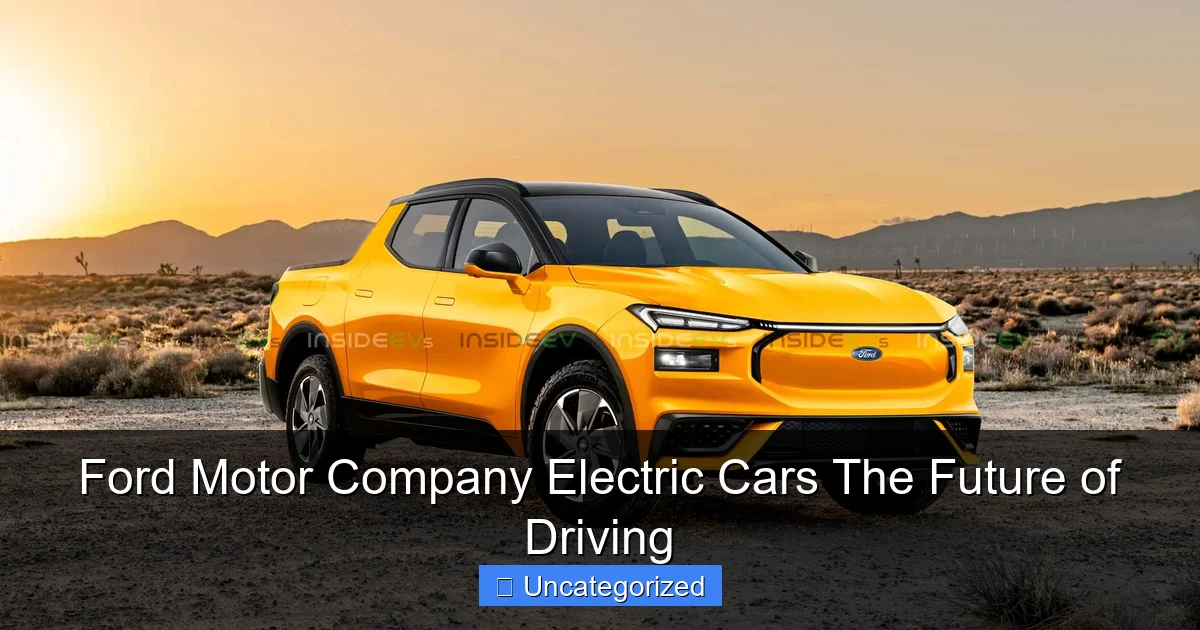
Visual guide about ford motor company electric cars
Image source: cdn.motor1.com
1. Ford F-150 Lightning: The Electric Pickup That’s Changing the Game
The F-150 Lightning isn’t just another EV; it’s a revolution in the pickup truck segment. As the first full-size electric pickup from a major automaker, it delivers:
- 320 miles of EPA-estimated range (Extended Range battery)
- 0-60 mph in 4.4 seconds (Extended Range, 4×4)
- Up to 2,235 lbs payload capacity and 10,000 lbs towing capacity
- Pro Power Onboard: 9.6 kW of mobile power for tools, campsites, or emergencies
What sets the Lightning apart is its dual identity. It’s a workhorse with a 14-cube front trunk (frunk) and a smart home extension with Intelligent Backup Power—capable of powering an average home for up to 3 days during outages. For contractors, campers, and suburban families, the Lightning proves that electric trucks can be both practical and powerful.
2. Ford Mustang Mach-E: Where Performance Meets Practicality
The Mustang Mach-E brings the spirit of the Mustang to the EV era. With a range up to 312 miles (Select RWD), it’s available in multiple trims:
- Select: Entry-level, starting at $42,995, ideal for urban drivers
- Premium: Adds panoramic sunroof, heated seats, and 20-inch wheels
- California Route 1: Focused on range (305 miles) with rear-wheel drive
- GT Performance Edition: 480 hp, 0-60 in 3.5 seconds, adaptive suspension
The Mach-E’s 15.5-inch touchscreen with SYNC 4A infotainment and Ford’s BlueCruise hands-free driving system (on select highways) make it a tech-forward choice. It’s not just a Mustang with batteries—it’s a reimagined electric SUV with soul.
3. Ford E-Transit: Electrifying Commercial Fleets
With over 130,000 E-Transit vans sold globally by 2024, Ford’s electric van is transforming last-mile delivery. Key features include:
- 126-mile range (ideal for urban routes)
- 12.4 cubic meters of cargo space (same as gas model)
- Fast charging: 45 minutes to 80% via DC fast charger
- Available in 25 configurations (cargo, cutaway, chassis cab)
Companies like Amazon, UPS, and DHL have adopted the E-Transit, cutting fuel costs by up to 70% and reducing emissions. For small businesses, it’s a cost-effective way to go green.
4. Ford Explorer EV (Coming 2025): The Next Chapter
Ford’s upcoming Explorer EV (developed with Volkswagen’s MEB platform) promises:
- 300+ miles of range
- Three-row seating for families
- Advanced driver-assist features (Ford Co-Pilot360)
- Affordable pricing (target: $40,000–$50,000)
This model will expand Ford’s EV reach into the mainstream SUV market, competing with the Tesla Model Y and Hyundai Ioniq 5.
Charging Infrastructure: How Ford Powers the Electric Journey
Range anxiety is a top concern for EV buyers, but Ford has built a robust charging ecosystem to eliminate barriers.
Ford BlueOval Charge Network: A Game-Changer
Ford’s BlueOval Charge Network is the largest integrated public charging network in North America, with over 84,000 charging plugs (and growing). Unlike proprietary systems (e.g., Tesla Superchargers), Ford partners with:
- Electrify America
- ChargePoint
- EVgo
- Shell Recharge
Drivers get:
- Free fast charging for 2 years (on 2024 models)
- Real-time availability via FordPass app
- Seamless billing (no separate accounts)
Pro Tip: Use the FordPass app to plan routes with charging stops. The app calculates charging time, cost, and even suggests nearby cafes during waits.
Home Charging Made Simple
Ford offers the Ford Connected Charge Station, a Level 2 charger (240V) that:
- Adds 20–30 miles of range per hour
- Integrates with solar panels
- Offers Wi-Fi connectivity for scheduling and monitoring
For renters or those without garages, Ford’s Plug & Charge feature lets drivers charge at public stations without tapping cards—just plug in, and billing happens automatically via the app.
Fast Charging: 10 Minutes to 100 Miles
All Ford EVs support DC fast charging. The F-150 Lightning and Mach-E can add up to 100 miles in 10 minutes at 150kW stations. Ford’s partnership with Electrify America ensures 1,800+ fast chargers by 2025, with 80% located near highways.
Sustainability and Innovation: Ford’s Green Commitment
Ford’s electric mission goes beyond vehicles—it’s a holistic sustainability strategy.
Carbon Neutrality by 2050
Ford aims to achieve carbon neutrality across its global footprint by 2050, with interim goals:
- 100% renewable energy for manufacturing by 2035
- Zero waste to landfill at all plants by 2030
- 50% reduction in vehicle lifetime emissions by 2030 (vs. 2019)
Initiatives include:
- Recycled Materials: The Mach-E uses 100% recycled plastics in floor mats and 25% recycled aluminum in body panels.
- Renewable Energy: Ford’s Rouge Electric Vehicle Center runs on solar power.
- Battery Recycling: Partnering with Redwood Materials to recycle 95% of battery components.
Innovation in Battery Technology
Ford is investing heavily in battery R&D:
- BlueOval SK: A joint venture with SK On to build 129 GWh/year of batteries (enough for 1.2 million EVs annually).
- Solid-State Batteries: In development for 2030, promising 50% more range and faster charging.
- Cell-to-Pack Design: Eliminates modules, boosting energy density by 15%.
Ford’s Michigan EV Center will produce batteries domestically, reducing reliance on overseas supply chains.
Community and Equity
Ford’s “EV for All” program focuses on:
- Affordable EVs (Explorer EV, future compact SUVs)
- Charging access in underserved areas
- Workforce training for green jobs (e.g., battery manufacturing)
Ownership Experience: What to Expect with a Ford EV
Buying a Ford EV isn’t just about the car—it’s about the entire ecosystem.
Cost Savings and Incentives
EVs save money long-term. For example:
- Fuel: Mach-E drivers save ~$1,000/year vs. gas SUVs.
- Maintenance: No oil changes, fewer moving parts (savings: $3,000 over 5 years).
- Incentives: Federal tax credit of $7,500 (2024 models), plus state/local rebates (e.g., $2,000 in California).
Pro Tip: Use the IRS’s Clean Vehicle Tax Credit tool to check eligibility.
FordPass App: Your EV Command Center
The FordPass app offers:
- Remote start, lock/unlock, and climate control
- Battery monitoring and charging schedules
- Navigation with charging stops
- Roadside assistance (free for 5 years)
For Lightning owners, the app unlocks Intelligent Backup Power—schedule when the truck powers your home during outages.
Warranty and Service
Ford EVs come with:
- 8-year/100,000-mile battery warranty
- 3-year/36,000-mile bumper-to-bumper coverage
- Free scheduled maintenance for 2 years
Ford has 3,000+ EV-certified dealers nationwide, with mobile service vans for home repairs.
The Road Ahead: Ford’s Electric Future and What It Means for Drivers
Ford’s electric journey is just beginning. Here’s what’s next:
2025–2030: Expanding the Portfolio
Ford plans to launch:
- Compact EV SUV: Targeting $25,000–$30,000 (competes with Tesla Model 2)
- Electric Expedition: A full-size 3-row SUV
- Electric Ranger: A midsize pickup for global markets
By 2026, Ford aims for 2 million annual EV sales globally.
Autonomous Driving and Connectivity
Ford’s BlueCruise 1.2 (launched 2023) enables hands-free driving on 130,000 miles of North American highways. Future updates will add:
- Lane-change assist
- Intersection navigation
- Traffic-light recognition
All Ford EVs will receive over-the-air (OTA) software updates, adding features without dealership visits.
Global Impact
Ford’s electric strategy extends worldwide:
- Europe: All Ford vehicles will be electric by 2030.
- China: Mustang Mach-E leads Ford’s EV charge.
- Australia: E-Transit and Lightning (RHD) launching in 2025.
Data Table: Ford EV Models at a Glance (2024)
| Model | Starting Price | Range (EPA) | 0-60 mph | Key Feature |
|---|---|---|---|---|
| F-150 Lightning | $54,995 | 240–320 miles | 4.4–7.7 sec | 9.6 kW Pro Power Onboard |
| Mustang Mach-E | $42,995 | 247–312 miles | 3.5–6.1 sec | BlueCruise hands-free driving |
| E-Transit | $51,895 | 126 miles | 6.5 sec | 12.4 m³ cargo space |
| Explorer EV (2025) | $40,000 (est.) | 300+ miles | 5.5 sec (est.) | Three-row seating |
Conclusion: Ford’s Electric Vision—Driving a Better Tomorrow
The Ford Motor Company electric cars aren’t just a response to market trends—they’re a bold reimagining of mobility. From the F-150 Lightning’s brute strength to the Mach-E’s sleek agility, Ford is proving that electric vehicles can be exciting, practical, and essential. With a charging network that rivals Tesla’s, a commitment to sustainability that spans decades, and an ownership experience designed for real people, Ford is democratizing the EV revolution.
As we look ahead, Ford’s roadmap is clear: affordable EVs for all, smarter technology, and a cleaner planet. Whether you’re a first-time EV buyer or a lifelong Ford fan, the message is simple—the future of driving is here, and it’s electric. The roar of the engine may be fading, but the hum of progress is louder than ever. Buckle up; the ride is just beginning.
Frequently Asked Questions
What electric cars does the Ford Motor Company currently offer?
Ford Motor Company’s current electric lineup includes the Mustang Mach-E, F-150 Lightning, and E-Transit van. These models cover SUVs, trucks, and commercial vehicles, offering versatility for different needs.
How does the F-150 Lightning compare to gas-powered Ford trucks?
The F-150 Lightning retains the durability of Ford’s gas trucks but offers instant torque, lower maintenance, and a targeted 240-320 miles of range. It also features innovative tech like Pro Power Onboard for worksite power.
What is Ford Motor Company’s plan for future electric cars?
Ford plans to invest $50 billion in EVs through 2026, aiming for 2 million global EV production annually. Upcoming models include a next-gen electric pickup and a commercial van built on a dedicated EV platform.
How long does it take to charge a Ford electric car?
Using a DC fast charger, Ford EVs like the Mustang Mach-E can reach 80% charge in ~40 minutes. With a home Level 2 charger (240V), a full charge typically takes 8-10 hours, depending on the model and battery size.
Does Ford Motor Company offer incentives for buying electric cars?
Ford provides access to federal tax credits (up to $7,500) and state/local incentives where available. The company also partners with charging networks to offer free or discounted charging periods for new EV buyers.
Are Ford electric cars reliable and safe?
Yes, Ford electric cars undergo rigorous testing and include advanced safety features like Co-Pilot360™. The Mustang Mach-E and F-150 Lightning have earned top safety ratings from IIHS and NHTSA, matching Ford’s ICE vehicles.