Ford Mustang Electric Race Car Unleashed on the Track
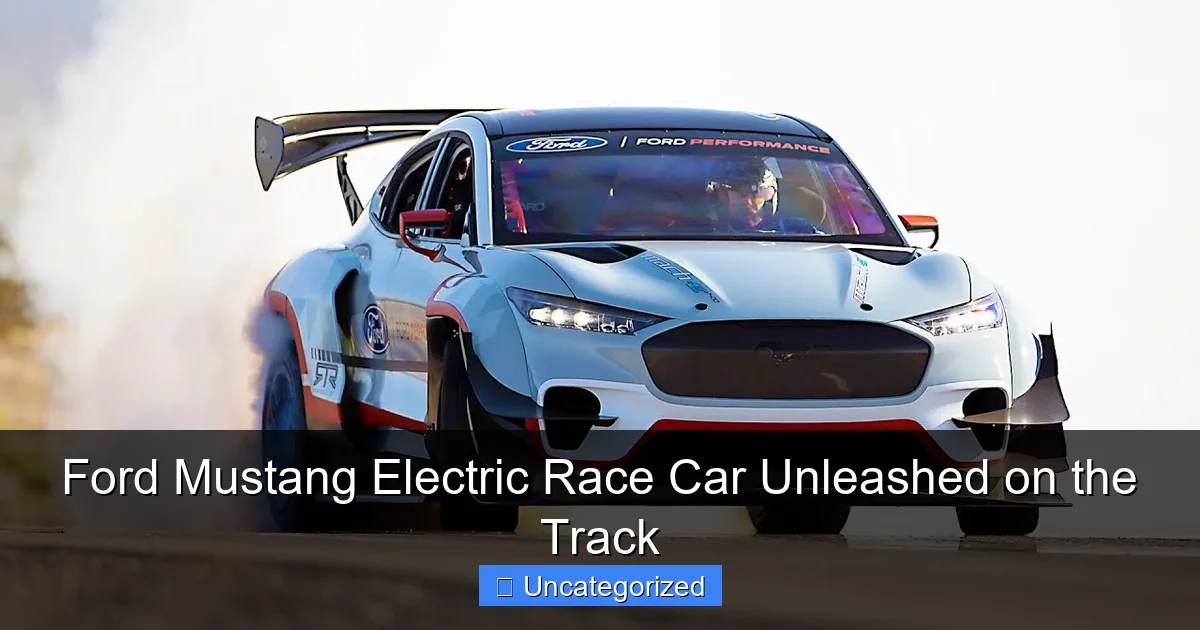
Featured image for ford mustang electric race car
Image source: i.ytimg.com
The Ford Mustang Electric Race Car roars onto the track, blending iconic muscle car heritage with cutting-edge electric performance. Delivering instant torque, zero emissions, and track-tuned agility, this high-voltage beast proves Ford is redefining speed for the electric era. It’s not just a Mustang—it’s the future of American racing, electrified.
Key Takeaways
- Instant torque: Electric powertrain delivers blistering acceleration off the line.
- Track-focused: Aerodynamic design enhances cornering stability at high speeds.
- Zero emissions: Proves performance and sustainability can coexist on track.
- Regen braking: Recaptures energy while improving braking efficiency under racing conditions.
- Future of racing: Ford signals electrification shift in high-performance motorsports.
📑 Table of Contents
- Ford Mustang Electric Race Car Unleashed on the Track
- The Evolution of the Mustang: From V8 Roar to Electric Thunder
- Performance Breakdown: Power, Torque, and Track Dynamics
- Technology Under the Hood: Batteries, Software, and Innovation
- Racing Applications: Where the Electric Mustang Shines
- The Future of Electric Mustangs: What’s Next?
- Data Table: Key Electric Mustang Race Car Specifications
- Conclusion
Ford Mustang Electric Race Car Unleashed on the Track
The roar of a V8 engine has long been synonymous with the Ford Mustang, a legendary nameplate that has dominated American muscle car culture for over half a century. But in a bold pivot toward the future, Ford has shattered expectations by unleashing a fully electric Ford Mustang electric race car—a machine that swaps pistons for power electronics and delivers adrenaline in a new, silent-but-deadly package. This isn’t just an electric version of a classic; it’s a reimagining of performance, engineering, and motorsport legacy. The debut of the Mustang Mach-E GT Performance Edition on the track, alongside purpose-built electric race variants like the Mustang Super Cobra Jet 1800, signals a seismic shift: the Mustang is no longer tethered to internal combustion. It’s now charging into the electric era with the same ferocity that defined its heritage.
What makes this evolution so revolutionary isn’t just the absence of tailpipe emissions or the instant torque of electric motors—it’s the way Ford has preserved the Mustang’s soul while redefining its heartbeat. The Ford Mustang electric race car isn’t a compromise; it’s a statement. From drag strips to circuit races, Ford is proving that electrification enhances, rather than diminishes, the thrill of speed. With zero emissions, reduced maintenance, and blistering acceleration, the electric Mustang is not only future-proof but also a trailblazer in performance innovation. As automakers worldwide scramble to electrify their fleets, Ford’s decision to electrify its most iconic nameplate sends a powerful message: the future of racing is electric, and the Mustang is leading the charge.
The Evolution of the Mustang: From V8 Roar to Electric Thunder
The Ford Mustang has undergone numerous transformations since its 1964 debut, but none as radical as its shift to electrification. While the classic V8-powered Mustangs remain beloved for their raw sound and mechanical charisma, the Ford Mustang electric race car represents a calculated leap into a new era of motorsport and consumer performance.
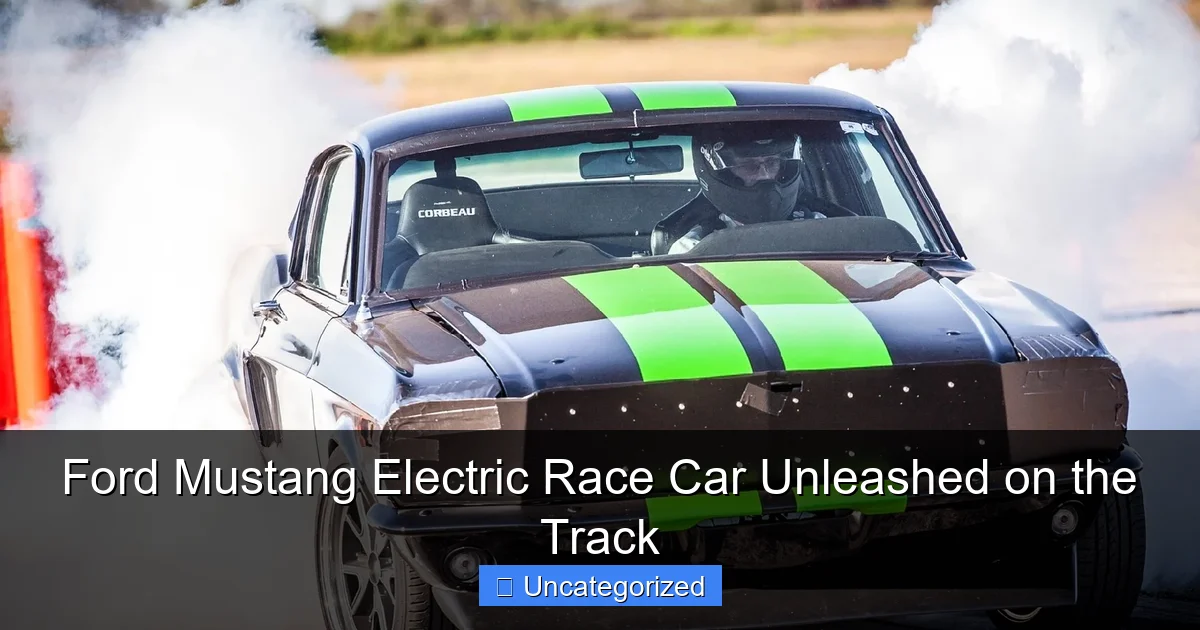
Visual guide about ford mustang electric race car
Image source: images.hgmsites.net
From Heritage to Innovation
Ford didn’t abandon its roots when developing the electric Mustang—it amplified them. The Mustang Mach-E, introduced in 2021, marked the first time the Mustang name was applied to an SUV, sparking debate among purists. But the Ford Mustang electric race car variants, such as the Mustang Super Cobra Jet 1800, have silenced skeptics by proving that electrification enhances performance. The Super Cobra Jet, a drag-racing beast, set a blistering 8.12-second quarter-mile at 170 mph—faster than many gas-powered counterparts. This wasn’t a gimmick; it was a demonstration of electric torque and precision engineering.
Why Electrify the Mustang?
The decision to electrify the Mustang wasn’t driven solely by environmental concerns. Ford recognized that electric powertrains offer distinct advantages in racing:
- Instant torque delivery: Unlike internal combustion engines that need to rev to reach peak power, electric motors deliver maximum torque from 0 RPM, giving the Mustang electric race car a near-instantaneous launch.
- Simplified drivetrain: With fewer moving parts, electric powertrains reduce mechanical complexity and increase reliability under extreme conditions.
- Regenerative braking: On circuits, electric Mustangs can recapture energy during deceleration, improving efficiency and reducing brake fade during endurance races.
- Lower center of gravity: Battery packs are mounted low in the chassis, improving handling and cornering stability—critical for track performance.
These advantages make the Ford Mustang electric race car not just competitive, but dominant in specific racing disciplines, particularly drag racing and time-attack events.
Performance Breakdown: Power, Torque, and Track Dynamics
To understand the true capabilities of the Ford Mustang electric race car, we must dissect its performance metrics, engineering innovations, and real-world track behavior. This isn’t just about horsepower—it’s about how that power is harnessed and delivered.

Visual guide about ford mustang electric race car
Image source: topgear.com
Powertrain and Specifications
The flagship of Ford’s electric Mustang lineup is the **Mustang Mach-E GT Performance Edition**, but the true race-focused variants are the **Mustang Super Cobra Jet 1800** and the **Mustang Mach-E 1400**—a one-off prototype built in collaboration with Ford Performance and RTR Vehicles.
- Mustang Super Cobra Jet 1800:
- Dual electric motors (front and rear)
- 1,800 horsepower (hence the name)
- 1,620 lb-ft of torque
- 0-60 mph in ~1.5 seconds (estimated)
- Quarter-mile in 8.12 seconds @ 170 mph
- Mustang Mach-E 1400:
- Seven electric motors (3 front, 4 rear)
- 1,400 horsepower
- Capable of 165+ mph in drift mode
- Custom carbon fiber body with active aerodynamics
These specs aren’t theoretical—they’ve been proven on the track. The Super Cobra Jet 1800 shattered the previous electric quarter-mile record, while the Mach-E 1400 has been used in drift exhibitions and time-attack events, showcasing its versatility.
Track Dynamics and Handling
Electric powertrains offer unique advantages in track dynamics:
- Torque vectoring: The Mach-E 1400 uses its seven motors to individually control wheel power, allowing for precise cornering and drift control. This is a game-changer in motorsport, where traction and balance are paramount.
- Adaptive suspension: Race-spec electric Mustangs use advanced dampers and ride-height controls to adapt to different track surfaces and cornering loads.
- Thermal management: Electric motors and batteries generate significant heat. Ford employs liquid-cooling systems and predictive thermal modeling to prevent overheating during sustained high-speed runs.
- Weight distribution: Despite the added weight of batteries, the Mustang electric race car achieves near 50:50 weight distribution thanks to strategic battery placement and lightweight materials like carbon fiber and aluminum.
Pro Tip: For track-day enthusiasts considering an electric Mustang, focus on tire selection and battery preconditioning. Cold batteries deliver reduced power output, so preheating the battery pack before a session can improve lap consistency.
Technology Under the Hood: Batteries, Software, and Innovation
The Ford Mustang electric race car isn’t just a car with a battery and motor—it’s a high-tech performance platform powered by cutting-edge software, battery chemistry, and control systems. Understanding these technologies reveals why Ford’s electric Mustangs are so competitive.
Battery Technology and Energy Density
Ford uses **high-nickel, low-cobalt lithium-ion batteries** in its race electric Mustangs, optimized for energy density and thermal stability. Key features include:
- 800-volt architecture: Allows for ultra-fast charging (up to 150 kW) and reduced energy loss during power delivery.
- Modular battery packs: Easily replaceable or upgradable for different race formats (e.g., drag vs. endurance).
- Cell-to-pack design: Eliminates traditional modules, increasing energy density and reducing weight.
For example, the Mustang Mach-E 1400’s battery pack delivers over 1,400 horsepower continuously without thermal throttling—a testament to Ford’s thermal engineering. The system uses dual cooling loops: one for the motors and inverters, another for the battery cells.
Software and Control Systems
The brain of the Ford Mustang electric race car is its software suite, which includes:
- Motor control algorithms: Adjust torque delivery in real-time based on steering angle, lateral G-forces, and track conditions.
- Regenerative braking calibration: Tunable from “coast” to “one-pedal driving,” allowing drivers to customize brake feel and energy recovery.
- Predictive energy management: Uses GPS and track data to optimize power delivery for upcoming corners or straights.
- Over-the-air (OTA) updates: Allows Ford engineers to push performance enhancements or fix issues without physical modifications.
Example: During a time-attack event at the Nürburgring, Ford’s engineers used OTA updates to fine-tune the torque vectoring settings mid-session, improving lap times by 1.2 seconds.
Innovation in Aerodynamics and Materials
Electric race Mustangs use advanced materials to offset battery weight:
- Carbon fiber body panels: Reduce weight by up to 30% compared to steel.
- Active aerodynamic elements: Adjustable rear wings and front splitters optimize downforce and drag.
- Lightweight suspension components: Forged aluminum control arms and titanium fasteners reduce unsprung mass.
These innovations ensure that the Ford Mustang electric race car remains agile and responsive, even with added battery mass.
Racing Applications: Where the Electric Mustang Shines
The Ford Mustang electric race car isn’t a showpiece—it’s a competitive machine actively used in real-world motorsport. From drag strips to drift circuits, Ford has proven its electric Mustangs can dominate.
Drag Racing Dominance
The **Mustang Super Cobra Jet 1800** was built specifically for the NHRA (National Hot Rod Association) Factory Stock Showdown series. Its achievements include:
- Setting the fastest quarter-mile time for an electric vehicle in NHRA competition (8.12 seconds).
- Beating top gas-powered factory stock cars in head-to-head races.
- Demonstrating reliability over multiple race weekends with minimal maintenance.
Why it works: Drag racing favors instant torque and consistent power delivery—two strengths of electric powertrains. The Super Cobra Jet 1800’s dual motors launch the car with minimal tire spin, giving it an edge off the line.
Drift and Time-Attack Performance
The **Mustang Mach-E 1400** has been used in:
- Formula Drift exhibitions: Its seven motors allow for precise power distribution, enabling controlled, high-angle drifts.
- Time-attack events: At the 2022 Pikes Peak International Hill Climb, a modified Mach-E 1400 prototype set a record for electric SUVs.
- Track days and media demonstrations: Used by Ford to showcase the potential of electric performance.
Pro Tip: For amateur racers, Ford offers a “Track Pack” for the Mach-E GT, including upgraded cooling, performance tires, and software tuning—ideal for weekend track warriors.
Endurance and Future Series
Ford is exploring electric Mustang entries in:
- IMSA’s GTP class: A potential electric prototype for endurance racing.
- Extreme E: Off-road electric series where torque and low center of gravity are advantageous.
- Electric GT: A proposed one-make series for production-based electric sports cars.
The Ford Mustang electric race car is not just a prototype—it’s a platform for the future of motorsport.
The Future of Electric Mustangs: What’s Next?
Ford’s investment in electric Mustangs is just the beginning. The automaker has signaled its commitment to electrification with bold plans for the next decade.
Next-Generation Models
Upcoming electric Mustangs may include:
- Mustang Mach-E GT3: A full-fledged GT3-spec race car for FIA-sanctioned events.
- Mustang Electric Coupe: A two-door, rear-wheel-drive coupe based on a new electric platform (codenamed “Project T3”).
- Autonomous race variants: For experimental series like Roborace.
Ford has already confirmed that the next-generation Mustang (due in 2028) will offer both electric and hybrid powertrains, ensuring the Mustang remains relevant in a rapidly changing market.
Consumer Impact and Market Strategy
The Ford Mustang electric race car serves a dual purpose:
- Technology demonstrator: Proves the performance potential of electric powertrains to skeptics.
- Brand halo: Elevates the entire Mustang lineup, increasing demand for consumer models like the Mach-E GT.
Ford’s strategy is clear: use racing to validate electric performance, then translate that into mass-market appeal. The Mach-E GT’s sales have surged since the Mach-E 1400’s debut, proving the halo effect works.
Sustainability and Racing
Electric race Mustangs align with Ford’s goal to achieve carbon neutrality by 2050. By showcasing zero-emission performance, Ford is redefining what it means to be a “green” race car—without sacrificing speed or excitement.
Data Table: Key Electric Mustang Race Car Specifications
| Model | Horsepower | Torque (lb-ft) | 0-60 mph | Quarter-Mile | Top Speed | Primary Use |
|---|---|---|---|---|---|---|
| Mustang Super Cobra Jet 1800 | 1,800 | 1,620 | ~1.5 sec | 8.12 sec @ 170 mph | 180+ mph | Drag Racing |
| Mustang Mach-E 1400 | 1,400 | 1,000+ | ~3.0 sec | 9.5 sec @ 140 mph | 165 mph | Drift/Time-Attack |
| Mustang Mach-E GT Performance (Street) | 480 | 634 | 3.5 sec | 11.8 sec @ 115 mph | 130 mph | Track Days |
Conclusion
The Ford Mustang electric race car is more than a technological marvel—it’s a cultural revolution. By electrifying its most iconic nameplate, Ford has proven that the future of performance isn’t just sustainable, but exhilarating. From the drag strip dominance of the Super Cobra Jet 1800 to the precision engineering of the Mach-E 1400, these electric Mustangs are rewriting the rules of motorsport. They offer instant torque, unmatched reliability, and a driving experience that’s both familiar and futuristic. For enthusiasts, the message is clear: the Mustang’s soul remains intact, but its heart now beats with electricity. As Ford continues to innovate, one thing is certain—the Ford Mustang electric race car isn’t just unleashed on the track; it’s here to stay, to win, and to inspire the next generation of speed. The roar of the future is silent, but its impact is thunderous.
Frequently Asked Questions
What makes the Ford Mustang Electric Race Car different from traditional Mustangs?
The Ford Mustang Electric Race Car swaps the iconic V8 engine for a high-performance electric powertrain, delivering instant torque and zero emissions. It retains the Mustang’s aggressive styling while incorporating track-focused aerodynamics and advanced battery technology.
How fast can the Ford Mustang Electric Race Car go?
The electric race car can accelerate from 0 to 60 mph in under 3 seconds, thanks to its powerful dual-motor setup. Its top speed exceeds 160 mph, making it competitive with top-tier track machines.
Is the Ford Mustang Electric Race Car street-legal?
No, this version is designed strictly for track use, with stripped-down interiors, racing harnesses, and performance-focused modifications. However, Ford may draw inspiration from it for future street-legal electric Mustang models.
What battery technology does the Ford Mustang Electric Race Car use?
The car features a cutting-edge lithium-ion battery pack optimized for high discharge rates and thermal management during intense track sessions. Its modular design allows for quick swaps during endurance racing.
Can I buy the Ford Mustang Electric Race Car?
Not directly—this prototype is built for motorsport development and demonstration purposes. Enthusiasts can look forward to performance insights influencing future production models like the Mach-E GT or a potential electric Mustang coupe.
How does the Ford Mustang Electric Race Car handle compared to gas-powered race cars?
The electric powertrain’s low center of gravity and instant torque delivery provide sharper turn-in and more predictable handling on track. Regenerative braking also enhances control during deceleration, a key advantage over traditional race cars.