Ford New Electric Cars and Trucks The Future of Driving
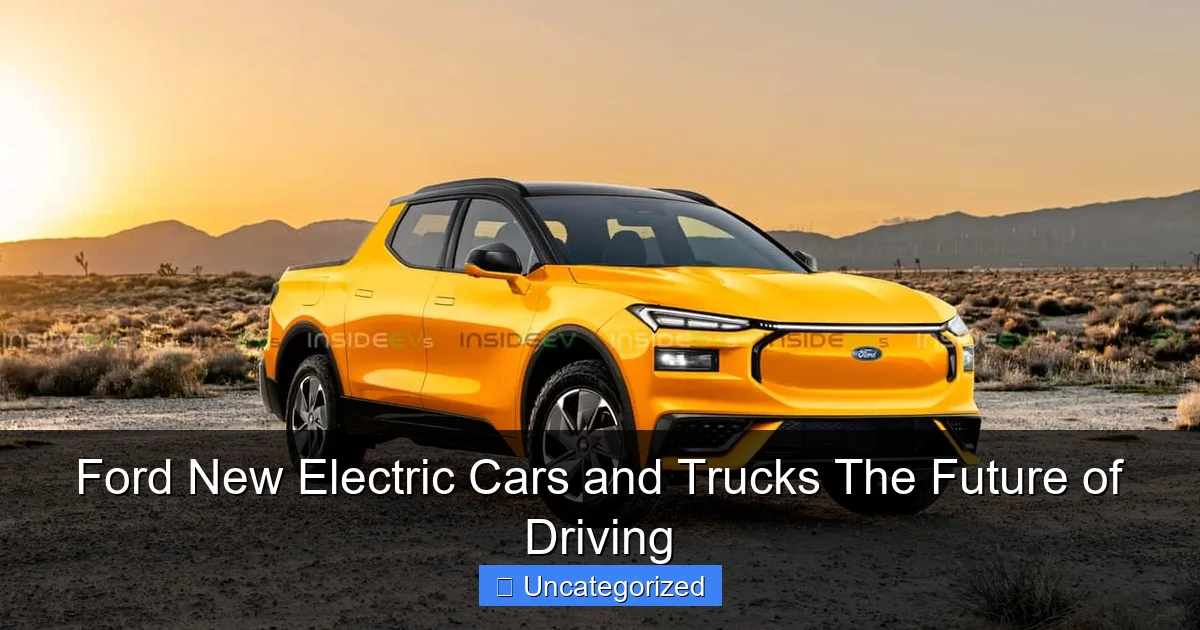
Featured image for ford new electric cars and trucks
Image source: cdn.motor1.com
Ford is revolutionizing the EV market with its new lineup of electric cars and trucks, combining rugged capability, cutting-edge tech, and eco-friendly performance. From the lightning-fast F-150 Lightning to the sleek Mustang Mach-E, Ford’s EVs deliver impressive range, smart features, and towing power, proving electric doesn’t mean compromise. This bold shift signals a future where power, sustainability, and innovation drive the road ahead.
Key Takeaways
- Ford’s electric lineup includes trucks, SUVs, and vans for diverse needs.
- Extended driving ranges now exceed 300 miles on select models.
- BlueCruise hands-free tech enhances safety on highways and long drives.
- Pro Power Onboard turns trucks into mobile workstations with built-in power.
- Competitive pricing and tax credits make EVs more affordable than ever.
- Fast-charging capability reaches 15–80% in under 30 minutes.
📑 Table of Contents
- Ford’s Electric Revolution: The Future of Driving is Here
- Ford’s Electric Vision: Strategy and Innovation
- Ford’s Electric Flagships: The Mustang Mach-E and F-150 Lightning
- Performance, Range, and Charging: What to Expect
- Cost and Incentives: Making Ford EVs Affordable
- Challenges and Considerations: What to Know Before Buying
- The Road Ahead: Ford’s Commitment to Electrification
Ford’s Electric Revolution: The Future of Driving is Here
The automotive world is undergoing a seismic shift, and at the forefront of this transformation stands Ford, an American icon reimagining its legacy for the electric age. Once synonymous with roaring V8 engines and rugged pickup trucks, Ford is now accelerating toward a cleaner, smarter, and more sustainable future with its new lineup of electric cars and trucks. From the groundbreaking Mustang Mach-E to the revolutionary F-150 Lightning, Ford isn’t just dipping its toes into electrification—it’s diving in headfirst. With a $50 billion investment in EVs by 2026, Ford is positioning itself as a serious contender in the global race to dominate the electric vehicle (EV) market. For drivers, this means access to vehicles that combine the brand’s legendary performance, utility, and innovation with zero-emission technology.
Why does this matter? The shift to electric isn’t just about environmental responsibility—it’s about redefining what a vehicle can do. Ford’s new electric cars and trucks promise instant torque, lower operating costs, and advanced connectivity features that make every drive smarter. Whether you’re a city commuter, a weekend adventurer, or a contractor hauling heavy loads, Ford’s EVs offer practical solutions without compromising on power or style. In this comprehensive guide, we’ll explore Ford’s electrified future, dissect the technology behind its vehicles, compare key models, and provide actionable insights to help you decide if Ford’s electric lineup is right for your next ride. Buckle up—the future of driving is electric, and Ford is leading the charge.
Ford’s Electric Vision: Strategy and Innovation
From Gas to Grid: Ford’s Electrification Roadmap
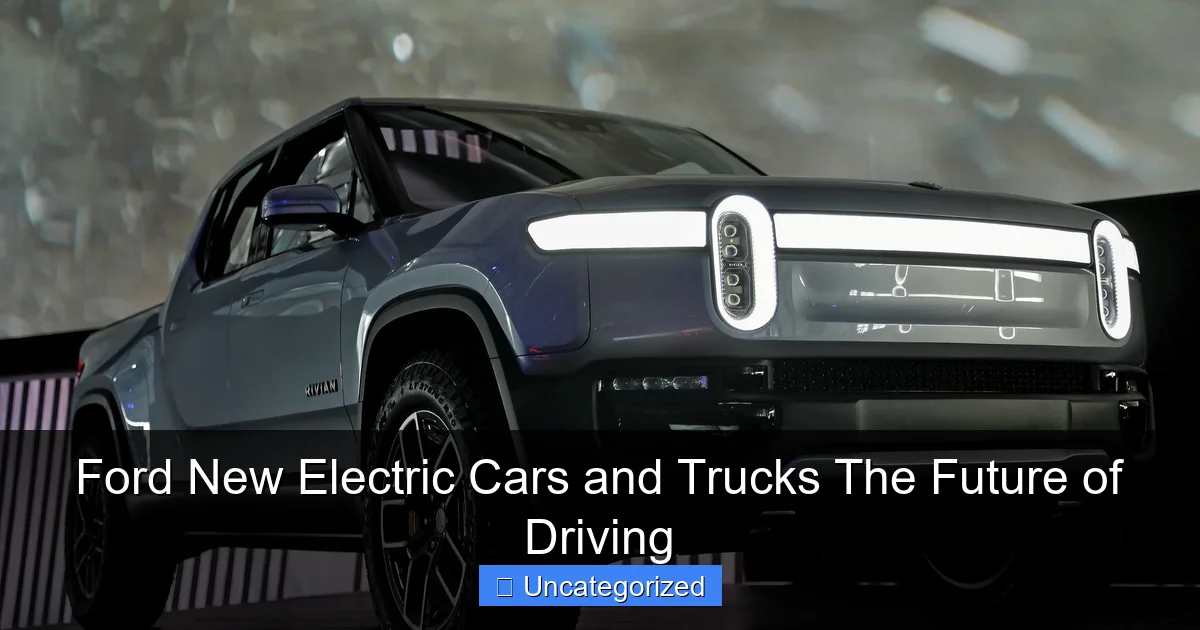
Ford’s commitment to electrification isn’t a sudden pivot—it’s a calculated, multi-year strategy. The company has outlined a clear path to electrify its most iconic models while investing in next-gen technology. By 2030, Ford aims for 40% of its global sales to be fully electric, with plans to launch 16 battery-electric vehicles (BEVs) by 2024. This includes not just passenger cars but also commercial vehicles, like the E-Transit van, designed to electrify fleets worldwide. The strategy hinges on three pillars: affordability, scalability, and adaptability. For example, Ford’s BlueOval™ Charge Network partners with third-party charging providers to give drivers access to over 84,000 chargers across North America, alleviating range anxiety.
Visual guide about ford new electric cars and trucks
Image source: static01.nyt.com
Proprietary Tech: The Ford Platform Advantage
What sets Ford apart is its proprietary EV platforms. The Global Electrification Platform (GEP), debuting in 2025, will underpin a range of affordable EVs, while the FNV (Ford Next-Generation Vehicle) architecture powers premium models like the Mach-E. These platforms enable faster charging (up to 150 kW DC fast charging), longer ranges, and over-the-air (OTA) software updates. For instance, the F-150 Lightning’s OTA updates have already added features like “Intelligent Range” to improve mileage predictions. Ford also leverages its Ford Pro™ division to offer businesses tailored EV solutions, including charging infrastructure and fleet management tools.
Sustainability Beyond the Tailpipe
Ford’s electrification isn’t just about vehicles—it’s a holistic approach to sustainability. The company is investing in recycled materials (e.g., the Mach-E’s interior uses 100% recycled plastics) and green manufacturing. The Rouge Electric Vehicle Center, where the F-150 Lightning is built, is a net-zero carbon facility powered by renewable energy. Even the battery supply chain is being restructured: Ford has secured partnerships with lithium and nickel suppliers to ensure ethical sourcing and reduce reliance on rare earth minerals.
Ford’s Electric Flagships: The Mustang Mach-E and F-150 Lightning
The Mustang Mach-E: Where Muscle Meets Efficiency
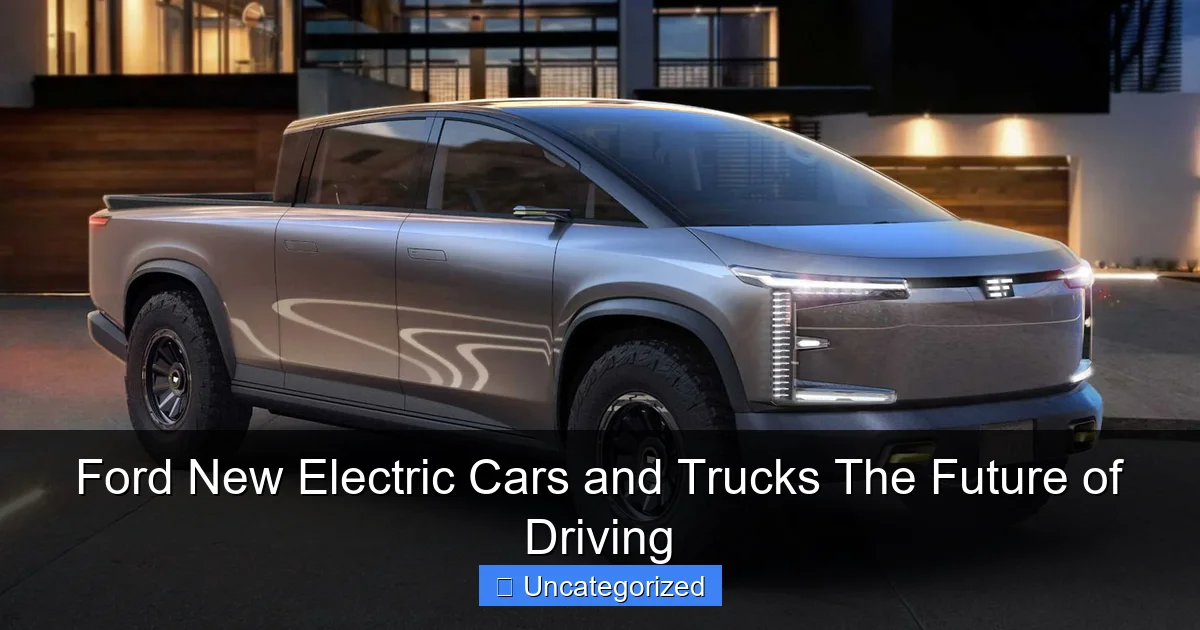
The Mustang Mach-E shattered stereotypes when it launched in 2021, proving that an electric SUV can deliver the thrill of a Mustang. With up to 480 horsepower (in the GT Performance Edition) and a 314-mile range, it competes with luxury EVs like the Tesla Model Y and Polestar 2. But the Mach-E isn’t just about specs—it’s a tech powerhouse. Key features include:
Visual guide about ford new electric cars and trucks
Image source: motortrend.com
- Ford SYNC® 4A: A 15.5-inch touchscreen with cloud-connected navigation and AI voice control.
- Hands-Free Driving: Ford’s BlueCruise system enables hands-free highway driving on over 130,000 miles of pre-mapped roads.
- Charging Flexibility: A 10-minute charge at a 150 kW station adds 61 miles of range.
Pro Tip: Opt for the Extended Range RWD model if you prioritize mileage over acceleration. It’s ideal for long commutes, while the GT version is perfect for adrenaline seekers.
The F-150 Lightning: The Electric Workhorse
The F-150 Lightning isn’t just Ford’s best-selling electric truck—it’s a game-changer for the pickup segment. Retaining the F-150’s legendary durability (10,000 lbs towing capacity, 2,235 lbs payload), it adds electric perks like:
- Pro Power Onboard: A mobile generator with up to 9.6 kW of exportable power (enough to run a home during outages).
- Mega Power Frunk: A 400-liter front trunk with 400 lbs of storage, USB ports, and a washable floor.
- Smart Charging: The Lightning can charge during off-peak hours and even send power back to the grid via vehicle-to-grid (V2G) technology.
Practical Example: A contractor in Texas used the Lightning’s Pro Power Onboard to run a jobsite for 24 hours during a blackout, saving thousands in generator fuel costs.
Beyond the Big Two: Other Ford EVs to Watch
While the Mach-E and Lightning steal the spotlight, Ford’s electric portfolio includes:
- E-Transit: A cargo van with a 126-mile range, perfect for urban deliveries.
- Explorer EV: A 3-row SUV (coming 2025) targeting families with a 300+ mile range.
- Lincoln Electrified Models: The Lincoln Star concept hints at luxury EVs with advanced autonomous features.
Performance, Range, and Charging: What to Expect
Breaking Down the Numbers: Range and Efficiency
Range anxiety is a common concern, but Ford’s EVs deliver competitive figures. Here’s a comparison of key models:
| Model | EPA-Estimated Range | 0-60 MPH Time | DC Fast Charging (10-80%) |
|---|---|---|---|
| Mustang Mach-E RWD (Standard Range) | 250 miles | 6.1 seconds | 38 minutes |
| Mustang Mach-E GT (Extended Range) | 270 miles | 3.8 seconds | 45 minutes |
| F-150 Lightning (Standard Range) | 230 miles | 4.5 seconds | 41 minutes |
| F-150 Lightning (Extended Range) | 320 miles | 4.5 seconds | 44 minutes |
| E-Transit (Cargo Van) | 126 miles | 6.5 seconds | 30 minutes |
Charging Made Easy: Home and Public Solutions
Ford simplifies charging with:
- Ford Charge Station Pro: A 19.2 kW home charger (sold separately) that adds 30 miles of range per hour.
- FordPass App: Find nearby chargers, check station availability, and pay via the app.
- Free Charging: New Lightning owners get 250 kWh of free charging at Electrify America stations.
Tip: Use the app to schedule charging during off-peak hours (e.g., midnight to 6 AM) to save on electricity costs. In California, this can reduce charging expenses by up to 40%.
Real-World Performance: What Drivers Say
Owners praise Ford’s EVs for:
- Instant Torque: The Lightning’s 775 lb-ft of torque makes it feel “like a rocket,” says a Colorado rancher.
- Ride Comfort: The Mach-E’s adaptive suspension handles potholes better than gas-powered SUVs.
- Low Maintenance: No oil changes or transmission repairs—just tire rotations and cabin air filter replacements.
Cost and Incentives: Making Ford EVs Affordable
Upfront Costs vs. Long-Term Savings
While Ford’s EVs have higher sticker prices than gas models, incentives and lower operating costs balance the scales. Here’s the breakdown:
- Mustang Mach-E: Starts at $42,995 (before federal tax credit).
- F-150 Lightning: Starts at $49,995 (before tax credit).
- E-Transit: Starts at $51,895 (before tax credit).
After the federal tax credit of $7,500 (for eligible buyers), the Lightning drops to $42,495—comparable to a gas F-150. Additional state incentives (e.g., California’s $2,000 rebate) can save even more.
Hidden Savings: Fuel, Maintenance, and More
EVs cost significantly less to run:
- Fuel: Charging a Lightning costs ~$10 for 100 miles (vs. $18 for a gas F-150).
- Maintenance: No engine, exhaust, or transmission repairs. Ford estimates $7,500 in savings over 10 years.
- Insurance: Some providers offer EV discounts (e.g., 15% off for Mach-E owners in Texas).
Pro Tip: Use Ford’s “EV Cost Calculator” (on their website) to compare total ownership costs in your area.
Financing and Leasing Options
Ford offers flexible plans:
- Ford Credit: 0% APR for 72 months on select models.
- Lease Deals: $399/month for the Mach-E with $3,500 down (varies by region).
- Ford Pro Leasing: Customized plans for businesses with E-Transit fleets.
Challenges and Considerations: What to Know Before Buying
Range Limitations in Extreme Conditions
Cold weather can reduce EV range by 20-40%. Ford addresses this with:
- Heat Pump Systems: Standard on Lightning and Mach-E to conserve battery power.
- Pre-Conditioning: Use the FordPass app to warm the cabin while plugged in.
Tip: Plan winter trips with 20% extra range buffer. A 200-mile trip might require a 240-mile battery.
Charging Infrastructure Gaps
While Ford’s BlueOval network is robust, rural areas still lack fast chargers. Solutions:
- Level 2 Home Charging: Install a 240V outlet for overnight charging.
- Portable Chargers: Keep a Ford Mobile Charger in the trunk for emergencies.
Resale Value and Market Perception
EV depreciation is a concern, but Ford’s brand strength helps. The Lightning’s resale value is projected at 60% after 3 years (vs. 50% for gas trucks). Early adopters also benefit from “first-mover” perks, like free charging and priority service.
The Road Ahead: Ford’s Commitment to Electrification
Ford’s electric journey is just beginning. The company plans to launch a sub-$30,000 EV by 2026 and expand its global EV lineup with models like the Explorer EV and Lincoln Nautilus EV. Key innovations on the horizon include:
- Solid-State Batteries: A partnership with SK On promises 50% faster charging by 2030.
- Autonomous Driving: BlueCruise will evolve to Level 4 autonomy by 2027.
- Circular Economy: Ford’s “Battery Life Cycle Management” program will recycle 95% of battery materials.
The message is clear: Ford isn’t just adapting to the electric future—it’s shaping it. For drivers, this means access to vehicles that are smarter, cleaner, and more capable than ever before. Whether you’re drawn to the Mach-E’s sporty elegance, the Lightning’s brute utility, or the E-Transit’s commercial efficiency, Ford’s electric cars and trucks represent the next evolution of driving. The road ahead is electric, and Ford is paving the way.
Frequently Asked Questions
What are the new Ford electric cars and trucks available in 2024?
Ford’s 2024 lineup includes the F-150 Lightning pickup, the Mustang Mach-E SUV, and the upcoming Explorer Electric. These models offer advanced tech, extended ranges, and sustainable performance.
How does the Ford F-150 Lightning compare to gas-powered trucks?
The Ford new electric trucks like the F-150 Lightning deliver instant torque, lower maintenance costs, and zero emissions, while matching or exceeding gas-powered towing and payload capacities. It also features innovative tech like Pro Power Onboard.
What is the driving range of Ford’s new electric vehicles?
Most Ford new electric cars and trucks offer ranges between 230 to 320 miles on a single charge, depending on the model and battery configuration. The Mustang Mach-E GT and F-150 Lightning Extended Range lead the pack.
Can I charge a Ford electric truck at home?
Yes, all Ford electric vehicles come with a standard home charging kit for 120V/240V outlets. A Level 2 (240V) charger can fully charge the F-150 Lightning overnight, making daily charging convenient.
What incentives are available for Ford electric vehicles?
Buyers may qualify for federal tax credits (up to $7,500) and local rebates for purchasing Ford new electric cars and trucks. Incentives vary by region, so check with your dealer for current offers.
How long does it take to charge a Ford Mustang Mach-E?
Using a DC fast charger, the Mach-E can gain up to 60 miles of range in 10 minutes. A full charge with a Level 2 home charger takes approximately 10 hours, depending on the battery size.