Ford Recalls Electric Car Power Cables Due to Fire Risk
Featured image for ford recalls electric car power cables due to fire risk
Image source: gannett-cdn.com
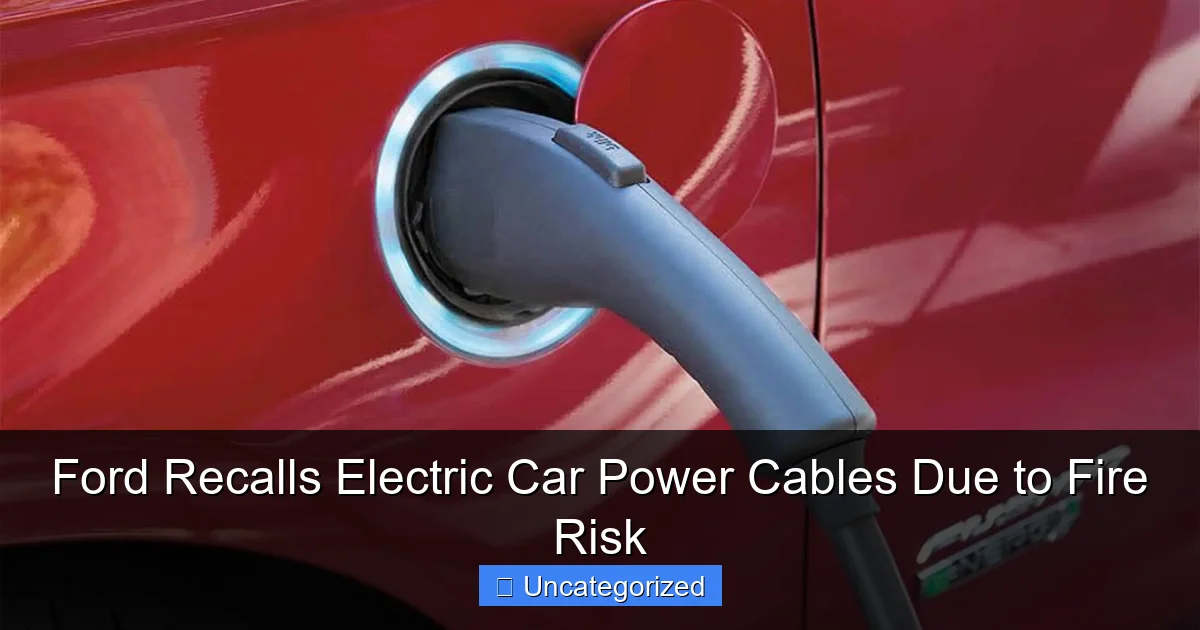
Ford is recalling thousands of electric car power cables due to a serious fire risk identified during charging. The issue stems from overheating in the high-voltage charging cables, which could ignite surrounding materials, prompting urgent action from the automaker and federal safety regulators.
Key Takeaways
- Ford recalls power cables for electric cars due to fire risk.
- Stop using recalled cables immediately to avoid potential hazards.
- Contact Ford dealerships for free replacements or refunds.
- Check VIN online to confirm if your vehicle is affected.
- Monitor NHTSA updates for ongoing recall developments.
- Prioritize safety checks if charging equipment shows wear or damage.
📑 Table of Contents
- Ford Recalls Electric Car Power Cables Due to Fire Risk: What Owners Need to Know
- Understanding the Recall: Scope and Affected Models
- Root Cause Analysis: Why the Cables Pose a Fire Risk
- Ford’s Response and Recall Remediation Plan
- Impact on EV Owners and Charging Best Practices
- Data and Statistics: Recall Scope and Industry Context
- Conclusion: Safety First in the EV Revolution
Ford Recalls Electric Car Power Cables Due to Fire Risk: What Owners Need to Know
The automotive industry has witnessed a rapid shift toward electrification in recent years, with major manufacturers like Ford investing billions into electric vehicle (EV) development. As part of its Ford+ plan, the company has launched several EVs, including the popular Ford Mustang Mach-E and the Ford F-150 Lightning. These vehicles represent not only a technological leap but also a commitment to sustainability and innovation. However, the journey toward a fully electric future hasn’t been without its challenges—particularly when it comes to safety and component reliability.
In a significant development, Ford Motor Company has issued a voluntary recall affecting thousands of its electric vehicles, specifically targeting the 120-volt convenience charging cords that come standard with certain models. The recall, initiated in coordination with the National Highway Traffic Safety Administration (NHTSA), stems from a potential fire risk associated with the power cables. While no major injuries have been reported, several incidents involving overheating and smoke during charging have prompted Ford to act swiftly. This recall underscores the importance of rigorous safety testing in EVs, especially as charging infrastructure and home-based charging solutions become more widespread. For current and prospective Ford EV owners, understanding the scope, cause, and response to this recall is essential for maintaining both vehicle safety and peace of mind.
Understanding the Recall: Scope and Affected Models
Which Models Are Included in the Recall?
The Ford electric car power cable recall affects a range of vehicles produced between 2021 and 2024. The primary models involved are:
Visual guide about ford recalls electric car power cables due to fire risk
Image source: midmichigannow.com
- Ford Mustang Mach-E (2021–2023 model years)
- Ford F-150 Lightning (2022–2024 model years)
- Ford E-Transit (2022–2023 model years)
According to Ford, approximately 135,000 vehicles in the United States and Canada are affected by this recall. The issue is not with the vehicles’ onboard charging systems or battery packs but specifically with the 120-volt Level 1 charging cords that come included in the vehicle’s accessory package. These cords are used when owners plug their EVs into standard household outlets (NEMA 5-15R), typically found in garages or outdoor receptacles.
Why Are Only the Charging Cords Being Recalled?
The recall is component-specific, meaning the fault lies in the design and manufacturing of the charging cable itself, not in the vehicle’s software, battery management system, or high-voltage charging infrastructure. The 120-volt cords, while convenient for slow charging, are not designed for continuous high-load use. Under certain conditions—such as prolonged charging sessions, poor outlet connections, or environmental factors like high ambient temperatures—the cable’s internal wiring and connectors can overheat.
Ford’s investigation, in collaboration with the supplier, revealed that the insulation around the internal wiring in some cords may degrade prematurely, increasing the risk of arcing, smoldering, or even fire. This is especially concerning because many EV owners use these cords overnight or during extended periods when the vehicle is unattended.
Real-World Example: A Case of Overheating
In one documented case from Texas, a Ford Mustang Mach-E owner reported smoke emanating from the wall outlet after leaving the car plugged in for 12 hours using the factory-supplied cord. The homeowner, who was alerted by a smart home smoke detector, disconnected the cord immediately. Upon inspection, the outlet showed signs of thermal damage, and the charging cable’s plug was partially melted. While no fire occurred, the incident prompted an investigation by Ford’s safety team, which later contributed to the broader recall decision.
Root Cause Analysis: Why the Cables Pose a Fire Risk
Design and Material Flaws in the Charging Cord
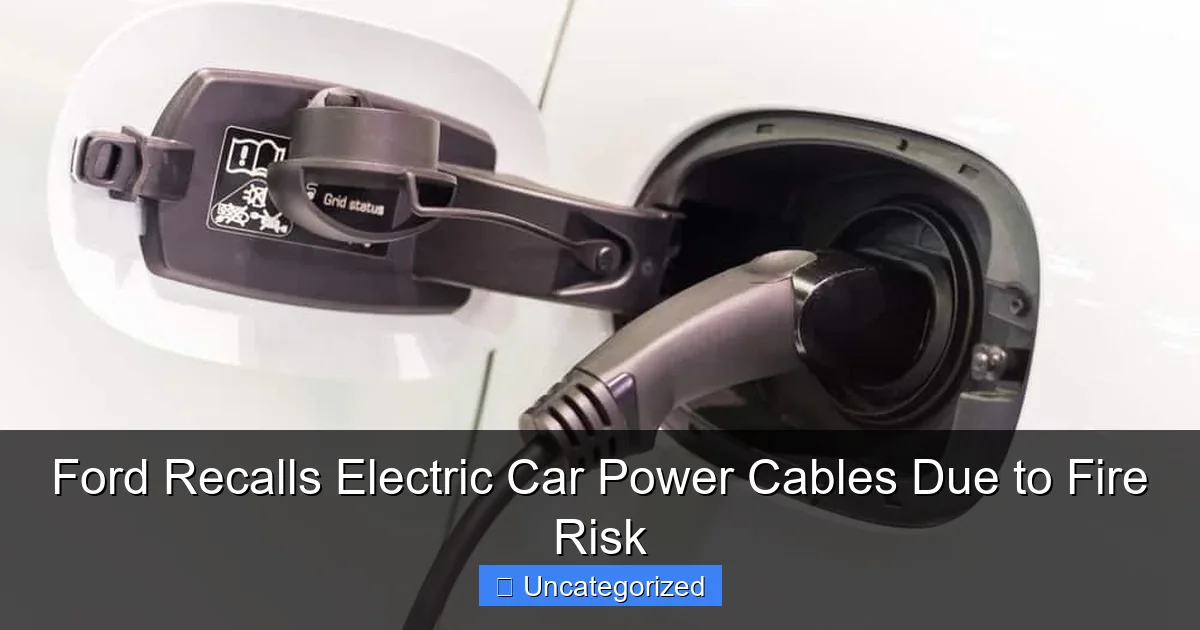
The root cause of the fire risk lies in a combination of design oversights and material limitations. The 120-volt charging cords supplied with Ford EVs are intended for occasional or emergency use, delivering approximately 3–5 miles of range per hour. However, many owners use them as their primary charging method, especially if they lack access to a 240-volt Level 2 charger at home.
Visual guide about ford recalls electric car power cables due to fire risk
Image source: bergerandgreen.com
Key issues identified by Ford and its supplier include:
- Insufficient thermal protection: The cords lack adequate thermal cutoff switches or temperature sensors to prevent overheating during extended use.
- Low-grade insulation: Some batches of cords used insulation materials with lower heat resistance, increasing the risk of breakdown under sustained load.
- Plug connector design: The NEMA 5-15 plug (standard household plug) may not maintain a secure connection in all outlets, leading to resistive heating at the contact points.
- Lack of current derating: The cord is rated for 15 amps, but prolonged use at or near this limit—common during overnight charging—can exceed safe thermal thresholds.
Environmental and Usage Factors
While the cord design is a primary factor, real-world usage conditions can exacerbate the risk:
- Old or worn electrical outlets can create loose connections, increasing resistance and heat.
- Extension cords or power strips used with the charging cable can further degrade performance and increase fire risk.
- High ambient temperatures in garages or outdoor areas reduce the cord’s ability to dissipate heat.
- Charging during peak electrical demand (e.g., evenings) can lead to voltage fluctuations, affecting current flow.
Ford emphasizes that the risk is not inherent to all 120-volt cords, but rather to specific production batches. However, to ensure customer safety, the company has decided to replace all cords in affected vehicles as a precaution.
Supplier Accountability and Quality Control
The charging cords in question were manufactured by a third-party supplier contracted by Ford. Internal audits revealed inconsistencies in quality control, including variations in wire gauge, insulation thickness, and plug assembly. While Ford has not disclosed the supplier’s name, the company has stated it is working with new suppliers and implementing stricter incoming inspection protocols to prevent similar issues in future accessories.
Ford’s Response and Recall Remediation Plan
Immediate Actions Taken by Ford
Upon identifying the issue, Ford initiated a voluntary safety recall in early 2024, with NHTSA filing the official notice (Recall Number 24V-123). The company has taken several steps to address the problem:
- Customer notifications: Owners of affected vehicles are being contacted via mail, email, and SMS with detailed instructions.
- Free replacement cords: Ford is distributing upgraded 120-volt charging cords with enhanced safety features, including thicker insulation, better plug contacts, and improved heat dissipation.
- Software updates: In some cases, Ford is pushing over-the-air (OTA) updates to the vehicle’s charging management system to provide alerts if abnormal charging behavior is detected.
- Partnership with dealerships: Ford dealerships are equipped to inspect, replace, and recycle the old cords at no cost to the owner.
How to Get Your Charging Cord Replaced
Owners of affected vehicles should follow these steps:
- Check your VIN: Visit the Ford Recall Lookup Tool and enter your Vehicle Identification Number (VIN) to confirm eligibility.
- Schedule an appointment: Contact your local Ford dealership or use the FordPass app to schedule a service visit.
- Bring your old cord: Ford recommends bringing the original charging cord to the dealership for inspection and safe disposal.
- Receive the new cord: The upgraded replacement cord will be installed and tested on-site.
- Register the replacement: Some dealerships may ask you to register the new cord for warranty tracking.
The entire process typically takes 30 minutes or less and requires no payment. Ford is also offering a $50 gift card to affected customers as a goodwill gesture.
Enhanced Safety Features in the New Cords
The replacement charging cords include several improvements:
- Thermal fuses that automatically cut power if temperatures exceed safe levels.
- Reinforced strain relief at the plug and vehicle connector ends to prevent wire fatigue.
- UL 2594 and SAE J1772 compliance for electrical safety and interoperability.
- Clear usage labels reminding owners not to use the cord with extension cords or damaged outlets.
Ford has also updated its owner’s manuals and digital resources to emphasize safe charging practices.
Impact on EV Owners and Charging Best Practices
What This Means for Current Ford EV Owners
For Ford EV owners, this recall is a reminder that even standard accessories can pose safety risks if not properly designed or maintained. While the recall is proactive and not linked to any fatalities, it highlights the need for vigilance, especially with home charging setups.
Affected owners should discontinue use of the recalled 120-volt cord immediately and switch to a 240-volt Level 2 charger if available. If a Level 2 charger is not installed, consider:
- Using a portable Level 2 charger (e.g., ChargePoint Home Flex, JuiceBox) that plugs into a NEMA 14-50 outlet.
- Charging during daylight hours when someone is home to monitor the process.
- Installing a dedicated 20-amp circuit with a GFCI outlet for safer Level 1 charging.
Best Practices for Safe EV Charging
To minimize fire risks and ensure reliable charging, follow these expert-recommended tips:
- Inspect cords and outlets regularly: Look for signs of fraying, melting, or discoloration.
- Use manufacturer-approved equipment: Avoid third-party or uncertified charging accessories.
- Avoid daisy-chaining power strips: Never plug the EV charger into an extension cord or surge protector.
- Install a Level 2 charger: A professionally installed 240-volt charger is safer, faster, and more efficient.
- Monitor charging sessions: Use your vehicle’s app or smart plug to receive alerts if charging stops unexpectedly.
- Ensure proper ventilation: Keep charging areas free of clutter and moisture.
For example, a Ford F-150 Lightning owner in Colorado installed a Wallbox Pulsar Plus 240-volt charger after the recall announcement. The owner reported not only faster charging (adding 30 miles of range per hour) but also greater peace of mind knowing the system is UL-certified and equipped with built-in thermal protection.
Long-Term Implications for EV Safety Standards
This recall may prompt broader industry changes. The Society of Automotive Engineers (SAE) and Underwriters Laboratories (UL) are already reviewing standards for EV charging accessories, particularly for Level 1 cords. Future regulations may require:
- Mandatory thermal cutoff devices in all charging cables.
- Stricter labeling requirements for usage limitations.
- Third-party certification for all OEM charging accessories.
Ford’s transparency in handling the recall could set a benchmark for how automakers address EV-related safety issues.
Data and Statistics: Recall Scope and Industry Context
Below is a summary of key data related to the Ford charging cable recall and broader EV safety trends:
| Metric | Value | Source |
|---|---|---|
| Total vehicles recalled | 135,000 | Ford Motor Company, NHTSA |
| Affected model years | 2021–2024 | Ford Recall Notice |
| Number of reported incidents | 27 (overheating/smoke) | NHTSA Complaint Database |
| Estimated repair time per vehicle | 30 minutes | Ford Service Manual |
| Cost of replacement cord (retail) | $89–$120 | Ford Parts Catalog |
| Percentage of EV owners using Level 1 charging daily | ~38% | U.S. Department of Energy (2023) |
| Number of EV-related fires (2023, U.S.) | 142 (all causes) | National Fire Protection Association (NFPA) |
| EV fire rate per 100,000 vehicles | 25 (vs. 1,530 for ICE vehicles) | NFPA, IIHS |
These figures illustrate that while EV fires are relatively rare, the risk increases when improper charging practices or faulty accessories are involved. The Ford recall is a timely intervention to prevent a potentially larger safety issue.
Conclusion: Safety First in the EV Revolution
The Ford recall of electric car power cables due to fire risk is more than just a routine safety update—it’s a critical moment in the evolution of electric mobility. As EVs become mainstream, the focus must shift not only to performance and range but also to the entire ecosystem of charging, from the vehicle to the home outlet. Ford’s proactive response demonstrates corporate responsibility and sets a precedent for transparency in the face of emerging risks.
For owners, the recall is a call to action: check your VIN, stop using the affected cord, and upgrade to safer charging solutions where possible. While the 120-volt cord is convenient, it’s not designed for long-term, unattended use. Investing in a Level 2 charger or using the replacement cord responsibly can significantly reduce risks.
Looking ahead, this incident should inspire automakers, regulators, and consumers to demand higher safety standards for all EV accessories. As the industry continues to innovate, safety must remain the foundation—not an afterthought. Ford’s handling of this recall, while inconvenient in the short term, ultimately strengthens trust in electric vehicles and ensures that the road to a sustainable future is both fast and safe.
Remember: when it comes to charging your EV, convenience should never come at the cost of safety. Stay informed, stay vigilant, and keep your electric journey powered—safely.
Frequently Asked Questions
Why is Ford recalling electric car power cables?
Ford is recalling electric car power cables due to a potential fire risk caused by overheating during charging. The issue stems from a manufacturing defect that could lead to melting or combustion under certain conditions.
Which Ford electric vehicles are affected by the recall?
The recall primarily impacts select Ford Mustang Mach-E and F-150 Lightning models equipped with the high-voltage charging cables manufactured between specific dates. Owners should check Ford’s recall website using their VIN for confirmation.
What should I do if my Ford EV is part of the power cable recall?
If your vehicle is affected, Ford will notify you by mail and advise returning the faulty charging cable to a dealership for a free replacement. You can also contact Ford’s customer service to schedule the repair.
How serious is the fire risk with Ford’s recalled power cables?
The fire risk is considered significant, as overheating could occur during normal charging, especially under high-load conditions. Ford has reported a small number of incidents, prompting the proactive recall to prevent injuries or property damage.
Can I continue using my Ford EV’s charging cable while waiting for the recall fix?
Ford recommends discontinuing use of the recalled power cable immediately and switching to a Level 1 charger or public charging stations until the replacement cable is installed. This minimizes the risk of overheating.
Is Ford offering compensation for the electric car power cable recall?
Ford is covering all costs for the cable replacement, including parts and labor. While no direct compensation has been announced, owners may request reimbursement for related expenses incurred due to the recall by contacting Ford.