Ford Electric Car Revolution The Future of Driving
Featured image for fords electric car
Image source: car-images.bauersecure.com
Ford is leading the electric vehicle revolution with a bold lineup of innovative, high-performance electric cars designed to redefine the future of driving. From the lightning-fast Mustang Mach-E to the rugged F-150 Lightning, Ford combines cutting-edge technology, impressive range, and sustainable design to meet the demands of modern drivers. This strategic shift signals Ford’s unwavering commitment to an all-electric future by 2035.
Key Takeaways
- Ford’s EV lineup includes Mustang Mach-E and F-150 Lightning, redefining performance and utility.
- Invest in charging infrastructure to maximize convenience and reduce range anxiety for daily drives.
- Advanced tech features like BlueCruise offer hands-free driving on approved highways.
- Lower ownership costs with fewer moving parts and reduced maintenance compared to gas vehicles.
- Expanding battery production aims to lower costs and increase EV accessibility by 2025.
- Ford EVs support sustainability with recycled materials and carbon-neutral manufacturing goals.
📑 Table of Contents
- Ford Electric Car Revolution: The Future of Driving
- The Ford Electric Car Lineup: Power, Range, and Innovation
- Technology and Charging: Powering the Ford Electric Car Experience
- Performance, Safety, and Sustainability: The Ford Edge
- Cost of Ownership: Are Ford Electric Cars Worth It?
- Challenges and How Ford Is Overcoming Them
- The Road Ahead: Ford’s Vision for an All-Electric Future
Ford Electric Car Revolution: The Future of Driving
In the rapidly evolving world of automotive technology, Ford is making bold strides toward a sustainable, electrified future. As the demand for cleaner, more efficient transportation grows, Ford has responded with a revolutionary lineup of electric vehicles (EVs) that are reshaping how we think about driving. From the iconic F-150 Lightning to the sleek Mustang Mach-E, Ford is not just adapting to the electric revolution—it’s leading it. With decades of manufacturing excellence, a deep understanding of American driving habits, and a commitment to innovation, Ford is proving that electrification doesn’t mean compromise. Instead, it means more power, more range, and more possibilities.
The Ford electric car revolution isn’t just about swapping gas tanks for batteries. It’s a holistic transformation that touches every aspect of vehicle design, performance, and ownership. Ford is investing $50 billion globally in electrification through 2026, aiming to produce 2 million EVs annually by 2026. This isn’t a side project; it’s the core of Ford’s future strategy. As climate change concerns mount and government incentives for EVs expand, Ford is positioning itself as a trusted, accessible, and performance-driven option for both first-time EV buyers and seasoned enthusiasts. Whether you’re a city commuter, a weekend adventurer, or a fleet manager, Ford’s electric vehicles promise to deliver a smarter, greener, and more exhilarating driving experience.
The Ford Electric Car Lineup: Power, Range, and Innovation
Mustang Mach-E: Where Performance Meets Electrification
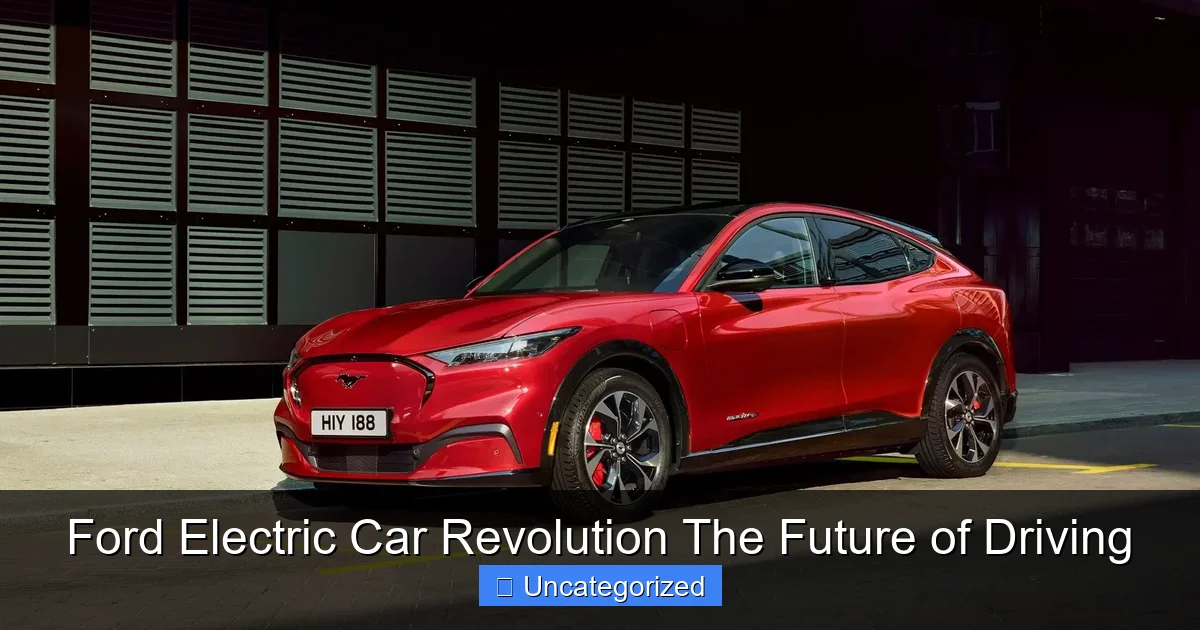
The Mustang Mach-E is Ford’s electrified reimagining of the legendary Mustang, and it’s turning heads for all the right reasons. Launched in 2020, the Mach-E blends the soul of a performance coupe with the practicality of an SUV. Available in multiple trims—Select, Premium, California Route 1, and the high-performance GT—the Mach-E caters to a wide range of drivers. The GT version delivers a staggering 480 horsepower and 634 lb-ft of torque, rocketing from 0 to 60 mph in just 3.5 seconds, rivaling many sports cars.
Range varies by configuration, with the extended-range rear-wheel-drive model offering up to 314 miles on a single charge. The Mach-E also features Ford’s SYNC 4A infotainment system, a 15.5-inch touchscreen, and over-the-air updates that continuously improve the vehicle’s software. One standout feature is the “frunk” (front trunk), which provides 4.7 cubic feet of weatherproof storage—perfect for groceries, gear, or even a cooler for tailgating.
F-150 Lightning: The Electric Workhorse
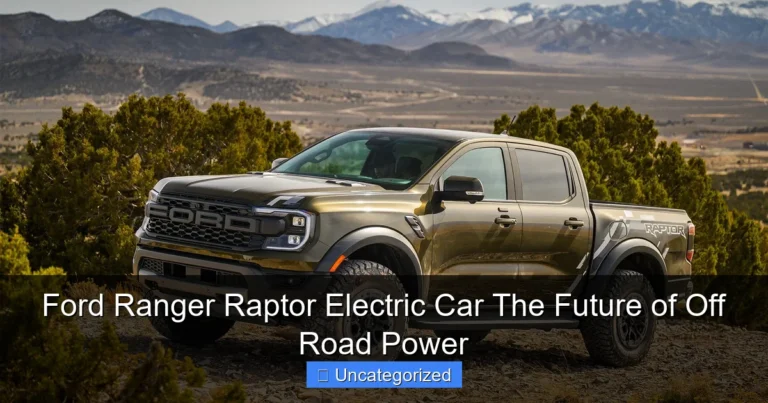
The F-150 Lightning is arguably Ford’s most ambitious EV yet. As the electric version of America’s best-selling vehicle for over 40 years, it had big boots to fill—and it delivers. With a starting MSRP of around $49,995 (before incentives), the Lightning offers up to 320 miles of range (Extended Range model), 580 horsepower, and a towing capacity of up to 10,000 pounds. It’s not just a green alternative; it’s a powerhouse.
One of the Lightning’s most innovative features is Pro Power Onboard, which turns the truck into a mobile generator. With up to 9.6 kW of power, it can run tools, lights, or even power a home during an outage. In fact, Ford’s “Intelligent Backup Power” system can keep a home powered for up to three days using the truck’s battery. This makes the F-150 Lightning a game-changer for contractors, campers, and homeowners in areas prone to blackouts.
E-Transit: Electrifying the Commercial Fleet
For businesses and delivery services, Ford’s E-Transit offers a zero-emission solution without sacrificing utility. With a range of up to 159 miles (depending on roof height and cargo configuration), the E-Transit is ideal for last-mile deliveries, shuttle services, and municipal fleets. It retains the same cargo volume and payload capacity as its gas-powered counterpart, ensuring no compromise on practicality.
The E-Transit also features Ford’s Fleet Management Tools, including real-time telematics, route optimization, and remote diagnostics. Companies like Amazon and DHL have already placed large orders, signaling strong confidence in Ford’s electric commercial vehicles. With federal and state incentives for commercial EVs, the E-Transit offers not just environmental benefits but significant long-term cost savings.
Future Models: What’s Coming Next?
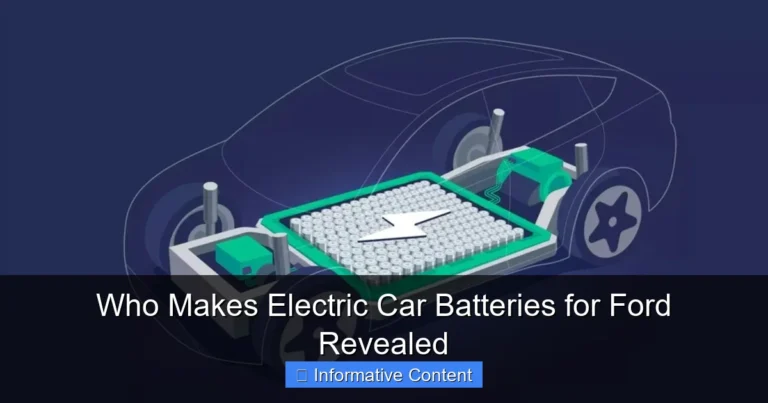
Ford isn’t stopping at current models. The company has announced plans for an all-electric Explorer, a new electric pickup based on the “Project T3” platform, and a range of affordable EVs under $30,000 by 2026. These upcoming vehicles will leverage Ford’s new skateboard-style EV architecture, allowing for greater flexibility in design, battery placement, and manufacturing efficiency. With a focus on modularity and scalability, Ford aims to make EVs more accessible to the average consumer while maintaining high standards of safety and performance.
Technology and Charging: Powering the Ford Electric Car Experience
FordPass Power My Trip: Smarter Charging
One of the biggest concerns for new EV owners is range anxiety and charging logistics. Ford addresses this with FordPass Power My Trip, a feature integrated into the SYNC system and FordPass app. When you enter a destination, the system automatically calculates the optimal route, factoring in traffic, elevation, weather, and charging needs. It identifies available charging stations, estimates arrival battery levels, and even preconditions the battery for faster charging when you arrive.
For example, if you’re driving from Chicago to Detroit (280 miles), Power My Trip might suggest a 20-minute stop at a Ford-connected DC fast charger halfway through, ensuring you arrive with 40% charge. This intelligent routing reduces stress and maximizes efficiency, especially on long trips.
BlueOval Charge Network: Seamless Access
Ford has partnered with over 84,000 charging stations across North America through the BlueOval Charge Network. This includes access to Electrify America, ChargePoint, EVgo, and other major providers. Ford EV owners can use a single app and payment method across all stations, eliminating the need to juggle multiple accounts.
Additionally, Ford offers Plug & Charge technology on select models, allowing the vehicle to authenticate and pay automatically when plugged in—no app or card required. This seamless integration makes charging as simple as refueling at a gas station.
Home Charging Solutions: Convenience at Your Doorstep
For daily use, home charging is the most convenient and cost-effective option. Ford partners with Qmerit to provide professional home charger installation. The Ford Connected Charge Station delivers up to 48 amps (11.5 kW), providing up to 30 miles of range per hour of charging. This means a full charge overnight for most daily commutes.
Pro Tip: If you have a 240-volt outlet (like for a dryer), installing a Level 2 charger can be done in a weekend. Ford also offers a $1,000 home charging incentive for F-150 Lightning buyers, reducing the total cost to under $500 after installation.
Vehicle-to-Grid (V2G) and Smart Energy Integration
Ford is pioneering vehicle-to-grid (V2G) technology, allowing EVs to feed power back into the grid during peak demand. The F-150 Lightning, for instance, can supply up to 9.6 kW of power to a home or the grid. Ford is also piloting programs with utilities to incentivize off-peak charging, helping stabilize the grid and reduce electricity costs for owners.
In a pilot with Duke Energy, Ford tested how Lightning trucks could act as mobile energy storage units, supporting local grids during outages. This bidirectional charging capability could revolutionize how we think about energy consumption and storage.
Performance, Safety, and Sustainability: The Ford Edge
Performance That Thrills
Ford electric cars are not just efficient—they’re exhilarating. Electric motors deliver instant torque, resulting in rapid acceleration and smooth, quiet operation. The Mustang Mach-E GT, for instance, outperforms many V8-powered vehicles in straight-line speed while offering superior handling thanks to its low center of gravity (from the battery placement).
The F-150 Lightning features four-wheel drive with independent front and rear electric motors, providing excellent traction in all conditions. It also has multiple drive modes (Normal, Sport, Off-Road, Tow) that adjust throttle response, steering, and suspension settings. For off-road enthusiasts, the Lightning’s “Tremor” trim adds all-terrain tires, upgraded suspension, and underbody protection.
Advanced Safety Features
Safety is a top priority in Ford’s electric lineup. All models come standard with Ford Co-Pilot360 2.0, a suite of driver-assist technologies including:
- Adaptive Cruise Control with Stop-and-Go
- Lane Centering and Lane-Keeping Assist
- Pre-Collision Assist with Automatic Emergency Braking
- Blind Spot Information System (BLIS)
- Rear View Camera with Dynamic Hitch Assist (on trucks)
The Mach-E and Lightning also feature Active Park Assist 2.0, which can park the vehicle automatically—parallel or perpendicular—with the driver just pressing a button. These features not only enhance safety but also reduce driver fatigue, especially in heavy traffic.
Commitment to Sustainability
Ford’s electrification strategy is deeply tied to sustainability. The company aims to achieve carbon neutrality by 2050, with interim goals of 100% renewable energy in global operations by 2035. The F-150 Lightning is built at the Rouge Electric Vehicle Center in Michigan, which uses solar power and has a zero-waste-to-landfill policy.
Battery recycling is another focus. Ford is investing in Redwood Materials, a company that recovers up to 95% of battery materials for reuse. This closed-loop system reduces reliance on mining and lowers the environmental footprint of EV production.
Cost of Ownership: Are Ford Electric Cars Worth It?
Upfront Cost vs. Long-Term Savings
While Ford electric cars may have a higher sticker price than their gas counterparts, the total cost of ownership (TCO) is often lower. According to a 2023 study by the U.S. Department of Energy, EVs cost 40–60% less to maintain over five years due to fewer moving parts, no oil changes, and reduced brake wear (thanks to regenerative braking).
Here’s a breakdown of potential savings:
| Cost Factor | Gas Vehicle (F-150 XLT) | F-150 Lightning (Standard Range) | Annual Savings |
|---|---|---|---|
| Fuel (15,000 miles/year) | $2,400 (gas at $3.20/gallon) | $750 (electricity at $0.15/kWh) | $1,650 |
| Maintenance (5 years) | $3,500 | $1,400 | $2,100 |
| Insurance (avg.) | $1,800/year | $1,900/year | –$100 |
| Federal Tax Credit (if eligible) | $0 | $7,500 | $7,500 |
| Total (5 years) | $17,500 | $10,450 | $7,050 |
Note: State and local incentives (e.g., California’s Clean Vehicle Rebate) can add $2,000–$5,000 in additional savings.
Resale Value and Depreciation
Historically, EVs depreciated faster than gas cars, but that’s changing. The F-150 Lightning and Mach-E have held their value better than industry averages, thanks to strong demand and Ford’s brand reputation. According to iSeeCars, the Mach-E retains about 75% of its value after two years, compared to 60% for the average EV.
Tip: To maximize resale value, keep your Ford EV well-maintained, avoid excessive mileage, and consider certified pre-owned (CPO) programs when buying used.
Incentives and Rebates
Federal tax credits of up to $7,500 are available for new Ford EVs, provided they meet battery and assembly requirements under the Inflation Reduction Act (IRA). As of 2024, the F-150 Lightning and Mach-E still qualify for the full credit, though buyers must meet income limits ($150,000 for individuals, $300,000 for joint filers).
Many states offer additional rebates—California’s Clean Vehicle Rebate Project, for example, offers up to $2,000. Some utilities also provide discounts on home chargers or electricity rates for EV owners.
Challenges and How Ford Is Overcoming Them
Battery Supply and Raw Materials
One of the biggest challenges in EV production is securing lithium, nickel, cobalt, and other critical minerals. Ford is addressing this through long-term contracts with mines and recycling partners. The company has signed deals with SK On, LG Energy Solution, and CATL to ensure stable battery supply through 2030.
Ford is also investing in sodium-ion battery technology for future affordable EVs, which could reduce reliance on scarce materials and lower costs.
Charging Infrastructure Gaps
While Ford has made strides with the BlueOval Network, rural and underserved areas still lack reliable fast charging. Ford is working with governments and utilities to expand infrastructure, including installing chargers at dealerships, shopping centers, and highway rest stops. The company has committed to installing 1,000 fast chargers at Ford dealerships nationwide by 2025.
Consumer Education and Adoption
Many consumers still have misconceptions about EVs—range, charging time, cost, and maintenance. Ford combats this with EV education campaigns, test drive events, and transparent pricing. The FordPass app includes a “EV Learning Center” with videos, FAQs, and personalized tips based on driving habits.
For example, Ford offers a “EV Experience Weekend” where customers can borrow a Mach-E for a few days to try it in real-world conditions—no sales pressure, just hands-on learning.
The Road Ahead: Ford’s Vision for an All-Electric Future
Ford’s electric car revolution is more than a product shift—it’s a cultural and technological transformation. With a clear roadmap, massive investments, and a deep understanding of what drivers need, Ford is poised to dominate the EV market. The company’s “Ford+ Plan” focuses on three pillars: electric vehicles, connected services, and digital experiences, creating a seamless ecosystem that enhances every aspect of ownership.
Looking ahead, Ford aims to make EVs mainstream and affordable without sacrificing performance, utility, or style. The upcoming sub-$30,000 EV and expanded battery recycling programs signal a commitment to accessibility and sustainability. As charging infrastructure improves and battery technology advances, Ford electric cars will become the default choice for millions of drivers.
Whether you’re drawn to the raw power of the F-150 Lightning, the sporty elegance of the Mustang Mach-E, or the practicality of the E-Transit, Ford offers an electric solution that fits your life. The future of driving isn’t just electric—it’s Ford electric. And that future is already here.
Frequently Asked Questions
What makes Ford’s electric car lineup stand out in the EV market?
Ford’s electric car revolution combines rugged American engineering with cutting-edge tech, offering models like the Mustang Mach-E and F-150 Lightning that blend performance, utility, and affordability. Their focus on high-capacity battery options and Pro Power Onboard (in trucks) sets them apart.
How does the Ford F-150 Lightning’s range compare to other electric trucks?
The Ford F-150 Lightning delivers an EPA-estimated 240-320 miles per charge, depending on battery size, rivaling the Chevrolet Silverado EV and Rivian R1T. Its extended-range battery is ideal for both daily commutes and heavy-duty tasks.
Can Ford’s electric car charging network support long-distance travel?
Yes! Ford partners with BlueOval™ Charge Network, providing access to 19,500+ public stations and 84,000+ chargers nationwide, including fast-charging options. Their “Plug & Charge” feature simplifies payments on select networks.
What is Ford’s electric car warranty coverage?
Ford offers an 8-year/100,000-mile battery warranty on all electric cars, covering defects and capacity loss below 70%. This aligns with industry standards but exceeds some competitors in mileage limits.
How affordable is Ford’s electric car maintenance compared to gas vehicles?
Ford’s electric cars require 40-50% less maintenance due to fewer moving parts—no oil changes, spark plugs, or transmission fluid. Regenerative braking also reduces wear on brake pads, saving long-term costs.
Does Ford’s electric car lineup include options for SUV and truck lovers?
Absolutely. The Mustang Mach-E (SUV) and F-150 Lightning (truck) cater to diverse needs, with the E-Transit van for commercial use. All models retain Ford’s iconic styling and capability, now electrified.