Fully Electric Ford Cars The Future of Driving is Here
Featured image for fully electric ford cars
Image source: electrichunter.com
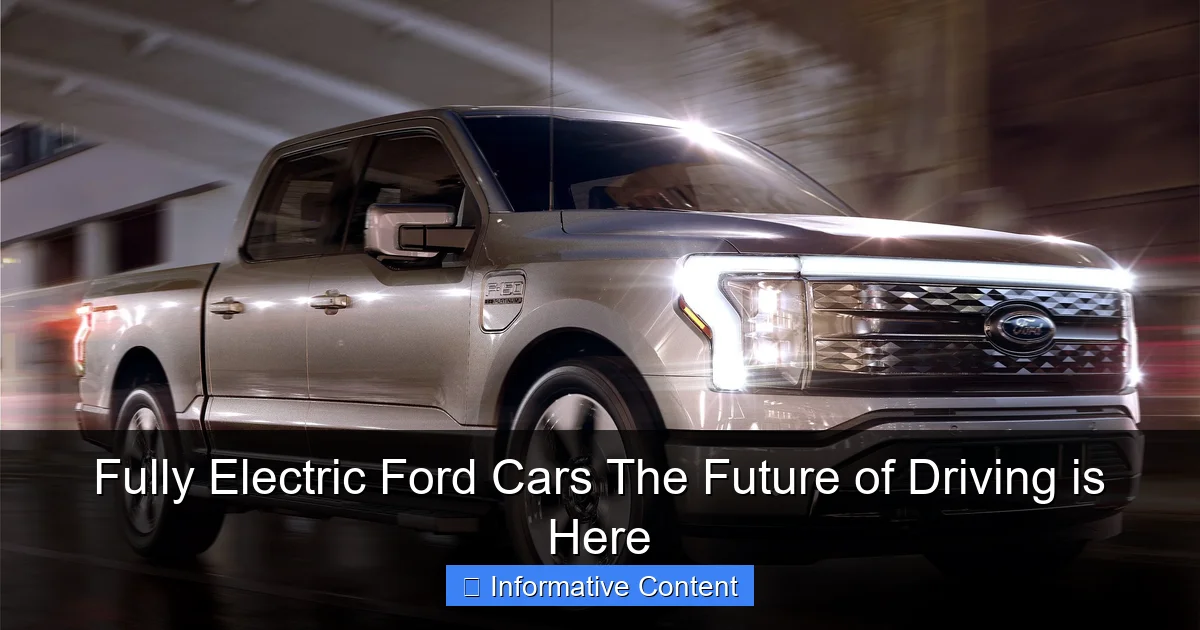
Fully electric Ford cars are revolutionizing the automotive industry with cutting-edge technology, zero-emission performance, and the iconic Ford reliability drivers trust. From the Mustang Mach-E to the F-150 Lightning, these EVs deliver exhilarating power, smart features, and a sustainable driving experience—proving the future of transportation is here today.
Key Takeaways
- Ford’s electric lineup delivers zero-emission driving with instant torque and smooth acceleration.
- Long-range models like the Mustang Mach-E offer 300+ miles on a single charge.
- Fast charging capability gets you back on the road in under 45 minutes.
- Advanced tech features include SYNC 4A, over-the-air updates, and driver-assist systems.
- Home charging solutions make overnight power-ups convenient and cost-effective.
- FordPass app enables remote monitoring, charging, and route planning from your phone.
- Built to last with rugged construction and extended battery warranties for peace of mind.
📑 Table of Contents
- The Rise of Fully Electric Ford Cars: A New Era Begins
- Why Ford is Betting Big on Fully Electric Cars
- The Fully Electric Ford Cars You Can Drive Today
- Charging Your Fully Electric Ford Car: What You Need to Know
- Technology and Features That Make Ford EVs Stand Out
- What’s Next? The Future of Fully Electric Ford Cars
- Data Table: Fully Electric Ford Cars at a Glance
- The Verdict: Are Fully Electric Ford Cars Right for You?
The Rise of Fully Electric Ford Cars: A New Era Begins
Remember when electric cars were just a futuristic idea? Fast forward to today, and they’re parked in driveways, zipping down highways, and turning heads. Among the automakers stepping boldly into this electric revolution is Ford. Known for its rugged trucks and muscle cars, Ford is now making waves with its fully electric Ford cars, proving that the future of driving is not just coming—it’s already here.
What makes Ford’s electric lineup stand out isn’t just the tech or the zero-emission driving. It’s the way Ford is blending its century-old legacy of durability and performance with cutting-edge electric innovation. Whether you’re a long-time Ford fan or someone curious about switching to electric, the brand’s commitment to practicality, range, and real-world usability is hard to ignore. From daily commutes to weekend road trips, these vehicles are designed to fit seamlessly into your life—no compromises.
Why Ford is Betting Big on Fully Electric Cars
From F-150 to Future: Ford’s Electric Pivot
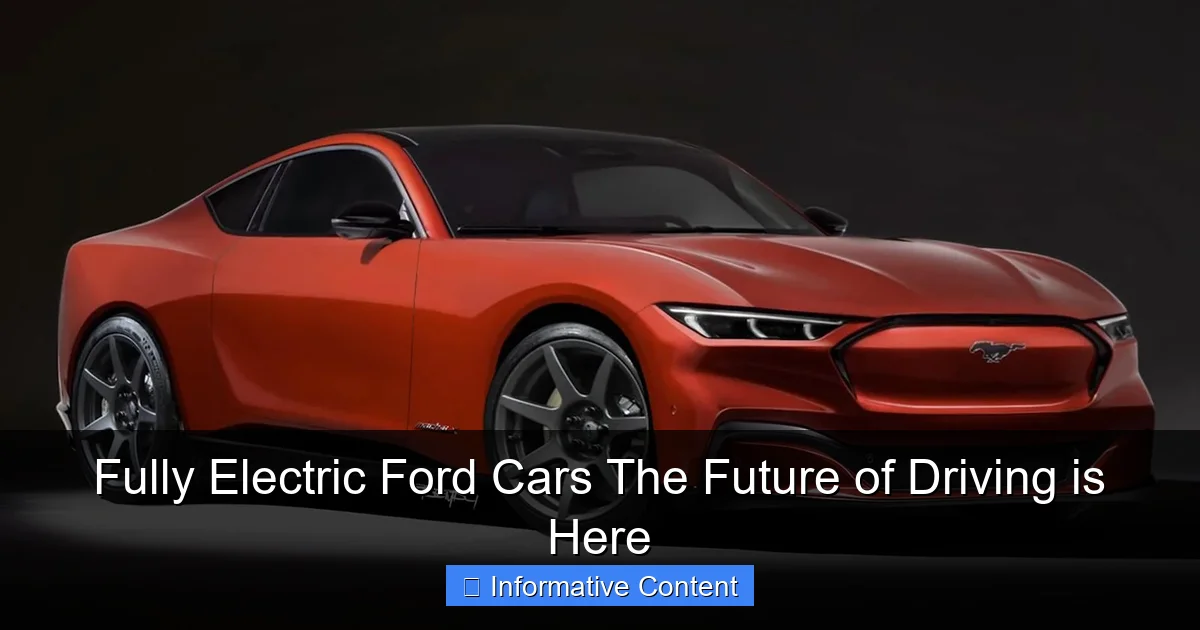
Ford isn’t just dipping a toe into the electric pool—it’s diving in headfirst. The company has pledged over $50 billion toward electric vehicle (EV) development through 2026, with plans to produce 2 million EVs annually by that time. This isn’t about chasing trends; it’s about redefining what Ford means in the 21st century.
Visual guide about fully electric ford cars
Image source: i.pinimg.com
Take the F-150 Lightning, for example. The F-Series has been America’s best-selling truck for over 40 years. By electrifying it, Ford sent a clear message: electric doesn’t mean fragile or niche. The Lightning retains the toughness of the original F-150 but adds instant torque, lower maintenance, and even the ability to power your home during an outage—something no gas-powered truck can do.
Real-World Benefits: Cost, Convenience, and Confidence
Let’s talk numbers. While the upfront cost of a fully electric Ford car might be higher than its gas counterpart, the long-term savings are real:
- Fuel savings: Charging at home costs about half as much as filling a tank with gas. For a typical driver, that’s $800–$1,200 saved per year.
- Maintenance: No oil changes, spark plugs, or exhaust systems. Electric motors have fewer moving parts, meaning less wear and tear.
- Incentives: Federal tax credits (up to $7,500) and state-level rebates can significantly lower the price.
And don’t forget convenience. Imagine pulling into your garage, plugging in your car, and waking up to a full “tank” every morning—no more gas station runs or price spikes. For city dwellers, many workplaces and apartment buildings now offer free or discounted charging, making it even easier.
One Ford owner from Portland, Oregon, shared: “I used to stress about gas prices, especially with my long commute. Now, I charge at night using off-peak rates. My monthly ‘fuel’ bill went from $180 to $40. And my car’s quieter, smoother, and more fun to drive.”
The Fully Electric Ford Cars You Can Drive Today
Ford Mustang Mach-E: Where Sport Meets Sustainability
The Mustang Mach-E is Ford’s answer to the question: “Can an electric SUV feel like a real Mustang?” And the answer is a resounding yes. With a sleek, coupe-like profile and a 0–60 mph time as quick as 3.5 seconds (in the GT Performance Edition), this isn’t your average eco-box.
Available in multiple trims, the Mach-E offers:
- Range: Up to 314 miles (Extended Range RWD)
- Charging: 10–80% in about 45 minutes on a DC fast charger
- Tech: Ford’s SYNC 4A infotainment with a 15.5-inch touchscreen, over-the-air updates, and voice-activated navigation
One standout feature? The front trunk—or “frunk.” With no engine up front, Ford turned that space into a 4.7-cubic-foot storage bin, perfect for groceries, gym bags, or even a cooler for tailgating.
But it’s not perfect. Some drivers find the ride a bit firm, especially on rough pavement. And while the interior feels premium, it’s not quite as luxurious as some German rivals. Still, for the price and performance, the Mach-E delivers serious value.
F-150 Lightning: The Electric Truck That Works as Hard as You Do
If the Mach-E is the sporty sibling, the F-150 Lightning is the workhorse. Built on the same platform as the gas-powered F-150, it retains the same payload (up to 2,235 lbs) and towing capacity (up to 10,000 lbs), but with a twist: instant electric torque that delivers power the moment you press the pedal.
Key specs:
- Range: Up to 320 miles (Extended Range)
- Power: 580 horsepower (Standard Range) or 580 hp / 775 lb-ft torque (Extended Range)
- Pro Power Onboard: 9.6 kW of exportable power—enough to run a house for three days during an outage
That last feature is a game-changer. During the 2021 Texas winter storm, Ford loaned Lightning prototypes to emergency crews. The trucks powered mobile command centers, charging stations for first responders, and even heated shelters. One fire chief said, “We used it like a giant battery bank. It kept our radios, laptops, and medical devices running for 24 hours straight.”
For contractors, farmers, or outdoor adventurers, the Lightning is more than a truck—it’s a mobile power station. And with Ford’s BlueCruise hands-free driving system (available on select trims), long highway drives become less tiring.
Ford E-Transit: Electrifying the Work Van
While most focus on passenger cars, Ford didn’t forget commercial fleets. The E-Transit is the first fully electric version of the best-selling cargo van in America. With 266 miles of range (on the extended-range model), it’s ideal for delivery drivers, plumbers, electricians, and small businesses.
Why go electric for work vans?
- Lower operating costs: No gas, fewer repairs, and tax incentives for commercial EVs
- Quiet operation: Perfect for early-morning deliveries in residential areas
- Regenerative braking: Helps extend range in stop-and-go city driving
One bakery in Austin switched to an E-Transit for their morning deliveries. “We save about $300 a month on fuel and maintenance,” the owner said. “And our customers love that we’re not leaving fumes in their driveways.”
Charging Your Fully Electric Ford Car: What You Need to Know
Home Charging: The Most Convenient Option
For most owners, charging at home is the easiest and cheapest way to keep your Ford EV ready. There are two main options:
- Level 1 Charger: Uses a standard 120V outlet. Adds about 3–5 miles of range per hour. Good for overnight charging if you drive less than 30 miles daily.
- Level 2 Charger: Requires a 240V outlet (like a dryer plug). Adds 20–30 miles per hour. Ford recommends installing a Ford Connected Charge Station (around $799) or a compatible third-party unit.
Pro tip: Schedule your charging during off-peak hours (usually 9 PM–7 AM) to save on electricity. Many utility companies offer special EV rates. For example, in California, off-peak rates can be as low as $0.10/kWh—half the daytime cost.
If you rent or live in an apartment, talk to your landlord or HOA about installing a Level 2 charger. Many states offer rebates for multi-unit dwellings. Ford also partners with ChargePoint and other networks to provide access to public chargers for apartment residents.
Public Charging: Road Trips Made Easy
Worried about range anxiety? Don’t be. Ford’s EVs come with built-in navigation that shows nearby charging stations, real-time availability, and estimated charging time. And with the BlueOval Charge Network, you get access to over 19,500 DC fast chargers across the U.S. and Canada—including Electrify America, EVgo, and ChargePoint.
Here’s how to use public charging like a pro:
- Plan ahead: Use FordPass or apps like PlugShare to map your route and locate fast chargers.
- Use fast charging wisely: DC fast chargers can add 60–80 miles in 10–15 minutes. Use them for long trips, but charge at home when possible—frequent fast charging can degrade battery life over time.
- Bring a charging cable: While most stations provide one, having your own Ford Mobile Power Cord (included with your car) gives you flexibility.
One family from Denver took their Mach-E on a 1,200-mile road trip to Yellowstone. “We charged at hotels, rest stops, and even a ski lodge,” the dad said. “The car told us exactly where to go and how long it would take. We never worried about getting stranded.”
Technology and Features That Make Ford EVs Stand Out
SYNC 4A: Smarter, Faster, More Intuitive
Ford’s latest infotainment system, SYNC 4A, is a major upgrade. The 15.5-inch touchscreen is responsive, with split-screen views so you can navigate while playing music or checking the weather. Voice commands are more natural—just say, “Hey Ford, find the nearest charging station with a coffee shop nearby,” and it works.
Other tech highlights:
- Over-the-air updates: Like a smartphone, your Ford gets new features and improvements without visiting the dealer.
- Wireless Apple CarPlay and Android Auto: No more tangled cords.
- Phone as a Key: Unlock and start your car using your smartphone (available on select trims).
BlueCruise: Hands-Free Driving on the Highway
Ford’s answer to Tesla’s Autopilot, BlueCruise allows hands-free driving on over 130,000 miles of pre-mapped highways in North America. It’s not full self-driving, but it’s a big step toward stress-free highway travel.
How it works:
- Activate with one button on the steering wheel.
- The system uses cameras and radar to keep you centered in the lane and a safe distance from other vehicles.
- Your eyes must stay on the road—a driver-facing camera ensures you’re alert.
One long-haul truck driver who tested a Lightning with BlueCruise said, “On a 300-mile stretch of I-80, I only touched the wheel twice. It made the drive so much more relaxing.”
FordPass App: Control Your Car from Anywhere
The FordPass app lets you:
- Start or stop charging
- Precondition the cabin (heat or cool it before you get in)
- Lock/unlock doors
- Check battery level and range
- Find and pay for public charging
It’s especially handy on cold mornings. “I set my Lightning to warm up at 7 AM,” said a nurse from Chicago. “By the time I leave for my shift, the cabin is toasty, and the battery is at optimal temperature for range.”
What’s Next? The Future of Fully Electric Ford Cars
Upcoming Models and Platforms
Ford isn’t stopping at the Mach-E, Lightning, and E-Transit. The company is building a new EV platform called “GE2,” designed for next-gen electric SUVs and crossovers. Expected to launch in 2025, this platform promises longer range, faster charging, and more interior space.
Rumors suggest a fully electric Explorer and a smaller, more affordable SUV—possibly priced under $35,000. Ford is also working on solid-state batteries, which could double range and cut charging time to under 15 minutes.
Commitment to Sustainability
Beyond the cars themselves, Ford is investing in sustainable manufacturing. The Rouge Electric Vehicle Center in Dearborn, Michigan, where the F-150 Lightning is built, runs on renewable energy and recycles 90% of its waste.
Ford also plans to use recycled materials in its EVs. The Mach-E’s seats, for example, are made from 100% recycled plastic bottles. And the company is exploring ways to repurpose old EV batteries for grid storage—turning end-of-life vehicles into clean energy solutions.
Community and Ownership Experience
Ford is also building an electric community. The “Ford EV Experience” program offers test drives, charging workshops, and owner meetups. In cities like Seattle and Austin, Ford hosts “EV Nights” where owners share tips, charging hacks, and road trip stories.
One owner from Denver said, “I joined a local Ford EV group. We caravan to charging stations, share route plans, and even help each other with minor repairs. It’s like a club, but for people who love clean driving.”
Data Table: Fully Electric Ford Cars at a Glance
| Model | Starting Price | Range (EPA) | 0–60 mph | Key Feature |
|---|---|---|---|---|
| Mustang Mach-E | $42,995 | 247–314 miles | 3.5–6.1 seconds | Frunk, SYNC 4A, GT Performance |
| F-150 Lightning | $49,995 | 240–320 miles | 4.0–4.5 seconds | Pro Power Onboard, BlueCruise |
| E-Transit | $51,895 | 159–266 miles | N/A | Commercial fleet ready, low operating cost |
Note: Prices and specs are based on 2024 models and may vary by trim and region.
The Verdict: Are Fully Electric Ford Cars Right for You?
Let’s be real: switching to electric isn’t just about saving money or reducing emissions. It’s about rethinking how you drive, where you charge, and what you expect from a car. And Ford’s fully electric Ford cars make that transition easier than ever.
They’re not perfect—no car is. Some have limited range compared to rivals, and the interior materials, while improved, still have room to grow. But what Ford does exceptionally well is deliver practical, powerful, and tech-packed vehicles that feel like real cars—not science experiments.
Whether you’re a truck lover who needs towing power, a family looking for a stylish SUV, or a business owner who wants to cut operating costs, there’s a Ford EV that fits. And with Ford’s massive investment in charging infrastructure, software updates, and future models, you’re not just buying a car—you’re joining a movement.
So, is the future of driving here? Absolutely. And Ford is leading the charge—quietly, efficiently, and with the kind of grit we’ve come to expect from the Blue Oval. The road ahead is electric. And it’s looking brighter than ever.
Frequently Asked Questions
What are the benefits of driving a fully electric Ford car?
Fully electric Ford cars offer zero emissions, lower maintenance costs, and instant torque for a smooth, responsive drive. With advanced tech and access to expanding charging networks, they’re a sustainable and practical choice for modern drivers.
How long does it take to charge a fully electric Ford car?
Charging time depends on the model and charger type: Level 2 (240V) chargers can fully recharge in 8–12 hours, while DC fast charging can deliver 60–80 miles of range in just 30 minutes. Home charging overnight is convenient for daily needs.
What is the driving range of Ford’s fully electric vehicles?
Current models like the Mustang Mach-E offer up to 310 miles on a single charge, while the F-150 Lightning provides up to 320 miles (depending on trim). Range varies based on driving habits, terrain, and battery size.
Are fully electric Ford cars eligible for tax incentives?
Yes, many fully electric Ford models qualify for federal tax credits up to $7,500, with additional state or local incentives possible. Check current programs and eligibility requirements, as rules may change by model year.
How does the F-150 Lightning compare to gas-powered trucks?
The F-150 Lightning delivers the same towing and payload capacity as its gas counterpart, with added perks like lower operating costs, quieter operation, and innovative features like Pro Power Onboard for job sites or camping.
Where can I charge my fully electric Ford car on road trips?
Ford vehicles come with access to the BlueOval™ Charge Network, featuring over 84,000 charging stations nationwide, including DC fast chargers. The FordPass app helps locate and pay for charging stops seamlessly.