HOA Electric Car Charging Policy Florida What You Need to Know

Featured image for hoa electric car charging policy florida
Image source: hoamanagement.com
Florida law prohibits HOAs from banning electric vehicle (EV) charging stations, ensuring homeowners have the right to install them for personal use. While HOAs can regulate placement and aesthetics, they cannot unreasonably restrict or deny installation, thanks to state statutes supporting EV infrastructure. Stay informed to protect your rights and avoid costly disputes.
Key Takeaways
- Florida law overrides HOA bans: HOAs cannot prohibit EV chargers in most cases.
- Request approval in writing: Submit charger plans to your HOA for compliance.
- HOAs can set rules: They may regulate charger type, location, and appearance.
- Cost responsibility matters: Owners typically pay for installation and electricity.
- Document all communications: Keep records of HOA approvals or denials for disputes.
- Know your rights: State law protects EV owners from unreasonable HOA restrictions.
📑 Table of Contents
- HOA Electric Car Charging Policy Florida: What You Need to Know
- Why Florida’s HOA Electric Car Charging Laws Matter
- What Your HOA Can (and Can’t) Do Under Florida Law
- Installing an EV Charger: Costs, Options, and HOA-Friendly Tips
- Special Cases: Condos, Townhomes, and Shared Parking
- How to Advocate for Better EV Policies in Your Community
- The Future of EVs and HOAs in Florida
HOA Electric Car Charging Policy Florida: What You Need to Know
Picture this: You’ve just bought your dream electric vehicle (EV), a sleek Tesla Model 3 or a rugged Ford F-150 Lightning. You’re excited to start your eco-friendly journey, lower your fuel costs, and reduce your carbon footprint. But then, you park your new EV in your driveway, pull out the charging cable, and your HOA sends a notice: “No charging in the driveway. Violation of community rules.” What now?
If you live in Florida and are part of a homeowners association (HOA), you’re not alone. Many Floridians face confusion, frustration, and even legal battles over HOA electric car charging policy Florida regulations. The good news? Florida has some of the most progressive laws in the U.S. protecting EV owners from unreasonable HOA restrictions. The bad news? Not all HOAs are on board, and misunderstandings are common. In this guide, we’ll walk you through everything you need to know about your rights, how to work with your HOA, and how to charge your EV without breaking the rules—or your budget.
Why Florida’s HOA Electric Car Charging Laws Matter
The Rise of EVs in the Sunshine State
Florida isn’t just the Sunshine State—it’s becoming the EV State. According to the Florida Department of Highway Safety and Motor Vehicles, EV registrations in the state jumped from just over 10,000 in 2017 to more than 130,000 in 2023. That’s a 1,200% increase in six years! With Tesla, Rivian, and Lucid setting up shops in Florida, and federal incentives making EVs more affordable, the trend is only accelerating.
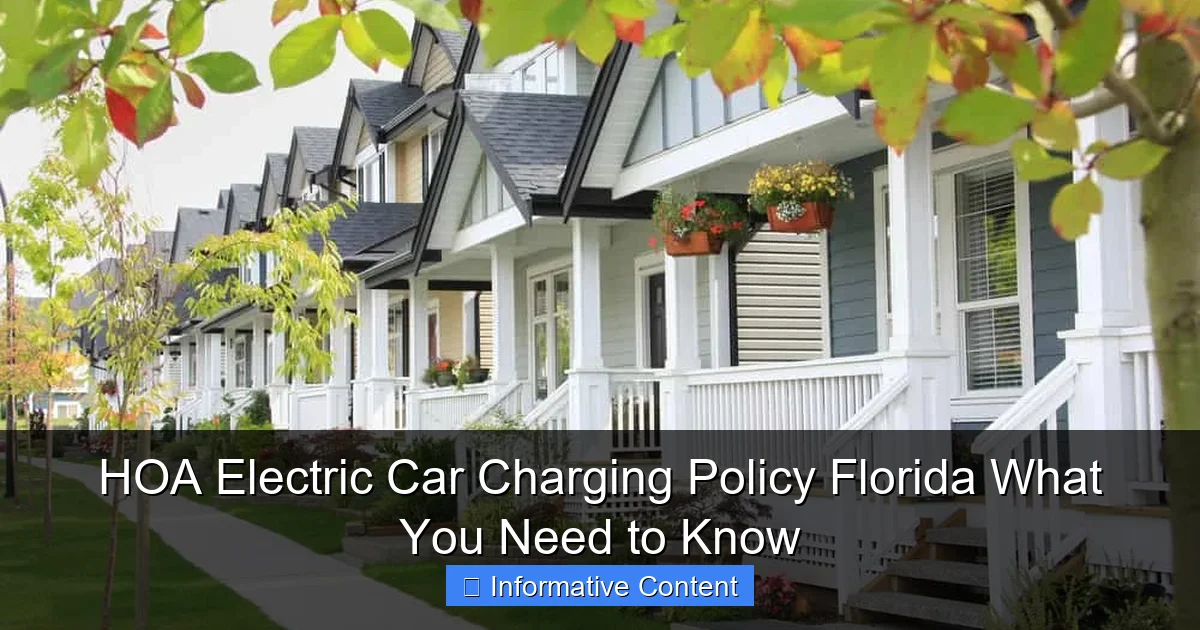
Visual guide about hoa electric car charging policy florida
Image source: fortunebuilders.com
But as EVs become more popular, so do conflicts between homeowners and HOAs. Many communities still have outdated rules that treat EV charging like a nuisance—blocking views, creating tripping hazards, or “cluttering” shared spaces. That’s where Florida’s laws come in.
Florida’s Pro-EV Legislation: A Game Changer
In 2012, Florida passed House Bill 7117, a landmark law that directly addresses HOA restrictions on EV charging. The law, now codified in Florida Statute § 718.113(8) (for condos) and § 720.3075(3) (for single-family home HOAs), states:
- HOAs cannot prohibit the installation of EV charging stations on a homeowner’s property.
- HOAs cannot unreasonably restrict the installation or use of charging equipment.
- HOAs may set reasonable rules for appearance, safety, and location—but they can’t make charging impossible or overly costly.
For example, an HOA can’t say, “No charging in the driveway.” But they can require you to use a retractable cable system or install a weatherproof enclosure. The key word? Reasonable.
Real-life example: In Tampa, a homeowner was denied permission to install a Level 2 charger because the HOA claimed it “would ruin the neighborhood’s aesthetic.” After citing Florida law and threatening legal action, the HOA reversed its decision—and even updated its policy to include EV charging guidelines.
What Your HOA Can (and Can’t) Do Under Florida Law
Prohibited HOA Restrictions
Under Florida law, your HOA cannot:
- Ban EV charging stations outright.
- Charge excessive fees just for installing a charger (e.g., $1,000 “impact fee”).
- Require you to use a specific brand or model of charger (unless it’s for safety reasons).
- Force you to install the charger in a location where it’s impractical (e.g., 50 feet from your parking spot).
- Deny permission based on “aesthetic” concerns without offering alternatives.
Think of it this way: If your HOA allows satellite dishes or solar panels (which are also protected under Florida law), they can’t treat EV chargers differently without a valid safety or structural reason.
Reasonable HOA Rules You Might Face
That said, your HOA can set rules to protect community interests. These might include:
- Appearance: Requiring the charger to match your home’s exterior color or hide cables behind a small enclosure.
- Safety: Mandating that cables not cross sidewalks or create tripping hazards. (Tip: Use a retractable cable reel or overhead pulley system.)
- Location: Asking you to install the charger on the side of your house instead of the front, if it’s less visible.
- Electrical upgrades: Requiring an electrician to certify that your home’s electrical panel can handle the load.
Pro tip: Always get a permit from your local city or county for the electrical work. This shows your HOA you’re following proper procedures and reduces their liability concerns.
What to Do If Your HOA Says “No”
Don’t panic—and don’t back down. Here’s a step-by-step approach:
- Ask for written reasons. Florida law requires HOAs to provide a written explanation if they deny a request. This creates a paper trail.
- Review your HOA’s covenants. Check if their rules conflict with state law. (Most do, if they’re outdated.)
- Send a formal request. Write a polite letter citing Florida Statute § 720.3075(3) and attach photos of your proposed installation.
- Offer compromises. Propose a retractable cable, a timer to avoid peak electricity rates, or a shared charging station for multiple homes.
- Escalate if needed. If your HOA still refuses, contact the Florida Department of Business and Professional Regulation (DBPR) or consult an attorney.
Real-life tip: In Orlando, a homeowner faced resistance until they proposed a community charging hub in the clubhouse parking lot. The HOA agreed—and now 12 residents share the station, splitting costs and reducing individual conflicts.
Installing an EV Charger: Costs, Options, and HOA-Friendly Tips
Choosing the Right Charger
Most EV owners install a Level 2 charger (240 volts), which charges a car 5-10 times faster than a standard outlet. Popular brands include:
- ChargePoint Home Flex: $699 (plus installation). Wi-Fi enabled, compact design.
- Wallbox Pulsar Plus: $599. Sleek, weather-resistant, and easy to use.
- Enel X Way: $549. Affordable and compatible with most EVs.
For HOAs, focus on chargers with minimal visual impact—small, wall-mounted units with retractable cables. Avoid bulky pedestal-style chargers unless you have a private garage.
Installation Costs and Incentives
Here’s what you’ll likely pay:
| Cost Component | Average Price | Notes |
|---|---|---|
| Charger unit | $500–$800 | Depends on brand and features |
| Electrical panel upgrade | $1,000–$3,000 | Only needed if your panel is outdated |
| Permit and inspection | $100–$300 | Required by most counties |
| Labor (electrician) | $500–$1,500 | 1–3 days of work |
| Total | $1,100–$5,600 | Can be lower with incentives |
Florida incentives:
- Federal Tax Credit: 30% of installation cost, up to $1,000 (through 2032).
- FPL EVolution Program: Rebates up to $500 for FPL customers.
- Local rebates: Some counties (e.g., Miami-Dade) offer additional savings.
HOA-Friendly Installation Tips
Make your HOA your ally, not your adversary:
- Go underground: If your driveway is shared, run the cable under a removable paver or use a retractable reel.
- Use timers: Charge at night (when electricity is cheaper) to reduce strain on the grid.
- Share the charger: Propose a “charging club” where neighbors split costs and usage.
- Document everything: Take photos before, during, and after installation to prove compliance.
Example: In Naples, a homeowner installed a ChargePoint Flex with a retractable cable reel. The HOA approved it because the cable disappears when not in use—no tripping hazard, no “visual pollution.”
Special Cases: Condos, Townhomes, and Shared Parking
Condo Living: The Biggest Challenge
If you live in a Florida condo, you face unique hurdles. Unlike single-family homes, condos often have shared parking lots and common electrical systems. Florida Statute § 718.113(8) still protects you, but the process is more complex:
- You’ll need board approval for any installation on common property.
- You may need to upgrade the main electrical panel (a costly project).
- You’ll likely need a licensed electrician to assess load capacity.
Solution: Work with your condo board to create a shared EV charging policy. Propose:
- Installing a multi-port charging station in the garage.
- Using a load management system to prevent circuit overloads.
- Splitting costs among EV owners or using reserve funds.
Townhomes and Attached Homes
For townhomes, the key is clear communication with neighbors. If you’re installing a charger on a shared wall, get their written approval. Consider:
- Using a splitter to share power with your neighbor (if they also have an EV).
- Installing the charger on your private patio instead of the driveway.
- Adding a lockable enclosure to prevent unauthorized use.
Shared Parking Lots
If you park in a shared lot (e.g., at a townhome complex), your HOA can’t ban charging—but they can require you to:
- Use a portable charger (like a JuiceBox with a 240V outlet).
- Limit charging to your assigned spot.
- Follow fire safety codes (e.g., no extension cords across walkways).
Real-life win: In Fort Lauderdale, a townhome community installed a 6-port charging station in their shared lot. Each homeowner pays $15/month for access, and the HOA covers maintenance. Now, 90% of residents support EV adoption!
How to Advocate for Better EV Policies in Your Community
Start a Conversation
Change doesn’t happen overnight—but it starts with one person. Here’s how to lead the charge:
- Host an EV meetup: Invite neighbors to test-drive EVs or discuss charging needs.
- Create a petition: Gather signatures from EV owners (or future buyers) to show demand.
- Propose a pilot program: Suggest a 6-month trial with 2–3 charging stations.
Work With Your HOA Board
Don’t go in guns blazing. Instead:
- Schedule a board meeting: Present data on EV adoption in Florida and your community.
- Offer solutions: Bring a cost estimate, a list of incentives, and a draft policy.
- Highlight benefits: EVs increase property values, attract younger buyers, and reduce carbon emissions.
Example: In Jacksonville, a homeowner presented the HOA with a cost-benefit analysis showing that installing a shared charger would cost $5,000 but increase home values by $10,000. The board approved it unanimously.
Get Legal Backup (If Needed)
If your HOA refuses to budge, know your rights:
- File a complaint: The Florida DBPR can mediate disputes.
- Consult an attorney: Many offer free consultations for HOA issues.
- Sue for damages: If the HOA’s actions cost you money (e.g., forcing you to install a costly workaround), you may be entitled to compensation.
The Future of EVs and HOAs in Florida
As EVs become the norm—not the exception—Florida’s HOAs will have to adapt. By 2035, California (a leader in EV adoption) will ban new gas car sales, and Florida is likely to follow. Communities that embrace EV charging now will be ahead of the curve.
The key is collaboration. HOAs protect property values, but they also have a responsibility to support sustainable living. With open communication, creative solutions, and a little patience, you can charge your EV at home—without breaking the rules or your relationship with your neighbors.
Remember: Florida law is on your side. Whether you’re installing a charger in your driveway, negotiating with a condo board, or leading a community initiative, you have the right to go electric. So plug in, power up, and enjoy the ride.
Frequently Asked Questions
Can my HOA in Florida legally ban electric car charging stations?
No, Florida law (Section 720.3075) prohibits HOAs from completely banning electric vehicle charging stations. However, they can establish reasonable rules regarding installation, location, and safety standards.
What are the key rules in an HOA electric car charging policy in Florida?
Most HOA electric car charging policies in Florida cover installation permits, equipment standards (like UL certification), location approvals, and who pays for electricity. The goal is to balance resident needs with safety and aesthetics.
Can an HOA charge me extra for using a charging station in Florida?
Yes, your HOA can require you to pay for electricity usage through submetering or a flat fee, but they must provide clear billing details. They cannot profit from the charges under Florida law.
Do I need HOA approval to install a charging station in my Florida condo?
Yes, you typically need written approval before installation, even if you own your parking spot. The HOA may review your plans for compliance with safety codes and community guidelines.
What if my HOA denies my request for an EV charging station in Florida?
If your HOA denies your request, they must provide a written explanation. You can appeal or modify your proposal to meet their concerns, as Florida law encourages reasonable accommodations for EV charging.
Can my HOA restrict where I install my electric car charger in Florida?
Yes, your HOA can specify approved locations (like your garage or assigned parking) to avoid visual clutter or safety risks. They cannot, however, deny all viable installation options.