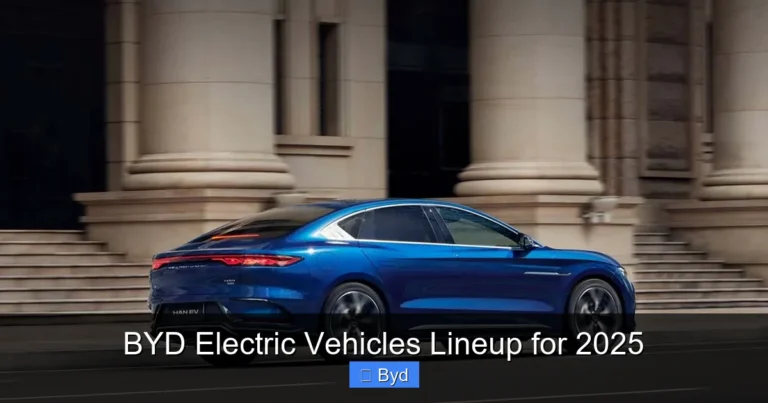
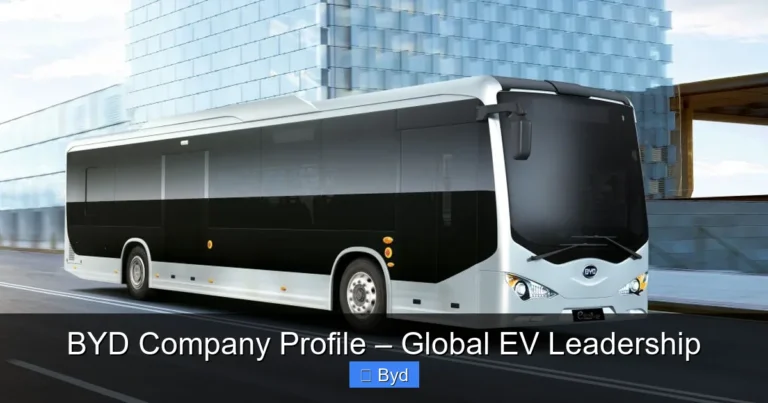
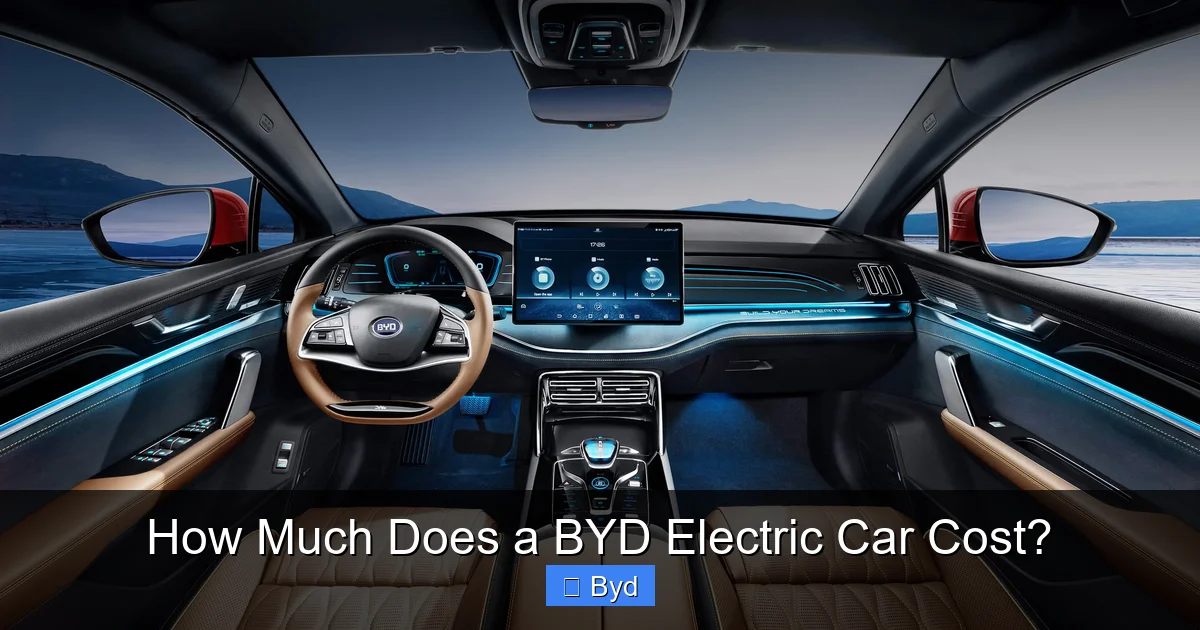
How Much Does a BYD Electric Car Cost?
Featured image for this comprehensive guide about how much is a byd electric car
Image source: byd.com
In the rapidly accelerating world of electric vehicles (EVs), one brand has consistently made headlines for its innovation, aggressive expansion, and compelling value proposition: BYD. Originally an acronym for “Build Your Dreams,” this Chinese automotive giant has transitioned from a relatively unknown player to a global powerhouse, outselling even Tesla in some quarters for EV sales. As more drivers consider making the switch to electric, a critical question often arises: how much is a BYD electric car?
For many prospective buyers, the initial purchase price is a significant hurdle when contemplating an EV. However, BYD aims to challenge perceptions, offering a range of electric vehicles that promise cutting-edge technology, impressive range, and practical features, often at a more accessible price point than many competitors. But “accessible” is a relative term, and the actual cost can vary dramatically depending on the specific model, region, features, and government incentives.
This comprehensive guide will peel back the layers to reveal the true BYD electric car cost. We’ll explore the pricing of popular models, delve into the factors that influence these figures, and even look beyond the sticker price to understand the total cost of ownership. By the end, you’ll have a clear picture of what to expect when investing in a BYD EV, helping you decide if building your electric dreams with BYD is the right path for you.
Quick Answers to Common Questions
What’s the general price range for a BYD electric car?
You’re probably wondering about the entry point! Generally, a BYD electric car can start anywhere from roughly $30,000 to $50,000 USD, depending on the model and specific market. This gives you a good baseline to begin exploring their range.
Are BYD electric cars considered affordable compared to competitors?
Yes, absolutely! BYD electric cars are often known for offering excellent value for money, frequently priced very competitively against other brands while still delivering impressive range and technology. They aim to make electric vehicles accessible.
What are the prices for popular BYD electric car models like the Atto 3 or Dolphin?
For popular models, you’ll typically find the BYD Dolphin starting around $30,000-$35,000, while the BYD Atto 3 (also known as Yuan Plus) usually ranges from $35,000-$45,000. Keep in mind these are approximate starting figures and vary by region and trim.
Do prices for a BYD electric car include government incentives or tax credits?
No, the manufacturer’s suggested retail price (MSRP) for a BYD electric car typically does not include potential government incentives or tax credits. These are usually applied at the point of sale by dealers or claimed later when you file your taxes, so remember to factor them in for potential savings!
How do different trim levels impact the cost of a BYD electric car?
Just like with any car, opting for higher trim levels in a BYD electric car will increase the price, as they come with more advanced features, enhanced performance, or luxurious interior upgrades. The base model will always offer the most accessible price point for a BYD electric car.
📋 Table of Contents
- Decoding the BYD Price Tag: An Overview of Models and Their Costs
- What Influences the Cost of a BYD Electric Car?
- A Closer Look at Popular BYD Models and Their Pricing
- Beyond the Sticker Price: Understanding the True Cost of Owning a BYD EV
- Navigating Incentives and Financing: Making a BYD More Affordable
- Is a BYD Electric Car a Good Value? Comparing BYD with the Competition
- Conclusion: Is a BYD Electric Car Right for Your Budget?
Decoding the BYD Price Tag: An Overview of Models and Their Costs
BYD’s product portfolio is vast and continually expanding, encompassing a wide array of electric vehicles designed to meet diverse needs and budgets. From compact hatchbacks perfect for city driving to spacious SUVs and luxurious sedans, there’s likely a BYD EV tailored for almost everyone. Understanding the general price ranges for these models is the first step in answering how much is a BYD electric car.

Learn more about how much is a byd electric car – How Much Does a BYD Electric Car Cost?
Image source: images.carexpert.com.au
It’s crucial to preface this by stating that specific pricing can vary significantly by market (e.g., Australia, Europe, Asia, Latin America, etc.) due to local taxes, import duties, shipping costs, and regional specifications. The figures provided here are approximate starting prices, intended to give you a general idea. Always consult your local BYD dealership for the most accurate and up-to-date pricing in your area.
| BYD Model | Vehicle Type | Starting Price (Approx. USD)* | WLTP Range (Approx. km) |
|---|---|---|---|
| BYD Dolphin | Compact Hatchback | $30,000 – $35,000 | 427 |
| BYD Atto 3 (Yuan Plus) | Compact SUV | $38,000 – $45,000 | 420 – 480 |
| BYD Seal | Sport Sedan | $45,000 – $60,000 | 520 – 700 |
| BYD Han EV | Full-size Sedan | $55,000 – $70,000 | 600 – 700 |
| BYD Seagull (Mini EV) | Urban Mini-EV | $15,000 – $20,000 | 305 – 405 (CLTC) |
| *Prices are approximate and can vary significantly based on market, trim level, optional features, and government incentives. WLTP range may also vary by specific battery size and configuration. | |||
The Core BYD Electric Vehicle Lineup and Estimated Pricing:
- BYD Atto 3 (Yuan Plus in some markets): This compact SUV is often considered BYD’s global flagship and a strong competitor in the lucrative SUV segment. It blends modern aesthetics with a practical interior and decent range.
- Estimated Starting Price Range: $35,000 – $45,000 USD (or equivalent in local currency).
- Key Features: Good range (around 400-480 km WLTP), Blade Battery technology, rotating infotainment screen, comfortable ride.
- BYD Dolphin (EA1 in some markets): A smaller, more city-friendly hatchback, the Dolphin aims for urban dwellers seeking an affordable and efficient EV. It often boasts a surprisingly spacious interior for its class.
- Estimated Starting Price Range: $28,000 – $38,000 USD (or equivalent).
- Key Features: Compact dimensions, excellent maneuverability, competitive range for its size (around 300-420 km WLTP), vibrant interior design.
- BYD Seal (Han EV in some markets outside China, though Seal is newer): This sleek, sporty sedan is BYD’s answer to premium electric sedans, featuring advanced technology and impressive performance. It directly competes with models like the Tesla Model 3.
- Estimated Starting Price Range: $45,000 – $60,000+ USD (or equivalent).
- Key Features: Powerful performance, long range (up to 700 km CLTC/570 km WLTP on some variants), Cell-to-Body (CTB) technology for enhanced safety and rigidity, luxurious interior.
- BYD Han (Luxury Sedan): The Han is BYD’s established executive sedan, known for its elegant design, opulent interior, and strong performance figures. It’s often positioned as a premium offering.
- Estimated Starting Price Range: $50,000 – $70,000+ USD (or equivalent).
- Key Features: High-end materials, advanced driver-assistance systems, impressive acceleration, excellent range.
- BYD Tang (Large SUV): A spacious and powerful 7-seater SUV, the Tang is designed for families needing more space and versatility, without compromising on electric performance.
- Estimated Starting Price Range: $55,000 – $75,000+ USD (or equivalent).
- Key Features: Family-friendly, large battery capacity, available with all-wheel drive, strong performance.
As you can see, the BYD EV price spectrum is quite broad, offering choices across various segments. It’s clear that BYD is committed to providing options that cater to different economic levels, making electric mobility more accessible to a wider audience.
What Influences the Cost of a BYD Electric Car?
The sticker price of any electric vehicle, including those from BYD, isn’t a single, arbitrary figure. It’s the culmination of numerous factors, both internal to the vehicle’s design and external market forces. Understanding these influences can help you better appreciate the value proposition and how much a BYD electric car costs.

Learn more about how much is a byd electric car – How Much Does a BYD Electric Car Cost?
Image source: autoleasecenter.nl
Key Factors Affecting BYD EV Prices:
- Battery Technology and Size:
- Blade Battery: BYD’s proprietary Blade Battery is a cornerstone of their vehicles. It offers exceptional safety, durability, and energy density. The cost of this advanced battery technology is a significant component of the overall vehicle price.
- Capacity (kWh): Larger battery packs (measured in kilowatt-hours, kWh) provide longer driving ranges but are also more expensive to produce. A BYD model with a 60 kWh battery will generally cost more than one with a 45 kWh battery, even if they are otherwise similar.
- Vehicle Segment and Size:
- Larger vehicles, like the BYD Tang SUV or Han sedan, naturally require more materials, more powerful motors, and larger battery packs, leading to higher manufacturing costs and, consequently, higher retail prices compared to smaller models like the Dolphin hatchback.
- The segment also dictates expected luxury and feature levels.
- Performance and Powertrain:
- Motor Configuration: Single-motor (front-wheel or rear-wheel drive) setups are typically less expensive than dual-motor (all-wheel drive) configurations, which offer more power and improved traction.
- Power Output (kW/hp): Higher power output often means more sophisticated motors, inverters, and cooling systems, contributing to a higher price.
- Technology and Features:
- Infotainment and Connectivity: Advanced infotainment systems, large touchscreen displays (like BYD’s rotating screen), premium sound systems, and robust connectivity features (e.g., 5G, OTA updates) add to the cost.
- Driver-Assistance Systems (ADAS): Features like adaptive cruise control, lane-keeping assist, blind-spot monitoring, and advanced parking assistance (often bundled into safety packages) increase the complexity and cost of the vehicle.
- Interior Materials and Finish: Premium upholstery, ambient lighting, heated/ventilated seats, and other luxury appointments elevate the overall price.
- Market and Region-Specific Factors:
- Import Duties and Taxes: Depending on where the BYD EV is manufactured and sold, import duties, tariffs, and local sales taxes can significantly inflate the final price. This is why the same model can have different prices in different countries.
- Local Regulations: Compliance with specific safety or environmental regulations in different regions can require modifications, adding to manufacturing costs.
- Currency Exchange Rates: Fluctuations in exchange rates between the manufacturing country’s currency (primarily Chinese Yuan) and the selling country’s currency can impact pricing.
- Competition: The competitive landscape in a particular market can influence how BYD prices its vehicles to gain market share or respond to rivals.
- Supply Chain and Manufacturing Costs:
- The cost of raw materials (lithium, cobalt, nickel, etc.), manufacturing processes, labor, and logistics all contribute to the final retail price. Global supply chain disruptions can also impact costs.
Understanding these variables helps demystify the varying BYD car prices across their range and different global markets. It underscores that you’re paying for a sophisticated piece of technology and engineering, not just a car.
A Closer Look at Popular BYD Models and Their Pricing
Let’s dive deeper into some of BYD’s most popular models that are making waves globally, providing more specific insights into their features and estimated costs. This section will help clarify how much is a BYD electric car when looking at specific contenders.
BYD Atto 3: The Global EV Sweet Spot
The Atto 3 (known as Yuan Plus in China) has been BYD’s spearhead into many international markets, and for good reason. It hits a sweet spot for many buyers, offering SUV practicality, a respectable range, and a feature-rich interior. Its design is distinctive, with a fitness-inspired theme that translates into unique interior elements.
- Target Audience: Families, urban commuters, first-time EV buyers looking for a practical SUV.
- Key Specifications (varies by variant/region):
- Battery Options: Often 49.9 kWh (Standard Range) or 60.48 kWh (Extended Range) Blade Battery.
- WLTP Range: Approximately 345 km (Standard) to 420 km (Extended).
- Power: Typically around 150 kW (201 hp).
- 0-100 km/h: Around 7.3 seconds.
- Estimated Price Range: From approximately $35,000 to $45,000 USD (or local equivalent). Prices will naturally be higher for the extended-range model and those with additional optional packages.
- Value Proposition: The Atto 3 often stands out for its comprehensive list of standard features for its price point, including a large rotating touchscreen, advanced safety tech, and a comfortable interior. It presents a strong case for affordability and practicality in the compact EV SUV segment.
BYD Dolphin: Agile and Affordable Urban Commuter
The Dolphin is BYD’s answer to the need for an affordable, compact, and nimble electric car for city living. Despite its small footprint, BYD has done an impressive job maximizing interior space and giving it a playful, youthful design.
- Target Audience: City dwellers, students, individuals looking for a second car, budget-conscious buyers.
- Key Specifications (varies by variant/region):
- Battery Options: Often 44.9 kWh (Standard Range) or 60.48 kWh (Extended Range) Blade Battery.
- WLTP Range: Approximately 310 km (Standard) to 427 km (Extended).
- Power: Typically around 70 kW (94 hp) for Standard Range, 150 kW (201 hp) for Extended Range.
- 0-100 km/h: Can vary from ~12.3 seconds to 7.0 seconds depending on the motor.
- Estimated Price Range: From approximately $28,000 to $38,000 USD (or local equivalent). The Dolphin is one of the most accessible BYD EV prices globally.
- Value Proposition: Its affordability, combined with a decent range for urban use and a surprising level of standard equipment, makes the Dolphin a compelling entry-level EV. It often undercuts many rivals while still offering BYD’s reliable Blade Battery technology.
BYD Seal: Performance and Luxury in a Sleek Package
The BYD Seal represents a step up in terms of performance, luxury, and technology. It’s a direct challenger to established premium electric sedans and showcases BYD’s capabilities in high-end EV design and engineering.
- Target Audience: Performance enthusiasts, executives, buyers seeking a premium electric sedan.
- Key Specifications (varies by variant/region):
- Battery Options: Often 61.4 kWh (Standard Range) or 82.5 kWh (Long Range/Performance) Blade Battery.
- WLTP Range: Approximately 460 km (Standard) to 570 km (Long Range).
- Power: From 150 kW (201 hp) for RWD to 390 kW (523 hp) for AWD Performance models.
- 0-100 km/h: As low as 3.8 seconds for the Performance variant.
- Estimated Price Range: From approximately $45,000 to $60,000+ USD (or local equivalent). The high-performance, long-range variants will naturally be at the upper end of this spectrum.
- Value Proposition: The Seal offers exhilarating performance, long-distance comfort, and a luxurious interior, often at a price point that is highly competitive against European and American rivals with similar specifications. It embodies BYD’s progress in creating truly desirable premium EVs.
This detailed look at specific models highlights how the answer to how much is a BYD electric car depends heavily on your specific needs and desires from an EV. Each model is engineered to offer a distinct balance of features, performance, and price.
Beyond the Sticker Price: Understanding the True Cost of Owning a BYD EV
While the initial BYD electric car cost is a crucial consideration, it’s only part of the financial picture. Smart buyers look at the total cost of ownership (TCO), which includes running costs, maintenance, insurance, and potential depreciation. EVs, including BYD’s, often shine in this area, offering significant savings over their internal combustion engine (ICE) counterparts.
Running Costs: Fueling Your BYD
This is where EVs typically offer the most significant savings.
- Electricity vs. Petrol/Diesel: Charging a BYD EV with electricity is almost universally cheaper per kilometer than fueling a petrol or diesel car.
- Home Charging: Charging at home, especially during off-peak hours if you have a time-of-use electricity plan, offers the lowest cost per charge. The cost will depend on your local electricity rates.
- Public Charging: Public charging stations, particularly DC fast chargers, are more expensive than home charging but still generally cheaper than petrol, especially if you subscribe to a charging network.
- Solar Power Advantage: If you have solar panels at home, your “fuel” cost for your BYD could be close to zero, offering immense long-term savings.
Maintenance Costs: Fewer Moving Parts, Fewer Headaches
Electric vehicles are mechanically simpler than ICE cars, leading to lower maintenance requirements and costs.
- No Oil Changes: BYD EVs don’t have engines that require oil changes, spark plug replacements, or complex exhaust systems.
- Fewer Wear Parts: Components like transmissions are also simpler or non-existent. Regenerative braking reduces wear on conventional brake pads and discs, meaning they last longer.
- Battery Longevity: BYD’s Blade Battery is known for its durability and long cycle life, backed by substantial warranties, reducing concerns about costly battery replacements. BYD typically offers 8-year/160,000 km battery warranties, though this can vary by region.
- Typical EV Maintenance: Expect routine checks on tires, brakes (less frequently), suspension, cabin air filters, and general software updates. These are generally less frequent and less expensive than ICE car services.
Insurance Costs: A Mixed Bag
Insurance premiums for BYD EVs can vary. While EVs might sometimes be more expensive to insure due to higher initial repair costs (especially for battery damage) or perceived higher value, this isn’t always the case. Factors influencing your premium include:
- Vehicle model and trim level (a BYD Seal Performance will likely cost more to insure than a Dolphin).
- Your driving record and age.
- Your geographical location.
- The specific insurance provider and policy.
It’s always advisable to get multiple insurance quotes when considering any new car, including a BYD EV.
Depreciation and Resale Value
Depreciation is the often-overlooked cost of car ownership. Historically, EVs have shown strong resale values, particularly for popular models. As the EV market matures and battery technology improves, depreciation rates for BYD EVs are expected to remain competitive. BYD’s strong brand growth and robust battery warranties are positive indicators for future resale value.
Putting it all together: Actionable Tip for Calculating TCO
When comparing a BYD electric car cost to an equivalent ICE vehicle:
- Initial Price: Factor in the purchase price minus any government incentives.
- “Fuel” Costs: Estimate your annual mileage and calculate electricity costs vs. petrol costs.
- Maintenance: Research typical service schedules and costs for both types of vehicles.
- Insurance: Obtain quotes for both.
- Tax Benefits: Consider any annual road tax benefits for EVs in your region.
For many BYD owners, the lower running and maintenance costs often offset a potentially higher initial purchase price over the lifespan of the vehicle, making the total cost of ownership very attractive.
Navigating Incentives and Financing: Making a BYD More Affordable
The upfront BYD EV price might seem substantial, but many governments globally are actively promoting EV adoption through various incentives. These can significantly reduce the effective purchase cost and make owning a BYD electric car more financially viable.
Government Incentives and Subsidies:
These incentives vary wildly by country, state, or even city, so it’s essential to research what’s available in your specific region. Common types of incentives include:
- Purchase Rebates/Grants: Direct money back to the buyer at the point of sale or after purchase. These can range from a few thousand dollars to substantial sums. For example, some European countries offer significant purchase grants for EVs like the BYD Dolphin or Atto 3.
- Tax Credits: A reduction in your income tax liability. In the USA, for instance, certain EVs qualify for federal tax credits, though BYD models imported from China might not directly qualify for the full credit unless specific manufacturing requirements are met. Always check the latest eligibility rules.
- Sales Tax Exemptions: Some regions exempt EVs from sales tax, saving thousands of dollars immediately.
- Reduced Registration Fees: Lower annual fees for registering an EV compared to an ICE vehicle.
- Toll Exemptions/Discounts: Free or discounted access to toll roads, HOV lanes, or city charging zones.
- Home Charger Installation Rebates: Assistance with the cost of installing a Level 2 home charger.
Tips for Maximizing Incentives:
- Research Thoroughly: Visit government websites or consult with your local BYD dealership. They are usually well-versed in local incentives.
- Act Quickly: Incentives can change, be capped, or be phased out without much notice as EV adoption grows.
- Check Eligibility: Ensure the specific BYD model and your personal circumstances meet all criteria for the incentive.
Financing Options for Your BYD EV:
Beyond incentives, financing plays a crucial role in making the BYD electric car cost manageable.
- Dealership Financing: BYD dealerships often have partnerships with banks or offer their own financing solutions, sometimes with competitive rates or special promotions.
- Bank Loans: Traditional car loans from banks or credit unions are a common way to finance an EV. Compare interest rates and terms from multiple lenders.
- Leasing: Leasing can be an attractive option if you prefer lower monthly payments, want to drive a new car every few years, or are concerned about long-term battery degradation (though BYD’s Blade Battery addresses this well). Lease terms typically cover a fixed period and mileage.
- Green Loans: Some financial institutions offer “green loans” or “eco-car loans” with preferential interest rates for electric vehicles, recognizing their environmental benefits.
Actionable Tips for Financing:
- Shop Around: Don’t just take the first offer. Compare rates from multiple lenders and your dealership.
- Understand the Terms: Pay close attention to the interest rate, loan term, any fees, and prepayment penalties.
- Consider Your Budget: Ensure the monthly payments fit comfortably within your financial plan.
By leveraging available incentives and choosing the right financing, the path to owning a BYD electric car becomes clearer and more financially accessible for many.
Is a BYD Electric Car a Good Value? Comparing BYD with the Competition
The ultimate question for many buyers is not just how much is a BYD electric car, but whether it offers compelling value for that price. Value is a blend of initial cost, features, quality, performance, safety, and long-term ownership costs. BYD has positioned itself aggressively to offer a strong value proposition against both traditional automakers and other EV specialists.
BYD’s Value Proposition: What You Get for the Price
BYD’s strategy focuses on delivering a comprehensive package:
- Blade Battery Technology: This is a key differentiator. The Blade Battery is renowned for its safety (passing the nail penetration test), durability, and long lifespan. This proprietary technology provides peace of mind and contributes significantly to the vehicle’s value.
- Comprehensive Standard Features: BYD often packs its vehicles with a generous list of standard features, including advanced infotainment systems (like the rotating screen), sophisticated driver-assistance systems, and premium interior touches, even in its more affordable models. This means less need to pay for expensive optional extras.
- Integrated Manufacturing: As a vertically integrated company, BYD produces its own batteries, electric motors, and even semiconductors. This gives them greater control over the supply chain, quality, and ultimately, cost efficiencies, which can be passed on to the consumer.
- Performance and Range: Across its lineup, BYD EVs offer competitive range figures and ample performance for their segments, ensuring drivers don’t feel they’re compromising by choosing an EV.
- Design and Quality: While early Chinese cars sometimes faced criticism for design, modern BYD vehicles like the Atto 3 and Seal boast attractive designs, well-appointed interiors, and increasingly high build quality, indicating a rapid evolution in their product standards.
BYD vs. the Competition: A High-Level Comparison
Let’s consider how BYD stacks up against some key rivals, keeping in mind that “value” is subjective and market-dependent:
- Against Tesla:
- Pricing: BYD often offers models at a lower starting price point than equivalent Teslas (e.g., BYD Seal vs. Tesla Model 3, BYD Atto 3 vs. Tesla Model Y).
- Features: BYD often includes more standard features that might be optional on Teslas. Tesla excels in software integration and its Supercharger network.
- Battery: Both use advanced battery tech, with BYD’s Blade Battery emphasizing safety and longevity, while Tesla’s focus on energy density and performance.
- Verdict: BYD often provides more “car for the money” in terms of physical features and finishes, while Tesla offers a more minimalist design and a superior charging ecosystem.
- Against Legacy Automakers (e.g., Volkswagen ID. series, Hyundai Kona Electric, Kia Niro EV):
- Pricing: BYD models are often highly competitive, sometimes undercutting similar offerings from established brands, or providing more range/features for a comparable BYD EV price.
- Technology: BYD’s battery tech (Blade Battery) is a strong selling point. Legacy brands also have strong R&D but might not have the same level of vertical integration.
- Brand Recognition: Legacy automakers often have decades of established trust, while BYD is still building its reputation in many Western markets.
- Verdict: BYD frequently offers a more compelling feature-to-price ratio, pushing traditional brands to innovate faster in the value segment.
- Against Other Chinese Brands (e.g., MG ZS EV, Nio, Xpeng):
- Pricing: BYD competes directly, often seen as a benchmark for quality and value among Chinese brands.
- Technology: BYD’s vertical integration gives it an edge, especially in battery tech. Other brands might rely more on external suppliers.
- Verdict: BYD generally holds a leadership position in terms of sales volume and technological maturity among its Chinese peers, often offering a robust package at competitive prices.
Considering the robust technology, strong feature set, impressive safety credentials (evident in Euro NCAP ratings for models like the Atto 3), and comprehensive warranties, a BYD electric car often represents excellent value. It challenges the notion that cutting-edge EV technology must come with a prohibitively high price tag, effectively lowering the barrier to entry for many prospective electric vehicle owners.
Conclusion: Is a BYD Electric Car Right for Your Budget?
As we’ve explored, the question of “how much is a BYD electric car?” doesn’t have a single, simple answer. It’s a complex equation influenced by model choice, battery size, features, regional market dynamics, and government incentives. However, one thing is clear: BYD has emerged as a formidable force in the global EV market, dedicated to making electric mobility accessible and desirable.
From the urban-friendly BYD Dolphin, offering an incredibly attractive entry point into EV ownership, to the versatile BYD Atto 3 SUV that provides a compelling blend of practicality and modern tech, and up to the premium, performance-oriented BYD Seal sedan, there’s a BYD EV price point designed for a wide array of budgets and preferences. These vehicles are not just about affordability; they bring a strong package of advanced Blade Battery technology, comprehensive safety features, and increasingly refined design and quality.
Beyond the initial purchase price, the true value of a BYD electric car often becomes even more apparent through its lower total cost of ownership. Reduced “fuel” costs from charging with electricity, significantly lower maintenance demands due to fewer moving parts, and potential government incentives all contribute to making a BYD EV a financially savvy choice in the long run. When weighed against competitors, BYD frequently offers a superior feature-to-price ratio, disrupting traditional market expectations.
If you’re considering the leap to electric driving, BYD deserves serious consideration. Its commitment to innovation, vertical integration, and aggressive global expansion means you’re investing in a brand with a strong future. We encourage you to visit your local BYD dealership, explore the models firsthand, and get personalized quotes to understand the precise BYD electric car cost in your region. Take advantage of test drives, inquire about local incentives, and compare financing options. Your dream of driving an advanced, efficient, and cost-effective electric vehicle might be closer than you think, built by BYD.
Frequently Asked Questions
How much does a BYD electric car typically cost?
The price of a BYD electric car varies significantly depending on the model, trim level, and specific market. Generally, you can expect BYD EVs to range from approximately $30,000 for entry-level compact models up to $70,000 or more for premium SUVs and sedans.
What is the price range for BYD electric vehicles?
BYD electric vehicles offer a broad price range, catering to different budgets and needs globally. In many markets, prices typically start from around $30,000 USD for models like the Dolphin and can extend beyond $70,000 USD for larger, more luxurious SUVs such as the Tang EV or performance-oriented sedans like the Seal.
What is the most affordable BYD electric car model?
The BYD Dolphin is generally considered the most affordable BYD electric car model available in many international markets. This compact hatchback offers a competitive price point, making electric vehicle ownership more accessible to a wider audience.
What factors influence the price of a BYD electric car?
Several factors influence the price of a BYD electric car, including the specific model (e.g., Dolphin, Atto 3, Seal, Tang), battery size and range, trim level, and included features. Regional taxes, import duties, and market demand also play a significant role in the final selling price.
Are there any government incentives or tax breaks that reduce the cost of a BYD electric car?
Yes, many countries and regions offer government incentives, tax credits, or subsidies for purchasing new electric vehicles, which can significantly reduce the effective cost of a BYD electric car. Eligibility and the amount of these benefits depend on local regulations and the vehicle’s specific attributes, so it’s advisable to check your local government’s EV incentive programs.
Beyond the purchase price, what are the running costs for a BYD electric car?
The running costs for a BYD electric car are generally lower than equivalent gasoline cars. Key expenses include electricity for charging, which is typically cheaper per mile than fuel, and lower maintenance costs due to fewer moving parts. Insurance premiums and potential road taxes are also factors to consider.