How to Charge a Kia Niro Electric Car Efficiently and Safely
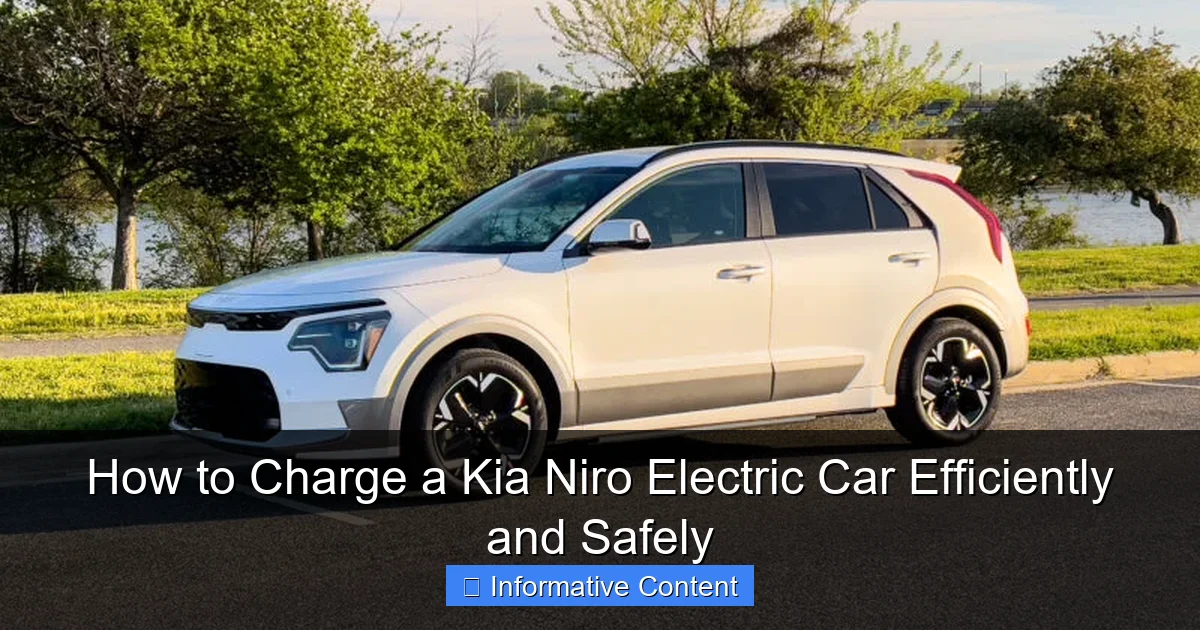
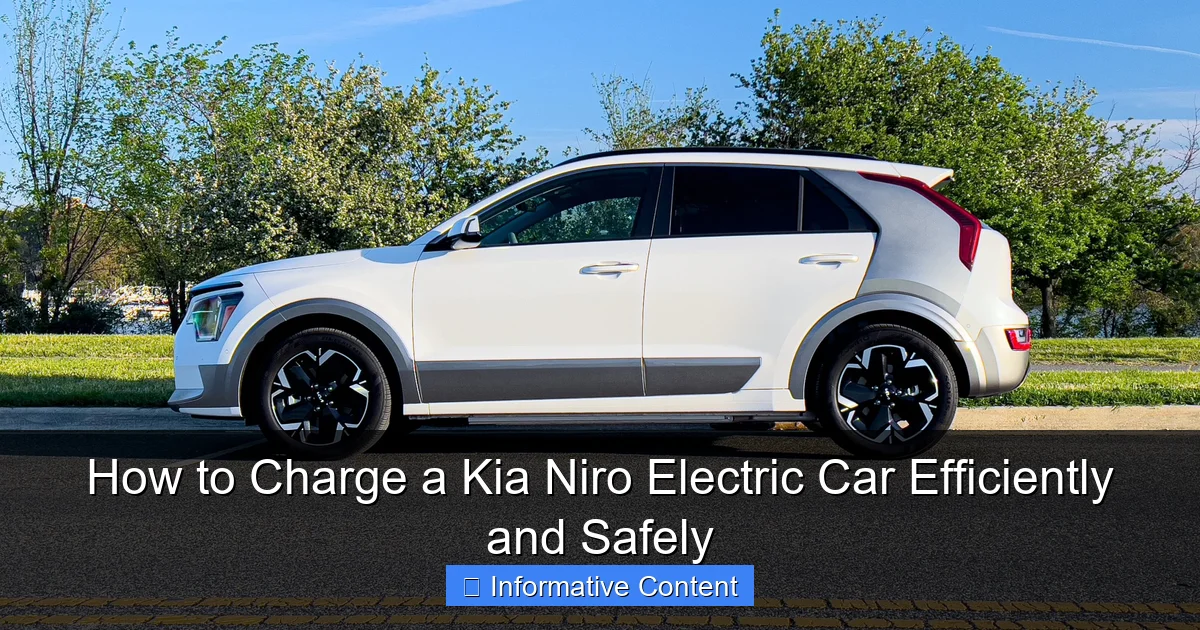
Featured image for how to charge a kia niro electric car
Image source: cdn.arstechnica.net
Charge your Kia Niro Electric efficiently by using a Level 2 home charger (240V), which delivers a full battery in 6–9 hours—ideal for overnight charging. Always use the manufacturer-recommended charging cable and avoid frequent DC fast charging to prolong battery life. For safety, ensure your charging station is UL-certified and never leave the car unattended during extreme weather conditions.
Key Takeaways
- Use Level 2 chargers: Ideal for daily charging; balances speed and battery health.
- Avoid frequent DC fast charging: Reserve for long trips to reduce battery wear.
- Charge to 80% daily: Maximizes battery lifespan while maintaining practical range.
- Precondition the battery: Warm it before fast charging for optimal efficiency.
- Schedule off-peak charging: Saves money using lower electricity rates at night.
- Use Kia Connect app: Monitor charging status and control remotely for convenience.
📑 Table of Contents
- Introduction: Embracing the Electric Revolution with Your Kia Niro
- Understanding Your Kia Niro’s Charging Capabilities
- Setting Up Home Charging: The Best Way to Charge Daily
- Using Public Charging Stations: Fast, Flexible, and Convenient
- Battery Care and Charging Best Practices
- Real-World Charging Scenarios and Tips
- Charging Data and Cost Comparison
- Conclusion: Charge with Confidence, Drive with Freedom
Introduction: Embracing the Electric Revolution with Your Kia Niro
When I first got behind the wheel of my Kia Niro EV, I felt a mix of excitement and slight anxiety—especially about charging. I remember driving home from the dealership, glancing at the battery percentage like a nervous parent checking a newborn’s temperature. “Will I make it?” “What if I can’t find a charger?” These thoughts raced through my mind, just like they probably do for you now. But after months of real-world use—road trips, daily commutes, and even a few “low battery” scares—I’ve learned that charging a Kia Niro electric car is simpler, safer, and more flexible than most people think. And the best part? It gets easier with practice.
Charging an electric car isn’t just about plugging in. It’s about understanding your options, planning smartly, and knowing how to protect your battery for the long haul. Whether you’re a first-time EV owner or upgrading from another electric model, this guide will walk you through how to charge a Kia Niro electric car efficiently and safely. We’ll cover everything from home charging setups to public fast-charging stations, battery care, and even some clever tips to save time and money. Think of this as your friendly, no-nonsense roadmap to EV confidence—no tech jargon, no fluff, just real advice from someone who’s been in your charging shoes.
Understanding Your Kia Niro’s Charging Capabilities
What Charging Levels Does the Kia Niro Support?
The Kia Niro EV (also known as the Niro Electric) supports all three standard charging levels: Level 1, Level 2, and DC Fast Charging. Knowing what each level offers helps you choose the right method for your lifestyle and schedule.
Visual guide about how to charge a kia niro electric car
Image source: cdn.arstechnica.net
- Level 1 (120V): Uses a standard household outlet. It’s the slowest option—adding about 3–5 miles of range per hour. Great for overnight top-ups if you drive less than 30 miles a day.
- Level 2 (240V): The most common and practical choice. Adds 20–30 miles of range per hour. Perfect for home charging and public stations. Most Niro owners install a Level 2 charger at home.
- DC Fast Charging (480V): The fastest option. Can charge from 10% to 80% in about 45–60 minutes. Ideal for road trips or when you’re in a hurry. The Niro EV supports CCS (Combined Charging System) fast charging, available at most modern public networks like Electrify America, ChargePoint, and EVgo.
Fun fact: My Niro EV has a 64 kWh battery, and I’ve found that DC fast charging is a game-changer on long drives. Once, I charged from 20% to 80% at a rest stop while grabbing a coffee and using the restroom—no waiting around!
Charging Port Location and Equipment Included
The Kia Niro EV has a charging port on the front driver’s side—just behind the grille. It’s easy to access and clearly marked. When you buy the car, you get:
- A portable Level 1 charging cable (the “trickle charger”) that plugs into any standard 120V outlet.
- A J1772 connector for Level 2 charging (standard in North America).
- A CCS DC fast charging inlet (for high-speed charging at public stations).
One thing I love: the charging port door automatically unlocks when you approach with the key fob. No fumbling with keys or buttons. Just plug and go. The car also has a handy light inside the port that turns on when charging starts—super useful at night.
Charging Speed and Range Expectations
The Kia Niro EV has an EPA-estimated range of around 253 miles on a full charge. But your real-world range depends on driving habits, weather, and use of climate control. For example:
- Highway driving at 70 mph? Expect closer to 200–220 miles.
- City driving with regenerative braking? You might hit 240–250 miles.
- Cold weather (below 20°F)? Range can drop by 30–40% due to battery chemistry and heater use.
When charging, the car’s infotainment screen shows real-time data: current charge level, estimated time to full, and charging speed. I check this all the time, especially when using fast chargers. It helps me plan my next move—like whether to stay for 80% or push to 100%.
Setting Up Home Charging: The Best Way to Charge Daily
Level 1 vs. Level 2: Which Is Right for You?
If you drive less than 20 miles a day and have a garage or driveway, the included Level 1 charger might be enough. I used it for a week when my Level 2 installation was delayed. It worked—but barely. I had to charge for 12+ hours to get a full battery. Not ideal if you forget to plug in one night.
For most people, Level 2 is the way to go. It’s faster, more convenient, and safer for daily use. A Level 2 charger can fully charge your Niro in 6–9 hours, depending on the charger’s amperage (32A vs. 40A). I went with a 40A charger (9.6 kW) and it’s perfect—I plug in at 9 PM and wake up to 100% every morning.
How to Install a Level 2 Charger at Home
Installing a Level 2 charger is easier than you think—but it does require some planning:
- Check your electrical panel: You’ll need a 240V circuit. Most homes have this for dryers or ovens. A licensed electrician can confirm if your panel has enough capacity (usually 100A or more).
- Choose a location: Pick a spot near where you park—garage, driveway, or carport. The closer, the shorter the cable run (and lower cost).
- Hire a certified electrician: This is not a DIY job. The electrician will install a 240V outlet (NEMA 14-50 or hardwired) and possibly upgrade your panel if needed.
- Pick a smart charger (optional but recommended): Models like ChargePoint Home Flex or Grizzl-E allow scheduling, monitoring via app, and even solar integration.
My installation cost about $700, including the charger and labor. But I got a $500 rebate from my local utility—making it a $200 net cost. Check your state or utility company’s website for EV charger incentives. Many offer $250–$1,000 back.
Smart Charging Tips for Home Use
- Schedule charging for off-peak hours: Many utilities offer lower electricity rates from 10 PM to 6 AM. I set my charger to start at 11 PM—saving me about $0.05 per kWh.
- Use the Kia Connect app: You can remotely start/stop charging, check battery status, and set departure times. I love setting a “warm-up” charge in winter—my car’s cabin is cozy when I leave.
- Don’t charge to 100% daily: For longevity, keep your battery between 20% and 80% for regular use. Save 100% for road trips.
- Use a weatherproof cover: If your charger is outside, protect it from rain and snow with a cover or install it under an eave.
Using Public Charging Stations: Fast, Flexible, and Convenient
Finding Reliable Public Chargers
Public charging is where the Kia Niro EV really shines. With over 60,000 public Level 2 and DC fast chargers in the U.S., you’re rarely more than 30 miles from a plug. Here’s how to find them:
- Use navigation apps: Google Maps, Apple Maps, and PlugShare show nearby chargers, availability, and user reviews. I use PlugShare religiously—it shows real-time status and even has filters for CCS fast chargers.
- Check the Kia Connect app: It integrates with ChargePoint and other networks. You can start charging directly from the app—no card swiping.
- Look for network logos: Electrify America, EVgo, and ChargePoint are the most reliable. Avoid “no-name” stations—they often have poor uptime.
Pro tip: Always check the charger’s status before driving there. I once drove 10 miles to a fast charger only to find it out of service. Now I check PlugShare first.
How to Use DC Fast Chargers Safely and Efficiently
DC fast charging is perfect for road trips, but there are a few rules to follow:
- Charge between 10% and 80%: Fast charging slows down after 80% to protect the battery. Charging from 80% to 100% takes nearly as long as 10% to 80%.
- Monitor battery temperature: Fast charging generates heat. In hot weather, your car may reduce charging speed to cool the battery. Park in the shade if possible.
- Use the car’s navigation: The Niro’s built-in nav system can plan a route with charging stops, including estimated arrival time and charger availability.
- Have a backup plan: Always identify the next charger along your route. I once got to a station with only one working fast charger—and a long line. The second station was 15 miles away, but I made it with 12% left.
I’ve used fast chargers in cities, rest stops, and even shopping malls. The best ones have multiple stalls, good lighting, and nearby amenities. Electrify America stations are my favorite—they’re well-lit, clean, and often have free Wi-Fi.
Cost and Payment Options
Public charging costs vary by network and location:
- Level 2: $0.25–$0.50 per kWh (about $10–$15 for a full charge).
- DC Fast Charging: $0.35–$0.60 per kWh, or a flat rate per minute (e.g., $0.40/min). A 45-minute fast charge might cost $18–$25.
Payment is easy: most networks accept credit cards, mobile apps (Apple Pay, Google Pay), or RFID cards. I use my ChargePoint app—it’s linked to my credit card and gives me 10% off every charge.
Battery Care and Charging Best Practices
How Charging Habits Affect Battery Life
Your Kia Niro’s battery is designed to last 10+ years, but your charging habits matter. Here’s what to avoid:
- Frequent deep discharges (below 10%) can stress the battery.
- Daily 100% charges reduce long-term capacity. Think of it like overcharging a phone.
- Fast charging every day generates heat and can degrade the battery faster. Use it when needed, not as your primary method.
Kia recommends keeping the battery between 20% and 80% for daily use. I follow this rule 90% of the time. For road trips, I charge to 100%—but only because I need the extra range.
Temperature and Weather Considerations
Extreme temperatures affect charging speed and battery health:
- Cold weather: Batteries charge slower below 32°F. The car uses energy to warm the battery first. Pre-heat the cabin while plugged in to reduce drain.
- Hot weather: Fast charging may slow down to prevent overheating. Park in the shade or use a sunshade.
- Winter charging: In snowy areas, clear snow from the charging port and cable. I keep a small brush in my trunk for this.
I live in Minnesota, so cold weather is a real challenge. My solution? I pre-condition the battery while plugged in—using the Kia Connect app to warm it before unplugging. It makes a huge difference in range and charging speed.
Maximizing Range and Efficiency
- Use regenerative braking: The Niro has adjustable regen levels. I use “High” in city driving—it recovers energy and reduces brake wear.
- Drive smoothly: Rapid acceleration wastes energy. Try to coast when possible.
- Check tire pressure: Underinflated tires increase rolling resistance. I check mine monthly.
- Use Eco mode: It limits acceleration and climate control output—great for maximizing range.
Real-World Charging Scenarios and Tips
Daily Commuter (20–30 Miles)
For short commutes, a Level 2 home charger is perfect. I plug in every night, even if I only used 20% of the battery. It’s like brushing your teeth—a simple habit that keeps things running smoothly. No need to fast charge. No range anxiety. Just peace of mind.
Weekend Road Trip (200+ Miles)
Here’s my routine:
- Start with 100% charge at home.
- Use the car’s nav to plan charging stops every 150–180 miles.
- Arrive at the charger with 20–30% left—plenty of buffer.
- Charge to 80% (about 45 minutes), then continue.
- Repeat as needed.
On a recent trip to Chicago, I made two fast-charging stops. Total charging time: 90 minutes. Total driving time: 6 hours. It felt just like a gas car—except quieter and cheaper.
Charging in an Apartment or Condo
No garage? No problem. Many apartment complexes now offer EV charging. If not:
- Talk to your landlord or HOA about installing a Level 2 charger.
- Use public Level 2 stations at nearby malls or parking garages.
- Look for “curbside” chargers in your city—some cities install them on streetlight poles.
I know a Niro owner who charges at a grocery store every Saturday while doing her shopping. She gets 30 miles of range in 90 minutes—free while she shops!
Charging Data and Cost Comparison
| Charging Method | Time to 100% (Niro EV) | Cost (Avg. $0.15/kWh) | Best For |
|---|---|---|---|
| Level 1 (120V) | 50–60 hours | $9.60 | Emergency top-ups, low daily use |
| Level 2 (240V, 7.2kW) | 9–10 hours | $9.60 | Daily home charging |
| Level 2 (240V, 9.6kW) | 6–7 hours | $9.60 | Faster home charging |
| DC Fast Charging (50kW) | 70–80 minutes (10–80%) | $25–$30 | Road trips, urgent charging |
| DC Fast Charging (150kW) | 45–60 minutes (10–80%) | $25–$30 | High-speed travel |
Note: Costs assume a 64 kWh battery and $0.15/kWh electricity rate. Public fast charging may cost more depending on the network.
Conclusion: Charge with Confidence, Drive with Freedom
Charging your Kia Niro electric car doesn’t have to be stressful. In fact, once you get into a routine, it becomes second nature—like charging your phone or filling your gas tank. The key is understanding your options, planning ahead, and taking care of your battery for the long term.
Whether you’re plugging in at home every night, using a fast charger on a road trip, or finding creative solutions in an apartment, the tools and networks are there to support you. And the best part? You’re not just saving money on fuel—you’re reducing emissions, enjoying a quieter drive, and experiencing the future of mobility.
So go ahead, plug in, charge up, and hit the road. Your Kia Niro is ready. And now, so are you. Remember: how to charge a Kia Niro electric car efficiently and safely isn’t just about the hardware—it’s about building habits that make EV ownership effortless and rewarding. Happy charging!
Frequently Asked Questions
How do I charge a Kia Niro electric car at home?
To charge your Kia Niro EV at home, use a Level 2 (240V) charging station for faster charging, or plug into a standard 120V outlet (Level 1) for slower, overnight charging. A professionally installed home charger ensures efficient and safe charging.
What type of charging connector does the Kia Niro EV use?
The Kia Niro Electric uses a CCS (Combined Charging System) DC fast charging connector for public stations and a J1772 (Type 1) connector for Level 1 and Level 2 charging. Always verify the correct plug type before connecting.
How long does it take to fully charge a Kia Niro electric car?
Charging time varies by method: Level 1 (120V) takes ~50 hours, Level 2 (240V) takes ~9-10 hours, and DC fast charging can reach 80% in ~45 minutes. Use the Kia app to monitor charging speed and battery status.
Can I charge my Kia Niro using public charging stations?
Yes, you can charge your Kia Niro at public Level 2 or DC fast charging stations. The car’s built-in navigation or apps like PlugShare help locate nearby stations and confirm CCS compatibility for faster charging.
How do I optimize charging efficiency for my Kia Niro electric car?
For efficient charging, schedule charging during off-peak hours, avoid frequent DC fast charging to prolong battery life, and pre-condition the battery in extreme temperatures. Use the Kia UVO app to set charging timers.
Is it safe to charge a Kia Niro in the rain or snow?
Yes, charging your Kia Niro in wet conditions is safe—the charging port and connectors are weatherproof and designed to prevent electrical hazards. Always ensure the connector is clean and fully inserted before starting.