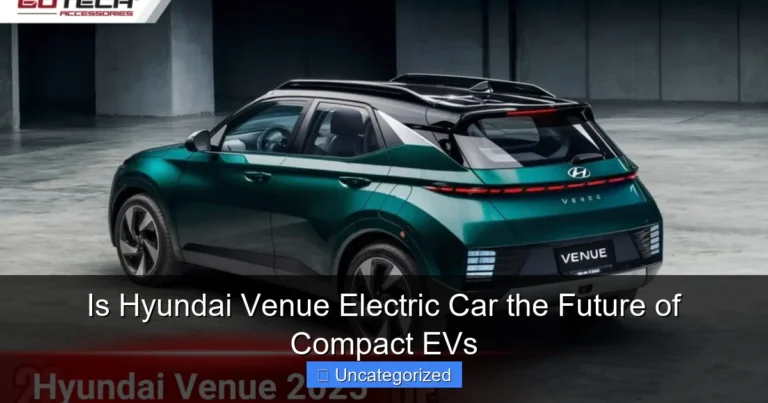
Hyundai Electric Cars The Future of EcoFriendly Driving

Featured image for hyundai electric cars
Hyundai electric cars are redefining eco-friendly driving with cutting-edge technology, impressive range, and bold designs that rival top competitors. From the affordable Kona Electric to the luxurious Ioniq 6, Hyundai delivers sustainability without sacrificing performance or style. With rapid charging, advanced safety features, and a growing EV lineup, Hyundai is a top contender in the electric revolution.
Key Takeaways
- Hyundai EVs offer long ranges up to 300+ miles on a single charge.
- Fast charging tech reaches 80% battery in under 20 minutes.
- Affordable pricing with tax incentives, making them budget-friendly choices.
- Advanced safety features like Highway Driving Assist come standard.
- Sustainable interiors use recycled and eco-conscious materials.
- Strong warranty coverage includes 10-year/100,000-mile battery protection.
📑 Table of Contents
- The Dawn of a New Automotive Era: Hyundai Electric Cars
- Hyundai’s Electrification Journey: From Vision to Reality
- Top Hyundai Electric Cars: Models That Are Shaping the Future
- Charging Infrastructure and Ownership Experience
- Sustainability and Innovation: Beyond the Car
- Hyundai Electric Cars vs. the Competition: A Data-Driven Comparison
- The Road Ahead: Hyundai’s Vision for 2030 and Beyond
The Dawn of a New Automotive Era: Hyundai Electric Cars
As the world grapples with climate change, rising fuel costs, and the urgent need for sustainable transportation, Hyundai electric cars are emerging as a beacon of innovation in the automotive industry. With a bold commitment to electrification, Hyundai has transformed from a traditional automaker into a global leader in eco-friendly mobility. From sleek sedans to spacious SUVs, Hyundai’s electric lineup is not only redefining what it means to drive green but also proving that sustainability doesn’t require sacrificing performance, style, or comfort.
The shift toward electric vehicles (EVs) is no longer a niche trend—it’s a global movement. Governments worldwide are setting ambitious carbon-neutral targets, and consumers are increasingly demanding cleaner, smarter, and more efficient transportation options. Hyundai has responded with a comprehensive electrification strategy that includes cutting-edge battery technology, ultra-fast charging capabilities, and a diverse portfolio of vehicles designed for every lifestyle. Whether you’re a city commuter, a family road-tripper, or a tech-savvy early adopter, Hyundai electric cars offer a compelling blend of innovation, value, and environmental responsibility.
Hyundai’s Electrification Journey: From Vision to Reality
The Strategic Roadmap: Hyundai’s 2045 Carbon Neutrality Pledge
Hyundai Motor Group has set an audacious goal: achieve carbon neutrality across all operations by 2045. This includes not only the vehicles they produce but also their manufacturing plants, supply chains, and end-of-life recycling. Central to this mission is the electrification of their entire vehicle lineup. By 2030, Hyundai plans to sell 1.87 million battery electric vehicles (BEVs) annually, with a full lineup of 11 dedicated EVs under the IONIQ sub-brand and other eco-friendly models across its mainstream offerings.

Visual guide about hyundai electric cars
Image source: i.infocar.ua
This isn’t just a marketing slogan—it’s backed by billions in R&D investment. In 2022 alone, Hyundai invested over $9 billion in electrification and mobility technologies. Their strategy includes partnerships with battery giants like SK On and LG Energy Solution, ensuring a secure supply of high-density, long-life batteries. Additionally, Hyundai is pioneering the development of solid-state batteries, which promise faster charging, greater range, and improved safety over current lithium-ion technology.
IONIQ: The Dedicated Electric Sub-Brand
Launched in 2021, the IONIQ brand represents Hyundai’s dedicated foray into the EV space. Unlike legacy automakers who retrofit combustion platforms, Hyundai built IONIQ from the ground up on the Electric-Global Modular Platform (E-GMP). This platform is engineered specifically for electric vehicles, offering advantages in battery placement, weight distribution, and interior space.
The IONIQ lineup includes:
- IONIQ 5: A retro-futuristic crossover with ultra-fast 800V charging
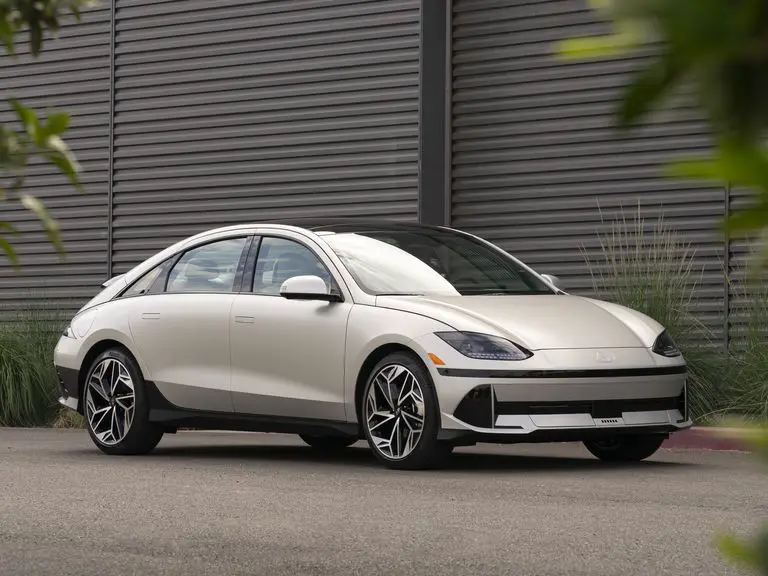
- IONIQ 6: A sleek, aerodynamic sedan with a drag coefficient of just 0.21
- IONIQ 7: An upcoming three-row electric SUV (launching 2024)
Each model is designed with sustainability in mind—using eco-friendly materials like recycled PET bottles, bio-based plastics, and vegan leather. For example, the IONIQ 5’s interior features seat fabrics made from recycled fishing nets, a nod to Hyundai’s commitment to ocean conservation.
Top Hyundai Electric Cars: Models That Are Shaping the Future
IONIQ 5: The Game-Changer in the Crossover Segment
The Hyundai IONIQ 5 is arguably the most talked-about electric car in Hyundai’s lineup. With its 1980s-inspired pixel design and cutting-edge technology, it stands out in a crowded market. The IONIQ 5 offers up to 303 miles of range (EPA-estimated) on the Long Range RWD model, with dual-motor AWD variants delivering up to 320 horsepower.
One of its most revolutionary features is 800V ultra-fast charging, which allows the battery to charge from 10% to 80% in just 18 minutes using a 350kW DC fast charger. This is a game-changer for long-distance travel, reducing charging anxiety and making road trips more feasible. Additionally, the IONIQ 5 supports Vehicle-to-Load (V2L) technology, enabling you to power external devices—perfect for camping, outdoor events, or emergency situations.
Pro Tip: If you frequently take road trips, opt for the AWD version with the heat pump. It maintains better range in cold weather compared to standard models.
IONIQ 6: Efficiency Meets Elegance
The Hyundai IONIQ 6 is a masterclass in aerodynamic efficiency. With a drag coefficient of 0.21, it’s one of the slipperiest production cars ever made—beating even the Tesla Model 3 (0.23). This translates into exceptional range: up to 361 miles on the RWD Long Range model (EPA-estimated).
Inside, the IONIQ 6 features a futuristic dual-cockpit design with a 12.3-inch digital instrument cluster and a 12.3-inch touchscreen infotainment system. The interior is spacious, with a flat floor thanks to the E-GMP platform, offering ample legroom for rear passengers. The car also includes advanced driver assistance systems (ADAS) like Highway Driving Assist 2 (HDA2), which enables semi-autonomous driving on highways.
Real-World Example: A tech reviewer in California drove the IONIQ 6 from San Francisco to Los Angeles (approx. 380 miles) with one 20-minute charge—demonstrating its practicality for cross-state travel.
Kona Electric: Compact, Affordable, and Practical
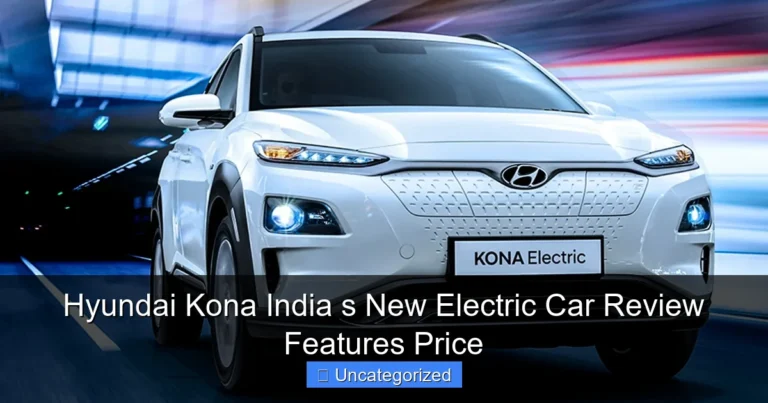
For those seeking a more budget-friendly option, the Hyundai Kona Electric remains a top contender in the compact EV segment. Starting at around $34,000 (after federal tax credit), it offers up to 258 miles of range (2023 model), making it ideal for urban commuters and suburban families.
The Kona Electric features a 150 kW electric motor, delivering 201 horsepower and 291 lb-ft of torque—plenty for city driving and highway merging. It supports DC fast charging up to 100 kW, charging from 10% to 80% in about 47 minutes. The interior is well-equipped with standard Apple CarPlay, Android Auto, and a suite of safety features like Forward Collision-Avoidance Assist and Lane Keeping Assist.
Tip: If you live in a region with limited fast-charging infrastructure, the Kona Electric’s lower price and solid range make it a smart, no-fuss entry into EV ownership.
Charging Infrastructure and Ownership Experience
Hyundai’s Charging Network: Blazing the Trail
One of the biggest barriers to EV adoption is charging infrastructure. Hyundai is tackling this head-on with IONITY, a joint venture with BMW, Mercedes-Benz, Ford, and Volkswagen to build a high-power charging network across Europe. In North America, Hyundai has partnered with Electrify America, offering IONIQ 5 and IONIQ 6 buyers two years of unlimited 30-minute DC fast charging at no extra cost.
Additionally, Hyundai is investing in smart charging solutions, including:
- Home charging stations with Wi-Fi connectivity and scheduling
- Mobile apps that show real-time charger availability and pricing
- Integration with utility companies for off-peak charging discounts
Example: In California, Hyundai EV owners can enroll in the “Green Energy Program” to power their homes and vehicles with 100% renewable energy.
Home Charging: Making It Easy and Affordable
For most EV owners, home charging is the primary method. Hyundai recommends installing a Level 2 (240V) charger, which can fully charge the IONIQ 5 in about 6–7 hours (vs. 24+ hours on a standard 120V outlet).
Hyundai partners with companies like ChargePoint and ClipperCreek to offer discounted home chargers. Some states and utilities also provide rebates—up to $1,000 in California—making installation more affordable. Hyundai’s app even helps you locate and schedule charging times to take advantage of lower electricity rates.
Pro Tip: Use a timer to charge during off-peak hours (typically 10 PM–6 AM). This saves money and reduces strain on the grid.
Maintenance and Longevity: EVs Are Cheaper to Own
Electric cars have fewer moving parts than internal combustion engine (ICE) vehicles, which translates into lower maintenance costs. Hyundai electric cars require:
- No oil changes
- No transmission servicing
- Reduced brake wear (thanks to regenerative braking)
- Fewer fluid replacements
Hyundai offers an industry-leading 10-year/100,000-mile battery warranty on all new electric vehicles, giving owners peace of mind. Real-world data shows that Hyundai EV batteries retain over 90% capacity after 100,000 miles, outperforming many competitors.
Sustainability and Innovation: Beyond the Car
Eco-Friendly Materials and Manufacturing
Hyundai is rethinking every aspect of vehicle production to minimize environmental impact. The IONIQ 5’s interior uses:
- Recycled PET bottles for seat fabrics and carpets
- Bio-based plastics derived from corn and sugarcane
- Natural dyes and pigments to reduce chemical runoff
Hyundai’s Ulsan manufacturing plant in South Korea is now partially powered by solar panels, and the company is piloting closed-loop recycling systems to reclaim materials from end-of-life vehicles. They’ve also introduced “Green Steel”—steel produced with reduced carbon emissions—in select models.
Vehicle-to-Grid (V2G) and Smart Mobility
Hyundai is exploring Vehicle-to-Grid (V2G) technology, which allows EVs to feed power back into the grid during peak demand. In pilot programs, Hyundai electric cars have acted as mobile energy storage units, helping stabilize local grids and reduce reliance on fossil-fuel power plants.
The company is also investing in smart mobility solutions, including:
- Autonomous shuttles for urban areas
- EV-based ride-sharing and car-sharing platforms
- Integration with smart city infrastructure (e.g., traffic lights, parking)
Example: In Seoul, Hyundai’s “RoboRide” service uses autonomous IONIQ 5s to transport passengers, reducing traffic and emissions.
Hyundai Electric Cars vs. the Competition: A Data-Driven Comparison
Range, Charging Speed, and Efficiency
Below is a comparison of Hyundai’s top electric models with key competitors in their respective segments:
| Model | EPA Range (miles) | DC Fast Charge (10–80%) | Efficiency (MPGe) | Starting MSRP |
|---|---|---|---|---|
| Hyundai IONIQ 5 (RWD) | 303 | 18 minutes | 114 | $41,450 |
| Hyundai IONIQ 6 (RWD) | 361 | 18 minutes | 136 | $45,500 |
| Hyundai Kona Electric | 258 | 47 minutes | 120 | $34,000 |
| Tesla Model Y Long Range | 330 | 25 minutes | 123 | $48,490 |
| Ford Mustang Mach-E (RWD) | 306 | 38 minutes | 100 | $42,995 |
| Kia EV6 (RWD) | 310 | 18 minutes | 117 | $42,600 |
Analysis: The IONIQ 5 and IONIQ 6 lead the pack in charging speed and efficiency, thanks to the E-GMP platform. While Tesla offers slightly more range, Hyundai’s 800V system provides a significant advantage in real-world usability—faster charging means less time at rest stops and more time on the road. The Kona Electric, though slower to charge, offers exceptional value for its price point.
Ownership Costs and Incentives
Beyond the sticker price, Hyundai electric cars benefit from:
- Federal tax credit: Up to $7,500 (eligibility depends on battery sourcing and MSRP)
- State incentives: Additional rebates in states like California, New York, and Colorado
- Lower insurance rates: Some insurers offer discounts for EVs due to fewer accidents
- Free charging programs: As mentioned, IONIQ buyers get free Electrify America access
Real-World Tip: Use the Department of Energy’s “Vehicle Cost Calculator” to compare 5-year ownership costs. In most cases, Hyundai EVs are cheaper than ICE counterparts when factoring in fuel, maintenance, and incentives.
The Road Ahead: Hyundai’s Vision for 2030 and Beyond
Hyundai is not resting on its laurels. The company is aggressively expanding its EV lineup and investing in next-generation technologies. By 2025, Hyundai plans to launch 17 new electric models, including electric versions of the Santa Fe, Palisade, and even a performance-oriented IONIQ 5 N—a 600+ horsepower electric hot hatch.
Looking further ahead, Hyundai is developing:
- Autonomous driving systems (Level 4 by 2027)
- Flying electric taxis (through its Supernal subsidiary)
- Hydrogen fuel cell EVs (expanding beyond the NEXO)
The Hyundai electric cars of today are just the beginning. With a clear roadmap, relentless innovation, and a deep commitment to sustainability, Hyundai is positioning itself as a leader in the global transition to eco-friendly driving. Whether you’re drawn to the retro-futuristic charm of the IONIQ 5, the efficiency of the IONIQ 6, or the affordability of the Kona Electric, Hyundai offers a compelling vision of what the future of mobility can be: cleaner, smarter, and more accessible for everyone.
As governments, businesses, and individuals continue to prioritize sustainability, Hyundai’s electric vehicles stand as a testament to what’s possible when innovation meets responsibility. The future of eco-friendly driving isn’t just coming—it’s already here, and it’s wearing a Hyundai badge.
Frequently Asked Questions
What are the top Hyundai electric cars available today?
Hyundai’s current electric lineup includes the IONIQ 5, IONIQ 6, and Kona Electric, all offering cutting-edge design, long-range capabilities, and fast-charging technology. These models showcase Hyundai’s commitment to innovation in the EV market.
How does Hyundai’s electric car range compare to competitors?
Hyundai electric cars boast competitive ranges, with the IONIQ 5 offering up to 303 miles per charge and the IONIQ 6 reaching 361 miles, rivaling industry leaders like Tesla and Ford. Their E-GMP platform ensures efficient energy use without sacrificing performance.
Are Hyundai electric cars eligible for government incentives?
Yes, many Hyundai electric cars qualify for federal and state tax credits in countries like the U.S., Canada, and the UK, depending on local regulations. For example, the IONIQ 5 and 6 may receive up to $7,500 in U.S. federal tax credits.
What charging options do Hyundai electric cars support?
Hyundai EVs support Level 2 home charging (up to 11 kW) and DC fast charging (up to 350 kW), allowing an 80% charge in as little as 18 minutes. Most models also include complimentary charging credits via partnerships like Electrify America.
How reliable are Hyundai electric cars for long-term ownership?
Hyundai backs its electric cars with a 10-year/100,000-mile battery warranty, reflecting high reliability standards. Real-world owner reviews praise their durability, low maintenance, and consistent performance over time.
What makes Hyundai’s electric cars stand out in the eco-friendly market?
Hyundai electric cars prioritize sustainability through recycled materials, solar roof options (IONIQ 5), and zero-emission driving. Their eco-conscious design extends beyond performance, aligning with global green mobility trends.