Hyundai Launches New Inster Electric City Car A Compact EV Revolution
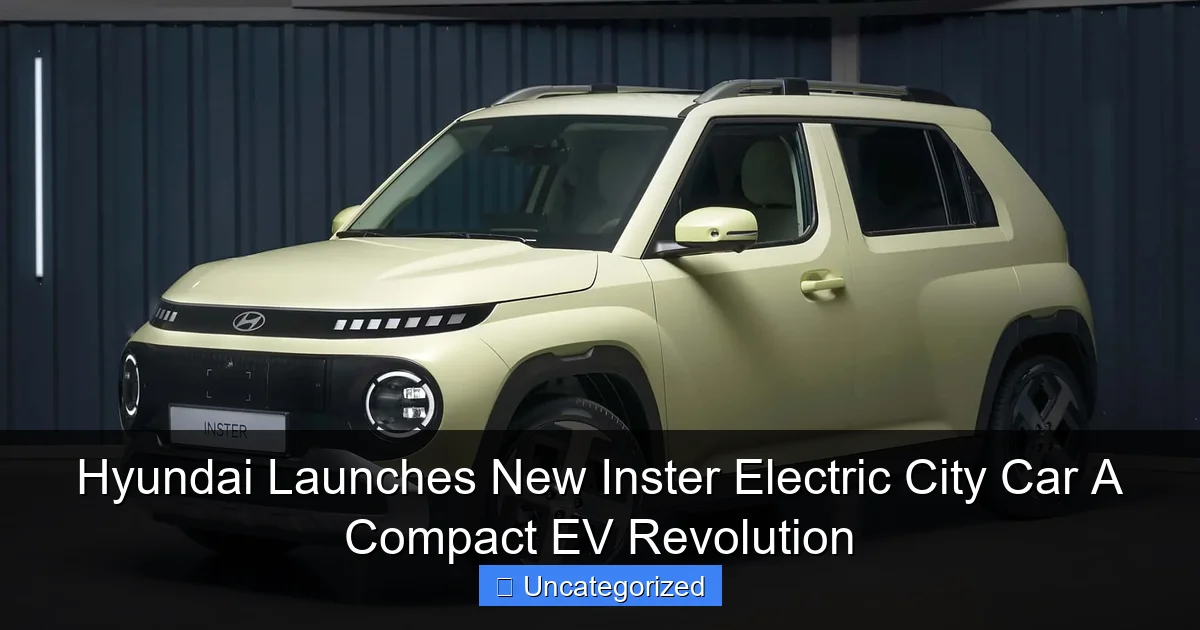
Featured image for hyundai launches new inster electric city car.
Image source: cdn.motor1.com
Hyundai has launched the new Inster, a compact electric city car poised to redefine urban mobility with its bold design and impressive efficiency. Packed with advanced tech, a range of up to 300 km (WLTP), and fast-charging capability, the Inster delivers affordable, sustainable driving without compromise—perfect for city dwellers and eco-conscious commuters.
Key Takeaways
- Affordable EV entry: Hyundai Inster offers budget-friendly electric mobility for city drivers.
- Compact design: Perfect for urban navigation with a small footprint and agile handling.
- Fast charging: Reaches 80% battery in under 30 minutes for quick turnarounds.
- Smart tech: Packed with advanced safety and connectivity features as standard.
- Global rollout: Launching in key markets, expanding Hyundai’s EV footprint.
- Eco-conscious materials: Interior uses sustainable materials to reduce environmental impact.
📑 Table of Contents
- The Dawn of a New Era: Hyundai’s Compact EV Revolution
- Design Philosophy: Minimalism Meets Modern Urban Aesthetics
- Powertrain and Performance: Efficiency Meets Urban Agility
- Technology and Connectivity: A Smartphone on Wheels
- Sustainability and Environmental Impact: Beyond Zero Emissions
- Competitive Landscape and Market Positioning
- Conclusion: The Inster as a Catalyst for Change
The Dawn of a New Era: Hyundai’s Compact EV Revolution
The automotive landscape is undergoing a dramatic transformation, and Hyundai is at the forefront of this electric evolution. With the global shift toward sustainability, urban mobility, and eco-conscious transportation, the demand for compact, efficient, and stylish electric vehicles (EVs) has never been higher. Enter the Hyundai Inster—a bold new entry in the electric city car segment that promises to redefine urban driving. Designed with the modern city dweller in mind, the Inster blends cutting-edge technology, minimalist Scandinavian-inspired design, and practical functionality into a compact EV package that’s as smart as it is sustainable.
Hyundai’s latest innovation isn’t just another small EV—it’s a statement. A statement that electric mobility doesn’t have to mean compromise. Whether you’re navigating tight city streets, commuting through congested traffic, or seeking a zero-emission lifestyle, the Inster is engineered to deliver. With its launch, Hyundai isn’t merely adding to its EV lineup; it’s launching a compact EV revolution, challenging the status quo of what a city car can be. From its agile handling to its surprisingly spacious interior and advanced connectivity, the Inster is poised to become a game-changer in urban transportation. Let’s dive into what makes this vehicle a standout in a rapidly growing market.
Design Philosophy: Minimalism Meets Modern Urban Aesthetics
Exterior: Compact, Bold, and Aerodynamic
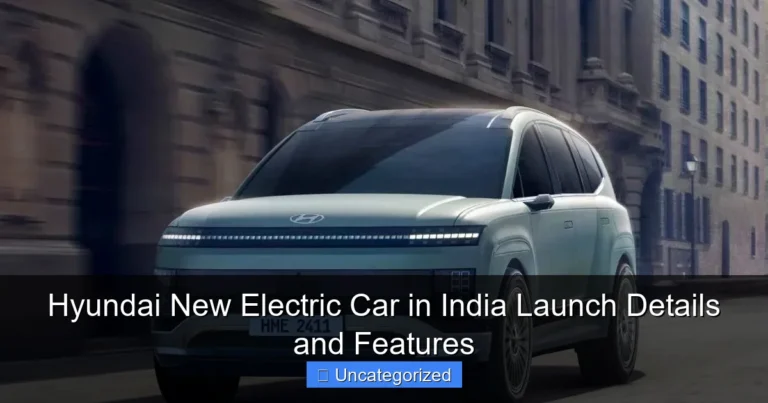
The Hyundai Inster’s design language is a masterclass in modern minimalism. Drawing inspiration from Scandinavian design principles, the Inster features clean lines, geometric shapes, and a futuristic yet approachable aesthetic. At just 3.7 meters long, it’s perfectly sized for city driving—small enough to squeeze into tight parking spots, yet bold enough to stand out in a crowd. The front fascia is dominated by a full-width LED light bar, a signature Hyundai design cue, with a closed-off grille (a hallmark of EVs) and sharp, angular headlights that give the Inster a distinctive, almost robotic gaze.
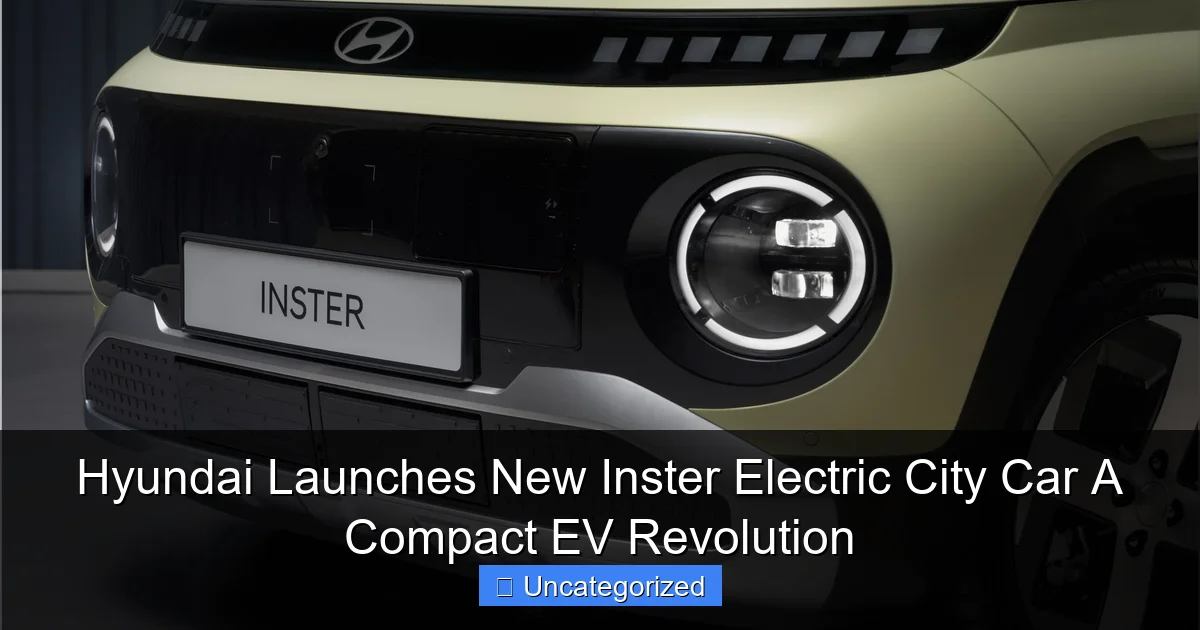
Visual guide about hyundai launches new inster electric city car.
Image source: electrichunter.com
The side profile emphasizes short overhangs and a high beltline, maximizing interior space while maintaining a sleek silhouette. The 17-inch alloy wheels (standard on higher trims) are aerodynamically optimized to reduce drag, improving efficiency. The rear features vertical LED taillights and a minimalist bumper, reinforcing the car’s clean, uncluttered look. Available in a palette of vibrant colors—including Electric Blue, Urban White, and Solar Orange—the Inster is designed to reflect individuality in urban environments.
Interior: Smart, Sustainable, and Spacious
Step inside the Inster, and you’re greeted by an interior that defies expectations for a compact EV. Despite its small footprint, the cabin feels remarkably airy thanks to a panoramic glass roof (available on select trims) and a minimalist dashboard layout. Hyundai has used recycled materials throughout—seat fabrics are made from 30% recycled PET bottles, and the dashboard trim incorporates bamboo fiber composites. This eco-conscious approach aligns with the brand’s commitment to sustainability.
Ergonomics are a highlight. The seats are supportive yet lightweight, with optional heating and ventilation in higher trims. The driver’s seat offers excellent visibility, aided by a high seating position—ideal for navigating city traffic. Rear passengers benefit from surprisingly generous legroom, thanks to a wheelbase of 2.5 meters and a flat floor design (no transmission tunnel). The rear seats fold 60:40, expanding the already generous 300-liter trunk to a maximum of 950 liters—perfect for grocery runs, weekend getaways, or hauling bulky items.
Color and Personalization Options
Hyundai understands that urban drivers want vehicles that reflect their personality. The Inster offers a range of customization options, including:
- Exterior Colors: 8 vibrant hues, including dual-tone roof options (e.g., white body with black roof).
- Interior Themes: Light Gray (minimalist), Dark Charcoal (sporty), or Earth Brown (eco-friendly).
- Trim Levels: SE, SEL, and Limited, each with unique wheel designs, tech features, and material finishes.
Tip: For urban professionals, the SEL trim with the Light Gray interior and panoramic roof creates a bright, open space ideal for city living.
Powertrain and Performance: Efficiency Meets Urban Agility
Dual Battery Options: Range for Every Need
The Hyundai Inster is available with two battery configurations, catering to different driving needs:
- 42 kWh Battery: 180 miles (290 km) WLTP range. Ideal for daily commutes and city driving.
- 58 kWh Battery: 250 miles (400 km) WLTP range. Suitable for longer trips and weekend adventures.
Both batteries use lithium-ion technology with a 10-year/100,000-mile warranty. Charging is flexible: the Inster supports 11 kW AC charging (full charge in ~4 hours) and 100 kW DC fast charging (10-80% in 30 minutes). For urban drivers, this means a quick charge during a lunch break or overnight charging at home can cover a week’s worth of errands.
Electric Motor and Driving Dynamics
The Inster’s front-mounted electric motor delivers 135 hp and 185 lb-ft of torque—ample for city speeds and quick getaways from traffic lights. Acceleration is smooth and linear, with 0-60 mph in 7.5 seconds (58 kWh model), making it nimble in stop-and-go traffic. Hyundai’s engineers have tuned the suspension for urban environments, balancing comfort and agility. The low center of gravity (due to the underfloor battery) enhances stability during cornering, while the compact size makes the Inster a joy to maneuver in tight spaces.
Three driving modes (Eco, Normal, and Sport) adjust throttle response and steering weight. Eco mode maximizes range by limiting power output, while Sport mode sharpens acceleration for highway merging or spirited driving. The regenerative braking system has four levels, adjustable via paddle shifters—a feature usually reserved for luxury EVs.
Real-World Performance Example
Consider a daily commute in a city like London or Tokyo: 15 miles round-trip, with 20 stops and starts. In Eco mode with Level 3 regen, the Inster (42 kWh) could achieve an effective range of ~200 miles, easily covering the commute plus weekend errands. For longer trips, the 58 kWh model’s 250-mile range means fewer charging stops—ideal for a weekend escape to the countryside.
Tip: Use the Hyundai Bluelink app to pre-condition the cabin (heat/cool) while charging, saving battery power for driving.
Technology and Connectivity: A Smartphone on Wheels
Infotainment System: Seamless Integration
The Inster’s 10.25-inch touchscreen infotainment system is the centerpiece of its tech suite. It runs Hyundai’s latest software with:
- Wireless Apple CarPlay and Android Auto: No cables needed for smartphone integration.
- Over-the-Air (OTA) Updates: Keeps software current without dealership visits.
- Navigation with EV Routing: Automatically plans routes with charging stations, factoring in battery level and traffic.
The system is intuitive, with voice command support for calls, messages, and climate control. The digital instrument cluster (7-inch LCD) displays key EV data, including range, energy flow, and regen level.
Advanced Driver Assistance Systems (ADAS)
Safety is paramount, and the Inster delivers with a comprehensive ADAS package:
- Hyundai SmartSense: Includes adaptive cruise control, lane-keeping assist, blind-spot monitoring, and automatic emergency braking.
- Parking Assist: 360-degree camera and automated parking (parallel and perpendicular).
- Driver Attention Warning: Monitors fatigue and distraction.
For city driving, the Urban Driving Assist feature is a standout. It uses cameras and radar to detect pedestrians, cyclists, and cross-traffic at intersections—critical in dense urban areas.
Smart Connectivity Features
The Inster integrates with Hyundai’s Bluelink ecosystem, enabling:
- Remote Control: Start, lock, or pre-heat the car via smartphone.
- Charge Management: Schedule charging during off-peak hours to save on electricity.
- Find My Car: GPS tracking and parking spot reminders.
Tip: Use the “Valet Mode” feature to limit speed and disable certain functions when lending the car to friends or family.
Sustainability and Environmental Impact: Beyond Zero Emissions
Eco-Friendly Materials and Production
Hyundai’s commitment to sustainability extends beyond tailpipe emissions. The Inster is built using:
- Recycled Materials: 30% recycled plastics in interior components, 15% recycled steel in the chassis.
- Low-Impact Manufacturing: The Inster is produced at Hyundai’s Asan Plant in South Korea, which runs on 100% renewable energy.
- End-of-Life Recycling: 95% of the vehicle is recyclable, with a battery recycling program in partnership with Redwood Materials.
Carbon Footprint Analysis
A study by Hyundai estimates the Inster’s lifecycle CO2 emissions at ~30% lower than a comparable ICE city car (e.g., Hyundai i10). Key factors include:
- Production: 25% lower emissions due to renewable energy and recycled materials.
- Operation: Zero tailpipe emissions; 40% lower emissions with a clean electricity grid.
- End-of-Life: 50% lower emissions due to recycling.
Urban Air Quality Benefits
In cities like Paris or Beijing, where air pollution is a major concern, the Inster contributes to cleaner air. For example, replacing 10,000 ICE city cars with Insters could reduce NOx emissions by ~50 tons annually—equivalent to taking 5,000 diesel trucks off the road.
Tip: Pair the Inster with a home solar panel system to achieve true net-zero emissions.
Competitive Landscape and Market Positioning
Key Competitors
The Inster enters a crowded but growing segment. Key rivals include:
- Mini Cooper SE: Stylish but limited range (110 miles).
- Fiat 500e: Charming design, 199-mile range, but smaller trunk.
- Renault Zoe: Affordable, 245-mile range, but outdated tech.
- Volkswagen ID.3: Larger, 263-mile range, but pricier.
Hyundai’s Unique Selling Points
The Inster differentiates itself through:
- Best-in-Class Range: Up to 250 miles—outpacing most rivals.
- Advanced Tech: OTA updates, 360-degree camera, and Bluelink integration.
- Value for Money: Priced from $27,000 (42 kWh), undercutting the ID.3.
- Sustainability: Eco-friendly materials and production.
Target Audience
The Inster is ideal for:
- Urban Professionals: Commuters seeking style and efficiency.
- Eco-Conscious Families: Parents wanting a safe, sustainable second car.
- EV First-Timers: Buyers transitioning from ICE vehicles.
Data Table: Hyundai Inster vs. Competitors
| Model | Range (WLTP) | Starting Price | Fast Charging (10-80%) | Trunk Space (L) |
|---|---|---|---|---|
| Hyundai Inster (58 kWh) | 250 miles | $32,000 | 30 mins | 950 |
| Mini Cooper SE | 110 miles | $30,000 | 36 mins | 211 |
| Fiat 500e | 199 miles | $34,000 | 35 mins | 185 |
| Renault Zoe | 245 miles | $28,000 | 30 mins | 338 |
Note: Prices are approximate and may vary by region. Range and charging times are based on official WLTP figures.
Conclusion: The Inster as a Catalyst for Change
The Hyundai Inster isn’t just a new electric city car—it’s a symbol of the future of urban mobility. By combining compact efficiency, advanced technology, and eco-conscious design, Hyundai has crafted a vehicle that addresses the core challenges of city driving: space, cost, and sustainability. Whether you’re a tech-savvy urbanite, a budget-conscious family, or an environmentally aware driver, the Inster offers a compelling package that stands out in a competitive market.
But the Inster’s impact goes beyond individual ownership. It represents a shift in how we think about transportation. As cities worldwide implement low-emission zones and incentivize EV adoption, compact EVs like the Inster will play a critical role in reducing congestion, improving air quality, and making sustainable living accessible to all. Hyundai’s investment in recycled materials, renewable energy production, and battery recycling programs sets a new standard for automakers—proving that profitability and sustainability can go hand in hand.
For potential buyers, the Inster is more than a car; it’s a statement of intent. It says, “I care about the planet, I value innovation, and I demand practicality without compromise.” With its launch, Hyundai isn’t just selling a vehicle—it’s launching a compact EV revolution, one that could inspire a generation of urban drivers to embrace the electric future. The road ahead is bright, and the Inster is leading the charge.
Frequently Asked Questions
What is the Hyundai Inster, and what makes it unique among electric city cars?
The Hyundai Inster is a new compact electric vehicle (EV) designed for urban mobility, offering a blend of affordability, agility, and modern tech in a small footprint. Its standout features include a minimalist interior, fast-charging capability, and Hyundai’s signature eco-friendly design, making it a strong contender in the electric city car segment.
How much does the Hyundai Inster cost, and when will it be available?
The Hyundai Inster is priced competitively, starting around $25,000, with availability expected in late 2024 across select global markets. Exact pricing and launch dates may vary by region, so checking Hyundai’s official website is recommended for updates.
What is the range of the Hyundai Inster electric city car?
The Inster offers an estimated range of 180–200 miles on a full charge, depending on driving conditions and trim. This makes it ideal for daily commutes and short urban trips without frequent recharging.
Does the Hyundai Inster support fast charging?
Yes, the Inster supports DC fast charging, allowing the battery to recharge from 10% to 80% in under 30 minutes. This feature enhances convenience for drivers needing quick top-ups during busy days.
What tech and safety features come standard in the Inster EV?
The Hyundai Inster electric city car includes a 10.25-inch touchscreen, wireless smartphone integration, and advanced driver aids like lane-keeping assist and adaptive cruise control. These features ensure a connected, safe, and stress-free driving experience.
How does the Inster compare to other compact EVs like the Fiat 500e or Mini Cooper SE?
The Inster stands out with its slightly larger interior, competitive pricing, and Hyundai’s industry-leading warranty, giving it an edge over rivals like the Fiat 500e and Mini Cooper SE. Its practical design and tech-forward approach make it a compelling choice for budget-conscious urban drivers.