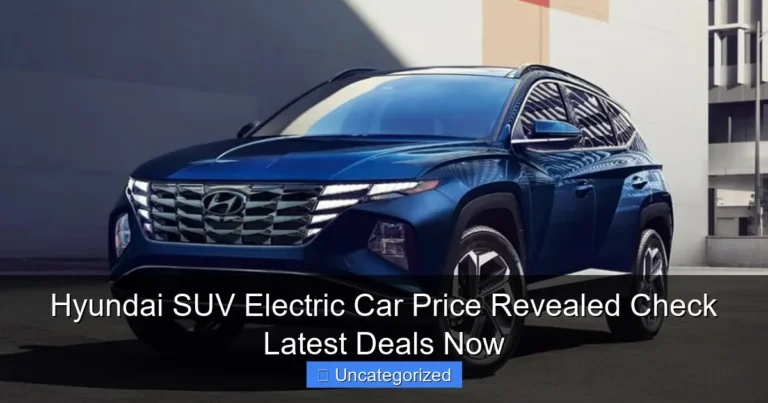
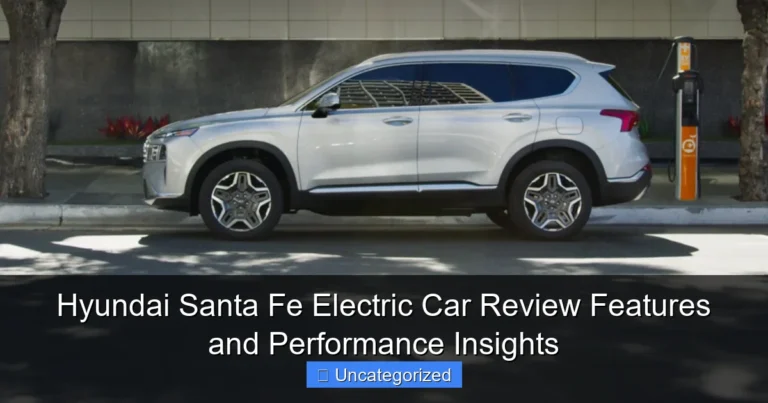
Hyundai Motor Company Electric Car Innovations You Need to Know
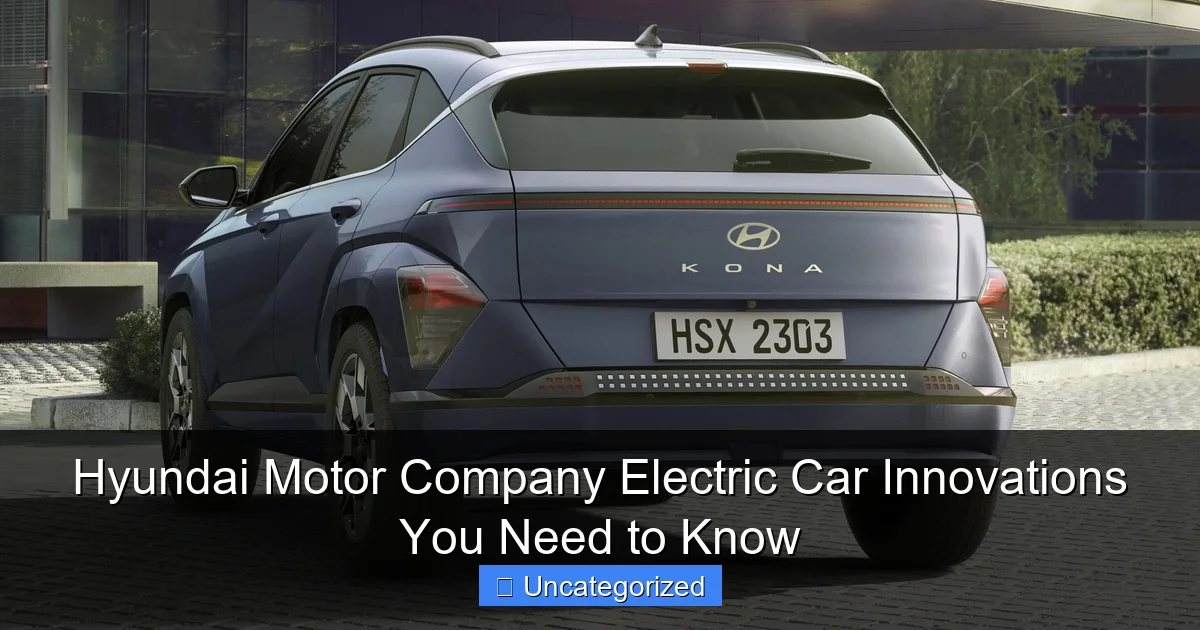
Featured image for hyundai motor company electric car
Image source: images.carexpert.com.au
Hyundai Motor Company is revolutionizing the electric vehicle market with cutting-edge innovations like ultra-fast charging, vehicle-to-load (V2L) technology, and advanced battery efficiency across its EV lineup. Models such as the IONIQ 5 and IONIQ 6 showcase Hyundai’s commitment to sustainable mobility, offering impressive range, futuristic design, and smart connectivity features that set new industry benchmarks.
Key Takeaways
- Hyundai leads in affordable, long-range EV innovation with models like Ioniq 5.
- Ultra-fast charging tech cuts downtime to under 20 minutes.
- Solar roof integration boosts efficiency and extends range passively.
- V2L capability turns EVs into mobile power sources for emergencies.
- Sustainable materials used in interiors reduce environmental impact significantly.
- Advanced safety features standard across all electric models for peace of mind.
📑 Table of Contents
- Hyundai Motor Company Electric Car Innovations You Need to Know
- 1. The E-GMP Platform: The Backbone of Hyundai’s Electric Revolution
- 2. Battery Technology and Energy Efficiency Breakthroughs
- 3. Design Philosophy: Where Aesthetics Meet Aerodynamics
- 4. Smart Technology and Connected Features
- 5. Sustainability and Environmental Leadership
- 6. Performance and Future Models: The Road Ahead
Hyundai Motor Company Electric Car Innovations You Need to Know
The automotive world is undergoing one of its most significant transformations in over a century, and at the heart of this revolution is the Hyundai Motor Company. Once recognized primarily for its value-driven gasoline-powered vehicles, Hyundai has rapidly evolved into a global leader in electric mobility, redefining what it means to drive sustainably, efficiently, and stylishly. With a bold vision to achieve carbon neutrality by 2045 and a commitment to electrify its entire lineup, Hyundai is not just keeping pace with the electric vehicle (EV) revolution—it’s leading it.
From cutting-edge battery technology and next-generation electric platforms to AI-driven driving assistance and ultra-fast charging capabilities, Hyundai’s electric car innovations are setting new industry benchmarks. The company’s strategic investments in research and development, partnerships with tech giants, and a customer-first approach have enabled it to deliver EVs that are not only environmentally responsible but also exhilarating to drive. Whether you’re a tech enthusiast, a sustainability advocate, or simply a car buyer looking for the best value, Hyundai’s electric vehicles offer something truly compelling. This article dives deep into the most important Hyundai Motor Company electric car innovations that are shaping the future of transportation.
1. The E-GMP Platform: The Backbone of Hyundai’s Electric Revolution
At the core of Hyundai’s electric vehicle strategy is the Electric-Global Modular Platform (E-GMP), a dedicated EV architecture launched in 2021. Unlike legacy automakers who retrofit combustion platforms for electric use, Hyundai built E-GMP from the ground up to maximize efficiency, performance, and safety. This platform underpins some of the company’s most acclaimed EVs, including the Ioniq 5, Ioniq 6, and the Kia EV6 (a sister brand sharing the same architecture).
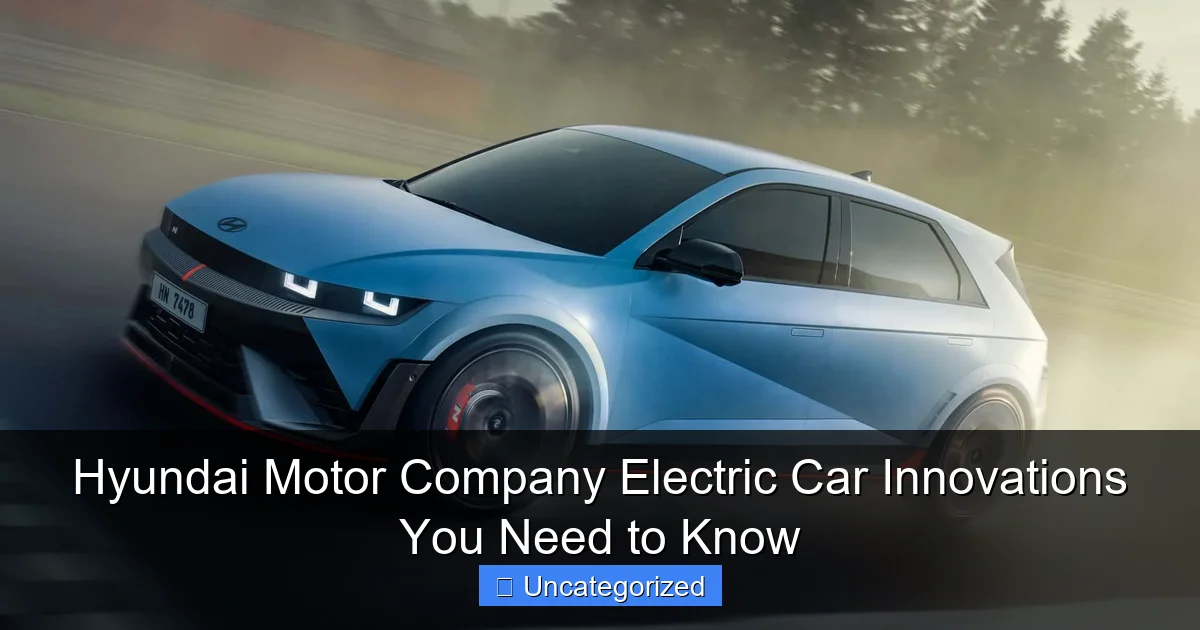
Visual guide about hyundai motor company electric car
Image source: cdn.motor1.com
Modular Design for Scalability and Flexibility
One of the most innovative aspects of E-GMP is its modularity. The platform supports multiple body styles—SUVs, sedans, and even future performance models—while maintaining consistent core components like battery packs, electric motors, and power electronics. This allows Hyundai to scale production efficiently and reduce development time. For example, the Ioniq 5 (SUV) and Ioniq 6 (sedan) share the same 800V electrical system and battery layout but offer distinct driving experiences tailored to their form factors.
800V Ultra-Fast Charging: A Game-Changer for Range Anxiety
Perhaps the most groundbreaking feature of E-GMP is its support for 800V charging, a rare capability in the EV market. While most competitors (like Tesla and Nissan) operate on 400V systems, Hyundai’s 800V architecture enables ultra-fast charging. The Ioniq 5, for instance, can charge from 10% to 80% in just 18 minutes using a 350kW DC fast charger. This is nearly twice as fast as many 400V competitors.
- Tip: To maximize charging speed, use Hyundai’s “Charge MyHyundai” app to locate compatible 350kW chargers and schedule off-peak charging to reduce electricity costs.
- Example: On a road trip from Los Angeles to San Francisco (approx. 380 miles), an Ioniq 5 can complete the journey with just one 20-minute stop—ideal for minimizing travel time.
Rear-Wheel Drive and Dual-Motor All-Wheel Drive Options
E-GMP offers both rear-wheel drive (RWD) and dual-motor all-wheel drive (AWD) configurations. The RWD setup delivers a balanced, sporty feel with up to 320 horsepower, while the AWD variant pushes output to 577 horsepower in the Ioniq 5 N performance model. The platform’s low center of gravity and near 50:50 weight distribution contribute to superior handling and cornering stability.
Additionally, E-GMP integrates a multi-link rear suspension system, which enhances ride comfort and control—especially important for long-distance EV travel.
2. Battery Technology and Energy Efficiency Breakthroughs
Battery technology is the cornerstone of any successful electric car, and Hyundai is investing heavily in innovation to extend range, reduce charging times, and improve longevity. The Hyundai Motor Company electric car lineup benefits from proprietary battery management systems, advanced cell chemistry, and thermal management solutions.
High-Energy Density Lithium-Ion Batteries
Hyundai uses high-nickel NMC (Nickel Manganese Cobalt) lithium-ion batteries with energy densities exceeding 250 Wh/kg. These cells offer a balance between energy storage, power delivery, and safety. The Ioniq 5’s 77.4 kWh battery pack delivers an EPA-estimated range of up to 303 miles on a single charge—among the best in its class.
- Tip: To maximize battery lifespan, avoid consistently charging to 100% unless preparing for a long trip. Hyundai recommends daily charging to 80% for optimal battery health.
Smart Thermal Management System
One of the biggest challenges with EVs is maintaining battery efficiency in extreme temperatures. Hyundai’s E-GMP platform includes a liquid-cooled thermal management system that actively regulates battery temperature. In cold weather, the system preheats the battery using residual heat from the electric motor or cabin, reducing charging time and preserving range. In hot conditions, it prevents overheating, which can degrade battery performance.
For example, during winter testing in Norway, Hyundai reported that Ioniq 5 models retained over 85% of their range at -10°C (14°F), thanks to this system.
Vehicle-to-Load (V2L) Technology: Powering Your Life On the Go
A standout feature of Hyundai’s EVs is Vehicle-to-Load (V2L), which allows the car to power external devices using its high-voltage battery. The Ioniq 5 comes with a standard V2L outlet in the rear cargo area, capable of delivering up to 3.6 kW of power—enough to run a coffee machine, laptop, camping equipment, or even a small home during a power outage.
- Example: During a camping trip, an Ioniq 5 owner can power a portable refrigerator, LED lights, and a portable speaker system—all without needing a generator.
- Tip: Use the “Eco+” driving mode to conserve energy when using V2L, especially if the battery is below 50%.
Future-Proofing with Solid-State Battery Research
While current Hyundai EVs use lithium-ion batteries, the company is actively developing solid-state battery technology through partnerships with SK Innovation and in-house R&D. Solid-state batteries promise higher energy density (up to 500 Wh/kg), faster charging (under 10 minutes), and improved safety due to non-flammable electrolytes. Hyundai aims to introduce solid-state batteries in production models by 2030, positioning itself as a leader in next-gen EV power.
3. Design Philosophy: Where Aesthetics Meet Aerodynamics
Hyundai’s electric vehicles are not just technologically advanced—they’re also visually striking. The brand’s “Sensuous Sportiness” design language blends futuristic aesthetics with functional aerodynamics, creating EVs that turn heads while maximizing efficiency.
Parametric Pixel Design: A Signature Look
The Ioniq 5 and Ioniq 6 feature Hyundai’s signature Parametric Pixel design, inspired by digital displays and retro-futurism. The front and rear lighting units use pixel-style LEDs, creating a distinctive, high-tech appearance. This isn’t just for show—the design improves visibility and reduces drag.
- Example: The Ioniq 6’s sleek, coupe-like profile has a drag coefficient of just 0.21 Cd, one of the lowest in the industry. This directly contributes to its impressive 361-mile range (WLTP).
Interior Innovation: A Living Space on Wheels
Hyundai reimagines the EV interior as a “third space”—a comfortable, tech-rich environment for work, relaxation, or socializing. Key features include:
- Flat Floor and Sliding Center Console: Thanks to the E-GMP platform’s flat battery layout, the cabin offers class-leading legroom and a customizable center console that slides up to 140mm.
- Sustainable Materials: Hyundai uses recycled plastics, bamboo fibers, and plant-based leather in seats and trim, reducing environmental impact.
- Relaxation Seats: The Ioniq 5 offers zero-gravity front seats with leg rests, perfect for recharging during long drives.
Tip: Use the “Digital Side Mirrors” (available on select trims) to improve aerodynamics and reduce blind spots, especially at highway speeds.
Color and Customization Options
Hyundai offers a wide palette of eco-conscious paint colors, including Digital Green and Gravity Gold, which use low-VOC (volatile organic compound) coatings. Buyers can also choose from multiple interior themes, such as “Eco Fabric” or “Premium Leather,” allowing for personalization without compromising sustainability.
4. Smart Technology and Connected Features
Hyundai is integrating advanced digital technologies to enhance safety, convenience, and driving enjoyment. The Hyundai Motor Company electric car lineup features AI-driven systems, over-the-air (OTA) updates, and seamless smartphone integration.
Hyundai Digital Key and Smartphone Integration
With the Hyundai Digital Key, owners can unlock, start, and control their EV using an NFC-enabled smartphone or smartwatch. The app also allows remote climate control, charging scheduling, and vehicle tracking.
- Tip: Share digital keys with family members or valet services for added convenience and security.
Over-the-Air (OTA) Software Updates
All E-GMP-based Hyundai EVs receive OTA updates, similar to smartphones. These updates can improve:
- Charging speed and efficiency
- Navigation accuracy
- Driver assistance features
- Infotainment performance
For example, a 2023 update increased the Ioniq 5’s maximum DC charging rate from 220kW to 240kW—without requiring a dealership visit.
Advanced Driver Assistance Systems (ADAS)
Hyundai’s Highway Driving Assist 2 (HDA2) and Remote Smart Parking Assist are among the most advanced ADAS features in the industry. HDA2 combines adaptive cruise control, lane centering, and automated lane changes for semi-autonomous driving on highways. Remote Smart Parking allows drivers to park or exit a tight spot using their smartphone—ideal for urban environments.
- Example: In a crowded parking garage, a driver can exit the Ioniq 5 and use the app to maneuver it into a narrow space, then summon it later.
AI-Powered Voice Assistant and Navigation
The Ioniq 6 features an AI voice assistant that learns user preferences over time. It can suggest charging stations based on battery level, adjust climate settings, and even recommend nearby restaurants. The navigation system integrates real-time traffic, weather, and charging station availability to optimize route planning.
5. Sustainability and Environmental Leadership
Hyundai is committed to more than just zero-emission vehicles—it’s building a holistic ecosystem for sustainable mobility.
Carbon-Neutral Manufacturing
Hyundai’s Ulsan EV plant in South Korea runs on 100% renewable energy, including solar and wind power. The company plans to achieve carbon neutrality across all global operations by 2045.
Recycling and Battery Second-Life Programs
Hyundai has launched a battery recycling program in partnership with SK On. Used EV batteries are repurposed for energy storage systems (ESS) in homes and businesses, reducing waste and supporting the renewable energy grid.
Eco-Friendly Supply Chain
The company is working with suppliers to reduce the carbon footprint of materials like aluminum, steel, and rare earth elements. For example, the Ioniq 5 uses recycled aluminum in its body structure, saving approximately 30% in CO2 emissions during production.
Community and Environmental Initiatives
Hyundai sponsors reforestation projects, clean energy research, and EV adoption incentives in underserved communities. In the U.S., the “Hyundai Hope On Wheels” program donates EVs to nonprofits and hospitals, promoting equitable access to electric mobility.
6. Performance and Future Models: The Road Ahead
Hyundai is not resting on its laurels. The company has an ambitious roadmap for high-performance and next-generation EVs.
Ioniq 5 N: The Electric Performance Flagship
The Ioniq 5 N, launched in 2023, is Hyundai’s first high-performance EV. With 641 horsepower (in N Grin Boost mode), a 3.2-second 0-60 mph time, and track-tuned suspension, it proves that EVs can be both thrilling and sustainable. It also features:
- Artificial Gear Shifts: Simulates the feel of a manual transmission with sound and haptic feedback.
- N Drift Optimizer: Enables controlled oversteer for track driving.
Upcoming Models: Ioniq 7 and Beyond
Hyundai is developing the Ioniq 7, a three-row electric SUV based on the E-GMP platform, expected in 2024. It will offer seating for up to seven passengers, a 400-mile range, and advanced autonomous features. Future models may include electric pickup trucks and compact city EVs.
Autonomous Driving Ambitions
Hyundai is investing in Level 3 and Level 4 autonomous driving through its Motional joint venture with Aptiv. By 2025, select Hyundai EVs will offer hands-free driving on highways and automated valet parking in smart cities.
Global Expansion and Market Strategy
Hyundai is expanding EV production to the U.S., India, and Europe, with local battery plants to reduce costs and improve delivery times. The goal is to sell 1.87 million EVs annually by 2030, capturing 10% of the global EV market.
| Model | Platform | Battery (kWh) | Range (EPA) | 0-60 mph (sec) | Top Charging Speed |
|---|---|---|---|---|---|
| Ioniq 5 | E-GMP | 77.4 | 303 miles | 5.0 | 240 kW |
| Ioniq 6 | E-GMP | 77.4 | 361 miles (WLTP) | 5.0 | 240 kW |
| Ioniq 5 N | E-GMP | 84.0 | 270 miles | 3.2 | 240 kW |
| Kona Electric | Modified ICE | 64.8 | 261 miles | 7.8 | 100 kW |
The Hyundai Motor Company electric car journey is a testament to innovation, ambition, and responsibility. From the groundbreaking E-GMP platform and 800V charging to sustainable design and AI-powered features, Hyundai is redefining what electric mobility can be. Whether you’re drawn to the retro-futuristic style of the Ioniq 5, the sleek efficiency of the Ioniq 6, or the adrenaline-pumping performance of the Ioniq 5 N, there’s a Hyundai EV for every lifestyle.
As the company continues to push boundaries with solid-state batteries, autonomous driving, and global sustainability initiatives, one thing is clear: Hyundai is not just adapting to the electric future—it’s shaping it. For drivers, investors, and environmental advocates alike, the innovations coming out of Hyundai’s labs and factories are not just impressive—they’re essential. The road ahead is electric, and Hyundai Motor Company is leading the charge.
Frequently Asked Questions
What makes Hyundai Motor Company electric cars stand out in the EV market?
Hyundai Motor Company electric cars combine cutting-edge technology, long-range capabilities, and sleek designs. Their innovations, like ultra-fast charging and vehicle-to-load (V2L) functionality, set them apart from competitors.
How does Hyundai’s electric car lineup compare to Tesla?
While Tesla leads in software, Hyundai matches performance with practical features like affordable pricing, spacious interiors, and a focus on user-friendly charging solutions. Hyundai’s IONIQ series rivals Tesla in range and efficiency.
What is the fastest charging time for a Hyundai Motor Company electric car?
Hyundai’s E-GMP platform enables 10-80% charging in just 18 minutes using a 350kW fast charger. This makes Hyundai Motor Company electric cars among the quickest-charging EVs available today.
Do Hyundai electric cars support bidirectional charging?
Yes, select models like the IONIQ 5 and IONIQ 6 feature Vehicle-to-Load (V2L) technology, allowing you to power external devices or even another EV. This adds versatility for camping or emergencies.
What is the longest range available in Hyundai’s electric car models?
The IONIQ 6 Long Range achieves up to 361 miles (EPA-estimated), making it one of the highest-range Hyundai Motor Company electric cars. Real-world range may vary based on driving conditions.
Are Hyundai electric cars eligible for government incentives?
Yes, many Hyundai Motor Company electric cars qualify for federal tax credits and local rebates in regions like the U.S. and Europe. Check eligibility based on your country’s current EV incentive policies.