Hyundai Motor Company Electric Cars The Future of EcoFriendly Driving
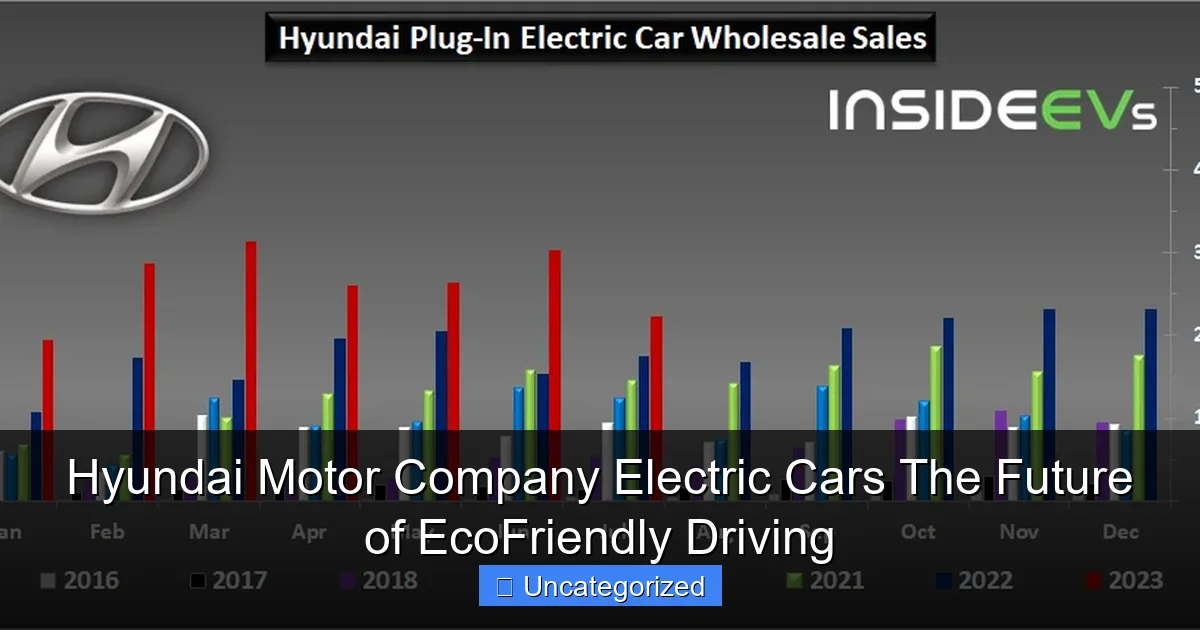
Featured image for hyundai motor company electric cars
Image source: cdn.motor1.com
Hyundai Motor Company is revolutionizing eco-friendly driving with its cutting-edge electric vehicles, combining innovative technology, long-range performance, and sleek design across models like the Ioniq 5 and Kona Electric. Backed by a global sustainability vision, Hyundai is making electric mobility more accessible and efficient, setting a new benchmark in the EV market.
Key Takeaways
- Hyundai leads EV innovation with cutting-edge battery tech and long-range models.
- Affordable pricing strategy makes Hyundai EVs accessible without sacrificing quality.
- Fast-charging capability reduces downtime, enhancing daily usability for commuters.
- Sustainability focus includes eco-friendly materials and carbon-neutral production goals.
- Advanced safety features like Highway Driving Assist set industry benchmarks.
- Expanding global lineup offers diverse options from sedans to SUVs.
📑 Table of Contents
- Hyundai Motor Company Electric Cars: The Future of Eco-Friendly Driving
- The Evolution of Hyundai’s Electric Vehicle Strategy
- Hyundai’s Flagship Electric Models: Features and Performance
- Technology and Innovation in Hyundai Electric Cars
- Charging Infrastructure and Ownership Experience
- Hyundai vs. Competitors: How Do They Stack Up?
- Conclusion: Driving Toward a Sustainable Future
Hyundai Motor Company Electric Cars: The Future of Eco-Friendly Driving
The automotive industry is undergoing a transformative shift toward sustainability, and Hyundai Motor Company electric cars are at the forefront of this revolution. As global concerns about climate change, air pollution, and fossil fuel dependency intensify, automakers are racing to develop efficient, affordable, and high-performance electric vehicles (EVs). Among them, Hyundai stands out with its bold commitment to electrification, cutting-edge technology, and a vision that aligns with a greener future. With ambitious goals like achieving carbon neutrality by 2045 and launching 17 new battery electric vehicles (BEVs) by 2030, Hyundai is not just keeping pace—it’s setting the standard.
From the sleek Ioniq 5 to the futuristic Ioniq 6 and the family-friendly Ioniq 7 (launching soon), Hyundai’s electric lineup is redefining what it means to drive sustainably. These vehicles combine bold design, advanced driver assistance systems, ultra-fast charging, and long-range capabilities to meet the diverse needs of modern drivers. Whether you’re a city commuter, a long-distance traveler, or a tech enthusiast, Hyundai’s EVs offer something for everyone. This blog post dives deep into the Hyundai Motor Company electric cars, exploring their technology, performance, environmental impact, and how they compare to competitors. Get ready to discover why Hyundai is shaping the future of eco-friendly driving.
The Evolution of Hyundai’s Electric Vehicle Strategy
From Early Hybrids to a Full EV Portfolio
Hyundai’s journey into electric mobility didn’t start overnight. The company began experimenting with alternative powertrains in the early 2000s, launching hybrid models like the Hyundai Sonata Hybrid and the Kia Niro (a sister brand) to test the waters. However, it was the 2016 introduction of the Hyundai Ioniq Electric that marked a turning point. As one of the first vehicles to offer three electrified powertrains—hybrid, plug-in hybrid, and full electric—on a single platform, the Ioniq demonstrated Hyundai’s foresight and engineering versatility.
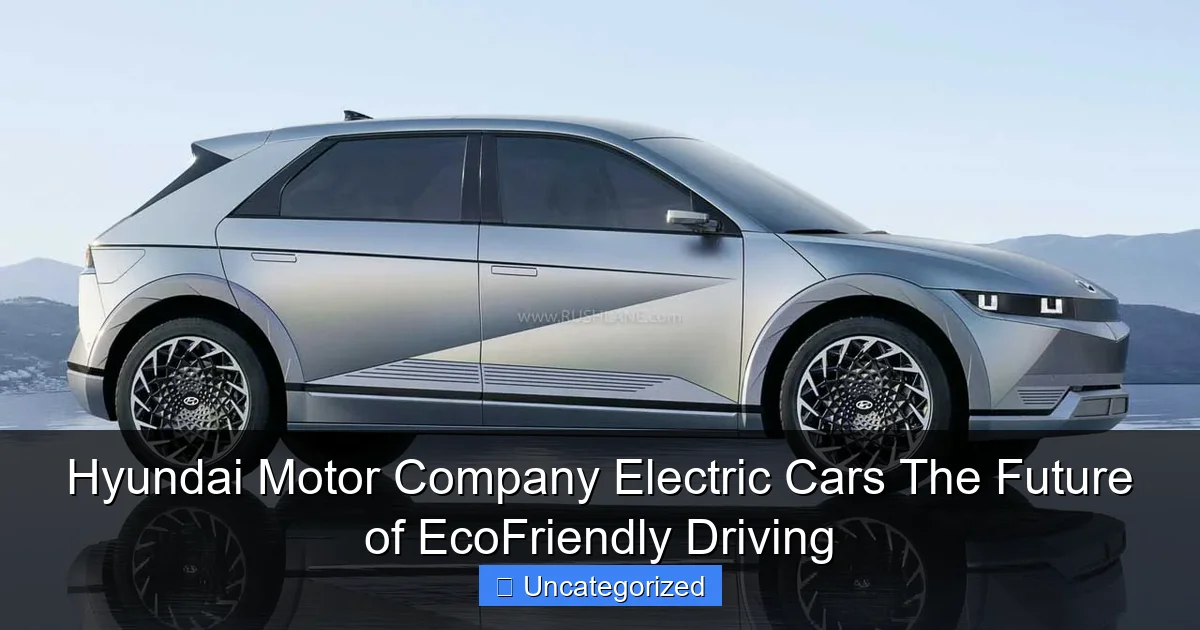
Visual guide about hyundai motor company electric cars
Image source: rushlane.com
By 2020, Hyundai launched the Ioniq sub-brand, dedicated exclusively to electric vehicles. This strategic move signaled a long-term commitment to BEVs, separating them from traditional internal combustion engine (ICE) models. The Ioniq brand now includes the Ioniq 5, Ioniq 6, and the upcoming Ioniq 7, each built on the Electric-Global Modular Platform (E-GMP), a scalable architecture designed specifically for EVs. This platform enables faster development, improved battery efficiency, and enhanced driving dynamics.
Ambitious Electrification Goals
Hyundai’s “Strategy 2025” outlines a clear roadmap: sell 560,000 BEVs annually by 2025 and 1.7 million by 2030. The company plans to invest over $10 billion in EV technology, including battery development, autonomous driving systems, and charging infrastructure. A key component of this strategy is the establishment of local battery production in the U.S., Europe, and South Korea to reduce supply chain risks and comply with regional regulations like the U.S. Inflation Reduction Act (IRA).
Hyundai is also investing in solid-state battery technology, which promises higher energy density, faster charging, and improved safety. By 2025, the automaker aims to introduce its first solid-state battery-powered EV, potentially reducing charging times to under 10 minutes and extending range beyond 600 miles. This technological leap could position Hyundai as a leader in next-gen EV innovation.
Global Market Penetration
Hyundai is aggressively expanding its EV presence in key markets. In the U.S., the Ioniq 5 and Ioniq 6 are eligible for federal tax credits (up to $7,500), making them more competitive against Tesla and Ford. In Europe, Hyundai has become one of the top-selling EV brands, thanks to strong demand for the Kona Electric and Ioniq 5. In India and Southeast Asia, the company is developing affordable, compact EVs tailored to emerging markets, such as the Exter EV, expected to launch in 2024.
Hyundai’s Flagship Electric Models: Features and Performance
Hyundai Ioniq 5: The Game-Changer
The Ioniq 5 is arguably Hyundai’s most iconic electric car. Launched in 2021, it won numerous awards, including the 2022 World Car of the Year. Built on the E-GMP platform, the Ioniq 5 offers:
- Range: Up to 303 miles (EPA-estimated) on a single charge (long-range RWD model).
- Charging: 10-80% charge in just 18 minutes using a 350 kW DC fast charger.
- Powertrain: Available in RWD (225 hp) and AWD (320 hp) configurations.
- Interior: “Living Space” design with a flat floor, sliding center console, and reclining front seats.
- Vehicle-to-Load (V2L): Power external devices (e.g., laptops, camping gear) via a 110V/220V outlet.
One standout feature is the Universal Island console, which slides forward and backward, allowing easy access from both driver and passenger sides. The Ioniq 5 also features a solar roof option (available in some markets), which can add up to 1,000 miles of range per year—ideal for eco-conscious drivers.
Hyundai Ioniq 6: The Streamlined Sedan
Following the success of the Ioniq 5, Hyundai introduced the Ioniq 6 in 2022—a sleek, aerodynamic sedan with a drag coefficient of just 0.21, making it one of the most efficient EVs on the road. Key features include:
- Range: Up to 361 miles (WLTP) for the RWD long-range model.
- Charging: Same ultra-fast charging capability as the Ioniq 5.
- Design: “Parametric Pixel” lighting, a digital side mirror system (in select markets), and a panoramic curved display.
- Performance: The AWD model accelerates 0-60 mph in 4.7 seconds.
- Interior: Sustainable materials like recycled PET fabric and bio-based paints.
The Ioniq 6 is particularly appealing to drivers who want a long-range EV without the bulk of an SUV. Its low-slung profile and efficient aerodynamics make it perfect for highway cruising and urban efficiency alike.
Upcoming: Hyundai Ioniq 7 (2024)
Set to launch in late 2024, the Ioniq 7 is Hyundai’s first three-row electric SUV. Based on the E-GMP platform, it will feature:
- Seating: 7 passengers with flexible interior layouts.
- Range: Estimated 300+ miles.
- Charging: 800V architecture for ultra-fast charging.
- Tech: Advanced Highway Driving Assist (HDA) and over-the-air (OTA) updates.
- Features: V2L, solar roof option, and a large center console with storage and cooling.
The Ioniq 7 aims to compete with the Tesla Model X, Ford Explorer EV, and Kia EV9. Hyundai is targeting families and ride-sharing services, emphasizing spaciousness, safety, and sustainability.
Technology and Innovation in Hyundai Electric Cars
E-GMP Platform: The Backbone of Performance
The Electric-Global Modular Platform (E-GMP) is the cornerstone of Hyundai’s EV success. Unlike retrofitting ICE platforms for electric use, E-GMP was designed from the ground up for EVs, offering:
- 800V Architecture: Enables ultra-fast charging and reduces energy loss.
- Flat Floor: Maximizes interior space and lowers the center of gravity.
- Modularity: Supports various wheelbases, battery sizes, and powertrains.
- Rear-Wheel Drive Default: Provides better handling and efficiency (AWD optional).
The E-GMP platform also supports bidirectional charging (V2L and V2G), allowing EVs to power homes or feed energy back into the grid during peak demand. This feature is especially valuable in areas prone to power outages or with unstable grids.
Advanced Driver Assistance Systems (ADAS)
Hyundai’s EVs come equipped with Hyundai SmartSense, a suite of safety and convenience features, including:
- Highway Driving Assist 2 (HDA2): Combines adaptive cruise control with lane centering for hands-on highway driving.
- Remote Smart Parking Assist: Park or retrieve your car using a smartphone app.
- Blind-Spot View Monitor: Displays camera footage of blind spots in the digital instrument cluster.
- Forward Collision-Avoidance Assist: Detects pedestrians, cyclists, and vehicles.
These systems use a combination of radar, cameras, and ultrasonic sensors to enhance safety and reduce driver fatigue. The Ioniq 5 and Ioniq 6 have received top safety ratings from the IIHS and Euro NCAP.
Sustainability Beyond the Tailpipe
Hyundai’s commitment to eco-friendly driving extends beyond zero-emission vehicles. The company uses:
- Recycled Materials: Interior fabrics from plastic bottles, carpets from fishing nets.
- Bio-Based Paints: Derived from plant oils, reducing VOC emissions.
- Eco-Friendly Manufacturing: Solar panels at Ulsan Plant (South Korea) generate 100 MW of power.
- End-of-Life Recycling: 95% of EV components are recyclable.
Hyundai also partners with battery recycling firms to recover lithium, cobalt, and nickel, reducing reliance on mining and lowering environmental impact.
Charging Infrastructure and Ownership Experience
Home and Public Charging Solutions
One of the biggest concerns for new EV owners is charging. Hyundai addresses this with a comprehensive charging ecosystem:
- Home Charging: Free Level 2 charger installation (up to $600 value) for U.S. buyers through Hyundai Home Energy.
- Public Charging: Partnership with Electrify America—new Hyundai EV buyers get 250 kWh of free charging (approx. 1,000 miles).
- Charging Network Access: Integration with ChargePoint, EVgo, and others via the MyHyundai app.
- 800V Compatibility: Ioniq 5 and Ioniq 6 can use 350 kW DC fast chargers, significantly reducing wait times.
Pro Tip: Use the MyHyundai app to locate nearby chargers, check availability, and monitor charging status remotely. For long trips, plan routes using the built-in navigation system, which factors in charging stops and battery usage.
Ownership Costs and Incentives
Hyundai EVs offer lower total cost of ownership (TCO) than ICE vehicles. Consider:
- Fuel Savings: At $0.15/kWh, a 300-mile charge costs ~$12 vs. $30+ for gasoline.
- Maintenance: Fewer moving parts mean lower service costs (no oil changes, exhaust systems, etc.).
- Tax Credits: U.S. buyers may qualify for up to $7,500 federal tax credit (check eligibility).
- State Incentives: Additional rebates in states like California, New York, and Colorado.
Hyundai also offers a 10-year/100,000-mile battery warranty, providing peace of mind for long-term ownership.
Customer Support and Software Updates
Hyundai provides over-the-air (OTA) updates to improve performance, add features, and fix bugs. Recent updates include:
- Improved regenerative braking settings.
- Enhanced navigation with real-time traffic and charging station data.
- New voice commands and infotainment themes.
Owners can schedule service appointments, access roadside assistance, and monitor vehicle health through the MyHyundai app—all from their smartphone.
Hyundai vs. Competitors: How Do They Stack Up?
Comparing Key Models
Below is a comparison of Hyundai’s flagship EVs with key competitors:
| Model | Range (EPA) | 0-60 mph | Charging (10-80%) | Starting Price (USD) | Key Advantage |
|---|---|---|---|---|---|
| Hyundai Ioniq 5 (RWD) | 303 mi | 7.4 sec | 18 min (350 kW) | $41,450 | Ultra-fast charging, V2L |
| Tesla Model Y (RWD) | 260 mi | 6.6 sec | 25 min (250 kW) | $42,990 | Supercharger network |
| Ford Mustang Mach-E (RWD) | 247 mi | 6.1 sec | 38 min (150 kW) | $42,995 | Sporty handling |
| Hyundai Ioniq 6 (RWD) | 361 mi (WLTP) | 6.2 sec | 18 min (350 kW) | $45,500 | Best-in-class efficiency |
| Kia EV6 (RWD) | 310 mi | 6.2 sec | 18 min (350 kW) | $48,700 | Shared platform with Ioniq 5 |
Hyundai’s EVs stand out for their fast charging, innovative features, and value for money. While Tesla leads in software and charging network size, Hyundai offers better fast-charging speeds and unique features like V2L and solar roofs.
Customer Satisfaction and Reliability
According to J.D. Power’s 2023 U.S. Electric Vehicle Experience (EVX) Ownership Study, Hyundai ranks in the top 5 for customer satisfaction. Owners praise the intuitive infotainment system, comfortable ride, and low maintenance costs. The Ioniq 5 also received a 5-star safety rating from the NHTSA and is a Top Safety Pick+ from the IIHS.
Conclusion: Driving Toward a Sustainable Future
The Hyundai Motor Company electric cars represent more than just a shift in propulsion—they embody a holistic vision for sustainable mobility. From the groundbreaking E-GMP platform to the award-winning Ioniq 5 and Ioniq 6, Hyundai is proving that eco-friendly driving can be exciting, efficient, and accessible. With upcoming models like the Ioniq 7 and investments in solid-state batteries, the future looks even brighter.
For drivers, the benefits are clear: lower operating costs, reduced environmental impact, and access to cutting-edge technology. Whether you’re drawn to the retro-futuristic design of the Ioniq 5, the streamlined efficiency of the Ioniq 6, or the family-friendly practicality of the Ioniq 7, Hyundai offers a compelling EV for every lifestyle.
As governments worldwide push for stricter emissions standards and consumers demand greener choices, Hyundai is well-positioned to lead the charge. By combining innovation, sustainability, and customer-centric design, Hyundai isn’t just building electric cars—it’s building a cleaner, smarter future for all. The road ahead is electric, and Hyundai is driving it forward with confidence and purpose.
Frequently Asked Questions
What makes Hyundai Motor Company electric cars stand out in the EV market?
Hyundai Motor Company electric cars combine cutting-edge technology, long-range capabilities, and bold designs at competitive prices. With innovations like ultra-fast charging and vehicle-to-load (V2L) functionality, Hyundai positions itself as a leader in accessible, high-performance EVs.
How does the driving range of Hyundai electric cars compare to rivals?
Most Hyundai electric cars, like the IONIQ 5 and Kona Electric, offer ranges between 250-300 miles on a single charge, matching or exceeding key competitors. Their E-GMP platform optimizes efficiency without sacrificing performance.
Are Hyundai Motor Company electric cars eligible for tax credits or incentives?
Eligibility depends on local regulations, but many Hyundai EVs qualify for U.S. federal tax credits up to $7,500 and regional incentives. Always verify current incentives in your area before purchasing.
How long does it take to charge a Hyundai electric car?
Using a DC fast charger, Hyundai electric cars can charge from 10% to 80% in just 18-30 minutes. Home charging (Level 2) typically takes 6-10 hours for a full charge, depending on the model.
What warranty coverage do Hyundai Motor Company electric cars offer?
Hyundai provides a 10-year/100,000-mile warranty on EV batteries and powertrains, one of the most comprehensive in the industry. Additional warranties cover corrosion, emissions, and general vehicle components.
Can Hyundai electric cars tow or handle rough terrain?
Yes! Models like the IONIQ 5 support towing up to 2,000 lbs, and Hyundai’s HTRAC all-wheel drive ensures traction on challenging roads. Their robust chassis and adaptive suspension make them capable beyond city driving.