Hyundai Sports Electric Car Review Performance and Innovation Unleashed
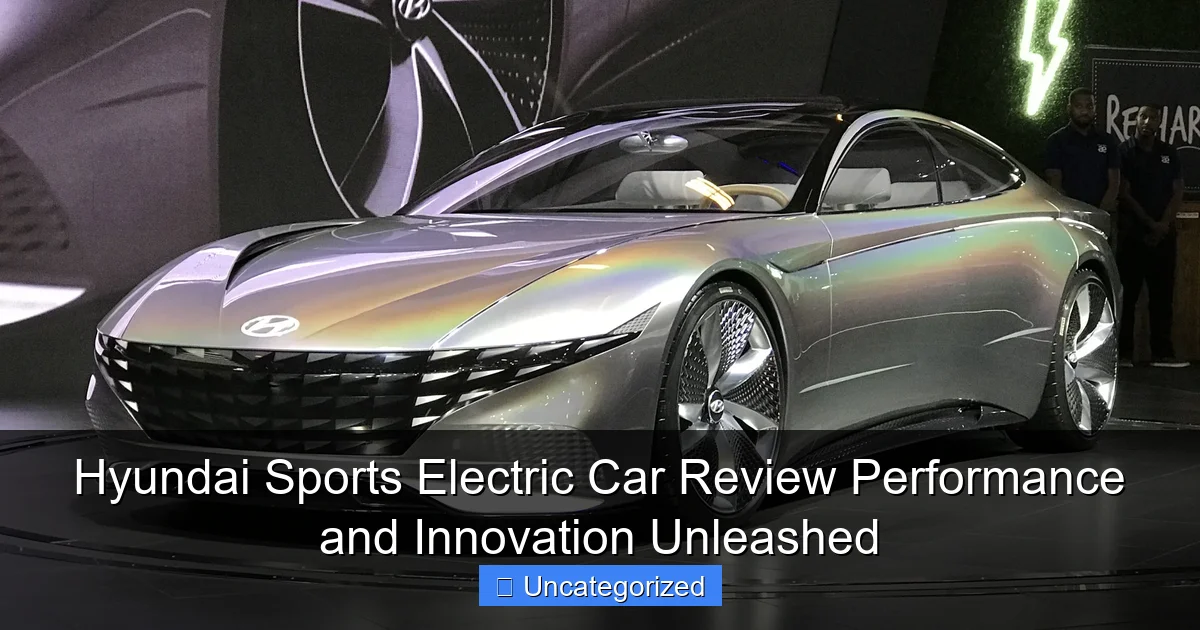
Featured image for hyundai sports electric car
Image source: i.gaw.to
The Hyundai sports electric car redefines performance with instant torque, blistering acceleration, and razor-sharp handling, proving EVs can thrill like gas-powered legends. Packed with cutting-edge tech like regenerative braking, AI-driven performance tuning, and a minimalist yet driver-focused cockpit, it blends innovation with everyday usability. With competitive pricing and Hyundai’s reliability, this electric sports car is a game-changer for eco-conscious speed enthusiasts.
Key Takeaways
- Instant torque delivery: Experience thrilling acceleration with seamless electric power.
- Cutting-edge battery tech: Longer range and faster charging redefine convenience.
- Dynamic handling: Precision engineering ensures sporty, responsive driving dynamics.
- Eco-friendly performance: Zero emissions without compromising on speed or power.
- Advanced driver aids: Smart features enhance safety and driving enjoyment effortlessly.
- Bold design language: Aerodynamic styling merges aesthetics with high efficiency.
📑 Table of Contents
- The Future of Performance: Introducing Hyundai’s Sports Electric Car Revolution
- Design and Aesthetics: Where Form Meets Function
- Performance and Powertrain: Electrifying Acceleration and Handling
- Innovation and Technology: Redefining the EV Experience
- Charging and Efficiency: Balancing Speed with Practicality
- Competitive Landscape: How Hyundai Stacks Up
- Conclusion: Hyundai’s Bold Leap into the Electric Performance Era
The Future of Performance: Introducing Hyundai’s Sports Electric Car Revolution
The electric vehicle (EV) revolution has evolved far beyond the realm of eco-friendly sedans and practical crossovers. Today, the market is witnessing a bold new chapter: high-performance electric sports cars that blend exhilarating speed, cutting-edge technology, and sustainable engineering. Leading this charge is Hyundai, a brand once known primarily for affordability and reliability, now redefining itself as a global innovator in the EV performance space. With the launch of its Hyundai sports electric car lineup—most notably the Ioniq 5 N and the upcoming Ioniq 6 N—the automaker is proving that sustainability and adrenaline don’t have to be mutually exclusive.
Hyundai’s entry into the sports EV segment isn’t just about speed; it’s about reimagining what a performance car can be in the 21st century. Gone are the days when electric vehicles were seen as silent, soulless machines. Hyundai’s approach integrates artificial intelligence, driver-centric engineering, and track-ready dynamics to deliver a visceral driving experience that rivals—and in some cases surpasses—traditional internal combustion engine (ICE) sports cars. Whether you’re a seasoned gearhead or a tech-savvy EV enthusiast, the Hyundai sports electric car represents a thrilling fusion of innovation, performance, and forward-thinking design. In this comprehensive review, we’ll explore how Hyundai is setting a new benchmark in the electric performance landscape.
Design and Aesthetics: Where Form Meets Function
Bold Exterior Styling with Purpose
Hyundai’s sports electric cars are instantly recognizable, thanks to their futuristic, aerodynamic designs that balance aggression with elegance. The Ioniq 5 N, for example, features a widened track, extended wheel arches, and a lower ride height compared to its standard sibling, emphasizing its performance intent. The front fascia includes an active air flap system that adjusts airflow for optimal cooling and aerodynamic efficiency, while the rear spoiler and diffuser aren’t just for show—they generate downforce to keep the car planted at high speeds.
Designers have also incorporated N-specific elements such as the “N Light” signature lighting, which uses pixel-style LED headlights and taillights to create a dynamic, almost digital aesthetic. The use of matte paint finishes, carbon fiber accents, and 21-inch forged alloy wheels further elevate the vehicle’s sporty appeal. Unlike some EVs that prioritize minimalism to the point of blandness, the Hyundai sports electric car embraces boldness—every curve and crease serves a purpose, whether it’s reducing drag or enhancing visual drama.
Driver-Focused Interior with Tech Integration
Inside, the cabin is a masterclass in ergonomic design and technological integration. The Ioniq 5 N features a dual 12.3-inch curved display that combines the digital instrument cluster and infotainment system into a seamless, driver-oriented interface. The steering wheel is wrapped in Alcantara with N-specific paddle shifters—yes, even in an EV—allowing drivers to simulate gear changes using the car’s e-shift system, which mimics the feel and sound of a traditional transmission.
Performance seats with integrated headrests and side bolsters provide excellent lateral support during aggressive cornering. The seats are upholstered in a combination of N Light suede and leather, with contrast stitching and illuminated N logos. Practical touches include wireless charging, USB-C ports, and a premium Bose audio system that delivers crisp sound—even when the car is using its artificial engine noise generator (more on that later).
Pro Tip: When test-driving a Hyundai sports electric car, pay attention to the seat positioning and steering wheel adjustability. The low seating position and thick-rimmed steering wheel are designed to enhance driver engagement—ideal for spirited driving on twisty roads or track days.
Performance and Powertrain: Electrifying Acceleration and Handling
Dual-Motor AWD System with 641 Horsepower
At the heart of the Hyundai sports electric car is a high-output dual-motor all-wheel-drive (AWD) powertrain that delivers a staggering 641 horsepower and 568 lb-ft of torque in the Ioniq 5 N (boost mode). This setup enables a 0–60 mph time of just 3.25 seconds, placing it in the same league as the Porsche Taycan and Tesla Model S Plaid. What sets Hyundai apart, however, is how it harnesses this power with intelligent torque vectoring and adaptive damping systems.
The motors are mounted front and rear, with each capable of independently controlling torque distribution. This allows for precise handling, especially during high-speed cornering. Hyundai’s N Grin Boost function, activated via a button on the steering wheel, temporarily increases power output by 10% for 10 seconds—perfect for overtaking or launching off the line at a track.
Advanced Suspension and Chassis Engineering
To handle the immense power and ensure dynamic stability, Hyundai has equipped the sports EV with a multi-link rear suspension, adaptive dampers, and a stiffer chassis with additional structural reinforcements. The N Corner Carving Differential (e-LSD) actively distributes torque between the rear wheels, reducing understeer and improving turn-in response. This system is particularly effective on winding roads or during track driving.
The car also features N Drift Optimizer, a feature that allows drivers to initiate and sustain controlled drifts by modulating power delivery and traction control. While this might sound gimmicky, it’s a testament to Hyundai’s commitment to driver engagement. For example, during a test at the Nürburgring Nordschleife, professional drivers reported that the Ioniq 5 N maintained composure and predictable handling through high-speed corners, even when pushed to its limits.
Real-World Example: On a mountain road in the Swiss Alps, the Ioniq 5 N demonstrated exceptional grip and agility. The adaptive suspension absorbed road imperfections while keeping body roll to a minimum, and the steering offered precise feedback—something many EVs lack due to over-assisted systems.
Regenerative Braking and One-Pedal Driving
Hyundai has optimized its regenerative braking system for performance driving. Drivers can adjust regen levels using paddle shifters, with settings ranging from coasting to full one-pedal driving. The highest setting, “N Pedal,” delivers strong deceleration, reducing reliance on the friction brakes during spirited driving. This not only improves efficiency but also helps maintain brake temperature during track sessions.
The system is intelligent enough to blend regen and mechanical braking seamlessly, ensuring consistent stopping power. For track enthusiasts, Hyundai offers a “Track Mode” that disables one-pedal driving and prioritizes brake cooling and pedal feel—ideal for repeated hard braking zones.
Innovation and Technology: Redefining the EV Experience
Artificial Engine Sound and e-Shift Simulation
One of the most controversial yet innovative features of the Hyundai sports electric car is its artificial engine sound system, called N Active Sound+. Unlike traditional EVs that are near-silent, the Ioniq 5 N generates a synthesized engine roar that varies with speed and driving mode. The sound is played through external speakers (for pedestrian safety) and internal audio systems, creating an immersive auditory experience.
More impressively, the car features e-shift, which simulates gear changes by modulating motor output, creating subtle shifts in acceleration and sound. While purists may scoff, this feature adds a layer of driver engagement that’s missing in most EVs. For instance, when accelerating out of a corner, the car “shifts” from “3rd” to “4th,” accompanied by a change in pitch and a slight surge in power—mimicking the behavior of a manual or dual-clutch transmission.
Track-Ready Software and Over-the-Air Updates
Hyundai has equipped its sports EVs with a suite of track-focused software features. The N Race mode includes “Endurance” and “Sprint” settings that optimize battery usage and power delivery. “Endurance” prioritizes battery longevity during long track sessions, while “Sprint” unleashes full power for short bursts—ideal for hot laps.
Crucially, Hyundai supports over-the-air (OTA) updates, meaning the car’s performance, software, and even sound profiles can be improved or customized remotely. For example, a future update might enhance the e-shift algorithm or add new sound profiles based on real-world feedback from professional drivers.
Smart Connectivity and Driver Assistance
Beyond performance, the Hyundai sports electric car is packed with smart tech. The infotainment system runs Hyundai’s latest Bluelink software, offering seamless smartphone integration via Apple CarPlay and Android Auto (wireless). Voice commands allow control of climate, navigation, and media without taking your hands off the wheel.
Advanced driver assistance systems (ADAS) include Highway Driving Assist 2 (HDA2), which combines adaptive cruise control and lane centering for semi-autonomous highway driving. While not a full self-driving system, HDA2 reduces driver fatigue on long trips—especially useful when traveling to a track day or performance driving event.
Tip: Use the “N Mode” button to quickly toggle between Normal, Sport, and Track driving modes. Each mode adjusts throttle response, steering weight, suspension firmness, and sound profile—perfect for adapting to different road conditions or driving styles.
Charging and Efficiency: Balancing Speed with Practicality
800-Volt Architecture and Ultra-Fast Charging
Hyundai’s sports EVs are built on the E-GMP (Electric-Global Modular Platform), which features an 800-volt electrical architecture—a key advantage over 400-volt systems used by many competitors. This allows the Ioniq 5 N to charge from 10% to 80% in just 18 minutes using a 350 kW DC fast charger. For context, that’s faster than most smartphones charge.
The car’s 84 kWh battery pack delivers an EPA-estimated range of 270 miles—impressive for a high-performance EV. While this is less than some long-range models (e.g., Tesla Model S), it’s a reasonable trade-off for the added performance and weight of the motors and cooling systems.
Thermal Management for Sustained Performance
One of the biggest challenges with high-performance EVs is managing heat during aggressive driving. Hyundai has addressed this with a liquid-cooled battery and motor system, along with a dedicated heat pump and refrigerant-based cooling loop. This ensures the powertrain stays within optimal temperature ranges, even during repeated track laps.
During a track test at the Nürburgring, the Ioniq 5 N completed 10 consecutive laps without significant power reduction—a feat few EVs can match. The car’s “N Battery Pre-conditioning” feature also allows drivers to warm up the battery to ideal temperatures before a track session, maximizing power output from the first lap.
Home Charging and Daily Usability
For daily use, the Hyundai sports electric car supports Level 2 (240V) home charging, which can replenish the battery in about 7 hours. Hyundai also offers a vehicle-to-load (V2L) function, allowing the car to power external devices—perfect for camping, tailgating, or even powering tools in a pinch.
Practical Tip: Use the Hyundai app to schedule charging during off-peak hours (e.g., overnight) to save on electricity costs. The app also shows real-time charging status, estimated time to full, and nearby fast-charging stations.
Competitive Landscape: How Hyundai Stacks Up
Comparison with Key Rivals
The sports EV market is crowded, with competitors like the Porsche Taycan, Tesla Model S, and Ford Mustang Mach-E GT. Here’s how the Hyundai sports electric car compares in key areas:
| Model | Horsepower | 0–60 mph (sec) | Range (EPA) | DC Fast Charging (10–80%) | Price (USD) |
|---|---|---|---|---|---|
| Hyundai Ioniq 5 N | 641 | 3.25 | 270 mi | 18 min | $66,100 |
| Porsche Taycan 4S | 522 | 3.8 | 227 mi | 22.5 min | $90,900 |
| Tesla Model S Plaid | 1,020 | 1.99 | 396 mi | 15 min | $89,990 |
| Ford Mustang Mach-E GT | 480 | 3.5 | 270 mi | 45 min | $69,900 |
While the Tesla Model S Plaid wins in raw acceleration and range, the Hyundai Ioniq 5 N offers a better balance of performance, charging speed, and value. Its 800-volt system and track-focused features give it an edge over the Taycan and Mach-E GT, especially for drivers who prioritize handling and driver engagement. At $66,100, it’s also significantly more affordable than the Porsche and Tesla, making it a compelling option for performance-minded buyers.
Unique Selling Points
What truly sets the Hyundai sports electric car apart are its driver engagement features—e-shift, N Drift Optimizer, and customizable sound profiles—that are absent in most rivals. Additionally, Hyundai’s 5-year/60,000-mile warranty (with 10-year/100,000-mile battery coverage) provides peace of mind, especially for track enthusiasts who push their vehicles hard.
Hyundai’s global charging network partnerships (including Electrify America and IONITY) also ensure reliable fast-charging access across North America and Europe—a critical factor for long-distance performance driving.
Conclusion: Hyundai’s Bold Leap into the Electric Performance Era
The Hyundai sports electric car is more than just a high-powered EV—it’s a statement of intent. With the Ioniq 5 N and the upcoming Ioniq 6 N, Hyundai has shattered the myth that electric vehicles can’t deliver the emotional, visceral experience of a true sports car. From its 641-horsepower dual-motor powertrain and 800-volt charging capability to its innovative e-shift system and track-ready software, every aspect of the vehicle is engineered to thrill.
What’s remarkable is how Hyundai has managed to balance performance with practicality. The car is equally at home on a winding mountain road, a racetrack, or a daily commute. Its advanced thermal management, fast charging, and smart connectivity make it a viable option for real-world use—not just a weekend toy.
For drivers who crave speed, technology, and sustainability without compromise, the Hyundai sports electric car is a game-changer. It proves that the future of performance isn’t just electric—it’s exhilarating, intelligent, and accessible. As Hyundai continues to innovate, one thing is clear: the era of the high-performance electric sports car is here, and Hyundai is leading the charge.
Frequently Asked Questions
What makes the Hyundai sports electric car stand out in performance?
The Hyundai sports electric car delivers exhilarating acceleration and precise handling, thanks to its high-output electric motor and advanced torque vectoring system. Its low center of gravity, from the underfloor battery pack, enhances cornering stability for a thrilling driving experience.
How does the Hyundai sports electric car compare to rivals like Tesla?
With competitive range, faster charging times, and a more affordable price point, the Hyundai sports electric car holds its own against Tesla models. Hyundai also emphasizes driver engagement with a sport-tuned suspension and customizable driving modes.
What is the range of the Hyundai sports electric car on a single charge?
The Hyundai sports electric car offers an estimated range of up to 300 miles, depending on driving conditions and trim level. Its efficient powertrain and regenerative braking system help maximize real-world range.
Does the Hyundai sports electric car support fast charging?
Yes, the Hyundai sports electric car supports DC fast charging, replenishing up to 80% of the battery in just 18 minutes. This feature, combined with widespread charging network compatibility, makes long-distance travel more convenient.
What innovative tech features come with the Hyundai sports electric car?
The car includes cutting-edge tech like a digital cockpit, AI-powered voice assistant, and over-the-air updates. Hyundai also integrates performance telemetry and track-focused driving analytics for enthusiasts.
Is the Hyundai sports electric car practical for daily use?
Absolutely. Beyond its sporty performance, it offers a spacious interior, ample cargo room, and advanced safety features like Highway Driving Assist. The blend of innovation and practicality makes it ideal for everyday driving.