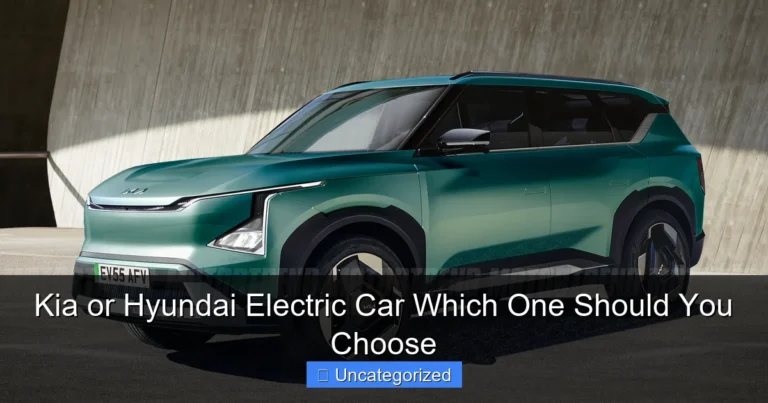
Hyundai Upcoming Electric Cars What to Expect in 2024 and Beyond

Featured image for hyundai upcoming electric cars
Image source: img.indianautosblog.com
Hyundai is electrifying the future with an ambitious lineup of upcoming electric cars set to launch in 2024 and beyond, featuring cutting-edge technology, extended ranges, and bold new designs. From the sleek IONIQ 6 to the rugged IONIQ 7 SUV, Hyundai’s EV expansion emphasizes performance, sustainability, and smart innovation. With advanced battery systems, ultra-fast charging, and AI-driven features, these models aim to redefine the electric driving experience and solidify Hyundai’s leadership in the EV market.
Key Takeaways
- Hyundai Ioniq 7 debuts: A spacious 3-row EV with 300+ mile range.
- Affordable Ioniq 3 coming: Compact, budget-friendly EV for mass market adoption.
- 800V ultra-fast charging: Future models cut charging time to under 20 minutes.
- Solid-state battery testing: Next-gen tech promises longer range by 2026.
- Expanded N performance line: High-performance EVs with 500+ horsepower incoming.
- Vehicle-to-load (V2L) standard: Use your Hyundai EV as a mobile power source.
📑 Table of Contents
- The Electric Revolution: Hyundai’s Bold Charge into the Future
- Hyundai’s Electric Vehicle Strategy: More Than Just New Models
- 2024-2025: The Most Anticipated Upcoming Models
- Breakthrough Technologies: Beyond the Battery
- Design Evolution: Form Meets Function
- Competitive Landscape: How Hyundai Stands Out
- The Road Ahead: What This Means for Consumers
The Electric Revolution: Hyundai’s Bold Charge into the Future
The automotive landscape is undergoing a seismic shift, and Hyundai is positioning itself at the forefront of the electric vehicle (EV) revolution. With global governments pushing for carbon neutrality and consumers increasingly prioritizing sustainability, Hyundai’s upcoming electric cars represent more than just new models – they’re a strategic pivot toward a cleaner, smarter transportation future. The South Korean automaker, once known primarily for affordable sedans, has transformed into an innovation powerhouse, investing over $10 billion in EV development through 2030. This commitment is already bearing fruit, with the Ioniq 5 and Ioniq 6 earning critical acclaim, but the most exciting chapters are yet to be written.
As we approach 2024 and beyond, Hyundai’s product pipeline reveals an ambitious roadmap that blends cutting-edge technology, radical design, and practical innovation. From affordable urban runabouts to high-performance flagships, the brand’s upcoming electric cars promise to address every segment of the market while pushing the boundaries of what’s possible. This comprehensive guide explores the most anticipated models, their technological breakthroughs, and how Hyundai’s strategy compares to competitors. Whether you’re an EV enthusiast, a potential buyer, or simply curious about the future of mobility, Hyundai’s electric evolution offers fascinating insights into the next era of transportation.
Hyundai’s Electric Vehicle Strategy: More Than Just New Models
The Three-Pillar Approach: Innovation, Affordability, and Sustainability
Hyundai’s EV strategy rests on three interconnected pillars that differentiate it from competitors. First, the company is investing heavily in innovation, particularly in battery technology, autonomous driving systems, and vehicle-to-grid (V2G) capabilities. Their E-GMP (Electric Global Modular Platform) has proven versatile, underpinning everything from compact crossovers to luxury sedans. Second, Hyundai maintains its commitment to affordability, leveraging economies of scale to offer compelling value propositions. The Ioniq 5, for instance, delivers premium features at a price point below many European rivals. Third, the brand emphasizes sustainability throughout the vehicle lifecycle, from recycled interior materials to solar roof options that can add up to 2,000 miles of range annually in ideal conditions.

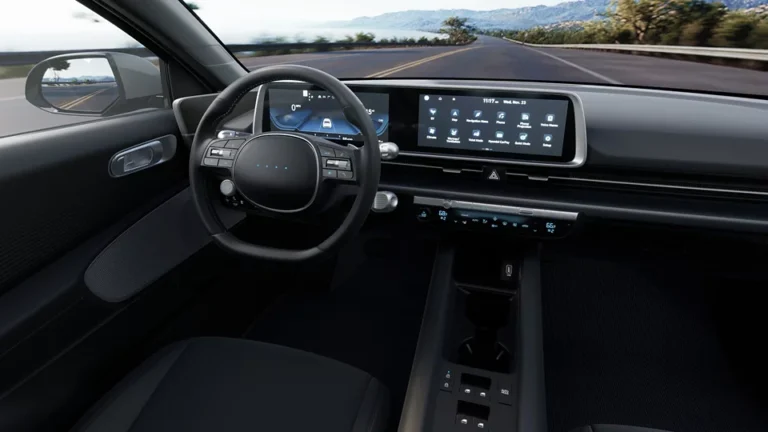
Visual guide about hyundai upcoming electric cars
Image source: gaadiwaadi.com
What sets Hyundai apart is its holistic approach to electrification. While some manufacturers treat EVs as a compliance exercise, Hyundai has embedded electrification into its core brand identity. “We’re not just building electric versions of our gas cars,” explains SangYup Lee, Hyundai’s Executive Vice President of Design. “We’re reimagining the entire vehicle architecture to take advantage of what electrification enables.” This philosophy manifests in features like the Ioniq 5’s solar roof and vehicle-to-load (V2L) functionality, which allows the car to power external devices.
Global Market Positioning: Targeting Every Segment
Hyundai’s upcoming electric cars will cover an unprecedented range of segments. From the affordable (projected $25,000-$30,000 compact EVs) to the luxury (Genesis-branded flagships exceeding $100,000), the strategy is clear: leave no market opportunity unaddressed. This approach is particularly evident in their regional strategies:
- North America: Focus on large SUVs and trucks, including the 7-seater Ioniq 7
- Europe: Compact crossovers and city cars with ultra-fast charging
- Asia: Micro EVs for dense urban environments and emerging markets
- Global: Performance variants (N-branded EVs) to attract enthusiasts
A critical advantage is Hyundai’s manufacturing flexibility. Their Alabama and Czech plants can produce EVs alongside ICE vehicles, allowing rapid scaling without massive new investments. “We can adjust production based on demand signals in real-time,” notes production chief Brian Latouf. “This agility is crucial as EV adoption rates vary by region.”
2024-2025: The Most Anticipated Upcoming Models
Ioniq 7: The Electric Family Hauler
Set to debut in late 2024, the Ioniq 7 represents Hyundai’s first foray into the large electric SUV segment. Based on the same E-GMP platform as the Ioniq 5 but stretched to 196 inches (5,000mm), this three-row SUV promises seating for seven and up to 350 miles of range. Key differentiators include:
- Swiveling second-row seats that face rear passengers when parked
- A “lounge mode” that reclines all seats for rest during charging stops
- Advanced noise-canceling technology using 42 microphones and speakers
- Projected 0-60 mph in 5.2 seconds (Performance model)
- 800V ultra-fast charging (10-80% in 18 minutes)
For families considering the transition to electric, the Ioniq 7’s 150 cubic feet of interior space (larger than the Kia EV9) and 7,500-pound towing capacity make it a compelling alternative to gas-powered SUVs. Hyundai is also testing a solar roof option that could add 1,500 miles of annual range – particularly valuable for long-distance travelers.
Hyundai N Vision 74: The High-Performance EV
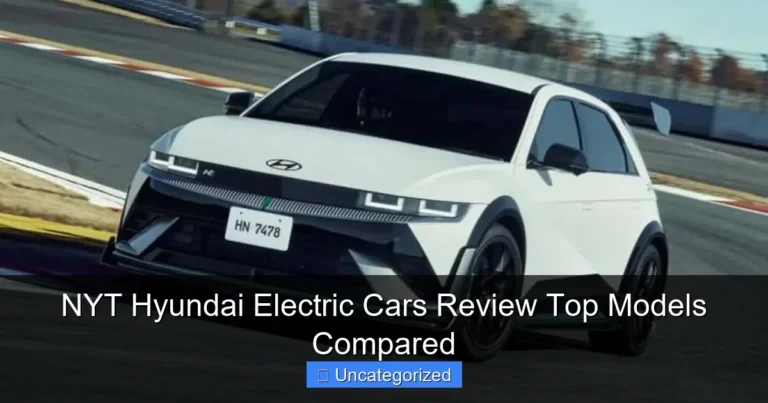
While the Ioniq 7 caters to families, the N Vision 74 (projected 2025) targets driving enthusiasts. This hydrogen fuel cell/electric hybrid supercar concept (retaining the 1974 Pony Coupe design) is rumored to produce 670 horsepower through a dual-motor setup. Unique features include:
- Hydrogen fuel cell for extended range (projected 373 miles)
- Rear-wheel steering for improved handling
- Active aerodynamics with deployable rear wing
- Track-focused N Grin Shift mode (boosts power temporarily)
- Carbon fiber monocoque construction
The N Vision 74 isn’t just a halo car – it’s a technology demonstrator. Hyundai plans to use its hydrogen system in future commercial vehicles, while the high-performance electric drivetrain will inform N-brand EVs. “This is how we’ll redefine the Hyundai N experience for the electric age,” says Albert Biermann, Hyundai’s former head of R&D.
Compact EV: The $25,000 Urban Warrior
Addressing a critical gap in the EV market, Hyundai is developing an affordable compact EV for 2025. Expected to share components with the Kia EV3, this model will target first-time EV buyers with:
- 150-mile real-world range (ideal for city use)
- Ultra-fast charging (10-80% in 20 minutes)
- Retractable roof option for open-air driving
- Advanced driver assistance as standard
- Projected starting price of $25,000-$28,000
For urban dwellers, this car’s 160-inch length (smaller than the Ioniq 5) and 180-degree turning radius make it ideal for tight city parking. Hyundai is also exploring car-sharing integration, allowing owners to monetize their vehicle when not in use through the Hyundai Mobility app.
Breakthrough Technologies: Beyond the Battery
Next-Generation Battery Systems
While most automakers focus on increasing battery capacity, Hyundai is pursuing a multi-pronged approach to energy storage. Their 2024-2026 technology roadmap includes:
- Sulfur batteries: 2x energy density of lithium-ion, 70% cheaper materials (projected 2026)
- Solid-state batteries: 500-mile range, 12-minute charging (projected 2027)
- Modular battery packs: Swappable units for commercial fleets
- Second-life applications: Repurposing used EV batteries for grid storage
Perhaps most innovative is Hyundai’s work on battery swapping for commercial vehicles. Their 2025 pilot program in Seoul will test a network of automated swap stations where delivery vans can replace depleted batteries in under 3 minutes. “This could revolutionize urban logistics,” explains battery chief Dr. Young-kyun Lee. “Imagine a UPS truck that never needs to plug in.”
Autonomous Driving: From Highway to Urban
Hyundai’s autonomous strategy focuses on real-world usability rather than headline-grabbing demos. Their Highway Driving Pilot (HDP) system, launching in 2024, offers:
- Hands-free driving on 100,000+ miles of mapped highways
- Automatic lane changes and passing
- Emergency collision avoidance
- Seamless handoff to driver when exiting highways
For urban environments, Hyundai’s Urban Driving Pilot (UDP) will debut in 2025 with:
- 360-degree perception using 12 cameras, 5 lidars, and 8 radars
- Intersection navigation without driver input
- Parking lot automation (including perpendicular parking)
- Pedestrian and cyclist detection at crosswalks
Unlike some competitors, Hyundai is developing these systems in-house through its Motional joint venture. “This allows us to optimize the software for our specific hardware,” says autonomy lead Dr. Woongjun Jang. “It’s not about being first – it’s about being best.”
Vehicle-to-Everything (V2X) Integration
Hyundai’s EVs will increasingly serve as mobile energy hubs. Beyond the Ioniq 5’s vehicle-to-load (V2L) capability, future models will offer:
- V2H (Home): Power entire homes during outages
- V2G (Grid): Sell excess energy back to utilities during peak demand
- V2V (Vehicle): Charge other EVs in emergencies
- V2X (Everything): Power construction sites, outdoor events, etc.
The 2024 Ioniq 7 will feature a 7.2kW V2L system – enough to run a small home for 24 hours. Hyundai is also testing a “smart charging” system that automatically schedules charging when electricity rates are lowest, potentially saving owners $500+ annually.
Design Evolution: Form Meets Function
Parametric Dynamics: The New Hyundai Language
Hyundai’s “Parametric Dynamics” design language, first seen on the Ioniq 5, will evolve in upcoming models. Key elements include:
- Pixel lighting: Signature front/rear LED patterns that communicate with pedestrians
- Parametric surfaces: Geometric body panels that manage airflow
- Living space interiors: Lounge-like cabins with movable furniture
- Digital grilles: Programmable surfaces that display information
The 2025 Ioniq 7 will debut a new “Digital Parametric Pixel” grille that can display charging status, greet owners with custom animations, and even show weather information. “The car becomes an extension of your digital life,” explains design chief SangYup Lee. “It’s not just about looking good – it’s about meaningful interaction.”
Sustainable Materials: Luxury Without Compromise
Hyundai is redefining sustainable luxury through innovative materials:
- Bio-based leather: Made from pineapple leaves and cactus
- Recycled plastics: 100% ocean-bound plastics in interior trim
- Algae foam: Used in seat cushions (reduces CO2 by 30%)
- Wool alternatives: From recycled PET bottles
The Ioniq 7 will feature a “Green Zone” interior package using these materials, with a projected 40% reduction in lifecycle emissions compared to conventional luxury SUVs. Hyundai is even developing a mushroom-based headliner that naturally absorbs sound while being fully compostable.
Ergonomics for the Electric Age
Without an engine up front, Hyundai is reimagining interior layouts. The Ioniq 7’s “Universal Island” console can move 12 inches fore/aft, creating flexible space for families. Other innovations include:
- Sliding rear seats that create a walk-through cabin
- Retractable steering wheel for lounge mode
- Biometric entry using fingerprint and facial recognition
- Holographic displays that project information into the driver’s line of sight
For commercial fleets, Hyundai is testing a “modular interior” system where seats and cargo areas can be reconfigured in under 30 minutes for different use cases.
Competitive Landscape: How Hyundai Stands Out
Price-to-Performance Ratio
Hyundai’s value proposition becomes clear when comparing key competitors:
| Model | Starting Price | Range (EPA) | 0-60 mph | Charging Speed |
|---|---|---|---|---|
| Hyundai Ioniq 5 SE | $41,450 | 303 miles | 5.2 sec | 10-80% in 18 min |
| Ford Mustang Mach-E GT | $59,995 | 270 miles | 3.8 sec | 10-80% in 38 min |
| Chevrolet Blazer EV | $56,715 | 320 miles | 4.5 sec | 10-80% in 25 min |
| Hyundai Ioniq 7 (Projected) | $55,000 | 350 miles | 5.2 sec | 10-80% in 18 min |
| Kia EV9 | $54,900 | 304 miles | 5.0 sec | 10-80% in 20 min |
While not the cheapest option, Hyundai delivers premium features like ultra-fast charging and solar roofs at prices 15-20% below European competitors. Their 10-year/100,000-mile battery warranty also provides long-term peace of mind.
Technology Leadership
Hyundai’s tech advantage stems from three key areas:
- Charging speed: 800V architecture enables faster charging than most rivals (except Porsche)
- Energy density: Their new batteries offer 25% more range per kWh than 2022 models
- Software integration: Over-the-air updates improve vehicle performance after purchase
The Ioniq 7’s “Digital Key 2.0” system, for example, will allow owners to share vehicle access through their phone – no physical key needed. Hyundai’s partnership with ChargePoint also gives owners access to 35,000+ charging stations across North America.
Global Manufacturing Advantage
With EV production facilities in the US, Europe, China, and South Korea, Hyundai can adapt quickly to regional market shifts. Their Alabama plant, for instance, can produce 300,000 EVs annually – enough to meet growing US demand without import tariffs. Meanwhile, their Czech facility serves European markets with locally produced Ioniq 5 and 6 models, avoiding Brexit-related trade complications.
The Road Ahead: What This Means for Consumers
Hyundai’s upcoming electric cars represent more than just new models – they’re a fundamental rethinking of what a car can be. For consumers, this translates to tangible benefits:
- Lower ownership costs: Projected 40% savings on energy vs. gas vehicles
- Enhanced convenience: Ultra-fast charging, V2L capability, and smart features
- Greater sustainability: Reduced emissions from manufacturing to daily use
- Future-proof tech: Over-the-air updates keep vehicles current
The key for buyers is to align their needs with Hyundai’s diverse lineup. Urban commuters should watch for the compact EV’s 2025 launch, while families will appreciate the Ioniq 7’s spaciousness and safety tech. Performance enthusiasts might wait for the N Vision 74’s production version, and budget-conscious buyers can look for incentives that could bring the Ioniq 5 below $30,000 after tax credits.
What’s clear is that Hyundai isn’t following the EV revolution – they’re leading it. With a balanced approach that combines innovation with accessibility, their upcoming electric cars have the potential to accelerate mainstream adoption. As battery technology improves and charging infrastructure expands, Hyundai’s commitment to “Progress for Humanity” (their official brand vision) becomes increasingly achievable. The road to an electric future is being paved with Hyundai’s bold investments, and the next few years promise to be the most exciting yet for EV enthusiasts worldwide.
Frequently Asked Questions
What are the most anticipated Hyundai upcoming electric cars in 2024?
Hyundai is set to launch the IONIQ 7, a large 3-row electric SUV, and refreshed versions of the IONIQ 5 and Kona Electric in 2024. These models promise longer ranges, faster charging, and advanced tech features.
When will the Hyundai IONIQ 7 be released?
The Hyundai IONIQ 7 is expected to debut in late 2024, with production starting in early 2025. This flagship 3-row SUV will offer over 300 miles of range and ultra-fast 800V charging.
How much will Hyundai’s upcoming electric cars cost?
While official pricing isn’t confirmed, the IONIQ 7 is expected to start around $55,000, with the refreshed IONIQ 5 likely maintaining its current $40,000-$50,000 range. Hyundai aims to keep pricing competitive as part of its EV market expansion.
What new technology will feature in Hyundai’s 2024 electric vehicles?
Upcoming Hyundai EVs will introduce next-gen battery tech, vehicle-to-load (V2L) capabilities, and an upgraded 12-inch infotainment system with over-the-air updates. The IONIQ 7 may also debut Level 3 autonomous driving features.
Will Hyundai expand its EV lineup beyond cars and SUVs?
Yes, Hyundai plans to introduce electric vans and light commercial vehicles under its “HTWO” brand by 2025. The company has also hinted at a future electric pickup truck to compete in the growing EV truck segment.
How does Hyundai’s EV charging network support its upcoming electric cars?
Hyundai is partnering with Electrify America to provide 3 years of complimentary 30-minute charging sessions for new EV buyers. The upcoming EVs will also feature Plug & Charge compatibility for seamless charging at over 8,000 stations nationwide.