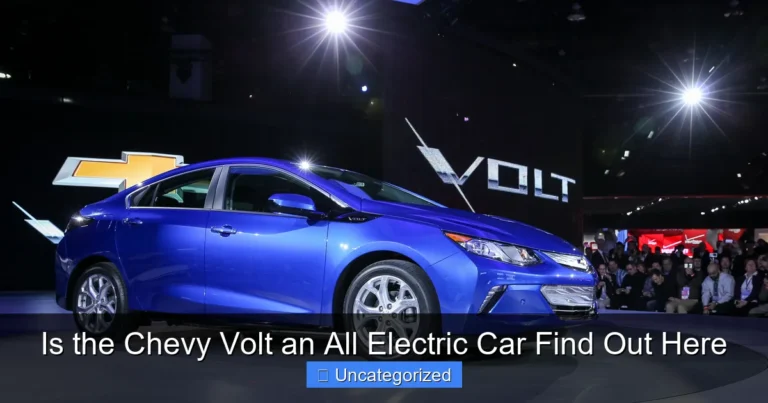
Is a Chevy Volt All Electric Car Find Out the Truth Here
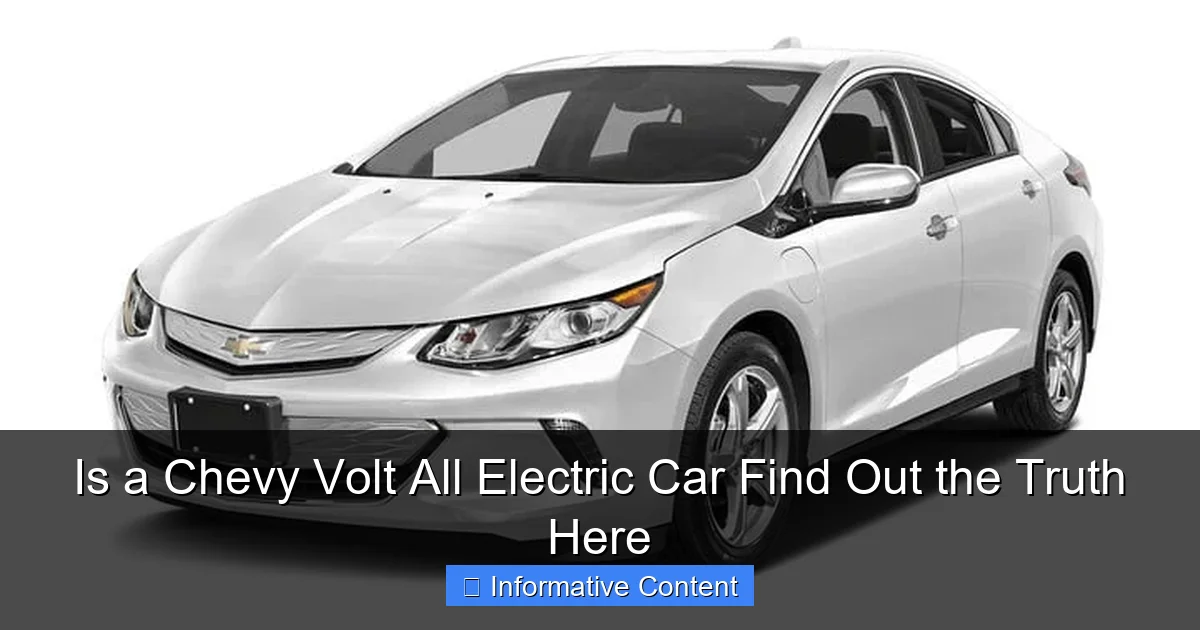
Featured image for is a chevy volt all electric car
Image source: chevroletenginenews.com
The Chevy Volt is not a fully electric car—it’s a plug-in hybrid with a gasoline engine that kicks in when the battery depletes. While it offers up to 53 miles of all-electric range, it relies on gas for longer trips, making it a versatile but not 100% electric option.
Key Takeaways
- Not fully electric: Chevy Volt uses a gas engine as backup.
- EV mode first: Starts in electric mode, then switches to hybrid.
- 35-53 mile EV range: Depends on model year and driving conditions.
- Regen braking helps: Recaptures energy to extend electric range.
- Charge daily for best results: Maximizes electric-only driving benefits.
- Gas engine kicks in: Automatically engages when battery runs low.
📑 Table of Contents
- Is a Chevy Volt All Electric Car? Let’s Set the Record Straight
- Understanding the Chevy Volt: A Plug-In Hybrid, Not a Full EV
- How Far Can a Chevy Volt Go on Electricity Alone?
- The Gas Engine: What Happens When the Battery Runs Out?
- Chevy Volt vs. All-Electric Cars: Key Differences
- Who Should Buy a Chevy Volt (And Who Shouldn’t)?
- Final Verdict: Is the Chevy Volt Right for You?
Is a Chevy Volt All Electric Car? Let’s Set the Record Straight
Picture this: You’re at a backyard BBQ, and the conversation turns to electric cars. Your neighbor says, “I’ve been thinking about getting a Chevy Volt—it’s fully electric, right?” You pause. You’ve been researching EVs, and something feels off. The Chevy Volt *seems* like an electric car, but is it really?
The short answer? No, the Chevy Volt is not a fully electric car—but it’s not a regular gas car either. It’s something in between. And that “something” has made it a fascinating (and sometimes confusing) option for drivers who want the perks of electric driving without the anxiety of running out of juice. If you’re scratching your head wondering whether the Volt fits your lifestyle, you’re in the right place. Let’s break down the truth about the Chevy Volt, its electric capabilities, and why it’s been a game-changer for many drivers—even if it doesn’t fit the “all-electric” label.
Understanding the Chevy Volt: A Plug-In Hybrid, Not a Full EV
What Makes the Volt a Plug-In Hybrid Electric Vehicle (PHEV)?
The Chevy Volt is a plug-in hybrid electric vehicle (PHEV). This means it has both an electric motor powered by a battery and a gasoline engine. Unlike a traditional hybrid (like the Toyota Prius), the Volt’s primary power source is the battery. You plug it in to charge, just like a Tesla or Nissan Leaf. But here’s the twist: when the battery runs low, the gas engine kicks in—not to power the wheels directly, but to generate electricity for the motor. Think of it as a backup generator on wheels.
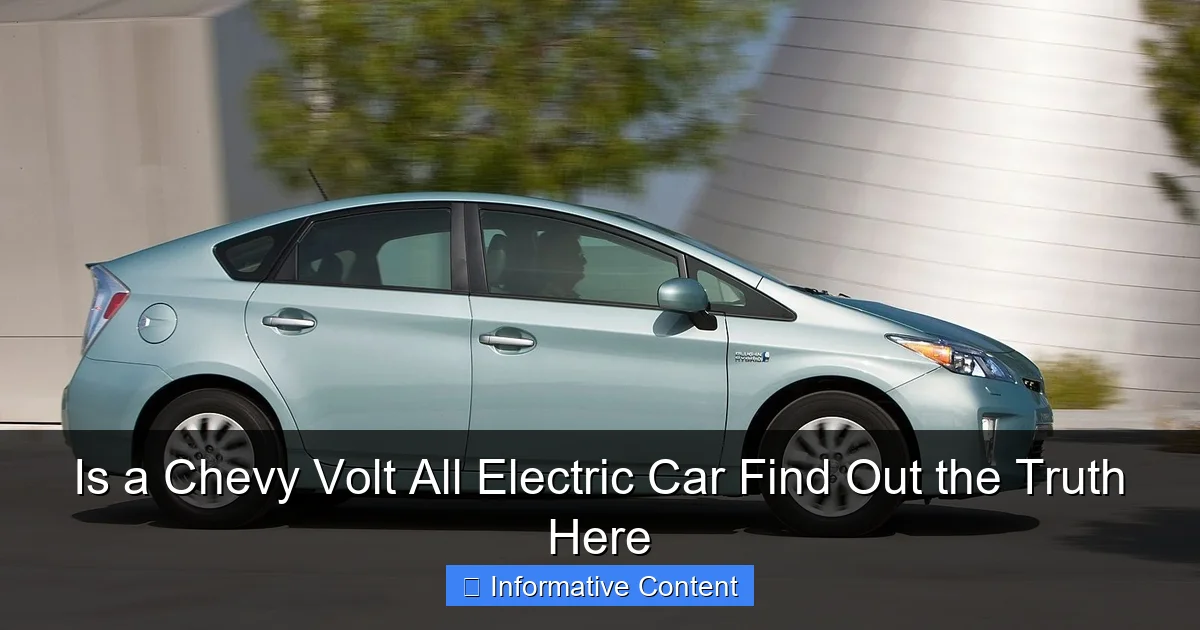
Visual guide about is a chevy volt all electric car
Image source: cimg2.ibsrv.net
This setup gives the Volt the best of both worlds: the quiet, smooth ride of an electric car for daily commutes, with the long-range freedom of a gas car when you’re road-tripping. For example, if you drive 35 miles a day (the average in the U.S.), you might never use a drop of gas during the week. But if you suddenly need to drive 300 miles on a weekend getaway, the gas engine eliminates “range anxiety” entirely.
How the Volt Differs from a Traditional Hybrid
Traditional hybrids (like the Prius) rely on the gas engine most of the time, using the battery only for short boosts or low-speed driving. The Volt flips this script. Its primary mode is electric-only, with the gas engine acting as a “range extender.” This means:
- Electric-first driving: The Volt uses its 18.4 kWh battery to power the wheels until it’s depleted (typically 50-60 miles in newer models).
- Gas as backup: Once the battery is low, the gas engine runs a generator to keep the electric motor going—no direct mechanical link to the wheels.
- No need to plug in (but you should): You can drive the Volt without ever charging it, but you’ll lose most of its electric benefits and get lower fuel economy.
Fun fact: Chevy even called this system “Extended Range Electric Vehicle” (EREV) to emphasize that it’s electric-first, even though it’s technically a PHEV.
How Far Can a Chevy Volt Go on Electricity Alone?
Battery Range by Model Year
The Volt’s electric range has improved over its two generations (2011–2015 and 2016–2019). Here’s a quick look:

Visual guide about is a chevy volt all electric car
Image source: tuvie.com
| Model Year | Electric-Only Range (EPA Estimate) | Battery Size |
|---|---|---|
| 2011–2015 (1st Gen) | 35–40 miles | 16 kWh |
| 2016–2019 (2nd Gen) | 50–60 miles | 18.4 kWh |
For context, the average American drives 37 miles per day (U.S. DOT). So a 2nd-gen Volt could cover most people’s daily needs on electricity alone. If you charge nightly, you’d only use the gas engine on longer trips.
Real-World Range: What to Expect
EPA estimates are optimistic. In real-world driving, expect:
- Summer/warm weather: 45–55 miles (2nd gen)
- Winter/cold weather: 35–45 miles (battery efficiency drops in the cold, and heating uses more power)
- Highway driving: Slightly lower range (air resistance at high speeds drains the battery faster)
Pro tip: Use the Volt’s “Hold Mode” on the highway. It saves battery for city driving, where electric mode is more efficient (thanks to regenerative braking).
Charging Basics: How Long Does It Take?
The Volt charges via a standard Level 2 (240V) charger or a regular 120V outlet:
- Level 2 (240V): 4–5 hours for a full charge (ideal for home charging)
- 120V (household outlet): 10–13 hours (fine for overnight charging if you drive less than 30 miles daily)
No fast charging (DC) is available—this isn’t a Tesla. But since the Volt has a gas backup, you’re not stranded if you can’t charge.
The Gas Engine: What Happens When the Battery Runs Out?
How the “Range Extender” Works (And Why It’s Clever)
When the battery is depleted, the gas engine starts—but it doesn’t power the wheels. Instead, it runs a generator that produces electricity for the motor. This is different from most hybrids, where the engine directly drives the wheels. The Volt’s system keeps the driving experience electric-like, even in gas mode.
Here’s what you’ll notice:
- Engine noise: The gas engine runs at a constant RPM (like a generator), so it’s quieter than in traditional hybrids.
- No gear shifts: The electric motor handles acceleration smoothly, with no transmission shifts.
- Fuel economy: ~42 mpg (combined) in gas mode—better than most gas-only cars.
When Does the Gas Engine Kick In?
The engine starts automatically when the battery reaches a low state of charge (around 20–30%). You can also force it on using “Hold Mode” to save battery for later (e.g., if you’re on the highway and want electric power for city driving).
Real-life example: A 2nd-gen Volt owner drives 55 miles to a weekend cabin. The battery is depleted halfway, so the gas engine starts. They arrive with ~1/3 tank of gas left and drive another 150 miles before refueling. No charging stops needed.
Gas Mode Limitations
While the range extender is handy, there are trade-offs:
- Performance drop: The car feels slightly slower in gas mode (electric motors deliver instant torque).
- Less efficiency: 42 mpg is good, but not as efficient as a Prius (56 mpg) in pure gas mode.
- Maintenance: You’ll still need oil changes and gas engine upkeep, unlike a full EV.
Chevy Volt vs. All-Electric Cars: Key Differences
1. Range and Charging
All-electric cars (like Tesla, Nissan Leaf):
- No gas engine—range is limited by battery size (200–400+ miles).
- Require charging stations for long trips (or home charging).
- DC fast charging (30–60 minutes for 80% charge) is available on most models.
Chevy Volt (PHEV):
- 350–400 miles total range (50–60 miles electric + 300+ miles gas).
- No range anxiety—just fill up at any gas station.
- No fast charging, but gas backup means you’re never stranded.
Bottom line: If you take frequent long trips or live in an area with sparse charging, the Volt’s flexibility is a big win.
2. Driving Experience
Electric cars:
- Instant torque (fast acceleration from 0–30 mph).
- Silent operation (no engine noise).
- Regenerative braking feels stronger (more “one-pedal driving”).
Volt:
- Electric mode feels nearly identical to a full EV.
- Gas mode adds engine noise but maintains smooth acceleration.
- Regen braking is good but not as aggressive as in a Tesla.
3. Cost and Maintenance
Upfront cost:
- Volt (used): $15,000–$25,000 (2016–2019 models).
- New EV: $30,000–$50,000+ (after incentives).
Long-term costs:
- Volt: Cheaper than a new EV but requires gas, oil changes, and spark plugs. Battery replacement (if needed) costs ~$5,000.
- EV: Lower maintenance (no oil, fewer moving parts) but higher battery replacement cost ($10,000+).
Who Should Buy a Chevy Volt (And Who Shouldn’t)?
The Ideal Volt Buyer
The Volt shines for drivers who:
- Want electric driving but fear range limits: Perfect for commuters who occasionally take long trips.
- Have access to home/work charging: Charging nightly maximizes electric-only driving.
- Live in areas with extreme weather: The gas backup eliminates cold-weather range drops.
- Want to save money on fuel: If you drive 10,000 miles/year and charge daily, you’ll use ~300 gallons of gas (vs. 500+ in a regular car).
Real-world example: A teacher in Colorado drives 25 miles to work daily. She charges at home and school, using only electricity. On weekends, she drives 150 miles to visit family—no charging stops needed.
When a Volt Isn’t the Right Fit
Avoid the Volt if you:
- Want a true zero-emissions vehicle: The gas engine still produces CO2 (though much less than a regular car).
- Don’t have a place to charge: Without charging, you’ll get ~42 mpg (good but not great).
- Need towing or heavy hauling: The Volt isn’t rated for towing.
- Want the latest tech: The 2019 Volt lacks features like Tesla’s Autopilot or over-the-air updates.
Alternatives to Consider
If the Volt’s hybrid setup doesn’t appeal to you, look at:
- All-electric: Nissan Leaf (200-mile range, $20,000 used), Tesla Model 3 (300+ miles).
- Other PHEVs: Toyota RAV4 Prime (42-mile electric range), Ford Escape PHEV (37 miles).
Final Verdict: Is the Chevy Volt Right for You?
The Chevy Volt is a brilliant compromise for drivers who want electric driving without the limitations of a full EV. It’s not “all-electric,” but it’s the next best thing: a car that feels electric for daily driving and acts like a gas car when you need range. If you:
- Charge at home or work,
- Drive mostly short distances,
- Want to save on fuel and maintenance,
- Hate the idea of being stranded without a charge,
…then the Volt could be your perfect match. It’s not a flashy Tesla or a rugged SUV, but it’s a smart, practical choice for the real world.
And hey, if your neighbor still insists it’s a full EV, just smile and say, “It’s electric-first, gas-backup—best of both worlds.” You’ll sound like a genius. 🚗⚡
Frequently Asked Questions
Is a Chevy Volt an all-electric car?
The Chevy Volt is not a fully all-electric car—it’s a plug-in hybrid that combines an electric motor with a gasoline-powered generator. When the battery depletes, the gas engine kicks in to extend driving range.
How does the Chevy Volt differ from a 100% electric vehicle?
Unlike all-electric cars (like Teslas), the Chevy Volt uses both a battery-powered electric motor and a gasoline engine for longer trips. The Volt can run on electricity alone for about 53 miles before the gas generator engages.
Can the Chevy Volt run solely on electricity?
Yes, the Chevy Volt can operate as an all-electric car for short trips, typically up to 53 miles on a full charge. After that, the gasoline engine activates to power the generator and maintain range.
What makes the Chevy Volt a plug-in hybrid instead of an all-electric car?
The Chevy Volt’s dual system—an electric drivetrain paired with a backup gasoline generator—makes it a plug-in hybrid. It offers electric-only driving but doesn’t rely entirely on a battery like a true all-electric car.
How far can the Chevy Volt go on electricity alone?
The latest Chevy Volt models can travel up to 53 miles on electric power alone. This makes it a great option for daily commutes without using any gas if charged regularly.
Is the Chevy Volt a good alternative to a fully all-electric car?
The Chevy Volt is ideal for drivers wanting electric efficiency without range anxiety, thanks to its backup gasoline engine. It’s a practical bridge between all-electric cars and traditional hybrids.