Is a Chevy Volt an Electric Car The Truth Revealed
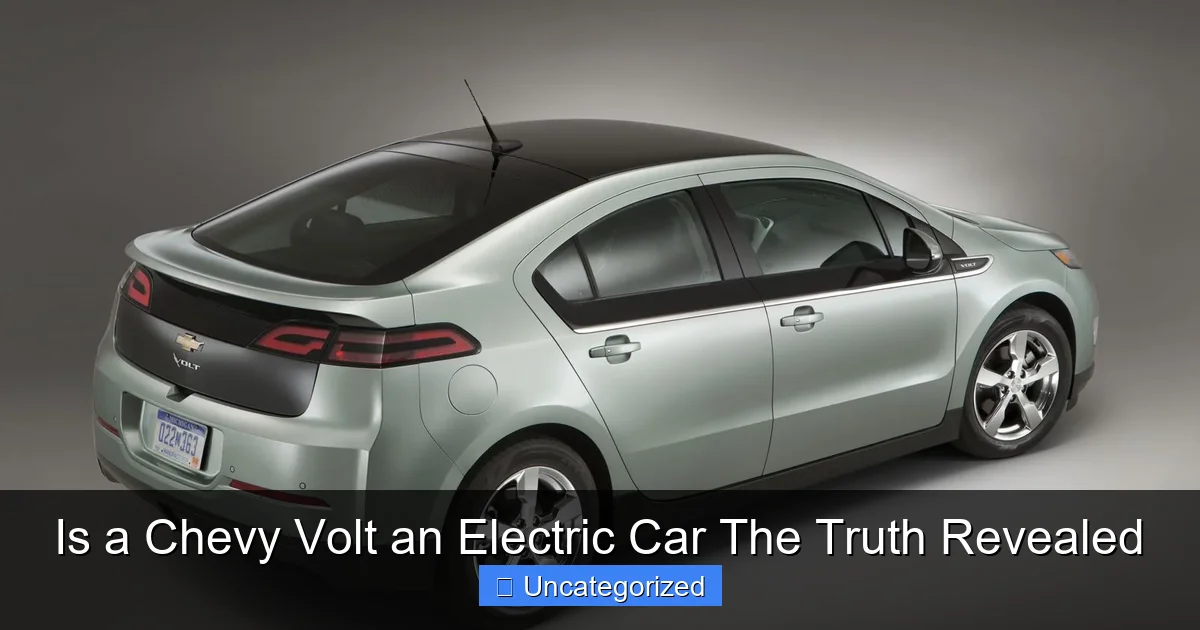
Featured image for is a chevy volt an electric car
Image source: images.hgmsites.net
The Chevy Volt is not a fully electric car—it’s a plug-in hybrid that combines an electric motor with a gasoline engine for extended range. While it can drive up to 53 miles on pure electric power, the gas engine kicks in when the battery depletes, making it a versatile but not zero-emission vehicle.
Key Takeaways
- Chevy Volt is a hybrid: Combines electric motor with gas engine for extended range.
- Electric-only mode available: Drives up to 53 miles on battery alone.
- Regenerative braking helps: Recovers energy to recharge the battery while driving.
- Gas engine kicks in: Automatically activates when battery charge runs low.
- Not fully electric: Requires gasoline for longer trips beyond EV range.
📑 Table of Contents
- The Electric Car Confusion: What Exactly Is a Chevy Volt?
- Understanding the Chevy Volt: A Hybrid with a Twist
- Electric Car vs. Plug-In Hybrid: The Key Differences
- Real-World Performance: How the Chevy Volt Compares
- Environmental Impact and Cost Considerations
- The Verdict: Is the Chevy Volt an Electric Car?
- Conclusion: The Truth About the Chevy Volt
The Electric Car Confusion: What Exactly Is a Chevy Volt?
Imagine this: you’re at a car dealership, eyeing a sleek, modern sedan with a charging port on the side. The salesperson proudly announces, “This is our plug-in hybrid, the Chevy Volt!” You pause, confused. It looks electric, it has a plug, and it promises zero emissions at low speeds—but then why does it also have a gasoline engine? Welcome to the world of the Chevy Volt, a vehicle that blurs the lines between traditional hybrids, plug-in hybrids, and fully electric cars. The question “Is a Chevy Volt an electric car?” isn’t just a semantic debate—it’s a crucial distinction for consumers navigating the rapidly evolving landscape of eco-friendly transportation.
In an era where automakers are racing to electrify their fleets, terms like “hybrid,” “plug-in hybrid,” and “battery electric vehicle” (BEV) are often used interchangeably—but they represent fundamentally different technologies. The Chevy Volt, produced by General Motors from 2011 to 2019, stands at the intersection of innovation and categorization. It’s not quite a pure electric car, but it’s far more electric than a conventional hybrid like the Toyota Prius. Understanding where the Volt fits in this spectrum is essential for anyone considering a fuel-efficient, low-emission vehicle. Whether you’re a daily commuter, a long-distance traveler, or an eco-conscious driver, knowing the truth about the Chevy Volt will help you make a smarter, more informed decision.
Understanding the Chevy Volt: A Hybrid with a Twist
What Makes the Chevy Volt Unique?
The Chevy Volt is officially classified as a plug-in hybrid electric vehicle (PHEV), but its design philosophy sets it apart from both traditional hybrids and fully electric cars. Unlike a standard hybrid (e.g., the Toyota Prius), which cannot be plugged in and relies solely on regenerative braking and the internal combustion engine (ICE) to charge its battery, the Volt can be charged externally via a standard 120V household outlet or a Level 2 charger. This means drivers can start each day with a full electric charge, enabling significant electric-only driving.
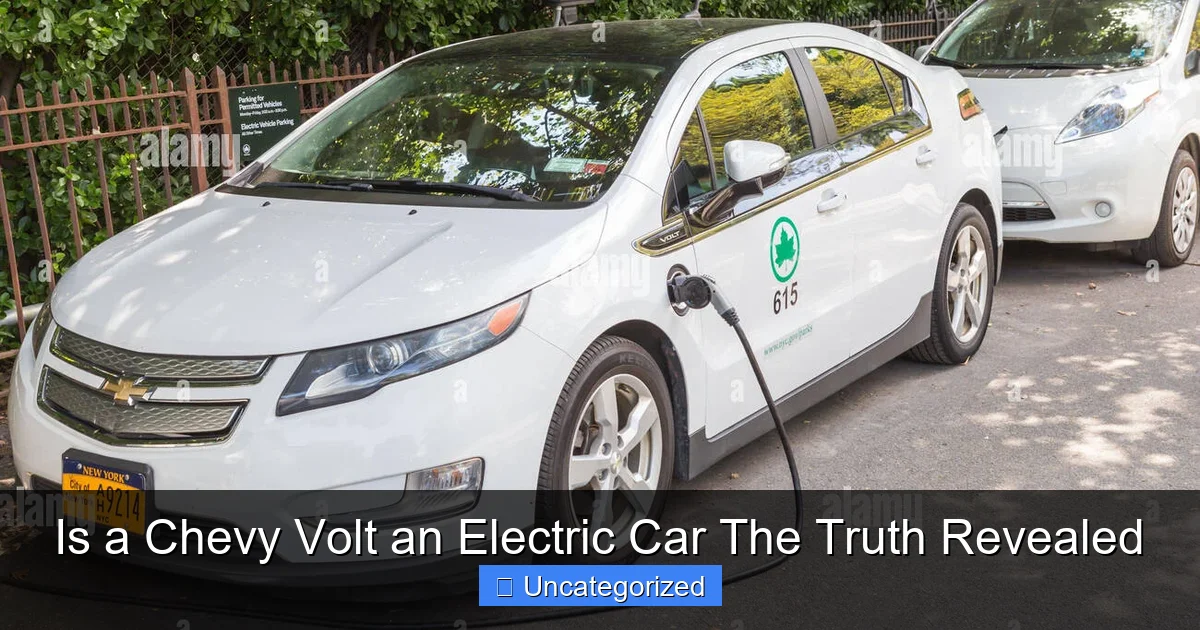
Visual guide about is a chevy volt an electric car
Image source: c8.alamy.com
What truly distinguishes the Volt is its electric-first driving strategy. From the moment you turn the key (or press the start button), the Volt operates solely on electric power. The gasoline engine doesn’t activate until the battery is depleted—typically after 35 to 53 miles, depending on the model year and driving conditions. This is a stark contrast to most plug-in hybrids, where the engine often kicks in at higher speeds or under heavy load, even with a full battery. In the Volt, the gasoline engine acts as a range extender, generating electricity to power the motor when the battery runs low, not to drive the wheels directly.
How the Volt’s Powertrain Works
The Chevy Volt uses a sophisticated dual-motor system known as the GM Voltec electric drive unit. Here’s how it functions:
- Primary Electric Drive: Two electric motors work in tandem to drive the front wheels. The primary motor handles most of the propulsion, while the secondary motor assists during acceleration or high-demand scenarios.
- Battery Pack: The Volt features a 18.4 kWh (later models) lithium-ion battery pack located under the rear seats and center console. This pack powers the vehicle in electric-only mode.
- Range-Extending Engine: A 1.5L (or 1.4L in earlier models) 4-cylinder gasoline engine powers a generator that produces electricity to recharge the battery when it drops below a certain threshold. The engine never mechanically drives the wheels—it only generates electricity.
- Regenerative Braking: When the driver lifts off the accelerator or applies the brakes, the electric motors act as generators, converting kinetic energy back into electricity to recharge the battery.
This setup allows the Volt to achieve an impressive electric range of up to 53 miles (2019 model), with a total range of over 400 miles when factoring in the gasoline engine. For urban commuters driving under 40 miles daily, the Volt can often complete a full week of driving without ever using gasoline.
Electric Car vs. Plug-In Hybrid: The Key Differences
Defining an Electric Car (BEV)
A true battery electric vehicle (BEV), such as the Tesla Model 3, Nissan Leaf, or Chevrolet Bolt EV, runs entirely on electricity. It has:
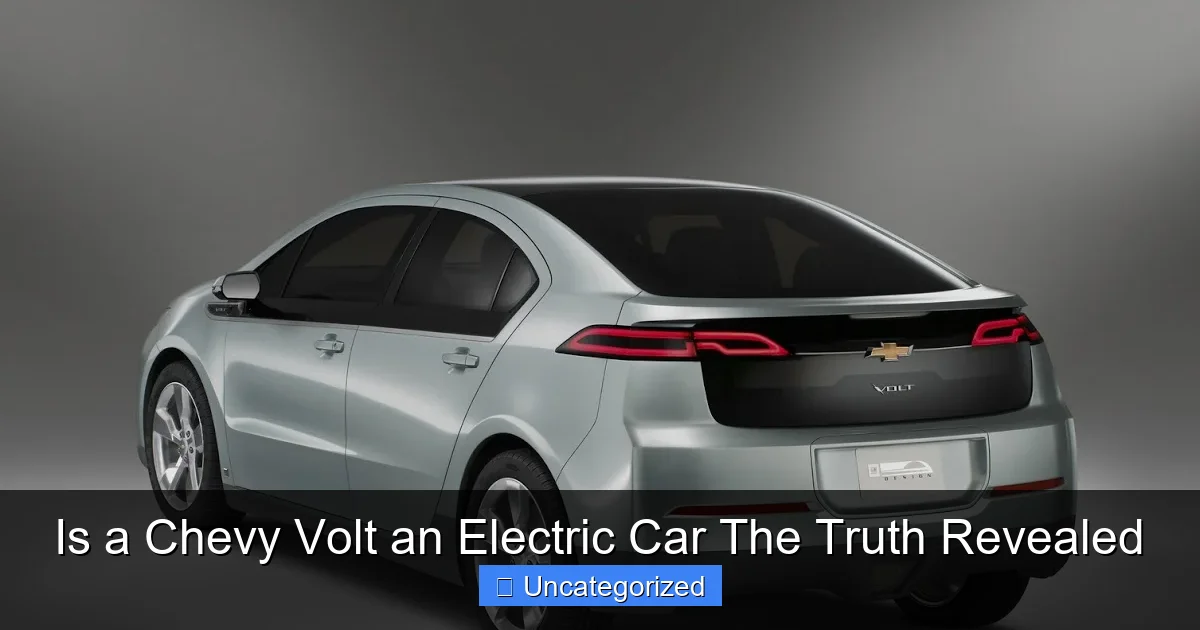
Visual guide about is a chevy volt an electric car
Image source: carscoops.com
- No internal combustion engine
- No gasoline tank
- No exhaust system
- Only one power source: a large lithium-ion battery pack
BEVs rely solely on external charging (home, workplace, or public stations) to replenish their batteries. They produce zero tailpipe emissions and are considered the gold standard for environmental sustainability in personal transportation. Their main limitation is range anxiety—the fear of running out of charge before reaching a charging station, especially on long trips.
Plug-In Hybrid Electric Vehicles (PHEVs): A Middle Ground
PHEVs, like the Chevy Volt, offer a compromise. They have:
- A rechargeable battery (smaller than a BEV’s)
- An internal combustion engine
- The ability to operate in electric-only mode for a limited range (typically 20–60 miles)
- A backup gasoline engine for longer trips
The key differentiator is dual power sources. While BEVs eliminate gasoline entirely, PHEVs reduce reliance on it. The Volt, in particular, is designed so that most daily driving is electric, but long-distance travel remains feasible without the need for charging infrastructure.
Why the Confusion Exists
The confusion arises because the Chevy Volt looks, feels, and drives like an electric car in most everyday scenarios. It’s quiet, smooth, and responsive—hallmarks of electric vehicles. Many owners report driving for months without visiting a gas station. However, technically, it cannot be classified as a BEV because it still uses gasoline. The U.S. Department of Energy and the EPA both categorize the Volt as a PHEV, not a BEV.
For example, if you drive 30 miles to work and 30 miles back, the 2019 Volt (with 53 miles of electric range) will complete the entire trip on electricity. But if you take a 200-mile weekend trip, the engine will activate after the battery depletes, using gasoline to extend the range. This hybrid capability makes the Volt more versatile than a BEV for drivers without consistent access to charging stations.
Real-World Performance: How the Chevy Volt Compares
Electric Range and Efficiency
The Chevy Volt’s electric range has improved significantly over its two generations:
- First Generation (2011–2015): 35–38 miles of electric range; 101 MPGe (miles per gallon equivalent) in electric mode; 40 MPG in hybrid mode.
- Second Generation (2016–2019): 53 miles of electric range; 106 MPGe; 42 MPG in hybrid mode.
For context, the average American commutes about 30 miles per day. This means a 2019 Volt owner could drive to work, run errands, and return home without using a single drop of gasoline. In fact, a Consumer Reports study found that Volt owners used gasoline only 25% of the time, with the rest of their driving being electric.
To put this into perspective, consider a driver who charges the Volt every night:
- Daily commute (30 miles): 100% electric
- Weekly driving (150 miles): 100% electric (53 miles x 3 days = 159 miles)
- Monthly fuel cost: $0 if driving under 212 electric miles per week (53 x 4)
Compare this to a standard gasoline car averaging 30 MPG and gas at $3.50/gallon: that same 150-mile week would cost $17.50 in fuel. The Volt saves over $800 per year in fuel costs for typical drivers.
Charging and Daily Use
Charging the Chevy Volt is simple and convenient:
- Level 1 Charging (120V): Takes about 13 hours to fully charge the 2019 model (from 0 to 53 miles). Ideal for overnight charging at home.
- Level 2 Charging (240V): Reduces charge time to about 4.5 hours. Recommended for faster top-ups or if you have a home charger installed.
Tip: Use a timer to charge during off-peak electricity hours (e.g., 10 PM to 6 AM) to save on energy costs. Many utility companies offer lower rates at night.
The Volt also features a Hold Mode, which allows drivers to conserve battery charge for later use—ideal for city driving after a highway trip. Additionally, the Regen on Demand paddle on the steering wheel lets drivers slow the car using regenerative braking, increasing efficiency and reducing brake wear.
Long-Distance Travel
One of the Volt’s biggest advantages over pure BEVs is its ability to handle long trips without range anxiety. Once the battery is depleted, the gasoline engine seamlessly kicks in, extending the total range to over 400 miles. Refueling takes just a few minutes at any gas station, compared to the 30+ minutes needed for a Level 3 DC fast charge on a BEV.
For example, a 400-mile road trip:
- With a BEV (e.g., Nissan Leaf with 150-mile range): Requires at least 2–3 charging stops, totaling 1.5–2 hours of charging time.
< With a Chevy Volt: Drives 53 miles on electricity, then uses gasoline for the remaining 347 miles. No charging stops needed.
This makes the Volt an excellent choice for drivers who want electric efficiency for daily use but need the flexibility of gasoline for occasional long trips.
Environmental Impact and Cost Considerations
Emissions and Sustainability
The Chevy Volt significantly reduces greenhouse gas emissions compared to traditional gasoline vehicles. According to the EPA, the 2019 Volt produces 112 grams of CO2 per mile when operating in hybrid mode—about 50% less than a comparable gasoline sedan. In electric mode, emissions depend on the local electricity grid:
- In regions with clean energy (e.g., hydro, wind, solar), emissions can be near zero.
- In coal-heavy grids, emissions are still lower than gasoline due to the efficiency of electric motors.
The Union of Concerned Scientists estimates that PHEVs like the Volt can reduce lifetime emissions by 30–50% compared to conventional cars, depending on driving patterns and grid mix.
Total Cost of Ownership
While the Volt had a higher upfront cost (MSRP: $33,000–$38,000), it offers long-term savings:
- Fuel Savings: $800–$1,200 per year for average drivers.
- Maintenance: Fewer moving parts than gasoline engines; no oil changes, spark plugs, or exhaust system repairs. Regenerative braking reduces brake pad wear.
- Tax Incentives: The Volt qualified for a federal tax credit of $7,500 (phased out after GM hit 200,000 PHEV/BEV sales in 2018).
- Insurance: Comparable to similar midsize sedans; some insurers offer green vehicle discounts.
Over a 5-year period, a Volt owner could save $5,000–$7,000 in fuel and maintenance costs, offsetting the higher purchase price.
Resale Value and Market Trends
The Volt’s resale value has held up well, especially for second-generation models. According to Kelley Blue Book, a 2018 Volt retains about 50% of its value after 3 years, outperforming many hybrids. However, the discontinuation of the model in 2019 means parts and support may become scarcer over time. For buyers, this means:
- Buy a well-maintained 2017–2019 model with a clean battery history.
- Check GM’s certified pre-owned program for extended warranties and inspections.
- Consider future charging needs—while the Volt doesn’t require fast charging, access to Level 2 charging improves convenience.
The Verdict: Is the Chevy Volt an Electric Car?
Technical Classification vs. Real-World Experience
Technically, no—the Chevy Volt is not a battery electric vehicle (BEV). It contains a gasoline engine and relies on fossil fuels for extended range. By definition, a BEV has no internal combustion engine and cannot run on gasoline. The Volt’s official classification by the EPA, SAE, and automakers is a plug-in hybrid electric vehicle (PHEV).
However, in real-world usage, the Chevy Volt behaves like an electric car for most daily driving. For the average commuter, the gasoline engine remains dormant for days, weeks, or even months. The driving experience—smooth acceleration, quiet cabin, instant torque—is identical to a BEV. The presence of a charging port and the ability to drive emission-free for 50+ miles blur the line between categories.
Who Should Consider the Chevy Volt?
The Volt is ideal for drivers who:
- Want to reduce fuel costs and emissions but aren’t ready to commit to a BEV.
- Have access to home charging (or workplace charging).
- Drive mostly short to medium distances but occasionally take long trips.
- Live in areas with unreliable or limited public charging infrastructure.
- Want a reliable, proven hybrid with a strong track record (the Volt was named Motor Trend Car of the Year in 2011 and 2016).
It’s less ideal for:
- Drivers seeking a fully zero-emission vehicle (in that case, consider the Chevrolet Bolt EV or Tesla Model 3).
- Those who rarely charge and would rely mostly on the gasoline engine (a standard hybrid or efficient ICE car may be cheaper).
Future of the Volt and GM’s Electrification Plans
GM discontinued the Volt in 2019 to focus on fully electric vehicles, including the Chevrolet Bolt EV, Bolt EUV, and upcoming Ultium-based models like the Silverado EV and Blazer EV. The Volt’s legacy lives on in GM’s commitment to an all-electric future by 2035.
For now, the Volt remains a pioneering transitional vehicle—one that helped bridge the gap between gasoline and electric. It proved that plug-in hybrids could offer real electric benefits without the range limitations of early BEVs.
Conclusion: The Truth About the Chevy Volt
So, is a Chevy Volt an electric car? The answer is nuanced. It is not a battery electric vehicle, but it is a highly capable plug-in hybrid that prioritizes electric driving. For the vast majority of daily trips, it functions exactly like an electric car—quiet, efficient, and emission-free. The gasoline engine serves as a safety net for long journeys, eliminating the range anxiety that still plagues many BEV owners.
The Chevy Volt represents a smart middle ground in the electrification journey. It’s a vehicle that doesn’t force drivers to choose between sustainability and convenience. Whether you’re charging at home every night or taking a cross-country road trip, the Volt adapts to your needs. While it may no longer be in production, its influence is undeniable. It paved the way for GM’s current and future electric lineup and remains a compelling option for used car buyers.
Ultimately, the Chevy Volt proves that the future of transportation isn’t just about going fully electric—it’s about thinking electric first. And in that mission, the Volt was, and still is, a resounding success.
| Feature | Chevy Volt (2019) | Typical BEV (e.g., Nissan Leaf) | Standard Hybrid (e.g., Toyota Prius) |
|---|---|---|---|
| Type | Plug-In Hybrid (PHEV) | Battery Electric Vehicle (BEV) | Hybrid (HEV) |
| Electric Range | 53 miles | 150–250 miles | 0 miles (no plug-in) |
| Total Range | 420 miles | 150–250 miles | 600 miles |
| Charging Required? | Yes (for electric use) | Yes | No |
| Gasoline Engine? | Yes (range extender) | No | Yes |
| MPGe (Electric Mode) | 106 MPGe | 110–120 MPGe | N/A |
| MPG (Gas Mode) | 42 MPG | N/A | 50–56 MPG |
| Best For | Mixed daily/long-distance drivers | Short to medium commutes | Long-distance, no charging |
Frequently Asked Questions
Is a Chevy Volt an electric car?
The Chevy Volt is a plug-in hybrid electric vehicle (PHEV), not a fully electric car. It runs on battery power for about 53 miles before switching to a gas-powered generator for longer trips.
How does the Chevy Volt differ from a fully electric car?
Unlike fully electric vehicles (EVs), the Chevy Volt uses both a rechargeable battery and a gasoline engine. The battery powers the car initially, but the gas engine kicks in once the battery depletes.
Can the Chevy Volt be driven as an electric car only?
Yes, the Chevy Volt can drive solely on electric power for up to 53 miles (depending on model year). Beyond that, it automatically switches to hybrid mode using its gas generator.
Do you need to charge the Chevy Volt like an electric car?
Yes, the Chevy Volt requires charging to maximize its electric-only range. However, unlike fully electric cars, it can still run on gasoline if the battery is empty, eliminating range anxiety.
Is the Chevy Volt considered an electric car for tax credits?
The Chevy Volt qualifies for federal tax credits as a plug-in hybrid electric car, but the amount may differ from fully electric vehicles. Check current IRS guidelines for eligibility.
What makes the Chevy Volt a “best of both worlds” electric car option?
The Chevy Volt combines electric efficiency for short commutes with a gas generator for long-distance driving. This dual-system offers flexibility without the range limitations of a fully electric car.