Is a Ford Edge an Electric Car or Truck Find Out Here
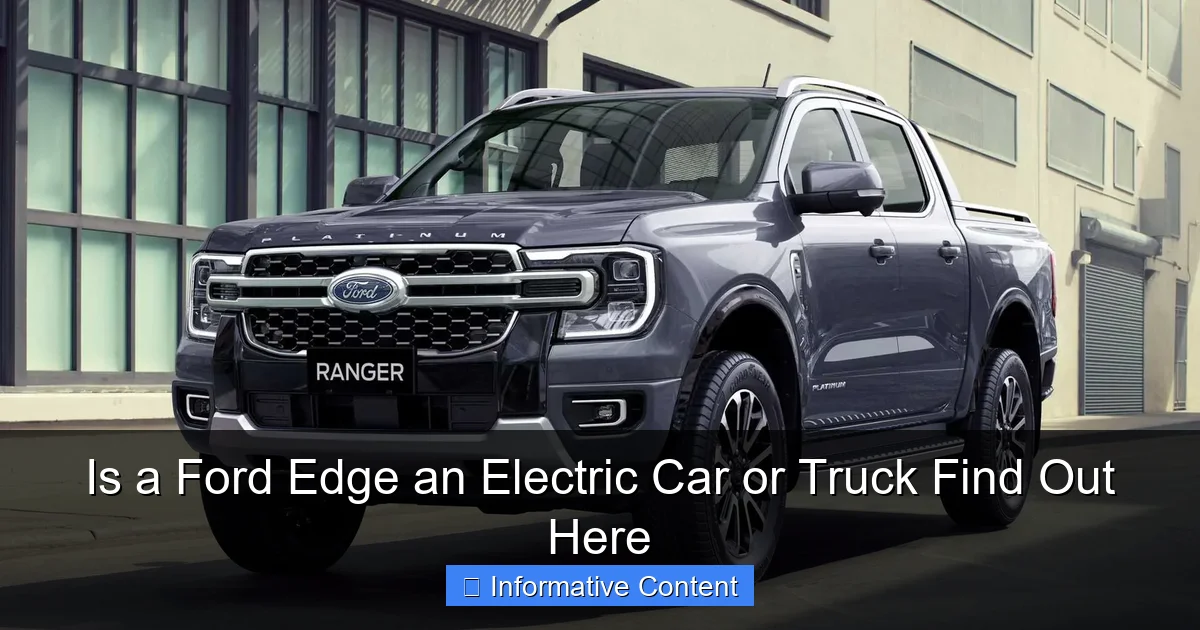
Featured image for is a ford edge an electric car or truck
Image source: i.wpimg.pl
The Ford Edge is neither an electric car nor an electric truck—it’s a midsize gasoline-powered SUV with no fully electric version currently available. While it offers efficient turbocharged engine options, it does not qualify as an EV or hybrid, despite Ford’s broader shift toward electrification.
Key Takeaways
- Ford Edge is not electric: It runs on gasoline, not battery power.
- No hybrid option available: Current models lack hybrid or plug-in variants.
- Classified as a midsize SUV: Not a truck, despite rugged styling cues.
- Check trim specifics: All trims use EcoBoost or V6 gas engines.
- Future electrification possible: Ford plans EVs but Edge isn’t one yet.
📑 Table of Contents
- Is a Ford Edge an Electric Car or Truck? Let’s Settle the Confusion
- What Is the Ford Edge? A Closer Look at the Basics
- How Does the Ford Edge Compare to Electric SUVs?
- Is There a Hybrid or Electric Ford Edge?
- Ford’s Electric Strategy: Where Does the Edge Fit?
- Should You Buy a Ford Edge in 2024? Practical Advice
- Final Thoughts: The Ford Edge Today and Tomorrow
Is a Ford Edge an Electric Car or Truck? Let’s Settle the Confusion
Picture this: You’re scrolling through car listings, sipping your morning coffee, and you come across the Ford Edge. Sleek, modern, and looking like it could handle a family road trip or a weekend adventure. But then you pause—*Is this thing electric?* Maybe you’ve seen Ford’s electric Mustang Mach-E or the F-150 Lightning and assumed the Edge might be part of that wave. Or perhaps you’ve heard whispers about hybrid SUVs and aren’t sure where the Edge fits in. You’re not alone. Many people are asking: *Is a Ford Edge an electric car or truck?* And honestly, it’s a fair question. The automotive world is shifting fast, and it’s easy to get lost in the jargon.
The short answer? The Ford Edge is neither an electric car nor a truck. It’s a midsize gas-powered crossover SUV, but there’s a lot more to unpack. In this post, we’re going to walk through everything you need to know—what the Ford Edge actually is, how it compares to electric vehicles (EVs), whether Ford plans to electrify it, and why this matters if you’re shopping for your next ride. Whether you’re a tech-savvy EV enthusiast or just want a reliable family hauler, this guide will help you understand where the Ford Edge fits in today’s rapidly evolving car landscape. So grab your favorite beverage, and let’s dive in.
What Is the Ford Edge? A Closer Look at the Basics
The Ford Edge’s Identity: Crossover, Not a Truck or EV
The Ford Edge is a midsize crossover SUV that’s been around since 2006. It sits in Ford’s lineup between the smaller Escape and the larger Explorer. Think of it as the “Goldilocks” of Ford SUVs—not too big, not too small, but just right for families, commuters, and weekend warriors alike. Unlike a traditional truck (like the F-150), the Edge doesn’t have a separate body-on-frame construction. Instead, it’s built on a unibody platform, which gives it a smoother, car-like ride—perfect for daily driving and long trips.
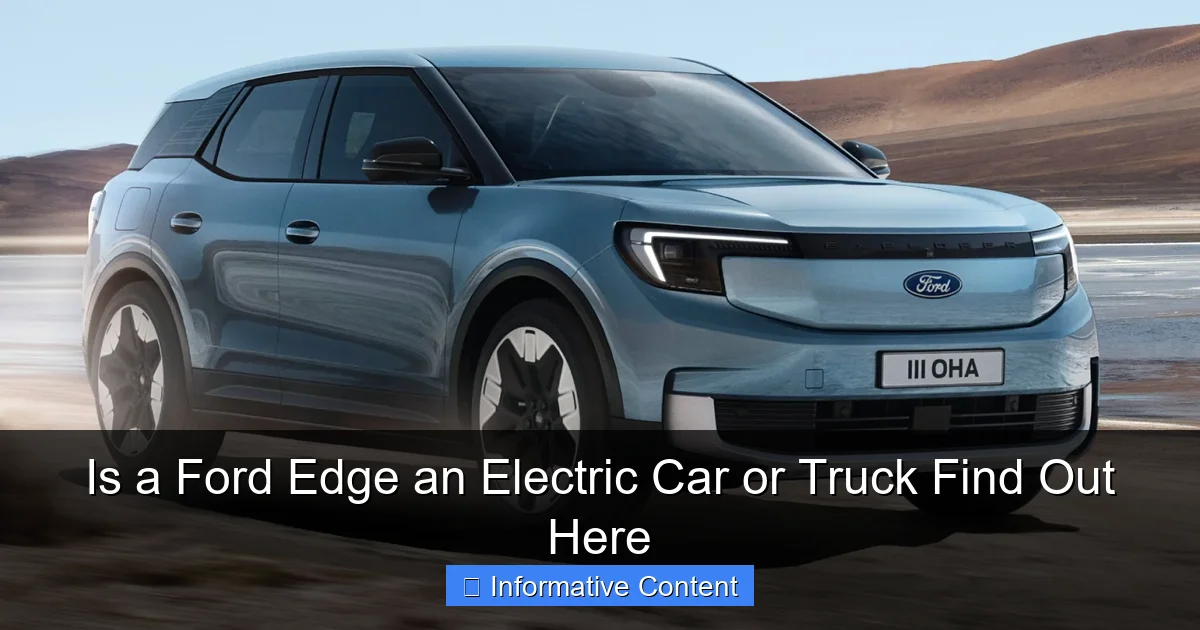
Visual guide about is a ford edge an electric car or truck
Image source: soymotor.com
And no, despite what some ads or social media posts might imply, the Ford Edge is not an electric car. It runs entirely on gasoline. There’s no battery pack, no charging port, and no zero-emission mode. It’s powered by internal combustion engines, just like most vehicles on the road today. But that doesn’t mean it’s outdated. In fact, the Edge has kept up with the times in other ways—offering advanced safety tech, a refined interior, and a surprisingly fun driving experience.
Engine Options and Powertrain Details
As of the 2023 and 2024 model years, the Ford Edge comes with two engine choices:
- 2.0L EcoBoost Turbocharged 4-Cylinder: Produces around 250 horsepower and 280 lb-ft of torque. This is the base engine, and it’s efficient for a midsize SUV, delivering a balance of power and fuel economy (around 21 mpg city, 28 mpg highway).
- 2.7L EcoBoost Twin-Turbo V6 (Edge ST model): A performance-oriented engine that pumps out 335 horsepower and 380 lb-ft of torque. This turns the Edge into something closer to a “sport SUV”—great for drivers who want more oomph without stepping into truck territory.
Both engines pair with an 8-speed automatic transmission and come with either front-wheel drive (FWD) or all-wheel drive (AWD). There’s no plug-in hybrid or electric variant—yet. And while Ford has been pushing hard into EVs, the Edge remains firmly in the gas-powered camp.
Who Is the Ford Edge For?
If you’re picturing a family of four heading to soccer practice, a couple loading up bikes for a trail ride, or a professional needing a quiet, tech-filled commute—the Edge fits all those scenarios. It’s practical, comfortable, and surprisingly agile for its size. I once took a friend’s Edge on a 300-mile weekend trip, and we were both impressed by how smooth it felt on the highway, how quiet the cabin stayed, and how much cargo space we had after tossing in suitcases, a cooler, and two backpacks. It’s not a truck, but it’s more than capable for most real-world needs.
How Does the Ford Edge Compare to Electric SUVs?
EVs vs. Gas: The Key Differences
Now, let’s address the elephant in the room: Why isn’t the Ford Edge electric? To understand that, it helps to compare it side-by-side with actual electric SUVs like the Mustang Mach-E, Ford Escape PHEV (plug-in hybrid), or even competitors like the Hyundai Ioniq 5 or Chevrolet Blazer EV.
The biggest difference is the power source. Electric vehicles (EVs) run on electricity stored in a large battery pack. They’re charged via charging stations (Level 1, Level 2, or DC fast chargers) and produce zero tailpipe emissions. The Ford Edge, on the other hand, burns gasoline and emits CO2. That’s a major distinction—especially if you’re environmentally conscious or live in a city with emissions regulations.
Here’s a quick comparison:
- Fuel Type: Edge = gasoline | EVs = electricity
- Emissions: Edge = CO2 emissions | EVs = zero tailpipe emissions
- Refueling: Edge = gas station (5 minutes) | EVs = home or public charger (30 minutes to 12+ hours)
- Maintenance: Edge = oil changes, spark plugs, belts | EVs = fewer moving parts, no oil changes
- Range: Edge = ~400–450 miles per tank | EVs = 200–350+ miles per charge (varies by model)
Performance and Driving Experience
You might think EVs are all about silent acceleration, and you’d be right—but the Edge holds its own. The base 2.0L engine is smooth and responsive, and the 8-speed transmission shifts seamlessly. The ST model with the V6 is genuinely fun to drive—quick off the line, stable in corners, and surprisingly nimble for a 4,000-pound SUV.
But EVs have a different kind of magic. The instant torque from electric motors means you get full power the second you press the “gas” pedal. No waiting for the engine to rev up. The Mustang Mach-E, for example, can go 0–60 mph in under 4 seconds in the GT version. The Edge ST? Around 6.1 seconds. Not slow by any means, but not in the same league.
That said, the Edge offers something EVs sometimes lack: driving engagement. The steering feels connected, the suspension is tuned for comfort but doesn’t float like some EVs, and there’s a real sense of feedback through the pedals and wheel. If you enjoy driving—not just commuting—the Edge delivers in a way many EVs don’t.
Cost and Long-Term Value
Let’s talk dollars and cents. The 2024 Ford Edge starts around $39,000, while the ST model pushes into the $50,000 range. That’s competitive with gas-powered rivals like the Honda Passport or Toyota 4Runner, but it’s significantly less than most new electric SUVs. The Mustang Mach-E starts at $43,000, but higher trims easily exceed $55,000. The Hyundai Ioniq 5 starts around $42,000, but tax credits can bring that down.
However, EVs often save money in the long run. Electricity is cheaper than gas (especially if you charge at home), and maintenance costs are lower. But if you don’t have a home charger or live in an area with spotty charging infrastructure, the Edge might actually be more practical. It’s all about your lifestyle.
Is There a Hybrid or Electric Ford Edge?
The Current Lineup: No Electrified Edge… Yet
As of now, Ford does not offer a hybrid, plug-in hybrid, or fully electric version of the Edge. The 2024 lineup includes only the gas-powered models we discussed earlier. That might seem surprising, given Ford’s aggressive push into electrification. After all, they’ve launched the F-150 Lightning, E-Transit van, and Mustang Mach-E—and even teased an electric Explorer.
But here’s the thing: Ford hasn’t completely abandoned the Edge. In fact, they’ve updated it recently with a refreshed interior, new tech features, and improved safety systems. This suggests they’re still committed to the model, at least in its current form. However, the lack of electrification is notable—especially when competitors like Hyundai, Kia, and Toyota are offering hybrid or EV versions of nearly every SUV in their lineup.
Why Hasn’t Ford Electrified the Edge?
There are a few possible reasons:
- Platform Limitations: The current Edge is built on an older platform (the CD4) that wasn’t designed with electrification in mind. Retrofitting it for a battery or hybrid system would be expensive and complex.
- Strategic Focus: Ford is pouring resources into new EV platforms like the Ford Global Electric Architecture (used for the Mach-E and upcoming EVs). They may be waiting to launch a next-generation Edge on a dedicated EV platform.
- Market Positioning: The Edge fills a niche that’s still dominated by gas buyers. Many customers in this segment aren’t ready to switch to electric yet—especially if they need AWD, towing capability, or long-range flexibility without charging anxiety.
That said, Ford has hinted at an electric future for all its SUVs. In a 2023 investor call, CEO Jim Farley said, “We’re electrifying our most iconic nameplates.” While he didn’t mention the Edge by name, it’s likely only a matter of time.
Rumors and Future Possibilities
Industry insiders and auto journalists have speculated that Ford could launch an electric Edge by 2026 or 2027. Some believe it might share a platform with the upcoming Explorer EV, which is expected to use Ford’s new scalable EV architecture. That would allow for dual-motor AWD, longer range (300+ miles), and fast charging capabilities.
There’s also a chance Ford might introduce a plug-in hybrid Edge first—a “bridge” option for customers who want some electric driving (e.g., 30–50 miles on battery) but still need the flexibility of a gas engine for longer trips. This would be similar to the Escape PHEV, which offers 37 miles of electric range.
So while the answer to “Is a Ford Edge an electric car or truck?” is still “no,” the answer might change in the next few years.
Ford’s Electric Strategy: Where Does the Edge Fit?
Ford’s EV Roadmap: What We Know So Far
Ford has made it clear: they’re all-in on electric vehicles. Their goal is to sell 2 million EVs annually by 2026 and achieve carbon neutrality by 2050. They’ve already invested over $50 billion in electrification and are building new battery plants in the U.S.
Here’s what Ford has done so far:
- Mustang Mach-E: A direct competitor to the Tesla Model Y, with strong sales and positive reviews.
- F-150 Lightning: An electric version of America’s best-selling truck. It’s been a hit with both truck lovers and EV newbies.
- E-Transit: An electric cargo van for fleets and small businesses.
- Upcoming EVs: An electric Explorer, a compact SUV (likely a global model), and possibly an electric Expedition.
Notice what’s missing? The Edge. But that doesn’t mean it’s being left behind. Ford often rolls out EVs in phases—starting with high-demand or iconic models (like the F-150), then moving to others. The Edge may be next in line.
Why the Edge Could Be a Great Candidate for Electrification
The Edge has a lot going for it as a potential EV:
- Popular Size: Midsize SUVs are the sweet spot for EV adoption. They’re big enough for families but not so large that they require massive batteries (which drive up cost and weight).
- Strong Brand Recognition: The Edge has been around for nearly 20 years. An electric version could attract loyal customers ready to upgrade.
- Tech-Friendly Interior: The Edge already has a 12-inch touchscreen, SYNC 4, and available driver-assist features. It wouldn’t take much to add EV-specific tech like battery management, regenerative braking controls, and charging navigation.
- Global Appeal: The Edge sells well in North America and is available in Europe and the Middle East. An electric version could help Ford meet stricter emissions regulations worldwide.
Imagine an electric Edge with 280 miles of range, 300 horsepower, and a 10-minute 10–80% fast charge. That would compete directly with the Kia EV6, Ford Mustang Mach-E, and Chevrolet Equinox EV—and it could win on value and driving dynamics.
Should You Buy a Ford Edge in 2024? Practical Advice
When the Ford Edge Makes Sense
Even though it’s not electric, the Ford Edge is still a solid choice for many buyers. Here’s when it makes the most sense:
- You need AWD and towing: The Edge can tow up to 3,500 lbs (with the 2.7L engine and proper equipment), which is enough for small campers, boats, or utility trailers.
- You want a comfortable, tech-filled cabin: The Edge’s interior is quiet, well-insulated, and packed with features. The available B&O sound system and heated/cooled seats make long drives a pleasure.
- You don’t have charging access: If you live in an apartment or don’t have a home charger, relying on public stations can be a hassle. The Edge eliminates that worry.
- You value driving feel: As mentioned earlier, the Edge is more engaging than many EVs. If you enjoy the act of driving, it’s a great pick.
When You Might Want to Look Elsewhere
Of course, the Edge isn’t perfect. Here are some scenarios where another vehicle might be a better fit:
- You want to go electric: If reducing emissions and fuel costs is a priority, consider the Mustang Mach-E, Hyundai Ioniq 5, or Ford Escape PHEV.
- You need more space: The Edge is midsize, but if you regularly carry 5+ adults or lots of cargo, the Explorer or Honda Pilot might be better.
- You’re on a tight budget: While the Edge is competitively priced, some rivals (like the Mazda CX-5 or Subaru Outback) offer similar features at a lower price.
- You want the latest tech: The Edge’s SYNC 4 system is good, but some EVs offer more advanced AI, over-the-air updates, and digital key features.
Pro Tip: Consider a Certified Pre-Owned (CPO) Edge
If you love the Edge but want to save money, look into a CPO model. A 2021 or 2022 Edge with 20,000–30,000 miles can cost $8,000–$12,000 less than new, and it still comes with a factory-backed warranty. I helped my brother buy a CPO Edge last year, and he’s been thrilled with it—great condition, low miles, and all the tech he wanted.
Final Thoughts: The Ford Edge Today and Tomorrow
So, to answer the big question: Is a Ford Edge an electric car or truck? No—it’s a gas-powered midsize crossover SUV. It’s not a truck in the traditional sense (no body-on-frame, no heavy-duty suspension), and it’s definitely not electric (no battery, no charging port). But that doesn’t make it irrelevant.
The Ford Edge is a well-rounded, comfortable, and capable vehicle that still holds its own in a world increasingly dominated by EVs. It’s perfect for people who want a reliable, tech-filled SUV without the complexity of charging or the higher price tag of electric models. And with Ford’s ongoing updates—like the 2024 refresh with a new infotainment system and improved safety features—it’s clear the Edge isn’t going anywhere soon.
But the future? That’s where things get exciting. With Ford’s massive investment in electrification, it’s only a matter of time before we see an electric Ford Edge—or at least a plug-in hybrid version. When that happens, the Edge could become a major player in the EV market, offering the same practicality and driving enjoyment with zero emissions.
For now, if you’re shopping for a new SUV and don’t need electric power, the Ford Edge is a smart, satisfying choice. Just know what you’re getting: a well-built, gas-powered crossover that’s built for real life. And hey, if you’re curious about EVs, you can always lease a Mach-E for a year and see how you like it—then decide whether the Edge’s successor is the next step in your automotive journey.
Bottom line: The Ford Edge isn’t electric—but it’s still a great car. And the best part? The future is coming fast. Whether you’re Team Gas or Team Electric, Ford seems to be building something for everyone.
Frequently Asked Questions
Is the Ford Edge an electric car or truck?
The Ford Edge is neither a fully electric car nor a truck—it’s a midsize gasoline-powered SUV. It does not have an all-electric version, though Ford offers hybrid and plug-in hybrid models in other vehicles.
Does the Ford Edge have an electric version?
No, the Ford Edge does not come in an all-electric variant. It remains a traditional internal combustion engine (ICE) SUV with options for turbocharged four- and six-cylinder engines.
Is a Ford Edge an electric car with towing capacity?
No, the Ford Edge is not an electric car. However, its gas-powered models offer a towing capacity of up to 3,500 pounds when properly equipped, making it a practical choice for light-duty hauling.
What type of fuel does the Ford Edge use?
The Ford Edge runs on regular unleaded gasoline. It does not support electric charging or alternative fuel types like hydrogen or diesel.
Is the Ford Edge a hybrid or electric truck?
The Ford Edge is not a hybrid or electric truck—it’s a conventional SUV. While Ford has hybrid and electric models like the Escape Hybrid or F-150 Lightning, the Edge remains a non-electric, non-truck vehicle.
Can I charge a Ford Edge like an electric car?
No, you cannot charge a Ford Edge like an electric car because it lacks an electric powertrain. It requires gasoline refueling at traditional service stations, not EV charging stations.