Is Chevy Spark an Electric Car Find Out the Truth Here
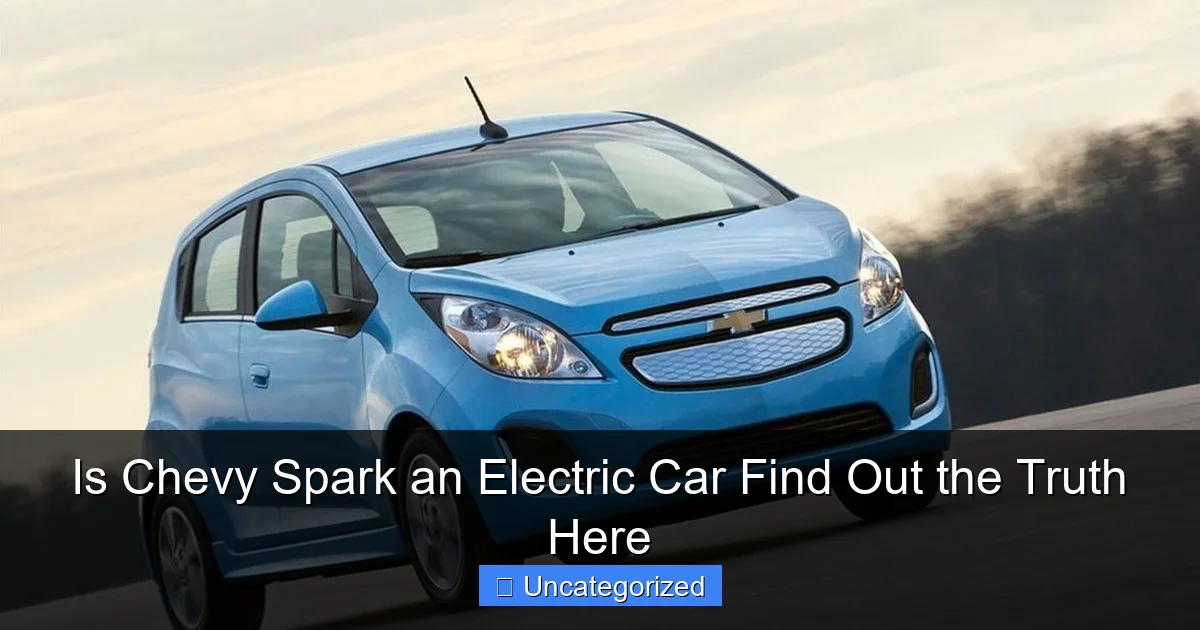
Featured image for is chevy spark an electric car
Image source: chevroletspecsnews.com
The Chevy Spark is *not* a fully electric car—it’s a gasoline-powered compact vehicle, though Chevrolet did offer a short-lived Spark EV model from 2013 to 2016. If you’re searching for an affordable, modern electric option from Chevy, the Bolt EV or Equinox EV are your best bets today.
Key Takeaways
- The Chevy Spark is not fully electric: It offers a gas-powered model only.
- No EV variant available: Chevrolet discontinued the Spark EV in 2016.
- Affordable but not eco-friendly: Lower cost but relies on gasoline.
- Consider Bolt EV instead: Chevy’s current electric option for city driving.
- Check local incentives: EV tax credits may apply to other models.
- Future plans unclear: Chevy has not announced a Spark EV revival.
📑 Table of Contents
- Is Chevy Spark an Electric Car? Find Out the Truth Here
- The Origins of the Chevrolet Spark: A Gasoline-Powered Legacy
- The Chevrolet Spark EV: An Electric Variant That Existed (But Not Everywhere)
- Can You Convert a Chevy Spark into an Electric Car?
- How the Chevy Spark Compares to True Electric Cars
- The Future of the Chevrolet Spark and EV Strategy
- Conclusion: Is the Chevy Spark an Electric Car?
Is Chevy Spark an Electric Car? Find Out the Truth Here
The Chevrolet Spark has been a popular name in the subcompact car segment for years, known for its affordability, compact size, and urban-friendly design. But in recent years, the term “electric” has become a buzzword in the automotive industry, with automakers racing to electrify their fleets. As a result, many car buyers and enthusiasts have started asking: Is the Chevy Spark an electric car? With the growing popularity of electric vehicles (EVs) like the Tesla Model 3, Nissan Leaf, and Chevrolet’s own Bolt EV, it’s easy to assume that the Spark might have made the transition. However, the truth is more nuanced than a simple yes or no. This article dives deep into the Chevy Spark’s powertrain options, history, and future to clarify whether it qualifies as an electric vehicle—and what that means for potential buyers.
Understanding whether the Chevy Spark is electric is not just about technical specifications—it’s about consumer expectations, environmental impact, and the future of urban mobility. Whether you’re a city dweller looking for a fuel-efficient commuter or a tech-savvy driver curious about EV trends, knowing the real story behind the Spark can help you make an informed decision. We’ll explore its gasoline-powered roots, the existence of an all-electric variant in select markets, and why the confusion persists. Let’s separate fact from fiction and uncover the truth about the Chevy Spark.
The Origins of the Chevrolet Spark: A Gasoline-Powered Legacy
From Daewoo Matiz to Chevy Spark
The Chevrolet Spark traces its lineage back to the early 2000s when General Motors acquired Daewoo Motors. The original model, known as the Daewoo Matiz, was a small city car designed for tight urban spaces and low fuel consumption. When GM rebranded it as the Chevrolet Spark for global markets, the focus remained on affordability, compact dimensions, and efficient gasoline engines. The first-generation Spark (2000–2005) was powered by a 796cc or 995cc inline-three-cylinder engine, delivering modest power but excellent fuel economy—typically around 35–40 mpg.
Over the years, the Spark evolved through multiple generations, with the second (2005–2010), third (2010–2015), and fourth (2016–2022) generations refining its design, safety, and technology. Each iteration continued to rely on internal combustion engines (ICE), with engine sizes ranging from 1.0L to 1.4L. The fourth-generation Spark, sold in the U.S. from 2016 to 2022, featured a 1.4L four-cylinder engine producing 98 horsepower. Despite its small size and modern infotainment features (including Apple CarPlay and Android Auto), it remained firmly in the gasoline-powered category.
Why the Spark Was Never a Standard EV in the U.S.
One of the key reasons the Chevy Spark is not widely recognized as an electric car in the United States is that GM never offered a factory-built electric version of the Spark in this market. Unlike some global brands that release EVs in specific regions (e.g., Europe or China), Chevrolet chose to focus its EV development on larger, more profitable platforms—such as the Chevrolet Bolt EV, which debuted in 2017. The Bolt was positioned as GM’s first affordable, long-range electric car, offering over 238 miles of range and modern EV tech, effectively overshadowing any potential electric Spark in the U.S. lineup.
Additionally, the Spark’s platform was not designed from the ground up to support a full battery-electric powertrain. While it was possible to retrofit an EV system (as we’ll see later), the cost, engineering complexity, and limited market demand made a factory electric Spark unfeasible for the U.S. market. As a result, American consumers knew the Spark solely as a gas-powered hatchback—a reliable, budget-friendly city car, but not a green machine.
The Chevrolet Spark EV: An Electric Variant That Existed (But Not Everywhere)
A Short-Lived Electric Experiment in Select Markets
Here’s where the confusion begins: there was an all-electric version of the Chevrolet Spark—but it was never sold in the United States. The Chevrolet Spark EV was introduced in 2013 (based on the third-generation Spark) and was available in limited markets, including South Korea, Canada, and select U.S. states like California, Oregon, and Maryland—but only through special fleet or lease programs, not general retail.
The Spark EV featured a 130-horsepower electric motor powered by a 19 kWh lithium-ion battery pack. It delivered 100 lb-ft of torque instantly, offering peppy acceleration (0–60 mph in about 7.5 seconds) and a range of approximately 82 miles on a full charge—modest by today’s standards but competitive for its time. Charging could be done via Level 1 (120V) or Level 2 (240V) outlets, with a full charge taking around 7 hours on Level 2. Regenerative braking helped extend range and improve efficiency during city driving.
Despite its technological promise, the Spark EV was discontinued after the 2016 model year. Sales were extremely limited—only a few thousand units were produced—and GM shifted its focus to the Bolt EV, which offered nearly triple the range and a more modern design. The Spark EV became a footnote in Chevrolet’s EV history, remembered mostly by EV enthusiasts and fleet operators.
Why Was the Spark EV Discontinued?
Several factors contributed to the Spark EV’s early exit:
- Limited Range: At 82 miles, the Spark EV couldn’t compete with newer EVs offering 200+ miles. Range anxiety was a real concern for consumers.
- High Cost Relative to Range: The Spark EV was priced similarly to larger EVs with better range, making it a tough sell.
- Platform Constraints: The Spark was retrofitted with EV components, leading to compromises in battery space, weight distribution, and efficiency.
- Focus on the Bolt EV: GM prioritized the Bolt as its flagship affordable EV, investing heavily in marketing, battery tech, and production.
- Niche Market: The Spark EV was only available in a handful of states and not through traditional dealerships, limiting exposure.
As a result, the Spark EV quietly faded away, and the nameplate returned to being synonymous with gasoline-powered subcompacts.
Can You Convert a Chevy Spark into an Electric Car?
Aftermarket EV Conversions: A DIY Possibility
For the mechanically inclined or environmentally driven, converting a gasoline-powered Chevy Spark into an electric car is technically possible—and several companies and DIY enthusiasts have done it. An EV conversion involves removing the internal combustion engine, fuel system, and exhaust, then installing an electric motor, battery pack, power electronics, and charging system. This transforms a gas car into a fully electric vehicle, often with improved torque and zero tailpipe emissions.
Popular platforms for such conversions include:
- EV West (USA): Offers conversion kits and components for small cars like the Spark.
- Zelectric Motors (USA): Specializes in classic car conversions, including compact hatchbacks.
- DIY Builds: Online forums like Endless-Sphere and DIY Electric Car provide step-by-step guides, wiring diagrams, and community support.
A typical conversion might use a 100–150 kW electric motor and a 20–30 kWh battery pack, aiming for a range of 100–150 miles. Costs can range from $15,000 to $30,000, depending on battery type (lithium-ion vs. LiFePO4), motor efficiency, and labor. While this is significantly more expensive than buying a new EV, it can be a rewarding project for hobbyists or those seeking to repurpose an old Spark.
Challenges and Considerations of DIY EV Conversion
Before diving into a Spark EV conversion, consider these practical challenges:
- Space Constraints: The Spark’s small engine bay and underfloor area make battery placement difficult. Some builders relocate batteries to the trunk or under the rear seats.
- Weight Distribution: Adding 600–1,000 lbs of batteries can affect handling and suspension. Upgraded shocks and brakes are often needed.
- Cooling and Ventilation: Lithium-ion batteries require thermal management to prevent overheating, especially in hot climates.
- Charging Infrastructure: The conversion must include a compatible onboard charger (e.g., 6.6 kW or 11 kW) and support for Level 2 charging.
- Legal and Insurance Issues: Some states require inspections or special registration for converted EVs. Insurance premiums may increase due to the vehicle’s modified status.
- Resale Value: Converted EVs are harder to sell and may not retain value well unless done professionally.
Tip: If you’re considering a conversion, start with a well-maintained Spark with low mileage. Use a reputable conversion kit and consult with EV specialists to ensure safety and performance.
How the Chevy Spark Compares to True Electric Cars
Performance, Range, and Efficiency: A Side-by-Side Look
To truly understand whether the Chevy Spark is an electric car, it’s helpful to compare it to actual EVs in its class. Below is a data table comparing the gas-powered Chevy Spark (2022), the discontinued Spark EV (2016), and two modern EVs: the Chevrolet Bolt EV (2023) and the Mini Cooper SE (2023).
| Model | Powertrain | Horsepower | Torque (lb-ft) | Range (EPA) | 0–60 mph | Fuel Economy (MPGe) | Price (Starting MSRP) |
|---|---|---|---|---|---|---|---|
| Chevy Spark (2022) | 1.4L I4 Gas | 98 hp | 94 lb-ft | 380 miles (est.) | 10.5 sec | 34 mpg | $14,595 |
| Chevy Spark EV (2016) | Electric Motor | 130 hp | 100 lb-ft | 82 miles | 7.5 sec | 119 MPGe | $27,495 (after incentives) |
| Chevy Bolt EV (2023) | Electric Motor | 200 hp | 266 lb-ft | 259 miles | 6.5 sec | 131 MPGe | $26,500 |
| Mini Cooper SE (2023) | Electric Motor | 181 hp | 199 lb-ft | 114 miles | 6.9 sec | 110 MPGe | $30,900 |
From this comparison, a few key insights emerge:
- The gas-powered Spark wins on affordability and range but lags in efficiency (MPGe) and performance compared to EVs.
- The Spark EV was efficient and quick but suffered from low range, making it impractical for most daily commuters.
- The Bolt EV outperforms the Spark in every electric category—range, efficiency, and price—making it a far better choice for those seeking a Chevrolet EV.
- The Mini Cooper SE, while smaller and less practical, offers a fun driving experience and decent EV performance for city use.
Environmental and Cost-of-Ownership Differences
Beyond performance, EVs offer long-term advantages:
- Lower Operating Costs: Electricity is cheaper than gasoline. Over 10 years, an EV can save $6,000–$10,000 in fuel costs.
- Reduced Maintenance: No oil changes, spark plugs, or exhaust systems. EVs have fewer moving parts.
- Lower Emissions: Even when charged from a grid mix, EVs emit less CO2 than gas cars. In renewable-heavy regions, emissions can be near-zero.
- Federal and State Incentives: While the Spark EV was eligible for tax credits, the gas Spark is not. Modern EVs like the Bolt may qualify for up to $7,500 in federal incentives.
However, the gas Spark still holds value for buyers on a tight budget who prioritize low upfront cost over long-term savings.
The Future of the Chevrolet Spark and EV Strategy
Discontinuation of the Spark and GM’s EV Roadmap
In 2022, Chevrolet announced the discontinuation of the Spark in the United States, marking the end of an era for the brand’s smallest car. The decision was driven by shifting consumer preferences toward SUVs and crossovers, as well as GM’s broader Ultium EV strategy. The automaker has committed to launching 30 new electric vehicles globally by 2025, including the Chevrolet Silverado EV, Equinox EV, and Blazer EV.
Interestingly, GM has not ruled out a future electric city car. In fact, the company has hinted at a potential small electric hatchback based on the Ultium platform, possibly targeting the same urban market as the Spark. This new model—if it arrives—could offer 200+ miles of range, fast charging, and advanced tech at a competitive price point. It would effectively be the spiritual successor to the Spark, but as a true EV from the start.
What This Means for Spark Fans
If you loved the Chevy Spark for its size, price, and city-friendly design, here’s what to consider:
- Used Spark EVs: While rare, you might find a 2013–2016 Spark EV on the used market, especially in California or Canada. Expect limited range and aging battery tech.
- New EVs Under $30,000: The 2023 Chevrolet Bolt EV and Bolt EUV start under $27,000 after federal tax credits, offering much better range and features.
- Future Models: Keep an eye on GM’s upcoming small EVs. The Chevrolet Trax EV (expected 2025) and potential Spark EV successor could revive the compact EV segment.
- Alternative Options: Consider the Nissan Leaf, Hyundai Kona Electric, or Kia Niro EV—all offer better range and modern tech than the old Spark EV.
Tip: If you’re set on a small EV, prioritize range and charging speed. A 100-mile range might suffice for city driving, but 200+ miles offers greater flexibility and peace of mind.
Conclusion: Is the Chevy Spark an Electric Car?
So, is the Chevy Spark an electric car? The answer is: it depends on which Spark you’re talking about. The vast majority of Chevy Sparks sold worldwide—especially in the U.S.—are gasoline-powered subcompact hatchbacks. They are efficient, affordable, and practical, but they are not electric vehicles. However, Chevrolet did produce a limited-run, all-electric Spark EV for select markets between 2013 and 2016. This version was a true EV with instant torque, zero emissions, and modern charging capabilities—but it was short-lived, limited in range, and never widely available.
Today, the Chevy Spark name is retired, and Chevrolet is focusing its electric efforts on larger, more advanced models. While the Spark EV was a noble experiment, it was ultimately overshadowed by more capable EVs like the Bolt. For consumers seeking a true electric car, the Spark (in its original form) is not the answer—but the future may hold a new, electrified successor that carries the Spark’s spirit into the EV era.
If you’re passionate about electric mobility, consider upgrading to a modern EV or exploring a DIY conversion of an old Spark. Either way, the truth is clear: the Chevy Spark’s legacy includes a brief but notable chapter in the EV world—one that reminds us how quickly the automotive landscape is evolving. The future is electric, and the Spark, in spirit, may just be part of it.
Frequently Asked Questions
Is the Chevy Spark an electric car?
The Chevy Spark is **not** a fully electric car. While Chevrolet previously offered the Spark EV (discontinued in 2016), the current Spark model is a gasoline-powered subcompact hatchback.
Does the Chevy Spark have an electric version?
The last electric version, the Spark EV, was discontinued after 2016. Today’s Chevy Spark runs exclusively on a 1.4L gasoline engine, producing 98 horsepower.
What is the difference between the Chevy Spark and Spark EV?
The Spark EV was a battery-powered variant with instant torque and limited range (~82 miles). The current Spark relies on a traditional internal combustion engine, offering better fuel economy (30-38 mpg) but no electric powertrain.
Why did Chevy stop making the electric Spark?
Chevrolet discontinued the Spark EV due to low demand and a strategic shift toward larger EVs like the Bolt. The gasoline-powered Spark remained in production for budget-conscious buyers.
Is the Chevy Spark a hybrid or electric car?
No, the modern Chevy Spark is neither a hybrid nor an electric car. It uses a standard gasoline engine, though it remains one of the most affordable new vehicles in the U.S.
What electric car replaced the Chevy Spark EV?
The Spark EV was succeeded by the Chevrolet Bolt EV, which offers a 259-mile range and faster charging. The Bolt is now Chevy’s flagship electric car for urban and highway driving.