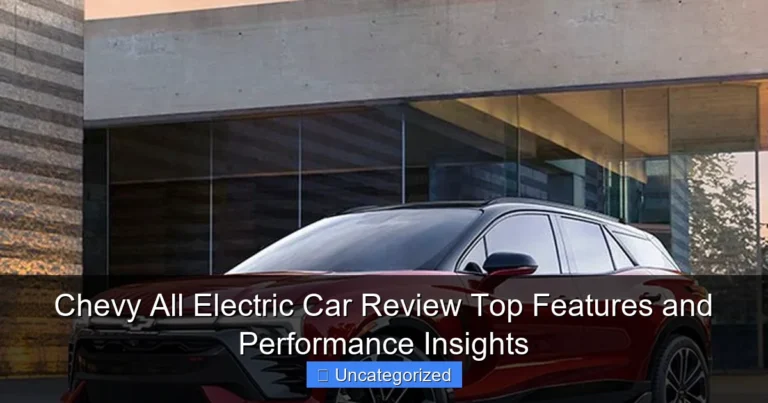
Is Chevy Trax an Electric Car Discover the Truth Here

Featured image for is chevy trax an electric car
Image source: carconfections.com
The Chevy Trax is not an electric car—it’s a compact SUV powered by a traditional 1.2L turbocharged gasoline engine. If you’re looking for an eco-friendly Chevy, consider the Bolt EV instead, as the Trax delivers fuel efficiency, not zero emissions.
Key Takeaways
- Not fully electric: The Chevy Trax is a gas-powered SUV with no EV variant.
- Fuel efficiency: Offers 28–32 MPG, ideal for budget-conscious drivers.
- Tech-ready: Features modern infotainment but lacks EV charging ports.
- Future models: Chevy plans EVs; Trax may electrify by 2025.
- Compare alternatives: Consider Bolt EUV for Chevy’s electric SUV option.
- Cost-effective: Priced lower than most EVs, but higher fuel costs long-term.
📑 Table of Contents
- Is the Chevy Trax an Electric Car? Unpacking the Truth
- Understanding the Chevy Trax: A Gasoline-Powered Compact SUV
- Electric vs. Gasoline: Key Differences in Vehicle Types
- Chevy’s Electric Vehicle Lineup: Where Does the Trax Fit?
- Performance, Efficiency, and Ownership Experience
- Data Table: Chevy Trax vs. Electric Alternatives
- Conclusion: The Chevy Trax Is Not an Electric Car—And That’s Okay
Is the Chevy Trax an Electric Car? Unpacking the Truth
When it comes to choosing a new vehicle, one of the most pressing questions for many consumers is whether a particular model is electric. With the rising popularity of electric vehicles (EVs), automakers are racing to introduce new models that cater to eco-conscious drivers, tech enthusiasts, and those looking to reduce long-term fuel costs. Among the many compact SUVs on the market, the Chevy Trax has garnered attention for its affordability, stylish design, and practicality. But is the Chevy Trax an electric car? This question has sparked debate among car buyers, especially as Chevrolet expands its EV lineup with models like the Bolt EV and the upcoming Equinox EV.
To answer this question definitively, we need to look beyond marketing buzzwords and examine the Trax’s powertrain, fuel type, emissions, and technological capabilities. While the Trax shares a brand with Chevrolet’s electric vehicles, it is fundamentally different in its core engineering. In this comprehensive guide, we’ll explore the truth behind the Chevy Trax’s propulsion system, compare it to electric and hybrid vehicles, examine its performance and efficiency, and help you determine whether this compact SUV fits your needs—whether you’re seeking an electric car or a reliable gasoline-powered alternative.
Understanding the Chevy Trax: A Gasoline-Powered Compact SUV
The Chevy Trax is a subcompact crossover SUV that has been a staple in Chevrolet’s lineup since its introduction in 2013 (with a refresh in 2024 for the U.S. market). Designed for urban commuters, small families, and budget-conscious buyers, the Trax offers a blend of affordability, maneuverability, and modern features. However, despite its modern styling and tech-forward interior, the Trax remains a traditional internal combustion engine (ICE) vehicle.

Visual guide about is chevy trax an electric car
Image source: gmauthority.com
Powertrain and Engine Specifications
The 2024 Chevy Trax is powered by a 1.2-liter turbocharged three-cylinder engine. This engine produces 137 horsepower and 162 lb-ft of torque, paired with a continuously variable transmission (CVT). The powertrain is front-wheel drive only, with no all-wheel drive option available in the current generation. This setup is optimized for fuel efficiency and city driving, not for electric propulsion.
Unlike electric vehicles that rely on battery packs and electric motors, the Trax uses gasoline as its sole energy source. The fuel tank capacity is 13.2 gallons, and it runs on regular unleaded gasoline (87 octane), making it convenient for everyday refueling at standard gas stations. There is no charging port, no battery pack under the floor, and no regenerative braking system—all hallmarks of electric vehicles.
No Electrification in the Current Generation
It’s important to clarify that the 2024 Chevy Trax does not offer a hybrid, plug-in hybrid, or fully electric variant. Chevrolet has not announced plans to electrify the Trax in the near future. While the brand is investing heavily in EVs—such as the Equinox EV, Blazer EV, and Silverado EV—the Trax remains a standalone gasoline model. This decision likely stems from its position as an entry-level vehicle, where cost efficiency and simplicity are prioritized over advanced powertrain technology.
Tip: If you’re looking for an affordable electric SUV from Chevrolet, consider the Chevy Bolt EV (discontinued but available as used) or wait for the 2024 Equinox EV, which starts at a similar price point and offers up to 300 miles of range.
Electric vs. Gasoline: Key Differences in Vehicle Types
To better understand why the Chevy Trax is not an electric car, it’s essential to compare the fundamental differences between electric vehicles (EVs), hybrid vehicles (HEVs/PHEVs), and traditional gasoline-powered cars. These differences affect everything from performance and maintenance to environmental impact and total cost of ownership.
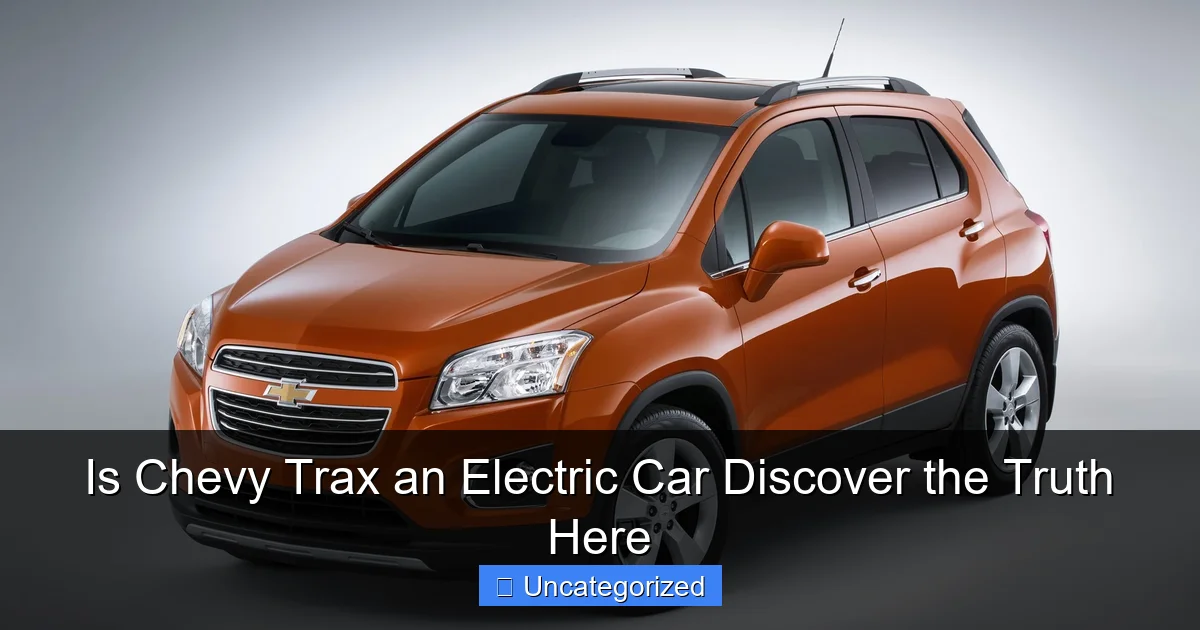
Visual guide about is chevy trax an electric car
Image source: images.hgmsites.net
Power Source and Energy Conversion
- Electric Vehicles (EVs): Use large battery packs (typically lithium-ion) to power one or more electric motors. Energy is stored electrically and converted directly into motion. Examples: Tesla Model Y, Ford Mustang Mach-E, Chevy Bolt EV.
- Hybrid Electric Vehicles (HEVs): Combine a gasoline engine with a small battery and electric motor. The battery is charged through regenerative braking and engine operation—no plug-in charging required. Example: Toyota RAV4 Hybrid.
- Plug-in Hybrids (PHEVs): Have larger batteries than HEVs and can be charged via an external power source, allowing for limited electric-only driving (usually 20–50 miles). Example: Toyota RAV4 Prime.
- Gasoline Vehicles (ICE): Rely solely on internal combustion engines that burn gasoline to generate power. No electric propulsion. Example: Chevy Trax, Honda HR-V.
The Chevy Trax falls squarely into the last category. It lacks a battery capable of storing electrical energy for propulsion and does not have an electric motor. Its engine burns fuel to create mechanical energy, which drives the wheels through a transmission.
Charging vs. Refueling
One of the most visible differences between EVs and gasoline cars is how they are “recharged.” EVs require access to charging infrastructure—home chargers, public stations, or fast chargers. Refueling takes minutes to hours, depending on the charger type.
In contrast, the Chevy Trax refuels in under 5 minutes at any gas station. This convenience is a major advantage for drivers who lack home charging access or frequently travel long distances. However, it also means the Trax emits tailpipe pollutants, unlike EVs, which have zero direct emissions.
Environmental and Efficiency Impact
While the Trax achieves an EPA-estimated 30 mpg combined (28 city / 32 highway), this pales in comparison to the energy efficiency of electric vehicles. EVs convert over 77% of electrical energy from the grid to power at the wheels, while gasoline vehicles convert only about 12–30% of the energy stored in gasoline. Additionally, EVs produce no tailpipe emissions, reducing air pollution and greenhouse gas emissions—especially in regions with clean energy grids.
Example: A 2024 Chevy Bolt EV has an MPGe (miles per gallon equivalent) of 120 combined, meaning it uses energy far more efficiently than the Trax, even when accounting for electricity generation.
Chevy’s Electric Vehicle Lineup: Where Does the Trax Fit?
Chevrolet is actively transitioning toward an all-electric future. The company has committed to phasing out gasoline-powered vehicles by 2035 and is rolling out a suite of EVs under the Ultium platform. However, the Trax is not part of this electric strategy—at least not yet.
Chevy’s Current and Upcoming Electric Models
- Chevy Bolt EV/EUV: Discontinued after 2023 but still available in the used market. Offers 259 miles of range, compact size, and low cost (under $27,000 used).
- Chevy Equinox EV: Launching in 2024 with a starting price of $30,000. Offers up to 300 miles of range, spacious interior, and modern tech.
- Chevy Blazer EV: A midsize electric SUV with up to 320 miles of range, performance trims (like the SS), and advanced infotainment.
- Chevy Silverado EV: An electric pickup truck with up to 450 miles of range, targeted at commercial and personal users.
These models are built on GM’s Ultium battery and motor platform, which allows for flexible vehicle architectures, faster charging, and higher energy density. The Trax, on the other hand, uses a conventional platform with no EV architecture, making it impossible to convert into an electric model without a complete redesign.
Why the Trax Isn’t Electric (Yet)
Chevrolet likely kept the Trax as a gasoline vehicle for several strategic reasons:
- Cost Efficiency: The Trax is priced to compete with entry-level SUVs like the Hyundai Venue and Kia Seltos. Adding electric components would significantly increase its price.
- Market Positioning: The Trax targets buyers who prioritize affordability, simplicity, and immediate availability over cutting-edge technology.
- Production Simplicity: Using a proven gasoline platform reduces R&D and manufacturing costs, allowing Chevrolet to offer a low-priced SUV while investing in EVs elsewhere.
- Gradual Electrification: GM is electrifying larger, higher-margin vehicles first (like the Silverado and Blazer), reserving smaller EVs for future releases.
Tip: If you love the Trax’s size and price but want an electric option, keep an eye on future GM announcements. An electric Trax could emerge in the late 2020s as battery costs decline and EV infrastructure expands.
Performance, Efficiency, and Ownership Experience
While the Chevy Trax isn’t electric, it still offers a compelling ownership experience for the right buyer. Let’s dive into its real-world performance, fuel economy, maintenance, and cost of ownership to help you make an informed decision.
Real-World Fuel Economy and Driving Range
The 2024 Chevy Trax achieves:
- 28 mpg city
- 32 mpg highway
- 30 mpg combined
With a 13.2-gallon fuel tank, this translates to a driving range of approximately 396 miles on a full tank. This is sufficient for daily commutes and weekend trips, though less efficient than EVs or hybrids. For example:
- Chevy Bolt EV: 259 miles on a 65 kWh battery (equivalent to ~120 MPGe)
- Kia Niro Hybrid: 53 mpg combined (500+ mile range)
For city dwellers with access to charging, an EV may offer lower fuel costs. But for those without home charging, the Trax’s quick refueling and widespread gas station access remain a major advantage.
Maintenance and Long-Term Costs
Gasoline vehicles like the Trax have more moving parts than EVs, which can increase long-term maintenance costs. However, modern engines are highly reliable, and the Trax’s simple design helps keep service affordable.
- Oil changes: Every 7,500–10,000 miles (vs. EVs, which require no oil changes)
- Brake wear: Higher due to friction braking (EVs use regenerative braking, reducing brake wear by up to 50%)
- Engine and transmission: Covered under 5-year/60,000-mile warranty
- Fuel costs: At $3.50/gallon and 15,000 annual miles, expect ~$1,750/year in fuel (vs. ~$600/year for an EV at $0.15/kWh)
Example: Over 5 years, the Trax may cost $8,750 in fuel, while a Bolt EV would cost $3,000—a $5,750 savings. However, the Trax’s lower purchase price (~$22,000 vs. $30,000 for the Equinox EV) can offset this difference.
Driving Experience and Features
The Trax delivers a smooth, comfortable ride with responsive steering and a quiet cabin. The 1.2L turbo engine provides adequate acceleration for city driving, though it can feel underpowered on highways. Standard features include:
- 8-inch touchscreen with Apple CarPlay and Android Auto
- Wi-Fi hotspot
- Automatic emergency braking
- Lane keep assist
- Available heated seats and sunroof
While not as tech-heavy as EVs, the Trax offers modern amenities at a budget-friendly price.
Data Table: Chevy Trax vs. Electric Alternatives
| Feature | Chevy Trax (2024) | Chevy Bolt EV (2023) | Chevy Equinox EV (2024) | Kia Niro Hybrid |
|---|---|---|---|---|
| Powertrain | 1.2L Turbo I3 (Gasoline) | Electric Motor (65 kWh) | Electric Motor (Up to 85 kWh) | 1.6L I4 + Electric Motor (Hybrid) |
| Horsepower | 137 hp | 200 hp | 290 hp (AWD) | 139 hp |
| Range | 396 miles (gas) | 259 miles (electric) | 300 miles (electric) | 588 miles (combined) |
| Fuel Economy / MPGe | 30 mpg | 120 MPGe | 100–110 MPGe | 53 mpg |
| Starting Price | $21,495 | $26,500 (used) | $30,000 | $26,940 |
| Refueling/Charging Time | 5 minutes (gas station) | 30 min (DC fast charge, 10–80%) | 30–40 min (DC fast charge) | 5 minutes (gas station) |
| Emissions | Tailpipe emissions (CO2, NOx) | Zero tailpipe emissions | Zero tailpipe emissions | Reduced emissions vs. ICE |
| Best For | Budget buyers, city drivers, no charging access | Urban EV drivers, low fuel costs | EV buyers wanting space and range | Hybrid efficiency seekers |
Conclusion: The Chevy Trax Is Not an Electric Car—And That’s Okay
After a thorough examination, the answer to the question “Is the Chevy Trax an electric car?” is a definitive no. The 2024 Chevy Trax is a gasoline-powered subcompact SUV with a 1.2-liter turbocharged engine, no battery pack, and no electric motor. It refuels at gas stations, emits tailpipe pollutants, and operates like a traditional internal combustion vehicle. While Chevrolet is expanding its electric lineup with exciting models like the Equinox EV and Blazer EV, the Trax remains a standalone ICE vehicle designed for affordability and simplicity.
That said, the Trax still offers significant value. With a starting price under $22,000, modern tech features, good fuel economy, and a compact footprint perfect for city driving, it’s an excellent choice for budget-conscious buyers who aren’t ready for the EV lifestyle—or who lack access to charging infrastructure. It’s also a practical option for those who prioritize quick refueling and lower upfront costs over long-term energy savings.
For drivers seeking an electric alternative, Chevrolet’s future is bright. The upcoming Equinox EV offers similar size and price with full electric propulsion, while the Bolt EV (available used) delivers exceptional value. As battery technology improves and charging networks expand, we may even see an electric Trax in the coming years.
Ultimately, the choice between the Trax and an electric car depends on your priorities: Do you value immediate affordability and convenience? Choose the Trax. Do you want zero emissions, lower fuel costs, and cutting-edge tech? Go electric. Either way, Chevrolet is building a diverse lineup to meet your needs—just make sure you know what you’re buying. The truth is clear: the Chevy Trax is not an electric car, but it’s a solid, reliable SUV in its own right.
Frequently Asked Questions
Is the Chevy Trax an electric car?
No, the Chevy Trax is not an electric car. It is a compact SUV powered by a traditional gasoline engine, offering reliable fuel efficiency for daily driving.
Does the Chevy Trax have an electric version?
Currently, the Chevy Trax does not have an electric or hybrid variant. It remains a gas-powered SUV, though Chevrolet offers other models like the Bolt EV for electric options.
What type of fuel does the Chevy Trax use?
The Chevy Trax runs on regular unleaded gasoline. Its 1.4L turbocharged engine delivers a balance of performance and efficiency, averaging around 26–31 MPG combined.
Is the Chevy Trax an EV or plug-in hybrid?
The Chevy Trax is neither an EV nor a plug-in hybrid. It is a conventional internal combustion engine vehicle with no battery-electric or plug-in hybrid powertrain available.
Why isn’t the Chevy Trax an electric car?
Chevrolet designed the Trax as a budget-friendly, gas-powered SUV to meet demand for affordable compact vehicles. For electric options, Chevy focuses on models like the Equinox EV and Silverado EV.
Will the Chevy Trax become an electric car in the future?
Chevrolet has not announced plans to electrify the Trax yet. However, as the auto industry shifts toward EVs, future Trax generations may include hybrid or electric variants.