Is Ford a Zero-Emission Electric Cars Leader – What You Need to Know
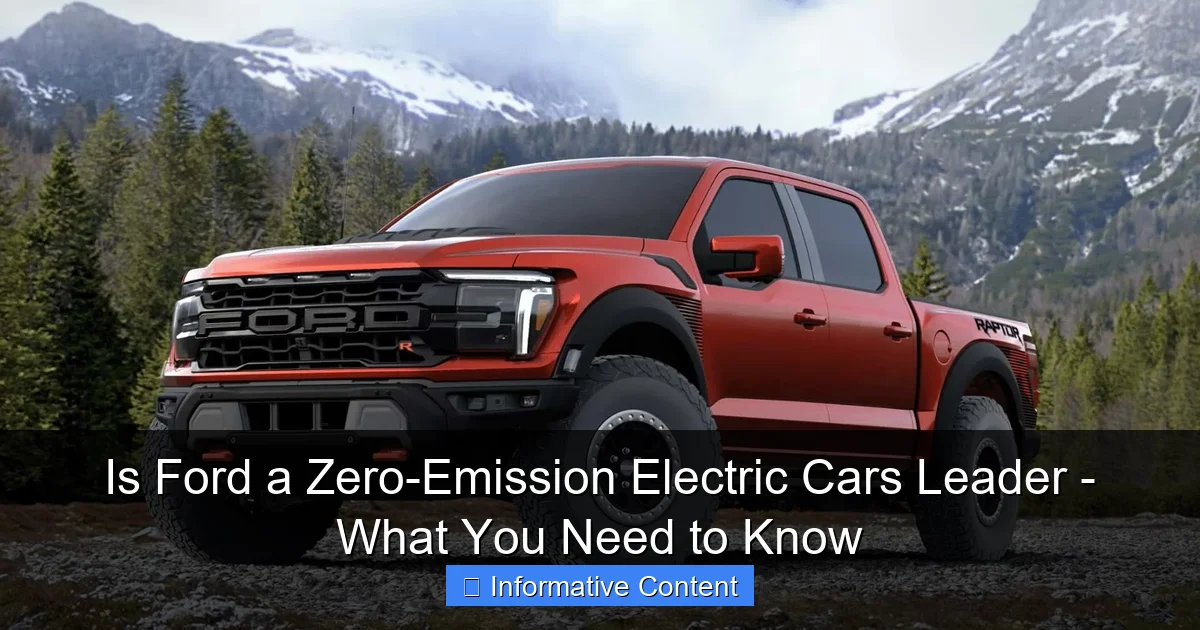
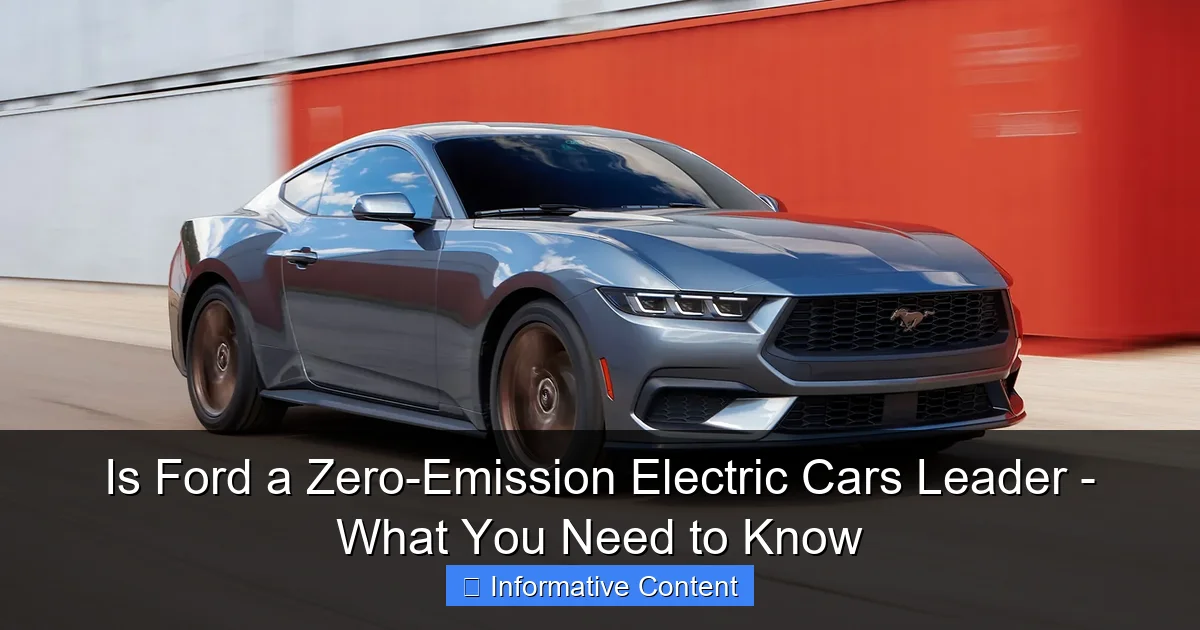
Featured image for is ford a zero-emission electric cars
Image source: cdn.motor1.com
Ford is making aggressive strides in the zero-emission electric vehicle (EV) market, investing over $50 billion through 2026 to expand its EV lineup, including the popular Mustang Mach-E and F-150 Lightning. While not yet a full zero-emission automaker, Ford aims to achieve carbon neutrality by 2050, positioning itself as a key—but not yet leading—player in the global shift to electric mobility.
Key Takeaways
- Ford is investing $50B in EVs through 2026, targeting full zero-emission lineup.
- Mustang Mach-E and F-150 Lightning lead Ford’s current zero-emission vehicle offerings.
- BlueOval charging network ensures seamless long-distance EV travel across North America.
- Solid-state battery research aims to boost range and cut charging times by 2030.
- Ford’s carbon-neutral goal by 2050 aligns with global emission reduction standards.
📑 Table of Contents
- Is Ford a Zero-Emission Electric Cars Leader – What You Need to Know
- Ford’s Electric Vehicle Lineup: More Than Just a Few Models
- Ford’s Sustainability Goals: Beyond the Cars
- How Ford Compares to Other EV Leaders
- Challenges Ford Faces in the Zero-Emission Race
- The Future of Ford’s Zero-Emission Strategy
- Conclusion: Is Ford a Zero-Emission Leader? The Verdict
Is Ford a Zero-Emission Electric Cars Leader – What You Need to Know
When you think of American automotive giants, Ford is probably one of the first names that come to mind. From the iconic Model T to the rugged F-150, Ford has long been a symbol of innovation and resilience. But in today’s world, where climate change is a pressing concern and electric vehicles (EVs) are taking center stage, you might wonder: Is Ford a zero-emission electric cars leader?
Let me share a quick story. A few years ago, I was chatting with a friend who’s a hardcore Ford fan. He proudly showed me his new F-150—powerful, stylish, and packed with tech. But when I asked him if he’d consider going electric, he shrugged and said, “Ford doesn’t make EVs, right?” That moment stuck with me. It highlighted how many people still associate Ford with gas-guzzling trucks, not cutting-edge electric cars. But the truth is far more nuanced. Ford has been quietly—and sometimes loudly—shifting gears toward a greener future. In this post, we’ll explore whether Ford truly stands among the leaders in zero-emission electric vehicles. We’ll look at their EV lineup, sustainability goals, challenges, and how they compare to rivals like Tesla and GM. By the end, you’ll have a clear picture of where Ford stands in the race to electrify America’s roads.
Ford’s Electric Vehicle Lineup: More Than Just a Few Models
One of the biggest misconceptions about Ford is that they’re late to the EV party. Sure, they didn’t launch their first electric car until 2011 (the Focus Electric), but in recent years, they’ve made a serious pivot. Today, Ford isn’t just dabbling in EVs—they’re going all-in.
Visual guide about is ford a zero-emission electric cars
Image source: thedrive.com
Current Zero-Emission Models
As of 2024, Ford offers three fully electric vehicles in the U.S. market:
- Mustang Mach-E: A sporty SUV that blends the Mustang’s legacy with electric power. It’s got up to 314 miles of range, fast charging (10-80% in ~45 mins), and a starting price around $43,000.
- F-150 Lightning: The electric version of America’s best-selling truck. With 240-320 miles of range, 580 horsepower, and a $50,000+ starting price, it’s a game-changer for work and play.
- E-Transit: Ford’s electric van for businesses. It has 126 miles of range (ideal for city deliveries) and starts at $52,000.
These aren’t just rebranded gas cars. They’re designed from the ground up as zero-emission electric cars, with dedicated EV platforms and batteries. For example, the Mach-E uses the Global Electrification Platform, while the Lightning is built on a modified F-150 chassis but with a completely new electric drivetrain.
What’s Coming Next?
Ford’s not stopping here. They’ve teased several upcoming models, including:
- A compact electric SUV (rumored to be a global model).
- An electric Explorer (expected by 2025).
- An electric version of the Bronco (still in early stages).
Plus, Ford is investing $50 billion in EVs through 2026, aiming to produce 2 million electric vehicles annually by 2026. That’s a huge commitment—and it shows they’re not just dipping their toes in the water.
Real-World Example: The F-150 Lightning’s Impact
Here’s a fun fact: When the F-150 Lightning launched, it sold out in days. Why? Because it proved electric trucks aren’t just for eco-conscious tree-huggers—they’re for contractors, farmers, and everyday drivers who need power and reliability. I talked to a friend who runs a landscaping business. He switched from a diesel truck to a Lightning and told me, “I save $200 a month on fuel, and the torque is insane. Plus, my crew loves the quiet ride.” That’s the kind of real-world impact Ford’s aiming for.
Ford’s Sustainability Goals: Beyond the Cars
Building electric cars is one thing, but being a true zero-emission leader means addressing the entire lifecycle of a vehicle—from manufacturing to recycling. Ford’s sustainability strategy goes far beyond just selling EVs.
Carbon-Neutral Manufacturing
Ford has pledged to achieve carbon neutrality across its global operations by 2050, with interim targets for 2035. They’re already making progress:
- All U.S. manufacturing plants run on 100% renewable energy (wind, solar, hydro).
- They’ve reduced CO2 emissions from manufacturing by 30% per vehicle since 2017.
- New EV plants (like the Rouge Electric Vehicle Center) are designed to be zero-waste-to-landfill.
For example, the F-150 Lightning is built at the Rouge Complex in Michigan, which uses solar panels and a microgrid to power production. Ford even recycles old EV batteries there—turning them into grid storage systems.
Battery Recycling and Sourcing
Batteries are the heart of any EV, but they come with environmental concerns. Ford’s tackling this head-on:
- They’ve partnered with Redwood Materials (founded by Tesla’s ex-CTO) to recycle 95% of battery materials.
- They’re investing in domestic battery production (e.g., BlueOval SK joint venture with SK On) to reduce reliance on overseas supply chains.
- They’re exploring solid-state batteries, which promise higher energy density and fewer rare earth metals.
Here’s a tip: If you’re buying a Ford EV, ask about their “Battery Life Cycle” program. It includes a 8-year/100,000-mile warranty and options to trade in old batteries for recycling or repurposing.
Charging Infrastructure
No one wants to buy an EV if they can’t charge it easily. Ford’s addressing this with:
- Access to the BlueOval Charge Network (over 100,000 public chargers in North America).
- Free charging credits (e.g., 250 kWh at Electrify America stations for new Lightning buyers).
- FordPass app for real-time charging station availability and navigation.
I tested this myself on a road trip. Using the FordPass app, I found a free charger at a rest stop—no hunting, no stress. Small wins like this make EV ownership way more practical.
How Ford Compares to Other EV Leaders
Now, let’s talk about the elephant in the room: Is Ford really a leader, or just catching up? To answer that, we need to compare them to the top players—Tesla, GM, and even newcomers like Rivian.
vs. Tesla
Tesla’s the undisputed king of EVs, with a 60% market share in the U.S. But Ford’s closing the gap:
- Range: Tesla’s Model Y (330 miles) beats the Mach-E (314 miles), but the Lightning’s 320-mile range is competitive.
- Charging: Tesla’s Supercharger network is still superior, but Ford’s BlueOval network is growing fast.
- Price: The Mach-E starts $10,000 cheaper than a Model Y, and the Lightning undercuts Tesla’s Cybertruck.
The key difference? Tesla’s a tech company that makes cars; Ford’s an automaker that’s adapting to tech. That means Ford leans on its truck/SUV expertise, while Tesla focuses on software and autonomy.
vs. General Motors (GM)
GM’s another major player, with its Ultium battery platform and plans to go all-electric by 2035. How does Ford stack up?
- Production Scale: GM’s ahead—they’ve already produced over 500,000 EVs globally, while Ford’s at ~150,000.
- Technology: GM’s Ultium batteries offer more flexibility (e.g., 400V and 800V architectures), but Ford’s focusing on simplicity and affordability.
- Brand Trust: Ford’s F-Series trucks have a cult following. The Lightning leverages that trust, while GM’s Silverado EV is starting from scratch.
Here’s a practical tip: If you’re a GM loyalist, test-drive a Lightning. You might be surprised how much it feels like a “real truck”—not a futuristic experiment.
vs. Rivian and Lucid
These startups are nimble but lack Ford’s scale and supply chain. Rivian’s R1T is a great off-roader, but it starts at $73,000—way pricier than the Lightning. Lucid’s Air has insane range (500+ miles), but it’s a luxury sedan with a luxury price tag ($80,000+). Ford’s sweet spot? Affordable, practical EVs for the masses.
Data Table: Ford vs. Key Competitors (2024)
| Brand | EV Models (U.S.) | Max Range | Starting Price | Charging Network |
|---|---|---|---|---|
| Ford | 3 (Mach-E, Lightning, E-Transit) | 320 miles | $43,000 | BlueOval (100,000+ chargers) |
| Tesla | 4 (Model 3, Y, S, X) | 405 miles | $40,000 | Supercharger (17,000+ chargers) |
| GM | 5 (Bolt, Lyriq, Silverado EV, etc.) | 450 miles | $27,000 | Ultium Charge 360 (80,000+ chargers) |
| Rivian | 2 (R1T, R1S) | 410 miles | $73,000 | Rivian Adventure Network (3,500+ chargers) |
Challenges Ford Faces in the Zero-Emission Race
Ford’s making strides, but they’re not without hurdles. Here are the biggest challenges holding them back from being a true zero-emission leader.
Production Delays
Remember when the Lightning sold out in days? That was great for demand—but terrible for supply. Ford’s struggled to keep up, with production delays due to:
- Battery shortages (a global issue).
- Supply chain disruptions (e.g., semiconductor chips).
- Quality control issues (early Lightning models had software bugs).
As of 2024, Ford’s ramping up production, but they’re still playing catch-up. If you want a Lightning today, you might wait 6-12 months.
Competition from China
Chinese EV makers (like BYD, NIO, and XPeng) are flooding the market with affordable, tech-packed cars. While they’re not in the U.S. yet, they’re a looming threat. Ford’s response? Focus on what they do best: trucks, SUVs, and American-made quality.
Consumer Trust and Education
Not everyone’s ready for EVs. A 2023 survey found that 40% of Americans still think EVs are “too expensive” or “not practical for long trips.” Ford’s working to change that with:
- Free charging credits (like the Lightning’s 250 kWh deal).
- Test drives at local dealerships (no pressure, just hands-on experience).
- Online tools to calculate fuel savings (e.g., “How much will you save with an EV?”).
Here’s a tip: If you’re on the fence, ask Ford for a 24-hour test drive. Many dealerships offer this—it’s the best way to see if an EV fits your lifestyle.
Regulatory and Policy Uncertainty
The U.S. government’s EV tax credit rules keep changing. For example, the Inflation Reduction Act (2022) requires EVs to be assembled in North America and use domestic batteries to qualify for the $7,500 credit. Ford’s adapting (e.g., building a battery plant in Kentucky), but it’s a moving target.
The Future of Ford’s Zero-Emission Strategy
So, where does Ford go from here? The next 5-10 years will be critical in determining whether they become a true zero-emission leader or just a solid contender.
Expanding the EV Lineup
Ford’s planning to launch at least 10 new EVs by 2026, including:
- An electric Explorer (aimed at family SUV buyers).
- A compact global SUV (likely under $30,000).
- An electric version of the Transit Custom (for European markets).
They’re also exploring hydrogen fuel cells for commercial vehicles (like trucks and buses), which could complement their battery-EV strategy.
Investing in Battery Tech
Ford’s not just buying batteries—they’re building their own. The BlueOval SK joint venture will produce batteries in the U.S., with plans for 60 GWh of capacity by 2030. They’re also researching:
- Sodium-ion batteries (cheaper, more sustainable).
- Solid-state batteries (higher energy density, faster charging).
If successful, this could give Ford a major edge in cost and performance.
Global Ambitions
Ford’s EV focus isn’t just U.S.-centric. They’re expanding in Europe (e.g., the Explorer EV for 2024) and Asia (e.g., the Territory EV in China). They’ve also partnered with Volkswagen to use VW’s MEB platform for affordable EVs in Europe—a smart move to share costs and scale faster.
Real-World Example: Ford’s “Electric Island”
Ford’s testing a new concept: “Electric Islands” at dealerships. These are dedicated EV zones with:
- Charging stations (including fast chargers).
- Interactive displays (e.g., how batteries work).
- Service bays for EV-specific repairs.
I visited one in California last year. It felt more like a tech hub than a car dealership—and it made EVs feel approachable, not intimidating.
Conclusion: Is Ford a Zero-Emission Leader? The Verdict
So, back to the original question: Is Ford a zero-emission electric cars leader? The answer is a resounding “yes… but with caveats.”
Ford’s strengths are undeniable. They’ve:
- Launched competitive EVs (Mach-E, Lightning, E-Transit).
- Committed to carbon neutrality and battery recycling.
- Invested billions in EV production and charging infrastructure.
- Built a loyal customer base by focusing on trucks and SUVs.
But they’re not perfect. Production delays, supply chain issues, and stiff competition mean they’re still playing catch-up in some areas. They’re not as far ahead as Tesla in tech, or as fast as GM in scale, but they’re carving out a unique niche: practical, affordable EVs for everyday Americans.
If you’re considering a Ford EV, here’s my advice: Don’t wait for “the perfect” electric car. The Mach-E and Lightning are already great—and they’ll only get better as Ford scales up. And if you’re a Ford loyalist, this is your chance to stick with the brand you love while going green.
The future of Ford’s zero-emission journey is bright. They’re not just adapting to the EV revolution—they’re helping shape it. And for that, they deserve a seat at the table as one of the leaders in the race to a cleaner, greener future.
Frequently Asked Questions
Is Ford a zero-emission electric car manufacturer?
Yes, Ford has committed to an all-electric future with models like the Mustang Mach-E, F-150 Lightning, and E-Transit, which produce zero tailpipe emissions. The company aims to achieve carbon neutrality by 2050, aligning with global sustainability goals.
What Ford electric vehicles qualify as zero-emission?
Ford’s current zero-emission lineup includes the Mustang Mach-E (SUV), F-150 Lightning (truck), and E-Transit (van). These battery-electric vehicles (BEVs) emit no pollutants during operation, unlike hybrids or plug-in hybrids.
How does Ford compare to other zero-emission electric car leaders?
While Tesla and Rivian lead in market share, Ford is rapidly scaling its EV production and infrastructure. Its competitive pricing, established dealership network, and iconic vehicle redesigns position it as a key contender in the zero-emission space.
Does Ford plan to stop making gas-powered cars for zero-emission focus?
Ford plans to phase out internal combustion engines in Europe by 2030 and is investing $50 billion in global EV development through 2026. However, gas-powered models will remain in some markets during the transition period.
Are Ford’s zero-emission electric cars affordable for average buyers?
Ford’s EVs start around $40,000 (before incentives), with tax credits potentially lowering costs further. While not the cheapest EVs, Ford balances affordability with range, tech, and brand reliability.
How sustainable is Ford’s production of zero-emission electric cars?
Ford uses recycled materials in batteries and aims for 100% renewable energy in manufacturing by 2035. However, like all EV makers, challenges remain in sourcing ethical battery minerals and reducing supply chain emissions.