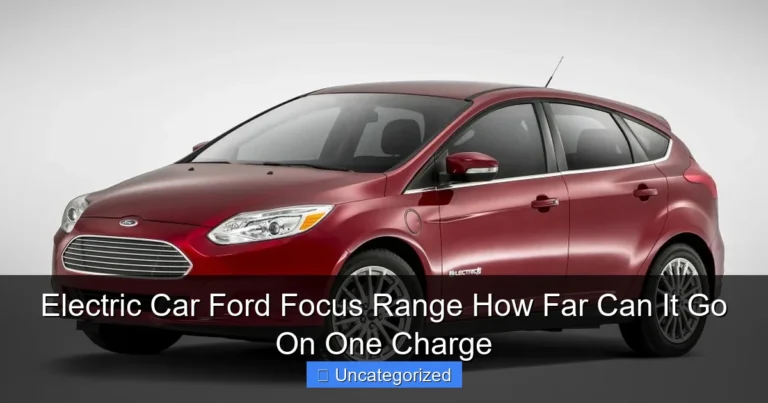
Is Ford Developing an Electric Car The Future of Ford EVs
Featured image for is ford developing an electric car
Ford is aggressively developing new electric vehicles, signaling a bold commitment to an all-electric future with plans to invest over $50 billion in EV technology through 2026. From the F-150 Lightning to the upcoming Explorer EV, Ford is expanding its electric lineup to dominate the rapidly evolving EV market and compete with Tesla and other automakers.
Key Takeaways
- Ford is investing $50B+ in EV development through 2026, signaling serious commitment.
- New EV platforms are coming with longer range and faster charging capabilities.
- Solid-state batteries are prioritized to boost performance and reduce costs by 2030.
- Dealer network will shift to support EV sales and service nationwide.
- Mustang Mach-E and F-150 Lightning prove Ford’s EV tech is market-ready today.
- EV production targets 2M+ units annually by 2026, doubling current capacity.
📑 Table of Contents
- Is Ford Developing an Electric Car? The Future of Ford EVs
- Ford’s Bold Leap into the EV Revolution
- Key Electric Models: What’s on the Road and What’s Coming
- Charging Infrastructure and Range: Solving the Biggest EV Hurdles
- Battery Tech and Sustainability: The Heart of Ford’s EV Strategy
- Challenges and Criticisms: Where Ford’s EV Journey Stumbles
- The Road Ahead: What’s Next for Ford EVs?
Is Ford Developing an Electric Car? The Future of Ford EVs
Imagine this: you’re driving down a quiet country road, the sun setting behind rolling hills, and the only sound is the soft hum of your car’s electric motor. No engine roar, no exhaust fumes—just you, the open road, and the future of driving. That future is already here, and Ford is racing to make it mainstream. With the world shifting toward sustainability and clean energy, automakers are under pressure to deliver electric vehicles (EVs) that are practical, affordable, and exciting. So, is Ford developing an electric car? The short answer is a resounding yes. But the long answer? It’s a fascinating journey of innovation, ambition, and some serious competition.
Ford isn’t just dipping its toes into the EV market—it’s diving in headfirst. From the iconic Mustang Mach-E to the all-electric F-150 Lightning, Ford is transforming its lineup to meet the demands of a new generation of drivers. But what does this mean for you? Whether you’re a longtime Ford fan or a curious first-time EV buyer, understanding Ford’s electric strategy can help you decide if their EVs are the right fit for your lifestyle, budget, and environmental values. Let’s explore how Ford is shaping the future of electric mobility and what it means for the automotive world.
Ford’s Bold Leap into the EV Revolution
From Gas Guzzlers to Electric Powerhouses
Ford has a long history of innovation—from the Model T to the F-Series trucks. But the shift to electric vehicles marks one of the most significant transformations in its 120-year legacy. The company has committed to investing over $50 billion in EVs and battery technology by 2026. This isn’t just a side project; it’s a full-scale pivot.
Think of it like this: if Ford were a chef, it would be reinventing its entire menu while still honoring its classic recipes. The F-150, America’s best-selling truck for over 40 years, is now available as the all-electric F-150 Lightning. It retains the rugged, work-ready appeal of the original but swaps the gas engine for a battery-powered drivetrain. This move shows Ford’s strategy: electrify its most popular models to ease customers into the EV world without sacrificing utility or familiarity.
Why Now? The Driving Forces Behind Ford’s EV Push
Several factors are pushing Ford toward electrification:
- Regulatory pressure: Stricter emissions standards in the U.S. and EU are forcing automakers to reduce carbon footprints.
- Consumer demand: More buyers are prioritizing sustainability, lower operating costs, and cutting-edge tech.
- Competition: Tesla’s dominance and the rise of Chinese EV brands like BYD are raising the stakes.
- Corporate goals: Ford aims to be carbon neutral by 2050, with a 50% EV sales target by 2030.
It’s not just about survival—it’s about staying relevant in a rapidly changing industry. And Ford isn’t doing this alone. Partnerships with battery manufacturers, charging networks, and tech companies are accelerating its EV ambitions.
Key Electric Models: What’s on the Road and What’s Coming
The Mustang Mach-E: Ford’s Electric Flagship
The Mustang Mach-E is Ford’s first all-electric SUV, and it’s a bold statement. Launched in 2021, it combines the Mustang’s sporty heritage with modern EV tech. With up to 314 miles of range (EPA-estimated), fast charging (10-80% in ~45 minutes), and a sleek design, it’s a strong contender in the midsize EV SUV market.
But it’s not perfect. Some traditional Mustang fans were skeptical at first—calling it “not a real Mustang.” However, real-world reviews show it delivers on performance, comfort, and tech. For example, the Mach-E GT Performance Edition can hit 0-60 mph in 3.5 seconds, rivaling some sports cars. It’s proof that Ford can blend performance and sustainability.
F-150 Lightning: The Electric Workhorse
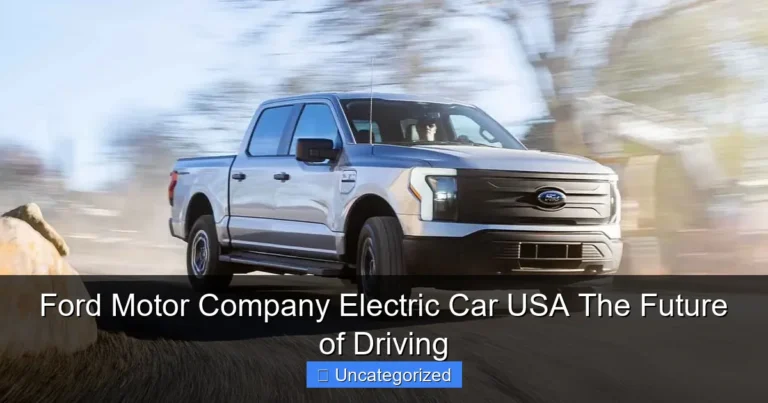
The F-150 Lightning is arguably Ford’s most important EV yet. It’s not just an electric truck—it’s a reimagined tool for work, play, and even power outages. With:
- Up to 320 miles of range (Extended Range model)
- 98 MPGe efficiency
- Pro Power Onboard (up to 9.6 kW of exportable power)
- Towing capacity up to 10,000 lbs
Imagine using your truck as a mobile generator during a storm—or charging your EV at a campsite. The Lightning turns the truck into a multi-purpose energy hub. And unlike some EVs, it doesn’t sacrifice utility for efficiency. Ford’s “Built Ford Tough” mantra now includes electric durability.
Future Models: The 2025+ Lineup
Ford has teased several upcoming EVs, including:
- All-new Explorer EV: A family-friendly SUV with 300+ miles of range, expected in 2025.
- All-electric Transit Van: Already available in Europe, coming to the U.S. for fleets and delivery services.
- Affordable $25,000 EV: In development, targeting budget-conscious buyers (launch date TBD).
These models show Ford’s focus on accessibility—not just high-end EVs. The goal is to offer electric options across all price points and vehicle types, from compact cars to heavy-duty trucks.
Charging Infrastructure and Range: Solving the Biggest EV Hurdles
Ford’s Charging Network: BlueOval™ Charge Network
One of the biggest concerns with EVs is charging. “Range anxiety” is real—but Ford is tackling it head-on. Through its BlueOval™ Charge Network, Ford gives EV owners access to over 100,000 public charging stations across North America, including:
- Electrify America
- EVgo
- ChargePoint
- And Ford’s own branded stations
This network covers 95% of U.S. highways, making long road trips easier. Plus, Ford EVs come with:
- FordPass Charging: An app that finds nearby stations, checks availability, and starts charging.
- Plug & Charge: Pay automatically when you plug in—no app needed.
- Home charging solutions: Ford offers installation of Level 2 chargers (240V) for home use.
For example, a Mach-E owner in Texas can drive from Dallas to Austin (195 miles) and charge at a station near the highway—no detours needed. It’s not perfect (some rural areas still lack fast chargers), but it’s a solid start.
Real-World Range: How Do Ford EVs Stack Up?
Let’s look at EPA-estimated ranges for key Ford EVs:
| Model | Trim | Range (Miles) | Fast Charging Time (10-80%) |
|---|---|---|---|
| Mustang Mach-E | Select (RWD) | 247 | 45 minutes |
| Mustang Mach-E | Extended Range (AWD) | 314 | 45 minutes |
| F-150 Lightning | Standard Range | 230 | 41 minutes |
| F-150 Lightning | Extended Range | 320 | 41 minutes |
| E-Transit | Van (Low Roof) | 126 | 30 minutes |
Note: Range varies based on driving habits, terrain, and weather. Cold winters can reduce range by 20-30%.
Tips to maximize range:
- Use one-pedal driving (regenerative braking) to recharge while slowing down.
- Pre-heat or pre-cool your car while it’s plugged in to save battery.
- Keep tire pressure at recommended levels—underinflated tires drain range.
Battery Tech and Sustainability: The Heart of Ford’s EV Strategy
Next-Gen Batteries: LFP and Beyond
Batteries are the soul of any EV. Ford is investing heavily in battery tech to improve range, reduce costs, and minimize environmental impact. Here’s what’s happening:
- LFP (Lithium Iron Phosphate) batteries: Used in the base Mach-E and F-150 Lightning, these batteries are cheaper, safer, and more durable than traditional NMC (Nickel Manganese Cobalt) batteries. They also use no cobalt, reducing ethical concerns about mining.
- Solid-state batteries: Ford is researching these for future models. They could offer 2x the range and faster charging by 2030.
- U.S. battery plants: Ford is building 3 battery factories in Kentucky and Tennessee (BlueOval SK) to produce 120 GWh of batteries annually by 2026.
For example, the F-150 Lightning’s LFP battery lasts longer in hot climates and can handle more charge cycles—ideal for truck owners who use their vehicles daily.
Recycling and Circular Economy
Ford isn’t just making EVs—it’s thinking about their entire lifecycle. The company has a battery recycling program to recover 95% of materials (like lithium, nickel, and cobalt) from old batteries. It’s also:
- Partnering with Redwood Materials to build a closed-loop recycling system.
- Designing EVs for easier disassembly and repair.
- Using recycled materials in new vehicles (e.g., seat fabrics from plastic bottles).
This matters because EVs are only as sustainable as their batteries. Ford’s approach could set a new standard for the industry.
Challenges and Criticisms: Where Ford’s EV Journey Stumbles
Production Delays and Supply Chain Woes
Ford’s EV ambitions have hit some bumps. In 2023, it paused production of the F-150 Lightning due to a battery fire issue (later resolved with a software update). It also delayed the Explorer EV launch from 2024 to 2025. Why?
- Supply chain shortages (semiconductors, battery materials)
- Quality control challenges (e.g., early Mach-Es had software glitches)
- High demand outpacing production capacity
These issues show that scaling EVs is harder than it looks. Even Tesla struggled with this in its early years.
Competition and Market Perception
Ford faces tough competition:
- Tesla: Still leads in range, tech, and charging network (Superchargers).
- GM: With the Chevy Blazer EV and Silverado EV, GM is a direct rival in the truck/SUV market.
- Hyundai/Kia: Offering EVs with longer ranges and better warranties.
Some critics also question Ford’s EV pricing. The Mach-E starts at $43,000, while the F-150 Lightning begins at $50,000—higher than some gas-powered models. Ford argues that long-term savings (lower fuel/maintenance costs) offset the upfront price.
But there’s hope: the upcoming $25,000 EV could change the game for budget buyers.
The Road Ahead: What’s Next for Ford EVs?
So, is Ford developing an electric car? Absolutely. But it’s doing much more than that—it’s building an entire electric ecosystem. From trucks and SUVs to vans and future affordable models, Ford is covering all bases. The company’s strategy is clear:
- Electrify its most popular vehicles to attract loyal customers.
- Invest in U.S.-based battery production to reduce reliance on foreign suppliers.
- Expand charging access to eliminate range anxiety.
- Prioritize sustainability from production to recycling.
The road ahead isn’t easy. Ford must overcome production challenges, fierce competition, and the need for even more affordable EVs. But with its legacy of innovation and a clear vision, Ford has the tools to succeed.
For you, the buyer, this means more choices, better technology, and a cleaner future. Whether you need a rugged truck, a sporty SUV, or a budget-friendly commuter, Ford’s EV lineup is growing to meet your needs. The future of Ford EVs isn’t just electric—it’s exciting, practical, and within reach.
So, the next time you’re at a dealership, take a test drive in a Mach-E or Lightning. You might just find that the future of driving is already here—and it’s made in America.
Frequently Asked Questions
Is Ford developing an electric car to compete with Tesla and other EV leaders?
Yes, Ford is actively developing electric vehicles (EVs) as part of its $50 billion investment in electrification through 2026. Models like the Mustang Mach-E and F-150 Lightning show Ford’s commitment to competing in the growing EV market.
What new electric vehicles is Ford planning to release in the next 5 years?
Ford plans to launch several new EVs, including the electric Explorer, a Puma EV, and next-gen pickup trucks built on its new “Skateboard” EV platform. The company aims for 2 million annual EV sales by 2026.
How does Ford’s electric car strategy align with its sustainability goals?
Ford’s EV development is central to its goal of achieving carbon neutrality by 2050, with interim targets to use 100% renewable energy in manufacturing by 2035. Electrifying bestsellers like the F-Series reduces emissions at scale.
Are Ford’s electric cars profitable yet, or is the company losing money on EV development?
While Ford’s EV division, Model e, reported losses in 2022–2023, the company expects profitability by 2026 as battery costs drop and production scales up. The gas-powered division still funds most EV investments.
What battery technology is Ford using for its electric car lineup?
Ford is adopting lithium iron phosphate (LFP) batteries for some models (like the 2024 F-150 Lightning) to reduce costs and cobalt reliance. It’s also building battery plants with SK On and exploring solid-state partnerships.
Can Ford’s electric car charging network support long-distance travel?
Ford’s BlueOval Charge Network includes 10,000+ fast chargers across North America, with partnerships like Electrify America. The F-150 Lightning offers Plug & Charge for seamless, pay-as-you-go charging.