Is Ford Doing Any Electric Car Research The Truth Revealed
Featured image for is ford doing any electric car research
Yes, Ford is heavily investing in electric car research, with a bold commitment to spend over $50 billion through 2026 to expand its EV lineup and build new battery plants. The automaker is actively developing next-gen electric platforms, software, and charging solutions, proving it’s not just keeping up with the EV revolution—it’s aiming to lead it.
Key Takeaways
- Ford is investing $50B in EV research and production through 2026.
- New EV platforms are being developed for next-gen electric vehicles.
- Solid-state batteries are a key focus for future Ford EVs.
- BlueCruise tech shows Ford’s commitment to EV autonomy and innovation.
- Retooling factories accelerates Ford’s shift toward electric vehicle manufacturing.
- Partnerships with SK and others boost battery tech and EV range capabilities.
📑 Table of Contents
- Is Ford Doing Any Electric Car Research? The Truth Revealed
- Ford’s Electric Car Research: The Big Picture
- Current Electric Car Models: What Ford Is Selling Now
- Future Electric Cars: What’s Coming Next
- Battery Technology: The Heart of Ford’s Research
- Challenges and Controversies: Where Ford Struggles
- Conclusion: The Road Ahead for Ford’s Electric Future
Is Ford Doing Any Electric Car Research? The Truth Revealed
Imagine you’re at a family dinner, and your cousin—who’s obsessed with electric vehicles (EVs)—leans in and asks, “Hey, is Ford doing any electric car research?” You pause. You know Ford made the Mustang and F-150, but do they even care about electric cars? It’s a fair question, especially when Tesla, Hyundai, and even BMW seem to dominate the EV headlines. The truth? Ford isn’t just dipping its toes into electric car research—it’s diving in headfirst, with billions invested, new factories rising, and plans that could reshape the future of driving. But it’s not all smooth roads. There are bumps, delays, and lessons learned along the way. Let’s peel back the curtain and see what Ford’s really doing behind the scenes.
As someone who’s followed the auto industry for years (and once waited three hours in line to test drive a Tesla Model 3), I’ve seen how fast things change. Ford, a company built on gas-guzzling trucks and muscle cars, now finds itself in a race against time, technology, and competitors. The good news? They’re not just keeping up—they’re betting big. The bad news? The transition isn’t always easy. In this post, we’ll explore Ford’s electric car research, their current EV lineup, future plans, and what it all means for you, the driver. Whether you’re an EV newbie or a seasoned enthusiast, there’s something here for everyone.
Ford’s Electric Car Research: The Big Picture
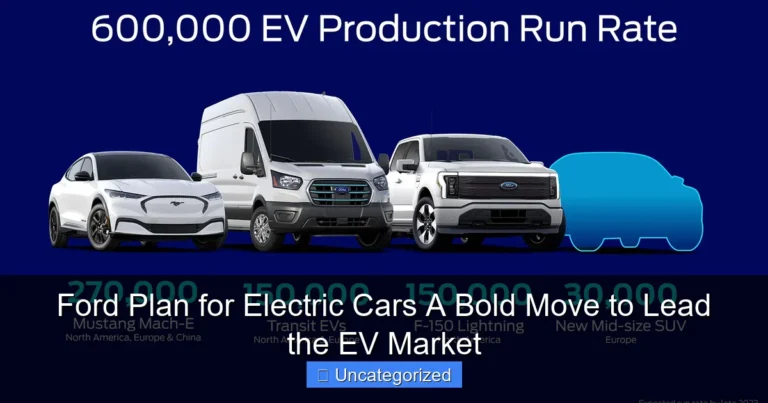
Let’s start with the headline: Yes, Ford is absolutely doing electric car research. And it’s not a side project—it’s a core part of their business strategy. In 2021, Ford announced a $30 billion investment in EVs and battery technology through 2025. That number has since grown to over $50 billion, with a focus on electrifying their most popular vehicles, building new factories, and developing next-gen battery tech. This isn’t just about building a few electric cars; it’s about transforming the entire company.
Why Ford Is Going All-In on Electric
Why the sudden shift? A few reasons:
- Regulatory pressure: Countries worldwide are setting deadlines to phase out gas-powered cars. The EU plans to ban new gas cars by 2035, and California (a huge auto market) will follow by 2035. Ford has to adapt or risk losing market share.
- Consumer demand: More people want EVs. In 2023, U.S. EV sales hit 1.4 million, up 50% from 2022. Ford can’t ignore that.
- Competitive pressure: Tesla, Rivian, and even legacy brands like GM and Volkswagen are moving fast. Ford doesn’t want to be left behind.
One of Ford’s biggest moves was creating a separate EV division called Ford Model e in 2022. This team works alongside the traditional Ford division (Ford Blue) but focuses solely on electric cars, software, and innovation. Think of it as Ford’s “EV startup” within the larger company. They’ve hired top talent from Tesla, Apple, and other tech firms, signaling serious intent.
Where Ford’s Research Is Happening
Ford’s electric car research isn’t confined to one lab. They’re investing in:
- Michigan: The Ford Research and Engineering Center in Dearborn is a hub for EV development. They’re testing new battery chemistries, charging systems, and autonomous driving tech.
- Ohio: The new Ohio Assembly Plant is being retooled to build electric trucks and batteries. It’s part of Ford’s plan to localize production and reduce costs.
- Kentucky: The BlueOval SK Battery Park (a joint venture with SK On) will produce batteries for Ford’s EVs, starting in 2025. This is a $5.8 billion project—one of the largest in U.S. history.
- Europe: Ford is also expanding EV research in Germany and the UK, focusing on compact EVs for European markets.
Fun fact: Ford’s research isn’t just about cars. They’re exploring electric delivery vans, school buses, and even electric tractors through their commercial vehicle division. It’s a full ecosystem play.
Current Electric Car Models: What Ford Is Selling Now
Research is great, but what’s actually on the road? Ford’s current EV lineup shows they’re not just experimenting—they’re delivering real vehicles with real appeal. Let’s break down the key models.
Mustang Mach-E: The Electric Muscle Car
The Mustang Mach-E (launched in 2021) was a bold move. It took the Mustang name—synonymous with gas-powered performance—and applied it to an electric SUV. The result? A car that’s fast (0-60 mph in 3.5 seconds for the GT model), stylish, and practical (250-300 miles of range). It’s not a Mustang in the traditional sense, but it’s a great EV.
Pros:
- Fun to drive with instant torque.
- Spacious interior and decent cargo space.
- Over-the-air software updates (like a smartphone).
Cons:
- Some purists hate the Mustang branding on an SUV.
- Early models had software glitches (fixed in updates).
F-150 Lightning: The Electric Truck
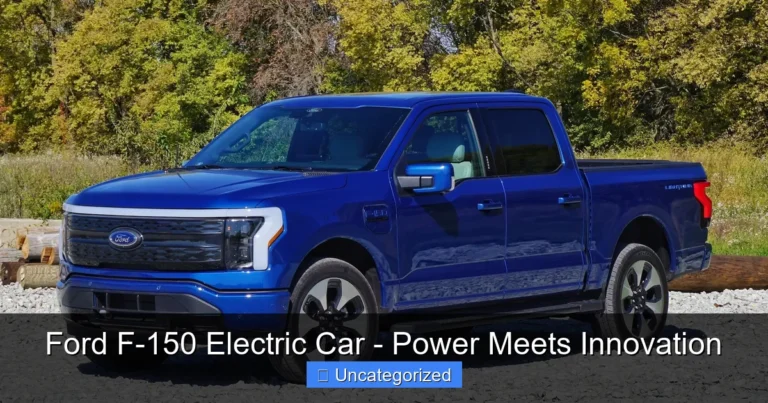
The F-150 Lightning (launched in 2022) is Ford’s biggest EV gamble. The F-150 is America’s best-selling vehicle for decades, so electrifying it was risky. But the Lightning delivers. It has up to 320 miles of range, can tow 10,000 pounds, and even has a “frunk” (front trunk) that holds 14.1 cubic feet of space.
Why it’s a game-changer:
- Pro Power Onboard: The truck can power tools, homes, or even another EV. During Hurricane Ian in 2022, Lightning owners used their trucks as backup power sources.
- Work-friendly: It’s designed for contractors, farmers, and anyone who needs a tough truck.
Tip: If you’re considering the Lightning, check if your local utility offers EV charging incentives. Some companies give rebates for off-peak charging.
E-Transit: The Electric Work Van
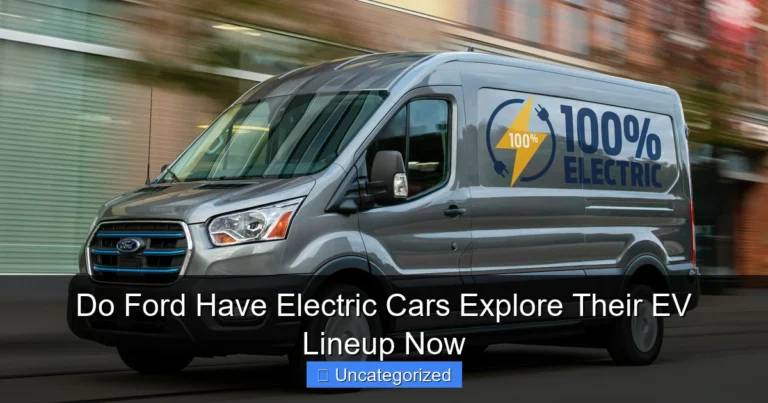
Ford’s E-Transit (launched in 2022) is an electric version of their popular cargo van. With 126 miles of range, it’s perfect for urban deliveries, tradespeople, and small businesses. It’s also one of the few electric vans on the market right now.
Real-world example: UPS has ordered over 10,000 E-Transits, and Amazon has thousands in its fleet. This shows Ford’s focus on commercial EVs—a smart move, given the rise of e-commerce.
Future Electric Cars: What’s Coming Next
Ford isn’t stopping at the Mach-E, Lightning, and E-Transit. They’ve got a pipeline of new EVs, and the research behind them is intense. Here’s what’s coming.
Next-Gen Electric Trucks and SUVs
Ford’s “Project T3” (short for “Trust The Truck”) is a new electric truck platform launching in 2025. It’s designed from the ground up for EVs, with:
- Longer range (500+ miles).
- Faster charging (10-80% in 10 minutes with a 350 kW charger).
- Advanced software for autonomous driving and over-the-air updates.
This truck will likely replace the Lightning in a few years, with a more futuristic design and better performance. Ford says it’s “a truck for the next 100 years.”
Compact Electric SUV for Europe
Ford is developing a compact electric SUV for Europe, set to launch in 2024. It’ll be built on Volkswagen’s MEB platform (a partnership to save costs) and target the growing market for small EVs. Think of it as Ford’s answer to the Tesla Model Y or Hyundai Kona Electric.
Affordable Electric Cars by 2026
One of Ford’s biggest challenges is price. EVs are still expensive, and Ford wants to change that. They’re working on a new, lower-cost EV platform to launch in 2026. The goal? Build EVs priced under $30,000—competitive with gas cars. This could be a game-changer for mainstream adoption.
How they’re doing it:
- Simplified battery designs (less cobalt, more iron).
- Smaller, more efficient motors.
- Modular platforms to reuse parts across models.
Battery Technology: The Heart of Ford’s Research
Batteries are the most critical part of any EV. They affect range, cost, charging speed, and even environmental impact. Ford’s battery research is a major focus, with several key initiatives.
Lithium-Ion vs. Solid-State Batteries
Ford is currently using lithium-ion batteries (like most EVs), but they’re investing heavily in solid-state batteries for the future. Solid-state batteries promise:
- Higher energy density (more range).
- Faster charging (5-10 minutes for a full charge).
- Better safety (less risk of fires).
Ford has partnerships with Solid Power (a solid-state battery startup) and is building a pilot production line in Michigan. They aim to have solid-state batteries in some EVs by 2030.
Recycling and Sustainability
Ford is also researching battery recycling. Their goal is to reuse 95% of battery materials by 2035. They’ve partnered with Redwood Materials (founded by a Tesla co-founder) to build a closed-loop recycling system.
Why it matters: Mining lithium, cobalt, and nickel has environmental and ethical issues. Recycling reduces reliance on mining and lowers costs.
Data Table: Ford’s Battery Tech Roadmap
| Technology | Status | Expected Launch | Key Benefits |
|---|---|---|---|
| Lithium-Ion (Current) | In production | 2021-2025 | Proven, cost-effective |
| LFP (Lithium Iron Phosphate) | Testing | 2024 | Cheaper, longer lifespan |
| Solid-State | Research/pilot | 2030 | Higher range, faster charging |
Challenges and Controversies: Where Ford Struggles
Ford’s electric car research isn’t without problems. They’ve faced delays, quality issues, and skepticism. Let’s address the tough stuff.
Production Delays and Quality Issues
In 2023, Ford had to halt F-150 Lightning production for several weeks due to a battery issue. They also recalled thousands of Mach-Es for software and brake problems. These hiccups hurt their reputation and caused financial losses.
Lesson learned: Ford is working with suppliers to improve quality control. They’ve also hired more engineers to test vehicles before release.
Competition from Tesla and Chinese EVs
Tesla still dominates the U.S. EV market, and Chinese brands like BYD and NIO are growing fast. Ford’s challenge is to differentiate itself. They’re focusing on trucks, vans, and work vehicles—areas where Tesla is weak.
Consumer Trust
Some buyers are wary of Ford’s EV shift. The Mustang Mach-E, for example, faced backlash from traditional Mustang fans. Ford is trying to win them over with performance and heritage-focused marketing.
Tip for Ford: They need to communicate their EV vision more clearly. A “why” behind the shift (sustainability, innovation, performance) would help.
Conclusion: The Road Ahead for Ford’s Electric Future
So, is Ford doing any electric car research? Absolutely. They’re investing billions, building new factories, and pushing the boundaries of battery tech, software, and vehicle design. The Mustang Mach-E, F-150 Lightning, and E-Transit prove they can build great EVs. And with Project T3, solid-state batteries, and affordable EVs on the horizon, the future looks bright.
But it’s not all smooth sailing. Delays, quality issues, and tough competition are real challenges. Ford’s success will depend on execution—turning research into reliable, desirable vehicles that people actually want to buy.
If you’re an EV shopper, here’s my take: Ford is worth considering. Their trucks and vans offer unique features (like Pro Power Onboard) that other EVs don’t. And if they deliver on their affordable EV promise, they could become a major player in the mainstream market.
For Ford, the message is clear: Keep innovating, keep learning, and keep listening to customers. The electric car race is just getting started, and Ford’s in it for the long haul. Whether they win or not, one thing’s certain—they’re no longer the “gas-only” company they once were. And that’s a good thing for all of us.
Frequently Asked Questions
Is Ford doing any electric car research in 2024?
Yes, Ford is heavily invested in electric car research, with over $50 billion allocated through 2026 to develop new EVs, battery technology, and charging infrastructure. Their research focuses on improving range, performance, and affordability across models like the F-150 Lightning and Mustang Mach-E.
What recent breakthroughs has Ford made in electric car research?
Ford’s electric car research has led to innovations like the Pro Power Onboard system for work trucks and advanced lithium-ion/nickel-cobalt-manganese battery chemistries. They’re also pioneering solid-state battery research through partnerships with companies like SK Innovation.
Where does Ford conduct its electric vehicle research?
Ford’s primary electric car research happens at the Ford Research & Innovation Center in Dearborn, Michigan, with additional facilities in Palo Alto, California, and Aachen, Germany. Their “Ion Park” battery lab specifically focuses on next-gen EV battery development.
How does Ford’s electric car research compare to Tesla’s?
While Tesla leads in battery density and software, Ford’s research prioritizes practical applications for trucks and commercial vehicles. Ford leverages its century of manufacturing expertise while investing heavily in autonomous driving and connected car tech to compete.
What future EVs is Ford’s research department working on?
Ford’s electric car research is developing a next-gen “Project T3” electric truck (2025), a mid-size SUV (2026), and a low-cost EV platform. Their research also explores hydrogen fuel cells for long-haul trucks through the “Hy-Wire” project.
Is Ford collaborating with other companies on electric car research?
Yes, Ford partners with SK Innovation (batteries), Google (AI/software), and Redwood Materials (battery recycling). Their joint ventures include BlueOval SK for US battery plants and a strategic alliance with Volkswagen for MEB platform sharing.