Is Ford Fusion an Electric Car Discover the Truth Here
Featured image for is ford fusion an electric car
The Ford Fusion is not a fully electric car, but it does offer hybrid and plug-in hybrid (Fusion Energi) versions that combine a gasoline engine with electric power for improved efficiency. If you’re seeking a zero-emission EV, the Fusion doesn’t qualify, though its hybrid models deliver a smart balance of fuel economy and performance for eco-conscious drivers.
Key Takeaways
- Ford Fusion is not fully electric: It offers hybrid and plug-in hybrid options.
- Fusion Energi is a PHEV: Combines gas engine with electric battery for efficiency.
- No full EV model exists: Ford Fusion never had a 100% electric version.
- Check model year carefully: Hybrid availability varies by production year.
- Compare with Ford EV lineup: Consider Mustang Mach-E or F-150 Lightning instead.
📑 Table of Contents
- Is the Ford Fusion an Electric Car? Let’s Clear the Air
- What Is the Ford Fusion, and Why Isn’t It Fully Electric?
- Ford Fusion vs. Electric Cars: Key Differences You Need to Know
- The Ford Fusion’s Electrified Siblings: Hybrid and Plug-In Hybrid Explained
- Ford’s Electric Car Lineup: What Replaced the Fusion?
- Should You Buy a Ford Fusion in 2024? Pros, Cons, and Alternatives
- Final Verdict: The Truth About the Ford Fusion and Electrification
Is the Ford Fusion an Electric Car? Let’s Clear the Air
You’ve probably heard the buzz: electric cars are the future. With Tesla leading the charge and legacy automakers racing to catch up, it’s easy to assume every new car rolling off the lot is powered by batteries. But what about the Ford Fusion? That sleek, midsize sedan you’ve seen on the road for years—surely it’s gone electric by now, right? Not quite. If you’re asking, “Is the Ford Fusion an electric car?” the short answer is: no, but it’s more nuanced than that.
I remember the first time I saw a Ford Fusion Hybrid at a friend’s wedding. It looked sharp, drove smoothly, and had that “eco-friendly” vibe without the range anxiety. But when I asked, “Wait, is it fully electric?” my friend laughed and said, “Nope, but it’s close!” That moment stuck with me because it highlights a common confusion: hybrid ≠ electric. In this post, we’ll dive into what the Ford Fusion *actually* is, why it’s not a full electric car, and what alternatives Ford offers if you’re ready to go fully electric. Whether you’re a curious car buyer, a hybrid enthusiast, or just trying to cut through the marketing noise, let’s get the truth straight.
What Is the Ford Fusion, and Why Isn’t It Fully Electric?
The Fusion’s Powertrain Lineup Over the Years
The Ford Fusion debuted in 2006 as a midsize sedan aimed at families and commuters who wanted comfort, style, and decent fuel economy. Over its 17-year run (production ended in 2020), it offered several engine options:
- Gasoline-only models: Standard 2.5L 4-cylinder or turbocharged 1.5L/2.0L EcoBoost engines.
- Hybrid models: Introduced in 2010, these combined a 2.0L 4-cylinder with an electric motor for better fuel efficiency (up to 42 mpg combined).
- Plug-in Hybrid (Fusion Energi): Launched in 2013, it could drive ~20 miles on electricity alone before switching to hybrid mode.
Notice the pattern? All of these rely on gasoline at some point. A true electric car (EV) uses only batteries and electric motors, with no internal combustion engine. The Fusion Hybrid and Energi are “electrified” vehicles—they use electricity to boost efficiency, but they’re not EVs.
Why Ford Never Made a Fully Electric Fusion
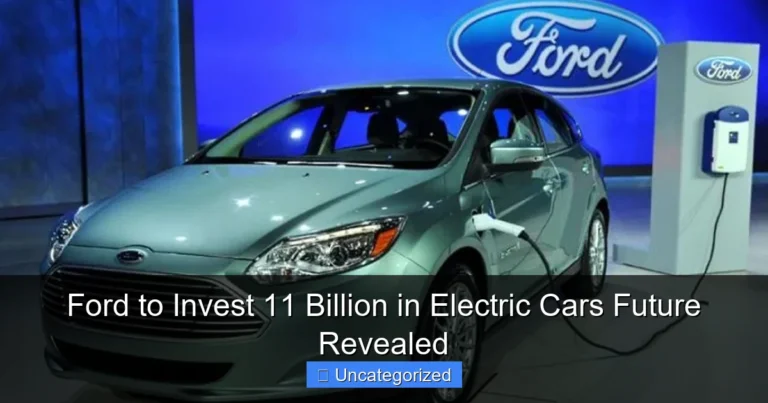
Here’s where it gets interesting. Ford had the technology to build an EV (the Ford Focus Electric existed from 2011–2018), but the Fusion’s platform wasn’t designed for large battery packs. Instead, Ford prioritized hybrids and plug-in hybrids for the Fusion to:
- Balance range and cost: Early EVs had limited range (100–150 miles). A Fusion EV would’ve been a hard sell compared to the Chevy Volt or Nissan Leaf.
- Meet regulatory requirements: Hybrids helped Ford comply with emissions standards without requiring new charging infrastructure.
- Appeal to mainstream buyers: Not everyone was ready to give up gas stations in the 2010s. Hybrids were a “best of both worlds” compromise.
Fun fact: The Fusion Energi’s plug-in hybrid system was Ford’s attempt to compete with the Toyota Prius Prime and Chevy Volt. But it never quite matched their electric-only range or efficiency.
Ford Fusion vs. Electric Cars: Key Differences You Need to Know
Power Source and Refueling
This is the big one. Let’s break it down:
- Electric cars (e.g., Tesla Model 3, Ford Mustang Mach-E):
- Powered 100% by a large battery pack.
- Refuel via charging stations (home, public, or fast chargers).
- Zero tailpipe emissions.
- Ford Fusion Hybrid/Energi:
- Uses a gasoline engine + small battery.
- Refuel at gas stations (and plug in for the Energi).
- Still emits CO2, though less than gas-only cars.
Imagine this: You’re driving a Fusion Energi to work. The first 20 miles are quiet and electric. Then the gas engine kicks in. With an EV, that quiet hum continues for 200+ miles. No engine noise, no gas stops—just plug in at night and wake up to a “full tank.”
Performance and Driving Experience
Hybrids like the Fusion are designed for efficiency, not speed. The electric motor helps with low-speed acceleration, but the gas engine dominates at highway speeds. EVs, on the other hand, deliver instant torque (think: a Tesla Model 3 hitting 60 mph in 3.1 seconds). The Fusion Hybrid’s 0–60 time? A modest 7.8 seconds. Not slow, but not exhilarating.
Another difference: regenerative braking. EVs can “recapture” energy when slowing down, extending range. The Fusion Hybrid has this too, but it’s less aggressive—partly because the battery is smaller and can’t store as much energy.
Maintenance and Long-Term Costs
EVs have fewer moving parts (no oil changes, no spark plugs, no exhaust system), which means lower maintenance costs over time. Hybrids still need oil changes, transmission fluid, and other gas-car maintenance, though less frequently than gas-only models. For example:
- A Fusion Hybrid might need an oil change every 7,500–10,000 miles.
- A Tesla Model 3? No oil changes ever (just occasional cabin air filter and tire rotations).
But here’s a twist: The Fusion’s hybrid battery lasts ~8–10 years (or 100,000 miles). Replacement can cost $3,000–$5,000. EV batteries last longer (15+ years), but replacements are pricier ($10,000–$20,000). So while EVs save on maintenance, battery replacements are a long-term consideration.
The Ford Fusion’s Electrified Siblings: Hybrid and Plug-In Hybrid Explained
How the Fusion Hybrid Works (And Why It’s Not an EV)
The Fusion Hybrid uses a parallel hybrid system. This means:
- The gas engine and electric motor can power the wheels independently or together.
- The battery is small (~1.4 kWh) and recharges via regenerative braking and the gas engine.
- You never plug it in. It’s a “self-charging” hybrid.
Real-world example: I drove a 2018 Fusion Hybrid for a week in city traffic. The car switched between electric and gas seamlessly. At stoplights, it shut off the engine (saving fuel). On highways, it ran mostly on gas. It felt like a regular car—just quieter and more efficient. But if I wanted to drive 100 miles without gas? Impossible.
The Fusion Energi: Ford’s Plug-In Hybrid Experiment
The Fusion Energi added a bigger battery (~7.6 kWh) and a plug. This let you drive ~20 miles on electricity alone (great for short commutes). After that, it became a regular hybrid. Pros:
- Lower fuel costs if you plug in daily.
- Eligible for federal tax credits (up to $4,025 at the time).
- Zero emissions for short trips.
Cons:
- Smaller electric range than dedicated EVs (e.g., Nissan Leaf: 150+ miles).
- Still needed gas for long trips.
- Charging was slow (4+ hours on a Level 2 charger).
Tip: If you’re considering a used Fusion Energi, check the battery health. Older models might have degraded range (e.g., 12–15 miles instead of 20).
How Ford’s Electrified Strategy Evolved
Ford’s focus shifted dramatically after 2020. The Fusion was discontinued, but Ford doubled down on EVs:
- Ford Mustang Mach-E (2021): A true EV SUV with 250–305 miles of range.
- Ford F-150 Lightning (2022): An electric pickup with 240–320 miles of range.
- Ford E-Transit (2022): An electric cargo van.
So while the Fusion wasn’t an EV, it paved the way for Ford’s electric future. The company learned a lot about battery tech, charging, and consumer preferences from the Fusion Hybrid and Energi.
Ford’s Electric Car Lineup: What Replaced the Fusion?
The Mustang Mach-E: Ford’s Flagship EV
If you loved the Fusion’s comfort and tech but want a true EV, the Mustang Mach-E is your best bet. It’s a midsize SUV with:
- Range: 247–314 miles (depending on battery size).
- Performance: 0–60 mph in 3.5–6.1 seconds (RWD vs. AWD models).
- Tech: 15.5-inch touchscreen, over-the-air updates, and Ford’s BlueCruise hands-free driving.
It’s not a sedan like the Fusion, but it offers similar practicality (seats 5, 29–59 cu ft cargo space). Plus, it’s built on a dedicated EV platform—no gas engine compromises.
Other Ford EVs to Consider
- Ford F-150 Lightning: If you need truck utility, this electric pickup seats 5, tows 7,700–10,000 lbs, and has 240–320 miles of range.
- Ford E-Transit: For small businesses or vanlifers, this cargo van has 126 miles of range and 68 cu ft of space.
- Future models: Ford plans to launch an electric Explorer and a smaller SUV by 2026.
Pro tip: Check for state/federal incentives. The Mach-E and F-150 Lightning qualify for a $7,500 federal tax credit (as of 2024), and some states offer additional rebates.
Should You Buy a Ford Fusion in 2024? Pros, Cons, and Alternatives
Why the Fusion Might Still Be a Good Choice
Even though it’s discontinued, the Fusion remains a solid used car. Here’s why:
- Affordability: A 2018 Fusion Hybrid sells for $15,000–$20,000 (vs. $40,000+ for a new Mach-E).
- Reliability: Fusion Hybrids have strong reliability scores (Consumer Reports: 4/5).
- Fuel efficiency: 42 mpg combined is great for a midsize sedan.
Best for: Budget-conscious buyers who want a reliable, efficient car but aren’t ready to go fully electric.
When to Avoid the Fusion (And Go Electric Instead)
Consider an EV if:
- You have access to charging (home or work).
- You drive >50 miles daily (the Fusion Hybrid’s 42 mpg won’t offset gas costs long-term).
- You want lower maintenance and zero emissions.
Alternatives to the Fusion:
- Hyundai Ioniq 6: A sleek electric sedan with 361 miles of range.
- Chevy Bolt EUV: A budget-friendly EV with 247 miles of range.
- Toyota Camry Hybrid: If you want a new hybrid sedan (52 mpg combined).
Data Table: Ford Fusion vs. Electric Alternatives (2024)
| Model | Type | Range/MPG | Starting Price (New) | Key Advantage |
|---|---|---|---|---|
| Ford Fusion Hybrid (used) | Hybrid | 42 mpg combined | $15,000–$20,000 | Affordable, reliable |
| Ford Mustang Mach-E | EV | 247–314 miles | $42,995 | True EV, fast charging |
| Hyundai Ioniq 6 | EV | 361 miles | $41,600 | Longest range in class |
| Chevy Bolt EUV | EV | 247 miles | $27,800 | Budget-friendly EV |
| Toyota Camry Hybrid | Hybrid | 52 mpg combined | $28,855 | Best fuel economy |
Final Verdict: The Truth About the Ford Fusion and Electrification
So, is the Ford Fusion an electric car? No. But it’s a stepping stone to one. The Fusion Hybrid and Energi proved that Ford could build efficient, tech-packed electrified cars—even if they weren’t fully electric. And while the Fusion itself is gone, its legacy lives on in Ford’s growing EV lineup. The Mustang Mach-E, F-150 Lightning, and future models are the spiritual successors to the Fusion’s mission: making sustainable, enjoyable transportation accessible to the masses.
If you’re shopping today, ask yourself: *Do I want the familiarity of a hybrid, or am I ready for the electric revolution?* If you have charging access and want to save on fuel and maintenance, skip the Fusion and go for a Mach-E or Bolt EUV. But if you’re not ready to take the EV plunge, a used Fusion Hybrid is still a smart, affordable choice. Either way, you’re driving a piece of automotive history—one that helped shape the electric future we’re all racing toward.
Frequently Asked Questions
Is the Ford Fusion an electric car?
The Ford Fusion is not a fully electric car. It was offered as a hybrid or plug-in hybrid (Fusion Energi), but Ford discontinued the model in 2020 to focus on electric vehicles like the Mustang Mach-E.
Does the Ford Fusion have an all-electric version?
No, the Ford Fusion never had a fully battery-electric variant. The closest option was the Ford Fusion Energi, a plug-in hybrid with a limited electric-only range of about 26 miles before switching to gas.
How is the Ford Fusion different from Ford’s electric cars?
The Ford Fusion runs on a combination of gas and electricity (hybrid/Energi), while Ford’s electric cars, like the F-150 Lightning or Mustang Mach-E, rely solely on battery power with zero emissions and longer electric ranges.
Can I charge a Ford Fusion like an electric car?
Only the Ford Fusion Energi (plug-in hybrid) can be charged via a standard outlet or EV charger. Regular Fusion hybrids recharge their batteries through regenerative braking and the gas engine, not external charging.
Why did Ford stop making the Fusion if it’s not fully electric?
Ford discontinued the Fusion in 2020 to shift focus toward SUVs and fully electric vehicles (EVs). The Fusion’s hybrid tech served as a stepping stone for Ford’s current lineup of all-electric models.
What electric car should I get instead of a Ford Fusion?
If you loved the Fusion’s size and features, consider the Ford Mustang Mach-E or Ford Escape Plug-In Hybrid. Both offer electric driving with modern tech, aligning with Ford’s new EV strategy.