Is the Chevy Volt a Hybrid or an Electric Car Find Out Here
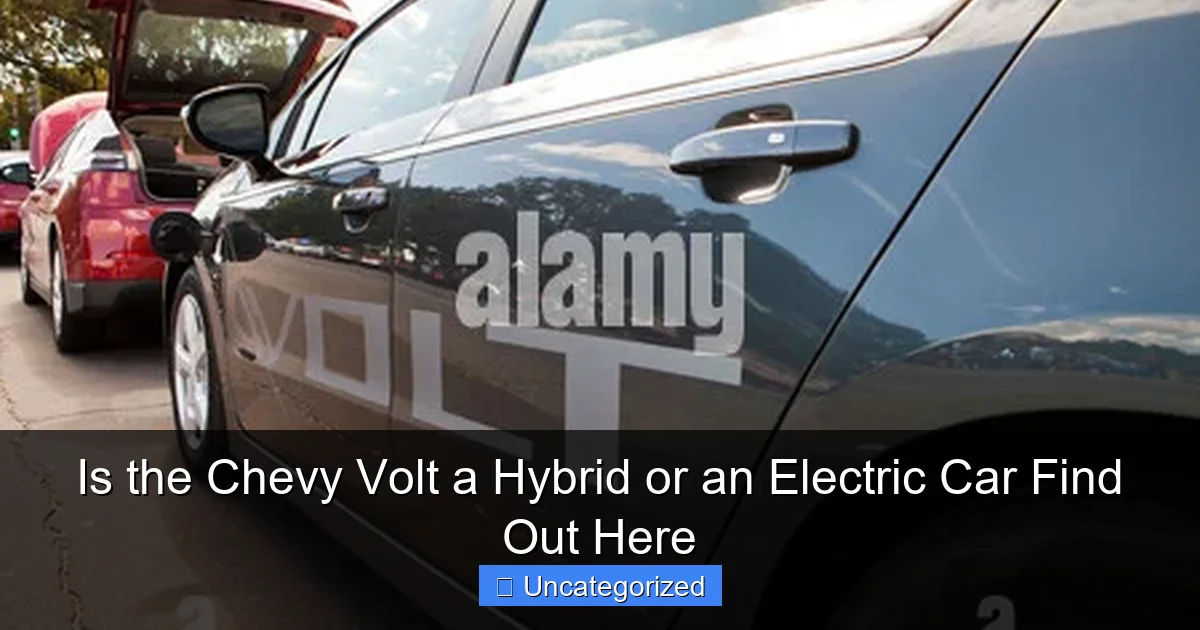
Featured image for is the chevy volt a hybrid or an electric car
Image source: l450v.alamy.com
The Chevy Volt is a plug-in hybrid, not a pure electric car, combining a battery-powered electric motor with a gasoline engine for extended range. It runs on electricity for up to 53 miles before seamlessly switching to hybrid mode, making it ideal for both short commutes and long drives. This dual-power design offers the best of both worlds—zero emissions in electric mode and no range anxiety when the battery depletes.
Key Takeaways
- The Chevy Volt is a plug-in hybrid: Combines electric and gas power for dual efficiency.
- Electric-only range reaches 53 miles: Ideal for short commutes without using gasoline.
- Gas engine extends total range: Eliminates range anxiety for longer trips seamlessly.
- Regenerative braking boosts efficiency: Recaptures energy while driving to recharge the battery.
- Charging is optional but recommended: Use Level 1 or 2 chargers for optimal electric performance.
- Lower emissions than traditional hybrids: Eco-friendly choice with reduced environmental impact.
📑 Table of Contents
- Is the Chevy Volt a Hybrid or an Electric Car? Let’s Settle the Debate
- Understanding the Chevy Volt’s Powertrain Architecture
- Defining Vehicle Categories: EV, Hybrid, and Plug-In Hybrid
- Real-World Performance: How the Chevy Volt Behaves in Daily Use
- Environmental Impact and Fuel Efficiency: The Green Advantage
- Pros and Cons of the Chevy Volt: Is It Right for You?
- Conclusion: The Chevy Volt Is a Unique Hybrid — But Closer to an Electric Car
Is the Chevy Volt a Hybrid or an Electric Car? Let’s Settle the Debate
The automotive world has seen a dramatic shift in the last two decades, with electric vehicles (EVs) and hybrids becoming mainstream. Amid this transformation, one car has sparked endless discussion: the Chevy Volt. Launched in 2011, the Volt has long been a topic of debate among car enthusiasts, environmentalists, and everyday drivers alike. Is it a true electric car? Or is it just another hybrid with a fancy name? The answer isn’t as straightforward as you might think — and that’s precisely what makes the Chevy Volt so fascinating.
At first glance, the Chevy Volt appears to be a full electric vehicle. It can drive on electricity alone for a significant distance, emits no tailpipe pollutants during electric-only operation, and can be plugged in to recharge. But here’s where things get interesting: once the battery is depleted, a gasoline-powered engine kicks in — not to power the wheels directly, but to generate electricity for the motor. This unique system blurs the line between a pure EV and a traditional hybrid. Whether you’re considering buying one, curious about its technology, or simply want to understand how it works, this guide will dive deep into the mechanics, benefits, and real-world performance of the Chevy Volt to answer the burning question: Is the Chevy Volt a hybrid or an electric car?
Understanding the Chevy Volt’s Powertrain Architecture
How the Volt’s Dual-Motor System Works
The Chevy Volt operates on a series-parallel hybrid powertrain, a sophisticated system that combines the best of both electric and internal combustion engine (ICE) technologies. Unlike conventional hybrids like the Toyota Prius, which use the gas engine to directly drive the wheels, the Volt primarily relies on electric motors for propulsion. The vehicle is equipped with a large lithium-ion battery pack (18.4 kWh in the first generation, 18.4 kWh in the second generation) and two electric motors — one for primary propulsion and another that acts as a generator.
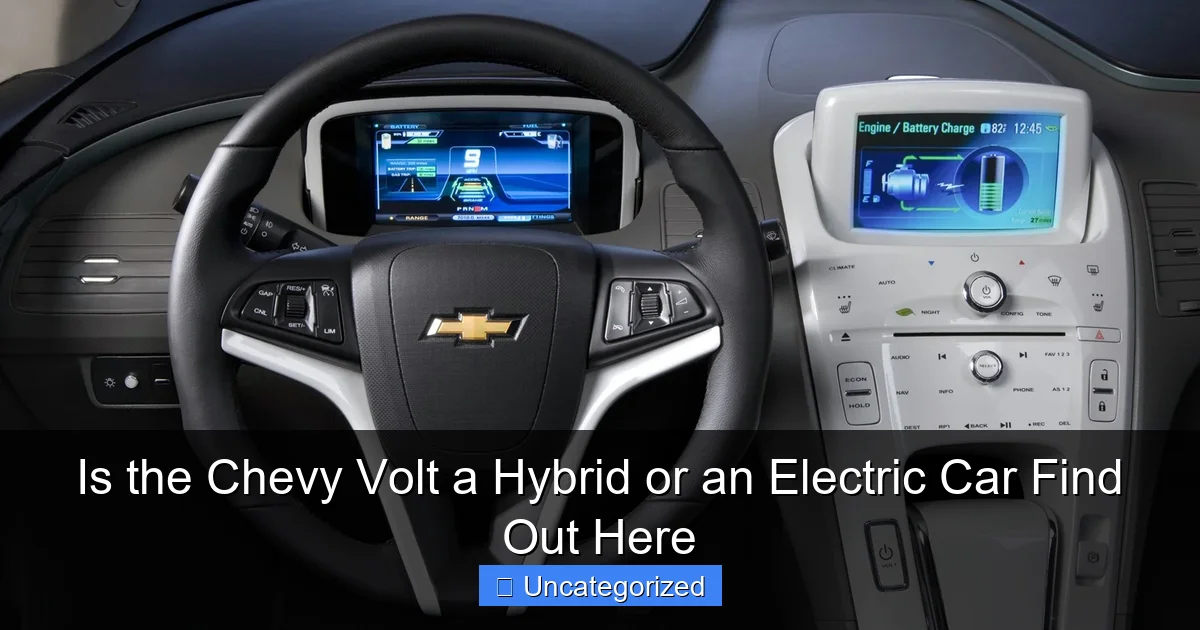
Visual guide about is the chevy volt a hybrid or an electric car
Image source: hdcarwallpapers.com
When the car is plugged in and charged, it runs purely on electricity. The battery powers the main motor, which turns the front wheels. This is the EV mode, and it’s the default setting whenever the battery has charge. In this mode, the gasoline engine is completely off — no noise, no emissions, and no fuel consumption. This is why many people refer to the Volt as an electric car: for the first 35–53 miles (depending on the model year), it behaves exactly like a Tesla or a Nissan Leaf.
The Role of the Gasoline Engine: Generator, Not Drive Source
Here’s where the Volt diverges from pure EVs. Once the battery charge drops below a certain threshold (typically after 35–53 miles), the 1.5L (Gen 2) or 1.4L (Gen 1) gasoline engine starts — but it doesn’t power the wheels directly. Instead, it spins a generator that produces electricity to recharge the battery and continue powering the electric motor. This is called range-extended electric vehicle (EREV) technology.
Think of it like this: the Volt is an electric car with a built-in backup power plant. The engine acts like a portable generator, not a traditional car engine. This design offers a major advantage over pure EVs: no range anxiety. Once the battery is low, the engine kicks in, allowing the Volt to drive another 300+ miles on gasoline. This dual capability makes it a plug-in hybrid electric vehicle (PHEV) with a twist — the electric motor is always in charge of propulsion.
Example: A driver commutes 40 miles round-trip daily. With a 2019 Chevy Volt (53-mile electric range), they can complete the entire week’s commute on electricity alone, charging each night. On the weekend, they take a 300-mile road trip. The first 53 miles are electric, then the engine starts, generating electricity for the rest of the journey — all without stopping to recharge.
Defining Vehicle Categories: EV, Hybrid, and Plug-In Hybrid
What Is a Pure Electric Vehicle (BEV)?
A battery electric vehicle (BEV) runs entirely on electricity stored in a battery. It has no internal combustion engine, no fuel tank, and no tailpipe emissions. Examples include the Tesla Model 3, Nissan Leaf, and Chevrolet Bolt EV. These vehicles must be recharged from an external power source (wall outlet, Level 2 charger, or DC fast charger) and have a limited driving range per charge — typically 150 to 350 miles.
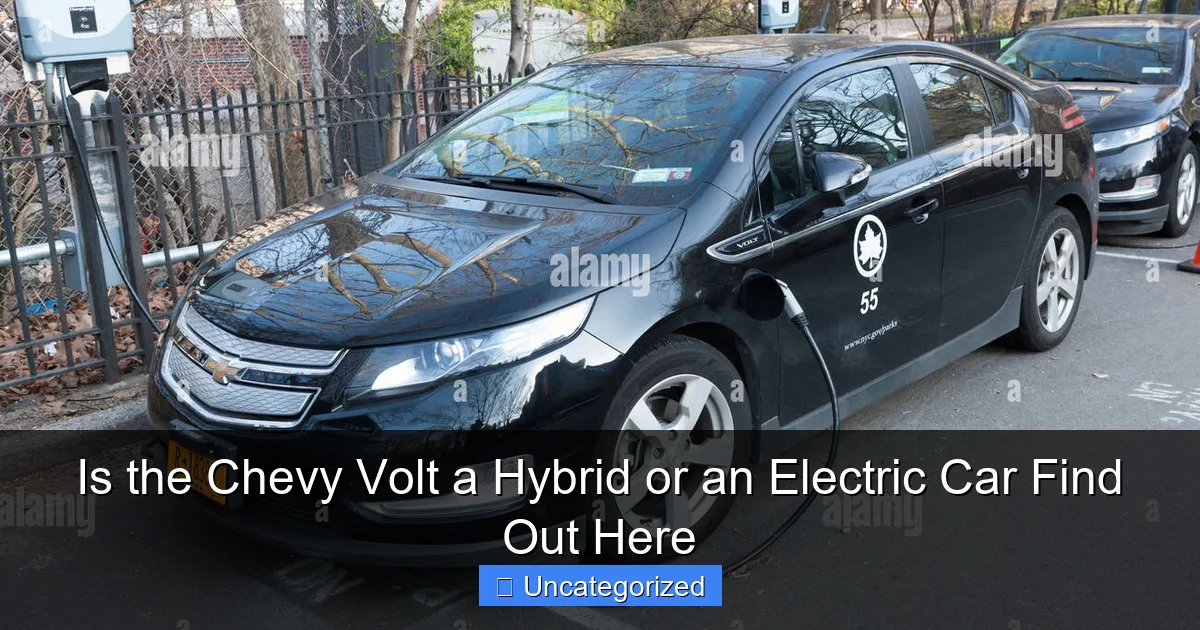
Visual guide about is the chevy volt a hybrid or an electric car
Image source: c8.alamy.com
BEVs are ideal for drivers with short to medium commutes, access to charging infrastructure, and no long-distance travel needs. However, they suffer from range anxiety and longer refueling times compared to gasoline cars.
What Is a Traditional Hybrid (HEV)?
A hybrid electric vehicle (HEV) uses both a gasoline engine and an electric motor, but the battery is charged through regenerative braking and engine operation — not by plugging in. The gas engine and electric motor can work together or independently to drive the wheels. The Toyota Prius is the most famous example. HEVs typically achieve better fuel economy than conventional cars (e.g., 50+ mpg) but cannot run on electricity alone for more than a few miles.
Because HEVs don’t plug in, they rely entirely on gasoline for long trips and offer minimal electric-only capability.
What Is a Plug-In Hybrid (PHEV)?
A plug-in hybrid electric vehicle (PHEV) has a larger battery than a traditional hybrid and can be charged externally. It can drive a meaningful distance (20–50 miles) on electricity alone. Once the battery is depleted, it switches to hybrid mode, using both the engine and motor. The Chevy Volt fits squarely into this category — but with a key distinction: it’s an EREV, meaning the engine never drives the wheels directly.
Other PHEVs, like the Toyota RAV4 Prime or Ford Escape PHEV, use a parallel hybrid system, where both the engine and motor can power the wheels. The Volt’s series-parallel system allows it to operate in pure electric mode, range-extended mode, or a combination of both — giving it greater flexibility and efficiency.
Tip: When shopping for a PHEV, pay attention to the electric-only range. The Volt’s 35–53 miles is among the highest in its class, making it one of the most “electric-like” PHEVs available.
Real-World Performance: How the Chevy Volt Behaves in Daily Use
Electric-Only Driving: A True EV Experience
For most urban and suburban drivers, the Chevy Volt feels like a full electric car. With an average daily commute of 30–40 miles in the U.S., the Volt’s 53-mile electric range (Gen 2) means over 90% of trips can be completed without using gasoline. According to Chevrolet, 80% of Volt owners drive less than 40 miles per day — well within the electric range.
During electric-only operation, the Volt delivers instant torque, smooth acceleration, and near-silent operation — all hallmarks of electric vehicles. Regenerative braking helps recharge the battery during deceleration, improving efficiency. The car’s infotainment system displays real-time energy use, battery charge, and estimated electric range — helping drivers stay informed.
Example: A teacher drives 20 miles to school each morning, 20 miles home in the evening, and runs errands (10 miles) after work. Total daily driving: 50 miles. With a 2019 Volt (53-mile range), they can complete the day on electricity alone — no gas used, no emissions.
Range-Extended Mode: No Charging, No Problem
Once the battery is depleted, the Volt seamlessly transitions to range-extended mode. The gasoline engine starts, but the driver won’t feel a jolt or hear a loud roar — the transition is smooth. The engine runs at optimal RPM to generate electricity efficiently, and the electric motor continues to power the wheels.
In this mode, the Volt gets approximately 42 mpg (combined) — excellent for a car of its size and performance. The total driving range (electric + gas) is about 420 miles on a full charge and full tank. This eliminates the “charging desert” problem faced by pure EVs in rural or remote areas.
Tip: Use the “Hold Mode” feature to save battery charge for later. For example, if you’re driving on the highway and want to use electric power in the city, you can switch to Hold Mode to preserve the battery until you reach your destination.
Charging Options and Time
The Volt can be charged using a standard 120V household outlet (Level 1) or a 240V charging station (Level 2). Charging times vary:
- Level 1 (120V): 13 hours for a full charge (0–100%)
- Level 2 (240V): 4.5 hours for a full charge
While not as fast as DC fast charging (available on pure EVs), the Volt’s charging speed is sufficient for overnight charging. Most owners charge at home or work, making daily use convenient.
Environmental Impact and Fuel Efficiency: The Green Advantage
Emissions and Sustainability
The Chevy Volt significantly reduces greenhouse gas emissions compared to traditional gasoline cars. When driven in electric mode, it produces zero tailpipe emissions. Even in range-extended mode, its fuel efficiency (42 mpg) and reduced engine runtime lower overall emissions.
According to the U.S. Department of Energy, a Volt driven 53 miles on electricity and then 50 miles on gas emits about 150 grams of CO2 per mile — compared to 404 grams per mile for a typical gasoline car. Over 15,000 miles per year, this translates to a reduction of over 3.5 tons of CO2 emissions annually.
The environmental benefit is greatest when the electricity comes from renewable sources (solar, wind, hydro). In regions with clean energy grids, the Volt’s lifecycle emissions can be up to 70% lower than a conventional car.
Fuel and Maintenance Savings
Because the Volt uses less gasoline, owners save significantly on fuel costs. The average U.S. driver spends about $1,500 per year on gas. A Volt owner who drives 12,000 miles per year (8,000 electric, 4,000 gas) would spend:
- Electricity: 8,000 miles ÷ 3.5 miles/kWh = 2,285 kWh × $0.13/kWh = $297
- Gasoline: 4,000 miles ÷ 42 mpg = 95 gallons × $3.50/gallon = $332
- Total annual fuel cost: $629 — less than half of a conventional car
Maintenance is also lower. The electric motor has fewer moving parts than a gas engine, and regenerative braking reduces wear on brake pads. Oil changes are less frequent (every 12,000 miles in gas mode), and there’s no transmission fluid, spark plugs, or exhaust system to maintain.
Data Table: Chevy Volt Fuel and Emissions Comparison
| Vehicle Type | Electric Range | Gas Efficiency (MPG) | Annual Fuel Cost (12k miles) | CO2 Emissions (g/mi) |
|---|---|---|---|---|
| Chevy Volt (2019) | 53 miles | 42 (combined) | $629 | 150 |
| Toyota Prius Hybrid | 0 miles | 56 (combined) | $750 | 250 |
| Chevy Bolt EV | 259 miles | N/A | $450 (electricity only) | 110 |
| Ford F-150 (Gas) | 0 miles | 20 (combined) | $2,100 | 404 |
Note: Assumes 12,000 miles/year, $0.13/kWh electricity, $3.50/gallon gas, 50% electric driving for Volt.
Pros and Cons of the Chevy Volt: Is It Right for You?
Advantages of the Chevy Volt
- Best of Both Worlds: Electric for short trips, gas for long ones — no range anxiety.
- High Electric Range: 53 miles is among the highest for PHEVs.
- Low Emissions: Zero tailpipe emissions in EV mode; low overall CO2 output.
- Fuel Savings: Drastically reduces gasoline consumption and costs.
- Smooth Driving Experience: Instant torque, quiet operation, refined ride.
- Home Charging: No need for public fast chargers for daily use.
- Tax Incentives: Qualified for federal tax credit (up to $7,500 in some years).
Disadvantages and Limitations
- Higher Upfront Cost: More expensive than conventional hybrids (though offset by fuel savings).
- No DC Fast Charging: Cannot use Tesla Superchargers or most public fast chargers.
- Smaller Cargo Space: Battery placement reduces trunk and rear seat space.
- Engine Noise in Range-Extended Mode: Some drivers notice the engine under heavy load.
- Discontinued Model: GM stopped production in 2019, though used models are widely available.
Who Should Consider the Chevy Volt?
The Chevy Volt is ideal for drivers who:
- Want an electric car but fear range limitations
- Have access to home or workplace charging
- Drive mostly short distances but take occasional long trips
- Want to reduce fuel costs and environmental impact
- Prefer a compact, efficient sedan with advanced tech
Tip: If you live in a cold climate, expect reduced electric range in winter (20–30% less). Precondition the battery while plugged in to maximize efficiency.
Conclusion: The Chevy Volt Is a Unique Hybrid — But Closer to an Electric Car
After exploring its technology, performance, and real-world benefits, the answer to “Is the Chevy Volt a hybrid or an electric car?” is clear: it’s a plug-in hybrid electric vehicle (PHEV) with a strong electric-first design. Technically, it’s a hybrid — but one that prioritizes electric driving in a way few others do. Unlike traditional hybrids, the Volt is built around electric propulsion, with the gasoline engine serving as a backup generator rather than a primary power source.
This makes the Chevy Volt a range-extended electric car — a bridge between pure EVs and conventional hybrids. It offers the zero-emission, quiet, efficient driving of an electric car for daily use, while eliminating the range limitations that deter many from going fully electric. For drivers seeking sustainability, cost savings, and peace of mind, the Volt remains one of the most intelligent and practical choices in the electrified vehicle market — even years after its discontinuation.
Whether you call it a hybrid, an electric car, or something in between, the Chevy Volt stands out as a pioneer in the EV transition. It proves that you don’t have to choose between environmental responsibility and driving freedom. With the Volt, you get both — and that’s a win for everyone.
Frequently Asked Questions
Is the Chevy Volt a hybrid or an electric car?
The Chevy Volt is a plug-in hybrid electric vehicle (PHEV), blending both electric and gasoline-powered capabilities. It primarily runs on electricity for short distances but switches to a gasoline generator for longer trips.
How does the Chevy Volt differ from a fully electric car?
Unlike fully electric cars, the Chevy Volt uses a gasoline engine to generate electricity when the battery depletes, eliminating range anxiety. This dual-power system makes it a flexible plug-in hybrid, not a pure EV.
Can the Chevy Volt run solely on electric power?
Yes, the Chevy Volt can run on electric power alone for about 50 miles (depending on the model year) before the gasoline engine activates. Once the battery is low, the gas generator seamlessly extends the driving range.
What makes the Chevy Volt a plug-in hybrid instead of a regular hybrid?
The Chevy Volt is a plug-in hybrid because it has a larger battery that can be charged externally, unlike regular hybrids that rely solely on regenerative braking and the engine. This allows for longer electric-only driving.
Does the Chevy Volt need to be plugged in to function?
While the Chevy Volt doesn’t require plugging in to run, charging it maximizes efficiency and electric-only range. Without charging, it operates like a traditional hybrid, using gas to generate electricity.
Is the Chevy Volt more fuel-efficient than a standard hybrid?
Yes, the Chevy Volt’s plug-in hybrid design typically delivers better fuel efficiency for short commutes by prioritizing electric power. For longer drives, its gas generator ensures efficiency comparable to, or better than, standard hybrids.