Is the Chevy Volt a Pure Electric Car Find Out Here
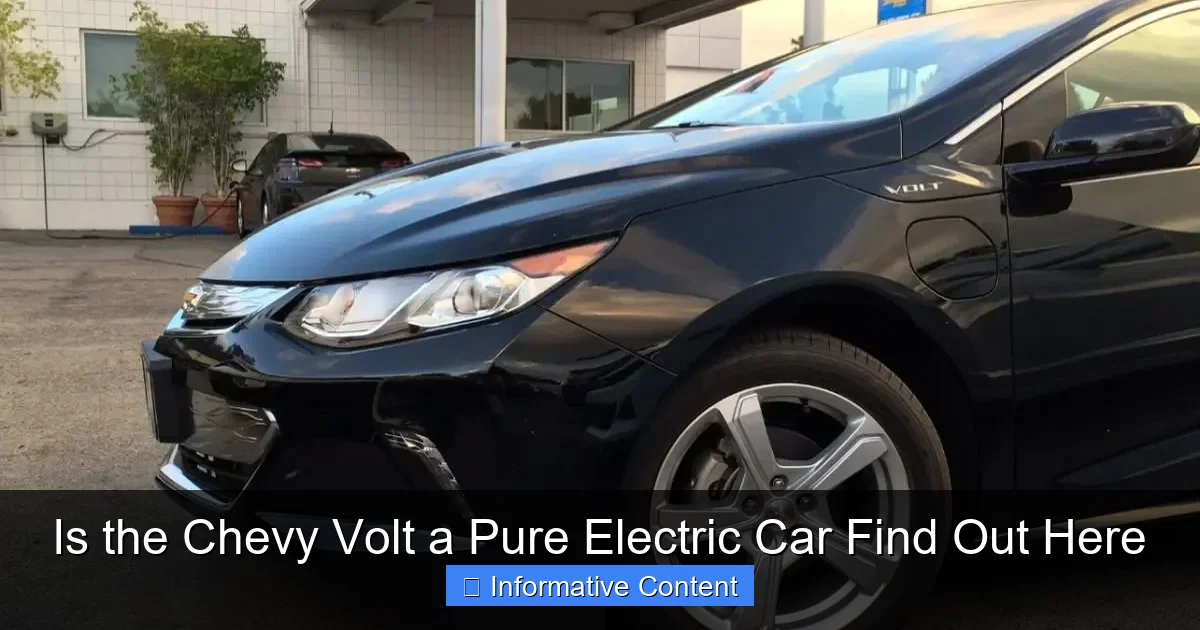
Featured image for is the chevy volt a pure electric car
Image source: imageio.forbes.com
The Chevy Volt is not a pure electric car—it’s a plug-in hybrid that combines an electric motor with a gasoline engine for extended range. While it can drive solely on electricity for up to 53 miles, the gas engine kicks in afterward, making it a versatile but not fully electric vehicle. Perfect for those who want EV benefits without range anxiety.
Key Takeaways
- Not fully electric: The Chevy Volt uses a gas engine as a generator.
- Plug-in hybrid: It combines electric driving with gas backup for longer trips.
- EV-only mode: Can drive 53 miles on electricity alone before switching.
- Fuel flexibility: Ideal for drivers wanting electric efficiency without range anxiety.
- Charging required: Maximize electric use by charging regularly for best savings.
- Emissions matter: Lower emissions than gas cars, but not zero like pure EVs.
📑 Table of Contents
- What Makes the Chevy Volt Different from a Pure Electric Car?
- Understanding the Basics: What Is a Pure Electric Car?
- How the Chevy Volt’s Dual-Power System Works
- Chevy Volt vs. Pure Electric Cars: A Head-to-Head Comparison
- Who Should Consider the Chevy Volt?
- The Future of the Chevy Volt and Plug-In Hybrids
- Final Verdict: Is the Chevy Volt a Pure Electric Car?
What Makes the Chevy Volt Different from a Pure Electric Car?
Imagine you’re standing at a gas station, filling up your car, when a sleek, modern-looking vehicle pulls up beside you. It’s not making any engine noise. No exhaust fumes. Just silence. You glance at the badge: Chevy Volt. Your first thought? “That must be a pure electric car.” But then you notice something odd. The driver walks over to the gas pump and starts filling the tank. Now you’re confused. If it runs on electricity, why does it need gas?
This scenario plays out more often than you might think. The Chevy Volt is a head-scratcher for many people. It looks like an electric car, drives like an electric car, and even has a charging port. But it also has a gas tank and an internal combustion engine. So, is the Chevy Volt a pure electric car? The short answer is: No, it’s not. But the long answer is way more interesting. In this article, we’ll dive deep into what makes the Chevy Volt unique, how it works, and whether it’s the right choice for your lifestyle. Whether you’re an EV enthusiast, a curious car buyer, or just someone who wants to make a smart, eco-friendly choice, this guide is for you.
Understanding the Basics: What Is a Pure Electric Car?
Defining a Pure Electric Car (BEV)
Before we can answer whether the Chevy Volt is a pure electric car, we need to know what a pure electric car actually is. The technical term for a pure electric car is a battery electric vehicle (BEV). Here’s what that means in simple terms:
- No gas engine: A BEV runs 100% on electricity stored in a large battery pack.
- Charging only: You plug it into an electrical outlet or charging station. No gas pumps needed.
- Zero tailpipe emissions: Since there’s no engine burning fuel, it produces no exhaust.
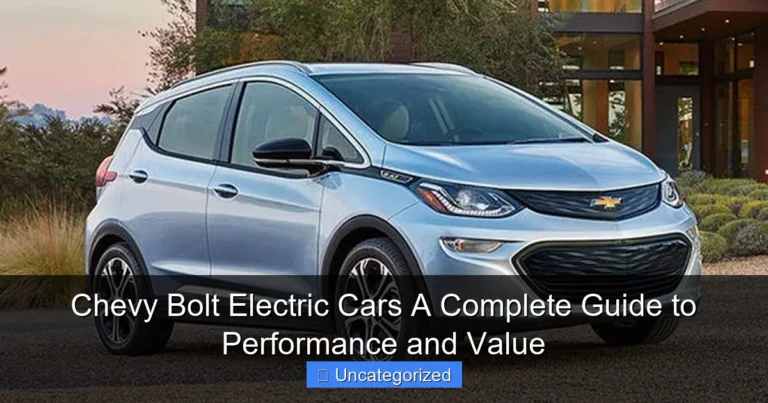
- Examples: Tesla Model 3, Nissan Leaf, Chevrolet Bolt EV, Ford Mustang Mach-E.
Think of a pure electric car like a smartphone. It runs on a battery. When the battery runs low, you plug it in to recharge. That’s it. No other energy sources.
How the Chevy Volt Fits Into the EV Spectrum
Now, let’s bring the Chevy Volt into the picture. The Volt is not a BEV. Instead, it’s a plug-in hybrid electric vehicle (PHEV). This is a crucial distinction. Here’s how it works:
- It has a large battery: Like a BEV, the Volt stores electricity in a battery pack and can be plugged in to charge.
- It drives on electricity first: When fully charged, the Volt runs entirely on electric power. No gas. No emissions.
- But it also has a gas engine: Once the battery is depleted, a small gasoline engine kicks in—not to drive the wheels directly, but to generate electricity that powers the electric motor.
So, in its first phase, the Volt behaves like a pure electric car. But once the battery runs out, it transitions into a range-extended electric vehicle. This is why it’s often called an “EREV” (Extended-Range Electric Vehicle).
Real-World Example: A Typical Day with the Chevy Volt
Let’s say you drive 30 miles round-trip to work. You charge your Volt overnight. In the morning, you drive to work and back—60 miles total. The Volt uses only electricity. No gas. No noise. Just smooth, quiet electric driving.
But then you decide to take a weekend trip to visit family 200 miles away. After the first 50 miles (depending on your model), the battery is drained. The gas engine starts up, generating electricity to keep you moving. You still drive on electric power, but now the gas engine is the power source. You can keep driving until you run out of gas—then you refill the tank, not the battery.
This flexibility is the Chevy Volt’s superpower. It gives you the best of both worlds: electric driving for daily commutes and gas-powered range for long trips.
How the Chevy Volt’s Dual-Power System Works
The Electric Drive System: The First 40-50 Miles
The heart of the Chevy Volt is its electric drive system. Here’s what happens when you first start driving:
- Electric motor powers the wheels: A large electric motor (111 kW in the 2019 model) drives the front wheels directly.
- Battery provides power: The 18.4 kWh lithium-ion battery pack (in the 2019 model) supplies electricity to the motor.
- Regenerative braking: When you brake or coast, the motor acts as a generator, capturing energy and sending it back to the battery.
This phase is identical to a pure electric car. The car is silent. Acceleration is smooth and instant. And if your daily driving is under the electric range (typically 40–53 miles depending on the model year), you’ll never use a drop of gas.
The Range Extender: The Gas Engine’s Role
Here’s where things get interesting. When the battery charge drops below a certain level (usually around 20–30%), the 1.5L 4-cylinder gasoline engine starts up. But it doesn’t drive the wheels directly. Instead, it spins a generator that produces electricity. This electricity:
- Powers the electric motor to keep the car moving.
- Recharges the battery slightly to maintain a minimum charge for efficiency.
Think of it like this: The gas engine is a portable power station. It doesn’t replace the electric motor. It just keeps the lights on. This setup is called a series hybrid system.
Key Differences from a Conventional Hybrid
Many people confuse the Chevy Volt with regular hybrids like the Toyota Prius. But there’s a big difference:
- Prius: The gas engine and electric motor can both drive the wheels. It’s a parallel hybrid.
- Chevy Volt: Only the electric motor drives the wheels. The gas engine only generates electricity. It’s a series hybrid.
This means the Volt is fundamentally an electric car with a backup generator. The Prius, on the other hand, is a gas car with electric assistance.
Tip: Maximizing Electric-Only Driving
Want to stay in electric mode as long as possible? Here are a few tips:
- Charge daily: Plug in every night to start each day with a full battery.
- Use climate control wisely: Heating and cooling use battery power. Precondition the car while it’s plugged in.
- Drive efficiently: Smooth acceleration and coasting help preserve battery range.
- Monitor the energy flow screen: The Volt’s dashboard shows exactly what’s powering the car. Use it to stay in electric mode longer.
Chevy Volt vs. Pure Electric Cars: A Head-to-Head Comparison
Electric Range and Daily Use
Let’s compare the Chevy Volt to a typical pure electric car. We’ll use the 2019 Chevy Volt (53 miles electric range) vs. the 2019 Chevrolet Bolt EV (238 miles electric range):
| Feature | Chevy Volt (PHEV) | Chevy Bolt EV (BEV) |
|---|---|---|
| Electric Range | 53 miles | 238 miles |
| Total Range (with gas) | 420 miles | 238 miles |
| Charging Time (Level 2) | 4.5 hours (full) | 9.5 hours (full) |
| Gasoline Engine | Yes (range extender) | No |
| Tailpipe Emissions | Zero (electric mode), Low (gas mode) | Zero |
| Best For | Daily commuters with occasional long trips | Daily commuters with reliable charging |
As you can see, the Volt shines in flexibility. If your daily drive is under 50 miles, you’ll rarely touch gas. But if you need to drive 300 miles in a day, the gas engine gives you peace of mind. The Bolt EV, on the other hand, is a pure electric car. It’s better for longer daily commutes or if you have access to fast charging on the go.
Charging and Refueling: What’s Easier?
Here’s a practical comparison:
- Chevy Volt:
- Plug in every night (like a phone).
- No need to find charging stations on road trips.
- Gas station refills are quick and familiar.
- Chevy Bolt EV:
- Plug in every night.
- For long trips, you need DC fast charging (30–45 mins for 80% charge).
- Charging station availability can be hit or miss.
If you live in an area with sparse charging infrastructure, the Volt’s gas backup is a game-changer. No range anxiety. No hunting for chargers in the middle of nowhere.
Cost of Ownership: Which Is Cheaper?
Let’s break it down:
- Upfront Cost: The Bolt EV is usually slightly more expensive than the Volt, but federal and state EV tax credits can offset this.
- Electricity vs. Gas:
- Volt: You’ll use electricity for daily driving and some gas for long trips. Average fuel cost: ~$50/month (varies by driving habits).
- Bolt EV: All electricity. Average cost: ~$25/month (at $0.12/kWh).
- Maintenance:
- Volt: Fewer moving parts than a gas car, but still has an engine, oil changes, and exhaust system.
- Bolt EV: Even fewer parts. No oil changes, spark plugs, or exhaust system. Lower long-term maintenance.
For short-term savings, the Volt wins due to lower upfront cost and gas backup. For long-term savings, the Bolt EV edges out with lower maintenance and fuel costs.
Who Should Consider the Chevy Volt?
Perfect for Daily Commuters
If your daily drive is 40 miles or less, the Chevy Volt is a fantastic choice. You’ll:
- Drive on electricity 90%+ of the time.
- Save money on gas (or eliminate it entirely).
- Enjoy a quiet, smooth ride.
- Have the option to take road trips without range anxiety.
Think of it as a “set it and forget it” solution. Charge at night, drive during the day. Simple.
Great for Apartment Dwellers or Renters
Not everyone can install a home charging station. If you live in an apartment or rent, charging can be a hassle. The Chevy Volt solves this:
- You can charge at work, public stations, or even a regular outlet (though slower).
- If you miss a charge, you can still drive on gas.
- No need to rely on home charging for long trips.
Compare this to a pure electric car. If you forget to charge and your battery dies, you’re stranded. With the Volt, you just fill the tank and keep going.
Ideal for Long-Distance Drivers
Do you regularly drive 200+ miles in a day? A pure electric car might make you nervous. Charging stops add time. The Chevy Volt eliminates that worry. You get:
- Electric driving for the first 50 miles.
- Seamless transition to gas-powered range extension.
- No need to search for charging stations.
One driver I spoke with, Sarah from Colorado, told me: “I drive to Denver every weekend. The Volt lets me start on electric and switch to gas when I’m halfway there. I don’t even think about charging on the road.”
Not the Best for Heavy Long-Distance Drivers
However, if you’re a sales rep who drives 300+ miles daily, the Volt might not be ideal. Why?
- You’ll use a lot of gas, reducing the cost savings.
- The gas engine runs almost constantly, increasing maintenance.
- A pure electric car with fast charging might be more efficient for your needs.
In this case, a BEV with access to DC fast charging (like the Bolt EV, Tesla, or Hyundai Kona Electric) could be a better fit.
The Future of the Chevy Volt and Plug-In Hybrids
Why GM Discontinued the Chevy Volt
In 2019, General Motors announced it would discontinue the Chevy Volt by 2023. Why? A few reasons:
- Battery tech improved: Pure electric cars now have longer ranges (200–400 miles), reducing the need for range extenders.
- Charging infrastructure grew: More public charging stations made pure EVs more practical.
- GM’s EV focus shifted: The company prioritized all-electric models like the Bolt EV, GMC Hummer EV, and Cadillac Lyriq.
- Cost of development: PHEVs are more complex than BEVs, with two powertrains to engineer and maintain.
It’s not that the Volt was a failure. In fact, it was a pioneer. It helped prove that plug-in hybrids could work. But as the market evolved, pure electric cars became the future.
Are Plug-In Hybrids Still Relevant?
Absolutely. While the Chevy Volt is gone, other PHEVs are thriving:
- Ford Escape PHEV: 37 miles electric range, great for SUV lovers.
- Toyota RAV4 Prime: 42 miles electric range, powerful and efficient.
- Jeep Wrangler 4xe: 21 miles electric range, perfect for off-road adventures.
These vehicles fill a niche: people who want electric driving but aren’t ready for full EV ownership. PHEVs are especially popular in areas with poor charging infrastructure or for those who take frequent long trips.
Tip: Consider a PHEV as a “Bridge” to Full EV Ownership
If you’re curious about electric cars but nervous about range or charging, a PHEV like the Chevy Volt (or its successors) is a great middle ground. You’ll:
- Experience electric driving firsthand.
- Learn how to charge and manage battery range.
- Have a safety net with the gas engine.
Many PHEV owners eventually transition to a pure electric car once they’re comfortable with the technology. The Chevy Volt was a pioneer in this “learning curve” approach.
Final Verdict: Is the Chevy Volt a Pure Electric Car?
Let’s circle back to the original question: Is the Chevy Volt a pure electric car? The answer is a clear no. It’s not a BEV. But that doesn’t make it any less impressive. The Chevy Volt is a plug-in hybrid electric vehicle (PHEV) with a unique twist: it’s an electric car first, a gas car second.
Here’s the bottom line:
- If you want a pure electric car with zero emissions, no gas, and no engine, the Chevy Volt isn’t it. Look at the Chevrolet Bolt EV, Tesla Model 3, or Hyundai Ioniq 5 instead.
- If you want electric driving with gas backup for peace of mind, the Chevy Volt is a fantastic choice. It’s perfect for daily commuters, apartment dwellers, and occasional road-trippers.
- If you’re curious about EVs but not ready to go all-in, the Volt (or another PHEV) is an excellent “training wheels” option.
The Chevy Volt isn’t just a car. It’s a statement: “I want to drive electric, but I don’t want to be stranded.” And in a world where charging infrastructure is still growing, that flexibility is priceless.
So, while the Chevy Volt isn’t a pure electric car, it’s a brilliant hybrid of old and new. It gives you the smooth, quiet, efficient experience of an EV with the range and convenience of a gas car. And for millions of drivers, that’s the perfect balance.
Whether you’re considering a used Chevy Volt or looking at modern PHEVs, remember this: the future of transportation is electric. But the path there doesn’t have to be all-or-nothing. Sometimes, the smartest move is to take a step in the right direction—even if it’s not a giant leap.
Frequently Asked Questions
Is the Chevy Volt a pure electric car?
The Chevy Volt is not a pure electric car; it’s a plug-in hybrid electric vehicle (PHEV). It combines a battery-powered electric motor with a gasoline engine that kicks in when the battery is depleted.
How does the Chevy Volt differ from a pure electric car?
Unlike a pure electric car, the Chevy Volt has both an electric motor and a gasoline engine. The electric motor drives the car initially, but the gasoline engine activates to recharge the battery and extend range, eliminating range anxiety.
Can the Chevy Volt run entirely on electricity?
The Chevy Volt can run purely on electricity for about 53 miles (varies by model year) before the gasoline engine engages. After that, it operates as a hybrid, using both electric and gas power.
Why isn’t the Chevy Volt considered a pure electric car?
A pure electric car relies solely on battery power with no internal combustion engine. The Chevy Volt, while electric-first, includes a backup gasoline engine, which disqualifies it from being classified as a pure electric vehicle.
What makes the Chevy Volt a plug-in hybrid instead of a pure electric car?
The Chevy Volt qualifies as a plug-in hybrid because it can be charged via an outlet (like a pure EV) but also has a gasoline engine for extended range. This dual-power system distinguishes it from pure electric cars like the Tesla Model 3.
Does the Chevy Volt need gasoline to operate as a pure electric car?
No, the Chevy Volt doesn’t need gasoline during its initial electric-only range. However, unlike a pure electric car, it requires gasoline once the battery is drained to continue driving, making it a hybrid rather than fully electric.