Is the Chevy Volt an All Electric Car Find Out Here
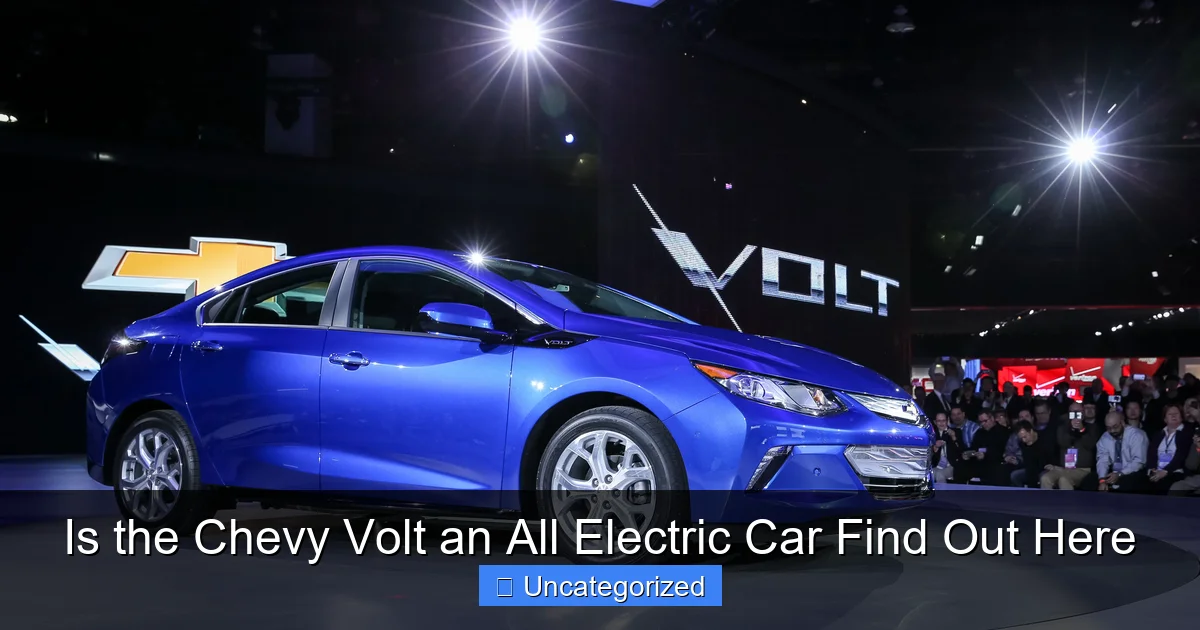
Featured image for is the chevy volt an all electric car
Image source: biggreenpurse.com
The Chevy Volt is not a fully electric car—it’s a plug-in hybrid that combines an electric motor with a gasoline engine for extended range. While it can drive on electricity alone for up to 53 miles, the gas engine kicks in when the battery depletes, making it a versatile but not all-electric option.
Key Takeaways
- Not fully electric: The Chevy Volt is a plug-in hybrid, not a pure EV.
- Electric-first drive: It runs on battery power first, then uses gas.
- 40-mile electric range: Covers short commutes without gas usage.
- Gas backup extends range: Switching to gas adds 300+ miles.
- Regen braking helps: Recaptures energy to boost efficiency.
- Charging flexibility: Charge at home or public stations for best results.
📑 Table of Contents
- Understanding the Chevy Volt: A Hybrid Pioneer
- How the Chevy Volt’s Powertrain Works
- Chevy Volt vs. All-Electric Cars: Key Differences
- Real-World Performance and Driving Experience
- Cost of Ownership and Charging Practicalities
- Chevy Volt Generations and Key Features
- Data Comparison: Chevy Volt vs. Competitors
- Conclusion: Is the Chevy Volt an All-Electric Car?
Understanding the Chevy Volt: A Hybrid Pioneer
The Chevy Volt has long been a topic of debate among eco-conscious drivers and automotive enthusiasts alike. Since its debut in 2011, it has stood at the crossroads of innovation—bridging the gap between traditional internal combustion engines (ICE) and the all-electric future. But the question remains: *Is the Chevy Volt an all-electric car?* The answer isn’t as straightforward as a simple “yes” or “no.” The Volt is a plug-in hybrid electric vehicle (PHEV), a category that combines electric propulsion with a gasoline engine, offering a unique blend of efficiency, range, and versatility. This duality has made it a standout in the automotive world, but it also invites confusion about its classification.
To truly understand the Chevy Volt, we must dive deeper into its design, capabilities, and real-world performance. Unlike all-electric vehicles (EVs) like the Tesla Model 3 or Nissan Leaf, which rely solely on battery power, the Volt operates on a hybrid system. However, it’s not your average hybrid like the Toyota Prius. The Volt’s innovative engineering allows it to function as an electric car for most daily commutes while seamlessly switching to gasoline for longer trips. This article will explore the Volt’s technology, compare it to pure EVs, and clarify its role in the evolving landscape of sustainable transportation. Whether you’re a prospective buyer or simply curious, this guide will answer all your questions about the Chevy Volt’s electric credentials.
How the Chevy Volt’s Powertrain Works
The Dual-Motor Electric Drive System
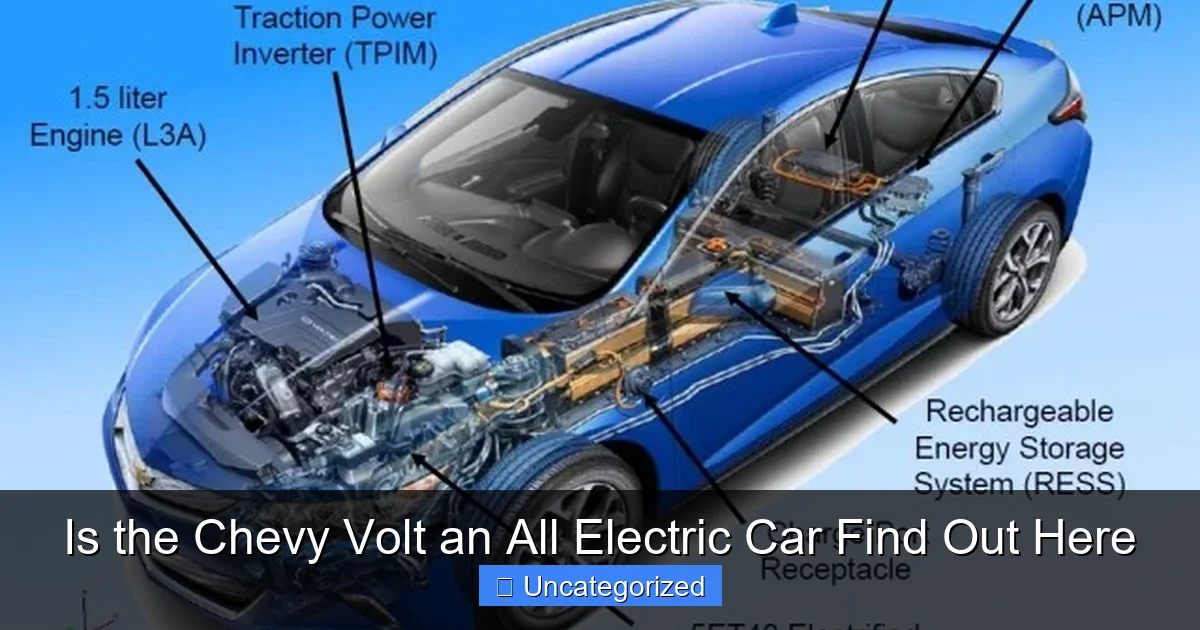
The Chevy Volt’s powertrain is a masterpiece of hybrid engineering. At its core are two electric motors and a 1.5L four-cylinder gasoline engine. The electric motors are the primary source of propulsion, powered by a 18.4 kWh lithium-ion battery pack (for 2016–2019 models). This setup allows the Volt to operate in EV mode for up to 53 miles (EPA-estimated range), making it a fully electric car for short commutes. For example, if your daily drive is 30 miles round-trip, you could theoretically go weeks without using a drop of gasoline—just plug in and charge overnight.
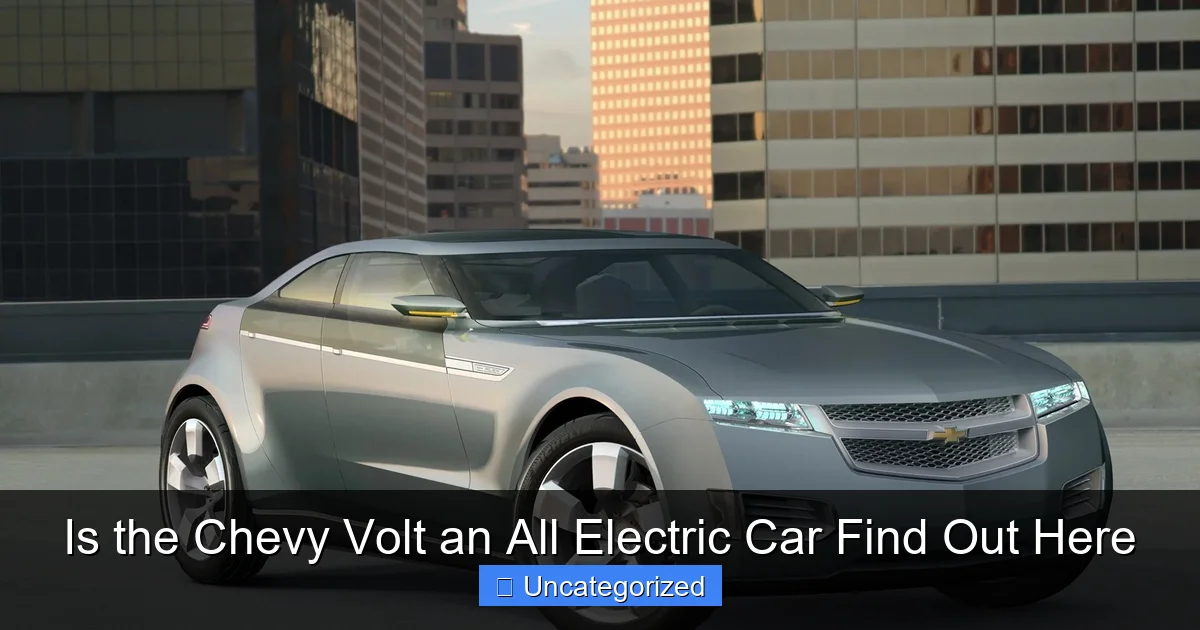
Visual guide about is the chevy volt an all electric car
Image source: 3.bp.blogspot.com
The dual-motor system is designed for efficiency. In low-speed or stop-and-go conditions, one motor drives the wheels while the other acts as a generator, capturing energy from regenerative braking. At higher speeds, both motors work in tandem to deliver smooth acceleration. This seamless integration of electric power is what sets the Volt apart from conventional hybrids.
The Role of the Gasoline Engine
Here’s where the Volt diverges from all-electric cars. Once the battery is depleted, the gasoline engine kicks in—but not to drive the wheels directly. Instead, it powers a generator that replenishes the battery, allowing the electric motors to continue operating. This is known as a series-hybrid configuration. Think of the gasoline engine as a backup generator: it extends the Volt’s range to over 400 miles (total) while maintaining the feel of an electric car. For instance, if you take a 200-mile road trip, the first 53 miles are electric, and the remaining 147 miles use the gasoline engine to keep the battery charged.
This design is a game-changer for drivers who need flexibility. Unlike pure EVs, the Volt eliminates range anxiety—the fear of running out of power with no charging station nearby. The gasoline engine ensures you’re never stranded, making the Volt a practical choice for both city driving and long-distance travel.
Chevy Volt vs. All-Electric Cars: Key Differences
Range and Refueling Flexibility
One of the most significant differences between the Chevy Volt and all-electric cars is their approach to range and refueling. Pure EVs like the Tesla Model 3 Long Range boast over 300 miles on a single charge, but they rely entirely on charging infrastructure. If you’re on a road trip and the battery runs low, you must find a charging station—which can take 30 minutes (fast charger) to several hours (Level 2 charger). The Volt, by contrast, can refuel with gasoline in minutes, just like a conventional car. This makes it ideal for drivers who travel frequently or live in areas with sparse charging networks.
Visual guide about is the chevy volt an all electric car
Image source: images.hgmsites.net
However, the Volt’s electric range is modest compared to modern EVs. For example, the 2023 Hyundai Kona Electric offers 258 miles of range, while the Volt maxes out at 53 miles. If you prioritize zero-emission driving, a pure EV is a better fit. But if you want the best of both worlds—electric efficiency with gasoline backup—the Volt shines.
Environmental Impact and Emissions
All-electric cars produce zero tailpipe emissions, making them the gold standard for eco-friendly transportation. The Chevy Volt, while not emission-free, still outperforms traditional hybrids. In EV mode, it emits no pollutants, and even in hybrid mode, its gasoline engine is highly efficient (around 42 mpg combined). Over a year, a Volt driven primarily in electric mode can reduce CO2 emissions by up to 50% compared to a standard gasoline car.
Consider this: If your daily commute is 40 miles round-trip, you’ll use the gasoline engine only for trips beyond 53 miles. Over time, your gasoline consumption will be minimal, especially if you charge regularly. In contrast, a pure EV would require a larger battery and more frequent charging, which may not be feasible for all drivers (e.g., those without home charging).
Real-World Performance and Driving Experience
Electric Driving Feel
The Chevy Volt delivers a driving experience that closely mimics an all-electric car. The electric motors provide instant torque, resulting in smooth, quiet acceleration. There’s no engine noise in EV mode—just the hum of the tires and the occasional whine of the electric drivetrain. This makes the Volt ideal for urban driving, where stop-and-go traffic is common.
Regenerative braking is another highlight. By lifting off the accelerator, the Volt slows down significantly, capturing energy to recharge the battery. This “one-pedal driving” feature is a favorite among EV enthusiasts and reduces wear on the brakes. For example, in city driving, you might rarely need to use the physical brake pedal, as the regen system handles most deceleration.
Hybrid Mode: When the Gasoline Engine Engages
Once the battery is depleted, the transition to hybrid mode is nearly imperceptible. The gasoline engine starts quietly and powers the generator, maintaining the electric driving feel. The Volt’s computer manages the switch seamlessly, so you won’t notice a difference in performance. The only clue is a slight hum from the engine, which is muffled by sound-deadening materials.
On the highway, the Volt performs admirably. The gasoline engine keeps the battery charged, allowing the electric motors to maintain speed efficiently. While it won’t win any drag races (0–60 mph in ~8.4 seconds), the Volt offers adequate power for most driving scenarios. For long-distance travelers, the hybrid mode ensures you won’t run out of juice—a major advantage over pure EVs.
Cost of Ownership and Charging Practicalities
Fuel and Electricity Costs
The Chevy Volt’s dual powertrain makes it cost-effective for drivers with short commutes. In EV mode, you’ll save significantly on fuel. For example, at $0.13/kWh (average U.S. electricity rate), a full charge costs about $2.40. If you drive 53 miles per charge, that’s roughly $0.046 per mile—far cheaper than gasoline (assuming $3.50/gallon and 25 mpg for a standard car).
However, if you frequently drive beyond the electric range, gasoline costs add up. Over a year, a driver who averages 12,000 miles (70% electric, 30% hybrid) might spend $400 on electricity and $600 on gasoline, totaling $1,000. A pure EV with 250-mile range would cost ~$624 annually (assuming 12,000 miles at $0.052/mile), while a gasoline car could exceed $1,600.
Charging Infrastructure and Home Charging
The Volt is compatible with Level 1 (120V) and Level 2 (240V) chargers. A Level 1 charger takes ~13 hours for a full charge, while Level 2 reduces this to ~4 hours. For most owners, a Level 2 charger is a worthwhile investment, especially if you drive daily. Public charging stations are optional—since the Volt can refuel with gasoline, you’re not dependent on them.
Here’s a tip: If you have access to workplace charging, you can extend your electric range without extra costs. For instance, if you charge at work and home, you might never use the gasoline engine during the week.
Chevy Volt Generations and Key Features
First Generation (2011–2015)
The original Volt set the stage for plug-in hybrids. It featured a 16 kWh battery with a 35–40-mile electric range and a 1.4L engine. While innovative, it had a higher price tag (~$40,000) and fewer amenities than later models.
Second Generation (2016–2019)
The second-gen Volt was a major leap forward. Key upgrades included:
- An 18.4 kWh battery with 53-mile electric range.
- A more efficient 1.5L engine (42 mpg combined).
- Improved infotainment (Chevrolet MyLink with Apple CarPlay/Android Auto).
- Regen on Demand paddle for stronger regenerative braking.
This generation made the Volt competitive with pure EVs for daily driving while offering unmatched flexibility.
Discontinuation and Legacy
Chevrolet discontinued the Volt in 2019, citing declining demand and a shift toward full EVs (like the Bolt EV). However, its legacy lives on. The Volt proved that PHEVs could bridge the gap between ICE and EVs, paving the way for models like the Toyota RAV4 Prime and Ford Escape Plug-In Hybrid.
Data Comparison: Chevy Volt vs. Competitors
| Model | Type | Electric Range (EPA) | Total Range | MPG (Hybrid Mode) | Price (2019) |
|---|---|---|---|---|---|
| Chevy Volt | Plug-In Hybrid | 53 miles | 420 miles | 42 mpg | $33,500 |
| Toyota Prius Prime | Plug-In Hybrid | 25 miles | 640 miles | 54 mpg | $27,600 |
| Nissan Leaf | All-Electric | 149 miles | 149 miles | N/A | $31,600 |
| Tesla Model 3 | All-Electric | 263 miles | 263 miles | N/A | $39,990 |
This table highlights the Volt’s unique position: it offers more electric range than the Prius Prime but less than pure EVs. Its hybrid mode gives it a range advantage over EVs, making it a versatile choice for many drivers.
Conclusion: Is the Chevy Volt an All-Electric Car?
So, is the Chevy Volt an all-electric car? The short answer is no—but it’s close. The Volt is a plug-in hybrid that functions as an electric car for most daily driving, with a gasoline engine as a backup. It’s the perfect solution for drivers who want electric efficiency without the range limitations of pure EVs. If your commute is under 50 miles and you can charge regularly, you’ll rarely use gasoline. For longer trips, the hybrid mode ensures you’re never stranded.
The Volt’s legacy is undeniable. It proved that PHEVs could deliver the best of both worlds, influencing the design of future hybrids and EVs. While it’s no longer in production, the lessons learned from the Volt live on in modern PHEVs like the RAV4 Prime and Escape Plug-In Hybrid. Whether you’re considering a used Volt or exploring newer alternatives, understanding its capabilities will help you make an informed decision. In the end, the Chevy Volt isn’t *just* an electric car—it’s a smarter, more flexible way to drive.
Frequently Asked Questions
Is the Chevy Volt an all electric car?
The Chevy Volt is not a fully all-electric car. It’s a plug-in hybrid that uses both an electric motor and a gasoline engine to power the vehicle, offering flexibility for longer trips.
How does the Chevy Volt’s electric range compare to other all-electric cars?
The Chevy Volt offers about 53 miles of all-electric range, which is shorter than most dedicated all-electric cars like the Tesla Model 3 or Nissan Leaf. Once the battery depletes, the gas engine activates to extend driving range.
Can the Chevy Volt run solely on electricity?
Yes, the Chevy Volt can run solely on electricity for up to 53 miles using its battery. After that, the onboard gasoline generator kicks in to recharge the battery and power the electric motor.
What makes the Chevy Volt different from all-electric cars?
Unlike all-electric cars that rely 100% on battery power and require charging for all miles driven, the Chevy Volt switches to a gasoline engine when the battery runs low, eliminating range anxiety.
Do I need to charge the Chevy Volt if it’s not an all-electric car?
Yes, to maximize efficiency and electric-only driving, you should charge the Chevy Volt regularly. However, it can still operate on gasoline alone if charging isn’t available, unlike true all-electric vehicles.
Is the Chevy Volt a good option for someone considering an all-electric car?
The Chevy Volt is a great transitional vehicle for those curious about electric driving but worried about range. It offers all-electric benefits for short commutes with the backup of a gas engine for longer trips.