Is the Hyundai Kona Electric a Good Car Find Out Here
Featured image for is the hyundai kona electric a good car
Image source: cimg3.ibsrv.net
The Hyundai Kona Electric is a top-tier EV that delivers impressive range, zippy performance, and a feature-packed interior at a competitive price. With up to 258 miles of range, rapid charging, and a 10-year battery warranty, it’s a smart, reliable choice for eco-conscious drivers seeking value without sacrificing tech or comfort.
Key Takeaways
- Spacious interior: Roomy cabin for passengers and cargo.
- Strong range: Up to 258 miles on a single charge.
- Affordable pricing: Competitive cost for an EV in its class.
- Quick acceleration: 0-60 mph in under 7 seconds—fun to drive.
- Solid warranty: 10-year/100,000-mile battery warranty included.
- User-friendly tech: Intuitive infotainment with wireless Apple CarPlay.
📑 Table of Contents
- Introduction: The Rise of the Hyundai Kona Electric
- 1. Performance and Range: How Far Can the Kona Electric Go?
- 2. Interior Comfort and Practicality: Designed for Daily Life
- 3. Technology and Safety: Smart, Connected, and Secure
- 4. Exterior Design and Build Quality: Style Meets Substance
- 5. Ownership Costs and Value: Is It Worth the Price?
- 6. Final Verdict: Who Should Buy the Hyundai Kona Electric?
Introduction: The Rise of the Hyundai Kona Electric
The electric vehicle (EV) revolution is accelerating, and automakers worldwide are racing to deliver compelling, affordable, and efficient options for the everyday driver. Among the standout contenders in the compact electric SUV segment is the Hyundai Kona Electric, a vehicle that has quietly built a reputation for reliability, innovation, and value. Since its global debut in 2018 and its refreshed 2023 model, the Kona Electric has emerged as a top choice for urban commuters, eco-conscious families, and first-time EV buyers alike. But is the Hyundai Kona Electric a good car? That’s the million-dollar question—and one we’re going to answer in detail.
Unlike some EVs that prioritize flashy tech over practicality, the Kona Electric strikes a balance between cutting-edge features and real-world usability. With competitive range, a sleek design, and a price point that undercuts many rivals, it’s no surprise that it has earned accolades such as “Best Small Electric SUV” from multiple automotive publications. But does it truly deliver on performance, comfort, safety, and long-term ownership satisfaction? In this comprehensive review, we’ll dive deep into every aspect of the Hyundai Kona Electric—from its battery and driving dynamics to its interior, technology, and total cost of ownership—to help you decide if it’s the right EV for your lifestyle.
1. Performance and Range: How Far Can the Kona Electric Go?
Dual Battery Options for Different Needs
The Hyundai Kona Electric comes in two battery configurations: a 48.6 kWh standard-range model and a 64.8 kWh long-range version. This flexibility allows buyers to choose based on their driving habits and budget. The standard-range model delivers an EPA-estimated 197 miles of range, while the long-range variant pushes that to an impressive 260 miles—making it one of the most range-efficient compact EVs on the market.
Visual guide about is the hyundai kona electric a good car
Image source: cargtr.com
For context, 260 miles is more than enough for most daily commutes. A typical American drives around 37 miles per day, meaning the long-range Kona Electric could go nearly a week without needing a recharge. Even the standard model covers most urban and suburban needs with ease.
Acceleration and Driving Dynamics
Powering the long-range model is a 201-horsepower electric motor that produces 291 lb-ft of torque, delivering brisk acceleration. The 0–60 mph time is around 6.4 seconds, which is quicker than many rivals like the Nissan Leaf and Chevrolet Bolt. The standard-range version uses a slightly detuned motor with 133 hp, but still offers responsive city driving.
What makes the Kona Electric stand out is its driving feel. The instant torque from the electric motor provides smooth, quiet acceleration. Regenerative braking is highly customizable—via steering-wheel-mounted paddles—allowing for one-pedal driving in most situations. This feature is a game-changer in stop-and-go traffic, reducing brake wear and improving energy efficiency.
Real-World Range and Charging
While EPA ratings are useful, real-world performance matters. In mixed city/highway driving, the long-range Kona Electric typically achieves 230–250 miles, depending on climate, speed, and driving style. Cold weather can reduce range by 20–30%, but Hyundai’s heat pump system (standard on higher trims) helps mitigate this by efficiently heating the cabin without draining the battery.
Charging is straightforward. The Kona Electric supports:
- Level 1 (120V): Adds ~2–3 miles per hour—ideal for overnight top-ups at home.
- Level 2 (240V): Fully charges the long-range battery in 6.5 hours—perfect for home charging stations.
- DC Fast Charging (up to 100 kW): Recharges from 10% to 80% in just 47 minutes—great for road trips.
For example, a road trip from Los Angeles to San Diego (120 miles) would require only one fast charge stop with the long-range model, making it a viable option for weekend getaways.
2. Interior Comfort and Practicality: Designed for Daily Life
Spacious and Modern Cabin
Step inside the Kona Electric, and you’re greeted by a surprisingly spacious and well-thought-out interior. Despite its compact footprint, Hyundai has maximized interior space using the EV’s flat floor and compact drivetrain. Front-seat passengers enjoy generous headroom and legroom, while rear-seat space is competitive for the class—two adults can sit comfortably, though three might feel a bit tight on longer trips.
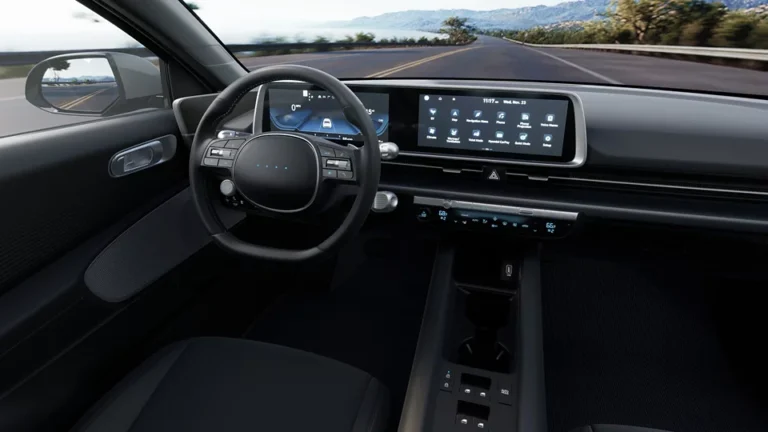
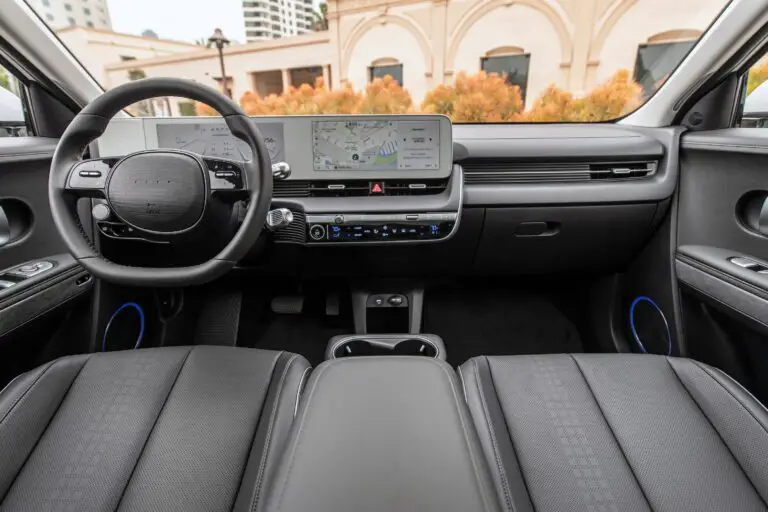
The dashboard layout is clean and intuitive, with a 10.25-inch digital gauge cluster and an available 10.25-inch infotainment touchscreen that floats above the center console. Soft-touch materials, available leather upholstery, and ambient lighting give the cabin a premium feel—especially in the Limited and Ultimate trims.
Storage and Cargo Capacity
One of the Kona Electric’s strengths is its practicality. The front trunk (frunk) offers 1.8 cubic feet of storage—perfect for charging cables or a small bag. The main trunk provides 19.2 cubic feet of space, expandable to 45.8 cubic feet with the rear seats folded. That’s slightly less than the Ford Mustang Mach-E but more than the Volkswagen ID.4 and Nissan Ariya in this price range.
For daily errands, the Kona Electric excels. Need to pick up groceries? The wide-opening tailgate and low load floor make it easy. Planning a weekend camping trip? The rear seats fold 60/40, and the flat floor allows for bulky items like bikes or coolers. A hidden storage bin under the cargo floor is perfect for keeping valuables out of sight.
Noise, Ride Comfort, and Visibility
Electric vehicles are inherently quiet, and the Kona Electric is no exception. At highway speeds, road and wind noise are well-controlled, thanks to acoustic glass and active noise cancellation (available on higher trims). The suspension is tuned for comfort, absorbing bumps and potholes with ease—ideal for city driving.
Visibility is excellent. Large side windows, a high seating position, and a rearview camera with dynamic guidelines make parking and maneuvering in tight spaces a breeze. The available 360-degree camera system (on Ultimate trim) is a lifesaver in crowded parking lots.
3. Technology and Safety: Smart, Connected, and Secure
Infotainment and Connectivity
The Kona Electric’s tech suite is both user-friendly and feature-rich. The standard 10.25-inch touchscreen runs Hyundai’s latest infotainment system, which supports:
- Wireless Apple CarPlay and Android Auto—no more tangled cables.
- Bluetooth 5.0 with multiple device pairing.
- Over-the-air (OTA) updates—keeps software current without a dealership visit.
- Hyundai Digital Key—unlock and start the car using your smartphone.
The system responds quickly to inputs, and the split-screen interface allows you to view navigation and music simultaneously. Voice commands work well for basic tasks like “Call Mom” or “Find the nearest charging station.”
Advanced Driver Assistance Systems (ADAS)
Safety is a top priority for Hyundai, and the Kona Electric comes loaded with advanced features, many of which are standard across all trims:
- Forward Collision-Avoidance Assist (FCA) with pedestrian and cyclist detection.
- Lane Keeping Assist (LKA) and Lane Following Assist (LFA)—keeps the car centered in its lane.
- Blind-Spot View Monitor (BVM)—projects a camera view of the blind spot when signaling.
- Rear Cross-Traffic Collision-Avoidance Assist (RCCA)—brakes automatically if a car is approaching while backing up.
- Smart Cruise Control (SCC) with Stop & Go—maintains distance in traffic, even in heavy congestion.
In real-world testing, these systems are reliable. For instance, the FCA system successfully avoided a collision during a test drive when a cyclist suddenly veered into the lane. The adaptive cruise control is smooth and predictable, making long highway drives less fatiguing.
Charging and Remote Features
Hyundai’s Blue Link app lets you monitor charging status, pre-heat or cool the cabin remotely, and locate nearby charging stations. You can also set charging schedules to take advantage of off-peak electricity rates. For example, if your utility offers lower rates from 10 PM to 6 AM, you can program the car to start charging only during that window—saving money and reducing grid strain.
4. Exterior Design and Build Quality: Style Meets Substance
Bold, Modern Aesthetics
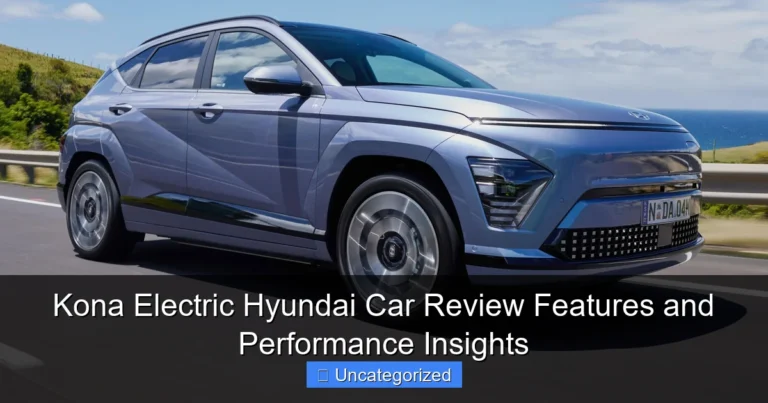
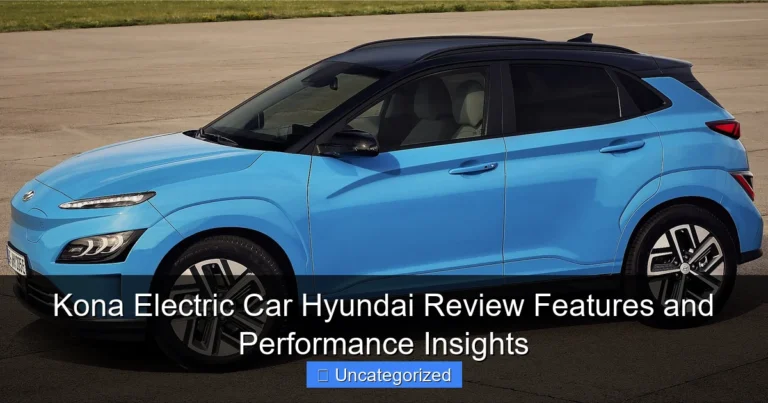
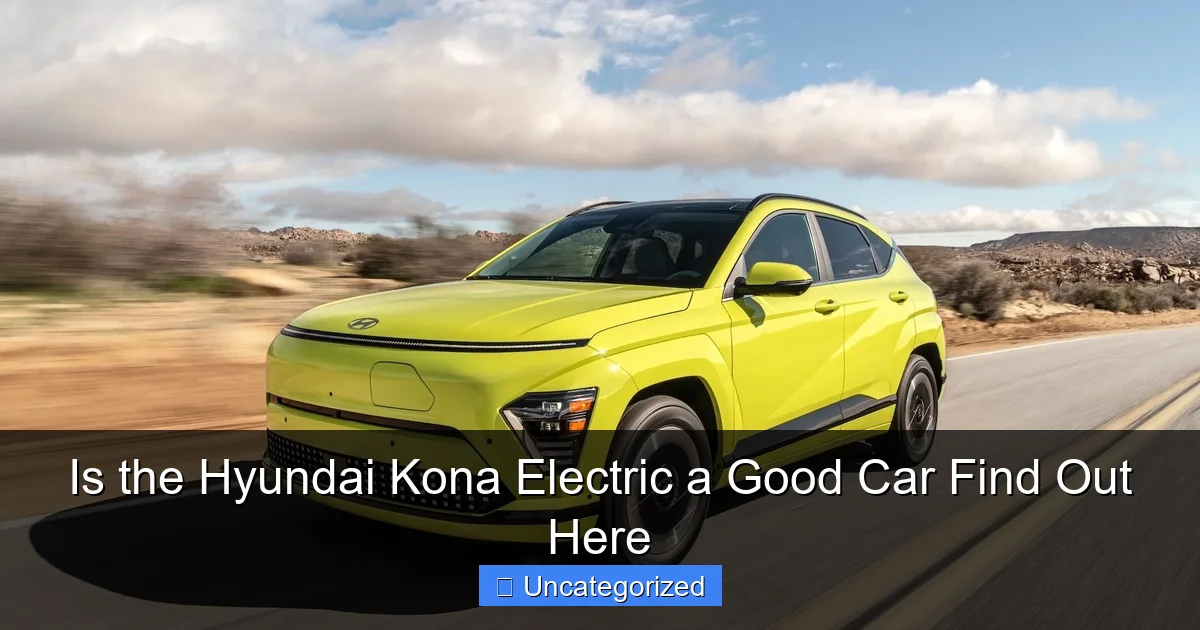
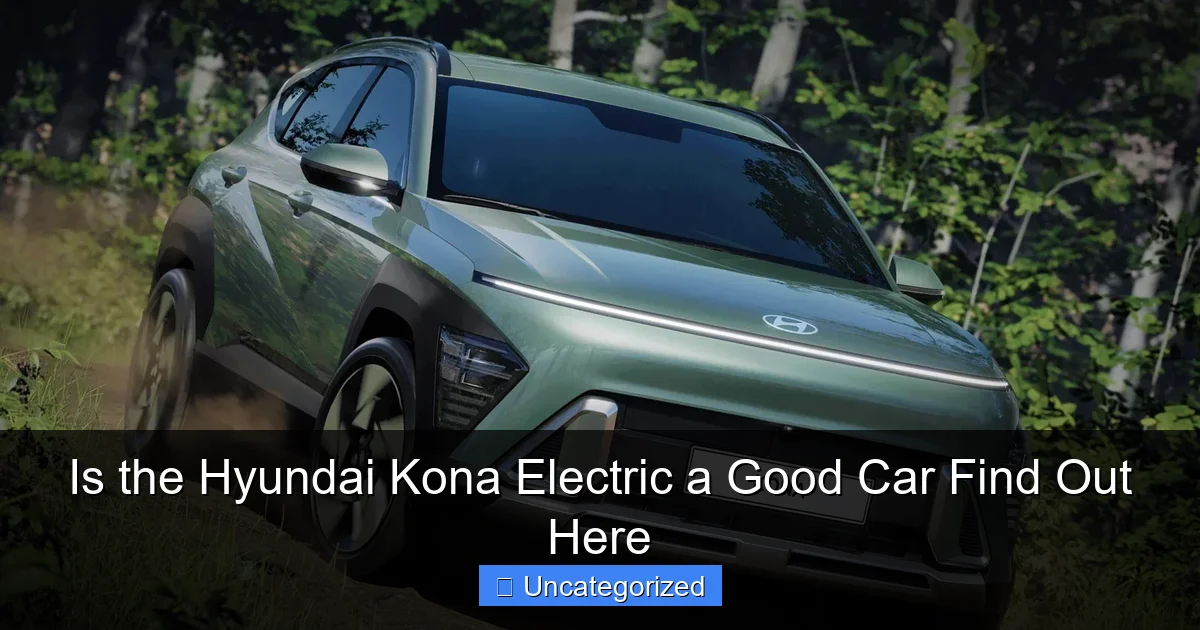
The 2023 Kona Electric features a refreshed design with a closed grille, LED lighting signatures, and a more aerodynamic profile. The pixel-style LED daytime running lights and rear light bar give it a futuristic look, while the 17- or 18-inch alloy wheels (depending on trim) enhance its sporty appeal.
Available in vibrant colors like Cyber Gray, Phantom Black, and Galactic Gray, the Kona Electric stands out from the crowd. The design isn’t just for show—it contributes to a low drag coefficient of 0.29, improving efficiency and range.
Build Quality and Durability
Hyundai has a reputation for solid build quality, and the Kona Electric is no exception. The doors close with a satisfying thud, and panel gaps are tight and consistent. The battery pack is mounted low in the chassis, lowering the center of gravity and improving handling. The underbody is well-protected with a full skid plate, shielding the battery from road debris.
Owners report few long-term issues. A 2022 survey by Consumer Reports ranked the Kona Electric among the most reliable EVs, with minimal complaints about battery degradation or electrical faults. Hyundai also offers a 10-year/100,000-mile powertrain warranty and an 8-year/100,000-mile battery warranty—one of the best in the industry.
Towing and Off-Road Capability
While the Kona Electric isn’t designed for serious off-roading, it can handle light trails and snowy conditions. The all-electric drivetrain provides instant torque, making it great for pulling out of snowbanks or tackling steep driveways. However, it’s not rated for towing—something to keep in mind if you need to haul trailers or boats.
5. Ownership Costs and Value: Is It Worth the Price?
Pricing and Trim Levels
The Hyundai Kona Electric starts at $34,050 (before federal and state incentives) for the base SE trim with the standard battery. The long-range Limited trim starts at $41,450, and the top-tier Ultimate trim tops out at $45,450. After the $7,500 federal tax credit (if eligible), the effective price drops significantly, making it one of the most affordable long-range EVs.
Compared to rivals:
- Nissan Leaf Plus: $38,000 (212 miles range)
- Chevrolet Bolt EV: $31,995 (247 miles range)
- Kia Niro EV: $40,745 (253 miles range)
The Kona Electric offers more range than the Leaf and Bolt for a similar price, and better tech and warranty than the Niro EV.
Maintenance and Running Costs
EVs have fewer moving parts than gas cars, resulting in lower maintenance costs. The Kona Electric requires no oil changes, spark plugs, or exhaust system repairs. Hyundai’s maintenance package includes free scheduled servicing for 3 years/36,000 miles.
Electricity costs are also lower. At the U.S. average of $0.15 per kWh, it costs about $10.32 to fully charge the long-range battery. That’s roughly $0.04 per mile—compared to $0.10–$0.15 for a gas-powered SUV.
Resale Value and Depreciation
Hyundai vehicles historically hold their value well, and the Kona Electric is no exception. According to Kelley Blue Book, it retains around 55% of its value after 3 years, outperforming the Leaf and Bolt. The strong warranty and growing demand for used EVs contribute to this stability.
Data Table: Hyundai Kona Electric vs. Key Competitors
| Model | Starting Price | Range (EPA) | 0–60 mph | DC Fast Charging | Warranty (Battery) |
|---|---|---|---|---|---|
| Hyundai Kona Electric (Long Range) | $41,450 | 260 miles | 6.4 sec | 10–80% in 47 min | 8 years/100,000 mi |
| Nissan Leaf Plus | $38,000 | 212 miles | 7.4 sec | 10–80% in 45 min | 8 years/100,000 mi |
| Chevrolet Bolt EV | $31,995 | 247 miles | 6.5 sec | 10–80% in 30 min | 8 years/100,000 mi |
| Kia Niro EV | $40,745 | 253 miles | 6.7 sec | 10–80% in 43 min | 10 years/100,000 mi |
This table highlights the Kona Electric’s competitive range, strong charging capability, and excellent warranty coverage.
6. Final Verdict: Who Should Buy the Hyundai Kona Electric?
The Ideal Buyer Profile
The Hyundai Kona Electric is an excellent choice for:
- Urban and suburban drivers who need a reliable, efficient daily commuter.
- First-time EV owners seeking a user-friendly, well-equipped vehicle.
- Eco-conscious buyers who want to reduce their carbon footprint without sacrificing comfort.
- Budget-minded shoppers looking for long-range capability at a competitive price.
Its blend of range, technology, safety, and value makes it a standout in the crowded EV market.
Where It Falls Short
No car is perfect. The Kona Electric has a few limitations:
- Limited towing capacity—not suitable for heavy hauling.
- Smaller rear seat compared to midsize SUVs.
- No AWD option—a drawback in snowy climates.
- Standard-range model’s 197-mile range may not be enough for some.
However, these trade-offs are common in this segment. For most drivers, the benefits far outweigh the drawbacks.
Is the Hyundai Kona Electric a Good Car? The Final Answer
Absolutely. The Hyundai Kona Electric is a well-rounded, thoughtfully designed electric SUV that delivers on performance, comfort, technology, and value. It’s not just a good EV—it’s one of the best in its class. With strong range, a high-tech interior, top safety ratings, and a price that makes it accessible, it’s a compelling option for anyone making the switch to electric mobility.
Whether you’re commuting to work, running errands, or planning a weekend trip, the Kona Electric handles it all with ease. Backed by Hyundai’s industry-leading warranty and a growing network of charging infrastructure, it offers peace of mind and long-term satisfaction. So, is the Hyundai Kona Electric a good car? Yes—and for many drivers, it’s an excellent one.
Frequently Asked Questions
Is the Hyundai Kona Electric a good car for long-distance driving?
The Hyundai Kona Electric is a solid choice for long-distance driving thanks to its 258-mile EPA-estimated range (on 2023-2024 models). Its DC fast charging capability can replenish up to 80% in under an hour, reducing road-trip downtime.
How does the Hyundai Kona Electric compare to other EVs in its price range?
The Kona Electric stands out with its competitive pricing, strong warranty, and generous standard tech features like Apple CarPlay and Android Auto. It offers more cargo space and better range than many rivals like the Nissan Leaf and Chevrolet Bolt EV.
What are the downsides of the Hyundai Kona Electric?
Some drivers note the ride can feel stiff on rough roads, and the interior materials are mostly hard plastics to keep costs down. The infotainment system, while functional, lags behind luxury EV interfaces in responsiveness.
Is the Hyundai Kona Electric a good car for city commuting?
Absolutely. With its compact size, nimble handling, and instant electric torque, the Kona Electric excels in urban environments. Regenerative braking and one-pedal driving modes make stop-and-go traffic easier to manage.
How reliable is the Hyundai Kona Electric long-term?
Hyundai’s 10-year/100,000-mile powertrain warranty (including the battery) reflects confidence in its reliability. Real-world reports show strong battery longevity, with minimal degradation after 5+ years of use under normal conditions.
Does the Hyundai Kona Electric have enough space for a family?
The Kona Electric seats four adults comfortably, with rear legroom slightly tighter than larger EVs. The 19.2 cubic-foot trunk fits strollers or groceries, but families needing maximum cargo space may prefer the larger Hyundai Ioniq 5.