Is the Kia Soul Base an Electric Car Find Out Here
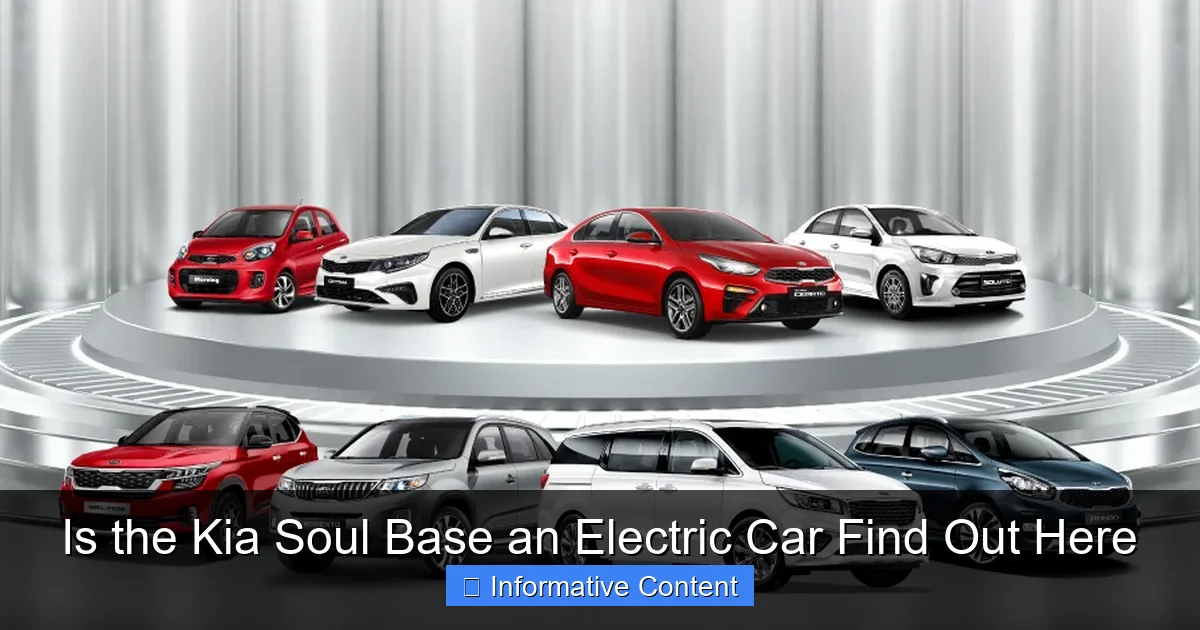
Featured image for is the kia soul base an electric car
Image source: kiavietnam.com.vn
The Kia Soul Base is not a fully electric car, but it offers a fuel-efficient gasoline engine ideal for budget-conscious drivers. If you’re seeking an affordable EV alternative, consider the Kia Soul EV, which delivers zero-emission driving with a 243-mile range—perfect for eco-friendly commutes.
Key Takeaways
- Not fully electric: The Kia Soul Base is a gas-powered model, not an EV.
- EV variant available: Choose the Kia Soul EV for a fully electric experience.
- Check trims carefully: Confirm model specs to avoid confusing Base with EV trims.
- Lower upfront cost: Base model offers affordability over the pricier EV version.
- Fuel efficiency: Base model delivers solid MPG for daily commuting needs.
📑 Table of Contents
- Is the Kia Soul Base an Electric Car? Let’s Break It Down
- Understanding the Kia Soul Lineup: Gas vs. Electric
- Key Differences Between the Gas and Electric Soul
- Who Should Choose the Base Kia Soul (and Who Shouldn’t)
- The Kia Soul EV: Is It Worth the Extra Cost?
- Data Table: Kia Soul Gas vs. Electric Comparison
- Final Thoughts: Should You Go Electric?
Is the Kia Soul Base an Electric Car? Let’s Break It Down
You’ve probably seen the Kia Soul zipping around town—its boxy, cheerful silhouette is hard to miss. Maybe you’ve even caught a glimpse of the Kia Soul EV with its futuristic grille and charging port, silently gliding past gas stations. But here’s the real question: Is the Kia Soul base an electric car? If you’re shopping for a compact, affordable vehicle and are curious about going electric, this is a valid and important question.
I remember when I first started looking into the Kia Soul. I was drawn to its quirky design and surprisingly roomy interior. But I kept seeing two versions: one with a traditional engine and another with a charging port. I assumed the base model was the gas version, but I wasn’t entirely sure. Sound familiar? You’re not alone. Many shoppers get confused between the Kia Soul trims, especially when the word “base” comes into play. The truth is, the base Kia Soul is not an electric car—it runs on gasoline. But the good news? There’s an electric version, and it’s more accessible than you might think. In this guide, we’ll walk through the differences, what the base model offers, and whether the electric Soul might actually be a better fit for your lifestyle.
Understanding the Kia Soul Lineup: Gas vs. Electric
The Kia Soul comes in two distinct powertrains: the gas-powered Kia Soul and the Kia Soul EV (Electric Vehicle). These are completely different models under the same name, and understanding the difference is key to making the right choice.

Visual guide about is the kia soul base an electric car
Image source: kiavietnam.com.vn
What the Base Kia Soul Offers
The base Kia Soul—typically labeled as the LX trim in the U.S.—is powered by a 2.0-liter four-cylinder gasoline engine. This engine produces around 147 horsepower and 132 lb-ft of torque, paired with a continuously variable transmission (CVT). It’s not a sports car, but it’s peppy enough for city driving and highway merging. Think of it as the “everyday reliable” version—great for commuting, errands, and weekend getaways.
One of the biggest draws of the base Soul is its affordability. With a starting MSRP around $20,000 (as of 2023–2024 models), it’s one of the most budget-friendly new cars on the market. It also comes with standard features like:
- 7-inch touchscreen with Apple CarPlay and Android Auto
- Rearview camera
- Bluetooth connectivity
- LED headlights
- 16-inch steel wheels
It’s a no-frills, dependable car that doesn’t break the bank. But if you’re asking, “Is the Kia Soul base an electric car?” the answer is a clear no. It runs on gasoline and requires regular fill-ups, oil changes, and maintenance like any traditional car.
The Kia Soul EV: The Electric Alternative
Now, let’s talk about the Kia Soul EV. This is the fully electric version, and it’s a whole different beast. The Soul EV uses a battery-electric powertrain instead of an internal combustion engine. As of the 2023–2024 models, it comes with either a 39.2 kWh or 64 kWh battery, depending on the trim (EV1 and EV2).
- EV1: ~111-mile range, 134 horsepower
- EV2: ~243-mile range, 201 horsepower
The EV2 trim is the one most people consider if they want a practical, long-range electric car. It’s quiet, smooth, and offers instant torque—meaning it accelerates quickly from a stop, which is great in city traffic. The Soul EV also includes features like:
- Regenerative braking (lets you drive with one pedal in many situations)
- DC fast charging (up to 80% in about 40–50 minutes)
- Heated front seats and steering wheel (standard on higher trims)
- Advanced driver aids like blind-spot monitoring and adaptive cruise
So, while the base Kia Soul is not electric, the Soul EV is—and it’s a solid contender in the compact EV market.
Key Differences Between the Gas and Electric Soul
If you’re trying to decide between the gas-powered base Soul and the electric Soul EV, it helps to compare them side by side. They look similar, but under the skin, they’re very different.
Performance and Driving Experience
The gas-powered Soul is… fine. It’s not slow, but it’s not exciting either. Acceleration is adequate, and the CVT keeps things smooth, though it can feel a bit rubbery under hard acceleration. The ride is comfortable for a small car, and the boxy shape gives great visibility.
The Soul EV, on the other hand, feels alive from the moment you press the start button. Electric motors deliver power instantly—no waiting for the engine to rev. The EV2 trim, with 201 horsepower, feels noticeably quicker and more responsive. The ride is also quieter, with no engine noise. You’ll notice the difference the first time you pull away from a stoplight.
One thing to note: the EV is heavier due to the battery pack (about 3,500 lbs vs. 2,800 lbs for the gas model). This can affect handling slightly, but the lower center of gravity actually improves cornering stability. It’s not a sports car, but it feels planted and confident.
Fuel vs. Charging: What’s More Convenient?
This is where things get interesting. The gas Soul uses regular unleaded fuel. Fill up at any gas station, and you’re back on the road in 5 minutes. The EPA estimates around 27 mpg city / 33 mpg highway, so a full tank (~14.5 gallons) gets you about 400 miles.
The Soul EV, however, needs charging. If you have a Level 2 charger at home (like a 240V outlet), you can fully charge the 64 kWh battery in about 9–10 hours. No need to go anywhere—just plug it in overnight. But if you rely on public charging, it’s a different story. DC fast charging can get you to 80% in under an hour, but availability varies by region. In rural areas, fast chargers might be scarce.
Tip: If you live in an apartment or don’t have a garage, owning an EV can be tricky. You’ll need access to charging at work, a nearby public station, or a shared facility. The gas Soul is more flexible in this regard.
Cost of Ownership: Upfront vs. Long-Term
Here’s a common misconception: EVs are always more expensive. While the Soul EV starts around $34,000–$38,000 (before incentives), the gas base model starts at ~$20,000. So yes, the EV has a higher sticker price. But don’t stop there.
- Gas costs: At $3.50/gallon and 30 mpg, driving 12,000 miles a year costs about $1,400.
- Electricity costs: At $0.15/kWh and 3.5 miles per kWh, the same 12,000 miles costs about $514. That’s a $886 annual savings.
- Maintenance: EVs have fewer moving parts. No oil changes, spark plugs, or exhaust systems. Brakes last longer thanks to regenerative braking.
- Incentives: Depending on your state, you may qualify for tax credits (e.g., up to $7,500 federal credit for the Soul EV, though eligibility can vary).
Over 5 years, the EV could save you $4,000–$6,000 in fuel and maintenance, narrowing the upfront price gap. Plus, EVs often have higher resale value.
Who Should Choose the Base Kia Soul (and Who Shouldn’t)
The base Kia Soul is a great car for certain people—and not so great for others. Let’s break it down with real-life scenarios.
Best For: Budget-Conscious Buyers and Long-Distance Drivers
If you’re looking for a new car under $22,000, the base Soul is a strong contender. It’s reliable, has decent fuel economy, and comes with modern tech features that many cars at this price point lack. It’s ideal for:
- College students: Affordable, safe, and easy to park.
- Urban commuters: The compact size makes city driving and parking a breeze.
- Road trippers: With a full tank, you can go 400+ miles without stopping—no range anxiety.
One friend of mine, Sarah, drives 100 miles round-trip for work. She doesn’t have a garage and lives in a cold climate. She chose the base Soul because she didn’t want to worry about charging in winter or finding stations during long drives. For her, the gas model made perfect sense.
Not Ideal For: Eco-Conscious Drivers or Short Commuters
If you care about the environment or drive mostly short distances, the base Soul might not be the best choice. Here’s why:
- Carbon footprint: Even with decent mpg, it still emits CO2. The EV produces zero tailpipe emissions.
- Daily driving: If your commute is under 30 miles, the EV can easily handle it on a single charge—and you’ll rarely need to plug in.
- Noise and comfort: The gas engine can be noisy at highway speeds. The EV is whisper-quiet.
Another friend, Mark, switched from a gas Soul to the Soul EV after his commute dropped to 15 miles a day. He charges at home, saves $100/month on fuel, and loves how smooth the ride is. “I’ll never go back,” he told me.
When the Base Soul Shines: Practicality and Simplicity
Let’s be honest: not everyone wants to think about charging, battery health, or software updates. The base Soul is simple. Fill it up, change the oil every 7,500 miles, and you’re good to go. No apps, no charging schedules, no range calculations. If you value driving without overthinking, the base model delivers.
The Kia Soul EV: Is It Worth the Extra Cost?
So, if the base Kia Soul isn’t electric, should you go for the EV instead? Let’s explore whether the upgrade is worth it.
Range and Real-World Use
The Soul EV2 (64 kWh) offers ~243 miles of range. That’s plenty for most people. The average American drives about 37 miles a day, so you could go over a week without charging. Even with winter range loss (batteries lose 20–30% efficiency in cold weather), you’re still looking at 170–200 miles—more than enough for errands, school runs, and local trips.
But if you regularly drive 200+ miles in a day, the EV might not be ideal unless you plan charging stops. The gas Soul, with its 400+ mile range, is better for long hauls.
Charging Infrastructure: What You Need to Know
Before buying the Soul EV, ask yourself: Where will I charge? If you have a driveway or garage, installing a Level 2 charger (around $500–$800 with installation) makes ownership easy. But if you park on the street or in an apartment complex, it’s more complicated.
Public charging networks like ChargePoint, EVgo, and Electrify America are growing, but coverage isn’t equal everywhere. Use apps like PlugShare to check nearby stations. Tip: Look for stations with DC fast charging (50kW or higher) for quick top-ups.
Features and Tech Upgrades
The Soul EV isn’t just electric—it’s more advanced. Higher trims include:
- 10.25-inch touchscreen with navigation
- Wireless Apple CarPlay and Android Auto
- Harman Kardon premium audio
- Heated and ventilated front seats
- Smart key with push-button start
These features aren’t just luxuries—they improve the daily driving experience. For example, the ventilated seats in summer are a game-changer in hot climates.
Data Table: Kia Soul Gas vs. Electric Comparison
| Feature | Kia Soul Base (Gas) | Kia Soul EV2 (Electric) |
|---|---|---|
| Engine/Powertrain | 2.0L 4-cylinder (147 hp) | Electric motor (201 hp) |
| Transmission | CVT | Single-speed reduction gear |
| Fuel Type | Regular unleaded | Electricity (64 kWh battery) |
| Range | ~400 miles (14.5 gal tank) | ~243 miles (EPA) |
| MPG/MPGe | 27 city / 33 hwy | 127 city / 104 hwy (MPGe) |
| Charging/Fuel Time | 5 minutes (gas station) | 9–10 hours (Level 2), 40–50 min (DC fast charge) |
| Starting MSRP | ~$20,000 | ~$38,000 (before incentives) |
| Maintenance (5 years) | ~$5,000 (oil, brakes, etc.) | ~$2,000 (tires, cabin filter, etc.) |
| Emissions | CO2 emissions (tailpipe) | Zero tailpipe emissions |
Final Thoughts: Should You Go Electric?
So, to answer the big question: Is the Kia Soul base an electric car? No. The base model runs on gasoline. But the Kia Soul EV exists, and it’s a compelling option for many drivers.
If you’re on a tight budget, drive long distances, or don’t have reliable charging access, the base Soul is a smart, practical choice. It’s affordable, dependable, and fun to drive in its own way. But if you’re ready to embrace electric driving, the Soul EV offers lower operating costs, a quieter ride, and a smaller environmental footprint.
Think about your daily routine. Do you mostly drive short distances? Have a place to charge at home? Care about saving money on fuel and maintenance? If yes, the EV is worth the extra upfront cost. And with incentives, it might be more affordable than you think.
At the end of the day, both versions of the Kia Soul are excellent cars—just for different people. The base model is the practical, no-nonsense pick. The EV is the future-forward, eco-friendly upgrade. Whichever you choose, you’re getting a vehicle with personality, reliability, and a great warranty (10-year/100,000-mile powertrain coverage).
So, don’t let the name fool you. The Kia Soul comes in two flavors: gas and electric. Now that you know the difference, you can pick the one that fits your life—and your values. Happy driving!
Frequently Asked Questions
Is the Kia Soul base model an electric car?
The base Kia Soul is not an electric car—it comes with a traditional gasoline engine. Only the Kia Soul EV (Electric Vehicle) trim offers fully electric power.
What’s the difference between the Kia Soul base and the Kia Soul EV?
The base Kia Soul uses a 2.0L 4-cylinder gasoline engine, while the Kia Soul EV runs on a battery-powered electric motor. The EV version offers zero emissions and lower fuel costs but has a higher upfront price.
Can I get a Kia Soul base with an electric motor?
No, the standard Kia Soul base model is only available with an internal combustion engine. If you want an electric Kia Soul, you’ll need to choose the dedicated EV trim.
Does the Kia Soul base have any electric features?
While the base Kia Soul isn’t electric, it includes modern tech like a touchscreen infotainment system and available driver aids. However, it lacks the full electric powertrain found in the Soul EV.
Is the Kia Soul EV more expensive than the base model?
Yes, the Kia Soul EV carries a higher price tag than the base gasoline model due to its advanced electric powertrain and battery technology. Tax incentives may help offset the cost difference.
Which Kia Soul is the best choice for eco-conscious drivers?
For eco-friendly driving, the Kia Soul EV is the clear winner, offering all-electric range and zero tailpipe emissions. The base model is better suited for those prioritizing affordability over electric performance.