Is Toyota Going to Make Electric Cars The Future Unveiled
Featured image for is toyota going to make electric cars
Image source: upload.wikimedia.org
Toyota is aggressively expanding its electric vehicle lineup, signaling a major shift toward an all-electric future by 2030. With plans to launch 30 new EV models and invest $70 billion in electrification, the automaker is betting big on battery technology and global EV market dominance.
Key Takeaways
- Toyota commits to 30+ EV models by 2030, signaling a major shift toward electrification.
- Battery tech investments aim to cut costs and boost EV performance by 2025.
- Solid-state batteries could revolutionize range and charging speed by 2027.
- Hybrid-to-EV transition strategy targets markets slow to adopt full electrification.
- Global EV production hubs will expand, with new factories in North America and Asia.
- Consumer incentives may accelerate as Toyota aligns with government EV policies.
📑 Table of Contents
- Is Toyota Going to Make Electric Cars? The Future Unveiled
- The Evolution of Toyota’s Electrification Strategy
- Toyota’s Current Electric Vehicle Lineup
- Technology and Innovation: The Heart of Toyota’s BEV Future
- Challenges and Controversies: Hurdles on the Road Ahead
- Toyota’s Global Roadmap: A 2030 Vision
- Conclusion: The Future Is Electric—And Toyota Is Ready
Is Toyota Going to Make Electric Cars? The Future Unveiled
The automotive world is undergoing a seismic shift, and at the center of this transformation stands Toyota—a brand synonymous with reliability, innovation, and global leadership. For decades, Toyota has dominated the hybrid market with the iconic Prius, a car that redefined fuel efficiency and environmental consciousness. But as the world accelerates toward a fully electric future, a critical question echoes across showrooms, boardrooms, and living rooms: Is Toyota going to make electric cars? The answer isn’t a simple yes or no. It’s a nuanced, strategic, and evolving narrative that reflects Toyota’s unique vision for sustainable mobility.
While competitors like Tesla, Ford, and Volkswagen have launched aggressive all-electric campaigns, Toyota’s approach has been more deliberate. Critics have labeled the company as “behind the curve” or “slow to adapt,” but a deeper dive reveals a multifaceted strategy that blends battery electric vehicles (BEVs), hybrids, plug-in hybrids (PHEVs), and even hydrogen fuel cell technology (FCEVs). This article explores Toyota’s electric journey—its past hesitations, current initiatives, technological innovations, and long-term roadmap. By the end, you’ll understand not just whether Toyota is going to make electric cars, but how and why its vision might just redefine the future of transportation.
The Evolution of Toyota’s Electrification Strategy
From Prius to Beyond: The Hybrid Legacy
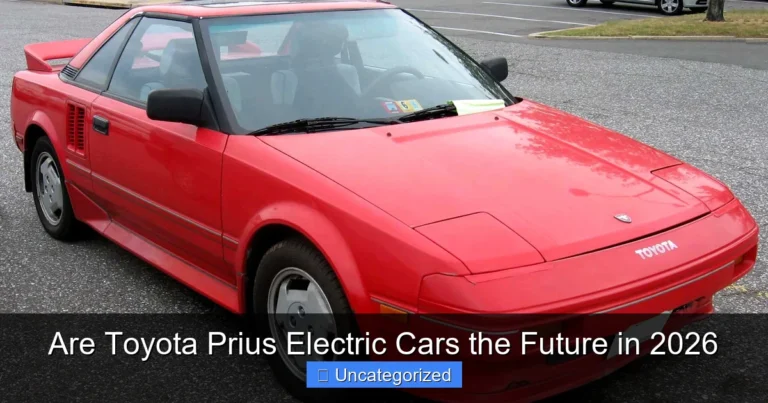
Toyota’s electrification story didn’t begin with batteries—it began with hybrids. The 1997 launch of the Prius marked a watershed moment in automotive history, introducing the world to the first mass-produced hybrid car. Over the next 25 years, Toyota sold over 20 million hybrid vehicles globally, establishing itself as the undisputed leader in electrified combustion technology. But while hybrids reduce emissions, they’re not zero-emission. As governments worldwide set ambitious net-zero targets (e.g., the EU’s 2035 ICE ban), Toyota faced mounting pressure to pivot toward full electrification.
Visual guide about is toyota going to make electric cars
Image source: live.staticflickr.com
The “Wait-and-See” Approach: Why Toyota Was Cautious
From 2010 to 2020, Toyota maintained a conservative stance on BEVs. Executives, including former CEO Akio Toyoda, argued that battery technology was too expensive, charging infrastructure was inadequate, and consumer demand was uncertain. Instead, Toyota doubled down on hydrogen fuel cell vehicles (FCEVs), betting on the Mirai as a long-term solution. This strategy drew criticism, especially as Tesla’s Model 3 and Model Y proved that BEVs could be both desirable and profitable. However, Toyota’s caution wasn’t ignorance—it was calculated risk mitigation. The company prioritized scalability over speed, ensuring that when it did enter the BEV market, it would do so with a robust, sustainable platform.
A Strategic Shift: The 2021 Announcement
In December 2021, Toyota stunned the industry by announcing a $70 billion investment in electrification, with plans to launch 30 BEVs by 2030 and sell 3.5 million BEVs annually by that year. This marked a dramatic reversal of its earlier stance. The shift was driven by three factors: (1) stricter global emissions regulations, (2) growing consumer demand for BEVs (EV sales grew 60% YoY in 2022), and (3) internal R&D breakthroughs in battery technology. The message was clear: Toyota wasn’t just going to make electric cars—it was going all-in.
Toyota’s Current Electric Vehicle Lineup
The bZ4X: Toyota’s First Global BEV
The bZ4X, launched in 2022, is Toyota’s flagship BEV and the first model under its “bZ” (Beyond Zero) sub-brand. Built on the e-TNGA platform (co-developed with Subaru), the bZ4X offers:
- Range: Up to 252 miles (EPA estimate) for the FWD model.
- Performance: 201 hp (FWD) or 214 hp (AWD) with optional dual-motor setup.
- Charging: 150 kW DC fast charging (10–80% in ~30 minutes).
- Features: Solar roof option (adds up to 1,000 miles of range annually), steer-by-wire system (in some markets).
The bZ4X has received mixed reviews. Praised for its spacious interior and safety features (Toyota Safety Sense 3.0), it’s been criticized for a slightly underwhelming range compared to rivals like the Hyundai Ioniq 5 or Ford Mustang Mach-E. However, Toyota views the bZ4X as a “learning model”—a stepping stone to more advanced BEVs.
Regional Models: The C-HR EV and Beyond
While the bZ4X is Toyota’s global BEV, it also sells region-specific electric models:
- Toyota C-HR EV (China): A compact crossover with 250-mile range, tailored for urban commuters.
- Toyota bZ3 (China): A sedan developed with BYD, featuring BYD’s Blade Battery technology (safer, more durable).
- Toyota Proace City Electric (Europe): A zero-emission van for commercial use.
These models highlight Toyota’s strategy: localization. By adapting BEVs to regional needs (e.g., smaller cars in China, vans in Europe), Toyota aims to dominate niche markets while scaling globally.
Upcoming Models: What’s Next?
Toyota’s 2023–2025 roadmap includes several highly anticipated BEVs:
- bZ Compact SUV: A smaller, more affordable BEV targeting the Tesla Model Y segment.
- Toyota Electric Pickup: A zero-emission truck, possibly based on the Tacoma platform, to compete with the Ford F-150 Lightning.
- Luxury BEVs (Lexus): Lexus plans to go all-electric by 2035, with the RZ 450e already on sale.
These launches signal Toyota’s intent to cover all segments—from budget-friendly to premium—by 2030.
Technology and Innovation: The Heart of Toyota’s BEV Future
Next-Gen Batteries: Solid-State and Beyond
Battery technology is the cornerstone of Toyota’s BEV strategy. The company is investing heavily in:
- Solid-State Batteries: Toyota holds over 1,000 patents in solid-state battery tech. These batteries promise:
- 300–400 miles of range in just 10 minutes of charging.
- No risk of thermal runaway (a major safety concern in lithium-ion batteries).
- Longer lifespan (up to 20 years, vs. 10–15 for lithium-ion).
- Projected Launch: Toyota aims to commercialize solid-state batteries by 2027–2028, starting with hybrid vehicles before transitioning to BEVs.
Tip: Keep an eye on Toyota’s partnerships with Panasonic and Idemitsu (a Japanese oil company turned battery materials specialist) for breakthroughs in solid-state production.
e-TNGA Platform: Scalable and Sustainable
The e-TNGA (Toyota New Global Architecture) platform is designed for flexibility, allowing Toyota to build BEVs of various sizes and shapes (sedans, SUVs, vans) on a single production line. Key advantages include:
- Modularity: Components like motors, batteries, and inverters are standardized, reducing manufacturing costs.
- Sustainability: The platform uses 90% recycled materials and supports over-the-air (OTA) updates to extend vehicle lifespan.
- Global Production: e-TNGA BEVs are built in the U.S., Japan, China, and Europe, minimizing supply chain risks.
Hydrogen and Hybrids: The “Multi-Pathway” Approach
Unlike Tesla’s all-BEV strategy, Toyota champions a multi-pathway vision:
- Hybrids and PHEVs: Toyota will continue selling hybrids (e.g., RAV4 Hybrid) for markets with poor charging infrastructure.
- Hydrogen Fuel Cells: The Mirai and Corolla Cross H2 test vehicles showcase Toyota’s belief in hydrogen as a solution for long-haul transport (trucks, buses).
This approach ensures Toyota can meet diverse consumer needs while navigating regulatory uncertainty.
Challenges and Controversies: Hurdles on the Road Ahead
Competition: Can Toyota Catch Up?
Toyota faces stiff competition from:
- Tesla: Dominates BEV sales with a 19% global market share (2023).
- Chinese EV Makers: BYD and NIO offer high-tech, affordable BEVs with rapid innovation cycles.
- Legacy Automakers: Ford, GM, and Volkswagen are investing billions in BEVs.
Toyota’s challenge isn’t just technology—it’s perception. After years of hybrid dominance, consumers may question its BEV credibility. To counter this, Toyota is leveraging its reputation for reliability and after-sales service.
Infrastructure and Supply Chain Risks
Two major hurdles remain:
- Charging Infrastructure: Toyota is investing in partnerships (e.g., ChargePoint, EVgo) but lags behind Tesla’s Supercharger network.
- Battery Materials: Securing lithium, cobalt, and nickel is critical. Toyota is exploring recycling programs and alternative chemistries (e.g., lithium-iron-phosphate).
Internal Resistance and Cultural Shift
Toyota’s traditional “kaizen” (continuous improvement) culture prioritizes incremental innovation over radical change. Transitioning to BEVs requires a cultural shift—from ICE-focused engineers to software-savvy teams. The company is addressing this through:
- Hiring 1,000+ software engineers by 2025.
- Establishing a dedicated BEV division (Toyota ZEV Factory).
Toyota’s Global Roadmap: A 2030 Vision
Sales Targets and Market Strategy
Toyota’s 2030 goals are ambitious but achievable:
| Region | BEV Sales Target (2030) | Key Models |
|---|---|---|
| North America | 1.5 million/year | bZ4X, Electric Pickup, bZ Compact SUV |
| Europe | 1.0 million/year | bZ4X, Proace City Electric, Lexus RZ |
| China | 1.0 million/year | bZ3, C-HR EV, bZ4X (localized) |
| Japan | 500,000/year | bZ4X, Mini EVs, Commercial BEVs |
Sustainability Commitments
Toyota’s “Environmental Challenge 2050” includes:
- Carbon-neutral manufacturing by 2035.
- 100% renewable energy at all global plants by 2030.
- Zero landfill waste from production.
Consumer Incentives and Ownership Experience
To attract BEV buyers, Toyota offers:
- Extended Warranties: 10-year/150,000-mile battery warranty (vs. 8-year/100,000-mile industry standard).
- Charging Partnerships: Free charging at ChargePoint stations (U.S.) for 1 year.
- Trade-In Programs: Discounts for hybrid/PHEV owners upgrading to BEVs.
Conclusion: The Future Is Electric—And Toyota Is Ready
So, is Toyota going to make electric cars? The answer is a resounding yes—but not in the way many expected. Toyota isn’t abandoning its hybrid roots or its hydrogen experiments. Instead, it’s pursuing a diversified electrification strategy that leverages its strengths in reliability, manufacturing, and global reach. The bZ4X is just the beginning. With solid-state batteries on the horizon, a scalable e-TNGA platform, and a $70 billion investment, Toyota is positioning itself as a BEV powerhouse by 2030.
The road ahead isn’t without challenges. Competition is fierce, infrastructure is uneven, and consumer trust must be earned. But Toyota has a secret weapon: its reputation for building cars that last. In a market where BEVs are often seen as “disposable tech,” Toyota’s promise of durability could be its ultimate differentiator. Whether you’re a die-hard Prius fan, a Tesla enthusiast, or a first-time EV buyer, one thing is clear—Toyota’s electric future is no longer a question of if, but when. And when it arrives, it might just be the most reliable, sustainable, and inclusive EV revolution yet.
Frequently Asked Questions
Is Toyota going to make electric cars in the near future?
Toyota has already launched several fully electric vehicles (EVs), including the bZ4X SUV, signaling its commitment to an electric future. The automaker plans to expand its EV lineup with 30 new battery-electric models by 2030.
Why has Toyota been slower to adopt electric cars compared to other brands?
Toyota prioritized hybrid and hydrogen fuel cell technology (like the Mirai) before fully embracing EVs. However, the company is now accelerating its electric car development to meet global emissions standards and market demand.
What are Toyota’s upcoming electric car models?
Beyond the bZ4X, Toyota has teased concepts like the bZ Compact SUV and a future electric pickup truck. The “bZ” (Beyond Zero) series will include sedans, crossovers, and performance EVs by 2030.
Is Toyota investing in electric car battery technology?
Yes, Toyota is investing heavily in solid-state batteries, aiming for longer range and faster charging by 2027. The company also plans to produce EV batteries in the U.S. to support its North American market growth.
Will Toyota phase out gasoline cars to focus on electric vehicles?
Toyota plans to sell 3.5 million EVs annually by 2030, but it won’t fully phase out hybrids or gas-powered models yet. The strategy balances global market needs with its multi-pathway approach to decarbonization.
How does Toyota’s electric car strategy compare to Tesla or Ford?
Unlike Tesla’s EV-only focus, Toyota is pursuing a mix of hybrids, plug-ins, hydrogen, and electric cars. While Ford ramps up EV production faster, Toyota aims for affordability and reliability as key differentiators.