Is Toyota Hybrid an Electric Car Find Out Here
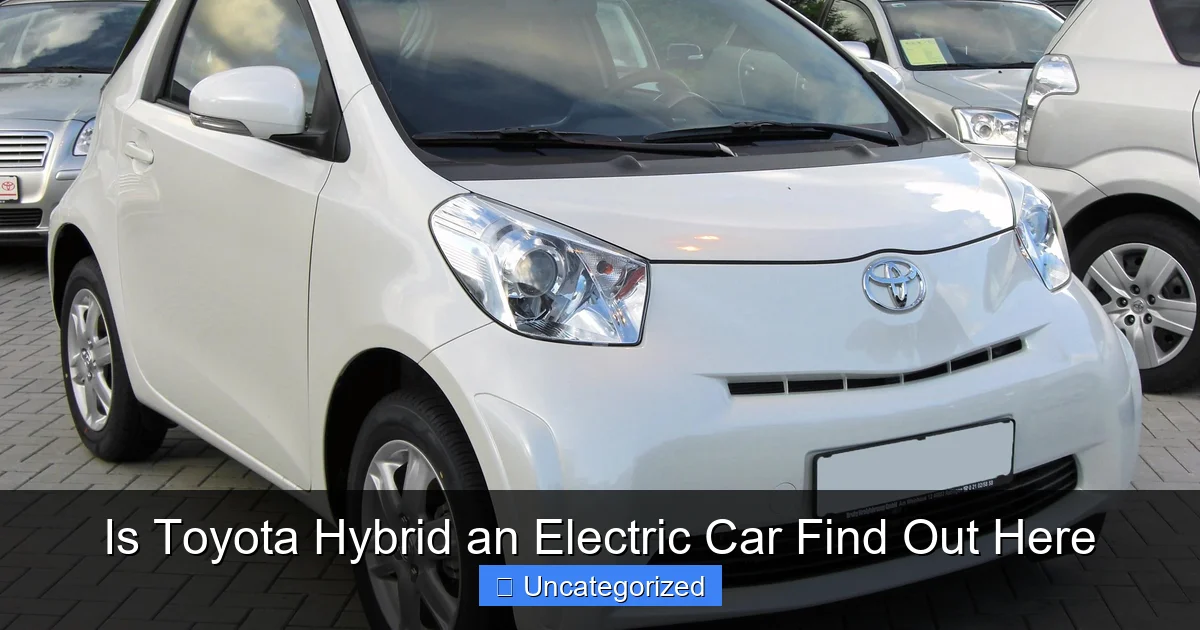
Featured image for is toyota hybrid an electric car
Image source: upload.wikimedia.org
Toyota hybrids are not fully electric cars, but they combine a gasoline engine with an electric motor for improved efficiency. Unlike pure EVs, they self-charge while driving and never need plugging in, making them a smart bridge between traditional cars and full electrification.
Key Takeaways
- Toyota hybrids are not fully electric: They combine gas engines with electric motors.
- Regenerative braking saves energy: Recharges battery while driving, no plug-in needed.
- Lower emissions than gas cars: Reduced fuel use cuts environmental impact.
- No charging infrastructure required: Ideal for drivers without home charging access.
- Plug-in hybrids differ: Toyota PHEVs can run on electricity alone for short trips.
📑 Table of Contents
Is Toyota Hybrid an Electric Car? Find Out Here
As the world shifts toward more sustainable transportation, electric vehicles (EVs) have taken center stage in the automotive conversation. With headlines dominated by all-electric models from Tesla, Ford, and other manufacturers, it’s easy to assume that any vehicle with a battery and an electric motor is an electric car. But what about the Toyota hybrid? With over two decades of hybrid leadership, Toyota has sold millions of vehicles like the Prius, RAV4 Hybrid, and Camry Hybrid—vehicles that combine gasoline engines with electric motors. So, is a Toyota hybrid an electric car?
The answer isn’t as straightforward as it seems. While Toyota hybrids use electric components and can run on electricity for short distances, they differ significantly from fully electric vehicles (EVs) in design, functionality, and ownership experience. This article dives deep into the mechanics, benefits, limitations, and real-world performance of Toyota hybrid vehicles to clarify whether they qualify as electric cars. Whether you’re considering a Toyota hybrid for fuel savings, environmental impact, or daily convenience, understanding the distinction between hybrids and EVs is crucial for making an informed decision. Let’s explore the technology behind Toyota’s hybrid systems, compare them to true electric vehicles, and help you determine which type of vehicle best fits your lifestyle and driving needs.
Understanding the Toyota Hybrid System
Toyota’s hybrid technology, known as the Hybrid Synergy Drive, is one of the most advanced and widely used hybrid systems in the world. First introduced with the Toyota Prius in 1997, this system has evolved into multiple variants, including standard hybrids, plug-in hybrids (PHEVs), and even hybrid-electric SUVs and trucks. But what exactly makes a Toyota hybrid work, and how does it differ from a full electric car?
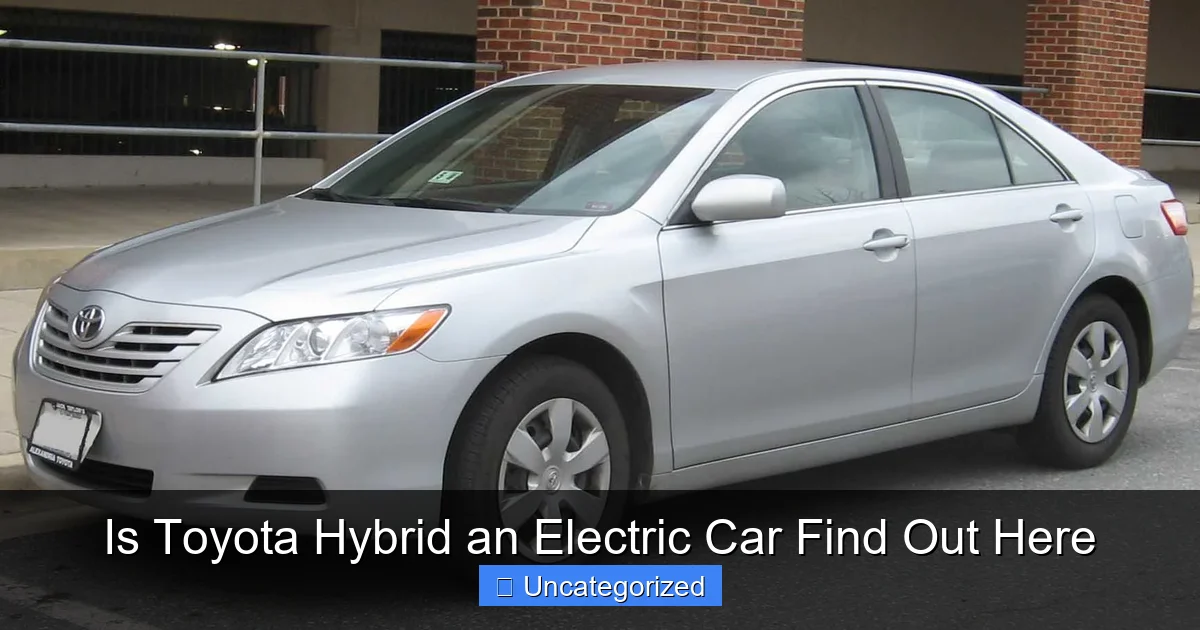
Visual guide about is toyota hybrid an electric car
Image source: upload.wikimedia.org
How Hybrid Synergy Drive Works
The core of the Toyota hybrid system is the seamless integration of a gasoline internal combustion engine (ICE) and one or more electric motors. Unlike traditional gasoline vehicles that rely solely on the engine for propulsion, a hybrid uses both power sources in tandem or independently, depending on driving conditions. The system intelligently switches between or combines the two based on factors like speed, load, and battery charge.
- Electric-only mode: At low speeds (typically under 25–30 mph) and during startup or coasting, the vehicle runs solely on electric power. This is ideal for stop-and-go city traffic.
- Gasoline engine mode: At higher speeds or under heavy acceleration, the gasoline engine takes over or assists the electric motor.
- Hybrid mode: Both the engine and motor work together to maximize efficiency and performance.
- Regenerative braking: When slowing down or braking, the electric motor acts as a generator, capturing kinetic energy and recharging the battery.
This dynamic interplay allows Toyota hybrids to achieve significantly better fuel economy than conventional vehicles—often 40–60 mpg in city driving—without the need for external charging.
Key Components of the Hybrid System
Several key components make the Toyota hybrid system possible:
- Nickel-metal hydride (NiMH) or lithium-ion battery: These batteries store energy generated from regenerative braking and are not designed to be plugged in (in standard hybrids). They are much smaller than EV batteries.
- Electric motor(s): One or two high-efficiency motors assist the engine or power the car independently at low speeds.
- Power split device: A planetary gearset that allows the engine and motor to work together or separately, optimizing efficiency.
- Hybrid control unit: The “brain” of the system that monitors driving conditions and decides how to distribute power between the engine and motor.
For example, in the 2023 Toyota Prius, the system uses a 1.8L 4-cylinder engine paired with two electric motors (one primary, one generator), delivering a combined 196 horsepower and up to 57 mpg combined.
Standard Hybrid vs. Plug-in Hybrid (PHEV)
It’s important to distinguish between two types of Toyota hybrids:
- Standard Hybrid (HEV): These vehicles, like the Camry Hybrid or RAV4 Hybrid, do not require external charging. The battery recharges through regenerative braking and engine operation.
- Plug-in Hybrid (PHEV): Models like the Prius Prime or RAV4 Prime have larger batteries that can be charged via a standard electrical outlet or charging station. They offer a limited all-electric range (typically 25–44 miles) before switching to hybrid mode.
While PHEVs can run on electricity for short distances, they still rely on gasoline once the battery depletes. This partial electric capability brings them closer to EVs but still doesn’t make them fully electric.
What Defines an Electric Car?
To determine whether a Toyota hybrid is an electric car, we must first define what an electric car truly is. The automotive industry and regulatory bodies use specific criteria to classify vehicles, and understanding these helps clarify the differences between hybrids, plug-in hybrids, and full electric vehicles.
Full Electric Vehicles (BEVs)
A battery electric vehicle (BEV) runs entirely on electricity stored in a large lithium-ion battery pack. It has:
- No internal combustion engine—only electric motors.
- No gasoline tank or exhaust system—zero tailpipe emissions.
- Requires external charging—via Level 1 (120V), Level 2 (240V), or DC fast charging.
- Longer electric range—typically 200–350+ miles on a single charge (e.g., Tesla Model 3, Ford Mustang Mach-E).
BEVs are powered entirely by electricity from the grid or renewable sources. They do not burn fuel and produce no direct emissions, making them the cleanest option for personal transportation.
Plug-in Hybrids (PHEVs) – A Middle Ground
Plug-in hybrids like the Toyota Prius Prime or RAV4 Prime blur the line between hybrids and EVs. They have:
- Larger battery packs than standard hybrids (8–18 kWh vs. 1–2 kWh).
- External charging capability—can be plugged into home or public chargers.
- All-electric driving range—typically 25–44 miles, after which the gasoline engine activates.
- Still rely on gasoline for extended trips or when the battery is drained.
While PHEVs offer the flexibility of electric driving for short commutes, they are not classified as electric cars by the U.S. Department of Energy or the EPA. Instead, they are categorized as “electric vehicles with limited range” or “hybrid electric vehicles with plug-in capability.”
Regulatory and Taxonomy Standards
Organizations like the U.S. Environmental Protection Agency (EPA) and International Energy Agency (IEA) define electric cars strictly as vehicles that:
- Derive all propulsion from electricity stored in a battery.
- Have no internal combustion engine or fuel tank.
- Must be recharged from an external power source.
By these standards, even the most advanced Toyota PHEV does not qualify as an electric car. For example, the 2023 Toyota RAV4 Prime has an all-electric range of 42 miles but still has a 17.1-gallon gas tank and a 2.5L 4-cylinder engine. Once the battery is depleted, it becomes a standard hybrid—still burning fuel.
Practical Example: Daily Driving Scenarios
Consider two drivers:
- Driver A: Commutes 35 miles daily in a Toyota RAV4 Prime. If charged every night, they could drive entirely on electricity during the week, only using gas for weekend road trips.
- Driver B: Commutes 60 miles daily in a standard RAV4 Hybrid. They never plug in and rely on the hybrid system’s efficiency, averaging 40 mpg.
- Driver C: Commutes 35 miles in a Ford Mustang Mach-E (BEV). Charges nightly and never uses gas.
Only Driver C is driving a true electric car. Driver A is using a plug-in hybrid that can operate as an EV, but Driver B’s vehicle is a conventional hybrid—definitely not electric.
Benefits and Limitations of Toyota Hybrid vs. Electric Cars
Choosing between a Toyota hybrid and a full electric car depends on your driving habits, access to charging, budget, and environmental priorities. Let’s break down the pros and cons of each to help you decide which technology fits your lifestyle.
Advantages of Toyota Hybrid Vehicles
Toyota hybrids offer several compelling benefits, especially for drivers not ready to go fully electric:
- No charging infrastructure needed: Standard hybrids like the Corolla Hybrid or Highlander Hybrid operate like traditional cars—just fill up with gas. No need for home chargers or public stations.
- Lower upfront cost: Hybrids are generally $5,000–$10,000 cheaper than equivalent EVs. The 2023 Prius starts at $27,450, while the Tesla Model 3 starts at $38,990.
- Excellent fuel economy: Many hybrids achieve 40–60 mpg combined, reducing fuel costs significantly over time.
- Long range: With a full gas tank and hybrid efficiency, a RAV4 Hybrid can travel over 500 miles without refueling—ideal for road trips.
- Reliability and resale value: Toyota’s reputation for durability means hybrids retain value better than most EVs.
Tip: If you live in an area with limited charging stations or frequently drive long distances, a Toyota hybrid offers peace of mind without range anxiety.
Limitations of Toyota Hybrids
Despite their advantages, hybrids have notable drawbacks compared to electric cars:
- Still produce emissions: Even with high efficiency, hybrids burn gasoline and emit CO₂ and pollutants.
- Smaller electric-only range (PHEVs only): Most plug-in hybrids can’t match the 200+ mile range of modern EVs.
- Higher long-term fuel costs: While hybrids save on gas, EVs save even more—especially with rising fuel prices and falling electricity rates.
- Less responsive acceleration: Hybrids prioritize efficiency over performance. The RAV4 Prime (302 hp) is an exception, but most hybrids are tuned for economy.
- Maintenance of two powertrains: Hybrids have both engine and battery systems, which may require more complex servicing than EVs (which have fewer moving parts).
Advantages of Full Electric Cars
For environmentally conscious drivers with access to charging, EVs offer significant benefits:
- Zero tailpipe emissions: EVs produce no CO₂, NOx, or particulate matter while driving.
- Lower operating costs: Electricity is cheaper than gasoline, and EVs require less maintenance (no oil changes, fewer brake replacements due to regenerative braking).
- Instant torque and smooth acceleration: Electric motors deliver power immediately, offering a more responsive driving experience.
- Quiet operation: EVs are significantly quieter than hybrids or gasoline cars, reducing noise pollution.
- Home charging convenience: Most EV owners charge overnight at home, eliminating trips to gas stations.
Limitations of Electric Cars
However, EVs aren’t perfect for everyone:
- Higher upfront cost: Even with tax incentives, EVs are often more expensive than hybrids.
- Charging infrastructure dependency: Long trips require planning around charging stations, which may be sparse in rural areas.
- Charging time: Even with fast charging, a full recharge can take 30–60 minutes, compared to 5 minutes at a gas station.
- Range anxiety: Cold weather, hills, and high speeds can reduce range by 20–30%.
- Battery degradation: Over time, EV batteries lose capacity, though most retain 80–90% after 10 years.
Real-World Cost Comparison (Example)
Let’s compare annual fuel and electricity costs for a driver traveling 12,000 miles per year:
- RAV4 Hybrid (40 mpg): 300 gallons × $3.50/gallon = $1,050/year
- RAV4 Prime (42 mi electric range + hybrid mode): 200 kWh × $0.13/kWh + 150 gallons × $3.50 = $26 + $525 = $551/year
- Ford Mustang Mach-E (3.5 mi/kWh): 3,428 kWh × $0.13/kWh = $446/year
While the EV has the lowest operating cost, the hybrid still offers substantial savings over a gasoline car (which would cost ~$1,700/year at 23 mpg).
Toyota’s Hybrid Strategy: The Road to Electrification
Toyota has long been a leader in hybrid technology, but the company’s approach to electrification has drawn both praise and criticism. While competitors like Tesla and Ford have gone all-in on EVs, Toyota has pursued a multi-pathway strategy—investing in hybrids, plug-in hybrids, hydrogen fuel cells, and battery EVs simultaneously. This section explores Toyota’s philosophy and how it impacts the hybrid vs. electric debate.
The “Multi-Pathway” Philosophy
Toyota argues that a one-size-fits-all approach to electrification won’t work globally. CEO Akio Toyoda has stated that “the enemy is CO₂, not the internal combustion engine.” The company believes that:
- Hybrids are a practical bridge for consumers not ready for full EVs.
- Not all regions have reliable charging infrastructure. In rural areas or developing countries, hybrids offer clean, efficient transportation without grid dependency.
- Hydrogen and synthetic fuels may play a role in the future, especially for trucks and heavy industry.
This strategy has allowed Toyota to maintain strong sales while gradually introducing EVs like the Toyota bZ4X and Lexus RZ.
Investment in Battery Electric Vehicles (BEVs)
Despite its hybrid focus, Toyota is investing heavily in EVs:
- $13.6 billion allocated to EV and battery development by 2030.
- Goal of 3.5 million annual EV sales by 2030, including 1 million from Lexus.
- New battery plants in North Carolina and Japan to support next-gen solid-state batteries.
- Partnership with Panasonic to improve battery efficiency and reduce costs.
The Toyota bZ4X, launched in 2022, is the company’s first dedicated EV platform (not a converted hybrid). It offers up to 252 miles of range and fast charging, signaling Toyota’s commitment to the EV market.
Why Toyota Prioritizes Hybrids (For Now)
Toyota’s continued focus on hybrids makes strategic sense for several reasons:
- Proven technology: Toyota has sold over 20 million hybrids since 1997, with a reputation for reliability.
- Regulatory compliance: Hybrids help Toyota meet fuel economy and emissions standards in the U.S., Europe, and Asia.
- Consumer trust: Many buyers are hesitant to switch to EVs due to range, cost, or charging concerns. Hybrids offer a familiar, low-risk option.
- Global scalability: Hybrids work in markets with limited charging infrastructure, unlike EVs.
Tip: If you’re considering a Toyota hybrid, look for PHEV models like the Prius Prime or RAV4 Prime—they offer the best of both worlds: electric driving for short trips and hybrid efficiency for long ones.
Making the Right Choice: Hybrid or Electric?
Deciding between a Toyota hybrid and a full electric car depends on your unique needs, priorities, and circumstances. This section provides a practical guide to help you make the best choice.
When to Choose a Toyota Hybrid
A Toyota hybrid (especially a PHEV) is ideal if you:
- Don’t have reliable home charging (e.g., apartment living, no garage).
- Frequently drive long distances (e.g., road trips, rural commutes).
- Want lower upfront cost without sacrificing efficiency.
- Prefer a “no-brainer” ownership experience—fill up with gas like a regular car.
- Have a short daily commute and a PHEV (e.g., Prius Prime) can cover your miles electrically.
Example: A teacher with a 20-mile round-trip commute could use a Prius Prime in electric mode all week, charging at home overnight, and only use gas for occasional weekend trips.
When to Choose a Full Electric Car
An EV is the better choice if you:
- Have access to home or workplace charging.
- Prioritize environmental impact (zero emissions, renewable energy use).
- Want the lowest long-term operating costs.
- Enjoy cutting-edge technology and performance.
- Drive mostly in urban or suburban areas with charging infrastructure.
Example: A tech worker in Austin, Texas, with a 15-mile commute, home charging, and a solar roof could save thousands over 5 years with an EV like the Tesla Model Y or Hyundai Ioniq 5.
Data Table: Hybrid vs. Electric vs. Gasoline Car (2023 Models)
| Vehicle Type | Model Example | Starting Price | Fuel/Energy Cost (Annual, 12k mi) | Range | Emissions (Tailpipe) | Charging/Refueling |
|---|---|---|---|---|---|---|
| Standard Hybrid | Toyota RAV4 Hybrid | $31,225 | $1,050 (gas) | 580 miles | 150 g/mi CO₂ | Gas station (5 min) |
| Plug-in Hybrid | Toyota RAV4 Prime | $43,690 | $551 (electric + gas) | 42 mi electric + 470 mi hybrid | 110 g/mi CO₂ (combined) | Plug (3–12 hrs) + gas station |
| Full Electric | Ford Mustang Mach-E | $42,995 | $446 (electric) | 250–314 miles | 0 g/mi CO₂ | Plug (Level 2: 8–12 hrs, DC: 30–45 min) |
| Gasoline | Toyota RAV4 (gas) | $28,275 | $1,700 (gas) | 420 miles | 250 g/mi CO₂ | Gas station (5 min) |
Final Tips for Decision-Making
- Assess your driving habits: Track your weekly mileage and charging access.
- Consider total cost of ownership: Include fuel, maintenance, insurance, and incentives.
- Test drive both types: Experience the difference in acceleration, noise, and driving feel.
- Check local incentives: Many states offer tax credits for PHEVs and EVs.
- Think long-term: EVs may have higher upfront cost but lower lifetime expenses.
Conclusion
So, is a Toyota hybrid an electric car? The short answer is no—at least not in the strictest sense. While Toyota hybrids, especially plug-in models like the Prius Prime and RAV4 Prime, incorporate electric motors and batteries, they still rely on gasoline engines for propulsion. They are hybrid electric vehicles (HEVs) or plug-in hybrid electric vehicles (PHEVs), not battery electric vehicles (BEVs).
However, Toyota hybrids represent a critical and practical step toward electrification. They offer many of the benefits of electric driving—such as improved fuel economy, reduced emissions, and quiet operation—without the challenges of charging infrastructure or range anxiety. For millions of drivers, especially those in areas with limited EV support, a Toyota hybrid is the most accessible and reliable path to cleaner transportation.
As Toyota continues to invest in full electric vehicles and next-generation battery technology, the line between hybrids and EVs will continue to blur. But for now, understanding the distinction empowers you to make the right choice. If you want zero emissions, lower operating costs, and cutting-edge performance, go electric. If you need flexibility, long range, and no charging hassle, a Toyota hybrid—especially a plug-in model—could be the perfect fit.
Ultimately, the future of transportation isn’t about choosing one technology over another—it’s about choosing the right tool for your needs. Whether you drive a hybrid, a plug-in, or a full EV, you’re part of the shift toward a more sustainable and efficient automotive world. And with Toyota leading the charge in hybrid innovation, you can trust that their vehicles will continue to offer smart, reliable, and eco-friendly solutions for years to come.
Frequently Asked Questions
Is a Toyota hybrid considered an electric car?
No, a Toyota hybrid is not a fully electric car. It combines a gasoline engine with an electric motor and battery, but still relies on fuel for power.
How does a Toyota hybrid differ from a fully electric car?
A Toyota hybrid uses both an internal combustion engine and an electric motor, while a fully electric car (EV) runs solely on electricity with no gas engine. This makes hybrids a middle ground between traditional cars and EVs.
Can a Toyota hybrid run on electric power only?
Yes, many Toyota hybrid models can drive short distances using only the electric motor at low speeds. However, the gasoline engine typically engages for longer trips or higher speeds.
Do I need to plug in a Toyota hybrid to charge it?
No, most Toyota hybrids don’t require plugging in—the battery recharges through regenerative braking and the gas engine. Plug-in hybrids (like the Prius Prime) are an exception and offer limited all-electric range.
Is the Toyota hybrid better for the environment than a gas car?
Yes, a Toyota hybrid emits fewer greenhouse gases than a traditional gas-powered car due to improved fuel efficiency and electric assistance. However, it’s not as eco-friendly as a fully electric car.
What’s the main advantage of a Toyota hybrid over an electric car?
The main advantage is convenience: Toyota hybrids don’t require charging infrastructure and offer longer driving ranges without range anxiety. They’re ideal for drivers not ready to switch to a fully electric car.