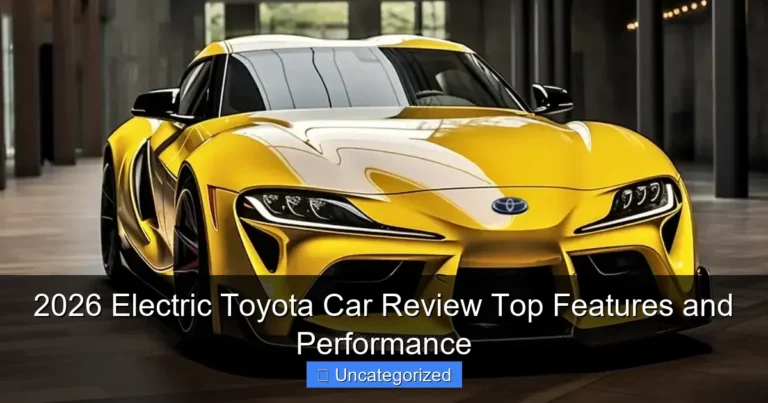
Is Toyota Making an Electric Car The Future of Mobility
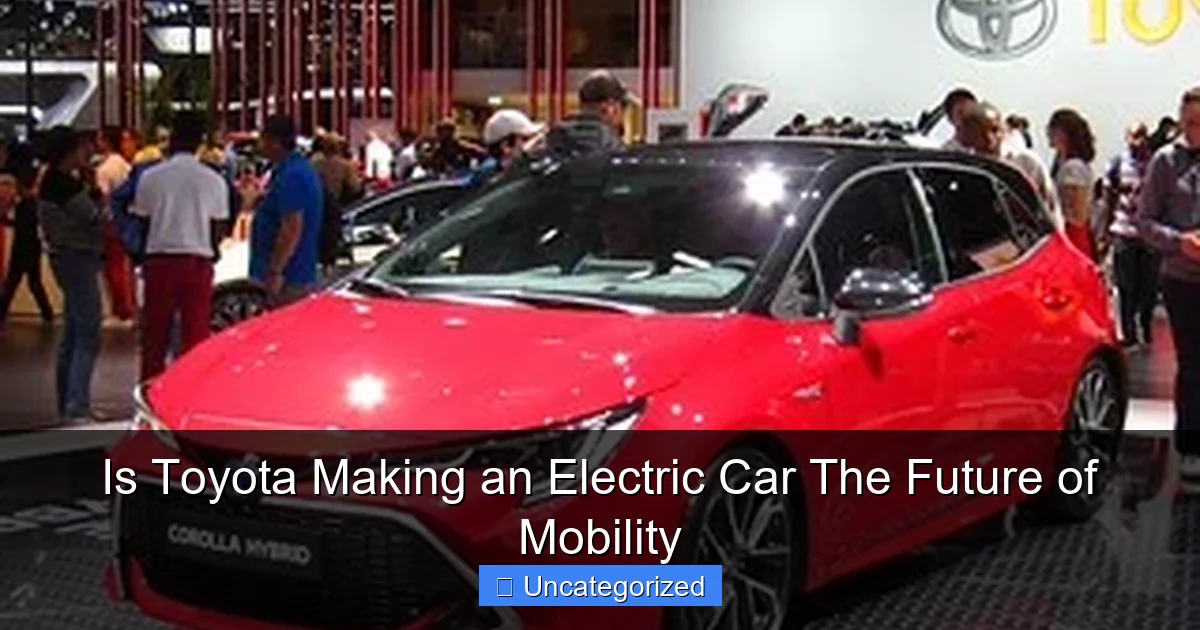
Featured image for is toyota making an electric car
Image source: live.staticflickr.com
Toyota is indeed making electric cars, marking a pivotal shift in its strategy with the launch of the bZ4X and plans for 30 EV models by 2030. The automaker is investing $70 billion in electrification to compete in the rapidly evolving EV market while balancing hybrid and hydrogen tech. This move signals Toyota’s commitment to a multi-pathway approach to sustainable mobility.
Key Takeaways
- Toyota is investing heavily in EVs, targeting 3.5 million annual sales by 2030.
- New solid-state batteries promise faster charging and longer range for future models.
- bZ4X leads the charge as Toyota’s first global all-electric SUV.
- Hybrids remain key while EV infrastructure and adoption catch up.
- Partnerships accelerate innovation with BYD and Panasonic for battery tech.
- Affordable EVs coming with plans for a $30,000 model in development.
📑 Table of Contents
- Is Toyota Making an Electric Car? The Future of Mobility
- Toyota’s Electrification Journey: From Hybrids to Full EVs
- The Current Toyota EV Lineup: Models You Can Buy Today
- Technology and Innovation: The Power Behind Toyota’s EVs
- Global Strategy: How Toyota Plans to Win the EV Race
- The Road Ahead: Toyota’s 2030 Vision and Challenges
- Conclusion: The Future is Electrified—and Toyota is All In
Is Toyota Making an Electric Car? The Future of Mobility
In an era where the automotive industry is undergoing a radical transformation, one question lingers in the minds of eco-conscious consumers, industry analysts, and car enthusiasts alike: Is Toyota making an electric car? For decades, Toyota has been synonymous with innovation, reliability, and pioneering hybrid technology. From the revolutionary Prius to the rugged RAV4 Hybrid, the Japanese automaker has consistently pushed the boundaries of fuel efficiency and sustainability. Yet, as the global shift toward zero-emission vehicles accelerates, Toyota’s stance on fully electric vehicles (EVs) has sparked intense debate. While competitors like Tesla, Volkswagen, and General Motors have aggressively rolled out electric lineups, Toyota’s approach has been more measured—some might say cautious.
But the answer is no longer a simple “no.” In fact, Toyota is not only making electric cars—it’s betting big on them. The company has unveiled a comprehensive electrification strategy that includes battery electric vehicles (BEVs), plug-in hybrids (PHEVs), and even hydrogen fuel cell vehicles (FCEVs). With a projected investment of over $70 billion in electrification by 2030, Toyota is signaling a bold commitment to a cleaner, greener future. This blog post dives deep into Toyota’s electric vehicle journey, exploring its past hesitations, current lineup, technological breakthroughs, and long-term vision. Whether you’re a potential EV buyer, a sustainability advocate, or simply curious about the future of mobility, this guide will provide the insights you need.
Toyota’s Electrification Journey: From Hybrids to Full EVs
The Hybrid Pioneer: A Legacy of Innovation
Before we answer whether Toyota is making an electric car, it’s essential to understand how the company became a global leader in electrified mobility. Toyota’s journey began in 1997 with the launch of the Prius, the world’s first mass-produced hybrid car. The Prius combined a gasoline engine with an electric motor and battery, achieving unprecedented fuel economy and reducing CO₂ emissions. Over the next two decades, Toyota sold over 20 million hybrid vehicles worldwide, cementing its reputation as a sustainability leader.
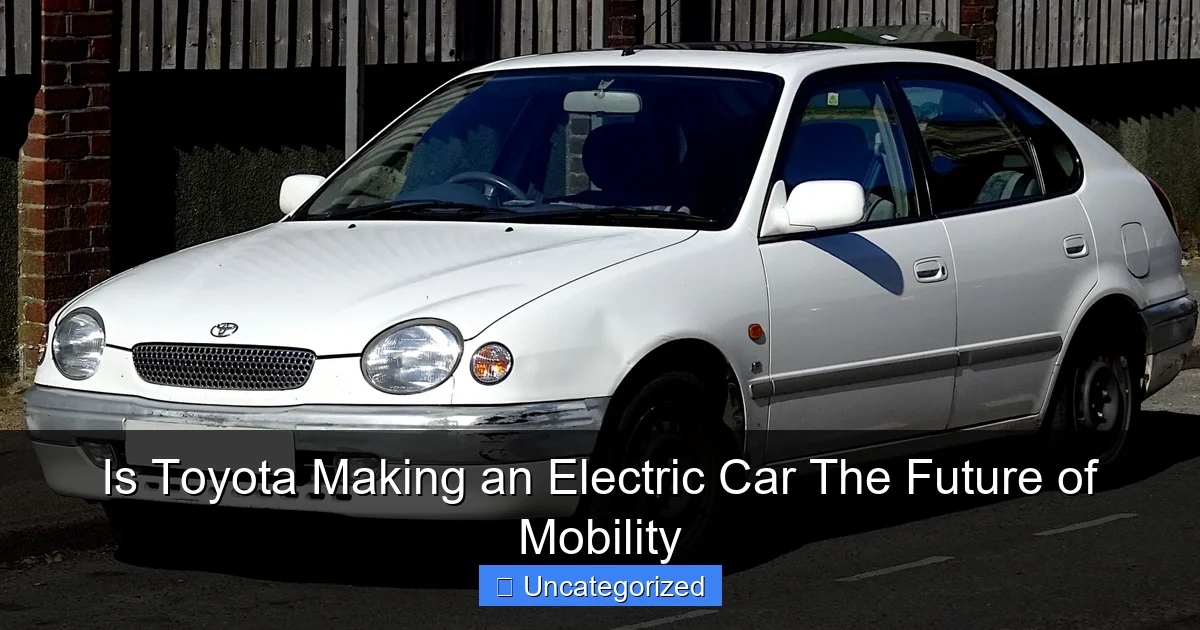
Visual guide about is toyota making an electric car
Image source: publicdomainpictures.net
However, Toyota’s early focus on hybrids and hydrogen fuel cells—rather than pure battery electric vehicles—led to criticism that the company was resisting the EV revolution. While rivals invested heavily in BEVs, Toyota maintained that hybrids and hydrogen offered a more practical, scalable solution for global markets, especially in regions with underdeveloped charging infrastructure.
The Strategic Pivot: Embracing Battery Electric Vehicles
The turning point came in 2021, when Toyota CEO Akio Toyoda announced a sweeping electrification plan. The company revealed plans to launch 30 new BEV models by 2030, aiming for 3.5 million global BEV sales annually. This marked a dramatic shift from its previous stance. “We will not be left behind,” Toyoda declared, acknowledging that the future of mobility is electric.
Key to this pivot was the realization that consumer demand, government regulations, and technological advancements were making BEVs not just viable—but necessary. Countries like the UK, France, and Norway have set deadlines to ban internal combustion engines (ICEs), while the U.S. Inflation Reduction Act offers incentives for domestically produced EVs. Toyota’s new strategy reflects a pragmatic response to these global trends.
Why the Delay? Toyota’s Cautious Approach Explained
Toyota’s slower entry into the EV market wasn’t due to a lack of capability—it stemmed from a philosophy of long-term sustainability. The company prioritized:
- Reliability: Toyota is renowned for building vehicles that last 200,000+ miles. It wanted to ensure its EVs matched this durability before mass production.
- Affordability: Early EVs were expensive. Toyota aimed to create EVs priced for mainstream consumers, not just luxury buyers.
- Global Accessibility: Unlike Tesla, which targets affluent urban markets, Toyota sells in rural and developing regions where charging stations are scarce. Hybrids and hydrogen offered interim solutions.
This cautious approach allowed Toyota to refine its battery technology, supply chain, and manufacturing processes—laying the groundwork for a scalable EV future.
The Current Toyota EV Lineup: Models You Can Buy Today
Toyota bZ4X: The Flagship All-Electric SUV
The Toyota bZ4X is the company’s first global BEV and a direct answer to the question, “Is Toyota making an electric car?” Launched in 2022, this compact SUV marks Toyota’s entry into the competitive electric SUV market, going head-to-head with the Tesla Model Y, Hyundai Ioniq 5, and Ford Mustang Mach-E.
- Range: Up to 252 miles (EPA-estimated) for front-wheel drive models.
- Power: 201 hp (FWD) or 215 hp (AWD); 0-60 mph in 7.1 seconds (AWD).
- Charging: 150 kW DC fast charging (10-80% in ~30 minutes).
- Tech: Toyota Safety Sense 3.0, over-the-air updates, and optional solar roof (in select markets).
The bZ4X is built on Toyota’s new e-TNGA platform, a dedicated EV architecture designed for flexibility, safety, and performance. Early reviews praise its ride comfort and intuitive infotainment but note that range and charging speeds lag slightly behind rivals. Toyota plans to address these gaps with future models.
Subaru Solterra: A Twin Under the Skin
Developed in partnership with Subaru, the Solterra is nearly identical to the bZ4X but tailored for Subaru’s adventure-focused audience. Key differences include:
- Standard AWD with X-Mode terrain response.
- Subaru’s EyeSight Driver Assist Technology.
- Unique styling cues like hexagonal grille and rugged cladding.
This collaboration allows Toyota to leverage Subaru’s expertise in off-road performance while sharing R&D costs—a smart move in the capital-intensive EV sector.
Other Electrified Models: Hybrids and PHEVs
While BEVs are the future, Toyota hasn’t abandoned its hybrid roots. Its current lineup includes:
- RAV4 Prime (PHEV): 42 miles electric range, 302 hp, 0-60 mph in 5.7 seconds.
- Prius Prime (PHEV): 44 miles electric range, 220 hp, 52 MPG combined.
- Corolla Hybrid: 52 MPG, starting at $23,050.
These models serve as a bridge to full electrification, offering zero-emission driving for short commutes while retaining gas engines for longer trips.
Technology and Innovation: The Power Behind Toyota’s EVs
e-TNGA Platform: Built for the Electric Age
The e-TNGA (Electric Toyota New Global Architecture) is the backbone of Toyota’s EV strategy. Unlike retrofitting ICE platforms, e-TNGA is designed from the ground up for electric vehicles, offering:
- Modularity: Supports SUVs, sedans, and crossovers with varying wheelbases and battery sizes.
- Safety: High-strength steel frame and battery pack protection for crash resilience.
- Efficiency: Low center of gravity for better handling and reduced energy consumption.
Toyota claims e-TNGA can accommodate batteries from 50 kWh to 100 kWh, enabling vehicles with ranges from 200 to 400+ miles. This flexibility is critical for targeting diverse markets—from urban commuters to long-haul drivers.
Battery Breakthroughs: Solid-State and Beyond
Battery technology is the Achilles’ heel of EVs—and Toyota is tackling it head-on. The company is investing heavily in:
- Solid-State Batteries: Toyota holds over 1,000 patents in solid-state technology, which promises:
- 50% higher energy density than lithium-ion.
- 30-minute charging to 80%.
- No risk of thermal runaway (fires).
- Next-Gen Lithium-Ion: Improved cobalt-free and manganese-based batteries for cost reduction and sustainability.
- Battery Recycling: A closed-loop system to reuse materials and minimize environmental impact.
Toyota plans to launch solid-state EVs by 2027–2028, potentially leapfrogging competitors in performance and safety.
Hydrogen Ambitions: The Mirai and Beyond
While BEVs dominate headlines, Toyota remains committed to hydrogen fuel cell vehicles (FCEVs). The Mirai sedan, powered by hydrogen, emits only water vapor and offers:
- 300+ mile range.
- 3–5 minute refueling (vs. 30+ minutes for BEVs).
- No reliance on rare earth metals.
Toyota sees FCEVs as ideal for heavy-duty transport (trucks, buses) and regions with hydrogen infrastructure, such as Japan and California. By 2030, it aims for 10,000 FCEV sales annually in the U.S. alone.
Global Strategy: How Toyota Plans to Win the EV Race
Market-Specific Approaches: Adapting to Local Needs
Toyota’s global strategy is not one-size-fits-all. Instead, it tailors its EV offerings to regional demands:
- North America: Focus on SUVs and trucks (e.g., bZ4X, future electric Tacoma).
- Europe: Compact cars and urban EVs (e.g., bZ3, a China-developed sedan).
- China: Partnerships with local firms like BYD for affordable EVs.
- Southeast Asia: Hybrid dominance with gradual BEV rollout.
This localization ensures Toyota meets diverse consumer preferences while complying with regional emissions standards.
Manufacturing and Supply Chain: Scaling for Success
To support its EV goals, Toyota is overhauling its production network:
- Building new battery plants in North Carolina (1.4 million sq ft, $13.9 billion investment).
- Partnering with Panasonic, CATL, and LG Energy Solution for battery supply.
- Retooling existing factories (e.g., Kentucky, Indiana) for EV production.
By 2025, Toyota aims to produce 1.5 million BEVs annually—a tenfold increase from 2022.
Charging Infrastructure: Bridging the Gap
Unlike Tesla’s Supercharger network, Toyota relies on partnerships with ChargePoint, EVgo, and Electrify America. However, it’s exploring:
- Dealer-installed charging stations.
- Mobile charging units for remote areas.
- Bidirectional charging (V2G) to power homes during outages.
These initiatives aim to ease “range anxiety” and make EVs practical for all drivers.
The Road Ahead: Toyota’s 2030 Vision and Challenges
2030 Targets: Ambitious Goals
Toyota’s 2030 roadmap is bold but achievable:
| Metric | Target | Progress (2023) |
|---|---|---|
| Global BEV Sales | 3.5 million/year | 100,000/year |
| BEV Models | 30+ | 5 (bZ4X, Solterra, etc.) |
| Solid-State Battery Launch | 2027–2028 | Prototype testing |
| FCEV Sales (U.S.) | 10,000/year | 2,000/year |
To hit these targets, Toyota must accelerate production, reduce costs, and build consumer trust in its EV technology.
Challenges and Criticisms
Toyota faces several hurdles:
- Competition: Tesla’s dominance, Chinese EV startups (BYD, NIO), and legacy automakers (VW, GM) are all vying for market share.
- Consumer Skepticism: Some buyers question Toyota’s late entry into EVs, fearing it’s playing catch-up.
- Supply Chain Risks: Battery material shortages (lithium, cobalt) could delay production.
- Regulatory Pressure: The EU’s 2035 ICE ban and U.S. emissions rules demand rapid adaptation.
Overcoming these challenges will require agility, innovation, and sustained investment.
The Role of Sustainability
Beyond profits, Toyota’s EV push aligns with its Environmental Challenge 2050 goals:
- Zero CO₂ emissions from new vehicles.
- 100% renewable energy in manufacturing.
- Circular economy for batteries and materials.
This holistic approach positions Toyota as a leader in responsible electrification, not just vehicle sales.
Conclusion: The Future is Electrified—and Toyota is All In
So, is Toyota making an electric car? The answer is a resounding yes—and not just one, but an entire ecosystem of electrified vehicles. From the groundbreaking bZ4X to the futuristic solid-state battery, Toyota is no longer on the sidelines of the EV revolution. Its strategy blends innovation, pragmatism, and long-term vision, ensuring it can compete in a rapidly evolving market.
What sets Toyota apart is its commitment to accessibility. While some brands target luxury buyers, Toyota aims to bring EVs to the masses—through affordable pricing, reliable technology, and global adaptability. The company’s hybrid legacy gives it a unique advantage: a deep understanding of electrified systems that few rivals can match.
As we look to the future, Toyota’s success will hinge on execution. Can it deliver solid-state batteries on time? Will its charging infrastructure keep pace with demand? Can it win over skeptics with compelling, high-performance EVs? The next decade will be a defining chapter in Toyota’s history.
For consumers, the message is clear: Toyota is not just making electric cars—it’s redefining what electric mobility means for everyone. Whether you’re buying your first EV or upgrading from a hybrid, Toyota’s lineup offers a blend of innovation, trust, and sustainability that’s hard to beat. The future of mobility is here—and Toyota is driving it forward.
Frequently Asked Questions
Is Toyota making an electric car in 2024?
Yes, Toyota is actively expanding its electric vehicle (EV) lineup in 2024, with models like the bZ4X leading the charge. The company plans to launch 10 new battery-electric vehicles globally by 2026 as part of its broader electrification strategy.
What is Toyota’s first all-electric car?
Toyota’s first dedicated all-electric car is the bZ4X, part of its “Beyond Zero” (bZ) sub-brand. This SUV offers a range of up to 252 miles and features advanced tech like solar charging and steer-by-wire systems.
Is Toyota making an electric car with solid-state batteries?
Toyota is developing solid-state batteries for future EVs, aiming for commercialization by 2027-2028. These batteries promise faster charging, longer ranges (up to 750 miles), and improved safety compared to current lithium-ion options.
How does the Toyota bZ4X compare to other electric SUVs?
The bZ4X competes with EVs like the Hyundai Ioniq 5 and Ford Mustang Mach-E, offering similar range and AWD capability. Its standout features include a spacious interior and Toyota’s reputation for reliability, though some rivals offer faster charging speeds.
Why is Toyota making an electric car now after focusing on hybrids?
After pioneering hybrids like the Prius, Toyota is shifting toward full electrification due to stricter emissions regulations and growing market demand. The company sees EVs as the future of mobility, complementing its existing hybrid and hydrogen fuel-cell technologies.
Where will Toyota build its electric cars?
Toyota is investing $13 billion to build EV manufacturing hubs in the U.S., including a new battery plant in North Carolina. The bZ4X is currently produced in Japan and China, with future models expected to be localized for key markets like Europe and North America.