Is Toyota Making Electric Cars The Future of Mobility
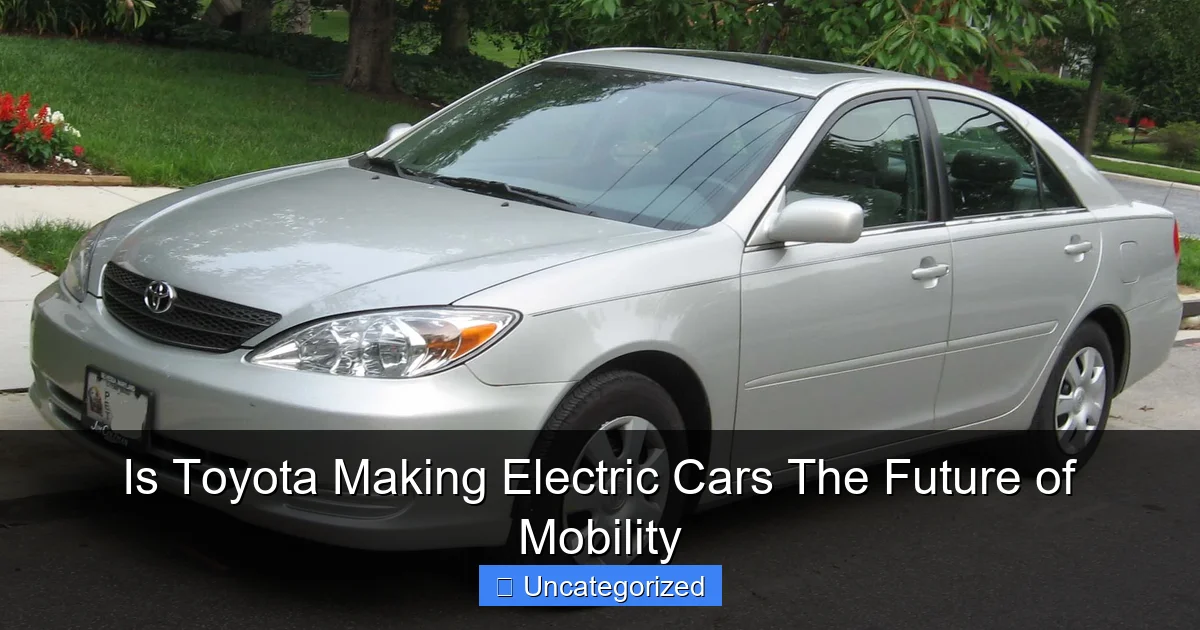
Featured image for is toyota making electric cars
Image source: upload.wikimedia.org
Toyota is making electric cars a core part of its future mobility strategy, accelerating its EV lineup with models like the bZ4X and investing $70 billion in electrification by 2030. The automaker aims to sell 3.5 million EVs annually by 2030, signaling a bold shift from its hybrid-heavy past to meet global sustainability demands.
Key Takeaways
- Toyota is investing $70B in electrification by 2030 to lead EV innovation.
- 15+ EV models planned by 2025, expanding global electric lineup.
- Solid-state batteries coming by 2027, boosting range and charging speed.
- Hybrid focus remains strong while transitioning to full electrification.
- Partnerships with BYD, Panasonic accelerate tech development and affordability.
- US and China prioritized for EV production and market growth.
📑 Table of Contents
- The Electric Revolution: Is Toyota Making Electric Cars?
- Toyota’s Electrification Strategy: Beyond Just EVs
- Current and Upcoming Toyota Electric Vehicles (BEVs)
- Technology and Innovation: Powering the Future
- Market Challenges and Competitive Landscape
- Global Impact and the Future of Mobility
- Data Table: Toyota’s Electrified Vehicle Lineup (2024)
- Conclusion: Toyota’s Electric Future Is Here—But It’s Just the Beginning
The Electric Revolution: Is Toyota Making Electric Cars?
For decades, Toyota has been synonymous with reliability, innovation, and leadership in the automotive industry. From the groundbreaking Prius to the rugged Land Cruiser, the Japanese automaker has shaped mobility trends across the globe. However, as the world accelerates toward a zero-emissions future, a critical question emerges: Is Toyota making electric cars? The answer is not as straightforward as it might seem—and it reveals a complex, evolving strategy that blends pragmatism, technological diversity, and long-term vision.
The shift to electric vehicles (EVs) is no longer a niche trend. Governments are mandating stricter emissions standards, consumers are demanding cleaner transportation, and competitors like Tesla, Ford, and Hyundai are flooding the market with all-electric models. Yet, Toyota’s approach has been notably cautious. While other automakers have committed to full electrification timelines, Toyota has taken a more measured path—prioritizing hybrid technology and hydrogen fuel cells while gradually expanding its electric offerings. This blog post dives deep into Toyota’s EV journey, exploring its current lineup, future plans, technological innovations, market challenges, and what this means for the future of mobility.
Toyota’s Electrification Strategy: Beyond Just EVs
Unlike many competitors who have declared an all-in commitment to battery electric vehicles (BEVs), Toyota has adopted a multi-pathway electrification strategy. This means the company is not solely betting on one technology but is instead investing in a portfolio of solutions: hybrids, plug-in hybrids, hydrogen fuel cell vehicles (FCEVs), and yes—battery electric vehicles.
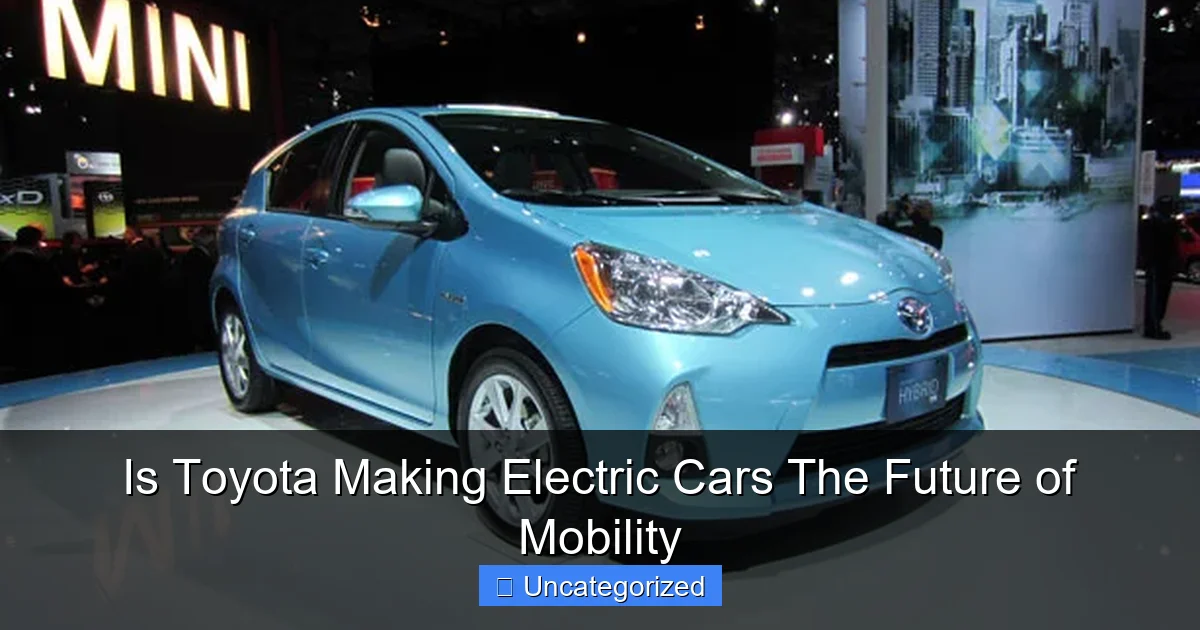
Visual guide about is toyota making electric cars
Image source: publicdomainpictures.net
Why a Multi-Pathway Approach?
Toyota’s leadership, including former CEO Akio Toyoda, has repeatedly emphasized that the path to carbon neutrality must be inclusive and realistic for all regions and consumers. Not every market has the charging infrastructure to support mass BEV adoption, and not every driver has access to home charging. In this context, Toyota argues that:
- Hybrids and plug-in hybrids (PHEVs) can reduce emissions now, without requiring massive infrastructure changes.
- Hydrogen fuel cell vehicles offer long-range, fast refueling, and zero tailpipe emissions—ideal for heavy-duty and long-haul applications.
- BEVs are essential for urban and short-range use, especially in regions with strong charging networks.
This diversified approach reflects Toyota’s belief that one size does not fit all in the transition to sustainable mobility. It also allows the company to meet regulatory requirements across diverse markets while maintaining profitability and customer satisfaction.
Hybrid Leadership as a Foundation
Before diving into BEVs, Toyota built its electrification reputation on hybrid technology. The Prius, launched in 1997, was the world’s first mass-produced hybrid car and remains a symbol of eco-friendly innovation. Today, Toyota offers over 20 hybrid models globally, including the Camry Hybrid, RAV4 Hybrid, and Sienna Hybrid. These vehicles use a combination of gasoline engines and electric motors to achieve fuel efficiency ratings of 40–50 MPG or higher.
Tip: If you’re considering a Toyota hybrid, look for models with e-CVT (electronically controlled continuously variable transmission) and Hybrid Synergy Drive—these systems optimize power delivery and fuel economy. For example, the 2024 RAV4 Hybrid delivers 40 MPG combined, making it one of the most efficient SUVs on the market.
By mastering hybrid tech, Toyota gained invaluable experience in battery management, regenerative braking, and electric drivetrains—experience it’s now applying to its BEV development.
Current and Upcoming Toyota Electric Vehicles (BEVs)
While Toyota’s hybrid lineup is robust, its battery electric vehicle offerings have been limited—until recently. The company is now accelerating its BEV rollout, responding to market demand and regulatory pressure.
The bZ4X: Toyota’s First Global BEV
The Toyota bZ4X (Beyond Zero 4X) marks Toyota’s official entry into the BEV mainstream. Launched in 2022, this compact SUV is built on the e-TNGA (Electric Toyota New Global Architecture) platform, co-developed with Subaru. Key features include:
- Range: Up to 252 miles (EPA-estimated) for front-wheel-drive models.
- Charging: 150 kW DC fast charging (0–80% in ~30 minutes).
- All-Wheel Drive: Dual-motor AWD option with X-MODE for off-road capability.
- Safety: Standard Toyota Safety Sense 3.0 (TSS 3.0) with advanced driver-assistance systems.
The bZ4X competes with models like the Hyundai Ioniq 5 and Volkswagen ID.4. While it doesn’t lead in range or charging speed, it offers Toyota’s hallmark reliability, spacious interior, and intuitive infotainment. A notable feature is the Solar Roof option (available in some markets), which can add up to 1,000 miles of range per year through solar charging—a first for a mass-market EV.
Future BEV Models: The bZ Lineup
Toyota has announced a bold bZ (Beyond Zero) sub-brand, with plans to launch 15 BEVs by 2025, including:
- bZ3: A mid-size sedan developed with BYD, targeting the Chinese market (launched 2023).
- bZ Compact SUV: A smaller SUV expected in 2025, competing with the Tesla Model Y.
- bZ Large SUV: A three-row electric SUV, potentially rivaling the Kia EV9.
- Electric Pickup Truck: Rumored for 2025–2026, possibly based on the Hilux platform.
Example: The bZ3 is particularly innovative—it uses BYD’s Blade Battery technology, known for safety and longevity. This partnership highlights Toyota’s willingness to collaborate with EV leaders to fast-track development.
Additionally, Toyota plans to introduce solid-state batteries in its BEVs by 2027–2028, promising longer range, faster charging, and improved safety. This could be a game-changer in the EV race.
Technology and Innovation: Powering the Future
Toyota’s BEV ambitions are backed by significant investments in technology, manufacturing, and R&D. The company is not just building EVs—it’s reimagining the entire ecosystem.
e-TNGA Platform: The BEV Foundation
The e-TNGA platform is Toyota’s modular electric architecture, designed to accommodate various vehicle types (SUVs, sedans, vans) with different battery sizes and motor configurations. Benefits include:
- Scalability: Enables rapid development of new models.
- Efficiency: Optimized weight distribution and aerodynamics.
- Cost Reduction: Shared components across models reduce R&D and production costs.
This platform is already used in the bZ4X and will underpin most future BEVs, including those from Subaru (Solterra) and Lexus (RZ 450e).
Battery Technology: From Lithium-Ion to Solid-State
Battery innovation is central to Toyota’s EV strategy. The company is investing $13.5 billion in battery development by 2030, focusing on:
- Lithium-Ion Batteries: Improving energy density and reducing cobalt use.
- Solid-State Batteries (SSBs): Aiming for commercialization by 2027. SSBs offer:
- Up to 2x the range (500+ miles).
- 80% charge in under 10 minutes.
- Greater thermal stability (reducing fire risk).
Tip: If you’re waiting for a Toyota EV with breakthrough range, keep an eye on 2027–2028 models. Early prototypes have already achieved 750-mile ranges in lab tests.
Hydrogen and Fuel Cell Vehicles (FCEVs)
Toyota remains a leader in hydrogen fuel cell technology, exemplified by the Mirai sedan. The Mirai offers:
- 300+ mile range.
- 3–5 minute refueling time.
- Zero emissions (only water vapor).
While FCEVs are niche due to limited hydrogen infrastructure, Toyota sees them as critical for heavy-duty trucks, buses, and long-haul transport. The company is also developing hydrogen-powered combustion engines for use in racing and commercial vehicles.
Market Challenges and Competitive Landscape
Despite its strengths, Toyota faces significant hurdles in the EV market. Its late entry into BEVs has allowed competitors to gain a foothold, and consumer perceptions are shifting rapidly.
Late to the BEV Party
While Tesla launched the Model S in 2012 and Hyundai the Ioniq 5 in 2021, Toyota’s first global BEV (bZ4X) arrived in 2022. This delay has cost the company market share in key regions like Europe and North America, where EV adoption is accelerating. In 2023, Toyota’s global BEV sales were under 100,000 units—compared to over 1.8 million for Tesla.
Example: In Norway, where EVs account for 80% of new car sales, Toyota holds less than 2% of the BEV market. Competitors like Volvo and BMW dominate with established electric lineups.
Consumer Perception and Brand Loyalty
Toyota’s reputation for reliability and durability is a double-edged sword. While loyal customers trust the brand, many associate Toyota with hybrids and gasoline engines—not cutting-edge EVs. The company must work hard to rebrand itself as an innovator in electrification.
To address this, Toyota is:
- Launching high-profile marketing campaigns for the bZ lineup.
- Offering 10-year/150,000-mile battery warranties (among the best in the industry).
- Partnering with charging networks (e.g., ChargePoint) to improve accessibility.
Supply Chain and Production Challenges
The global semiconductor shortage and battery supply chain disruptions have impacted all automakers, including Toyota. The company is investing in:
- North American battery plants: A $1.3 billion facility in North Carolina (opening 2025) will produce batteries for BEVs and hybrids.
- Localization: Reducing reliance on Chinese battery components to mitigate geopolitical risks.
These investments aim to ensure stable production and reduce costs—critical for competing with Tesla’s scale and efficiency.
Global Impact and the Future of Mobility
Toyota’s electrification strategy has far-reaching implications for the global automotive industry, environmental sustainability, and consumer choice.
Sustainability Goals and Carbon Neutrality
Toyota aims to achieve carbon neutrality by 2050, with interim targets including:
- 30% reduction in CO2 emissions per vehicle by 2030 (vs. 2010).
- 100% renewable energy in global operations by 2035.
- 5.5 million electrified vehicle sales annually by 2030 (including 1.5 million BEVs).
This plan relies on a mix of technologies, not just BEVs. For instance, Toyota is exploring biofuels, synthetic fuels, and vehicle-to-grid (V2G) systems to decarbonize existing fleets.
Affordability and Accessibility
Toyota’s focus on affordable electrified vehicles could democratize EV adoption. The company plans to launch a $20,000 BEV by 2025, targeting budget-conscious buyers in emerging markets. This contrasts with premium EV makers like Tesla and Lucid, which focus on high-end models.
Tip: Watch for the Toyota City Car—a compact EV rumored for 2025, designed for urban mobility and priced under $25,000 in the U.S.
Smart Mobility and Connected Ecosystems
Beyond vehicles, Toyota is investing in smart city solutions, including:
- Woven City: A prototype sustainable city in Japan, testing autonomous EVs, AI, and renewable energy.
- Connected Services: Over-the-air updates, predictive maintenance, and energy management for EVs.
This holistic approach positions Toyota as more than a carmaker—it’s becoming a mobility solutions provider.
Data Table: Toyota’s Electrified Vehicle Lineup (2024)
| Vehicle Type | Model | Powertrain | Range (EPA) | Key Feature |
|---|---|---|---|---|
| BEV | bZ4X | FWD/AWD | 252 miles (FWD) | e-TNGA platform, Solar Roof option |
| BEV | bZ3 (China) | FWD | 350 miles (NEDC) | BYD Blade Battery |
| FCEV | Mirai | Hydrogen Fuel Cell | 402 miles | Zero emissions, 5-min refuel |
| Hybrid | RAV4 Hybrid | Hybrid | 40 MPG combined | e-CVT, AWD option |
| PHEV | Prius Prime | Plug-in Hybrid | 44 miles (EV), 52 MPG | 620-mile total range |
| Hybrid | Camry Hybrid | Hybrid | 52 MPG combined | Best-in-class efficiency |
Conclusion: Toyota’s Electric Future Is Here—But It’s Just the Beginning
So, is Toyota making electric cars? Absolutely—and more importantly, it’s building a comprehensive electrification ecosystem. From the groundbreaking bZ4X to its bold investments in solid-state batteries and hydrogen technology, Toyota is no longer on the sidelines of the EV revolution. While its cautious approach may have cost it early market share, the company’s multi-pathway strategy, global reach, and technological depth position it as a long-term player in the future of mobility.
What sets Toyota apart is its pragmatic innovation. It’s not chasing headlines with unrealistic promises; instead, it’s focusing on real-world solutions that work for diverse consumers, markets, and infrastructure levels. Whether it’s a $20,000 city car, a hydrogen-powered truck, or a solar-equipped SUV, Toyota is designing vehicles for a world that’s still adapting to electrification.
For consumers, this means more choices, better reliability, and gradual adoption. For the planet, it means a realistic path to carbon neutrality. And for the industry, Toyota’s journey proves that the future of mobility isn’t about picking one technology—it’s about embracing many. As the company continues to roll out new BEVs, expand its battery production, and innovate in hydrogen and smart cities, one thing is clear: Toyota isn’t just making electric cars—it’s shaping the future of how we move.
Frequently Asked Questions
Is Toyota making electric cars for the mass market?
Toyota is actively expanding its electric vehicle (EV) lineup with models like the bZ4X SUV and plans to launch 30+ battery-electric vehicles globally by 2030. The automaker is investing heavily to make EVs more accessible, signaling a clear shift toward electrification.
Why is Toyota’s approach to electric cars different from other brands?
Toyota is pursuing a multi-pathway strategy, combining battery-electric vehicles (BEVs), hybrids, plug-in hybrids, and hydrogen fuel cells. This “is Toyota making electric cars” philosophy prioritizes diverse solutions to meet global emissions goals while accommodating varied customer needs.
What is the Toyota bZ4X, and does it represent Toyota’s electric future?
The bZ4X is Toyota’s first global battery-electric SUV, built on the e-TNGA platform designed exclusively for EVs. As a flagship model, it showcases Toyota’s commitment to electric cars with 250+ mile range and advanced safety tech.
Is Toyota lagging behind competitors in the electric car market?
While Toyota initially focused on hybrids and hydrogen, it has accelerated EV development with $70+ billion allocated through 2030. The “is Toyota making electric cars” shift is now in high gear, with new factories and partnerships to scale production rapidly.
Will Toyota discontinue hybrid cars to focus on electric vehicles?
No, Toyota plans to maintain hybrid production while expanding EV offerings, believing a transitional mix of technologies is necessary. This balanced approach ensures customers aren’t forced into full electrification before infrastructure matures.
How does Toyota’s solid-state battery tech impact its electric car future?
Toyota’s upcoming solid-state batteries promise 750+ mile ranges and 10-minute fast charging, potentially revolutionizing its EV lineup by 2027-2028. This breakthrough could address key barriers to mass EV adoption.