Is Toyota Not Doing All Electric Cars The Truth Revealed

Featured image for is toyota not doing all electric cars
Image source: cdn.tienphong.vn
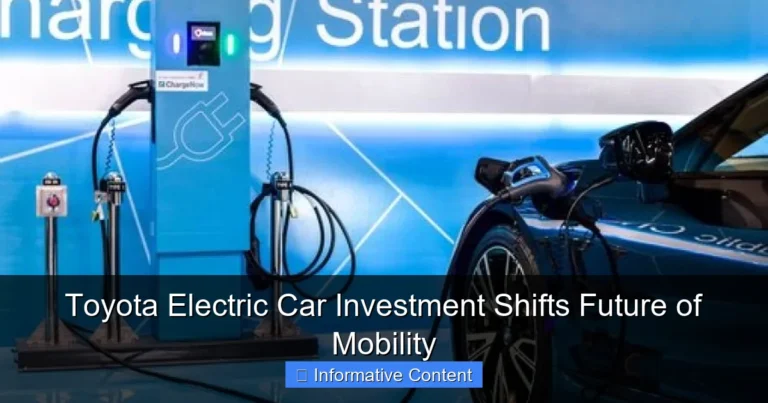
Toyota is not ignoring electric vehicles, but it’s prioritizing a multi-pathway approach, including hybrids, plug-in hybrids, hydrogen fuel cells, and battery electrics. The automaker believes in diverse solutions to meet global emissions goals rather than relying solely on all-electric models, balancing innovation with practicality for different markets and infrastructure readiness.
Key Takeaways
- Toyota prioritizes hybrids over full EVs, betting on diverse powertrain solutions.
- Battery tech limitations drive Toyota’s cautious approach to all-electric vehicles.
- Market demand shapes strategy: Toyota responds to regional EV adoption rates.
- Solid-state batteries may accelerate Toyota’s EV shift—launch expected by 2027.
- EV roadmap exists but lags behind competitors; focus remains gradual.
📑 Table of Contents
- Is Toyota Not Doing All Electric Cars? The Truth Revealed
- Toyota’s Electrification Strategy: A Multi-Pathway Approach
- The BEV Reality: Toyota’s Battery Electric Vehicle Roadmap
- Hydrogen and Fuel Cell Vehicles: Toyota’s Wild Card
- Market and Consumer Perception: Why the Skepticism?
- The Future: Toyota’s 2030 Vision and Beyond
- Conclusion: Toyota Is Doing All Electric Cars—Just Differently
Is Toyota Not Doing All Electric Cars? The Truth Revealed
For decades, Toyota has been a global leader in automotive innovation, most famously with the introduction of the Prius in 1997—the world’s first mass-produced hybrid vehicle. The company’s early and aggressive push into hybrid technology positioned it as a pioneer in eco-friendly transportation. However, in recent years, as competitors like Tesla, Ford, General Motors, and even European giants such as Volkswagen and BMW have accelerated their transition to fully electric vehicles (EVs), Toyota’s strategy has come under intense scrutiny. Many industry observers, investors, and consumers have begun to question: Is Toyota not doing all electric cars? Why has the company been so slow to adopt battery electric vehicles (BEVs), and what does this mean for its future in an increasingly electrified world?
The answer isn’t as simple as a “yes” or “no.” While Toyota has indeed been slower than many rivals in launching a broad lineup of all-electric vehicles, the reality is far more nuanced. Toyota’s approach is rooted in a long-term vision that prioritizes diversification rather than a single-minded focus on BEVs. The company believes that a “multi-pathway” strategy—using hybrids, plug-in hybrids (PHEVs), hydrogen fuel cell vehicles (FCEVs), and eventually battery electrics—is the most sustainable and practical path to carbon neutrality. This blog post will explore Toyota’s electrification strategy in depth, separating fact from fiction, and revealing the truth behind the headlines. We’ll examine the company’s past decisions, current plans, technological investments, market challenges, and future roadmap to answer the burning question: Is Toyota not doing all electric cars—or is it just doing them differently?
Toyota’s Electrification Strategy: A Multi-Pathway Approach
The Hybrid Legacy and Its Strategic Importance
Toyota’s dominance in hybrid technology is unparalleled. As of 2023, the company has sold over 20 million hybrid vehicles worldwide—far more than any other automaker. The success of the Prius, Camry Hybrid, RAV4 Hybrid, and other models has not only solidified Toyota’s reputation for reliability and fuel efficiency but also generated significant revenue and brand equity. This success has shaped Toyota’s broader electrification philosophy: evolution, not revolution.
Visual guide about is toyota not doing all electric cars
Image source: cdn.pixabay.com
Rather than abandoning hybrids to chase the EV hype, Toyota views them as a critical bridge to full electrification. Hybrids reduce emissions immediately and can be deployed at scale with existing infrastructure. For example, a RAV4 Hybrid emits about 30% less CO2 than its gasoline-only counterpart. In markets with underdeveloped charging networks—such as rural areas in the U.S., Southeast Asia, or parts of Africa—hybrids offer a practical, low-emission solution that BEVs cannot yet match.
Why Toyota Resists an “All-Electric-Only” Mandate
Toyota’s leadership, including former CEO Akio Toyoda, has repeatedly emphasized that one-size-fits-all electrification is unrealistic. In a 2021 speech, Toyoda stated: “We need to offer a variety of options to meet the needs of different customers and regions.” This philosophy is backed by data. According to the International Energy Agency (IEA), only about 60% of the world’s electricity comes from low-carbon sources. In countries like China and India, coal still dominates the grid, meaning a BEV charged there may not be significantly cleaner than a hybrid over its lifetime.
Moreover, Toyota argues that forcing all consumers into BEVs before infrastructure, supply chains, and affordability are ready could alienate customers and slow the overall transition to clean transportation. For instance, in 2023, the average price of a new BEV in the U.S. was $53,469, compared to $48,008 for all new vehicles. Hybrids, by contrast, are often priced within $2,000–$5,000 of their gasoline counterparts, making them accessible to a broader market.
The Role of Plug-in Hybrids (PHEVs)
Toyota has also invested heavily in plug-in hybrid technology, which combines a gasoline engine with a larger battery that can be charged externally. The Toyota RAV4 Prime, for example, offers 42 miles of all-electric range and a total range of over 600 miles. For many daily commuters, the electric range covers most driving needs, while the gasoline engine eliminates range anxiety on long trips.
Unlike some competitors who treat PHEVs as transitional products, Toyota sees them as a long-term solution. In 2023, the company announced plans to launch 10 new PHEV models by 2025, targeting markets where charging infrastructure is still limited. This strategy allows Toyota to reduce emissions now while preparing for a future where BEVs dominate.
The BEV Reality: Toyota’s Battery Electric Vehicle Roadmap
Delayed Start, but Not a Complete Absence
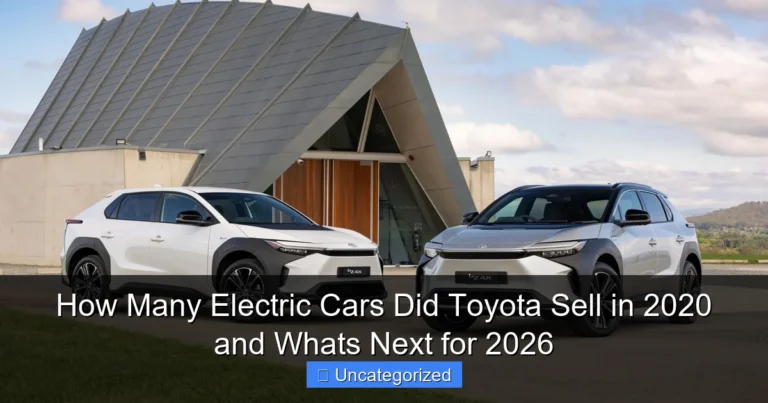
Critics often point to Toyota’s late entry into the BEV market as evidence of neglect. While Tesla launched the Model S in 2012 and Nissan the Leaf in 2010, Toyota didn’t release its first dedicated BEV—the bZ4X—until 2022. Even then, the launch was marred by recalls due to loose hub bolts, damaging early consumer confidence.
However, Toyota is far from absent in the BEV space. The bZ4X, based on the new e-TNGA platform, is just the beginning. Toyota has committed to launching 15 BEV models by 2025, including sedans, SUVs, and commercial vehicles. The lineup will span multiple price points, from the compact bZ3 (developed with BYD) to luxury models under the Lexus brand.
Investments in Battery Technology and Production
Toyota is investing $70 billion in electrification between 2022 and 2030, with a significant portion dedicated to BEVs. A key focus is on next-generation battery technology. The company is developing:
- Lithium-ion batteries with 20% higher energy density by 2025
- Solid-state batteries targeting a 2027–2030 launch, offering twice the range (over 750 miles) and 10-minute fast charging
- Low-cost cobalt-free batteries to reduce reliance on scarce materials
To support these innovations, Toyota is building three new battery plants in the U.S. (in North Carolina, Indiana, and Kentucky) and expanding facilities in Japan and China. By 2030, the company aims to produce 200 GWh of batteries annually—enough for 2.5 million BEVs per year.
Global BEV Sales and Market Penetration
In 2023, Toyota sold 104,000 BEVs worldwide—a modest number compared to Tesla’s 1.8 million. However, the company expects BEV sales to grow rapidly. By 2030, Toyota projects that BEVs will account for 30% of its global sales, or roughly 3.5 million units annually. This is a significant shift from its current 1% BEV sales share.
Regional strategies vary. In Europe, where BEV adoption is high, Toyota plans for 100% zero-emission sales (BEVs + FCEVs) by 2035. In the U.S., the target is 70% electrified vehicles (including hybrids) by 2030, with BEVs making up half of that. In emerging markets, hybrids and PHEVs will remain dominant for the foreseeable future.
Hydrogen and Fuel Cell Vehicles: Toyota’s Wild Card
The Mirai and the Case for FCEVs
While most automakers focus on BEVs, Toyota has doubled down on hydrogen fuel cell electric vehicles (FCEVs). The Toyota Mirai, launched in 2014, is the world’s best-selling FCEV, with over 25,000 units sold globally. FCEVs run on hydrogen, emit only water vapor, and offer 300–400 miles of range with a 5-minute refuel time—comparable to gasoline vehicles.
Toyota sees FCEVs as ideal for heavy-duty transport (trucks, buses, trains) and long-haul applications where BEVs face limitations. For example, the Hino Profia FCEV truck can haul 25 tons and travel 400 miles on a single fill—something no current BEV truck can match. Toyota is also testing hydrogen-powered forklifts and delivery vans.
Infrastructure and Cost Challenges
Despite their advantages, FCEVs face major hurdles:
- Refueling infrastructure: As of 2023, there are only 175 hydrogen stations in the U.S. and 150 in Europe, compared to over 150,000 EV chargers in the U.S. alone.
- High vehicle cost: The Mirai starts at $50,000, nearly double the price of a comparable BEV.
- Green hydrogen production: Most hydrogen today is made from natural gas (“gray hydrogen”), undermining environmental benefits. Toyota is investing in “green hydrogen” from renewable sources, but it’s still in early stages.
To overcome these barriers, Toyota is collaborating with governments and energy companies. In California, the company is part of the Hydrogen Mobility Network, which aims to build 200 stations by 2025. It’s also exploring hydrogen-powered ships and aircraft through its subsidiary, Toyota Industries.
Synergy with BEVs: A Dual-Track Future?
Toyota doesn’t see FCEVs and BEVs as competitors. Instead, it envisions a future where both technologies coexist. BEVs dominate personal and light-duty transport, while FCEVs power heavy industry and long-distance travel. This dual-track approach could give Toyota a unique edge in a decarbonized economy.
Market and Consumer Perception: Why the Skepticism?
Media Narratives and Investor Pressure
Toyota’s cautious BEV strategy has drawn criticism from media and investors. Headlines like “Toyota is Falling Behind in the EV Race” or “Toyota’s EV Delays Could Cost It the Future” dominate coverage. In 2022, Toyota’s stock underperformed compared to EV-focused automakers like Tesla and Rivian.
However, this narrative overlooks key facts. First, Toyota is still the world’s largest automaker by sales, with a reputation for reliability and resale value. Second, its multi-pathway approach has kept it profitable while rivals like Ford and GM lose billions on early BEV ventures. Third, consumer demand for BEVs varies widely by region. In 2023, BEVs made up 18% of U.S. sales but only 5% in Japan—Toyota’s home market.
Consumer Trust and Brand Loyalty
Toyota’s brand strength is a double-edged sword. On one hand, its loyal customer base—especially in the U.S. and Asia—values durability and low maintenance. On the other, this loyalty creates resistance to change. A 2023 survey by J.D. Power found that 65% of Toyota owners would consider another hybrid before switching to a BEV.
To address this, Toyota is using its hybrid expertise to ease the transition. The bZ4X, for instance, shares design cues with the RAV4 Hybrid, making it familiar to existing customers. The company also offers free charging credits and home charger installation for bZ4X buyers, reducing the “range anxiety” barrier.
Competitive Landscape and Pricing Strategy
Toyota’s BEVs are priced competitively but not aggressively. The bZ4X starts at $42,000, similar to the Ford Mustang Mach-E and Hyundai Ioniq 5. However, unlike Tesla, Toyota doesn’t offer a sub-$30,000 BEV—yet. The upcoming bZ3, developed with BYD, aims to fill this gap, targeting a $25,000–$30,000 price point.
Toyota’s advantage lies in total cost of ownership. Its BEVs are designed for 300,000-mile durability and low maintenance, appealing to cost-conscious buyers. The company also leverages its vast dealership network to provide service and support—something many EV startups struggle with.
The Future: Toyota’s 2030 Vision and Beyond
Ambitious Targets and Global Expansion
Toyota’s 2030 electrification targets are bold but achievable:
| Metric | 2023 Status | 2030 Target |
|---|---|---|
| BEV Sales | 104,000 units | 3.5 million units |
| BEV Models | 3 (bZ4X, bZ3, Lexus RZ) | 15+ |
| Battery Production | 10 GWh | 200 GWh |
| Solid-State Batteries | In development | Commercial launch |
| Zero-Emission Sales (EU) | 10% | 100% |
To hit these goals, Toyota is expanding BEV production globally. The U.S. plants will supply North America, while China and Thailand will serve Asia. Europe will rely on imports and local partnerships.
Innovation Beyond Vehicles
Toyota is investing in vehicle-to-grid (V2G) technology, allowing BEVs to feed power back into the grid during peak demand. The company is also testing autonomous BEV shuttles for urban mobility, such as the e-Palette concept.
On the sustainability front, Toyota aims for carbon-neutral manufacturing by 2035. Its factories will use renewable energy, recycled materials, and hydrogen-powered equipment.
Risks and Challenges Ahead
Toyota’s strategy isn’t without risks. Delays in solid-state battery development, supply chain disruptions (e.g., lithium shortages), or faster-than-expected BEV adoption could strain its multi-pathway model. Additionally, regulatory pressure—such as the EU’s 2035 ICE ban—may force Toyota to accelerate its BEV rollout.
However, Toyota’s diversified approach provides flexibility. If BEVs dominate, the company can scale up. If hydrogen or hybrids remain relevant, it’s already positioned. This adaptability may be its greatest strength.
Conclusion: Toyota Is Doing All Electric Cars—Just Differently
So, is Toyota not doing all electric cars? The answer is a resounding no. Toyota is investing heavily in BEVs, with a clear roadmap to launch 15 models by 2025 and sell 3.5 million annually by 2030. It’s developing cutting-edge battery technology, building new factories, and targeting key markets worldwide. However, Toyota’s strategy is not about abandoning hybrids or betting everything on BEVs. Instead, it’s about offering a spectrum of electrified solutions tailored to different customer needs, regional conditions, and technological realities.
This nuanced approach reflects Toyota’s engineering pragmatism and long-term vision. While competitors rush to go all-electric, Toyota is taking a more measured, holistic path—one that balances innovation with practicality, ambition with realism. In a world where the transition to sustainable transportation is complex and uneven, Toyota’s multi-pathway strategy may prove not just wise, but essential.
The truth is, Toyota is not ignoring the electric future. It’s redefining it. And in doing so, it may just lead the auto industry into a cleaner, more inclusive, and ultimately more successful era of mobility. The question isn’t whether Toyota is doing all electric cars—it’s whether the world is ready for a future where electrification means more than just batteries. Toyota believes it is. And time will tell if it’s right.
Frequently Asked Questions
Is Toyota not doing all electric cars? Why is that?
Toyota is not completely shifting to all-electric vehicles (EVs) yet, focusing instead on a multi-pathway approach that includes hybrids, plug-in hybrids, hydrogen fuel cells, and EVs. The company believes offering diverse powertrains better meets global market needs and infrastructure readiness. This strategy allows Toyota to reduce emissions without relying solely on EVs.
Why isn’t Toyota making only electric cars like Tesla or Ford?
Toyota prioritizes a balanced strategy, citing concerns about battery supply chains, charging infrastructure, and customer affordability. While competitors push for full electrification, Toyota argues its hybrid and hydrogen technologies offer practical, immediate emissions reductions for a wider audience.
Does Toyota have any all-electric cars in its lineup?
Yes, Toyota offers the bZ4X SUV and plans to expand its all-electric vehicle (EV) lineup with 30 new models by 2030. However, these EVs will coexist with hybrids and fuel-cell vehicles as part of Toyota’s broader electrification strategy.
Is Toyota falling behind in the electric car race?
While Toyota’s all-electric vehicle (EV) rollout has been slower than rivals, the company is investing heavily in future EV tech, including solid-state batteries. Critics argue it’s a risk, but Toyota claims its cautious approach ensures sustainable growth and market readiness.
Will Toyota eventually stop making gasoline-powered cars?
Toyota plans to phase out internal combustion engines gradually, aiming for 100% zero-emission vehicle sales by 2035 in key markets. However, hybrids and hydrogen-powered vehicles will remain part of its lineup longer than in fully EV-focused brands.
What’s the reason behind Toyota’s slow shift to all-electric cars?
Toyota’s slow shift to all-electric vehicles (EVs) stems from its commitment to a “multi-pathway” strategy, addressing infrastructure gaps and diverse global consumer needs. The company believes a mix of technologies, including hybrids, is a more realistic path to carbon neutrality than EVs alone.