Is Toyota Venza an Electric Car Discover the Truth Here
Featured image for is toyota venza an electric car
The Toyota Venza is not a fully electric car—it’s a hybrid SUV that combines a gasoline engine with an electric motor for improved efficiency. While it offers electric-only driving at low speeds and in certain conditions, it still relies on gas for longer trips, making it a great middle ground for eco-conscious drivers not ready for a full EV.
Key Takeaways
- Not fully electric: Venza is a hybrid, not a pure EV.
- Hybrid efficiency: Combines gas engine with electric motor for better MPG.
- No plug-in needed: Self-charging hybrid system requires no external charging.
- Eco-friendly choice: Lower emissions than traditional gas-powered SUVs.
- EV alternative: Consider Toyota RAV4 Prime or bZ4X for plug-in options.
- Regenerative braking: Recovers energy while driving to boost efficiency.
📑 Table of Contents
- Is the Toyota Venza an Electric Car? Let’s Set the Record Straight
- Understanding the Toyota Venza’s Hybrid Powertrain
- How the Venza Compares to Other Toyota Electrified Models
- Real-World Driving Experience: What It’s Like to Own a Venza
- Environmental Impact: Is the Venza a Green Choice?
- Who Should Buy the Toyota Venza (And Who Shouldn’t)
- Data Table: Toyota Venza vs. Key Competitors
- Conclusion: The Venza Is a Hybrid—Not an Electric Car
Is the Toyota Venza an Electric Car? Let’s Set the Record Straight
When it comes to the modern automotive market, the lines between hybrids, plug-in hybrids, and fully electric vehicles (EVs) have become increasingly blurred. With automakers racing to adopt eco-friendly technologies, it’s no wonder that car shoppers are often left scratching their heads when trying to categorize certain models. One such vehicle that frequently sparks debate is the Toyota Venza. If you’ve ever asked, “Is the Toyota Venza an electric car?”—you’re not alone. This sleek, midsize SUV has been marketed as a fuel-efficient, tech-savvy option, but does it qualify as an electric vehicle? The short answer is no, but the full story is far more nuanced.
The Toyota Venza is a hybrid SUV, meaning it combines a gasoline engine with an electric motor to deliver improved fuel economy and reduced emissions. However, it lacks the defining feature of a true electric car: the ability to run solely on electricity for extended distances without any gasoline. In this in-depth guide, we’ll explore the Venza’s powertrain, compare it to other Toyota electrified models, examine real-world performance, and help you understand where the Venza fits in Toyota’s broader electrification strategy. Whether you’re considering a Venza for your next vehicle or simply want to cut through the EV marketing hype, this article will give you the clarity you need to make an informed decision.
Understanding the Toyota Venza’s Hybrid Powertrain
The Toyota Venza is built on the GA-K platform, shared with models like the RAV4 Hybrid and Highlander Hybrid. However, unlike its siblings, the Venza is only available as a hybrid, with no traditional gasoline-only version. This might lead some to assume it’s an electric car, but the reality is more complex. Let’s break down the Venza’s hybrid system to understand exactly how it works and why it doesn’t qualify as a fully electric vehicle.
How the Hybrid System Works
The Venza uses Toyota’s Hybrid Synergy Drive (HSD) system, which integrates a 2.5-liter four-cylinder gasoline engine with three electric motors. Two of these motors power the front wheels, while the third powers the rear wheels, enabling an all-wheel-drive (AWD) system without a mechanical driveshaft. This setup allows for smooth acceleration, regenerative braking, and the ability to drive short distances on electric power alone—especially at low speeds.
For example, when you start the Venza in the morning or drive through a quiet neighborhood, the vehicle may operate in EV mode using only the electric motors. However, this mode is limited to very short distances (typically under 1 mile) and low speeds (below 25 mph). Once the battery charge drops or you accelerate harder, the gasoline engine kicks in automatically. This is a hallmark of a hybrid, not a fully electric car.
Battery Capacity and Charging
The Venza’s hybrid battery is a 1.6 kWh nickel-metal hydride (NiMH) unit, which is significantly smaller than the batteries used in plug-in hybrids (PHEVs) or EVs. For comparison, a Tesla Model Y has a 75 kWh battery, and even the Toyota RAV4 Prime (a plug-in hybrid) uses an 18.1 kWh lithium-ion battery. The Venza’s battery is designed to be self-charging, meaning it recharges through regenerative braking and engine operation—there is no plug-in charging capability.
Practical Tip: If you’re looking for a vehicle that can charge from an external power source (like a home or public EV charger), the Venza won’t meet your needs. Its hybrid system relies entirely on internal energy recovery and the gasoline engine.
Fuel Efficiency and Emissions
Despite not being electric, the Venza delivers impressive fuel economy: 40 mpg in the city and 37 mpg on the highway (EPA estimates). This makes it one of the most efficient midsize SUVs in its class, especially when compared to non-hybrid models. Lower fuel consumption means fewer trips to the gas station and reduced carbon emissions—benefits that align with the eco-conscious goals of many EV shoppers.
However, it’s important to note that while the Venza reduces emissions, it still produces them. A fully electric car, by contrast, produces zero tailpipe emissions. The Venza is a step in the right direction, but it’s not a full leap into electrification.
How the Venza Compares to Other Toyota Electrified Models
Toyota offers a diverse range of electrified vehicles, from mild hybrids to plug-in hybrids and even a few fully electric models. Understanding where the Venza fits in this lineup can help clarify its classification and highlight alternatives if you’re seeking a more advanced electric experience.
RAV4 Hybrid vs. Venza: Similar Powertrains, Different Packages
The Toyota RAV4 Hybrid shares the same 2.5L engine and Hybrid Synergy Drive system as the Venza, delivering similar fuel economy (41 mpg city, 38 mpg highway). The key difference lies in design and positioning: the RAV4 is a compact SUV with a more rugged, adventurous image, while the Venza is a midsize crossover with a premium, urban-focused aesthetic.
Both vehicles are non-plug-in hybrids, so neither qualifies as an electric car. However, the RAV4 Prime (a plug-in hybrid version of the RAV4) offers up to 42 miles of all-electric range—a feature the Venza lacks. If you want a Toyota SUV with true EV capability, the RAV4 Prime is a better choice.
Toyota’s Plug-in Hybrids: The RAV4 Prime and Prius Prime
Toyota’s plug-in hybrid electric vehicles (PHEVs) represent the next step toward full electrification. The RAV4 Prime and Prius Prime both feature larger lithium-ion batteries (18.1 kWh and 8.8 kWh, respectively) and can be charged via a standard 120V outlet or a Level 2 charger. They offer significant electric-only range (up to 42 miles for the RAV4 Prime) and can operate as fully electric vehicles for daily commutes.
Example: A driver with a 30-mile round-trip commute could complete the entire trip on electricity with a RAV4 Prime, using gasoline only for longer trips. The Venza, by contrast, would rely on its hybrid system for the entire journey, with minimal electric-only operation.
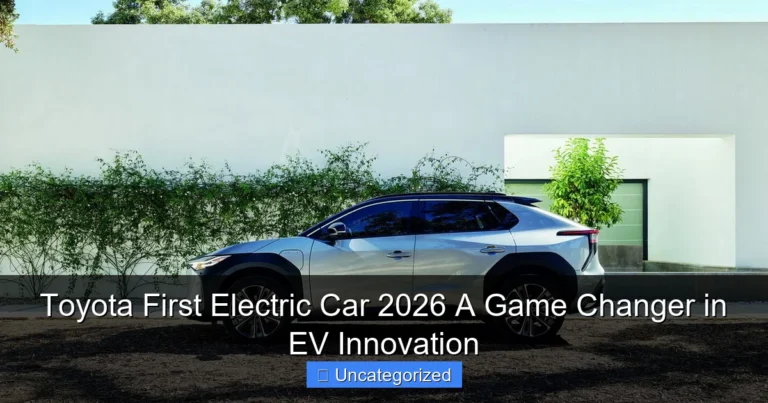
Toyota’s Fully Electric Vehicle: The bZ4X
Toyota’s first dedicated electric SUV, the bZ4X, is a true EV with a 71.4 kWh battery and up to 252 miles of EPA-estimated range. Unlike the Venza, the bZ4X has no gasoline engine and must be charged externally. It supports DC fast charging, allowing drivers to recharge from 10% to 80% in about 30 minutes.
If your goal is to own a zero-emission vehicle with no reliance on gasoline, the bZ4X is Toyota’s answer. The Venza, while efficient, simply doesn’t meet this standard.
Toyota’s Electrification Strategy: A Gradual Approach
Toyota has taken a measured approach to electrification, focusing heavily on hybrids and PHEVs while gradually introducing EVs. The Venza fits into this strategy as a premium hybrid option, appealing to buyers who want efficiency and style without the infrastructure or cost associated with full EVs. However, it’s not a stepping stone to electrification—it’s a standalone hybrid product.
Real-World Driving Experience: What It’s Like to Own a Venza
To truly understand whether the Venza feels like an electric car, we need to look at real-world driving experiences. How does it perform in daily use? Does it offer the quiet, smooth ride associated with EVs? And what are the limitations of its hybrid system?
Smooth, Quiet, and Comfortable Ride
One of the Venza’s standout features is its refined driving experience. The hybrid system operates seamlessly, with minimal noise from the gasoline engine. At low speeds, the electric motors provide a near-silent ride, similar to what you’d expect from an EV. The cabin is well-insulated, and the suspension is tuned for comfort, making the Venza ideal for city driving and long road trips alike.
Tip: If you live in a noise-sensitive area (like a quiet suburb or near a school), the Venza’s ability to operate in EV mode at low speeds can be a major advantage. However, don’t expect the same silence at highway speeds—the engine will be running most of the time.
Regenerative Braking and Driving Modes
The Venza features regenerative braking, which captures energy during deceleration to recharge the battery. It also offers multiple driving modes: Eco, Normal, and Sport. In Eco mode, the system prioritizes fuel efficiency by limiting throttle response and optimizing energy use. Sport mode, on the other hand, sharpens acceleration and keeps the engine more active.
While these modes enhance the driving experience, they don’t change the fundamental nature of the vehicle: it’s still a hybrid, not an EV. The regenerative braking is less aggressive than in full electric cars, and you can’t “one-pedal drive” (where lifting off the accelerator brings the car to a complete stop using only regen braking).
Limitations of the Hybrid System
Despite its strengths, the Venza’s hybrid system has clear limitations. The most obvious is the lack of plug-in charging. If you’re used to charging an EV overnight and driving on electricity the next day, the Venza will feel like a step back. Additionally, the short electric-only range means you can’t rely on battery power for more than a few minutes at a time.
Another consideration is fuel dependency. While the Venza is efficient, it still requires gasoline. In contrast, an EV like the bZ4X can be powered entirely by renewable energy (if you have solar panels or access to green charging stations).
Ownership Costs and Maintenance
Hybrids like the Venza offer lower fuel costs than traditional SUVs, but they’re not as economical to operate as full EVs. Electricity is generally cheaper than gasoline, especially when charging at home. However, the Venza’s hybrid system is reliable and requires minimal maintenance—no need for plug-in charging infrastructure or battery replacement (the NiMH battery is designed to last the life of the vehicle).
Practical Example: Over five years, a Venza owner might spend $5,000 on gasoline, while a bZ4X owner could spend $1,500 on electricity (assuming 12,000 miles per year and local energy rates). The Venza wins on convenience; the bZ4X wins on long-term savings.
Environmental Impact: Is the Venza a Green Choice?
For many buyers, the decision to consider an electric or hybrid car is driven by environmental concerns. How does the Venza stack up in terms of emissions, sustainability, and overall ecological footprint?
Lower Emissions, But Not Zero
The Venza produces approximately 170 grams of CO2 per mile, according to EPA data. This is significantly lower than the average midsize SUV (around 400 grams/mile) but still higher than a full EV, which produces zero tailpipe emissions. When charged with renewable energy, an EV’s lifetime emissions can be up to 70% lower than a hybrid.
Tip: If your local electricity grid is powered by coal or natural gas, the environmental benefits of an EV are reduced. In such cases, a highly efficient hybrid like the Venza may be a more practical green choice.
Lifecycle and Manufacturing Impact
Electric vehicles often have a higher manufacturing footprint due to battery production, which requires mining of lithium, cobalt, and nickel. Hybrids like the Venza use smaller, less resource-intensive batteries, reducing their initial environmental impact. However, EVs typically make up for this over time due to lower operating emissions.
A 2020 study by the International Council on Clean Transportation found that over a 150,000-mile lifespan, a full EV produces 60-68% less CO2 than a hybrid in most regions.
Recyclability and End-of-Life Considerations
Toyota has made efforts to improve the recyclability of its hybrid batteries. The Venza’s NiMH battery is more easily recyclable than lithium-ion batteries, though it contains toxic materials that must be handled carefully. Toyota also participates in battery reuse programs, where old hybrid batteries are repurposed for energy storage.
Who Should Buy the Toyota Venza (And Who Shouldn’t)
The Toyota Venza is a compelling option for certain buyers, but it’s not the right choice for everyone. Let’s break down who will benefit most from this hybrid SUV—and who should look elsewhere.
Ideal Buyers: Efficiency Seekers with Urban Lifestyles
The Venza is perfect for:
- City dwellers who want a quiet, comfortable SUV with excellent fuel economy.
- Drivers who don’t have access to home charging but want to reduce fuel costs.
- Buyers who prioritize a premium interior and advanced tech features over rugged off-road capability.
- Those who want a Toyota hybrid with a more upscale design than the RAV4.
Example: A professional living in downtown Chicago, commuting 20 miles daily, would appreciate the Venza’s smooth ride, low emissions, and premium features—without needing to worry about charging.
Who Should Avoid the Venza
The Venza is not ideal for:
- Buyers seeking a fully electric vehicle with zero gasoline use.
- Those who want plug-in charging capability for daily EV driving.
- Off-road enthusiasts (the Venza is AWD but not designed for serious trail use).
- Families needing more cargo space (the Venza is smaller than the Highlander).
If you fall into these categories, consider the Toyota bZ4X, RAV4 Prime, or a traditional SUV instead.
Future-Proofing Your Purchase
As EV infrastructure expands and battery technology improves, full electric vehicles are becoming more practical for a wider range of drivers. The Venza, while efficient, may feel outdated in a few years if you’re aiming for full electrification. However, if you’re not ready to commit to an EV—or don’t have reliable charging access—the Venza remains a smart, forward-thinking choice.
Data Table: Toyota Venza vs. Key Competitors
| Model | Vehicle Type | Electric Range | Fuel Economy (MPG) | Plug-in Charging | Starting MSRP |
|---|---|---|---|---|---|
| Toyota Venza | Hybrid SUV | 0.5–1 mile (EV mode only) | 40 city / 37 hwy | No | $35,070 |
| Toyota RAV4 Prime | Plug-in Hybrid SUV | 42 miles | 94 MPGe (combined) | Yes (120V/240V) | $43,090 |
| Toyota bZ4X | Electric SUV | 252 miles | 114 MPGe (combined) | Yes (AC/DC fast charging) | $42,000 |
| Honda CR-V Hybrid | Hybrid SUV | N/A (short EV mode) | 40 city / 35 hwy | No | $34,000 |
| Ford Escape Hybrid | Hybrid SUV | N/A | 44 city / 37 hwy | No | $32,000 |
Conclusion: The Venza Is a Hybrid—Not an Electric Car
After a deep dive into the Toyota Venza’s technology, performance, and environmental impact, the answer to “Is the Toyota Venza an electric car?” is clear: no, it is not. The Venza is a hybrid SUV that uses a combination of gasoline and electric power to deliver excellent fuel economy and a refined driving experience. It cannot be plugged in, has minimal electric-only range, and still produces tailpipe emissions.
However, that doesn’t mean the Venza isn’t a smart choice. For buyers who want the benefits of electrification—quiet operation, regenerative braking, lower fuel costs—without the need for charging infrastructure, the Venza is an excellent option. It’s a stylish, efficient, and technologically advanced SUV that represents Toyota’s hybrid expertise.
If you’re ready to go fully electric, consider the bZ4X or a plug-in hybrid like the RAV4 Prime. But if you’re not quite there yet—or simply prefer the convenience of a self-charging hybrid—the Venza offers a compelling middle ground. In a world where electrification is evolving rapidly, the Venza proves that hybrids still have a vital role to play.
Frequently Asked Questions
Is the Toyota Venza an electric car?
The Toyota Venza is not a fully electric car. It is a hybrid SUV that combines a gasoline engine with an electric motor for improved fuel efficiency.
Does the Toyota Venza have an electric-only driving mode?
Yes, the Toyota Venza operates as a hybrid, allowing short distances in electric-only mode at low speeds. However, it cannot be charged externally like a plug-in hybrid or full EV.
How does the Toyota Venza’s hybrid system work?
The Venza’s hybrid system uses a 2.5L 4-cylinder engine and three electric motors to deliver power efficiently. Energy is recaptured through regenerative braking, eliminating the need for plug-in charging.
Is the Toyota Venza a plug-in hybrid electric vehicle (PHEV)?
No, the Venza is a self-charging hybrid, not a plug-in hybrid electric vehicle (PHEV). It does not require plugging in but offers less electric-only range than PHEVs like the RAV4 Prime.
What is the electric range of the Toyota Venza?
The Venza doesn’t have a dedicated electric range like EVs. As a hybrid, it uses its electric motors for assistance and low-speed driving, with most power coming from the gas engine.
Why choose the Toyota Venza over a fully electric car?
The Venza is ideal for buyers wanting hybrid efficiency without charging hassles. If you’re seeking a fully electric car, Toyota offers the bZ4X, but the Venza excels in fuel savings and versatility.